AI Infrastructure
AI infrastructure — GPU compute, model hosting, inference, and deployment platforms. The backend stack teams use to run and scale AI in production.
Our editors' top AI Infrastructure picks for 2026 are Ray (best for Distributed compute for training and serving), fal.ai (best for Fast inference for generative models), and Vercel AI SDK (best for Framework for building AI apps). All 300 tools in this category are hand-reviewed and re-checked each edition — the full ranked directory is below.



Where to start

Ray
AI Infrastructure
Paid
4.93
502

fal.ai
AI Infrastructure
Freemium
4.93
491

Vercel AI SDK
AI Infrastructure
Free
4.93
480

Redis
Vector DBs & RAG
Freemium
4.92
490

Scale AI
AI Infrastructure
Paid - Inquire
4.93
480

Palantir AIP
AI Infrastructure
Paid - Inquire
4.92
475
Sorted by

Cyera
AI-native data security platform for discovery, classification, and protection. Sequoia/Accel-backed unicorn; Forbes AI 50 2026.
Freemium
4.92
503
Ray
Ray is an open-source unified compute framework designed to scale AI and Python workloads seamlessly.
Paid
4.93
502

DeepMind
Google DeepMind: Pioneering advancements in artificial intelligence for global benefits.
Paid - Inquire
4.94
500

Anthropic
AI safety company building Claude and pioneering Constitutional AI — $61B valuation.
Freemium
4.93
495
fal.ai
Fastest generative AI platform for developers — 1,000+ image, video, audio, and 3D models with optimized real-time inference. Default home for FLUX, SAM, MuseTalk.
Freemium
4.93
491
Redis
Redis is an in-memory data store used as a vector database, semantic cache and memory layer for AI and agent applications.
Freemium
4.92
490

Skild AI
Building the general-purpose robotic brain — Skild's omni-bodied foundation model controls any robot, valued at $14B+ after acquiring Zebra's Robotics business.
Paid - Inquire
4.92
484

Grok
Elon Musk's xAI aims to understand the universe's true nature.
Paid - Inquire
4.92
483
Vercel AI SDK
Universal TypeScript SDK from Vercel for building AI apps and agents with multi-model support.
Free
4.93
480
Scale AI
Scale AI delivers high-quality training data for AI applications, powering generative AI, automotive AI, and government AI.
Paid - Inquire
4.93
480
Palantir AIP
Palantir AIP offers secure AI deployment on private networks, ensuring enterprise-level control, compliance, and collaboration.
Paid - Inquire
4.92
475

Surge AI
Premium AI data labeling for frontier labs. Used by Anthropic, OpenAI, and major foundation labs for high-quality RLHF training data.
Freemium
4.92
471
Neo4j
Neo4j is a graph database that powers knowledge graphs and GraphRAG so AI apps can ground answers in connected, verifiable relationships.
Freemium
4.91
470

Nebius
Nebius is an AI-native GPU cloud platform that rents NVIDIA H100 through GB200 clusters with managed Slurm, Kubernetes and an inference API.
Paid - Paid
4.93
470

Ollama
Ollama is a local LLM runtime that downloads, runs, and serves open models on your own hardware via a CLI and an OpenAI-compatible API.
Free
4.93
470

Browser Use
Most popular open-source framework for AI browser agents — 89% on WebVoyager benchmark, the OSS that backs many production browser-using AI products.
Freemium
4.93
470

Cerebras
Platform for AI training with unique wafer-scale technology.
Paid - Inquire
4.93
470

FLUX by Black Forest Labs
Frontier image generation and editing models from Black Forest Labs, the FLUX family.
Freemium
4.93
468
Thinking Machines Lab
Frontier AI lab founded by ex-OpenAI CTO Mira Murati. $2B seed at $12B valuation, in talks for $50-60B. Building useful and safe AI.
Freemium
4.93
462

CUDA
A comprehensive development environment for GPU-accelerated applications.
Paid - Inquire
4.92
460

CoreWeave
CoreWeave specializes in delivering GPU-accelerated compute resources on a massive scale, optimizing performance on a flexible infrastructure.
Paid - Inquire
4.92
460
 Acquired
Altair
AI, simulation, and HPC platform from Altair (now part of Siemens). RapidMiner data science plus structural, fluid, and electromagnetic simulation in one s
Freemium
4.92
445
NVIDIA AI
NVIDIA AI is the world's most advanced platform for enterprise AI solutions.
Paid - Inquire
4.93
440
Lambda Labs
Commercial-grade GPU solutions for deep learning and AI.
Paid - $1.99 /hr
4.92
432

Cloudflare
Global edge network for deploying, securing, and speeding up apps — CDN, Workers, R2, and Workers AI — with an official MCP server for AI agents.
Freemium
4.89
430
 Acquired
Groq
Enterprise-scale AI solutions for ultra-fast language processing and inference.
Paid - Inquire
4.87
430

Google Colaboratory
Google Colaboratory is a hosted Jupyter notebook service that runs Python in the browser on free GPU and TPU runtimes.
Freemium
4.93
420

WorkOS
WorkOS is an enterprise-readiness platform that adds SSO, SCIM and audit logs to apps so teams, including AI companies, can sell to enterprises.
Freemium
4.91
420

Temporal
Temporal is a durable execution platform that runs long-running microservice and AI agent workflows reliably, surviving crashes and restarts without losing
Freemium
4.93
420

Hightouch
Composable CDP + AI Decisioning — sit on any data warehouse, deploy AI agents that personalize at scale. $80M Series C from Sapphire, ICONIQ, others.
Freemium
4.92
420

turbopuffer
Serverless vector and full-text search built on object storage — powers Cursor, Notion AI, Linear, Superhuman. 95% cost reduction vs traditional vector DBs.
Paid - Inquire
4.92
420
Factory Droid
Agent-native software development platform with autonomous Droids that handle the full SDLC — coding, incidents, docs, missions over multi-day horizons.
Paid - Inquire
4.92
420

Browserbase
Cloud headless browsers for AI agents — production-grade infrastructure for web automation, scraping, and agent workflows.
Freemium
4.92
420

CrewAI
Multi-agent platform for enterprises to operate teams of AI agents on complex, autonomous tasks.
Freemium
4.92
420

SandboxAQ
Merging AI and Quantum technology for societal impact.
Paid - Inquire
4.92
420

Dataminr
Real-time platform detecting high-impact events and emerging risks from public data.
Free Trial
4.92
420

BytePlus
BytePlus is the enterprise AI cloud from ByteDance, offering Seedance video, Seedream image and speech model APIs plus GPU compute.
Free Trial
4.86
410

RunPod
Globally distributed GPU cloud for AI tasks.
Paid - Inquire
4.91
410

IBM Watsonx
IBM Watsonx provides a comprehensive suite for AI deployment, data management, and governance, tailored for business needs.
Paid - Inquire
4.91
410

Apache Spark
Unified engine for large-scale data analytics and machine learning.
Paid - Inquire
4.85
410

Amazon SageMaker
Fully managed service for building, training, and deploying ML models.
Freemium
4.86
410

Kore.ai
Enterprise agentic AI platform — Kore.ai Agent Platform delivers AI for Work, Service, and Process across customer service, HR, and IT. Gartner MQ Leader.
Paid - Inquire
4.91
410
Dataiku
Dataiku is the world’s leading platform for Everyday AI, systemizing data use for exceptional business results
Paid - Inquire
4.93
404

LiveKit
Build voice, video, and physical AI agents on real-time infrastructure — open-source LiveKit Agents framework + LiveKit Cloud managed deployment. Series C-funded.
Freemium
4.91
400
LlamaIndex
Document OCR for the agentic stack — LlamaParse turns complex docs into model-ready data.
Freemium
4.86
400

LangSmith
AI agent observability platform — tracing, monitoring, and evals for any agent stack.
Freemium
4.86
400

Cohere
Unlock powerful semantic search, content generation, and intent recognition with Cohere's advanced models.
Freemium
4.85
400
Weaviate
Open-source vector database for storing data objects and vector embeddings
Freemium
4.91
400

Azure Machine Learning
Enterprise-grade AI service for the machine learning lifecycle.
Freemium
4.92
398
 Acquired
Neon
Serverless Postgres with instant branching and pgvector — with an official MCP server so AI agents can create databases and run queries in natural language.
Freemium
4.9
390

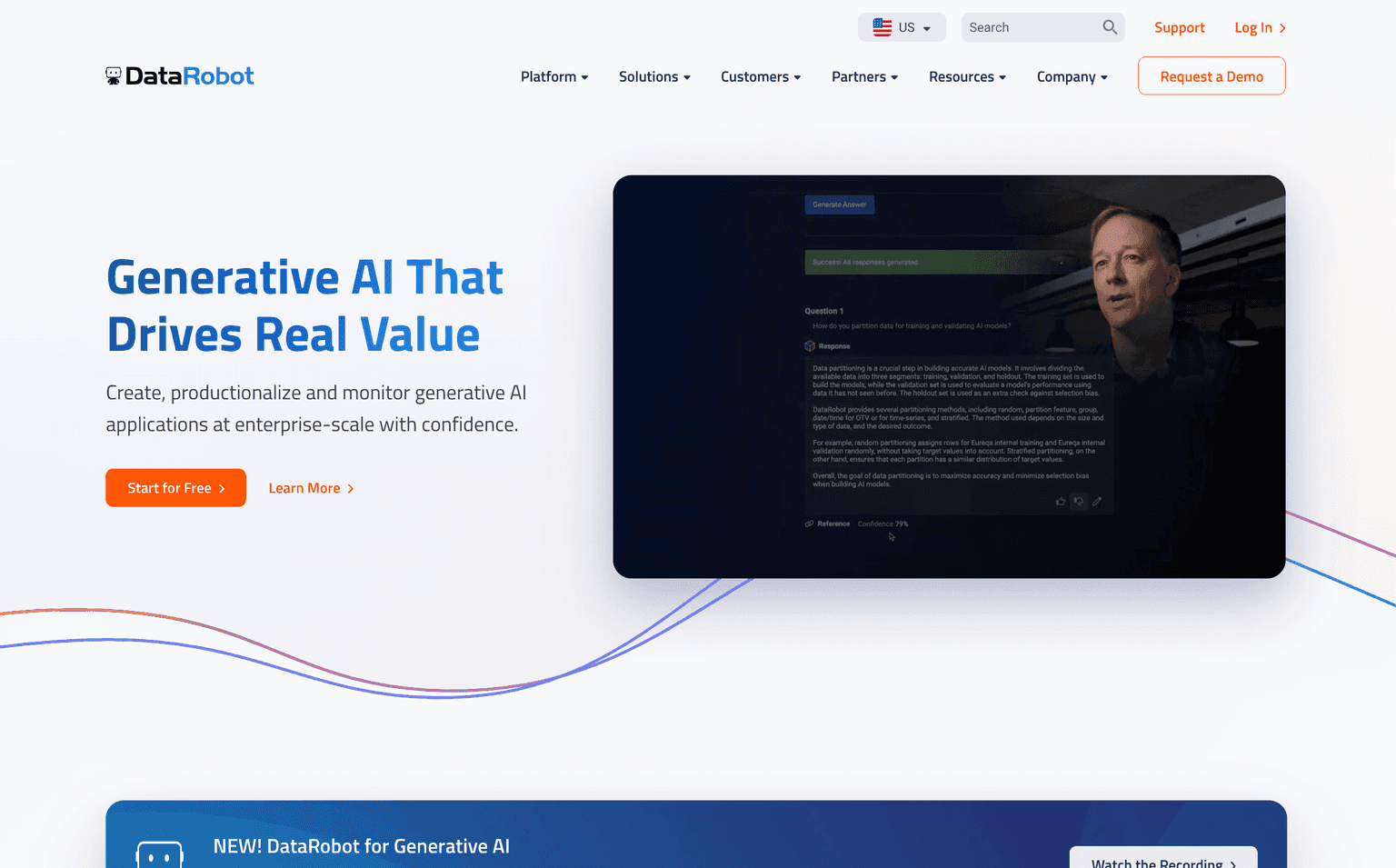
Datarobot
Open platform driving generative and predictive AI solutions.
Paid - Inquire
4.86
390

FluidStack
FluidStack: On-demand GPU servers for ML, rendering, and general compute tasks.
Paid - Inquire
4.93
386

Qdrant
Open-source vector database and search engine.
Freemium
4.85
380

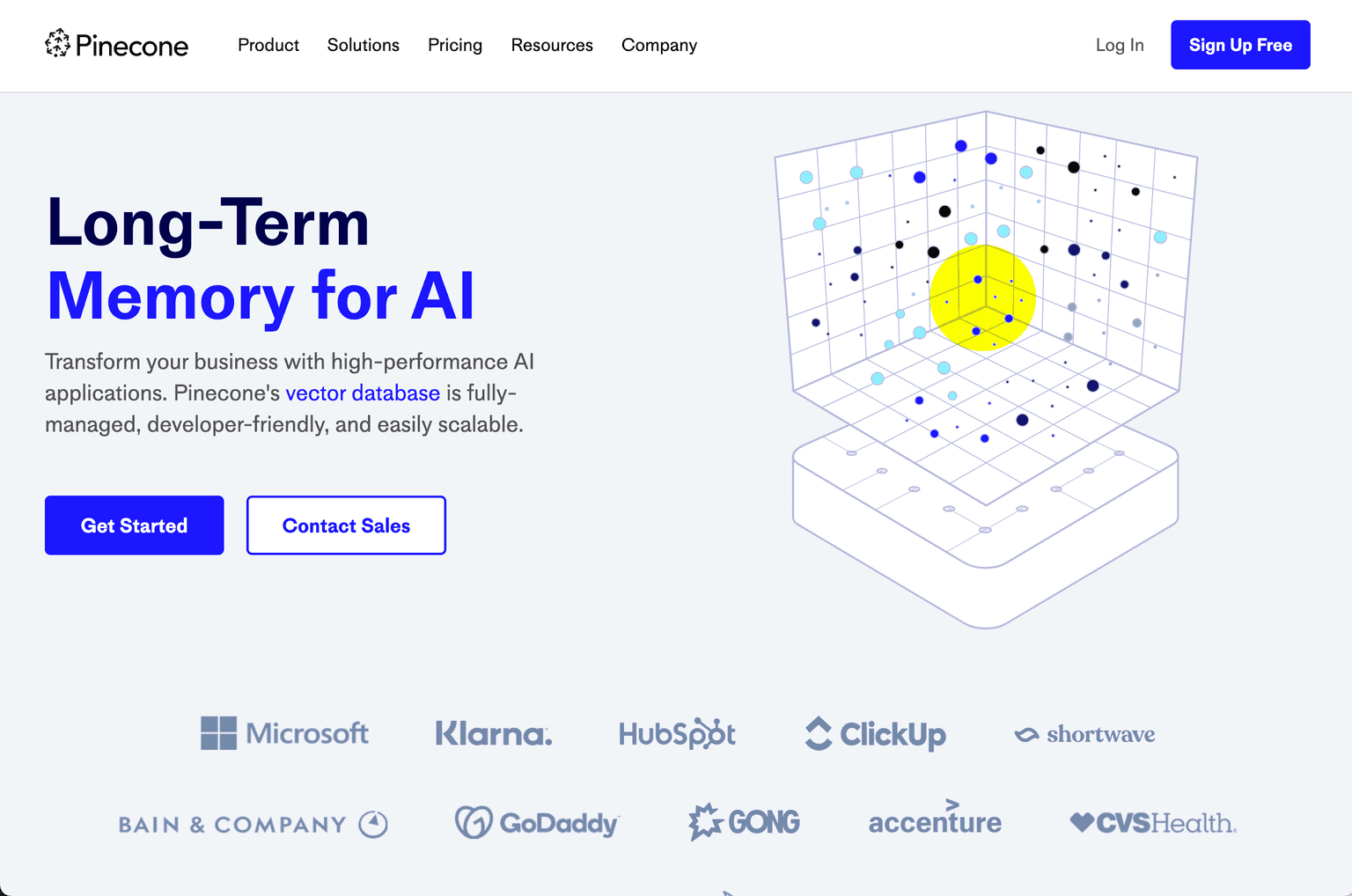
Pinecone
Pinecone: Transforming Vector Search for Enhanced Data Retrieval
Paid - Inquire
4.84
380

Intel
Intel® offers comprehensive solutions for AI development and deployment, from hardware to software optimizations.
Paid - Inquire
4.91
380
 Acquired
OpenRouter
Unified API and marketplace for the best LLMs at the best prices for any prompt.
Freemium
4.84
360

Exa
AI search API and engine that retrieves the best, real-time web data for AI apps.
Freemium
4.83
360
 Acquired
Anyscale
Unified compute platform for scalable AI and Python applications using Ray
Paid - Inquire
4.83
360

LogicMonitor
AI-powered platform for IT infrastructure monitoring and management.
Paid - Inquire
4.82
350

Crusoe
Sustainable AI cloud — vertically integrated GPU data centers powered by stranded energy.
Paid - Inquire
4.76
340

MinIO
High-performance object storage designed for large-scale workloads, optimized for Kubernetes.
Free Trial
4.82
340

Parallel Web Systems
Web search and research APIs purpose-built for AI agents. Highest-accuracy web data with verifiable evidence. By ex-Twitter CEO Parag Agrawal.
Paid - Inquire
4.82
335

Letta
Memory-first AI agents — agents that learn from experience and improve over time.
Freemium
4.82
335
Arize AI
ML observability platform for monitoring and fine-tuning machine learning models.
Paid - $100 /mo
4.8
335

MCPTotal
MCPTotal is the infrastructure platform for Model Context Protocol (MCP) — discover, deploy, and manage MCP servers connecting AI agents to enterprise tool
Freemium
4.73
334

Appen
High-quality data services to power AI innovation and model performance.
Paid - Inquire
4.82
332
Zhipu AI
Top Chinese foundation lab building the GLM family — ChatGLM, GLM-4, and AutoGLM agents.
Freemium
4.82
331

Z.ai
Z.ai is an AI model lab offering the GLM frontier model family via a free chatbot, coding plans, and an API.
Freemium
4.87
330

Pure Storage
Pure Storage — now trading as Everpure — provides infrastructure optimized for AI workloads and data analytics.
Paid - Inquire
4.82
330

Pydantic AI
Type-safe Python agent framework from the Pydantic team with structured outputs and validation.
Free
4.81
329

Elastic
Search AI platform pairing Elasticsearch retrieval with vector search for RAG, observability, and security.
Freemium
4.87
328

Oumi
Oumi is an unconditionally open-source AI lab building foundation models with the full pipeline open. Founded by ex-Apple, ex-Meta, ex-Google leaders.
Free
4.84
326

LiteLLM
Universal LLM proxy — call 100+ LLMs (OpenAI, Anthropic, Bedrock, Vertex) with one API.
Freemium
4.75
325

Aurora Innovation
Autonomous trucking pioneer building the Aurora Driver — a self-driving system targeting commercial freight. Public on Nasdaq; commercial launch Texas 2024
Freemium
4.76
322

MongoDB Atlas Vector Search
MongoDB Atlas Vector Search adds semantic vector search to your database for RAG and AI agents.
Freemium
4.85
320

LMNT
Fast, lifelike, affordable AI speech — studio-quality voice clones with 150ms latency. 24 languages. The TTS pick for cost-sensitive voice agents.
Freemium
4.82
320
Pipecat
Open-source Python framework for real-time voice and multimodal conversational agents — by Daily, the WebRTC infrastructure leader. Most-used voice agent OSS.
Free
4.82
320

Stagehand
Open-source AI browser automation SDK from Browserbase — write resilient browser agents using natural language with act, extract, observe, and agent primitives.
Freemium
4.82
320
 Acquired
Tavily
Real-time web search, extract, and crawl APIs built specifically for AI agents and RAG.
Freemium
4.82
320
Snorkel AI
Snorkel AI revolutionizes the AI development process by emphasizing programmatic data labeling and weak supervision.
Paid - Inquire
4.82
320

C3 AI
C3 AI delivers a comprehensive platform and applications for enterprise-scale AI development.
Paid - Inquire
4.81
320

Innoviz
Automotive-grade LiDAR sensor maker for autonomous vehicles and ADAS. InnovizOne and InnovizTwo deployed in BMW programs; public on Nasdaq.
Freemium
4.75
316

Arthur
ML Observability platform ensuring transparent, compliant, and efficient AI operations.
Paid - Inquire
4.82
312

Composio
Auth and tool integrations for AI agents — connect any agent to 200+ apps with one SDK.
Freemium
4.78
310

Amazon Bedrock
Amazon Bedrock is AWS's managed platform for building generative AI applications and agents on hundreds of foundation models.
Paid - Pay per token
4.86
305

Unsloth
Unsloth is an open-source fine-tuning framework that trains LLMs faster with far less GPU memory.
Freemium
4.87
305

Actively AI
GTM superintelligence with per-account AI agents — $45M Series B (TCV + First Harmonic, April 2026). Customers: Attentive, Ironclad, Ramp, Samsara.
Paid - Inquire
4.74
305

LanceDB
AI-native multimodal lakehouse and serverless vector DB — embedded retrieval for production-scale generative AI, open source, YC-backed.
Freemium
4.84
305
 Acquired
Modular
Unified AI execution engine and programming language.
Paid - Inquire
4.81
305

Hydra Host
Hydra Host is a bare-metal GPU cloud and orchestration layer that rents dedicated NVIDIA GPUs across 40+ data centers, with an AI-factory OS.
Paid - From $0.40/hr GPU
4.86
300

MindsDB
Simplifies the process of applying machine learning to end-user applications.
Freemium
4.8
300
 Acquired
Poolside
Poolside builds frontier AI foundation models specialized for code generation. $626M Series B at $3B valuation; founded by ex-GitHub CTO Jason Warner.
Paid - Paid
4.84
299

Microsoft Foundry
Microsoft Foundry is the enterprise platform for building, grounding and governing AI apps and agents, with a catalogue of 11,000+ models.
Paid - Pay per use
4.85
298

Unframe
Unframe is a managed AI delivery platform that turns enterprise needs into production AI agents over a company's existing data and systems.
Paid - Contact sales
4.86
298

Mira Network
Decentralized verification network for AI outputs — consensus-based hallucination reduction.
Freemium
4.82
297
SerpApi
Search engine results APIs turning Google and 60+ engines into structured JSON for devs and AI apps.
Freemium
4.85
296

Twelve Labs
Video understanding foundation models. Multimodal AI for video search, classification, and generation. Radical Ventures portfolio; Series B.
Freemium
4.73
295

ClearML
Open-source platform for end-to-end AI lifecycle management.
Paid - Inquire
4.78
295
AgentOps
Agent observability platform for OpenAI, CrewAI, Autogen, and 400+ LLMs. Visually track LLM calls, tools, multi-agent flows. Rewind and replay runs.
Freemium
4.84
293
Network Optix
Enterprise video OS managing 4M+ devices in 190 countries, with edge AI model deployment for camera fleets.
Paid - Inquire
4.84
291
- 01.AI
- 310.ai
- Abacus.AI
- Actively AI
- Actualyze AI
- AgentMail
- AgentOps
- Agno
- Alegion
- Alibaba ML
- Alle-AI
- Altair
- alwaysAI
- Amazon Bedrock
- Amazon SageMaker
- AMD AI Solutions
- Anchor Browser
- Anomalo
- Anthropic
- Anyscale
- Apache MXNet
- Apache Spark
- Appen
- Arcade
- Arcee AI
- Arize AI
- Arthur
- Astera Labs
- Athina AI
- Auriko
- Aurora Innovation
- Azure Machine Learning
- Baidu Ernie
- Baseten
- BigPanda
- Blaize
- Braintrust
- Bright Data
- Browser Use
- Browserbase
- Browserless
- BytePlus
- C3 AI
- Causa
- Cerebras
- Cerebrium
- Chroma
- Cleanlab
- ClearML
- Cloudflare
- Codebuff
- Coder
- Cognee
- Cognite
- Cohere
- Composio
- Context.dev
- Context7
- CoreWeave
- Crayon
- CrewAI
- Cribl
- Crusoe
- CUDA
- Cyera
- DagsHub
- DataBahn
- Datacurve
- Dataiku
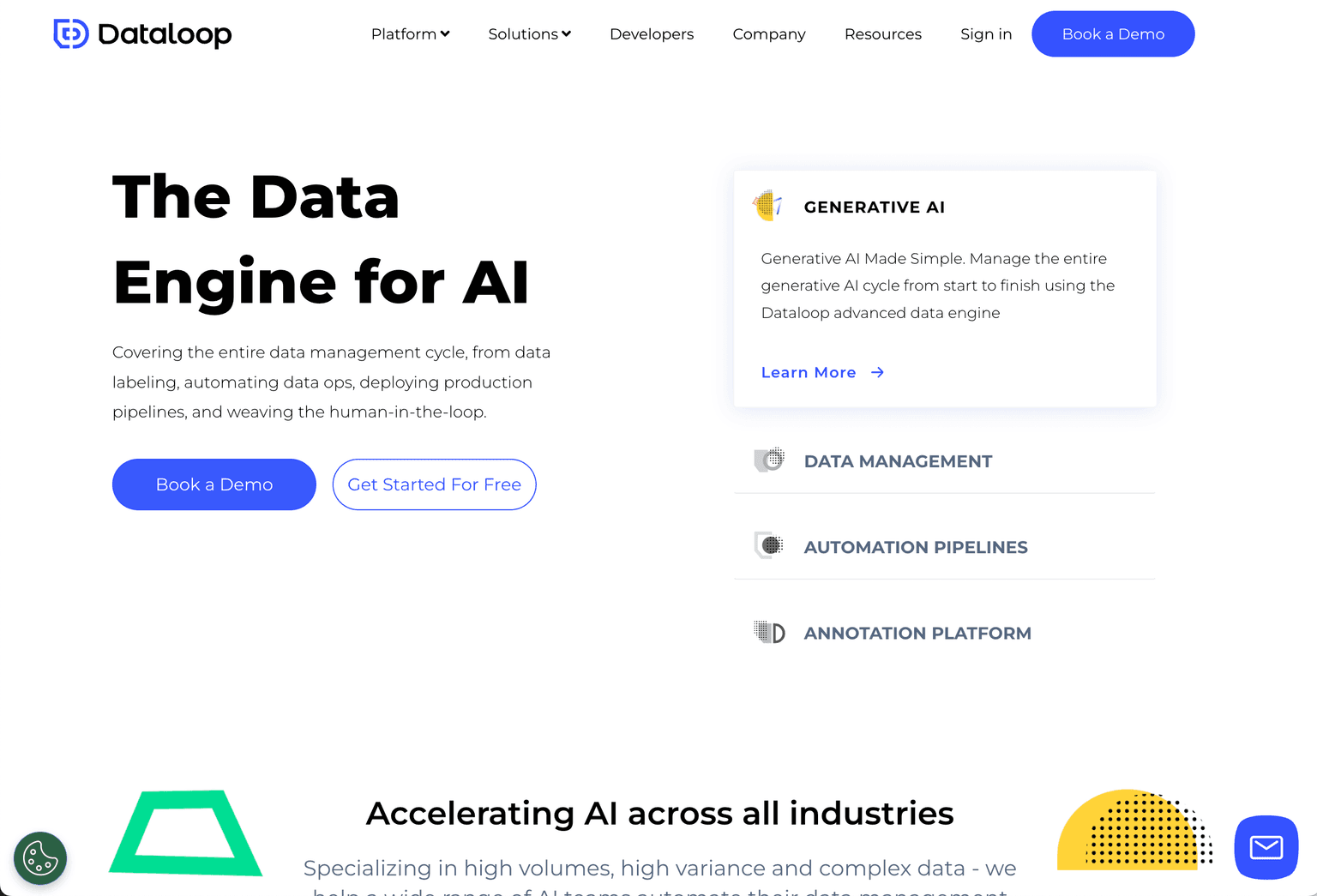
- Dataloop
- Dataminr
- Datarobot
- Dataworkz
- Daytona
- Deasie
- Deccan AI
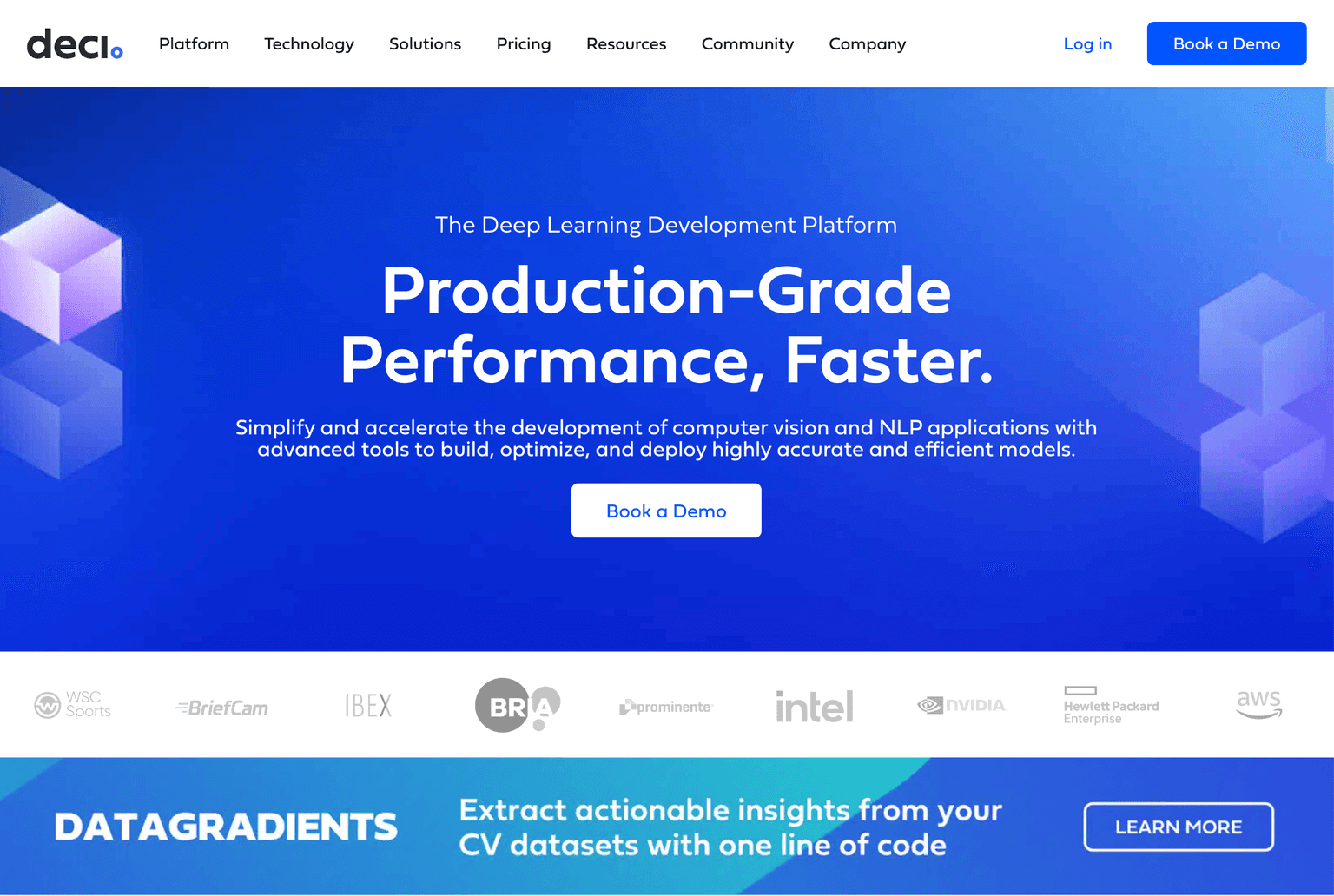
- deci
- Deepchecks
- DeepInfra
- DeepMind
- Deepset AI
- Distyl AI
- dottxt
- DSPy
- Dust
- E2B
- Elastic
- Emissary
- Encord
- Enkrypt AI
- Etched
- Exa
- Extropic
- Factory Droid
- fal.ai
- Falkonry
- FalkorDB
- Fetch.ai
- Fiddler AI
- Figure
- Firetiger
- FlexAI
- FluidStack
- FLUX by Black Forest Labs
- Foam
- Fractile
- Freeplay
- FriendliAI
- Galileo
- Gemesys
- Glaive AI
- Glama
- Go.AI
- Google Colaboratory
- Granica
- Graphcore
- Grok
- Groq
- Hailo AI
- Hebbia
- Heym
- Hi Auto
- Hightouch
- Hive AI
- Human Browser
- Hydra Host
- Hyperbrowser
- Hyperscience
- IBM Watsonx
- Inception Labs
- Inngest
- Innoviz
- InsightFinder
- Intel
- Jarvislabs.ai
- Kindo
- Klavis AI
- Klu
- Kong
- Kore.ai
- Kubeflow
- Labelbox
- Lambda Labs
- Laminar
- LanceDB
- Landing AI
- Langfuse
- LangGraph
- LangSmith
- Latent AI
- LatticeFlow
- Lepton AI
- Letta
- LiteLLM
- LiveKit
- LlamaIndex
- LMNT
- LogicMonitor
- Luel
- Lumai
- Luxonis
- Lyzr
- Manufact
- Matrice
- MCPTotal
- Mem0
- Metorial
- Microsoft Foundry
- Milvus
- MindsDB
- MiniMax
- MinIO
- Mira Network
- Mithril
- Mixedbread
- Modular
- MongoDB Atlas Vector Search
- Morph
- Naive
- Natural
- Nebius
- Nebuly
- Neo4j
- Neon
- Netlify
- Network Optix
- Neurometric
- Nimble
- Niteshift
- nOps
- Not Diamond
- Nota
- NVIDIA AI
- OctoAI
- OctoML
- Ollama
- ONNX
- Onyx
- Openlayer
- OpenRouter
- Openstream.ai
- Optumi
- Oriole Networks
- Orkes
- Oumi
- Outerbounds
- Oxylabs
- Palantir AIP
- Paperspace
- Parallel Web Systems
- Pay-i
- Peak
- Phoenix by Arize
- Physical Intelligence
- PhysicsX
- Pinecone
- Pipecat
- PlurAI
- Pollinations
- Pony.ai
- Poolside
- Prime Intellect
- Pure Storage
- Pydantic AI
- PyTorch
- Qdrant
- Ray
- Reactor
- Recall.ai
- Redis
- Reducto
- Reka AI
- Reprompt AI
- Revenium
- River AI
- ROCM
- Runlayer
- RunPod
- Runta
- Safe Superintelligence
- Sahara AI
- Sail Research
- SandboxAQ
- Scale AI
- Scalekit
- SerpApi
- Shelf
- Sight Machine
- SiliconFlow
- Sinequa
- Skild AI
- Skybridge
- Smallest.ai
- Smithery
- Snorkel AI
- Soniox
- Speakeasy
- Stagehand
- Steel
- Striveworks
- SuperAnnotate
- Superwise AI
- Surge AI
- Sycamore
- synthesis
- Tavily
- Telnyx
- Temporal
- TensorDock
- TensorOpera
- Tenstorrent
- Tetrate
- Thinking Machines Lab
- TopK
- Toyo
- Trajectory
- TrueFoundry
- turbopuffer
- Twelve Labs
- Ultravox
- Unframe
- UnifyApps
- Unsloth
- Unstructured
- V7
- Vast AI
- VAST Data
- Vectara
- Vercel AI SDK
- Virtue AI
- Voltage Park
- Vultr
- Weaviate
- Wirestock
- WitnessAI
- WorkOS
- Yuma AI
- Z.ai
- Zep
- Zhipu AI
AI Infrastructure AI, answered
What is AI infrastructure?
AI infrastructure is the stack of compute, data, and software that trains, serves, and scales AI models. It spans GPUs and orchestration like Ray, inference platforms like fal, vector and caching layers like Redis, and frameworks like the Vercel AI SDK. Teams assemble these pieces to move a model from prototype to production.
What do I need to run AI in production?
At minimum you need compute to serve the model, a way to manage requests and scaling, and storage for data and embeddings. Most teams add an inference layer, a vector store for retrieval, and monitoring. Ray handles distributed compute, fal serves generative models, and Redis stores embeddings and cache, with a framework tying them together.
What is the difference between training and inference infrastructure?
Training infrastructure runs large batch compute jobs to build or fine-tune a model, demanding many GPUs and high-throughput data pipelines. Inference infrastructure serves the finished model to users in real time, optimizing for latency and cost per request. Ray supports both, while platforms like fal focus on fast inference.
How do I reduce AI inference costs?
Right-size the model, batch requests, and cache repeated results rather than recomputing them. Serving platforms like fal optimize GPU use, and a vector cache in Redis avoids re-running retrieval. Many teams also route simple queries to smaller models and reserve large models for hard cases.
What is a vector store and why does AI need one?
A vector store holds embeddings, the numerical representations of text or images, so an application can find semantically similar content quickly. It powers retrieval-augmented generation, where a model pulls relevant context before answering. Redis and dedicated vector databases provide this layer between your data and the model.
Should I build AI infrastructure or use a managed platform?
Use managed platforms early, since they remove undifferentiated setup and let you ship faster. Build or self-host when scale, cost, data residency, or custom performance needs justify the engineering. Many teams start on hosted inference like fal and a framework like the Vercel AI SDK, then bring pieces in-house as usage grows.




Sign up for our newsletter
Receive weekly updates so you can stay up-to-date with the world of AI
Sign up for our newsletter
Receive weekly updates so you can stay up-to-date with the world of AI
The AI tools directory for discovering, exploring, and comparing the most innovative AI tools in the industry