Apache Spark
Unified engine for large-scale data analytics and machine learning.
Overview
Apache Spark: The Powerhouse of Large-Scale Data Processing and Machine Learning
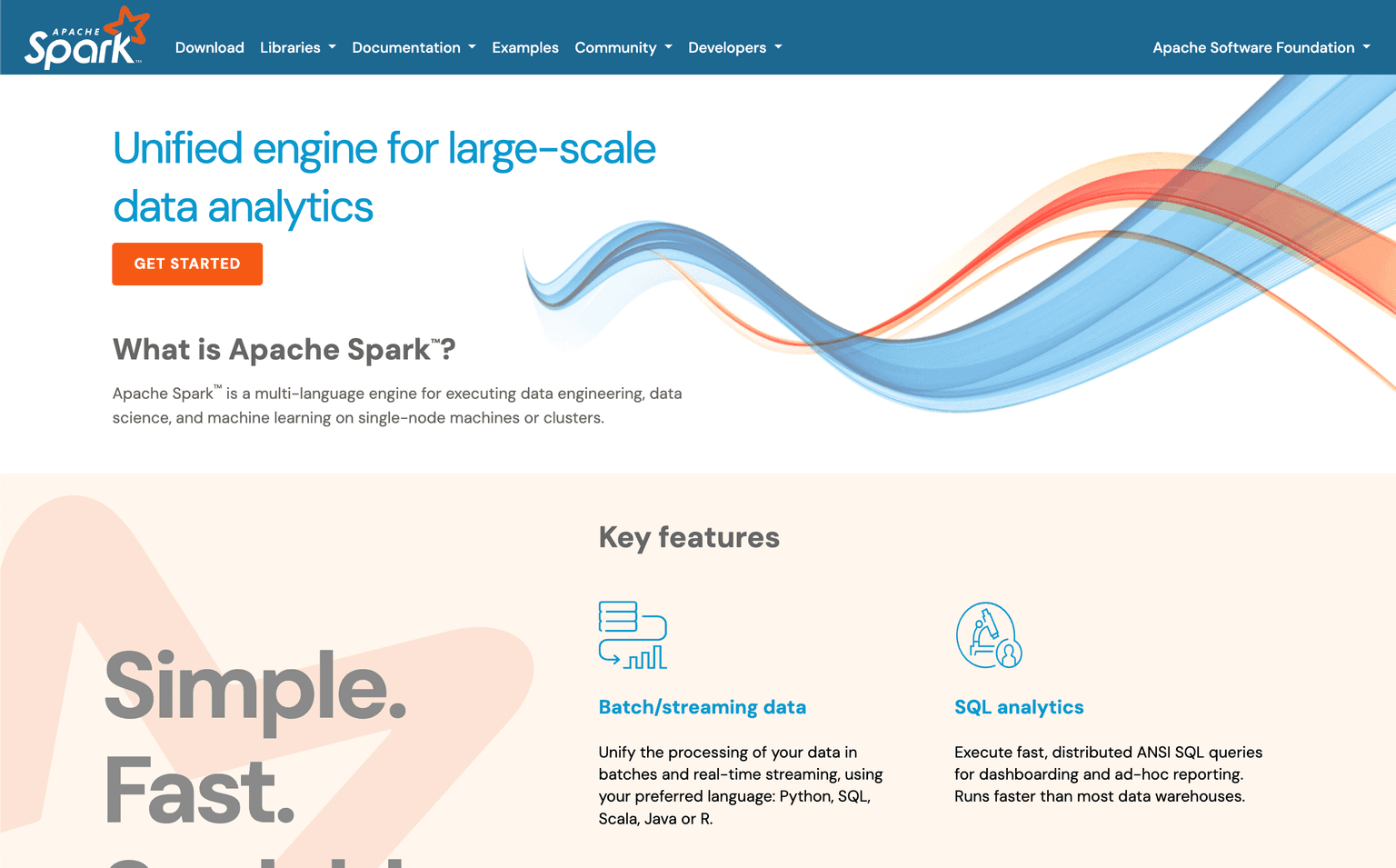
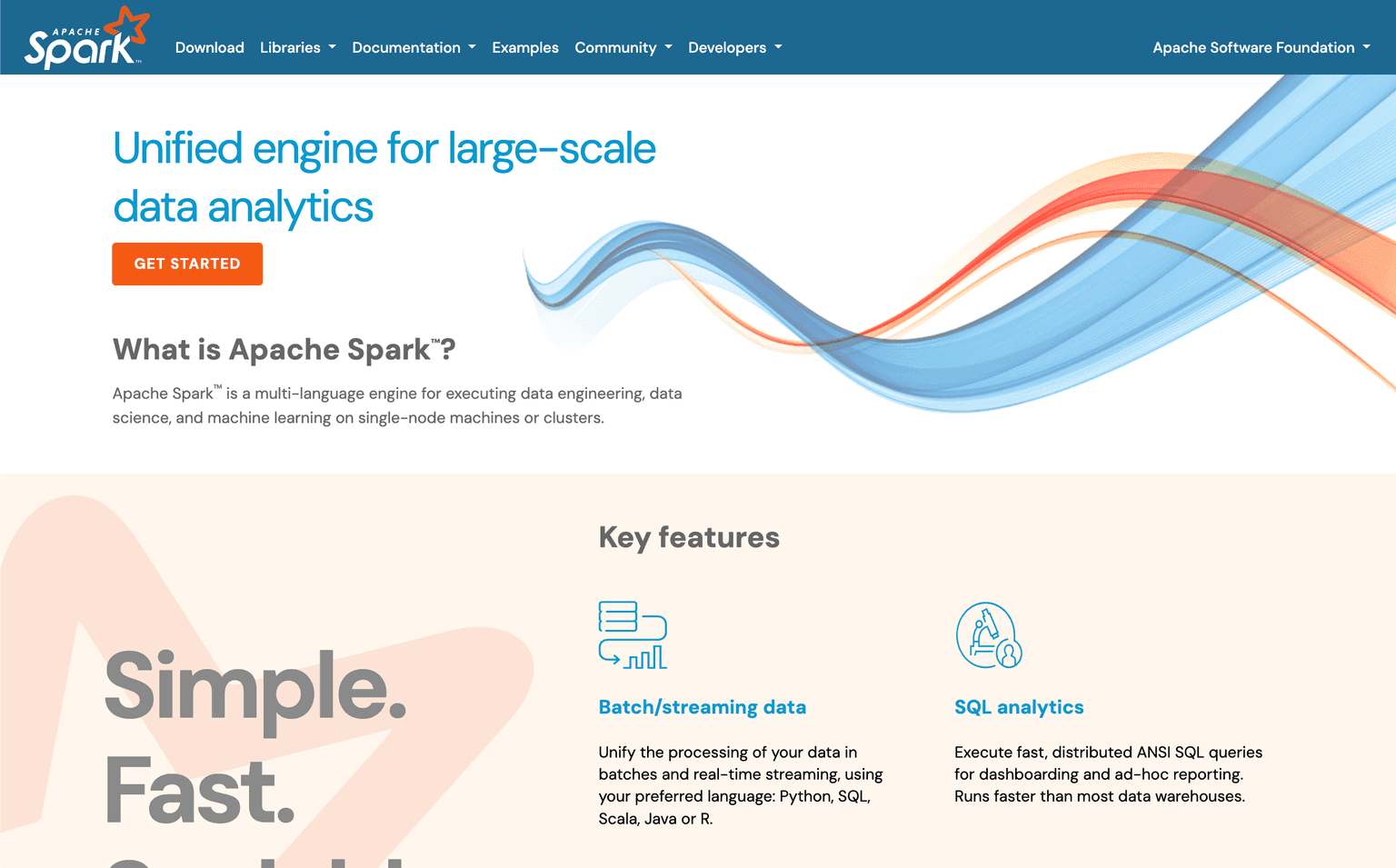
Apache Spark stands as a multi-language engine designed for executing data engineering, data science, and machine learning tasks, whether on single-node machines or vast clusters. It offers a seamless blend of simplicity, speed, scalability, and unification. With Spark, users can process data in batches or real-time streams, execute fast distributed ANSI SQL queries, and even perform exploratory data analysis on petabyte-scale data without downsampling. From training machine learning algorithms on a laptop to scaling them on fault-tolerant clusters with thousands of machines, Spark ensures efficiency and scalability.
Key Features:
Batch/Streaming Data: Process data in batches or real-time streams using Python, SQL, Scala, Java, or R. SQL Analytics: Execute fast, distributed ANSI SQL queries suitable for dashboarding and ad-hoc reporting. Data Science at Scale: Perform exploratory data analysis on massive datasets. Machine Learning: Train ML algorithms and scale them across large, fault-tolerant clusters.
Ideal Use Case:
Apache Spark is tailored for professionals dealing with large-scale data processing, analytics, and machine learning. It's a go-to solution for businesses and researchers aiming to harness the power of big data and AI.
Why use Apache Spark:
- Unified Platform: A single platform for batch processing, streaming, SQL analytics, and machine learning.
- Scalability: Built to handle vast datasets and complex computations efficiently.
- Flexibility: Supports a wide range of languages, including Python, SQL, Scala, Java, and R.
- Community Support: A thriving open-source community with contributors worldwide.
FAQ
What is Apache Spark used for? Apache Spark is a unified engine designed to handle large-scale data analytics and machine learning tasks. It processes massive datasets efficiently and supports a variety of analytical workloads in a single platform.
Who should use Apache Spark? Apache Spark is built for organizations and teams that need to perform analytics and machine learning on big data at scale. It's ideal for data engineers, data scientists, and analytics teams working with large datasets.
How much does Apache Spark cost? Apache Spark operates on a paid pricing model. Visit the Apache Spark pricing page for current plans and detailed pricing information.
How does Apache Spark compare to similar tools? Apache Spark competes with alternatives like Grok, fal.ai, and Vercel AI SDK in the data analytics and AI infrastructure space. The best choice depends on your specific needs around data processing scale, machine learning capabilities, and integration requirements.
tl;dr:
Apache Spark is a robust platform designed for large-scale data processing, analytics, and machine learning. It offers a unified solution to handle diverse data tasks, ensuring efficiency, flexibility, and scalability.
Related
Looking for more options? Browse the AI Infrastructure directory or read our best AI infrastructure tools listicle. Apache Spark is also tracked on Crunchbase.
Why Use Apache Spark
Editorial Review
Our take on Apache Spark.

Apache Spark is a distributed computing framework for processing massive datasets and training ML models across clusters.
What works
- Language-flexible (Python, Scala, SQL, R)
- SQL interface lowers barrier for analysts
- Proven at scale; high community confidence
What doesn't
- Infrastructure setup overhead for small use cases
- Performance tuning requires cluster expertise
Apache Spark handles large-scale data analytics and machine learning by distributing computation across multiple machines, letting you work with datasets that don't fit on a single node. It's language-agnostic—you can write jobs in Python, Scala, SQL, or R—and integrates with popular storage systems like HDFS and cloud object stores. The unified engine approach means you can move data through processing, analytics, and ML training without moving it between separate tools.
What makes Spark useful in practice is how it abstracts away cluster management complexity. You define your transformation logic; Spark figures out how to parallelize it across workers and handle failures. The SQL interface is particularly approachable for analysts already comfortable with standard query syntax.
The trade-off is setup friction. Running Spark requires infrastructure—either a cluster you manage yourself or a service tier on cloud platforms. For small datasets or one-off analyses, the overhead isn't worth it. Tuning job performance also demands real understanding of how Spark schedules tasks and manages memory; naive configurations can waste resources. It's a tool that pays back its complexity only when the problem truly demands distributed processing.
User Reviews
Similar Tools