Browser Use
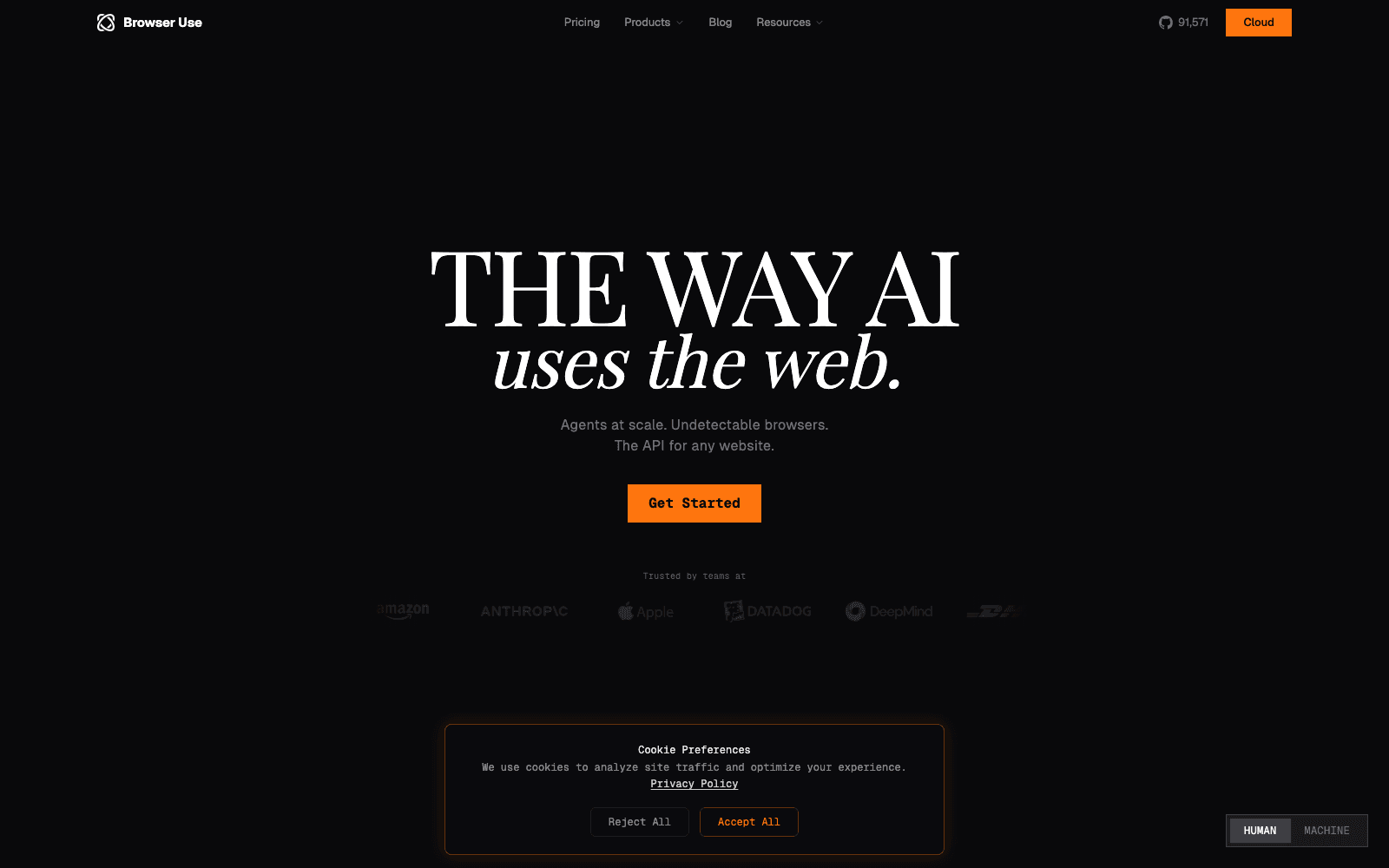
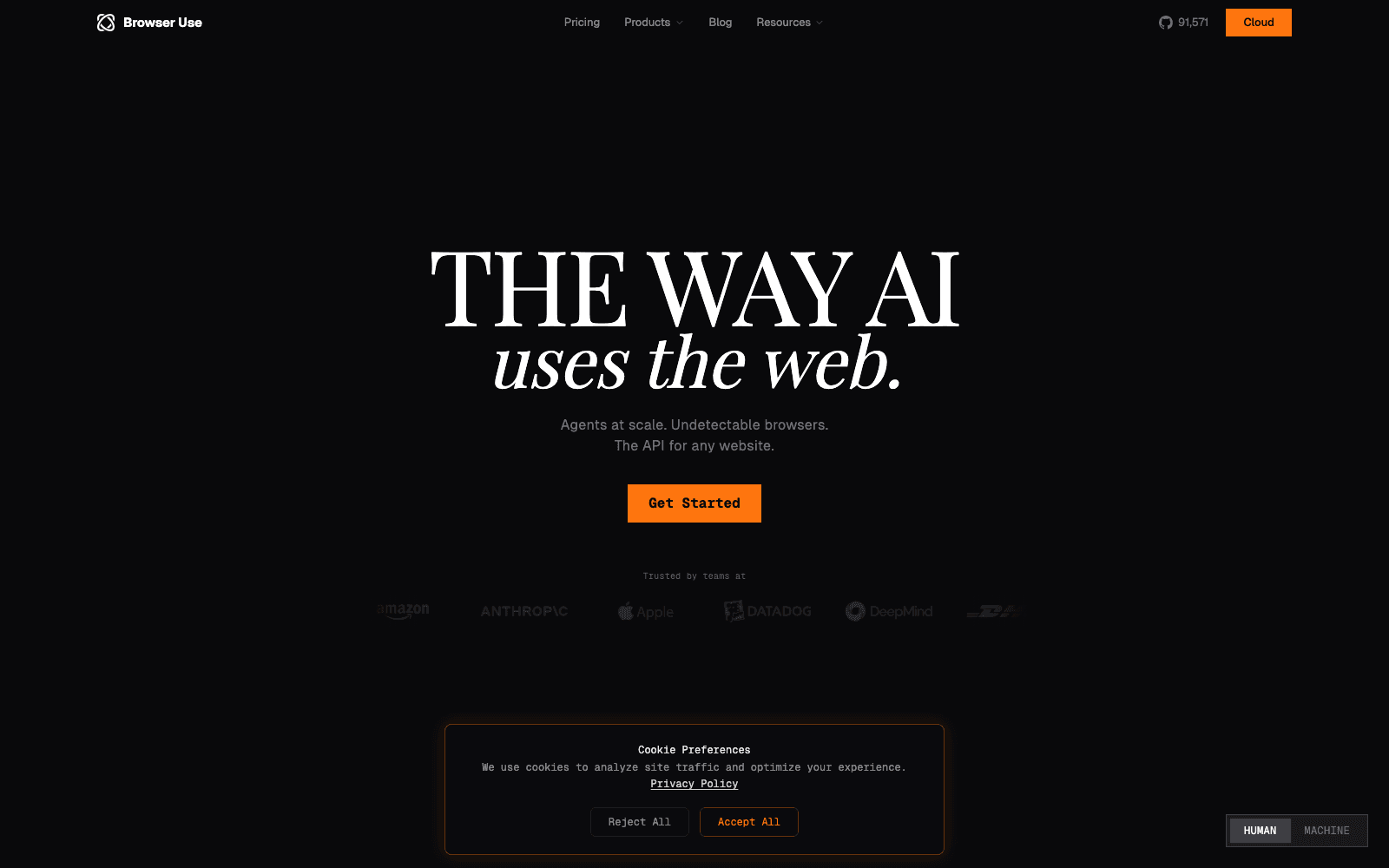
Most popular open-source framework for AI browser agents — 89% on WebVoyager benchmark, the OSS that backs many production browser-using AI products.
Overview
Browser Use: Open-Source AI Browser Agents
Browser Use is the most-used open-source framework for building AI browser agents — Python-first, MIT-licensed, with a 89.1% success rate on the WebVoyager benchmark (586 diverse web tasks). The optimized ChatBrowserUse() model completes tasks 3-5x faster than baseline alternatives with state-of-the-art accuracy.
Frequently described as "the OSS that backs OpenAI's Operator" because both rely on the underlying browser-using AI pattern — Browser Use is the one developers can self-host, fork, and embed in their own products.
Key Features
- 89% accuracy on WebVoyager benchmark (industry-leading for OSS)
- Python framework with simple async API
- Multi-tab handling, session management, captcha-aware
- BYO LLM — works with Claude, GPT, Gemini, local models via Ollama
- MIT license — free to fork, self-host, embed
Ideal Use Case
Developers building browser-using agents that need to be self-hosted, embedded in products, or run on private LLMs. Particularly strong for teams who don't want to be locked into OpenAI Operator's pricing or availability and want full control over the agent loop.
Why Use Browser Use
OpenAI Operator is great UX but closed and US-only. Browser Use is the open-source path: same browser-control pattern, BYO model, run anywhere. For developers building browser agents into their own products, Browser Use is the default starting point.
FAQ
What is Browser Use and what can it do? Browser Use is an open-source framework that enables AI agents to interact with web browsers autonomously. It powers many production AI products and is designed for developers building browser-automation capabilities into their applications.
Who should use Browser Use? Browser Use is built for developers and teams creating AI agents that need to navigate websites, perform tasks, and gather information automatically. It's particularly suited for those who want a production-ready, open-source solution rather than proprietary alternatives.
How much does Browser Use cost? Browser Use operates on a freemium model with both free and paid tiers available. Visit the Browser Use pricing page for current plans and to determine which tier fits your needs.
How does Browser Use compare to other AI agent frameworks? Browser Use stands out as the most popular open-source option in this space, achieving 89% on the WebVoyager benchmark. Unlike proprietary solutions like Grok or hosted platforms like fal.ai and Vercel AI SDK, Browser Use offers open-source flexibility while maintaining production-grade reliability.
tl;dr
Open-source AI browser agent framework. 89% WebVoyager, MIT license, Python. The OSS path to browser-using AI.
Related
Looking for more options? Browse the AI Infrastructure directory or read our best AI infrastructure tools listicle. Browser Use is also tracked on Crunchbase.
Why Use Browser Use
Editorial Review
Our take on Browser Use.

Widely-adopted open-source framework for AI browser automation; solid benchmark performance and real production use, but framework maturity and edge-case handling deserve scrutiny.
What works
- 89% WebVoyager benchmark; ships in production systems
- Open-source with reasonable community adoption and ratings
- Freemium model; low friction to experiment
What doesn't
- Browser automation always brittle on non-standard sites
- Production reliability depends heavily on your specific workflows
Browser Use is the go-to open-source option for building AI agents that can interact with web interfaces. It's backed by real production deployments and hits 89% on WebVoyager, which is a legitimate signal that it handles a meaningful slice of web tasks competently.
The catch is what you'd expect from any browser automation framework: real websites are messy, and the gap between benchmark performance and production reliability tends to widen once you're hitting edge cases—unusual JavaScript patterns, heavy client-side rendering, sites that actively resist automation. You'll want to stress-test against your actual use cases before betting the farm. The framework appears well-maintained, but like most OSS infrastructure projects, documentation and error messages can be hit-or-miss when things go sideways.
User Reviews
Similar Tools