Best AI Infrastructure & MLOps Tools (2026)









Best AI Infrastructure and MLOps Tools in 2026
If you're researching the best AI infrastructure tools in 2026, the right framing is the MLOps and ML platform stack — the layer beneath the AI application code that handles training compute, experiment tracking, model deployment, and the data labeling that feeds the whole pipeline. This is distinct from the AI development frameworks (LangChain, LlamaIndex — see Best AI Development Frameworks (2026)) that sit on top of the infrastructure.
This guide covers the eight AI infrastructure and MLOps tools that real ML teams use in 2026: Databricks, Weights & Biases, Hugging Face, Anyscale, Modal, Replicate, Scale AI, and MLflow. Each is rated on which layer of the stack it owns, the production credibility behind the pitch, and which type of ML team it fits.
How We Evaluated These Tools
The eight AI infrastructure tools below were evaluated on five criteria, in priority order:
- Real production deployments at named ML teams — verified usage by ML teams running models in production at scale
- Layer fit — does the tool own a clear layer (ML platform, experiment tracking, model hub, compute, deployment, data labeling, lineage) rather than being a generalist
- Pricing and access — published pricing across solo, team, and enterprise tiers; available open-source variant where applicable
- 2026 currency — has the platform shipped meaningful capability in the last 12 months that supports the modern ML stack (LLMs, generative AI, agentic systems)
- Ecosystem maturity — community size, integration depth, third-party tooling, and the breadth of supported frameworks
We deliberately did not include AI application frameworks (LangChain, LlamaIndex, Haystack) — those are the layer above infrastructure, covered separately in Best AI Development Frameworks (2026). Vector databases (Pinecone, Weaviate, Chroma) are also a distinct layer with their own dedicated guide.
The Seven Layers of the 2026 ML Infrastructure Stack
- Unified data + ML platform: Databricks (the most-deployed unified lakehouse + ML platform).
- Experiment tracking: Weights & Biases (commercial leader), MLflow (open-source standard).
- Model hub + open-source ecosystem: Hugging Face (the canonical reference).
- Distributed compute: Anyscale (managed Ray), Modal (serverless ML).
- Model deployment + serving: Replicate (managed inference), Anyscale + Modal (custom).
- Data labeling + RLHF: Scale AI (the enterprise standard).
- Vector search and storage: Pinecone, Weaviate, Chroma — see Best AI Tools for Data Visualization & Analytics for vector-DB-adjacent topics.
Quick Comparison
| Tool | Best for |
|---|---|
| Databricks | Unified lakehouse + ML platform. Best for enterprises standardizing on one data + ML stack. |
| Weights & Biases | Experiment tracking + ML observability. Best for teams running serious ML training workflows. |
| Hugging Face | Model hub + open-source ML ecosystem. Best for any team using open-source models. |
| Anyscale | Managed Ray for distributed ML. Best for teams scaling Python ML to multi-node clusters. |
| Modal | Serverless ML compute. Best for ML teams who want GPU compute without managing infrastructure. |
| Replicate | Managed inference for open-source models. Best for app developers deploying models without an ML team. |
| Scale AI | Enterprise data labeling and RLHF. Best for teams training custom models that need labeled data. |
| MLflow | Open-source experiment tracking and model registry. Best for teams self-hosting ML observability. |
Unified Platform
1. Databricks — Unified Lakehouse + ML Platform
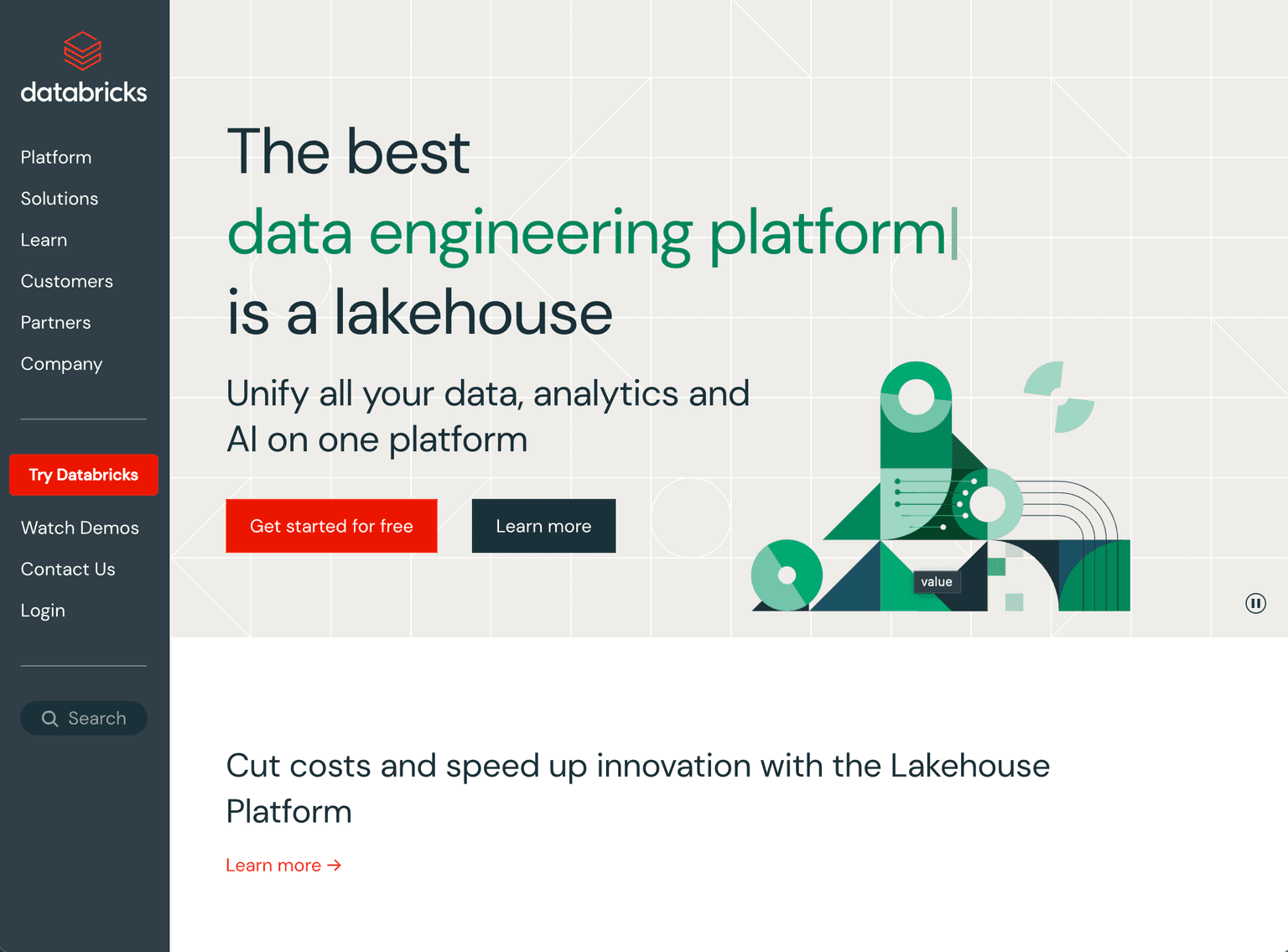
Databricks is the most-deployed unified data and ML platform in 2026 — combining the lakehouse architecture (data engineering on Delta Lake) with ML/AI capabilities (MLflow integration, model serving, AI/BI Genie, Mosaic ML for foundation-model fine-tuning) on the same platform. For enterprises that want one stack across data + ML + analytics, Databricks is the canonical answer.
Production credibility: $62B+ valuation entering 2026; deployed at 50% of the Fortune 500 per company disclosures; the Mosaic ML acquisition gave it foundation-model training capabilities; Anthropic and other foundation labs use Databricks-adjacent tooling internally for parts of their training pipeline.
What it wins at: enterprises standardizing on one data + ML platform, ML teams that need data engineering at scale alongside the model training, and the unified-governance pitch most enterprise IT teams need.
Where it falls down: for ML teams not on Databricks who are doing custom ML work, the platform commitment is significant. For lighter-weight ML compute, Modal or Anyscale fit better. Pricing complexity is real; budget time for procurement.
Experiment Tracking + Observability
2. Weights & Biases — Experiment Tracking and ML Observability
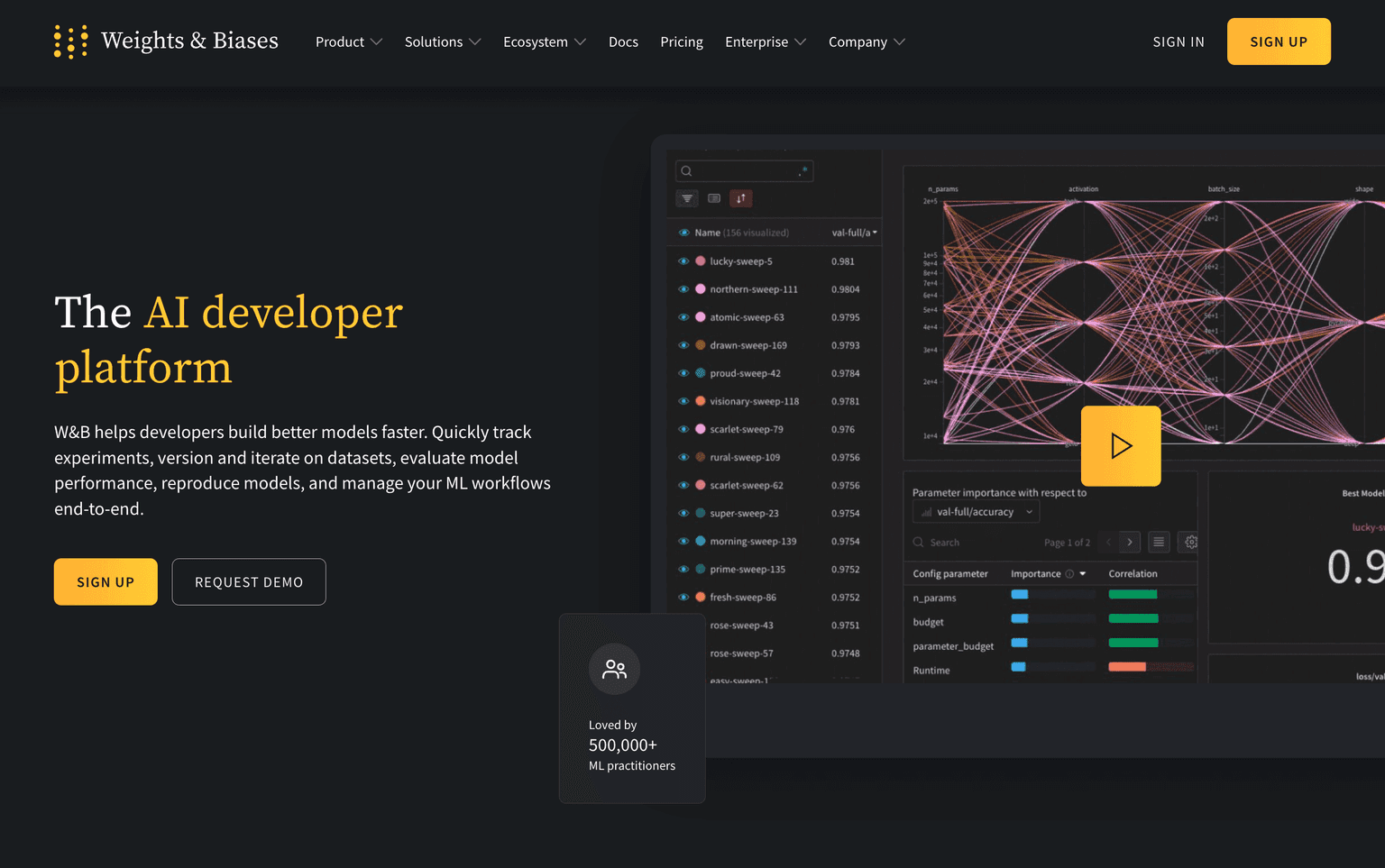
Weights & Biases is the commercial leader for ML experiment tracking and observability — log metrics, hyperparameters, model artifacts, and visualizations from every training run, then compare runs across projects, teams, and organizations. The 2024 acquisition by CoreWeave for $1.7B confirmed the platform's central role in the modern ML stack.
Production credibility: acquired by CoreWeave for $1.7B in 2024; deployed at OpenAI, Google DeepMind, Meta AI, Microsoft Research, NVIDIA, and most major ML research orgs and ML-led enterprises; reported >1M ML practitioners using the platform across academia and industry.
What it wins at: ML teams running serious training workflows where reproducibility, comparison across runs, and team collaboration matter; ML observability for production model performance; and the integration depth across PyTorch, TensorFlow, Hugging Face, and the broader ecosystem.
Where it falls down: for teams that prefer self-hosting open-source observability, MLflow fits better. W&B is the commercial leader; MLflow is the open-source baseline.
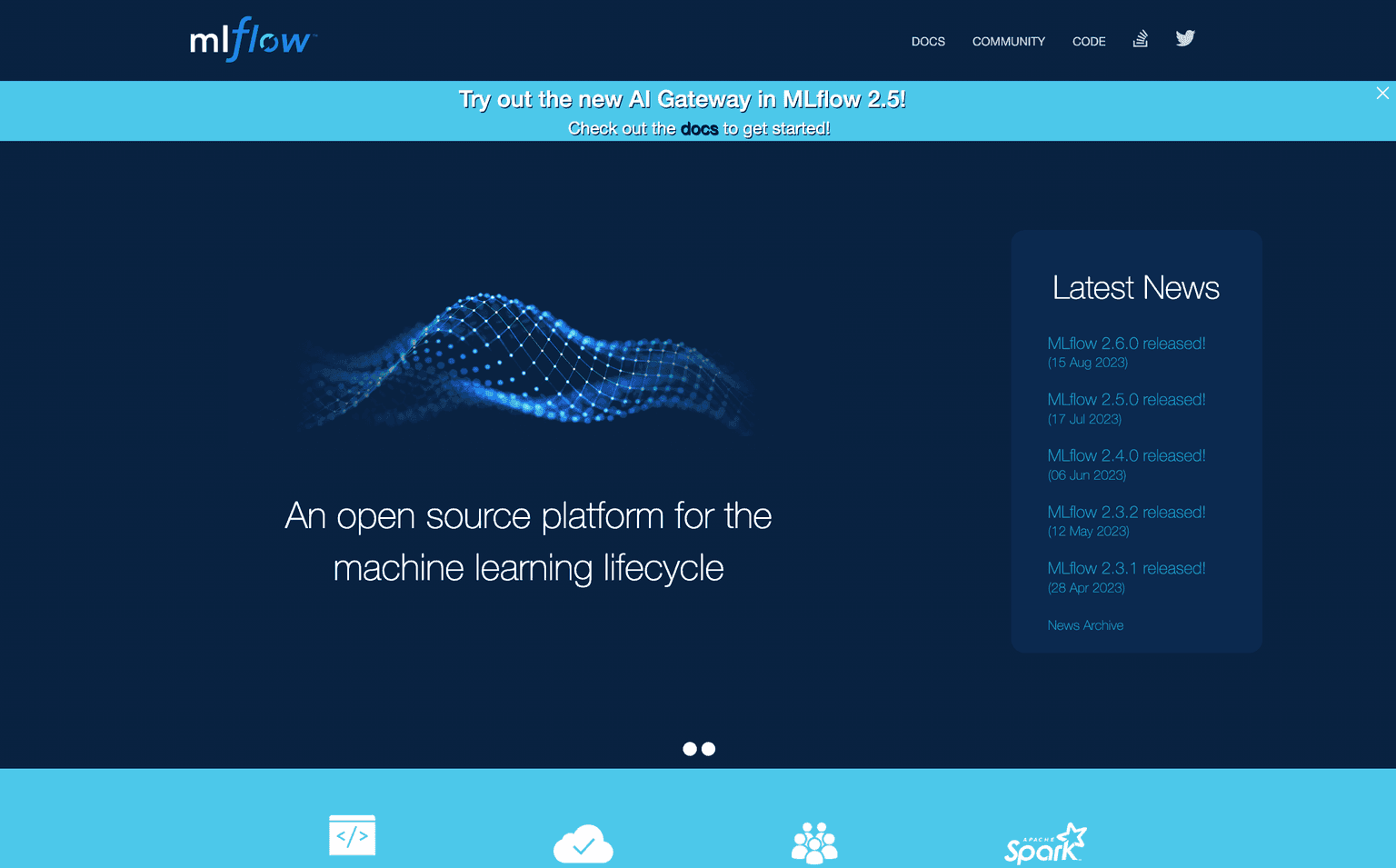
3. MLflow — Open-Source Experiment Tracking
MLflow is the open-source standard for ML experiment tracking, model registry, and ML lifecycle management. Originally developed at Databricks and then donated to the Linux Foundation, MLflow is the default choice for teams self-hosting ML observability without a commercial vendor.
Production credibility: Linux Foundation project; reported >2M monthly downloads on PyPI by 2024; deployed across enterprise ML teams as the open-source standard; tight integration with Databricks (where it originated) plus broad ecosystem support across SageMaker, Vertex AI, and other ML platforms.
What it wins at: teams self-hosting ML observability (no commercial vendor lock-in), Databricks customers leveraging the native integration, and the lowest-cost-to-deploy option for solo and small ML teams.
Where it falls down: UX and team-collaboration features trail W&B. For research-grade and enterprise-grade ML observability, W&B is meaningfully more polished.
Model Hub + Open-Source Ecosystem
4. Hugging Face — The Open-Source Model Hub
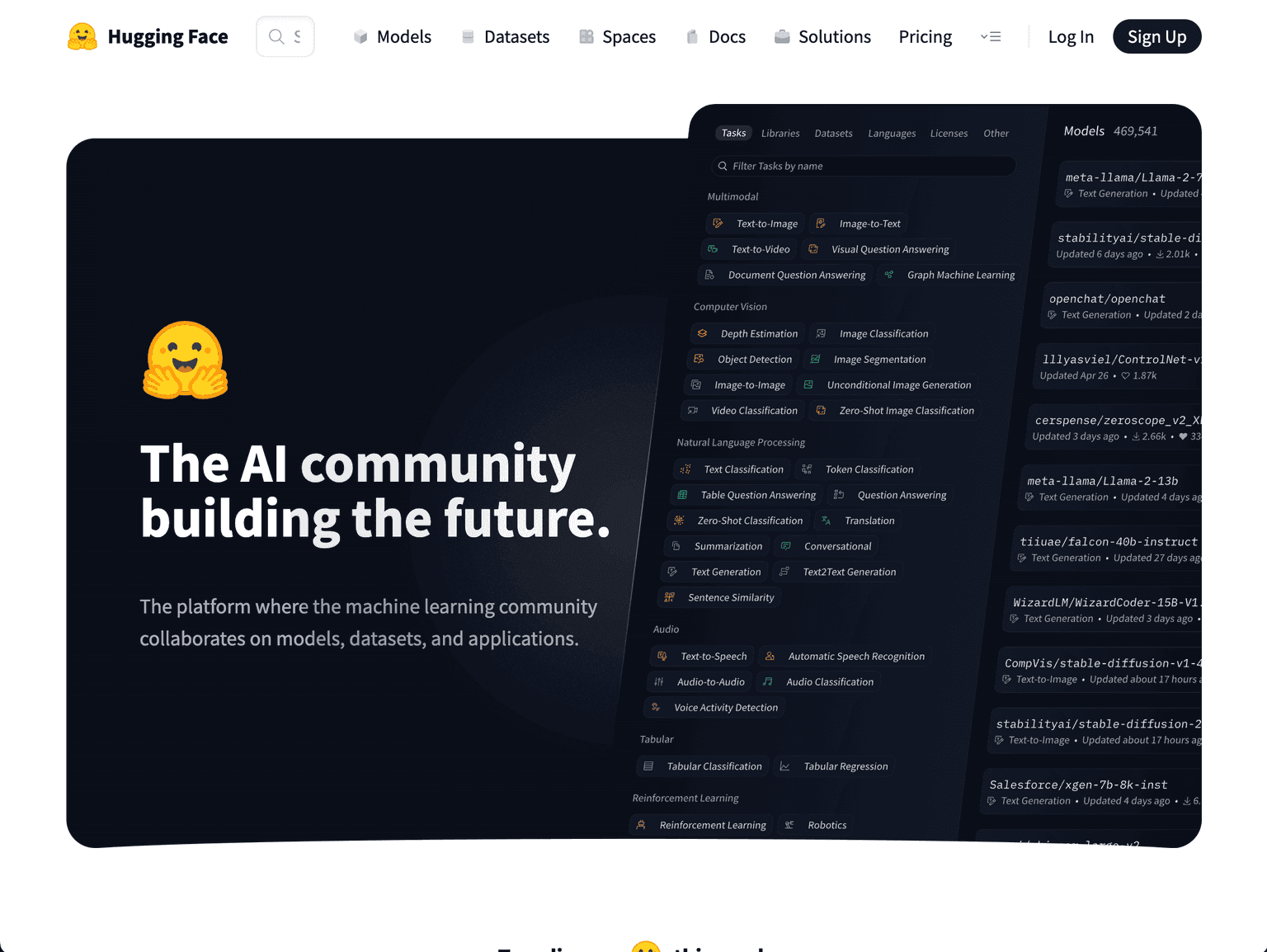
Hugging Face is the canonical reference for open-source ML models, datasets, and the surrounding ecosystem. The Hub hosts >1M models and >300K datasets; the transformers library is the default Python interface for loading and using foundation models; the ecosystem (Datasets, Tokenizers, Accelerate, PEFT, TRL, AutoTrain) covers the full open-source ML training lifecycle.
Production credibility: raised $235M+ Series D at a $4.5B valuation (2023); reported >5M users on the Hub by 2026; deployed across the entire open-source ML ecosystem as the default library and model distribution channel; partnerships with Meta, Google, Microsoft, AWS for the major open-weight model releases.
What it wins at: any team using open-source models, the model-hub use case for finding pre-trained models, and the Python ML ecosystem where transformers + Datasets is the standard interface.
Where it falls down: for closed-lab models (GPT, Claude, Gemini), Hugging Face isn't the access path — direct API or AWS Bedrock / Vertex AI fits. Hugging Face's value prop is open-source ML specifically.
Distributed Compute
5. Anyscale — Managed Ray for Distributed ML
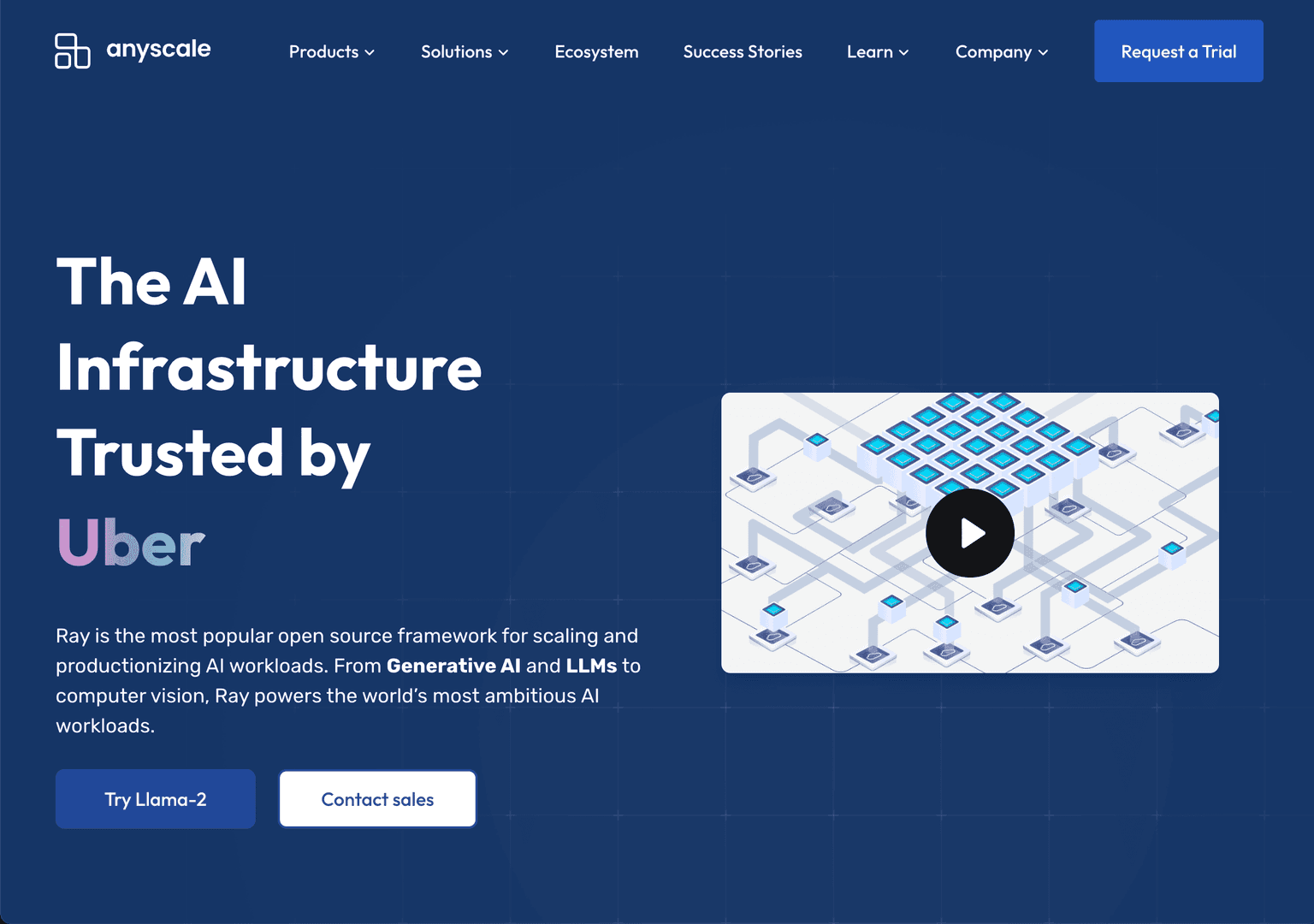
Anyscale is the managed-Ray platform for distributed Python ML — scale Python ML workloads from a laptop to multi-node GPU clusters without rewriting the code in Spark or Kubernetes. For ML teams that already think in Python and want distributed compute that respects the Python programming model, Anyscale is the canonical pick.
Production credibility: raised $200M+ across rounds at a $1.1B+ valuation (2022); Ray is the open-source distributed-Python framework underneath, deployed at OpenAI, Uber, Spotify, Shopify, and many ML-heavy organizations; Anyscale provides the managed-cloud variant of Ray with enterprise compliance.
What it wins at: ML teams scaling Python workloads to distributed compute, the Ray-based foundation for distributed RL and LLM training, and the Python-native programming model that Spark / Kubernetes don't match.
Where it falls down: for ML teams already on Spark or Kubernetes-native ML platforms, the migration cost is real. Anyscale is the right pick when distributed Python is the constraint.
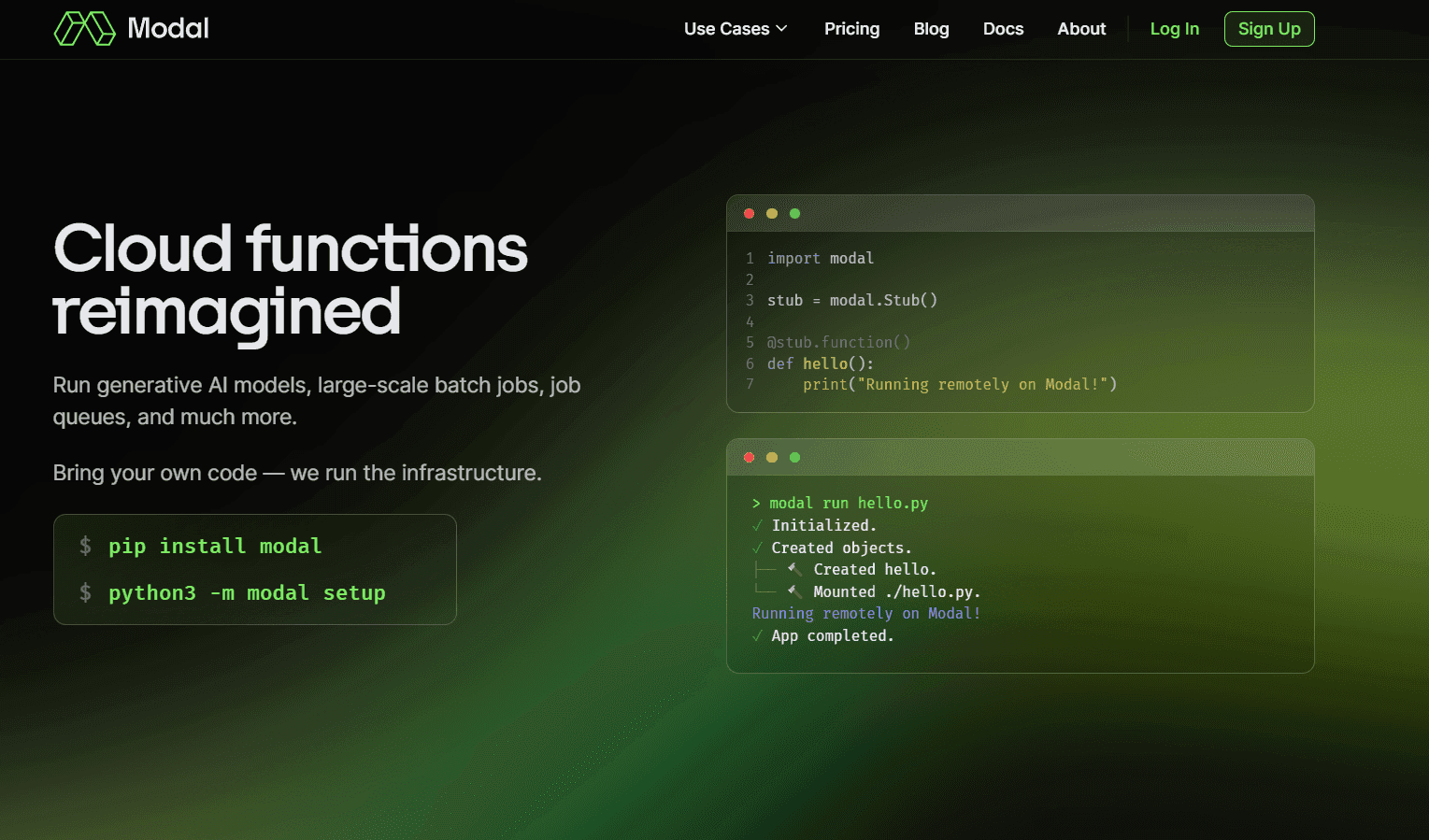
6. Modal — Serverless ML Compute
Modal is the serverless ML compute platform that lets developers run Python functions on GPU compute without managing Kubernetes, autoscaling, or container orchestration. For ML teams who want GPU compute on-demand without infrastructure ownership, Modal is the cleanest serverless option.
Production credibility: raised $80M+ Series B at a $1.1B valuation (2024) led by Lux Capital and Redpoint; deployed across ML-led startups and ML teams at established companies for inference workloads, batch processing, and prototype-stage model deployment; the Python-first developer experience is consistently the most-cited differentiator.
What it wins at: ML teams who want serverless GPU compute, batch ML processing without infrastructure management, and the Python developer experience that traditional Kubernetes-based ML platforms don't match.
Where it falls down: for sustained 24/7 high-throughput inference at scale, dedicated GPU clusters (own EC2 instances, Anyscale, custom Kubernetes) become more cost-effective. Modal is the right pick for variable-load serverless workloads specifically.
Model Deployment + Serving
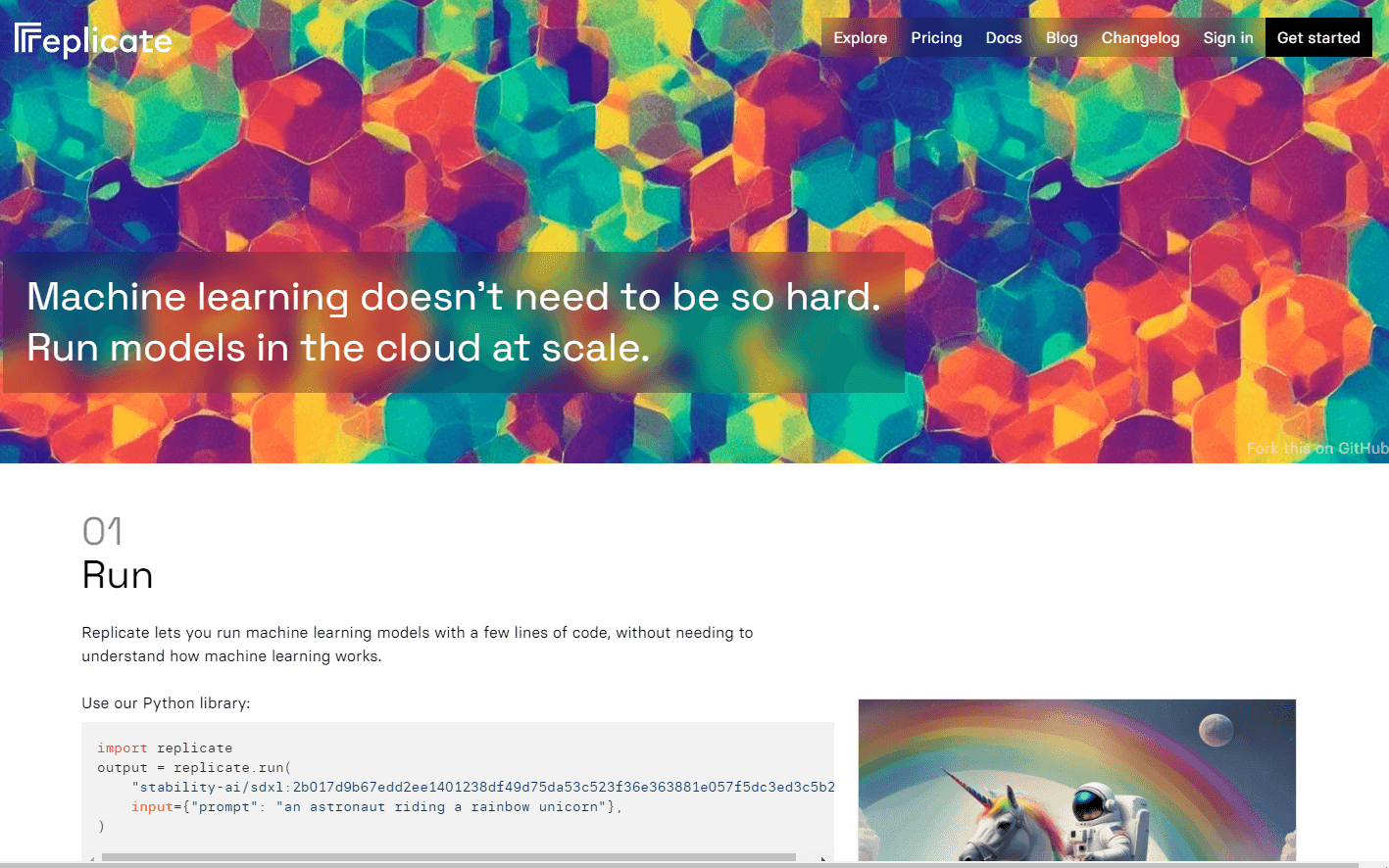
7. Replicate — Managed Inference for Open-Source Models
Replicate is the managed-inference platform that hosts thousands of open-source ML models behind a simple API — call any model with a single HTTP request, pay per second of compute. For application developers who want to integrate ML capabilities (image generation, transcription, custom models) without ML ops, Replicate is the lowest-friction path.
Production credibility: raised $40M+ Series B at a $350M+ valuation (2023); deployed across thousands of AI-application teams; hosts models from Black Forest Labs (FLUX), Stability AI (Stable Diffusion), Meta (Llama), and the long tail of community-maintained models; the per-second pricing model is the differentiator vs subscription-based alternatives.
What it wins at: application developers who want ML capabilities without ML ops, prototyping ML applications before committing to dedicated inference infrastructure, and the long-tail open-source models that don't have first-party APIs.
Where it falls down: for high-throughput production inference, dedicated infrastructure (Modal, Anyscale, custom Kubernetes) is more cost-effective. Replicate is the prototyping-and-low-volume option specifically.
Data Labeling + RLHF
8. Scale AI — Enterprise Data Labeling and RLHF
Scale AI is the enterprise data labeling and RLHF (reinforcement learning from human feedback) platform that powers most of the closed-lab foundation-model training pipelines. For enterprises training custom models that need high-quality labeled data, Scale AI is the canonical vendor.
Production credibility: raised $1B+ at a $13.8B valuation (2024) led by Accel, Index Ventures, with significant US government contracts (Defense Department, intelligence community); deployed across foundation-model labs (OpenAI, Microsoft AI, Cohere) and enterprise ML teams; Scale's Data Engine is the canonical reference for enterprise-grade labeling.
What it wins at: enterprise data labeling at scale, RLHF for foundation-model fine-tuning, and the use case where labeled data quality is a significant cost driver vs DIY labeling.
Where it falls down: for SMB ML teams or research projects where the labeling budget is small, alternatives (Labelbox, SuperAnnotate, in-house teams with open-source tooling) are more cost-effective. Scale AI is the enterprise tier specifically.
How to Build the 2026 ML Infrastructure Stack
Match the stack to the team's actual ML maturity:
- Solo ML developer or research team: Hugging Face + MLflow + Modal. Open-source models + open-source observability + serverless compute. ~$50–500/month based on compute usage.
- Mid-market ML team (5–20 ML engineers): Hugging Face + Weights & Biases + Anyscale + Replicate. ~$2,000–10,000/month based on team size and compute.
- Enterprise ML org (20+ ML engineers): Databricks (or alternative platform) + W&B + Anyscale + Scale AI for labeling. Custom-priced enterprise contracts in the mid-six-to-low-seven figures annually.
- AI-application developers (no dedicated ML team): Replicate + ChatGPT/Claude API + maybe Modal for custom logic. ~$100–2,000/month based on volume.
- Foundation-model training: Scale AI + Anyscale + W&B + custom GPU clusters. Multi-million-dollar annual budgets at scale.
The most-recommended 2026 starting stack for a new ML team: Hugging Face + MLflow + Modal. Three open-source-friendly tools, low fixed cost, scales to mid-market before requiring upgrades. Add W&B when team collaboration matters; add Databricks when the data engineering side becomes the constraint.
Adjacent Reading
- Best AI Development Frameworks (2026) — the application-framework layer (LangChain, LlamaIndex)
- Best LLMs (2026) — the foundation-model layer
- Top 7 AI Coding Assistants for Engineering Teams — the developer-tooling layer
- Best AI Tools for Data Visualization & Analytics — analytics + vector-database adjacent
- Must-Have Free AI Tools for Developers — broader free dev-tools ecosystem
Frequently Asked Questions
What's the best AI infrastructure tool for a new ML team in 2026? Depends on the team. For research and SMB ML: Hugging Face + MLflow + Modal — open-source-friendly stack with low fixed cost. For enterprise ML: Databricks as the unified platform. For application developers without dedicated ML ops: Replicate or direct API access (ChatGPT, Claude) is sufficient before investing in custom infrastructure.
What's the difference between MLOps and AI infrastructure? MLOps is the practice of deploying and managing ML models in production (observability, deployment, monitoring, retraining). AI infrastructure is the broader stack underneath (compute, storage, data labeling, model hubs, experiment tracking) that supports MLOps. The eight tools above span both — MLflow and W&B are MLOps; Databricks and Anyscale are infrastructure; Hugging Face is the model hub layer.
Should I use open-source or commercial MLOps tooling? Depends on the team. Open-source (MLflow, Ray, Hugging Face transformers) is the right starting point for solo and small ML teams — low cost, no vendor lock-in, large communities. Commercial tools (W&B, Databricks, Anyscale) become worthwhile at the team scale where collaboration features, enterprise compliance, and managed-service savings exceed the seat cost. Most mature enterprise ML teams use a mix.
Is foundation-model training accessible to non-foundation-lab teams in 2026? Increasingly, yes — Mosaic ML (now Databricks), Together AI, and Anyscale all make custom model training accessible to teams with $50K–$1M training budgets, vs the $100M+ required for foundation-model training from scratch. Most enterprise ML teams in 2026 fine-tune existing open-weight models (Llama 4, DeepSeek, Mistral) rather than train from scratch.
Are these AI infrastructure tools safe for sensitive data? The enterprise tiers of Databricks, W&B, Hugging Face, Anyscale, and Modal all carry SOC 2 Type II compliance, signed DPAs, and data-residency options. For regulated workloads (healthcare, financial services, defense), use the enterprise tier with the appropriate compliance certifications. Self-hosted open-source (MLflow, Ray, Hugging Face transformers) is the strictest privacy posture at the cost of operational complexity.
What's the typical cost for a 2026 ML infrastructure stack? Solo developer: $50–500/month (open-source + serverless compute). Mid-market team: $2,000–10,000/month. Enterprise: low-to-mid seven figures annually for full Databricks + W&B + Anyscale + Scale AI deployment. The compute spend dominates; the platform seat costs are typically <20% of total ML infrastructure budget at scale.
Final Thoughts
The AI infrastructure landscape in 2026 has consolidated around a clear set of category-defining tools across the layers of the modern ML stack — Databricks for unified platform, W&B for experiment tracking, Hugging Face for the open-source ecosystem, Anyscale and Modal for compute, Replicate for managed inference, Scale AI for labeling, MLflow for open-source observability.
For any ML team building in 2026, the highest-ROI move is: start with the open-source-friendly stack (Hugging Face + MLflow + Modal), upgrade to commercial alternatives (W&B, Anyscale, Databricks) when team scale and compliance requirements warrant. The seat costs are a rounding error against ML engineer salaries; the time spent picking the wrong tool early compounds into a multi-quarter migration cost.
Categories these tools span
More collections you may also like

Sign up for our newsletter
Receive weekly updates so you can stay up-to-date with the world of AI
Sign up for our newsletter
Receive weekly updates so you can stay up-to-date with the world of AI
The AI tools directory for discovering, exploring, and comparing the most innovative AI tools in the industry