
OpenRouter
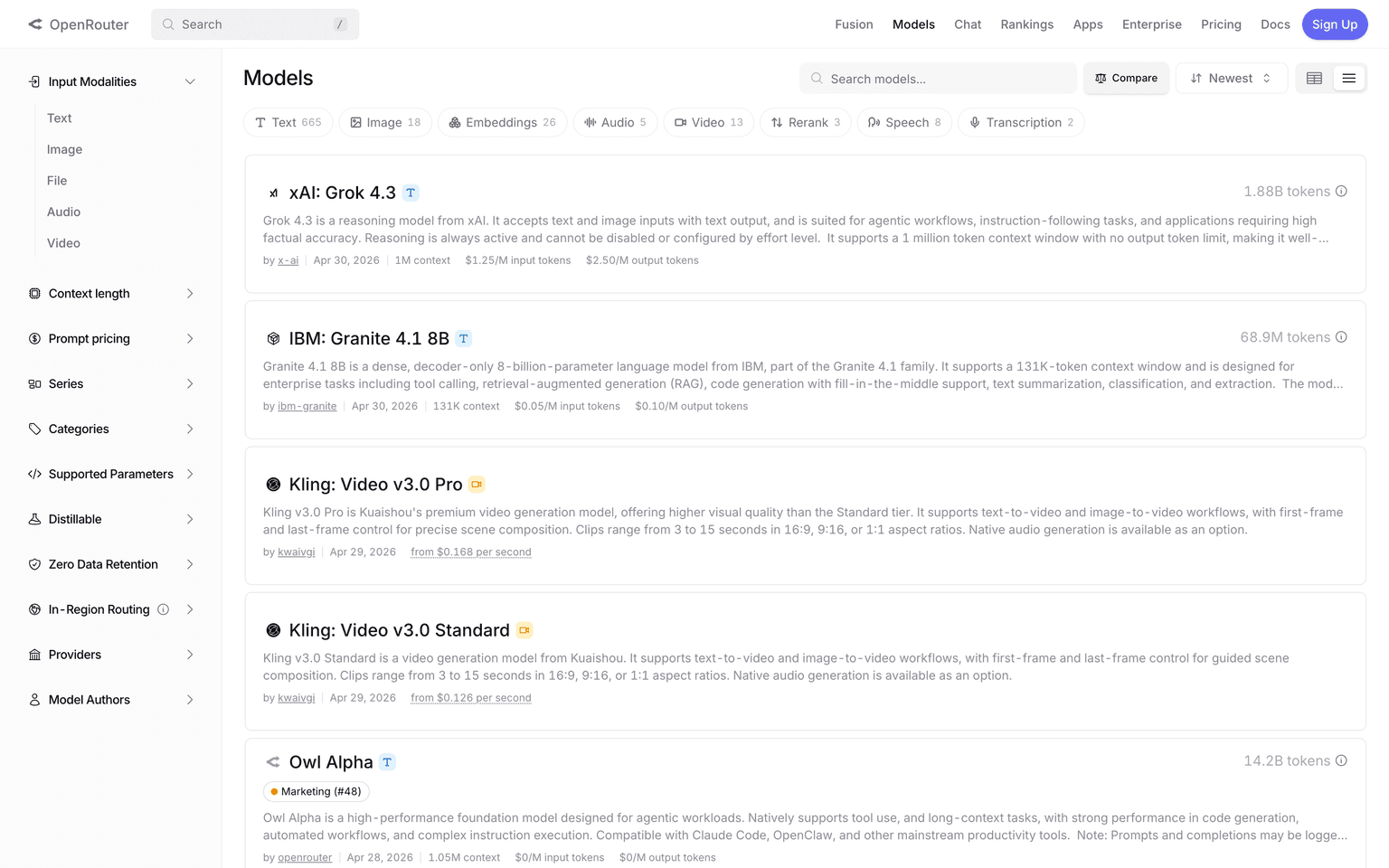
Unified API and marketplace for the best LLMs at the best prices for any prompt.
Acquired OpenRouter
Acquired · August 2026
OpenRouter turned a fragmented model landscape into a single endpoint — one OpenAI-compatible API routing across hundreds of models from more than 80 providers, with transparent per-token pricing, automatic fallbacks, and no lock-in to any single lab. That neutrality made it the default gateway for developers who refused to bet their stack on one provider. On August 19, 2026, Stripe announced an agreement to acquire OpenRouter, reportedly for around $7.5 billion, to fold token routing and cost optimization into its payments platform. The gateway keeps running.
Acquired by Stripe.
Last known pricing: Free credits to start; pay-as-you-go per model at upstream provider rates plus a small OpenRouter fee; team and credit-pool plans available.
Is OpenRouter shut down?
No — OpenRouter is still operating. Its acquisition by Stripe was announced on August 19, 2026, and the product continues to ship. We list it in the ToolDirectory.AI graveyard's acquired-but-operating section and watch for post-acquisition changes.
What to use instead

LiteLLM
Universal LLM proxy — call 100+ LLMs (OpenAI, Anthropic, Bedrock, Vertex) with one API.
Freemium
4.75
325

TOGETHER
Cloud service for developers to build with open-source AI, offering APIs, distributed training systems, and leading open-source models.
Paid - Inquire
4.93
441

Fireworks AI
High-speed, cost-efficient generative AI for product innovation with advanced fine-tuning capabilities.
Paid - Inquire
4.92
420
Overview
OpenRouter: Unified OpenAI-Compatible API for 200+ LLMs From Every Major Provider
OpenRouter is the unified API and marketplace for large language models, giving developers a single OpenAI-compatible endpoint that routes to 200+ models from OpenAI, Anthropic, Google, Meta, Mistral, DeepSeek, and many more. Engineers use OpenRouter to compare prices, fall over between providers, run prompt-level model selection, and avoid lock-in to any single AI lab. With strong pricing transparency, fast onboarding, and an active developer community, OpenRouter has become the default model gateway for many AI startups.
Acquisition note (August 2026): On August 19, 2026, Stripe announced an agreement to acquire OpenRouter, bringing the AI model gateway into its payments platform to help businesses route and optimize token usage across providers. Stripe did not disclose financial terms; Bloomberg had reported the deal at over $7 billion on August 16, and The New York Times put the price at roughly $7.5 billion. OpenRouter continues to operate normally and its API remains available.
Key Features:
- Unified OpenAI-compatible API across 200+ language models
- Pay-as-you-go pricing per model with full provider coverage
- Routing, fallbacks, and model selection per prompt
- Side-by-side model comparison and leaderboards
- Transparent token pricing and provider routing
- Free credits to start and team plans for production
- SDKs and integrations for popular AI frameworks
- Active Discord, GitHub, and developer community
- No lock-in to any single AI lab or provider
Ideal Use Case:
OpenRouter is built for engineers and AI startups who want one API to access every major model and avoid lock-in to a single provider. It is especially valuable for teams that want to compare prices, fall over between providers, or pick models per prompt.
Why Use OpenRouter:
- Use one OpenAI-compatible API for 200+ models
- Compare and route to the best model and price per prompt
- Avoid lock-in to any single AI lab or provider
- Fall over between providers when one has an outage
- Tap into transparent token pricing across the market
- Onboard fast with credits, then scale to team plans
FAQ
Is OpenRouter free? Yes. OpenRouter offers free credits to start. After that, pricing is pay-as-you-go per model based on the upstream provider, plus a small OpenRouter fee.
What models does OpenRouter support? 200+ models from OpenAI, Anthropic, Google, Meta, Mistral, DeepSeek, and many other providers.
Is OpenRouter OpenAI compatible? Yes. OpenRouter exposes an OpenAI-compatible API so existing SDKs and frameworks work out of the box.
Does OpenRouter support routing and fallbacks? Yes. You can pick a primary model and define fallbacks per request.
How is OpenRouter different from going direct? OpenRouter gives you one API, transparent pricing across providers, and model-routing flexibility you would otherwise build yourself.
Who owns OpenRouter? Stripe — the payments company announced an agreement to acquire OpenRouter on August 19, 2026. Stripe did not officially disclose terms, though The New York Times reported a price of roughly $7.5 billion. OpenRouter continues to operate and its API remains available.
tl;dr:
OpenRouter is the unified API and marketplace for the best LLMs at the best prices, with one OpenAI-compatible endpoint that routes to every major provider. For engineers and AI startups, it is the easiest way to avoid model lock-in.
Related
Looking for more options? Browse the Developer Tools directory or read our best AI coding tools listicle. OpenRouter is also tracked on Crunchbase.
Why Use OpenRouter
FAQ
Editorial Review
Our take on OpenRouter.

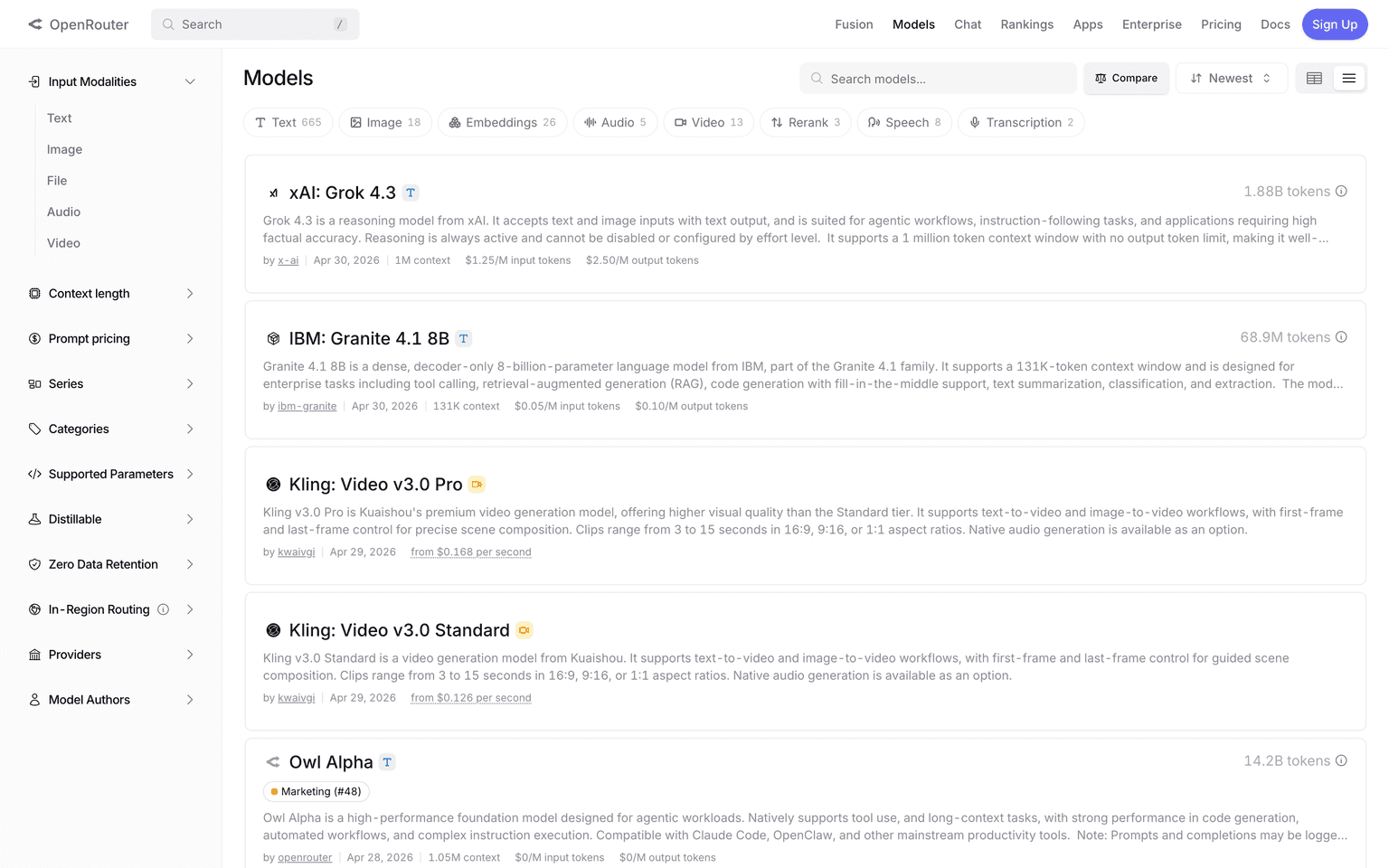
OpenRouter is an LLM gateway that lets you route prompts across 200+ models through a single API, comparing prices and performance without vendor lock-in.
What works
- Single API for 200+ models; easy vendor switching
- Pay-as-you-go; freemium entry point keeps friction low
- Team and credit-pool plans for group coordination
What doesn't
- Adds network latency vs. calling providers directly
- Cost savings modest unless you're heavily multi-model
OpenRouter handles the logistical tedium of working with multiple language models. Instead of managing separate API keys and endpoints for Claude, GPT, Llama, and dozens of others, you get one API that abstracts away the plumbing. You pay the upstream provider's rate plus a small OpenRouter margin, and you can swap models mid-project or A/B test them side by side. The real value isn't speed or features—it's flexibility and cost visibility.
The freemium model (free credits to start, then pay-as-you-go) lowers the friction to experiment. The interface for comparing model pricing and latency is straightforward. You get team and credit-pool management if you're coordinating across a group. As of 2026, the catalog spans frontier models and open-weight options, so you're not limited to the priciest players. The model selection is genuinely useful if you're tired of Anthropic-or-bust or OpenAI-only workflows.
The catch: you're trusting OpenRouter's routing logic and uptime. There's no guarantee it's faster than hitting Claude's API directly—in fact, the extra hop adds latency. If you're optimizing for raw speed or need deep integration with a specific provider's ecosystem, this adds a layer rather than removing one. The pricing transparency is great, but you still need to understand your own usage patterns to optimize.