Best AI Customer Support Tools (2026)








Best AI Customer Support Tools in 2026
If you're researching the best AI customer support tools in 2026, the category has been transformed in the last 18 months. The conversation has moved past chatbots that answer FAQs into AI agents that resolve real tickets end-to-end — including refunds, account changes, technical troubleshooting, and order modifications — without human handoff for the easy 60–80% of contact volume.
This guide covers the eight AI customer support platforms that actually move ticket-deflection metrics in production: Intercom Fin, Decagon, Sierra AI, Ada, Forethought, Cresta AI, Moveworks, and Kore.ai. Each is rated on resolution quality, integration depth, pricing model, and which contact-center shape it fits.
The Three Lanes of AI Customer Support in 2026
Most teams researching AI customer support are solving one of three problems. Mixing them is the most common procurement mistake:
- AI agents that resolve tickets autonomously: the buyer's lane in 2026. End-to-end resolution across chat, email, and (increasingly) voice. Leaders: Intercom Fin, Decagon, Sierra AI, Ada, Forethought.
- Live-agent assistance: AI that listens to the human agent's calls in real time and suggests next-best actions, knowledge-base citations, and coaching. Leader: Cresta AI.
- Internal employee support (IT/HR): an adjacent category where the "customer" is your own employees, not external buyers. Leaders: Moveworks, Kore.ai.
The "AI agent that resolves tickets" lane is where 80% of net-new budget is going in 2026. Live-agent assist and internal employee support are real categories but solve different problems.
Quick Comparison
| Tool | Best for |
|---|---|
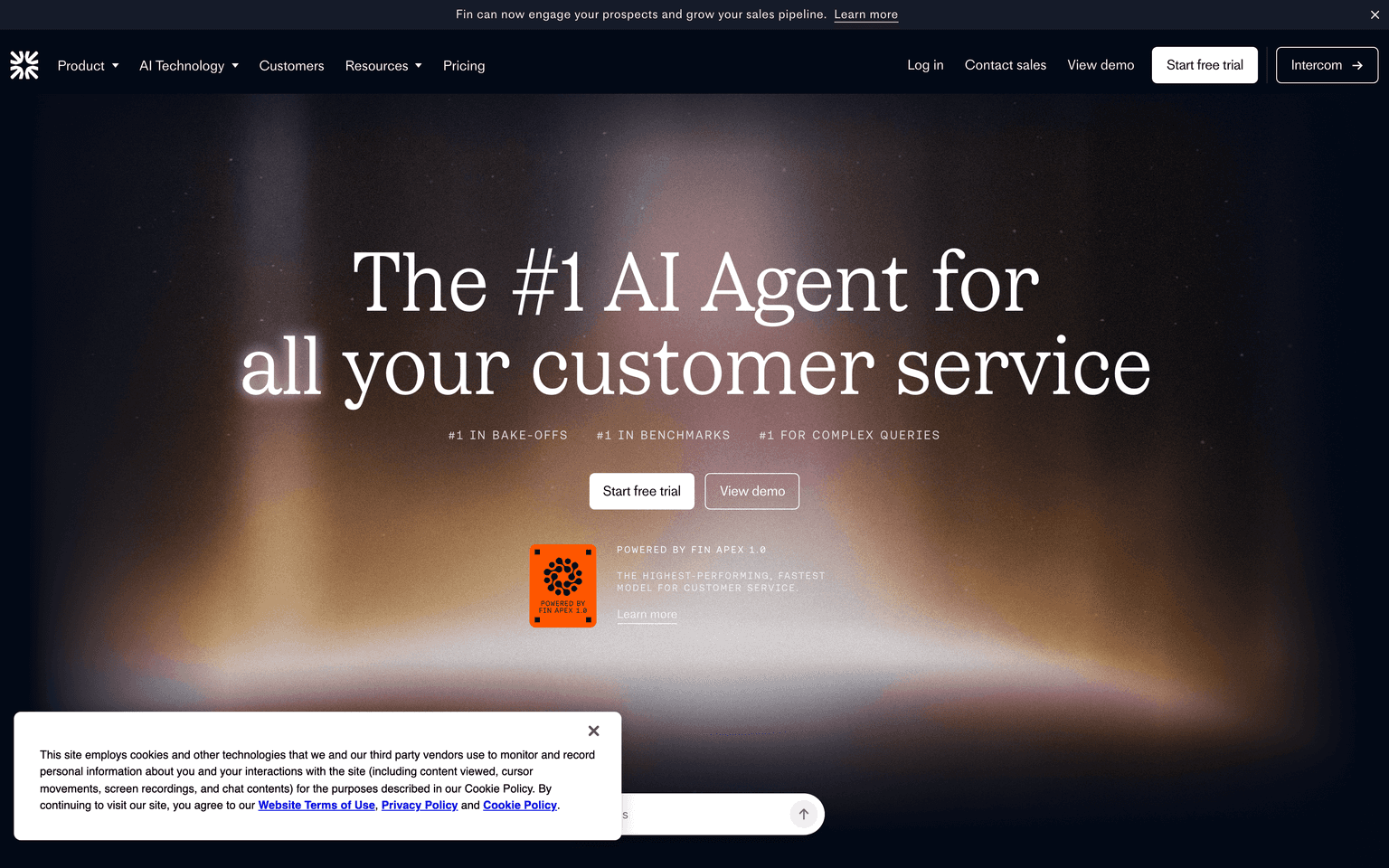
| Intercom Fin | End-to-end AI agent for support. Best for SaaS already on Intercom Messenger. Tops most independent bake-offs on accuracy. |
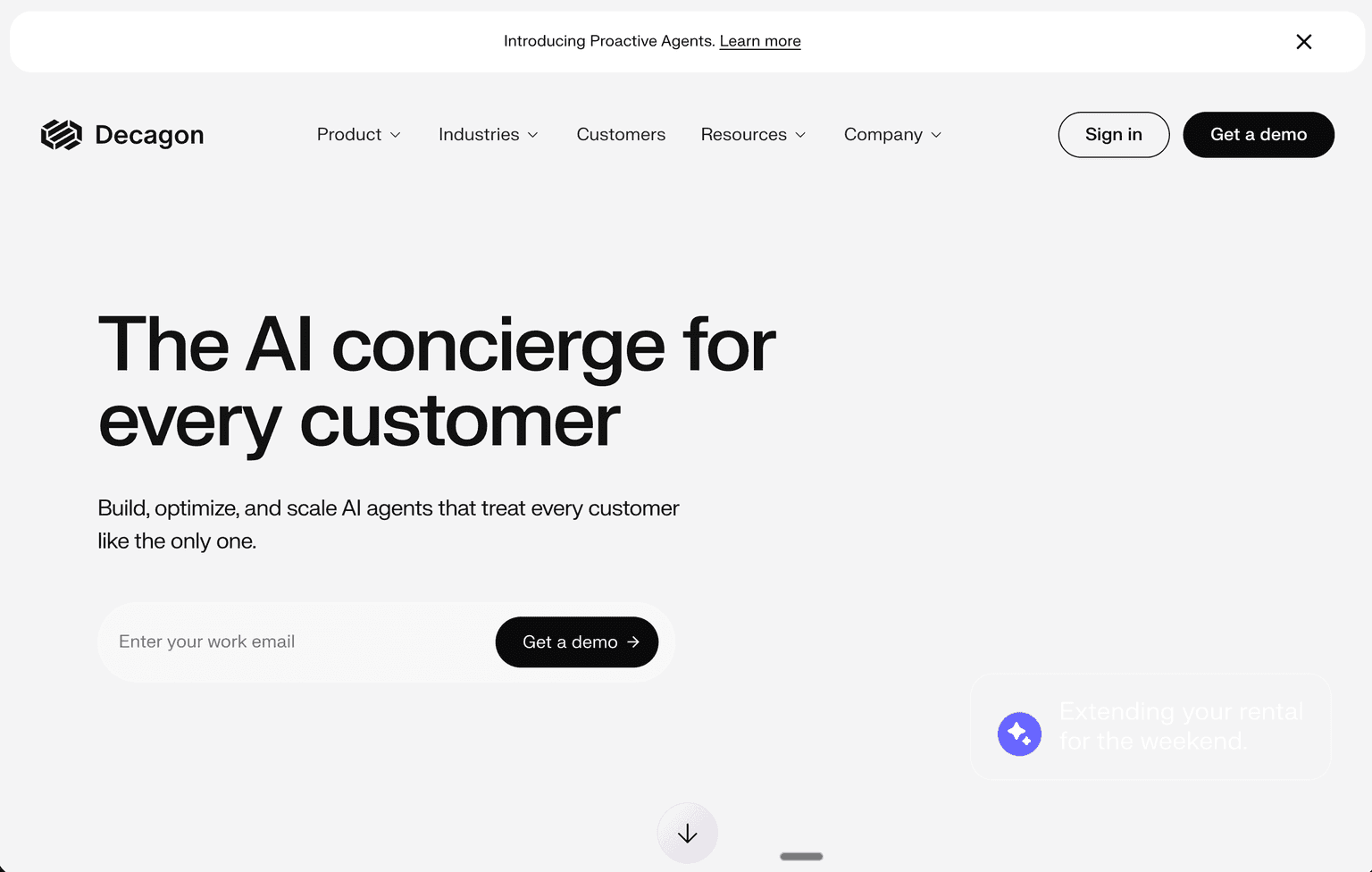
| Decagon | End-to-end AI concierge resolving tickets across chat, email, voice. Best for high-volume B2C support and enterprise procurement. |
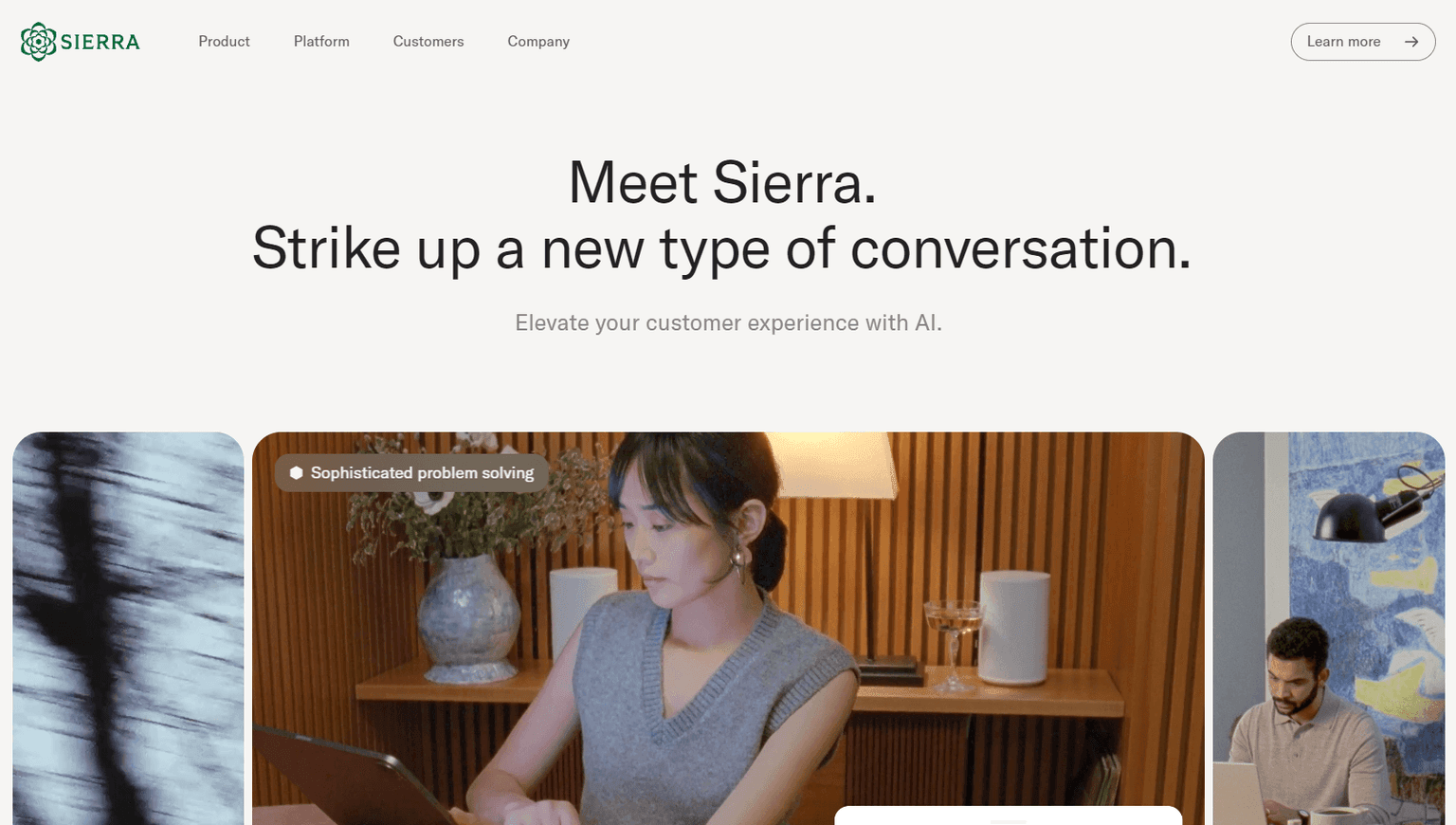
| Sierra AI | Voice-first conversational AI. Best for brands where voice is the primary channel; founded by Bret Taylor (ex-Salesforce co-CEO). |
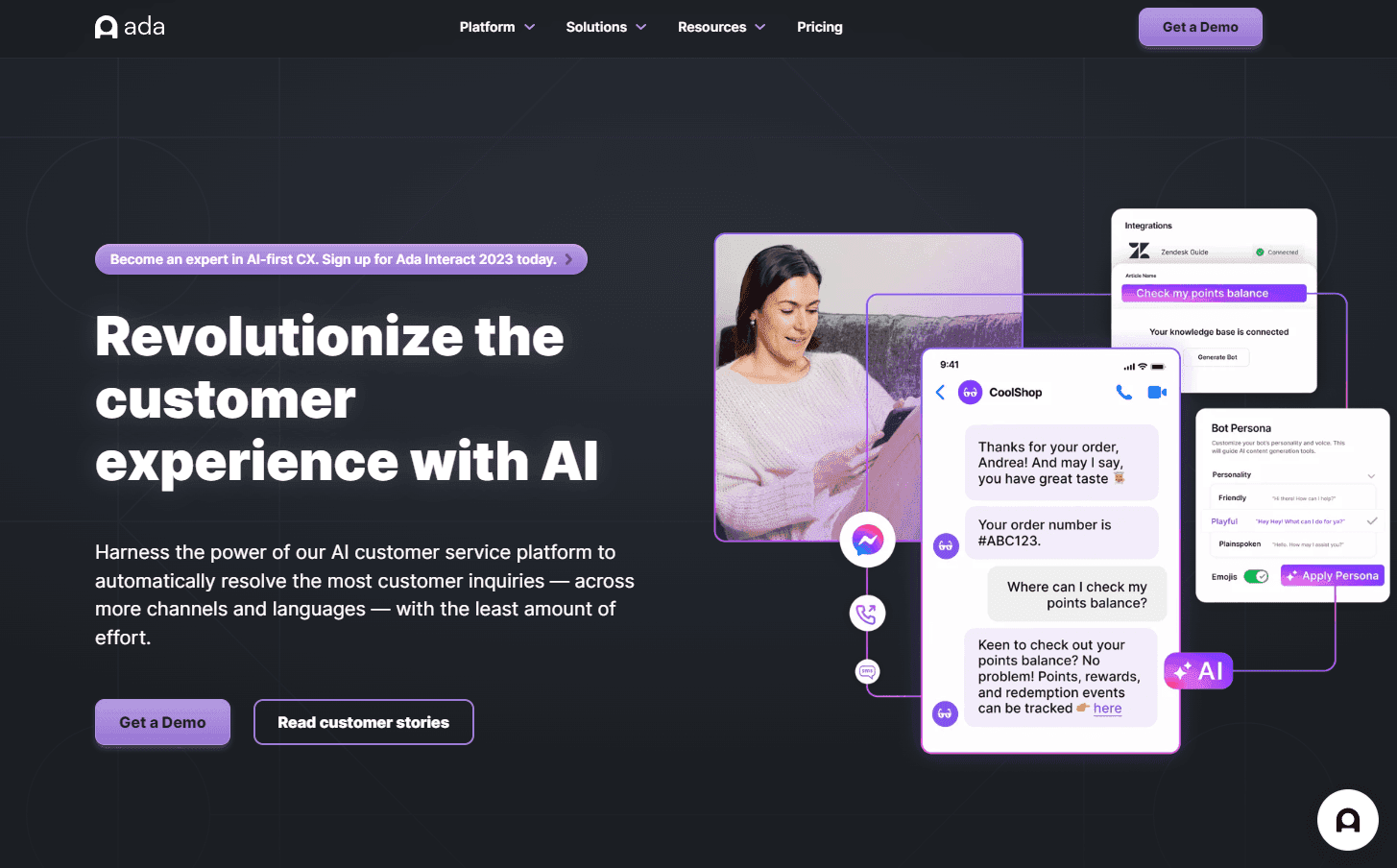
| Ada | Mature no-code AI agent platform. Best for non-engineering CX teams who need to build and tune agents themselves. |
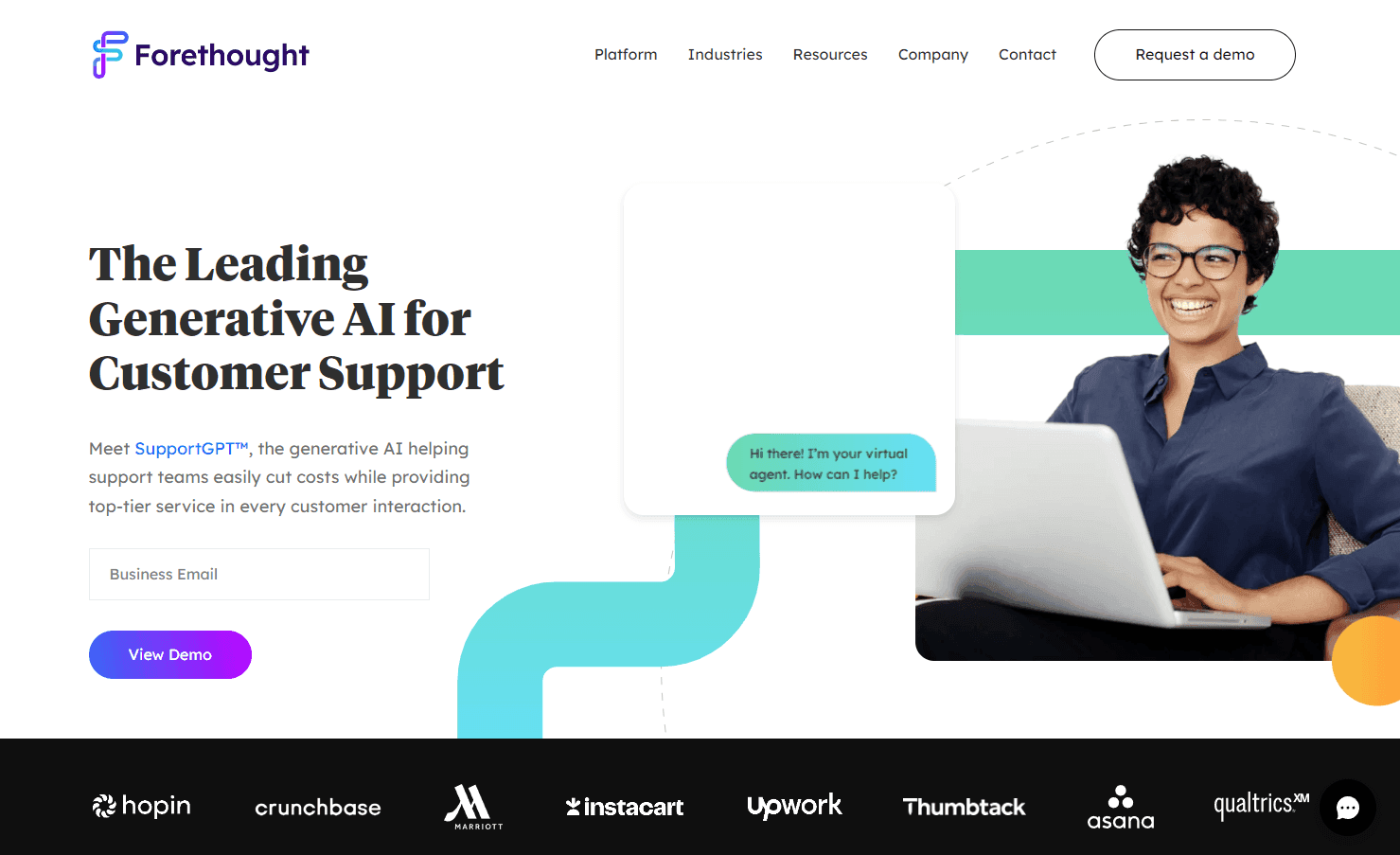
| Forethought | Generative AI for support across industries. Best for teams already on Zendesk or Salesforce Service Cloud. |
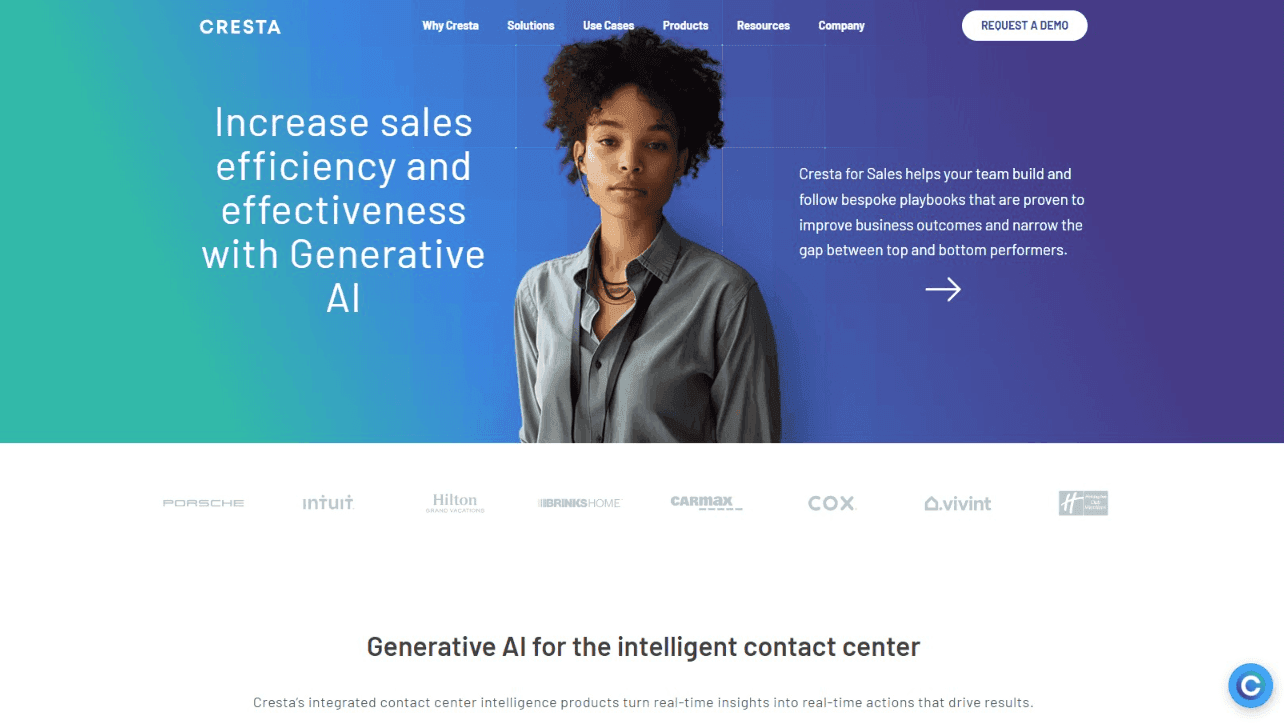
| Cresta AI | Real-time agent assist for contact centers. Best for human-led contact centers wanting AI as a coach, not a replacement. |
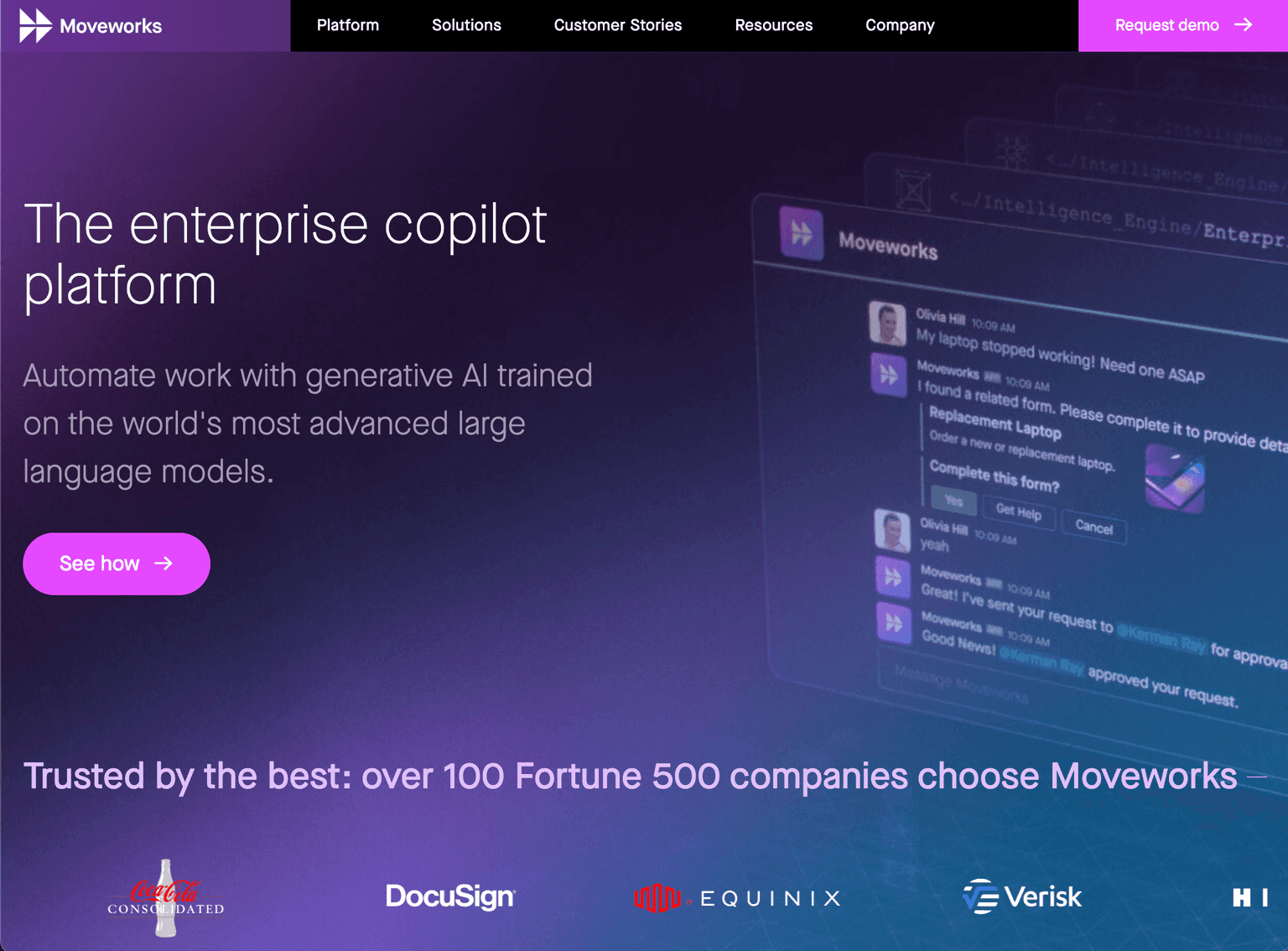
| Moveworks | Enterprise IT/HR copilot. Best for large enterprises automating internal employee support. |
| Kore.ai | Enterprise agentic AI platform. Best for orgs needing one platform across customer-facing, employee-facing, and developer agent use cases. |
AI Agents That Resolve Tickets End-to-End
This is the lane that has matured fastest. The leaders below all measure themselves on autonomous resolution rate (the percentage of tickets fully closed without human escalation) — typically 60–80% on the easy contact mix, lower on complex billing or technical cases. The five tools below compete intensely; differentiation is on integration depth, pricing model, and category specialization.
1. Intercom Fin — The Most-Deployed AI Agent for Support
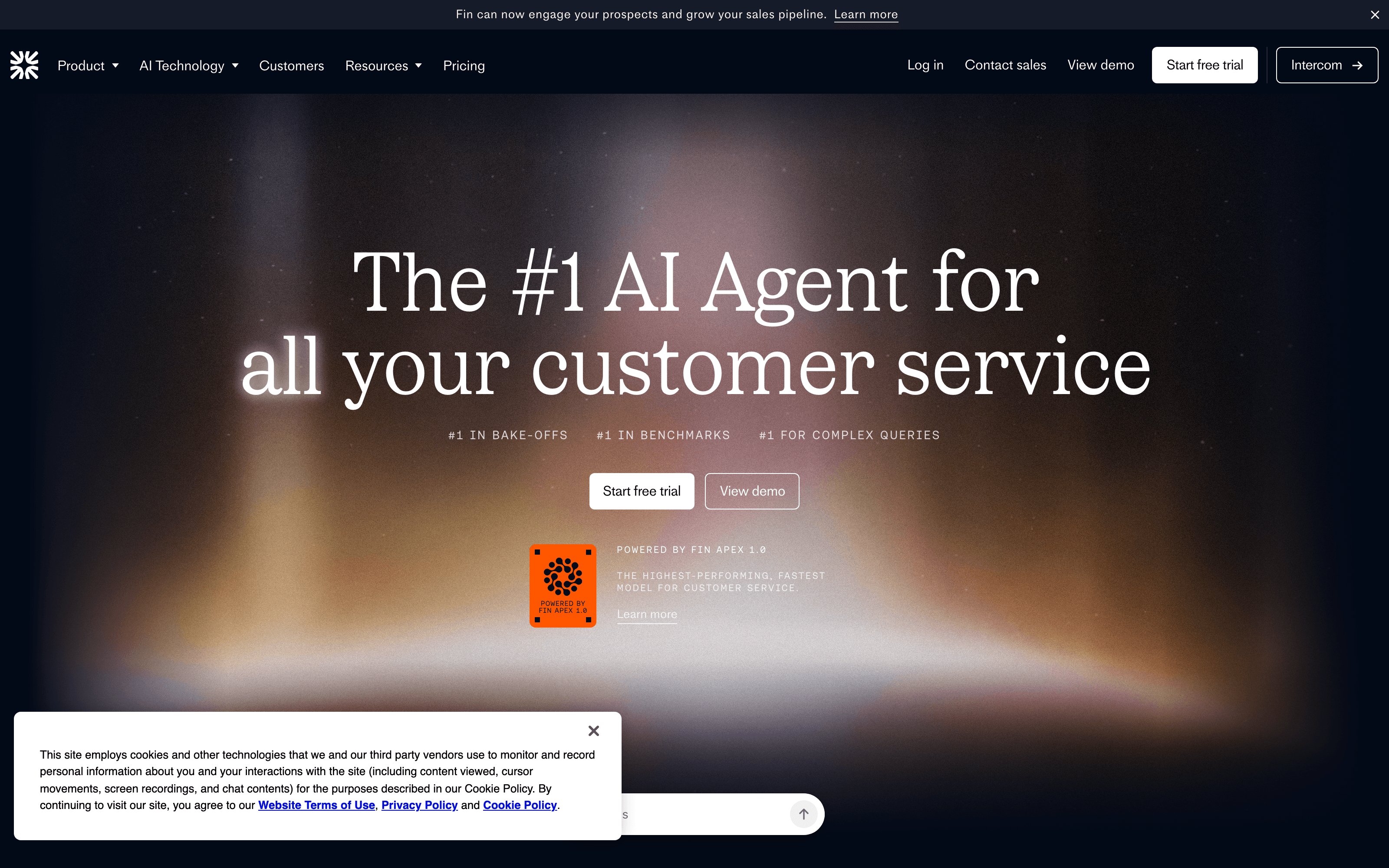
Intercom Fin is the most production-tested AI customer service agent in 2026. It tops most independent agent bake-offs on accuracy and latency, ships on top of Intercom Messenger (the deepest install base on B2B SaaS sites of any platform in this list), and resolves the easy contact mix without setup that takes weeks. The per-resolution pricing model lets cost track value directly — feature when volumes are predictable, budget surprise when they spike.
What it wins at: SaaS already running Intercom for support, fast time-to-first-resolution, and a unified agent that handles support, sales-qualification, and success across the same Messenger.
Where it falls down: opinionated about being part of the broader Intercom platform — if you don't use Intercom Messenger, the procurement story is harder. Per-resolution pricing requires forecasting discipline.
2. Decagon — Enterprise AI Concierge for High-Volume B2C
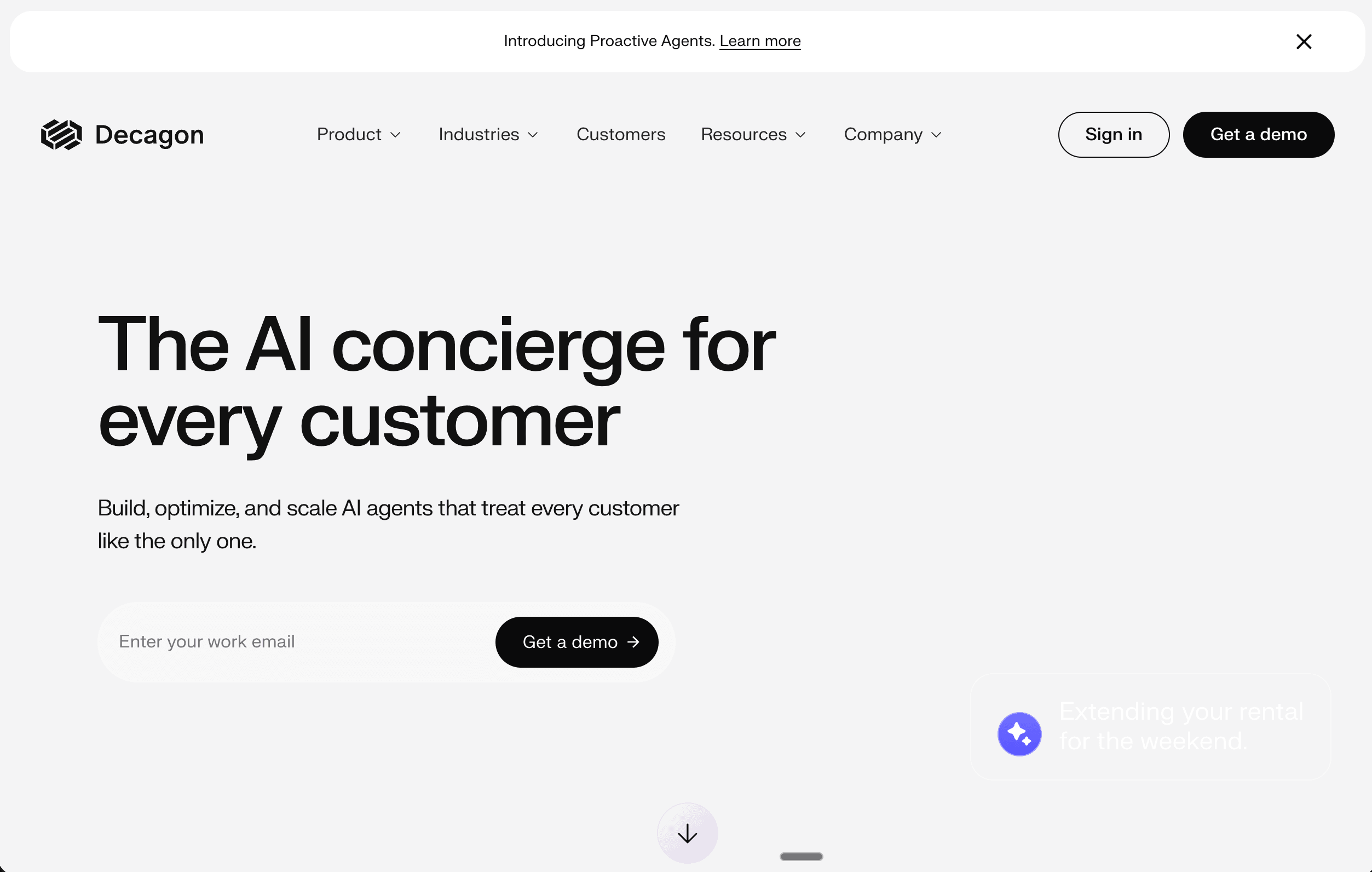
Decagon raised serious capital ($65M Series B in 2024, more since) on the thesis that high-volume B2C and consumer-internet companies need an AI concierge that operates across all channels — chat, email, voice, in-app — with the same agent identity and the same memory of the customer relationship. Production deployments at Klarna, Eventbrite, and others have published headline numbers (Klarna's 2024 announcement that AI handles 2/3 of customer service contacts cited Decagon).
What it wins at: high-volume consumer B2C, brands where the AI's memory of past customer interactions matters, and enterprise procurement where the platform's published case studies do real lifting.
Where it falls down: the price floor reflects enterprise positioning. SMB and mid-market teams typically can't justify the deployment cost; for those, Intercom Fin or Ada serve better.
3. Sierra AI — Voice-First Conversational AI From the Bret Taylor Camp
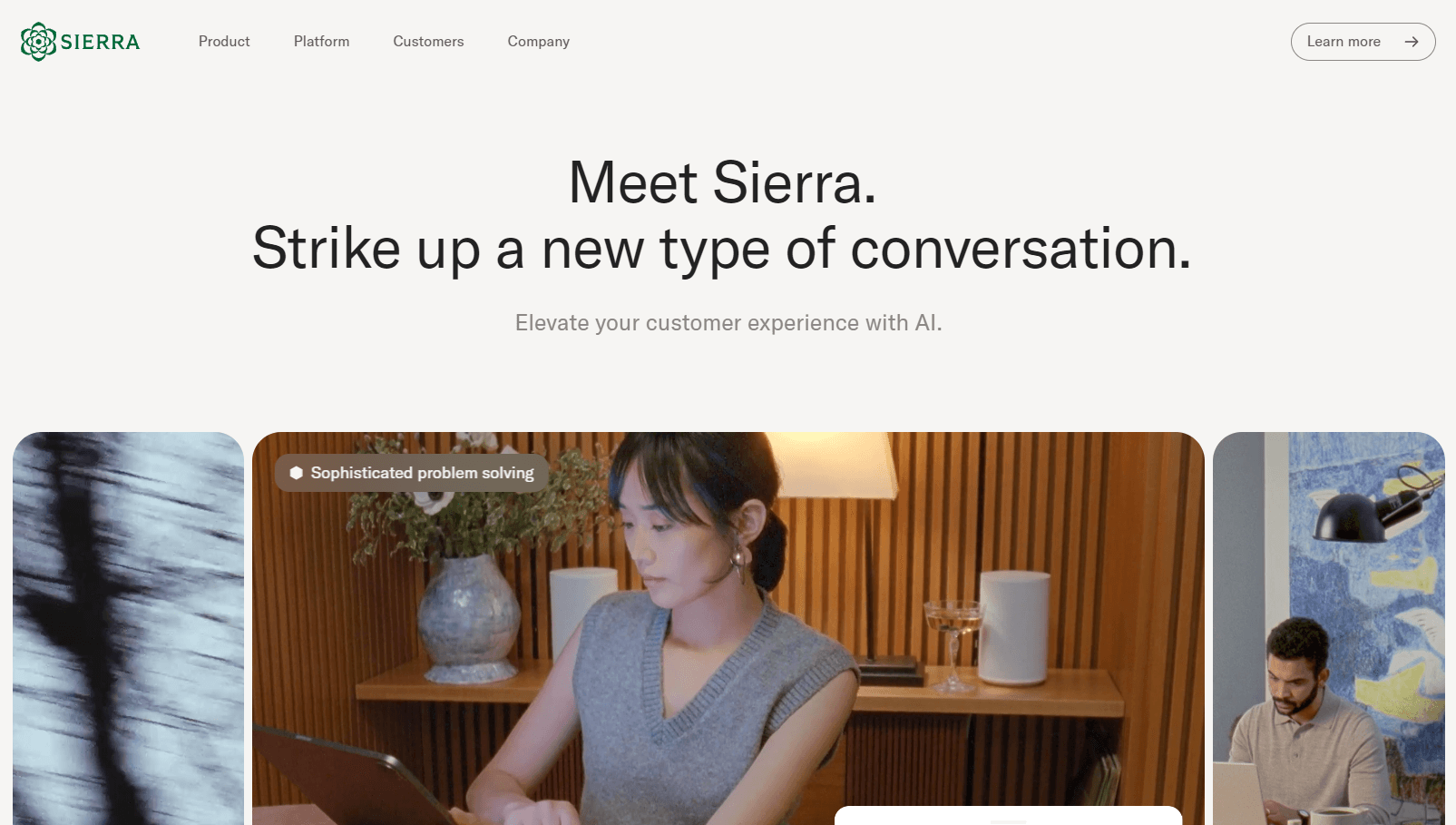
Sierra AI, founded by Bret Taylor (ex-Salesforce co-CEO) and Clay Bavor, took the voice-first approach when most of the category was still text-only. The product is positioned around "branded AI agents" — agents that adopt your company's voice, tone, and brand personality, particularly in voice channels where personality matters most. Customer logo wall is unusually strong for a 2-year-old company (SiriusXM, ADT, others).
What it wins at: brands where voice is the primary support channel (telecom, insurance, home services), brand-personality-sensitive deployments, and the credibility halo of the founders' track record.
Where it falls down: newer than the established platforms (Ada, Intercom). Self-service tooling for tuning the agent is less mature than the leaders. Voice-first focus means text-only deployments may be over-investing.
4. Ada — The Mature No-Code AI Agent Platform
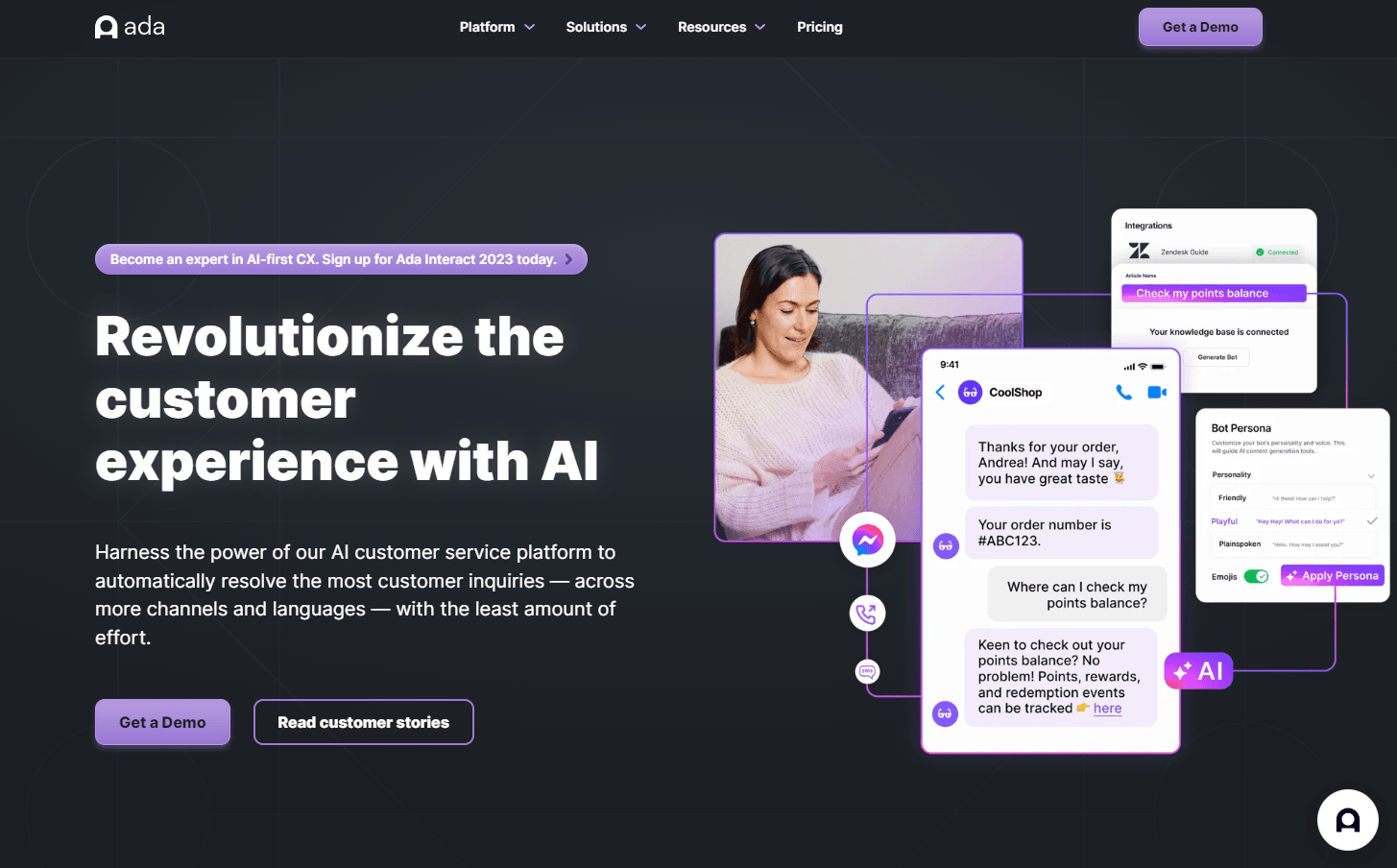
Ada has been in the AI customer service category since well before the LLM wave and rebuilt its product on top of generative AI through 2023–2024. The differentiator is no-code agent design — non-engineering CX teams can build, tune, and iterate on the agent themselves, without depending on engineering for every change. Strong for fast-iterating teams that want to own the agent's behavior.
What it wins at: CX teams wanting self-serve agent design and tuning, regulated industries needing fine-grained control over agent responses, and brands with mature CX operations that already know what they want the agent to do.
Where it falls down: raw resolution-rate metrics in 2025–2026 bake-offs trail Intercom Fin and Decagon by a few percentage points. Pricing reflects the enterprise positioning.
5. Forethought — Generative AI Across Industries
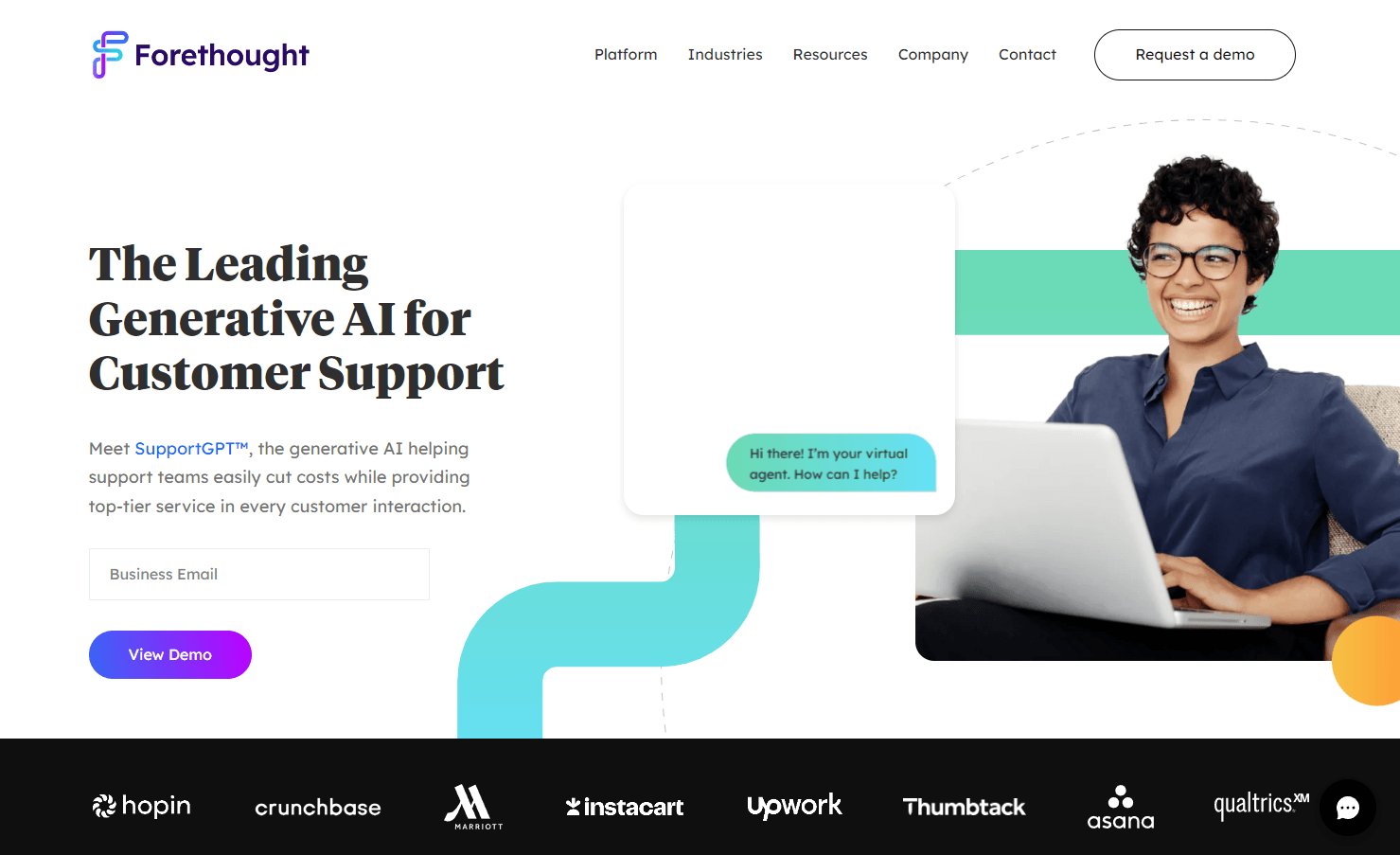
Forethought is the right pick for teams already running Zendesk or Salesforce Service Cloud — Forethought layers generative AI agents and ticket-triage automation on top of those incumbent ticketing systems without requiring a full platform replacement. Solo product (no broader bundle), focused on doing the support-AI lane well.
What it wins at: Zendesk and Salesforce Service Cloud customers wanting to add AI without migrating platforms, ticket-triage automation as the wedge before fuller agent deployment, and a more focused product than the broader competitors.
Where it falls down: less reach than the all-in-one platforms (Intercom Fin, Ada). For teams not on Zendesk or Salesforce, the integration value is reduced.
Real-Time Agent Assist
6. Cresta AI — AI Coaching for Contact Centers
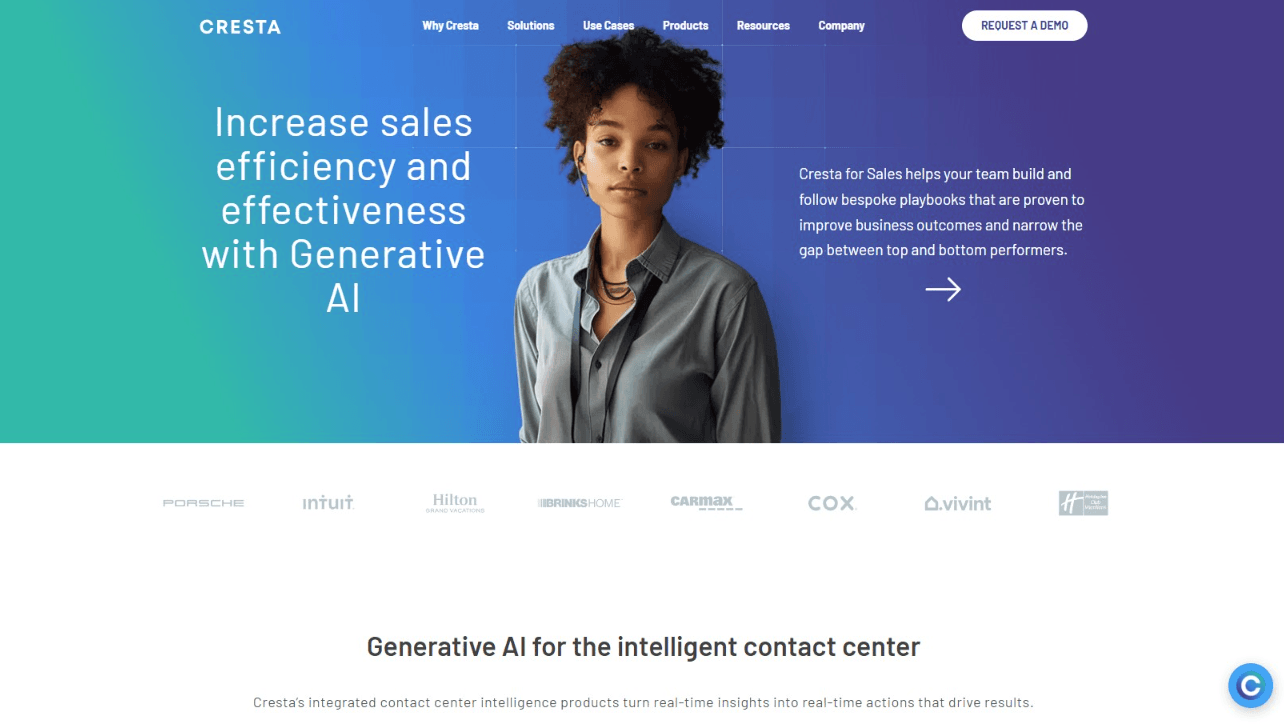
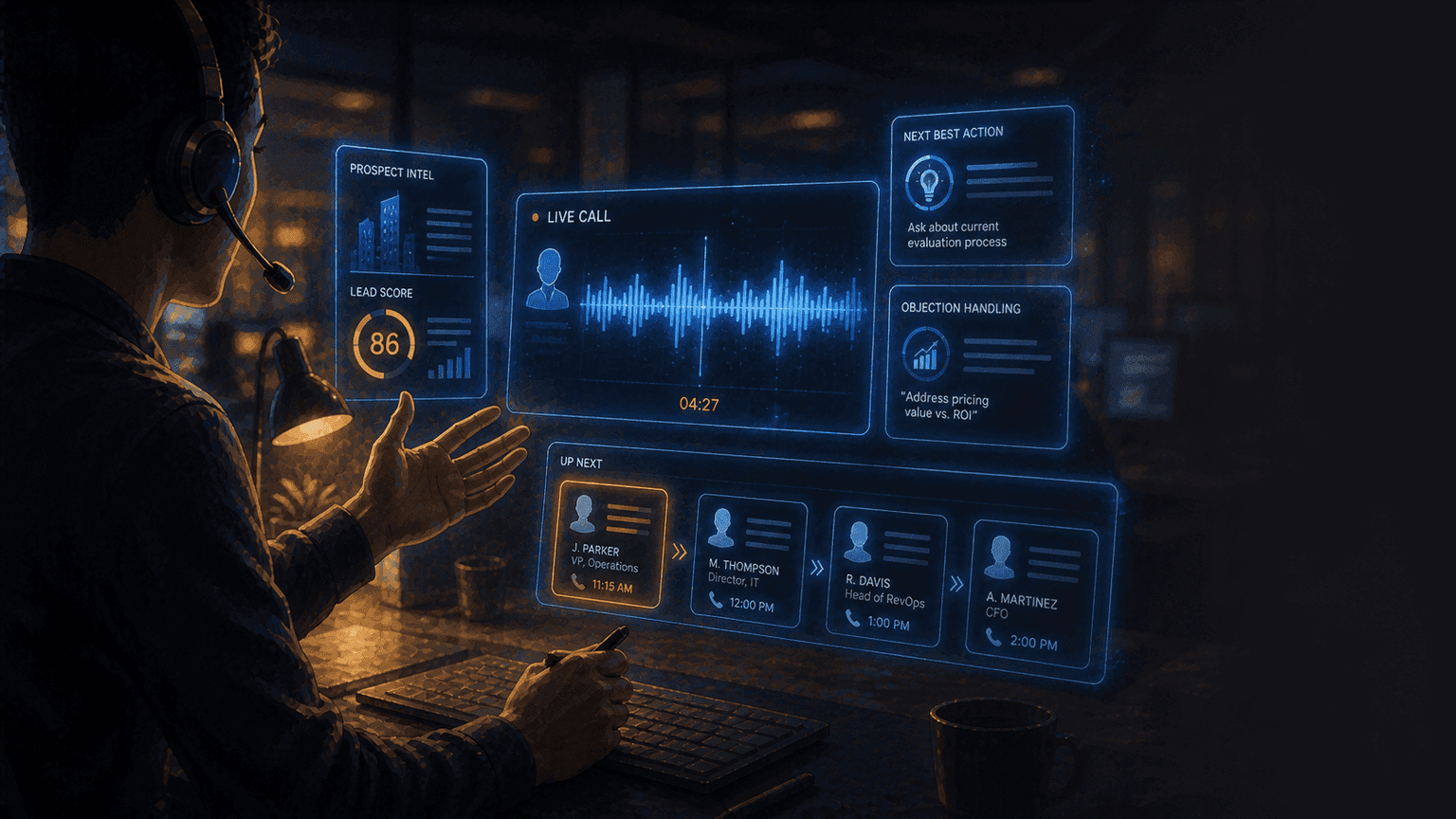
Cresta AI takes a different angle: instead of replacing the human agent, it sits alongside them, listens to live calls, and suggests next-best actions in real time — "the customer just mentioned X, here's the policy, here's the script that closes," delivered as the call is happening. Also handles post-call coaching and quality-management automation.
What it wins at: human-led contact centers where full automation isn't yet right (regulated industries, high-AOV sales, complex products), agent coaching at scale, and quality-management programs that previously required random call sampling.
Where it falls down: different product category from the autonomous-agent platforms — if your goal is ticket deflection, Cresta isn't the tool. Best as a complement to a contact-center workforce, not a replacement.
Internal Employee Support (IT and HR)
7. Moveworks — Enterprise IT/HR Copilot
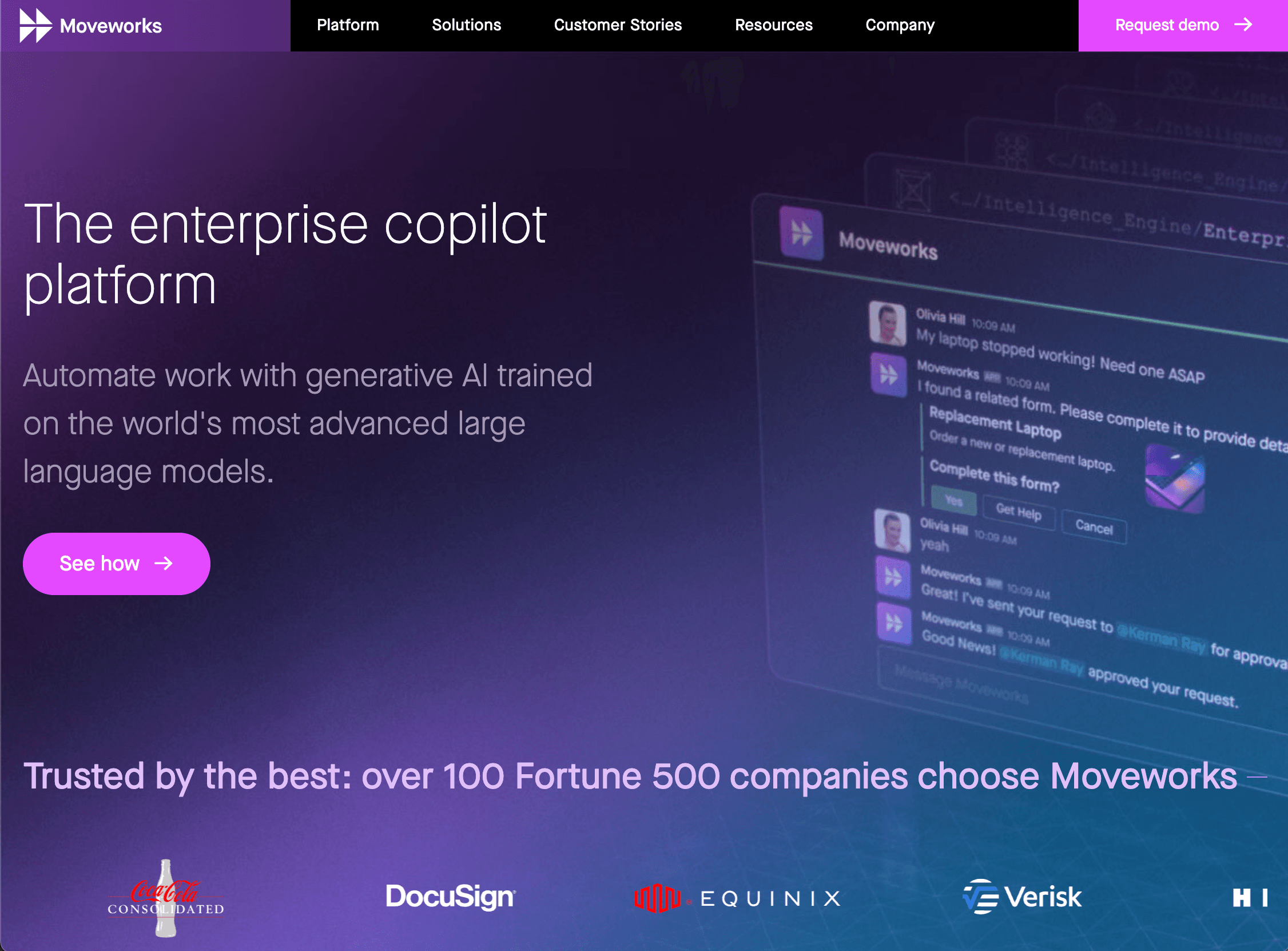
Moveworks is the leader in AI for internal support — IT helpdesk tickets, HR questions, password resets, software access requests — not external customer support. Different audience, different success metrics (employee productivity vs. customer satisfaction), different integration set (ServiceNow, Workday, Okta vs. Zendesk, Salesforce).
What it wins at: large enterprises wanting to automate the internal-employee help desk, deflect ticket volume from IT and HR teams, and surface knowledge from internal documentation that employees can't find.
Where it falls down: explicitly internal-only. For external customer support, this is the wrong category.
8. Kore.ai — Enterprise Agentic AI Platform
Kore.ai is the platform pick for enterprises wanting one AI platform to cover customer-facing agents, internal employee agents, and developer tooling — rather than separate vendors for each. Platform-shaped product, deeper governance and customization than the focused vertical tools, but more setup complexity.
What it wins at: large enterprises with multiple agent use cases across customer service, employee support, and internal tooling, governance-heavy environments (financial services, healthcare, government), and orgs that want one vendor relationship across agent categories.
Where it falls down: complexity and setup cost are real. For a single-use-case team (just customer support), the focused vertical tools (Intercom Fin, Decagon, Ada) ship faster and resolve more.
How to Choose Your AI Customer Support Stack
Match the tool to the actual contact-center shape:
- SaaS already on Intercom: Intercom Fin (default — same vendor, same data, one bill)
- High-volume B2C consumer support: Decagon (or Ada at smaller scale)
- Voice-first brands (telecom, insurance, services): Sierra AI
- CX team wants self-serve agent design: Ada
- Already on Zendesk or Salesforce, want AI without migrating: Forethought
- Human-led contact center, want AI as coach: Cresta AI
- Internal IT/HR support automation: Moveworks
- Enterprise wanting one platform across all agent use cases: Kore.ai
For most B2B SaaS in 2026, the strongest starter pattern is: Intercom Fin if Intercom is already your support stack, or Decagon/Ada if you're greenfield. Either way, set the deflection-rate baseline at month 1, measure honestly, and add a second platform (typically agent-assist via Cresta) only if month 6 data shows a clear gap the first tool can't close.
For adjacent reading, see our Best AI SDR Tools for Inbound Conversion for the front-of-funnel lane, Best AI Tools for Operations for the broader operations stack, and Best AI Tools for Finance and Accounting for the FinOps adjacency that often shares CFO mindshare with customer-care budget.
Frequently Asked Questions
What is an AI customer support tool in 2026? A platform that uses AI agents to handle customer inquiries — answering questions, resolving tickets, taking actions on the customer's behalf — across chat, email, voice, and in-app channels. The 2026 leaders measure themselves on autonomous resolution rate (the percentage of tickets fully closed without human handoff), typically 60–80% on the easy contact mix.
Are AI customer support tools actually replacing human agents? Replacing the volume of repetitive contacts (password resets, order status, refund requests on simple eligible orders), not replacing the agents themselves. Most teams that deploy these tools see headcount stable but contact volume per agent drop, freeing humans for the complex 20–30% of contacts where judgment matters. Companies trying full replacement (no human escalation path) consistently see customer-satisfaction collapse.
What's an autonomous resolution rate, and what's a good number? The percentage of customer contacts the AI agent fully resolves without escalating to a human. A reasonable production target in 2026 is 60–70% on a typical contact mix; consumer brands with simpler contact patterns can hit 80%+; complex B2B SaaS often plateaus at 50–60% because the contacts are harder. Anyone quoting 90%+ is either measuring loosely or has filtered the contact mix.
Which AI customer support tool integrates with Salesforce / Zendesk / Intercom? Essentially all of them integrate with the major ticketing systems. The depth varies. Intercom Fin is native to Intercom; Forethought is built around Zendesk and Salesforce Service Cloud integration; the others connect via API but with varying maturity. If your existing ticketing platform is non-negotiable, validate the specific integration depth in your pilot.
What's the typical pricing model? Four patterns in 2026: per-resolution (Intercom Fin, Decagon — pay per closed ticket), per-conversation (most chat-only tools), per-seat (legacy model, mostly for agent-assist tools like Cresta), or platform license + usage (enterprise tools like Kore.ai). Per-resolution is increasingly common because cost tracks value directly, but it requires forecasting discipline as deflection scales.
Will customers know they're talking to an AI? Most will, and most don't care if the agent solves their problem. Friction shows up when the agent fails — a customer who realizes mid-conversation that they wasted three minutes with an AI that can't help is harder to recover than one who got a slower human response. Disclosure norms vary by jurisdiction; California, Colorado, and the EU AI Act all have AI-disclosure requirements that increasingly apply.
How long does a typical deployment take? For SaaS-style platforms (Intercom Fin, Ada), a usable agent ships in 2–4 weeks. For enterprise-grade deployments with deep customization (Decagon, Sierra AI, Kore.ai), 2–6 months for full production. The variable is content and process maturity — teams with well-organized knowledge bases ship faster than teams whose support content is scattered.
Final Thoughts
The AI customer support category in 2026 has graduated from "which chatbot do we buy" to "which AI agent platform do we standardize on." The leaders measure themselves on the same metric (autonomous resolution rate) and increasingly compete on the same dimensions (integration depth, brand voice control, multi-channel coverage).
For most teams the right starting move is to pilot one platform on a defined slice of contact volume — say, the top 20 contact reasons or the simplest 30% of tickets — and measure resolution rate, customer satisfaction, and cost per ticket against the existing baseline. Don't standardize across the org until the pilot data is clear; the gap between vendor demos and real production performance is wider in this category than most.
Categories these tools span
More collections you may also like

Sign up for our newsletter
Receive weekly updates so you can stay up-to-date with the world of AI
Sign up for our newsletter
Receive weekly updates so you can stay up-to-date with the world of AI
The AI tools directory for discovering, exploring, and comparing the most innovative AI tools in the industry