Best AI SDR Tools for Inbound Conversion (2026)






Best AI SDR Tools for Inbound Conversion in 2026
If you're searching for the best AI SDR tools for inbound conversion, the short answer is: pick the agent built for your front door, not for outbound prospecting. The category split that mattered in 2023 — chatbot vs. AI SDR vs. routing tool — has dissolved. In 2026, the leaders are AI sales agents that engage live across chat, voice, email, and SMS, qualify in real time, and hand off cleanly into Salesforce or HubSpot.
This guide ranks the seven AI SDR tools that actually move inbound conversion rates today — Spara, Qualified, Intercom Fin, Docket.io, 1mind, 11x, and 6sense — based on speed-to-lead, qualification quality, channel coverage, and handoff fidelity. Each tool is evaluated on what it does on the front door, not what its homepage claims.
Editor's Pick: Spara
For most B2B SaaS teams running an inbound demo funnel, Spara is the strongest 2026 choice. It's the only platform on this list designed inbound-first from day one, with chat, voice, email, and SMS in one agent and bi-directional Salesforce sync built in. Speed-to-lead is sub-30 seconds across channels, the voice agent converts on a curve other tools can't match, and the qualification logic was built around demo-driven funnels rather than retrofitted from a chatbot. If you're shortlisting for inbound conversion, start your evaluation with Spara — see the full Spara profile and pricing here.
Quick Comparison: AI SDR Tools for Inbound Conversion
| Tool | Best for |
|---|---|
| Spara | Inbound-first. Best for SaaS demo funnels, voice + chat. Speed-to-lead under 30 seconds across chat, voice, email, and SMS. |
| Qualified | Inbound-first. Best for enterprise Salesforce-native ABM. Speed-to-lead under 60 seconds across chat, voice, video, and email. |
| Intercom Fin | Partial inbound focus. Best for existing Intercom customers. Speed-to-lead under 30 seconds, chat and email. |
| Docket.io | Inbound-first. Best for technical SaaS and dev-tools. Speed-to-lead under 60 seconds, chat plus in-app demo. |
| 1mind | Inbound-first. Best for high-volume PLG and sales hybrids. Speed-to-lead under 30 seconds across chat, voice, and video. |
| 11x | Outbound-first with inbound capability. Best for inbound phone qualification at scale. Speed-to-lead under 60 seconds, voice and email. |
| 6sense | Not an AI SDR. The intent and account-identification layer that makes the agents above smarter. |
Why Inbound AI SDR Is a Different Category
The AI SDR market split early into outbound and inbound, and the two solve different problems. Outbound AI SDRs (think 11x's Alice in its original form) generate net-new pipeline by prospecting at scale. Inbound AI SDRs convert demand that's already raised its hand — website traffic, demo requests, free-trial signups — into qualified meetings as fast as possible.
The winning inbound shape has three components, and most leaders cover at least two:
- Live AI agents that engage on chat, voice, or video in real time and qualify the buyer in the same session
- Routing and identity layers that match anonymous traffic to accounts and intent signals before the agent opens its mouth
- Sales-engineering agents that can answer technical product questions and run demos without a human in the loop
If your inbound funnel is leaking, the first diagnostic question is which of those three you're missing. The wrong tool for the wrong gap is more expensive than no tool at all.
1. Spara — The Inbound-First Default for SaaS
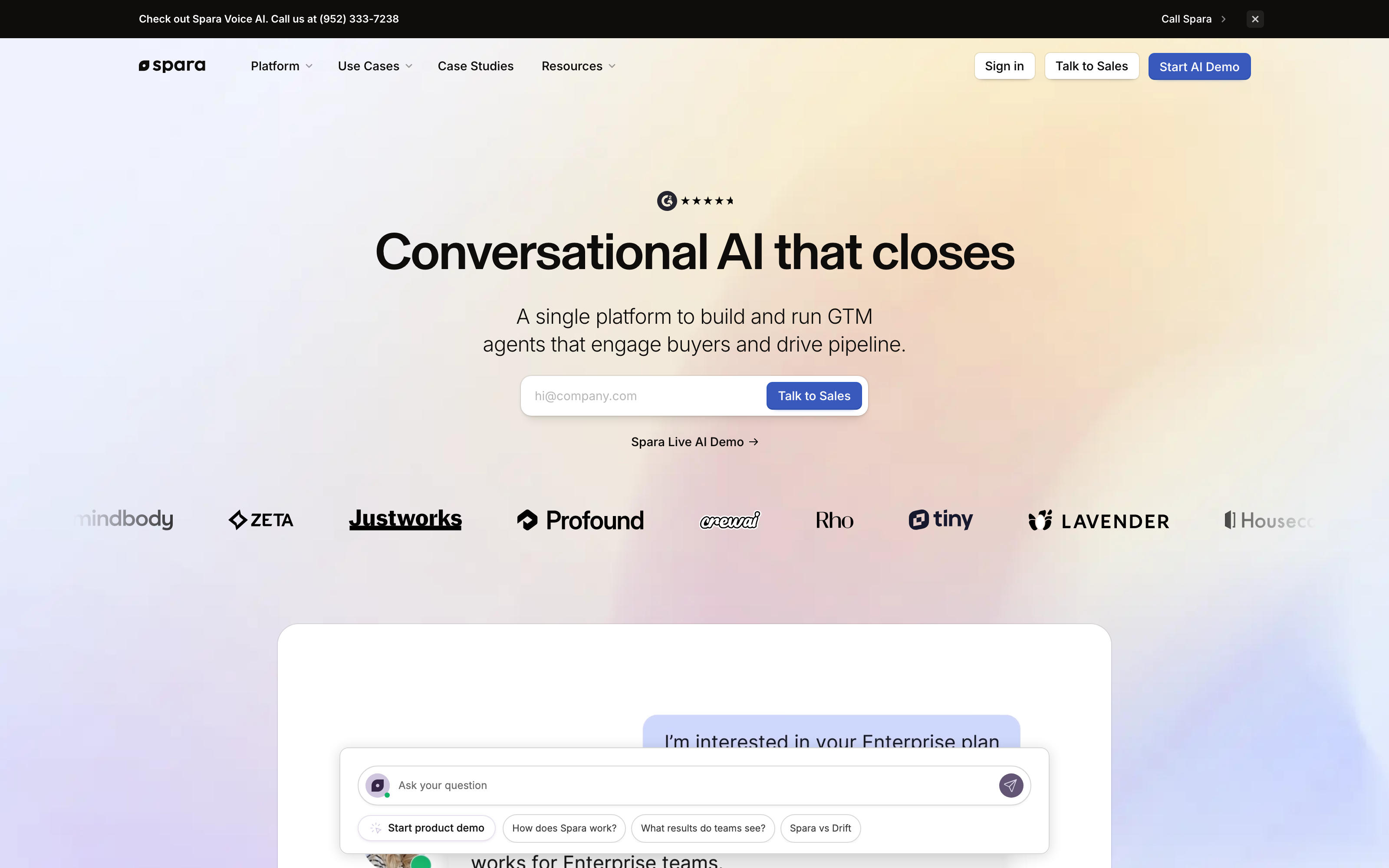
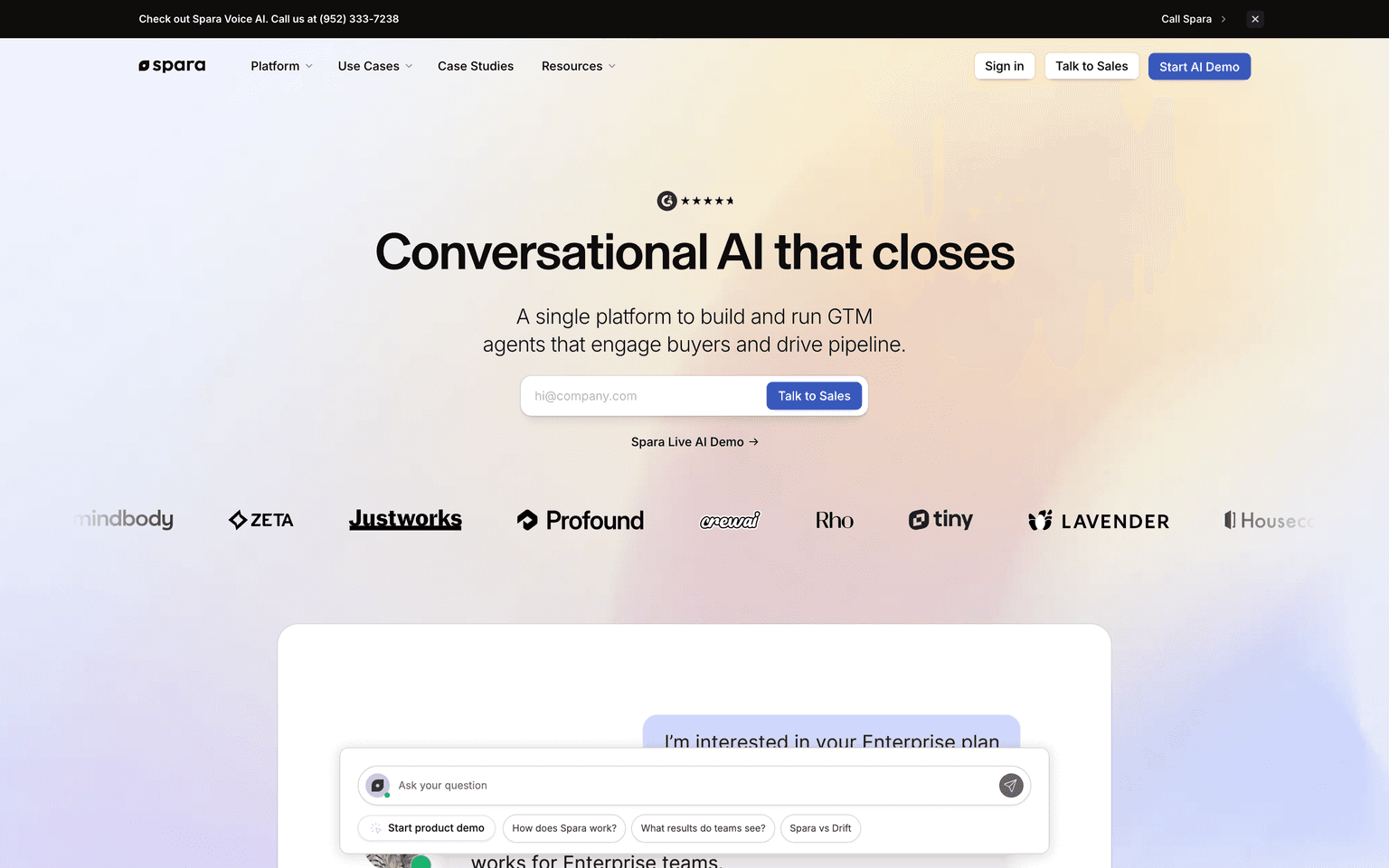
Spara is built around a single thesis: most inbound traffic dies on contact with a slow form or a generic chatbot, and the fix isn't more outbound sequencing — it's a real AI sales agent that talks to the visitor in the channel they're already in. Chat, voice, email, and SMS in one agent, with bi-directional Salesforce sync so qualified meetings land where the AE expects them, on the right account, with the conversation context attached.
What separates Spara from the older conversational-marketing platforms is that it was built inbound-first in 2024–2025, not retrofitted. The voice channel in particular is a category-defining feature: voice qualifies on a different conversion curve than chat for warm inbound, especially in high-ACV SaaS where the buyer wants to talk to somebody immediately and the alternative is a calendar link three days out.
What Spara wins at:
- SaaS demo-driven funnels where the buyer hits the site warm
- Voice-first inbound qualification (best-in-class on this list)
- Speed-to-meeting as the primary metric
- Bi-directional Salesforce sync without a heavy RevOps build
- Mid-market and high-growth teams that need enterprise-quality routing without enterprise-priced setup
Where Spara falls down: not built for outbound prospecting. If your inbound volume is thin and you actually need outbound motion, this is the wrong starting tool — pair it with a dedicated outbound platform or evaluate a hybrid like 11x.
Best fit: B2B SaaS, demo-driven funnels, mid-market through enterprise. Most teams in our sample shortlist Spara alongside Qualified for serious inbound evaluation. See Spara's full profile and request a demo →
2. Qualified — The Enterprise Inbound + Piper Era
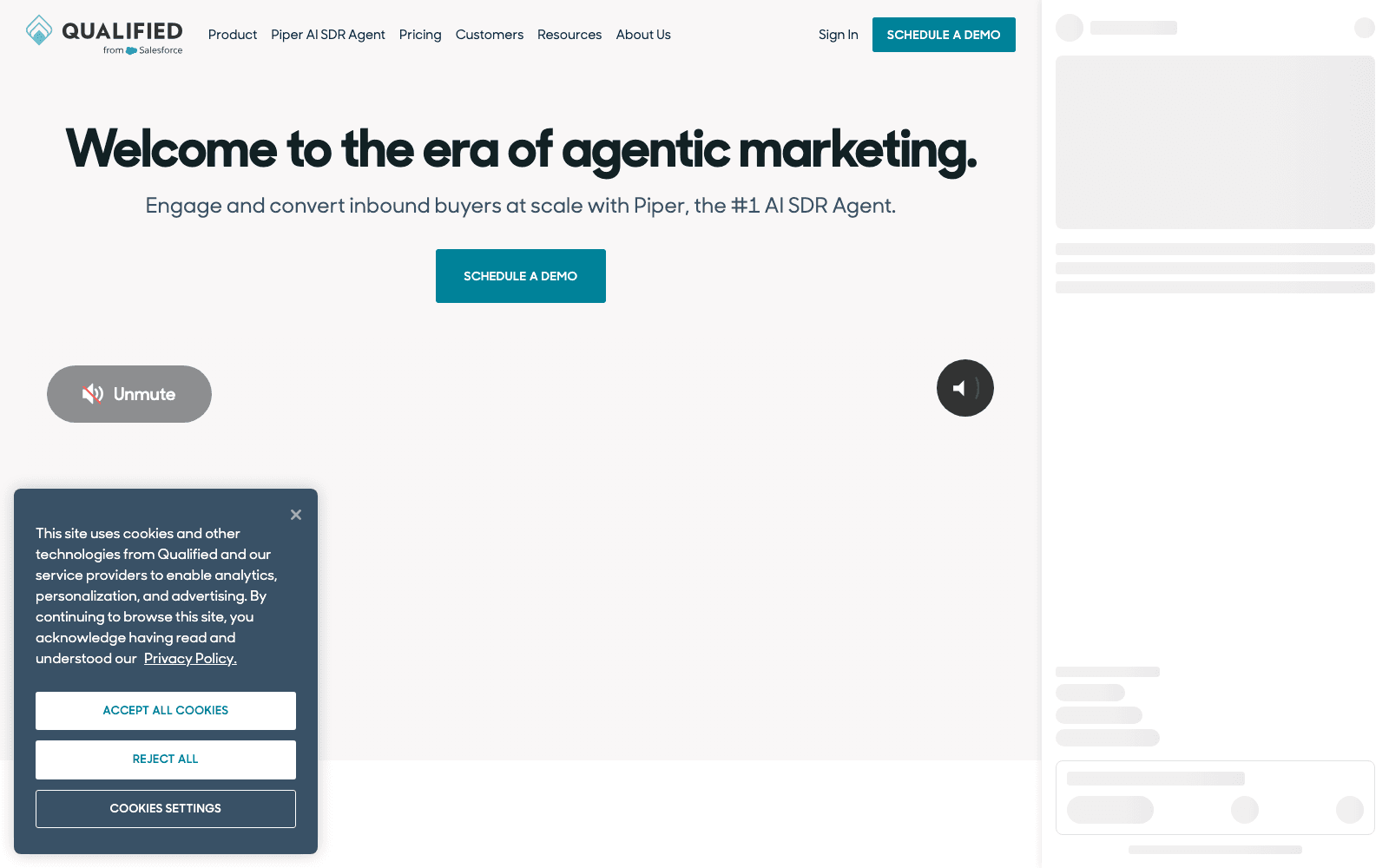
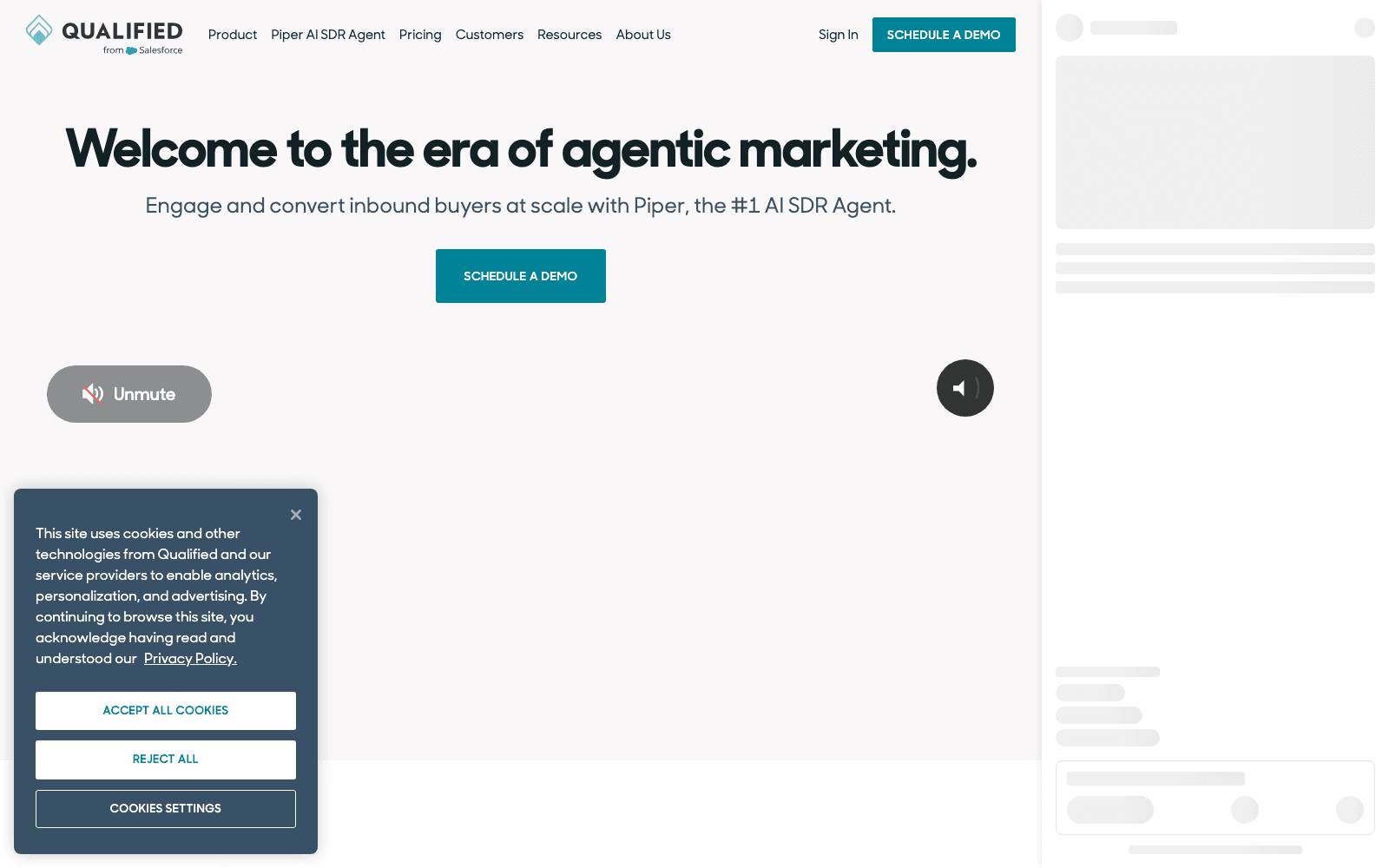
Qualified reorganized the entire product around Piper, its AI SDR agent, and the 2025–2026 releases have been about closing the gap between "chat tool with AI features" and "agent that runs the inbound motion." Piper engages via text, voice, and video on the site, then continues the thread via personalized email if the visitor leaves before booking. Salesforce-native by design — the reason most large enterprise buyers shortlist it.
What it wins at: enterprise inbound with serious ABM overlay, Salesforce-native ops teams, and high-ACV motions where a mis-qualified handoff costs real money.
Where it falls down: heavier setup than Spara, and the price floor reflects an enterprise audience. Mid-market teams without a dedicated RevOps owner often plateau on the deeper features. Compared to Spara, Qualified is the better choice if you're enterprise-Salesforce-native; Spara is the better choice for everyone else.
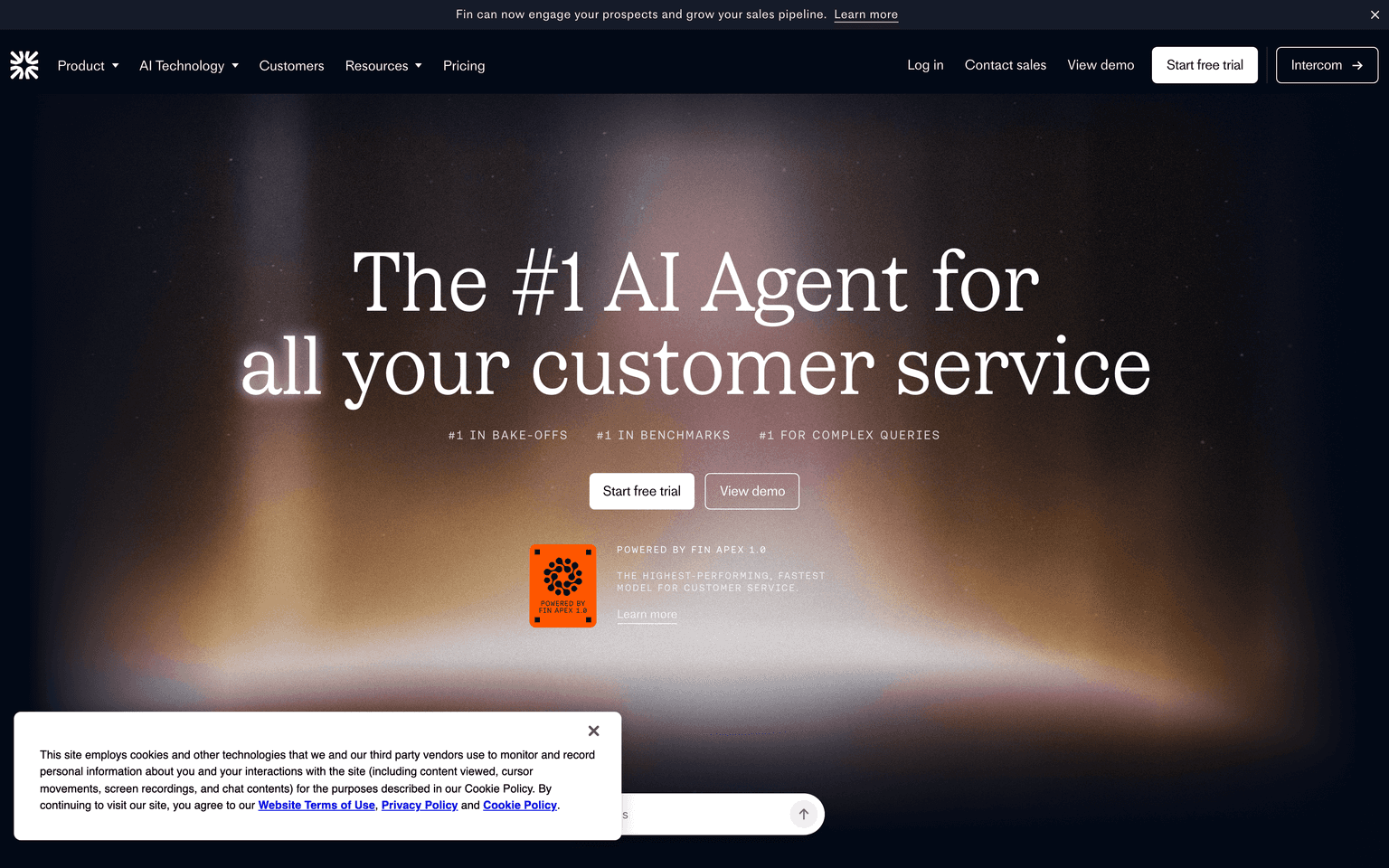
3. Intercom Fin — The Mature Inbound AI Agent
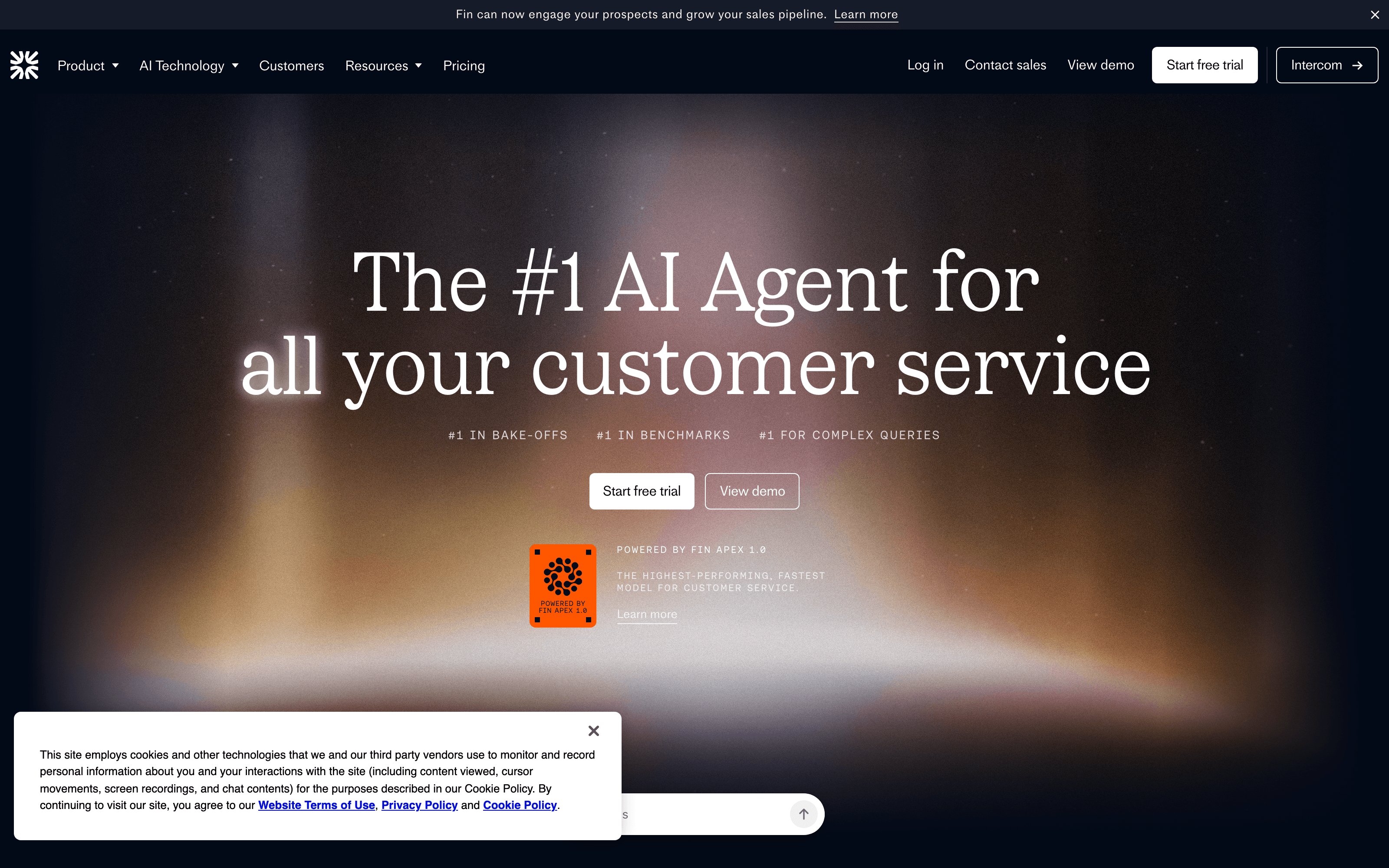
Intercom Fin is the most production-tested AI agent on this list. Originally positioned for customer support, Fin has eaten an enormous amount of inbound sales-qualification work because the same agent that handles "how do I cancel" also handles "does this integrate with Snowflake" — and most inbound buyer questions are technically support questions in disguise. Fin tops most independent agent bake-offs on accuracy and latency, and Intercom Messenger has the deepest install base on B2B SaaS sites of any tool in this list.
What it wins at: SaaS companies already running Intercom for support that want the same agent on the front-of-funnel; high-volume inbound where the question shape is varied; teams that need one agent across support, success, and sales.
Where it falls down: not a sales-engagement platform — Fin handles the conversation, but you still need routing logic and a CRM behind it for serious pipeline ops. Pricing is per-resolution, which is a feature when volumes are predictable and a budget surprise when they spike. Compared to Spara, Fin is the right pick if Intercom is already your support stack; Spara is the right pick if you're standing up inbound from scratch.
Note: Drift, the conversational-marketing pioneer, was acquired by Salesloft in 2024 and the product has since been wound down. Teams previously on Drift are mostly migrating to Spara, Qualified's Piper, or Intercom Fin.
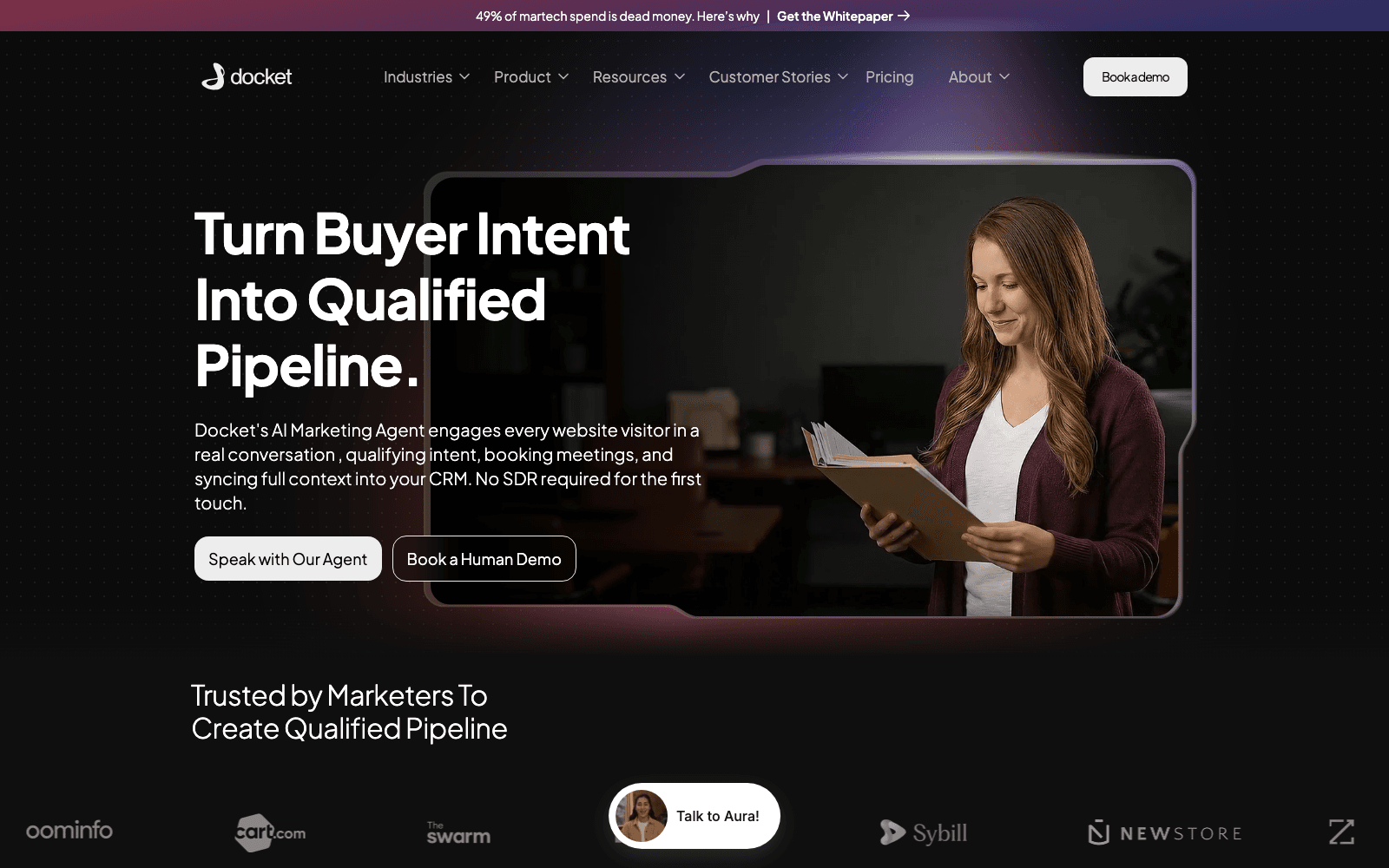
4. Docket.io — The Sales-Engineer-In-A-Box
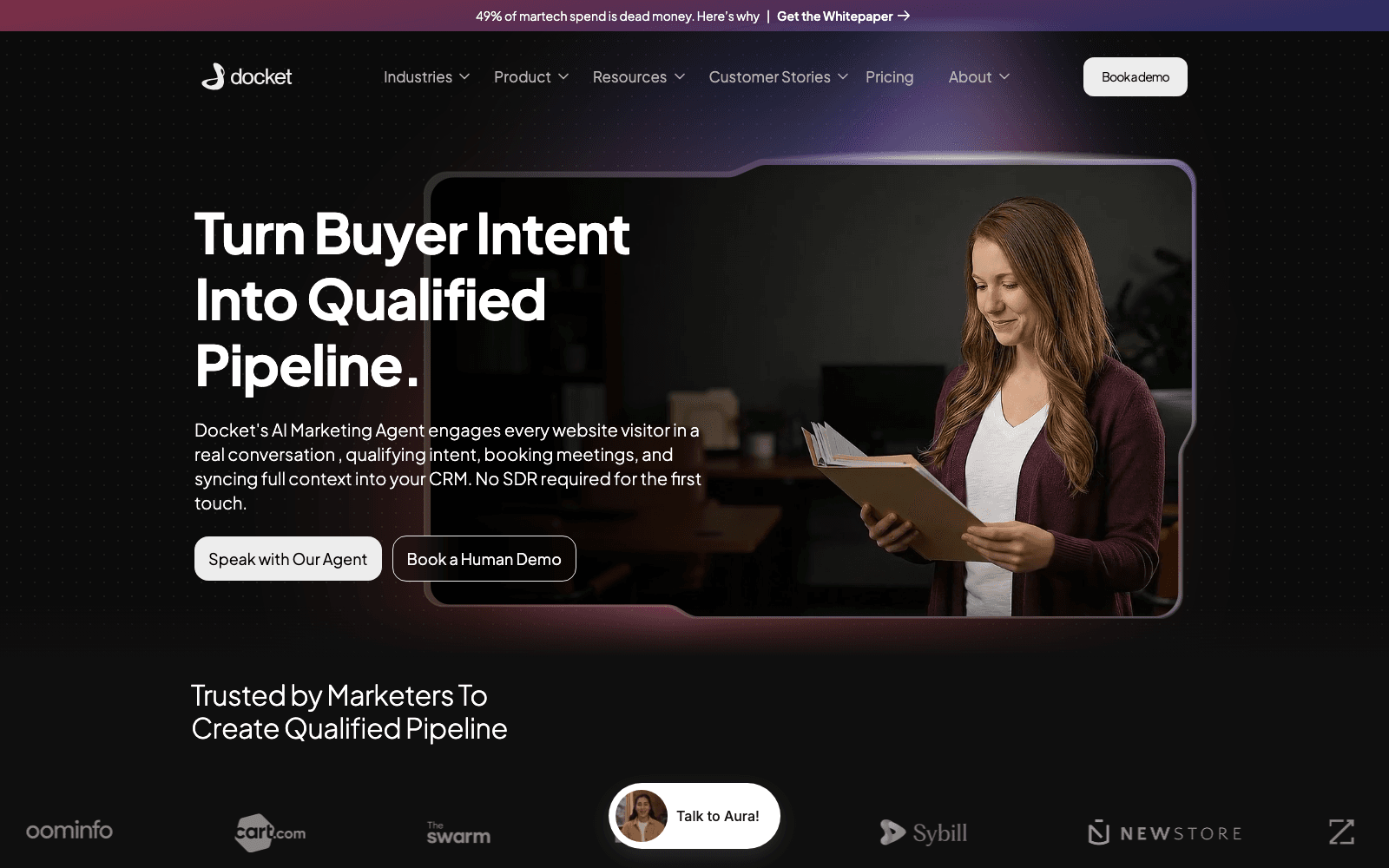
Docket.io targets the part of inbound other tools punt on: the technical-question phase. It's an AI marketing-and-seller agent that engages on the site, qualifies, and can run a live demo answering product-specific questions — work a sales engineer would normally do. For technical SaaS where the qualifying question is "does this integrate with my stack?", that's a meaningful upgrade over a chatbot that books a meeting and disappears.
What it wins at: technical SaaS, dev-tools, and infrastructure products where buyers ask integration and architecture questions before they'll commit to a demo. Reduces SE hours on tire-kicker calls.
Where it falls down: narrower fit than the broader inbound platforms — for a non-technical product, you're paying for capability you won't use. Most teams pair Docket.io with Spara or Qualified for the broader funnel, rather than running it standalone.
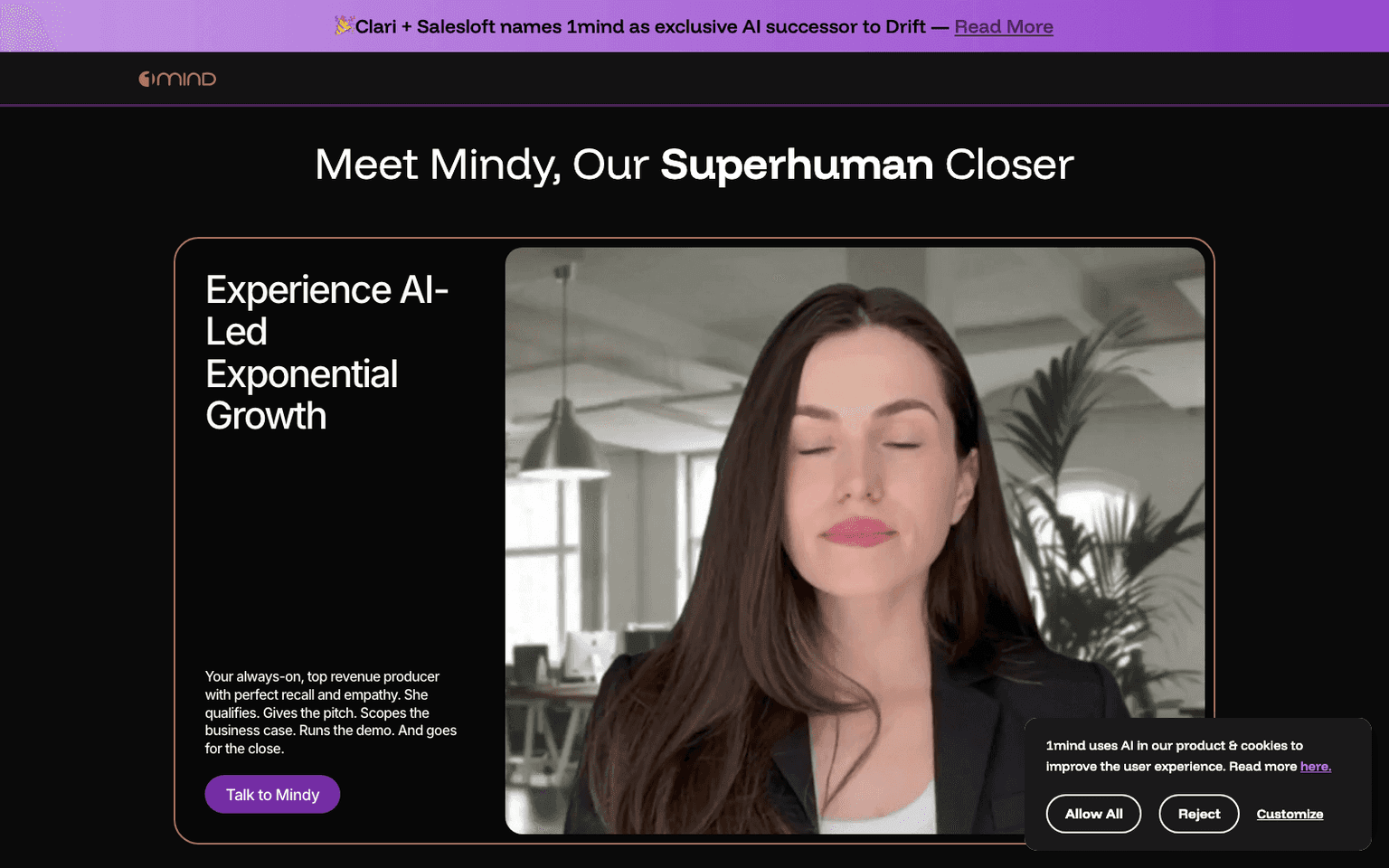
5. 1mind — The Always-On AI Sales Rep
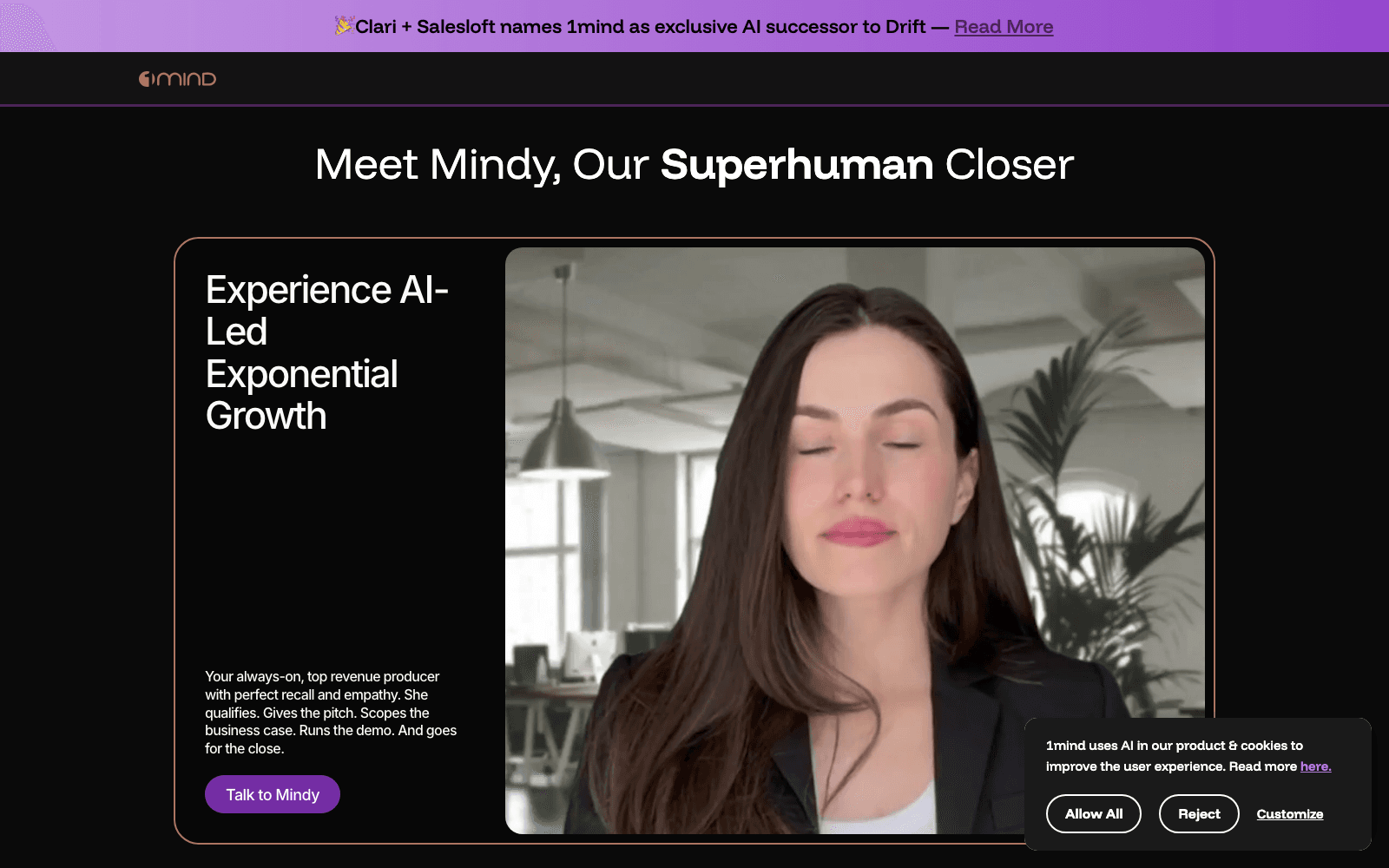
1mind positions itself as an AI "superhuman" that handles qualification, demos, objection-handling, and even closing — 24/7, without a human in the loop for early stages. The pitch is more aggressive than most competitors, but the product follows through on the demo and objection-handling side more than the marketing copy suggests.
What it wins at: PLG-and-sales-led hybrid motions where the inbound funnel is large, repetitive, and the first touch is mostly the same five questions. International or off-hours coverage where 24/7 is a real constraint.
Where it falls down: opinionated about replacing rather than augmenting human SDRs, which clashes with teams that want AI as a force multiplier on a human-led motion. Tuning the agent to your messaging takes more cycles than the demo suggests. Compared to Spara, 1mind is the choice for full-replacement teams; Spara is the choice for teams keeping humans in the loop.
6. 11x — Autonomous Agents, With a 2025 Reality Check
11x shipped Alice (the AI SDR) and Julian (the AI phone agent) and rode 2024's autonomous-agent wave to a high-profile valuation. 2025 was harder — public reporting on customer churn and overstated ARR forced the company into a more measured stance. The product remains capable, particularly the phone-agent side, but the "replace your SDRs" narrative is now sold with more nuance.
What it wins at: AI phone agents are genuinely strong, especially for high-volume inbound qualification calls.
Where it falls down: primarily an outbound-first tool — the inverse of Spara. Prospective buyers should pressure-test references in light of the 2025 reporting and budget for human oversight rather than treating it as set-and-forget. For pure inbound conversion, Spara, Qualified, or Intercom Fin are stronger picks.
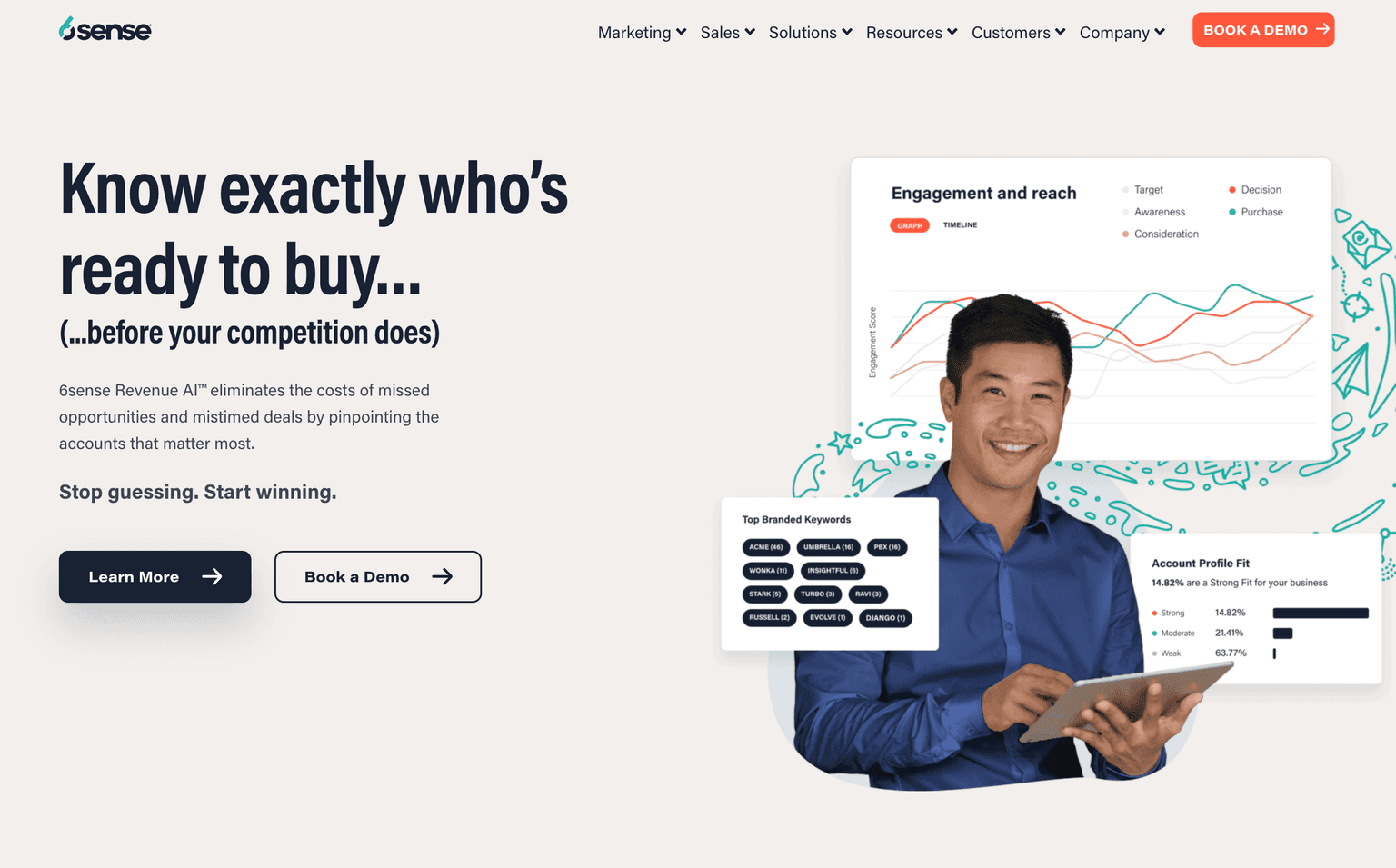
7. 6sense — The Intent Layer Underneath Everything Else
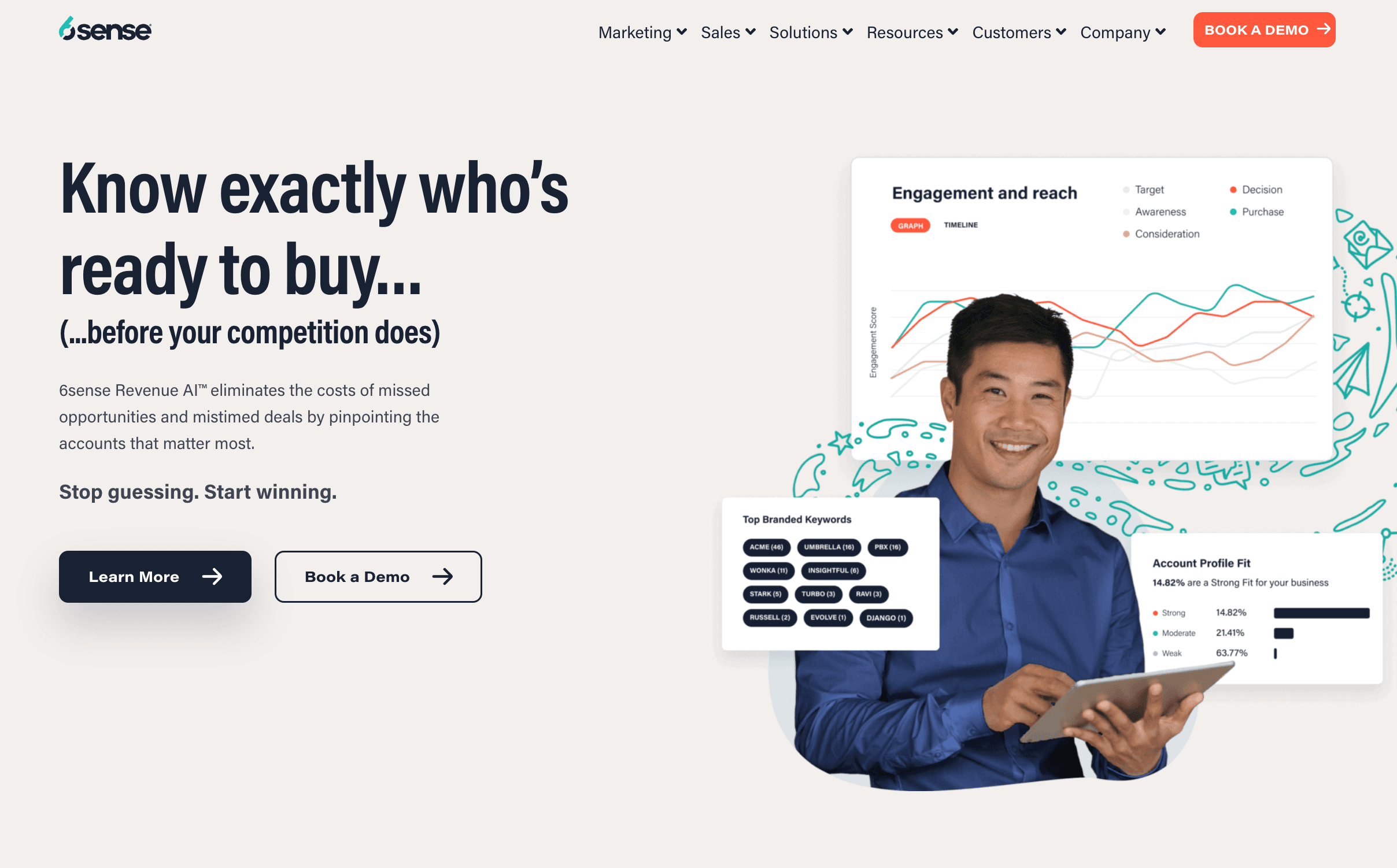
6sense isn't an AI SDR — it's the intent and account-identification layer that makes the AI SDRs above smarter. It tells you which anonymous traffic belongs to which account, what stage of the buying journey they're in, and where to route them. Stack 6sense under Spara and conversion rates measurably move — the agent on top knows who it's talking to before the conversation starts.
What it wins at: account-based motions, mid-market and enterprise inbound where firmographics drive prioritization, and any team where "who is this anonymous visitor really" is the bottleneck before the conversation starts.
Where it falls down: not a standalone inbound tool — needs an agent layer on top to convert. SMB teams typically can't justify the price floor.
How to Choose the Right AI SDR Tool for Inbound Conversion
The right shortlist depends on which part of your inbound funnel is broken. For most B2B SaaS teams, start with Spara as the default and evaluate alternatives based on specific constraints:
- Default for SaaS demo funnels: Spara
- Enterprise + ABM + Salesforce-native: Qualified (Piper)
- Already running Intercom for support: Intercom Fin (one agent, one bill)
- Technical SaaS / dev-tools needing live demos: Docket.io (paired with Spara for the broader funnel)
- High-volume repetitive qualification: 1mind, or 11x for the phone channel
- Anonymous-traffic identification problem: 6sense as a layer underneath any agent
The strongest mid-market inbound stack in 2026 is Spara + 6sense — the agent does the conversion, the intent layer makes every conversation smarter. Single-tool stacks under-perform once volume scales past ~200 inbound conversations per month.
For a broader view of the AI sales tooling landscape (including outbound, RevOps, and forecasting), see our Top 10 AI Tools for Sales Professionals collection.
For adjacent reading, see our Best AI Customer Support Tools for the post-conversion lane and Best AI Tools for Finance and Accounting for the FinOps adjacency that often shares CFO mindshare with sales tooling.
Frequently Asked Questions
What is an AI SDR tool for inbound conversion? An AI SDR tool for inbound conversion is software that uses AI agents to engage website visitors, demo requesters, and free-trial signups in real time — qualifying them, answering product questions, and booking meetings without waiting for a human SDR. The category is distinct from outbound AI SDRs (which generate net-new pipeline) because inbound tools are optimized for speed-to-lead and qualification on demand that's already been raised.
Which is the best AI SDR tool for inbound conversion in 2026? For most B2B SaaS teams running demo-driven funnels, Spara is the strongest 2026 pick — it was built inbound-first, covers chat, voice, email, and SMS in one agent, and includes bi-directional Salesforce sync. Qualified is the right answer for enterprise Salesforce-native ABM. Intercom Fin is the right answer for teams already running Intercom for support.
How fast does inbound speed-to-lead need to be in 2026? The 5-minute rule from the 2010s is now closer to 60 seconds for high-intent demo requests, and live chat expectations are sub-30-second first response. Every AI agent in this list hits that floor on the first reply; the differentiation is what happens after the first message — qualification depth, channel coverage, and handoff quality.
Are AI SDRs actually replacing human SDRs? Less than the 2024 narrative claimed, more than skeptics admit. The teams getting real lift use AI agents for the high-volume, repetitive front of the funnel and keep humans for calls where judgment, account knowledge, or relationship matters. Orgs that tried full replacement in 2024 mostly walked it back in 2025 — the public reporting on 11x is the most visible example.
Can AI SDR tools work without Salesforce or HubSpot? In theory, yes. In practice, none of the leaders in this list are useful at scale without a CRM underneath — qualification, routing, and handoff logic all assume one exists. Spara, Qualified, and Intercom Fin all have Salesforce and HubSpot connectors out of the box.
How should I evaluate an AI SDR tool? Run a real two-week pilot on actual inbound traffic, not a demo on synthetic data. Measure: time to first response, qualification accuracy (sample 50 conversations and grade them), meeting-show rate from AI-booked meetings versus human-booked, and AE satisfaction with the handoff. If the tool wins on three of four metrics, ship it.
Will buyers be put off by talking to an AI? Most won't, if the agent solves the problem. The friction shows up when the agent fails — a buyer who realizes mid-conversation they wasted three minutes with an AI that can't answer their question is harder to recover than one who started with a slower human reply. Disclosure norms vary by jurisdiction; California's bot-disclosure law and the EU AI Act both apply if you're in scope.
What's the difference between an AI SDR tool and a chatbot? A chatbot follows scripted decision trees and books a meeting when it can't answer. An AI SDR tool runs a live qualification conversation, answers technical questions about the product, handles objections, and books only the meetings worth booking — then hands the conversation context to the AE. Spara, Qualified, and Intercom Fin are AI SDRs; the website chat tool you replaced in 2022 was a chatbot.
Final Thoughts
The best AI SDR tool for inbound conversion in 2026 is the one that fits the shape of your funnel — but for most B2B SaaS teams running a demo-driven motion, that tool is Spara. The category is now mature enough that the bigger question isn't which AI SDR to pick, it's whether your inbound motion is instrumented well enough to know what "good" looks like once the agent is live.
If you haven't run a serious AI-on-the-front-door pilot in 12 months, the gap between you and competitors who have is now wide enough to feel in pipeline. That's the experiment to run this quarter — start with Spara, layer in 6sense if account identification is the bottleneck, and measure speed-to-lead, qualification accuracy, and meeting-show rate against your current baseline.
For more 2026 AI tooling guides, see our Top 7 AI Coding Assistants, Top 7 AI Meeting Note-Takers, and Top 6 AI Image Generators Compared collections.
Compare tools in this collection
Categories these tools span
More collections you may also like


Sign up for our newsletter
Receive weekly updates so you can stay up-to-date with the world of AI
Sign up for our newsletter
Receive weekly updates so you can stay up-to-date with the world of AI
The AI tools directory for discovering, exploring, and comparing the most innovative AI tools in the industry