Best AI Tools for Finance and Accounting (2026)










Best AI Tools for Finance and Accounting in 2026
If you're researching the best AI tools for finance and accounting in 2026, the category has matured into specialized products that ship in production at real CFO orgs — not the "AI for finance" demo decks of 2023. Numeric reshapes the financial close. Vic.ai automates AP at enterprise volume. HighRadius runs autonomous Order-to-Cash for the largest finance teams in the world. Rillet brings the same pattern to small business. Sphere automates tax compliance across 100+ jurisdictions. The 2026 question isn't "can AI help finance teams" but "which lane do you start with."
This guide covers the seven AI tools that move the needle in finance and accounting workflows in 2026: Numeric, Vic.ai, HighRadius, Rillet, Sphere, Cleareye.ai, and Indico Data. Each is rated on the workflow it serves, what it ships in production, and where the audit-and-compliance lines sit.
Updated August 2, 2026. Every pick re-verified as active. If you are buying for a regulated finance function, read this alongside our guide to AI in regulated industries, which covers the recordkeeping and supervision constraints that decide what you are allowed to deploy — the part a tool comparison cannot answer for you.
The Four Lanes of Finance and Accounting AI in 2026
- Financial close and reporting: automate journal entries, reconciliations, variance analysis, close packages. Leader: Numeric.
- AP / AR automation: invoice processing, payment matching, collections. Leaders: Vic.ai (AP), HighRadius (Order-to-Cash).
- Bookkeeping for SMB: automated bookkeeping, categorization, financial reporting for small businesses. Leader: Rillet.
- Tax, compliance, and document automation: sales tax, VAT, trade finance, contract review, document extraction. Leaders: Sphere (tax), Cleareye.ai (trade finance), Indico Data (document automation).
Most finance teams in 2026 use one tool from the close lane and one from the AP/AR lane — those are the two highest-value workflows for AI. Tax and document automation are situational depending on your jurisdictional footprint and document volume.
Quick Comparison
| Tool | Best for |
|---|---|
| Numeric | Financial close. Best for FP&A and controllership teams accelerating month-end close with AI-augmented reconciliations and variance analysis. |
| Vic.ai | AP automation. Best for finance teams automating invoice processing at volume — autonomous accounting from inbox to GL. |
| HighRadius | Autonomous Order-to-Cash. Best for enterprise finance teams running collections, cash application, and credit at scale. |
| Rillet | SMB bookkeeping. Best for small businesses replacing manual QuickBooks/Xero work with AI-augmented automation. |
| Sphere | Tax compliance. Best for companies operating across multiple tax jurisdictions (sales tax, VAT, GST) needing compliance automation. |
| Cleareye.ai | Trade finance. Best for banks and trading companies automating trade-finance document review and compliance. |
| Indico Data | Document automation. Best for insurance carriers and finance ops processing high volumes of unstructured documents (claims, contracts, statements). |
Financial Close and Reporting
The close lane is where AI in finance has produced the most measurable productivity wins so far. Numeric and competitors have published case studies showing 40–60% reductions in close cycle time at large finance teams. The work AI takes off the controller's plate (journal-entry preparation, reconciliation prep, flux analysis explanations) is exactly the work that's most repetitive and data-driven.
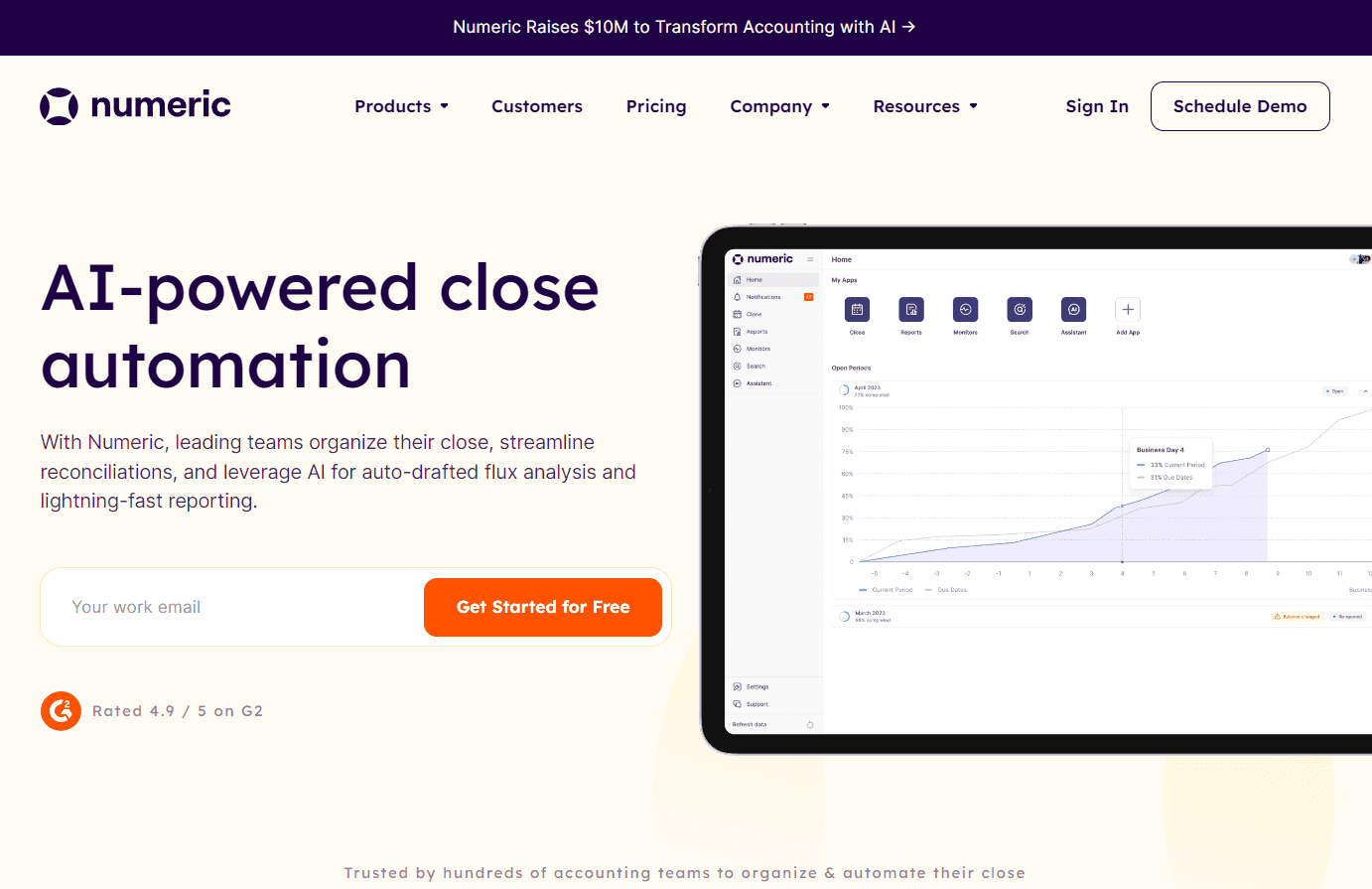
1. Numeric — AI-Augmented Financial Close
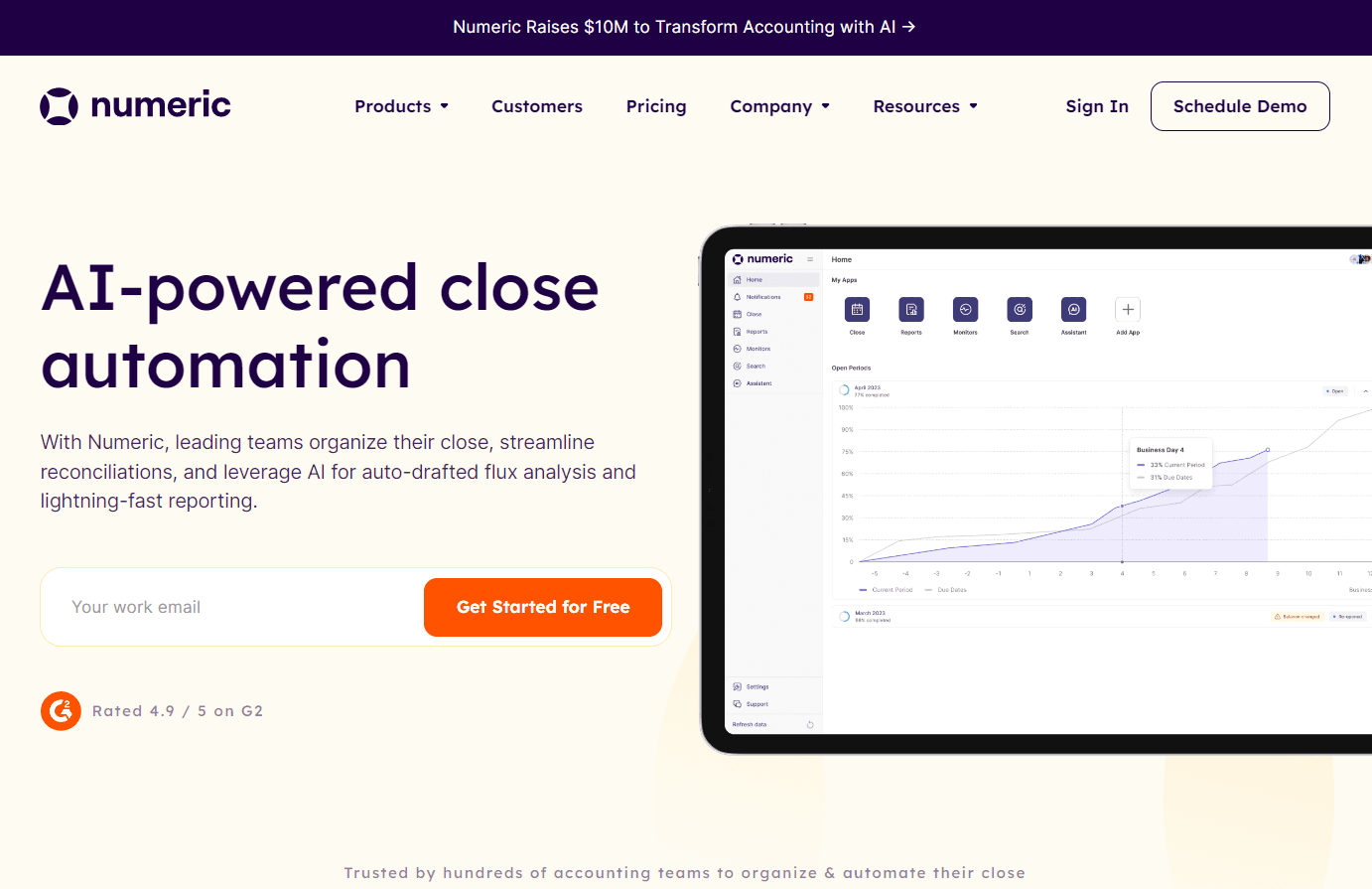
Numeric is the leading AI platform for the financial close — used by mid-market and enterprise finance teams to compress close cycle time, automate reconciliations, and surface variance explanations. The product sits between the GL (NetSuite, Sage Intacct, Oracle) and the controller, handling the work that used to consume the first week of every month.
What it wins at: mid-market and enterprise close acceleration, reconciliation automation, and the variance-analysis storytelling that controllers manually produce in close memos. Real published outcomes data — not vendor demos — showing meaningful close cycle time reductions.
Where it falls down: priced for finance teams with real budgets; small businesses and startups don't justify it. Implementation requires meaningful integration work with the existing GL.
AP / AR Automation
This is the second-most-mature finance AI lane. AP (accounts payable) automation has been around in some form since the early 2010s; what changed in 2024–2026 is AI moving from "OCR + rules" to actual autonomous agents that handle the workflow end-to-end. The leaders below operate at meaningfully higher autonomy than the previous generation.
2. Vic.ai — Autonomous AP Automation

Vic.ai automates accounts payable end-to-end — invoice intake, data extraction, GL coding, approval routing, payment processing — with the AI making decisions autonomously on the standard cases and escalating exceptions to humans. For finance teams processing thousands of invoices per month, the cost-per-invoice numbers Vic.ai produces vs. manual processing are genuinely transformative.
What it wins at: high-volume AP at mid-market and enterprise scale, autonomous-decisioning depth (not just OCR + rules), and a workflow that gets meaningfully better as it processes more of your specific invoices.
Where it falls down: scale-justified pricing — for finance teams processing under ~500 invoices per month, manual processing or simpler tools are usually cheaper. The autonomous accuracy improves with volume, so smaller teams see less benefit.
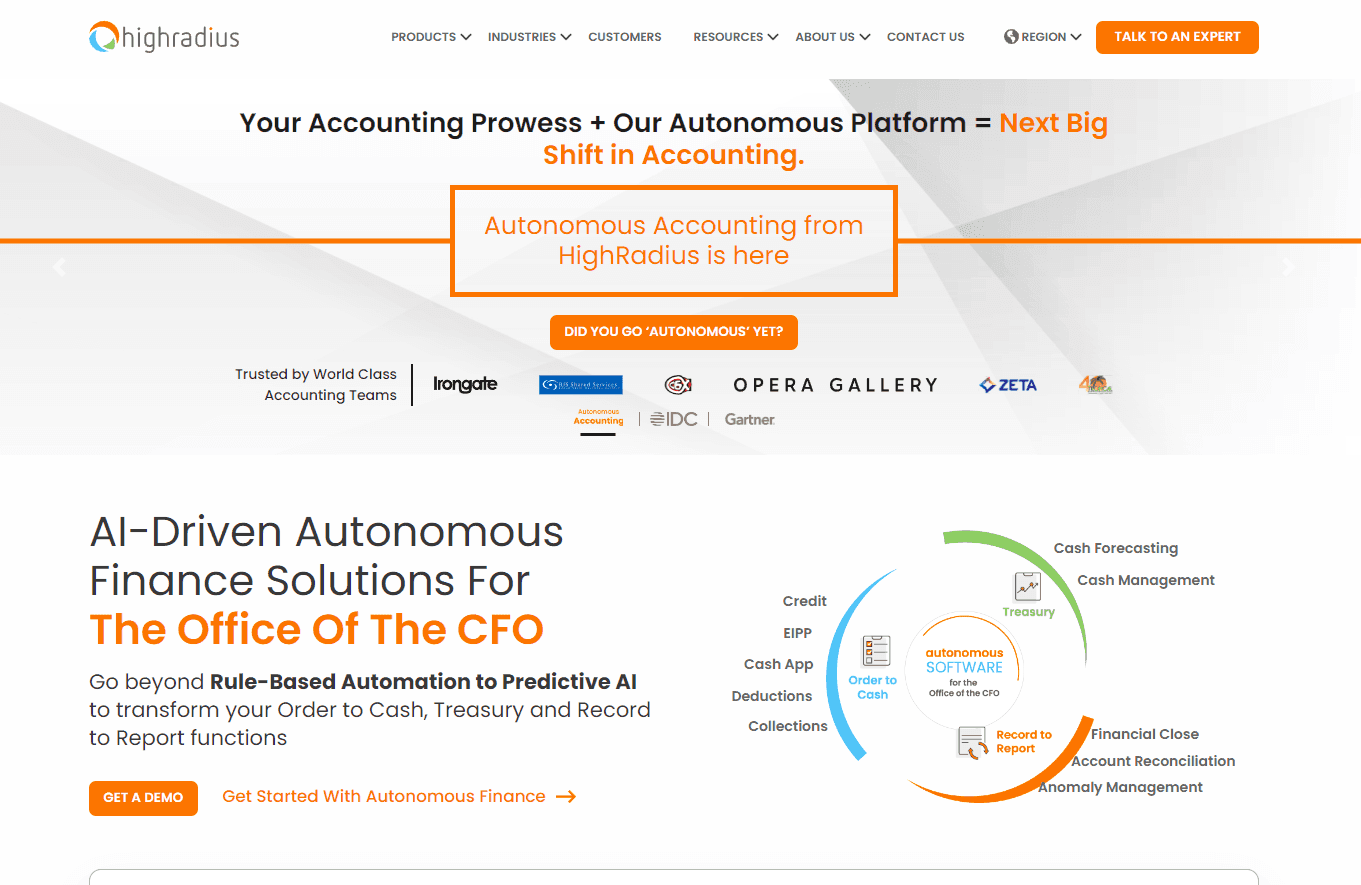
3. HighRadius — Autonomous Order-to-Cash for Enterprise
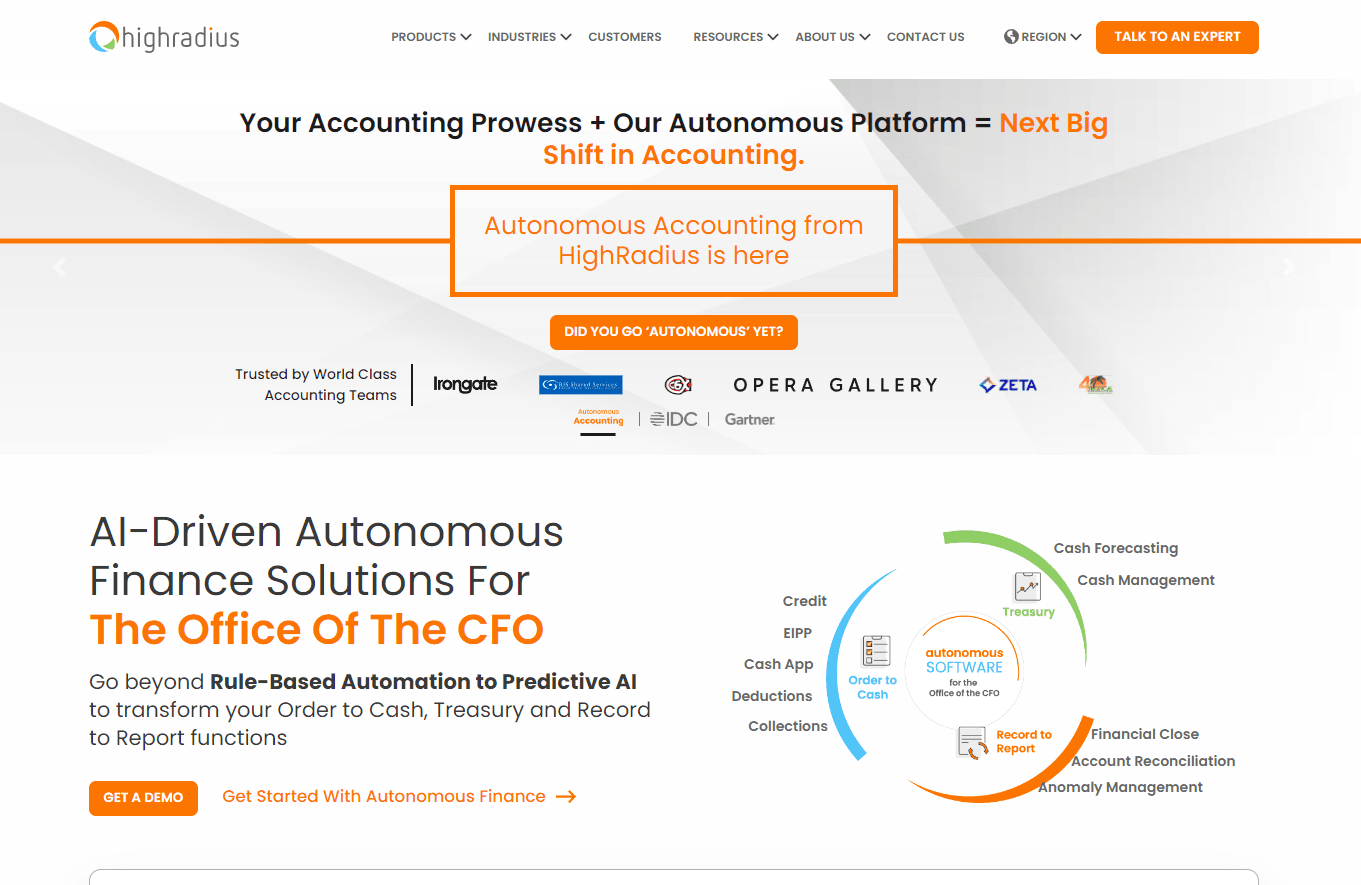
HighRadius is the enterprise leader in autonomous Order-to-Cash — collections, cash application, credit management, deductions, billing. Used by Fortune 500 finance teams at scale that Vic.ai targets at smaller scale. The product runs material percentages of inbound cash work autonomously at companies with billions in receivables.
What it wins at: enterprise Order-to-Cash automation, complex AR workflows (deductions, credit policy, dispute management), and the integration depth Fortune 500 finance ops require.
Where it falls down: enterprise-only — small and mid-market finance teams don't have the receivables volume to justify the platform. Implementation is multi-month and involves meaningful change management.
Bookkeeping for Small Business
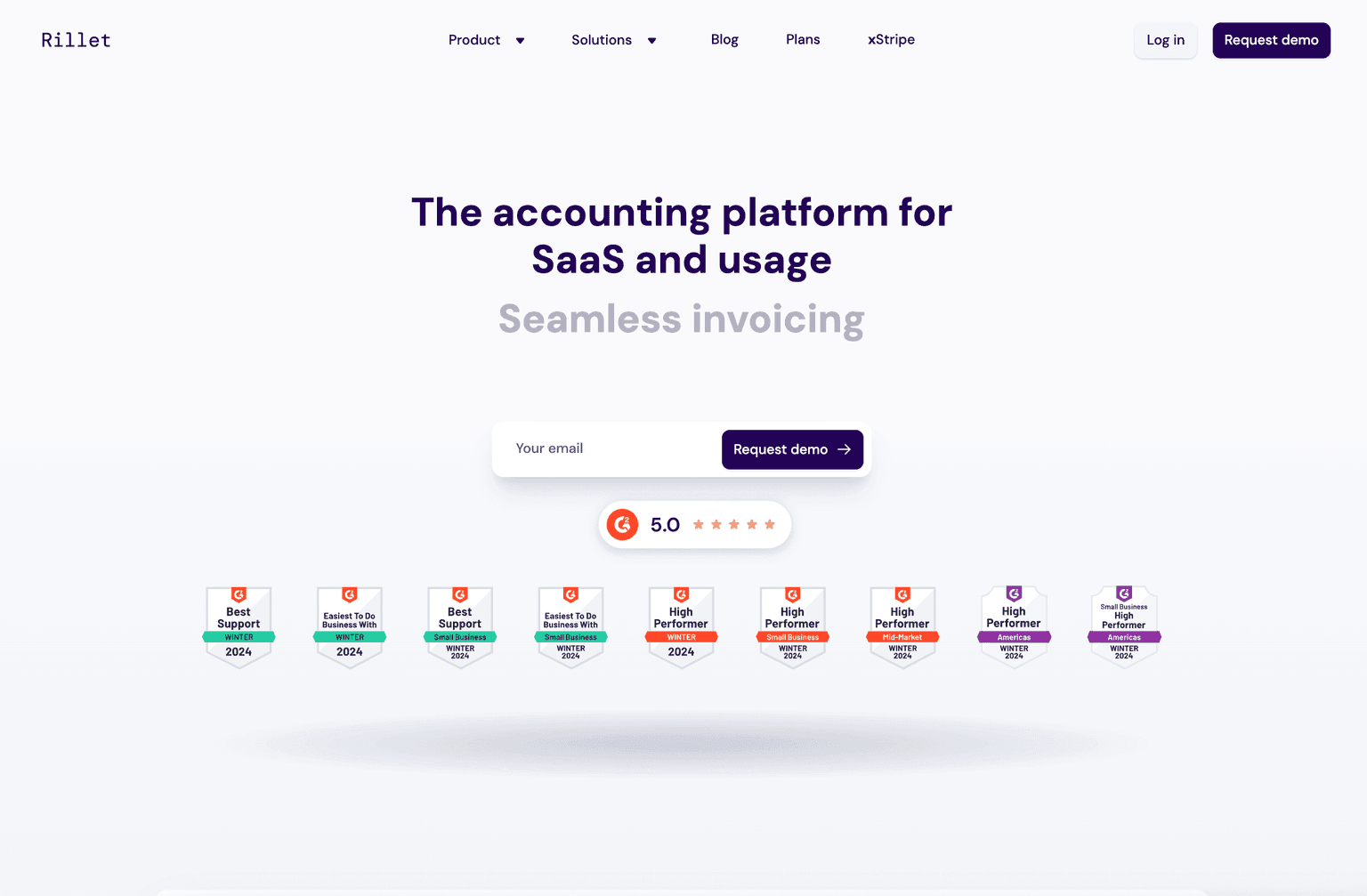
4. Rillet — AI Bookkeeping for SMB
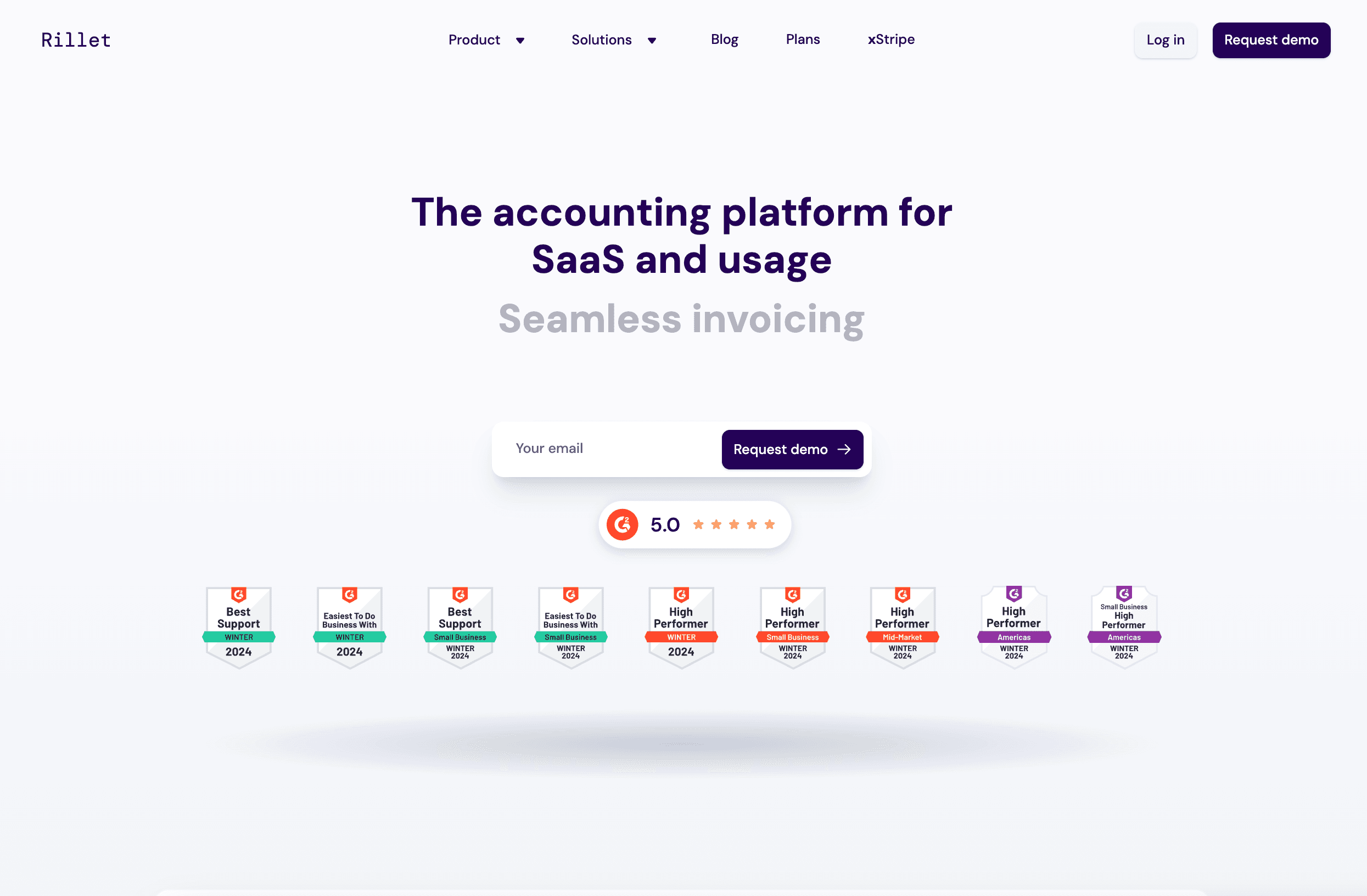
Rillet brings the same automation pattern Vic.ai applies to AP at enterprise scale down to small business bookkeeping. Auto-categorize transactions, generate financial reports, surface anomalies — the work an outsourced bookkeeper would charge $500–$1,500/month for, automated at a meaningful fraction of that cost.
What it wins at: small business owners who currently use QuickBooks but spend hours on categorization and reconciliation, founders who want clean financials without hiring a bookkeeper, and the early-stage company budget tier.
Where it falls down: for companies with complex accounting (multi-entity, complex revenue recognition, international operations), AI bookkeeping plateaus and you need a real CPA. Best as the bookkeeper-replacement layer, not the controller-replacement layer.
Tax, Compliance, and Document Automation
This lane is increasingly important as the regulatory landscape gets more complex. Sphere, Cleareye, and Indico operate on different problems but share a common thread: AI taking what would otherwise be hours of skilled-but-repetitive document and compliance work and reducing it to minutes.
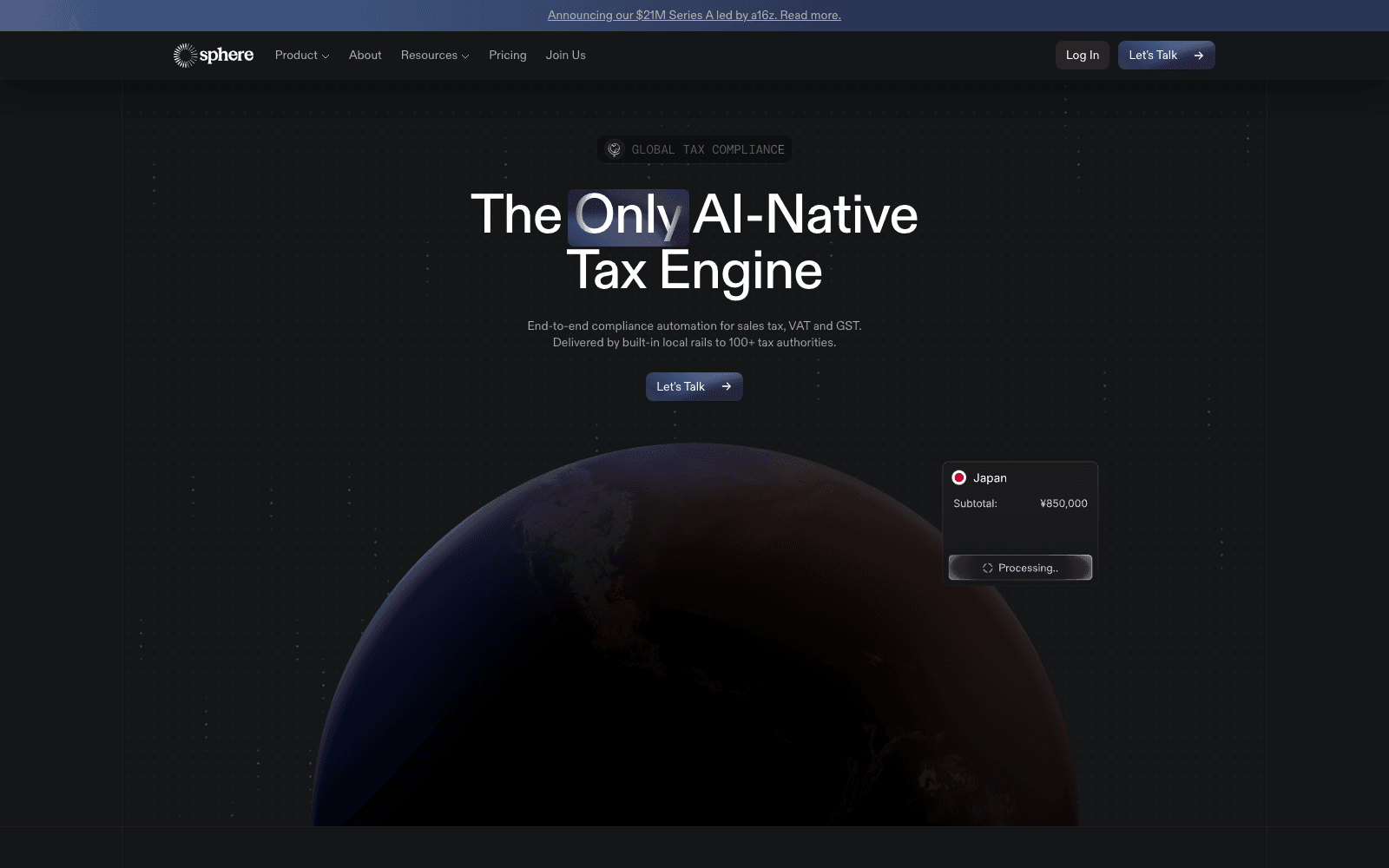
5. Sphere — AI-Native Global Tax Compliance
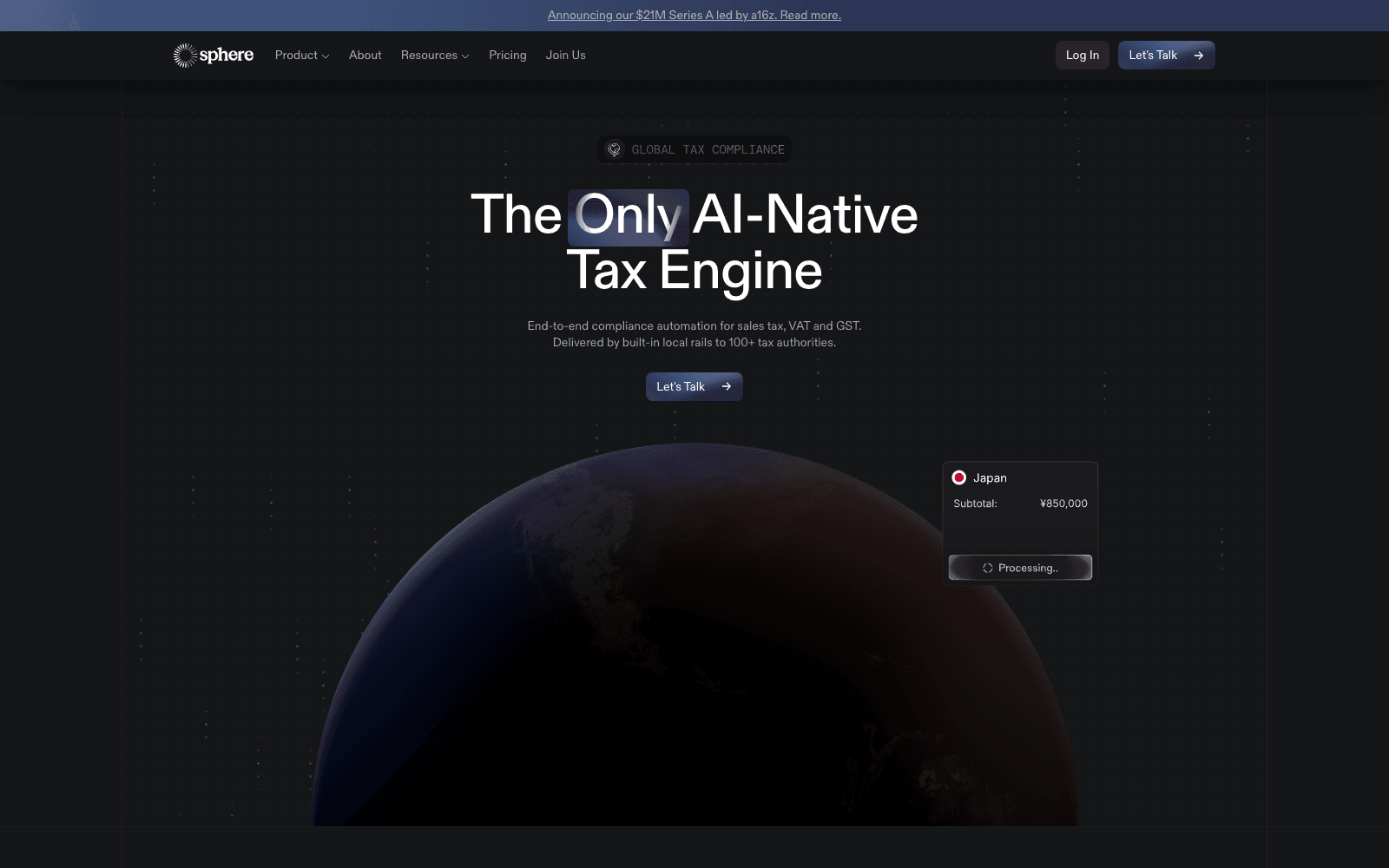
Sphere automates sales tax, VAT, and GST compliance across 100+ jurisdictions. For SaaS and ecommerce companies operating internationally, the alternative is either expensive (Avalara, Vertex at enterprise tier) or risky (manual filings that lead to compliance gaps). Sphere targets the gap between scrappy manual approaches and enterprise platforms.
What it wins at: SaaS and ecommerce with multi-jurisdiction tax footprint, mid-market finance teams not yet on enterprise tax platforms, and the AI-native architecture that adapts faster to regulatory changes than legacy competitors.
Where it falls down: newer than Avalara and Vertex; enterprise references are thinner. For Fortune 500 tax compliance with very complex structure, the legacy enterprise platforms still win on procurement.
6. Cleareye.ai — Trade Finance Operations
Cleareye.ai targets trade finance specifically — banks and trading companies handling letters of credit, document review, sanctions screening, and the document-heavy workflows international trade finance requires. AI compresses what would otherwise be hours of skilled review per transaction.
What it wins at: trade finance operations at banks and trading companies, document-heavy workflows where AI extraction beats manual review, and a niche where vertical expertise matters more than horizontal AI.
Where it falls down: trade-finance-specific — wrong tool for general accounting or finance work. Implementation is bank-grade (slow, careful) rather than SaaS-fast.
7. Indico Data — Document Automation for Finance and Insurance
Indico Data is the AI document automation platform used heavily in insurance and finance for processing unstructured documents at scale — claims, statements, contracts, applications. The 2025 product expansion added agentic workflows on top of the document-extraction core, making it credibly more than a smarter OCR.
What it wins at: insurance and finance ops with high volumes of unstructured documents, complex extraction tasks where rules-based approaches fail, and enterprise procurement contexts that need governance and audit logs alongside the AI.
Where it falls down: enterprise-priced; for smaller finance ops with simpler document workflows, lighter-weight tools (Vic.ai, Rillet) handle the scope you actually need.
How to Build Your 2026 Finance AI Stack
Match the tool to the actual finance team shape:
- Mid-market or enterprise CFO org: Numeric (close) + Vic.ai (AP) + HighRadius (AR) is the strongest 2026 trio. Add Sphere for international tax footprint.
- Small business / startup CFO: Rillet for the basic bookkeeping; ChatGPT or Claude for the FP&A drafting work; outsourced CPA for anything complex.
- Bank or financial services: Cleareye.ai (trade finance) or Indico Data (broader document ops) depending on which workflow dominates.
- Insurance carrier: Indico Data is the standard pick.
For most mid-market finance teams not yet using any of these, Numeric for close + Vic.ai for AP is the highest-ROI starting pair — both target the workflows that consume the most controller hours, both have published outcomes data, and both pay back within the first quarter for teams large enough to justify them.
For adjacent reading, see our Best AI Tools for Operations (Workato/Zapier overlap with finance ops automation), Best AI Tools for Data Visualization and Analytics (FP&A teams use BI tooling alongside finance AI), and Top 10 AI Tools for Sales Professionals for the RevOps adjacency that often shares CFO mindshare with FinOps.
Frequently Asked Questions
What's the best AI tool for accounting in 2026? Depends on the team size and workflow. For mid-market and enterprise close, Numeric. For AP automation, Vic.ai (mid-market) or HighRadius (enterprise Order-to-Cash). For SMB bookkeeping, Rillet. There isn't one tool that covers all of finance — pick by your bottleneck workflow first.
Will AI replace accountants? Not the accountants; replacing the volume of repetitive transactional work accountants used to do manually. Most finance teams adopting these tools shift staff toward analysis, advisory work, and judgment-heavy areas (audit, complex revenue recognition, M&A) and away from data entry and reconciliation. CPA-level expertise still matters; bookkeeper-volume work is what AI absorbs first.
How do I get audit / SOX comfort with AI in the financial close? The leaders in this category (Numeric, Vic.ai, HighRadius) have built their products with audit trail and SOX controls as core features — every AI decision is logged, reversible, and reviewable. Audit firms (Big Four and others) have evolved their methodologies to handle AI-augmented financial processes. For SOX-relevant workflows, validate with your auditor before deploying; most major audit firms have approved patterns for these tools.
Is AI in finance secure enough for sensitive data? The enterprise tiers of the leaders carry SOC 2 Type II, ISO 27001, and signed DPAs with zero-retention guarantees on the LLM side. Banking-grade implementations (HighRadius, Cleareye) carry additional financial-services certifications. Read the specific data-handling page; the differences between vendors matter more in finance than in most categories.
Can these tools work without my existing GL (NetSuite, QuickBooks, etc.)? No, these are workflow-on-top-of-GL tools, not GL replacements. Numeric, Vic.ai, HighRadius all integrate with the major GLs (NetSuite, Sage Intacct, Oracle, SAP) and add AI workflow on top. Rillet is closer to a QuickBooks/Xero alternative for very small businesses but still works with existing accounting infrastructure for larger ones.
What's the typical pricing? Numeric and HighRadius are mid-five-figures to low-six-figures annually depending on team size and module scope. Vic.ai prices per invoice or per FTE depending on plan. Rillet is small-business-priced (hundreds per month). Sphere ranges by jurisdiction count. Cleareye and Indico Data are enterprise contracts. None of the major tools have meaningful free tiers — this is paid B2B SaaS.
Do these tools handle multi-entity, multi-currency, international operations? Yes for the enterprise leaders (Numeric, HighRadius, Vic.ai). Sphere is purpose-built for multi-jurisdiction tax. Rillet's multi-entity support is improving but trails the enterprise alternatives. International operations specifically should validate the local currency, language, and regulatory support before subscribing.
Final Thoughts
AI in finance and accounting in 2026 is past the experimental phase and into operational deployment at real CFO orgs. The leaders have published outcomes data, run in production at scale, and have the audit and compliance posture mid-market and enterprise finance teams require. The teams getting the most leverage pick one or two tools that target their actual bottleneck workflows — close, AP, AR, tax, document processing — rather than buying a broad "AI for finance" suite that does many things mediocrely.
For finance leaders not yet using any of these tools, Numeric for close acceleration is the most measurable starting point if you're at mid-market scale; Rillet for SMB bookkeeping is the right small-business choice. The compounding effect — controllers doing more analysis, less data entry — shows up in week 2 and accelerates from there.
Categories these tools span
More collections you may also like


Sign up for our newsletter
Receive weekly updates so you can stay up-to-date with the world of AI
Sign up for our newsletter
Receive weekly updates so you can stay up-to-date with the world of AI
The AI tools directory for discovering, exploring, and comparing the most innovative AI tools in the industry