Top 6 AI Image Generators Compared (2026)




Stable Diffusion
Latent text-to-image diffusion model for photo-realistic image generation
Free
4.92
443

Stable Diffusion
Latent text-to-image diffusion model for photo-realistic image generation
Free
4.92
443
Best AI Image Generators in 2026
The AI image generation race is now in its mature phase. The arms race over photorealism is mostly settled, the open-weight ecosystem has caught up with the closed labs in image quality, and the real differences between tools have moved up the stack: prompt understanding, typography, controllability, licensing, and how each one fits into a real creative workflow.
This is the honest 2026 comparison of the six AI image generators that actually matter. Each section calls out the one job each tool wins at — because picking by leaderboard rank gets you a generator that's great at benchmarks and frustrating in production. The tools below are different enough that most serious creators end up using two of them, not one.
Updated August 2, 2026. The DALL·E branding was retired into OpenAI's newer image stack; that pick is now listed as GPT Image, reached through ChatGPT.
How We Evaluated These Tools
The six AI image generators below were evaluated on five criteria, in priority order:
- Production usage by named studios, agencies, and product teams — not Twitter demos, but verified deployment in editorial, advertising, game art, packaging, and product design workflows
- Prompt adherence and edit-ability — does the model render what you actually asked for, and can you steer or edit the result without re-rolling from scratch
- Commercial licensing clarity — clear, written commercial-use terms for paid users, with the licensing footnotes spelled out (training data, output ownership, redistribution)
- Workflow integration — APIs, plugins, in-product editors, and the depth of the surrounding ecosystem (LoRAs, ControlNets, fine-tuning, prompt libraries)
- 2026 currency — has the underlying model been updated in the last 12 months, or has the lab gone quiet (a real risk in this category)
We did not include image generation features inside non-AI-first products (Canva's Magic Media, Adobe Firefly inside Photoshop, Google's Imagen inside Workspace) — those are bundled add-ons that solve a different procurement problem. For the bundled-with-design-tool angle, those still belong in the design-tool category. For raw model quality and creative workflow, the six below are the right comparison set.
Quick Comparison
| Tool | Best for |
|---|---|
| Midjourney | Aesthetic benchmark. Best for editorial illustration, mood boards, hero images. |
| GPT Image | Easiest entry point, inside ChatGPT. Best for non-experts who want results from a sentence. |
| FLUX | Power-user prompt-adherence leader. Best for professional creators and developers via API. |
| Ideogram | Typography-in-image leader. Best for posters, ads, packaging mockups. |
| Leonardo.ai | Production workflow tool. Best for game studios and high-volume asset teams. |
| Stable Diffusion | Open foundation. Best for local generation, fine-tuning, product integration. |
1. Midjourney — Still the Aesthetic Benchmark
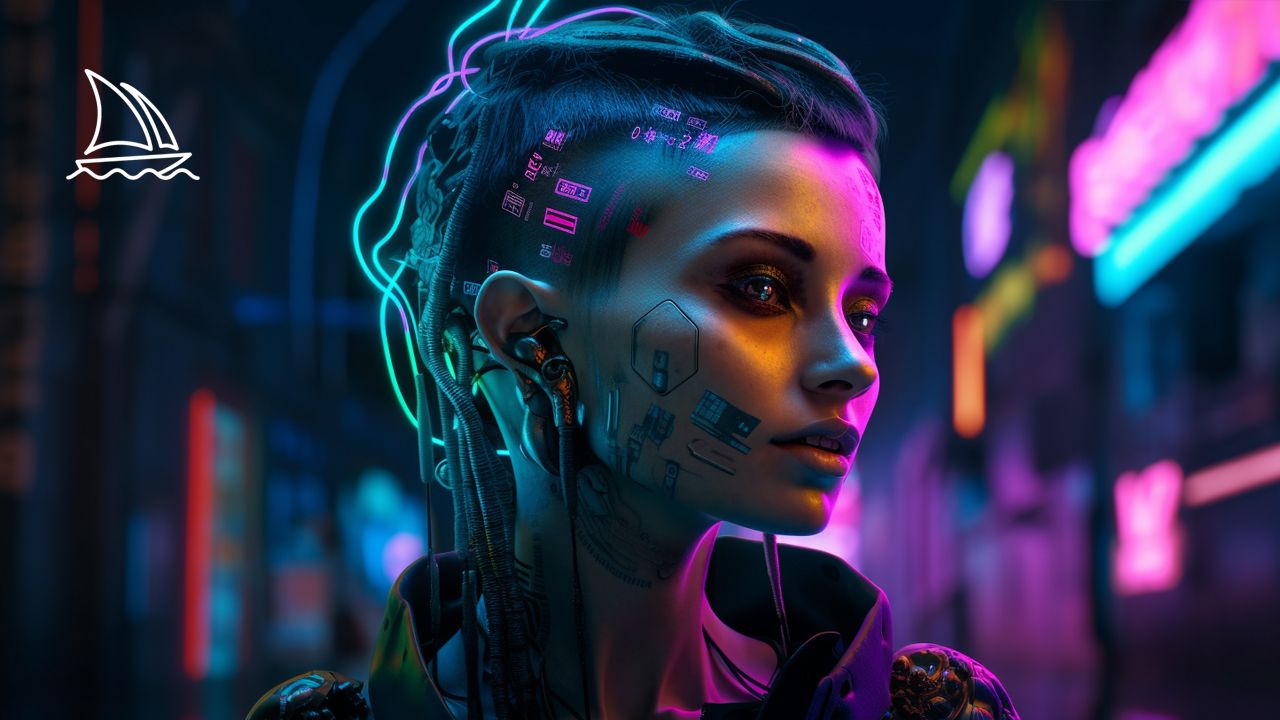
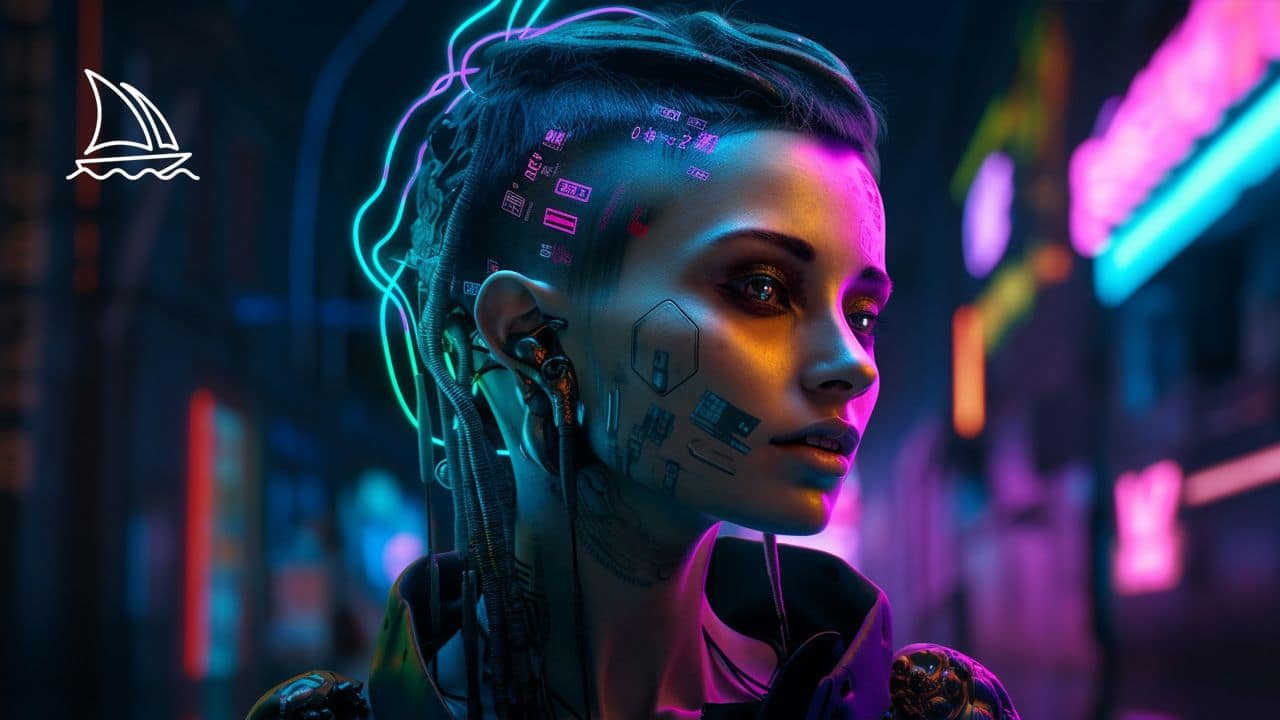
Midjourney is the generator art directors keep coming back to even when the benchmarks say something else won. Its house style — cinematic lighting, painterly composition, confident color — is a real edge for editorial illustration, marketing visuals, and concept art. v7 closed most of the prompt-adherence gap that used to push power users to other tools, while keeping the look that makes Midjourney outputs recognizable across a feed.
Production credibility: bootstrap-funded under founder David Holz; reported $200M+ ARR by mid-2024 from the company's own disclosures; >20M Discord members at peak; standard tooling at major editorial publications, ad agencies, and design studios. The aesthetic-quality lead has been the most durable competitive moat in the category.
What it wins at: hero images, editorial illustrations, mood boards, and any project where the brief is "make it look good" more than "render this exact thing." The community gallery is also the best discovery surface in the category for prompt techniques.
Where it falls down: typography is still weak compared to Ideogram, the in-app editing UX trails the web competitors, and the Discord-first onboarding is a wall for non-technical teammates even after the web app launched.
2. GPT Image — The Easiest Entry Point
GPT Image, OpenAI's image generation inside ChatGPT, is the right answer for anyone who wants to type a sentence and get a usable image. Prompt understanding leads the field because the model plans a layout before it draws and checks its own output, rather than generating in one pass. For non-experts, that's the difference between getting what you meant and fighting the tool.
Production credibility: OpenAI ships image generation through ChatGPT's paid tiers and the API, reaching the largest user base of any AI product; the GPT Image 2 generation released in April 2026 took the top spot on independent image-quality leaderboards; commercial usage rights are granted on paid tiers. Distribution is the moat, and the quality now matches it. The earlier DALL·E 3 branding has been retired — it is recorded in our AI graveyard.
What it wins at: conversational image generation, iterating in a chat thread, and bundled access for teams already paying for ChatGPT. Strong at composition logic — "a cat sitting on a stack of three books" works the first try.
Where it falls down: stylistic ceiling is lower than Midjourney for editorial work, content filters are aggressive (often blocking benign requests), and you don't get the same level of low-level control as the open-weights options.
3. FLUX — The Power User's Default
FLUX from Black Forest Labs is what serious creators reach for when Midjourney's house style doesn't fit and OpenAI's filter is in the way. The pro variants (1.1 Pro, Ultra, Kontext for editing) lead most prompt-adherence and human-anatomy benchmarks in 2026, and the open Schnell variant runs locally for engineers who want full control. It's the model that powers most of the high-end third-party generation apps you've used without knowing.
Production credibility: Black Forest Labs founded 2024 by the original Stable Diffusion researchers (Andreas Blattmann, Robin Rombach, Patrick Esser); raised $200M+ Series B in late 2024 led by Andreessen Horowitz; FLUX models power Krea, Freepik AI, FAL, Replicate, Grok image generation, and dozens of other production image-generation surfaces.
What it wins at: prompt adherence, hands and faces (the historic AI failure modes that FLUX largely solved), and licensing flexibility — the open variant is genuinely usable for commercial work without the licensing footnotes most labs hide behind.
Where it falls down: there's no first-party consumer app, so most users encounter FLUX through resellers (Replicate, FAL, Krea) whose UX varies wildly. Pricing is also less predictable than the subscription competitors.
4. Ideogram — The Tool That Can Actually Spell
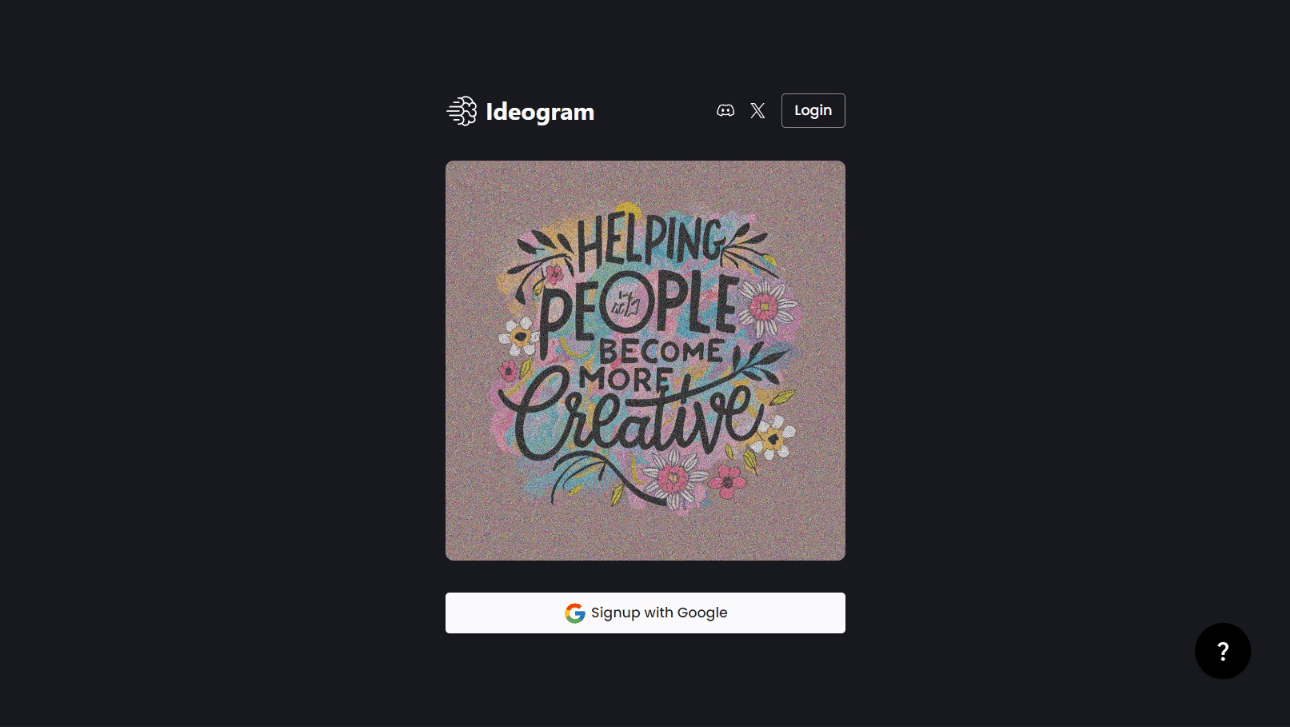
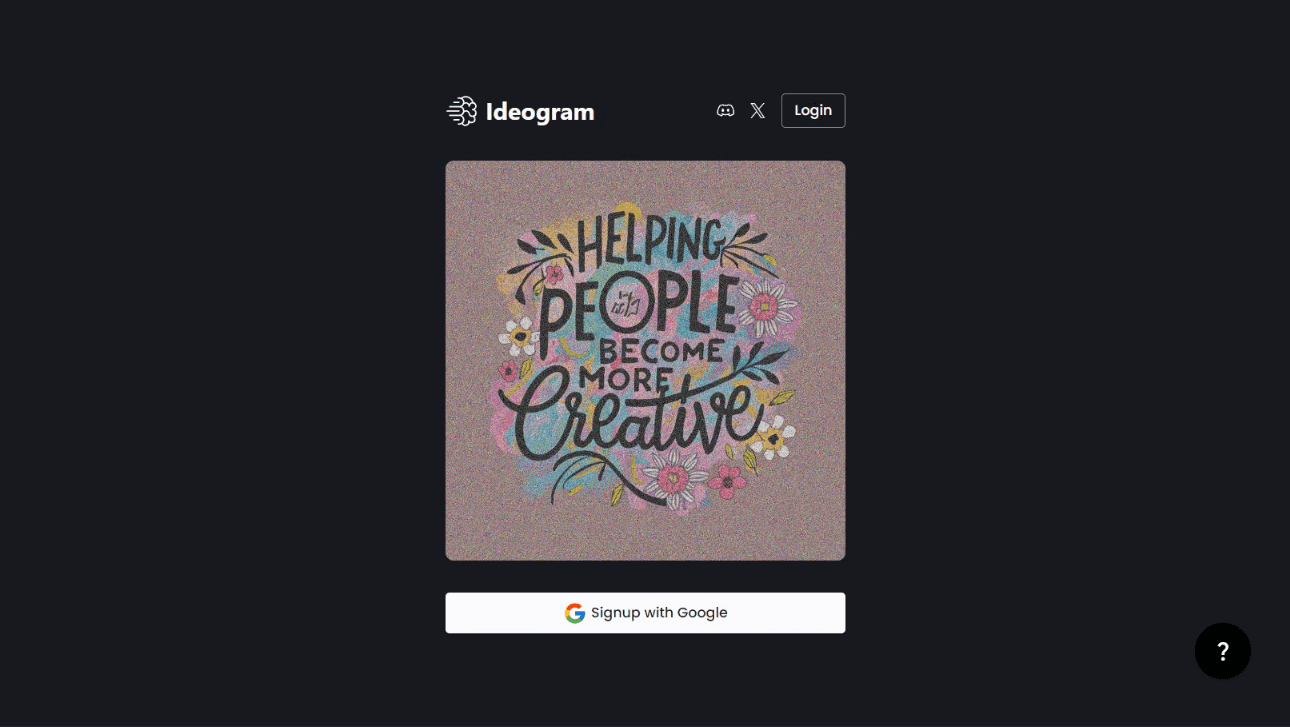
Ideogram found its niche by being the one generator that reliably renders text inside images, and it has compounded that lead. For posters, ads, social tiles, packaging mockups, and any visual where a word or phrase is part of the design, Ideogram is the only generator that doesn't make you composite the type in afterward. v3 also closed most of the photorealism gap with the leaders.
Production credibility: founded by ex-Google Brain image researchers; raised $80M Series A led by Andreessen Horowitz in August 2024; v3 launched mid-2025 with the strongest in-image typography in the category; deployed across packaging, advertising, and social-content workflows where text rendering is the make-or-break feature.
What it wins at: typography in images, designed posters, ads with copy, branded social content. The free tier is generous enough for evaluation.
Where it falls down: outside of typography work, it's a competent but not category-leading generator. If your brief never includes text, you're paying for a feature you don't need.
5. Leonardo.ai — The Workflow Tool for Game and Production Art
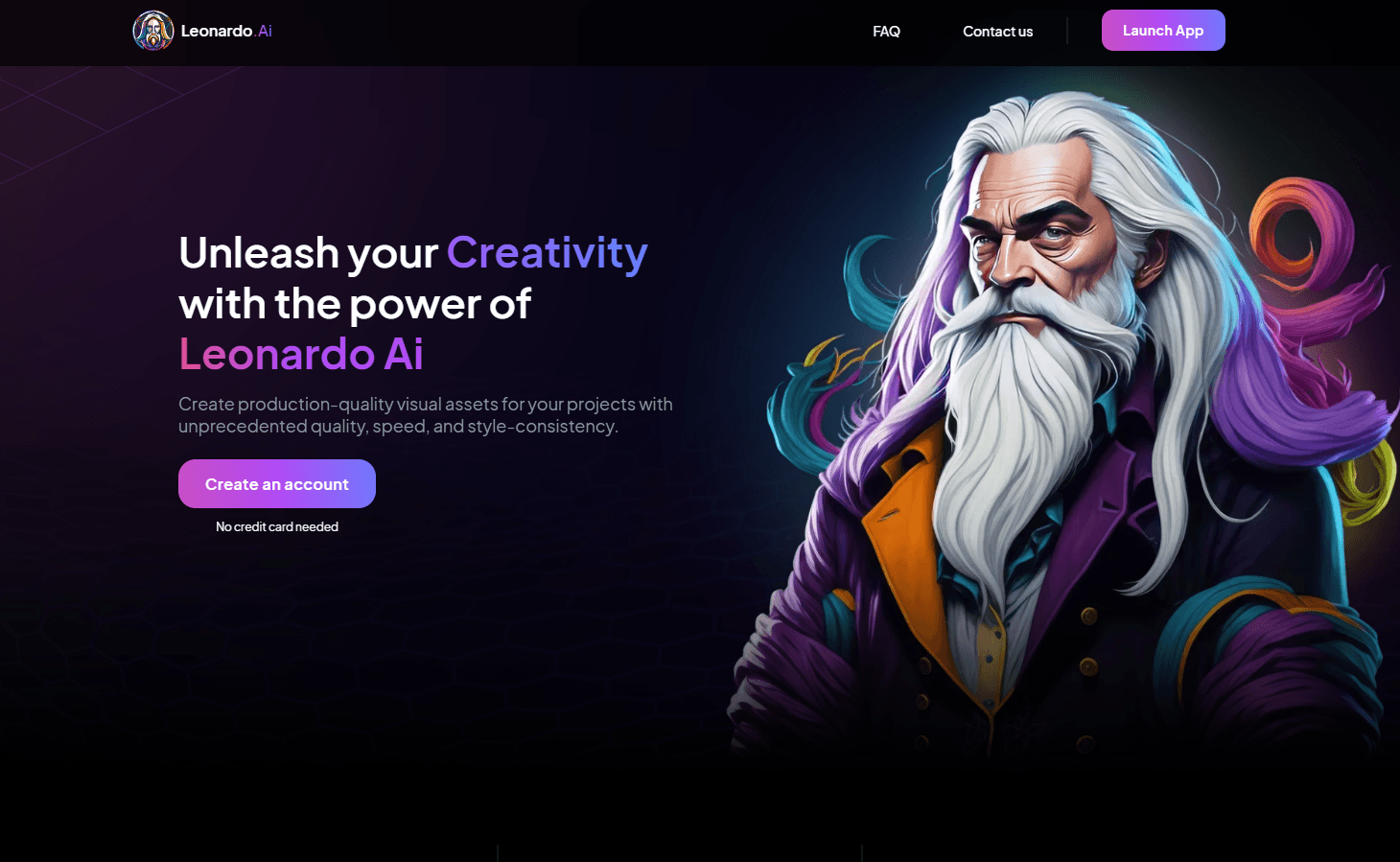
Leonardo.ai is the platform built for production art teams — game studios, indie devs, marketing teams generating large volumes of consistent assets. Its strength isn't a single best-in-class model; it's the workflow around the models: fine-tuned style packs, real-time canvas editing, image-to-image control, and team features that make it usable for organizations rather than solo creators.
Production credibility: acquired by Canva in mid-2024 in a multi-hundred-million-dollar deal; pre-acquisition crossed 19M+ users; remains independently operated as a Canva subsidiary; deployed across game studios (indies and AAA), marketing teams, and publishing houses generating high-volume consistent style assets. Canva's distribution gave it a step-change in enterprise reach through 2025–2026.
What it wins at: high-volume asset generation with consistent style, game and concept art workflows, and team collaboration. The Canvas mode is one of the better in-painting UXs in the category.
Where it falls down: peak quality on a one-off image is below Midjourney and FLUX. This is a tool sized for production pipelines, not for single hero shots.
6. Stable Diffusion — The Open Foundation Everything Else Builds On
Stable Diffusion — including SDXL and the SD3 family — remains the default for anyone who wants to run image generation locally, fine-tune on a custom dataset, or build it into their own product. The base models have been overtaken by FLUX and the closed leaders for raw quality, but the ecosystem of LoRAs, ControlNets, and community-trained variants is unmatched. If you need a model that draws your specific characters, products, or art style, Stable Diffusion is still the answer.
Production credibility: Stability AI raised emergency funding led by Sean Parker in 2024 after a leadership reset; SD models have been downloaded 200M+ times across HuggingFace and Civitai; the surrounding ecosystem (ComfyUI, Automatic1111, Forge, Krita AI, InvokeAI) is the largest open-source creative-AI ecosystem in existence. The community continues to ship even when the lab is quiet.
What it wins at: local generation, custom fine-tuning, full pipeline control, and integration into commercial products. The community has built tools around it (ComfyUI, Automatic1111, Forge) that no closed competitor matches.
Where it falls down: you're managing a tooling stack instead of using a product. Out-of-the-box quality is below FLUX. Not the right starting point for a non-technical creator.
How to Choose Between Them
Most serious image work in 2026 uses two generators, not one. A reasonable starting matrix:
- Editorial / marketing illustrations: Midjourney + Ideogram (when you need text)
- Product or marketing team that wants one tool: GPT Image inside ChatGPT, with a Midjourney seat for the design lead
- Power user / agency: FLUX 1.1 Pro on a reseller, plus Midjourney for style work
- Game studio or production pipeline: Leonardo.ai
- Engineer building image gen into a product: Stable Diffusion or FLUX (open variant), self-hosted
- Brand or packaging design with text in the image: Ideogram first, FLUX second
The "one model to rule them all" framing is a marketing convenience. The teams getting the best output run prompts through two generators and pick the winner.
Adjacent Reading
- Top 7 AI Video Generators (2026) — the moving-image side of the same creative AI workflow
- Best AI Tools for Audio Creation and Editing (2026) — soundtrack and SFX generation that pairs with visual work
- Top AI Voice Tools for 2026 — voice-cloning and TTS for narrated visual content
- Best AI Headshot Generators (2026) — the headshot-specific subcategory most teams pick separately
Frequently Asked Questions
Which AI image generator has the best quality in 2026? For raw photorealism and prompt adherence, FLUX 1.1 Pro and the latest Midjourney release trade the top spot depending on the benchmark. For aesthetic editorial work, Midjourney still wins more head-to-head blind tests. For typography-in-image, Ideogram is uncontested. The honest answer: "best" depends on the brief, and the gap between the top three is now small enough that prompt skill matters more than model choice.
Can I use AI-generated images commercially? Depends on the tool and tier. Midjourney, ChatGPT's image generation (paid), FLUX (Pro), Ideogram, and Leonardo all grant commercial usage rights to paying users. Free tiers usually don't, or restrict heavily. Stable Diffusion's open variants vary by checkpoint license — read the model card before shipping. Trademark and likeness laws still apply regardless of what the generator's terms say.
Are AI image generators replacing illustrators? Not the good ones. The market for cheap stock-photo replacement has collapsed; the market for art directors who can prompt, edit, and curate at speed has expanded. The teams winning with these tools treat them as leverage on a designer, not as a way to skip having one.
What about model bias and copyright issues? Real and ongoing. Midjourney, OpenAI, and Stability are all in active litigation over training data. FLUX's licensing is cleaner because Black Forest Labs trained more recent models with documented data sources, but no commercial generator has fully resolved this. If your use case is regulated (advertising disclosures, kids' content, regulated industries), get legal review before scaling output.
Should I run Stable Diffusion locally or use a hosted service? Locally if you need privacy, custom fine-tuning, or high-volume generation where API costs add up — and you're comfortable maintaining a CUDA stack. Hosted (Replicate, FAL, Krea, Leonardo) if you want the latest models without the ops burden. Most teams start hosted and only move local when the bill or the privacy requirement forces it.
What's the typical pricing in 2026? Midjourney runs $10–96/month per seat across Basic to Mega tiers. ChatGPT Plus ($20/month) bundles GPT image generation. FLUX is API-priced via resellers (Replicate, FAL, Together) at roughly $0.025–0.06 per image. Ideogram is $8–48/month. Leonardo.ai is free up to 150 images/day, $12–48/month for paid tiers. Stable Diffusion is free if you self-host (compute costs apply); $0.0023–0.02 per image via hosted APIs.
Is the typography problem really solved by Ideogram? In most cases, yes. For 1–10 word phrases in standard fonts and reasonable composition, Ideogram renders text correctly on the first or second generation. For dense paragraphs or unusual fonts, no generator yet handles it reliably — composite the text in afterward in those cases.
Final Thoughts
The AI image generator market in 2026 is no longer a single race. Midjourney owns aesthetics. GPT Image inside ChatGPT owns the easiest entry point. FLUX owns power users and prompt adherence. Ideogram owns typography. Leonardo owns production pipelines. Stable Diffusion owns the open foundation that the rest of the ecosystem still builds on.
The right move for almost any team is to pay for two seats — one aesthetic-leader (Midjourney or GPT Image) and one prompt-adherence-leader (FLUX) — and let the brief decide which one runs. The cost is a rounding error against a designer's salary, and the output gap between using one tool and using two is bigger than any model upgrade you'll see this year.
Compare tools in this collection
Categories these tools span
More collections you may also like
Sign up for our newsletter
Receive weekly updates so you can stay up-to-date with the world of AI
Sign up for our newsletter
Receive weekly updates so you can stay up-to-date with the world of AI
The AI tools directory for discovering, exploring, and comparing the most innovative AI tools in the industry