Best AI Tools for Audio Creation and Editing (2026)








Best AI Tools for Audio Creation and Editing in 2026
If you're researching the best AI tools for audio creation and editing in 2026, the category looks fundamentally different than it did 18 months ago. Music generation went from "plausible 30-second clips" to full vocal tracks indistinguishable from human production (Suno v5, Udio v2). Voice synthesis crossed the uncanny valley with ElevenLabs v3 and Resemble AI's emotional control. Podcast and video editing AI matured into production tooling rather than novelty. And the regulatory landscape around voice cloning tightened materially — voice deepfake legislation passed in multiple US states and the EU in 2025.
This guide covers the eight AI audio tools that move the needle in 2026: Suno, Udio, Stable Audio, ElevenLabs, LMNT, Resemble AI, Descript, and Adobe Enhance Speech. Each is rated by what it ships in production, what licensing posture it carries, and how the leaders combine into a real audio workflow.
The Three Lanes of Audio AI in 2026
Most teams researching audio AI are solving one of three problems. The right tool depends entirely on which:
- Music generation: turn a text prompt into a full song with vocals, instrumentation, and arrangement. Leaders: Suno, Udio, Stable Audio.
- Voice synthesis and cloning: generate spoken audio from text, clone a voice for narration or character work. Leaders: ElevenLabs, LMNT, Resemble AI.
- Audio production and editing: clean up recordings, edit podcasts and video, automate transcription. Leaders: Descript, Adobe Enhance Speech.
Most serious creators in 2026 use one tool from each lane, not one tool that does everything.
Updated August 2, 2026. PlayHT was removed — it became PlayAI and was acquired by Meta, and the standalone product is gone. Replaced with LMNT in the same slot.
Quick Comparison
| Tool | Best for |
|---|---|
| Suno | AI music generation. Best for full-song generation with vocals from a text prompt. Category leader by usage volume. |
| Udio | AI music generation. Best as a Suno alternative with stronger remix and stem-export tooling. |
| Stable Audio | Open-weights structured audio generation. Best for sound effects, instrumental loops, and integration into custom apps. |
| ElevenLabs | Voice synthesis and cloning. Best for narration, audiobooks, and dubbing — the category leader by quality and ecosystem. |
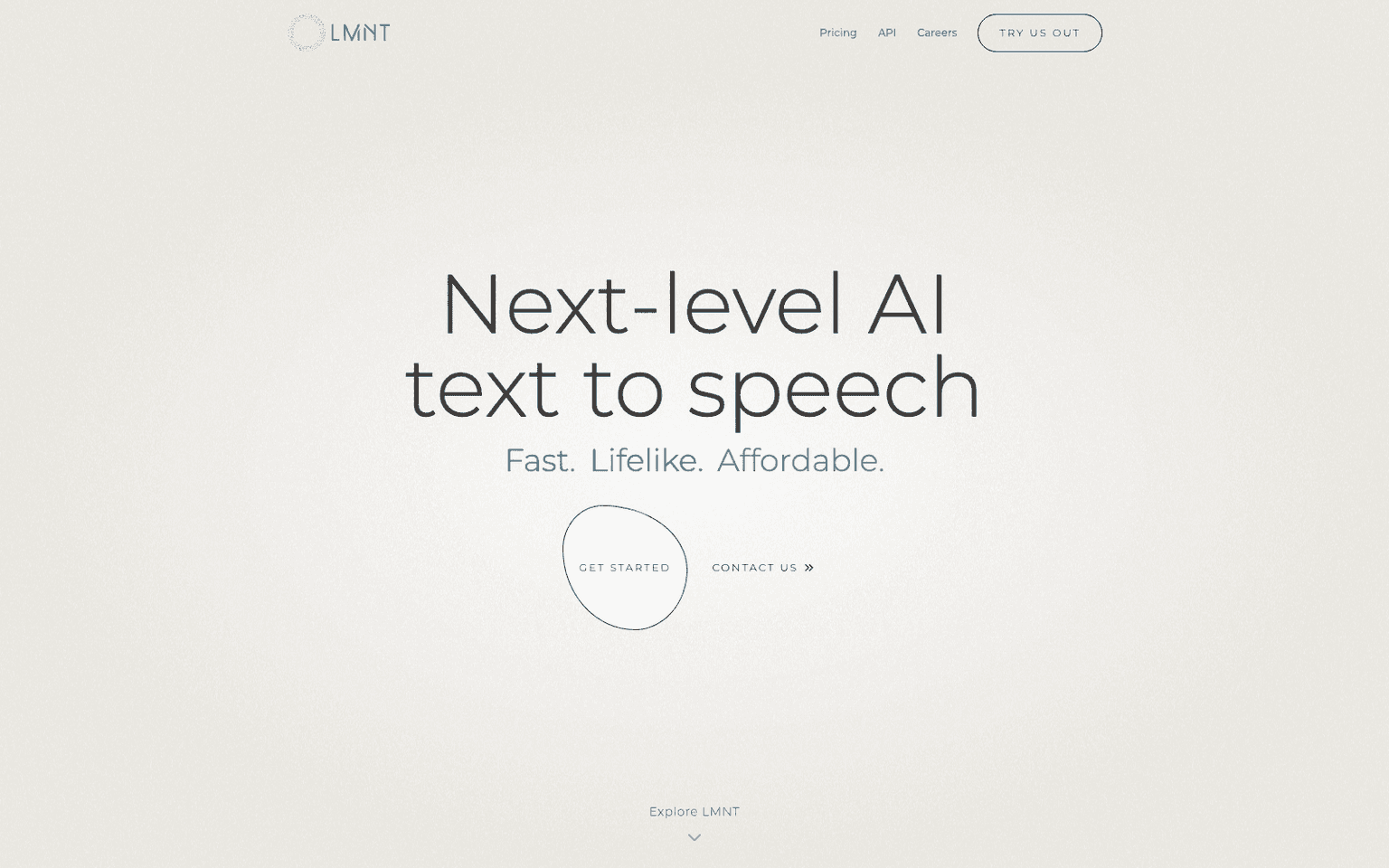
| LMNT | Low-latency speech synthesis with a developer focus. Best for real-time voice agents and API-driven workflows. |
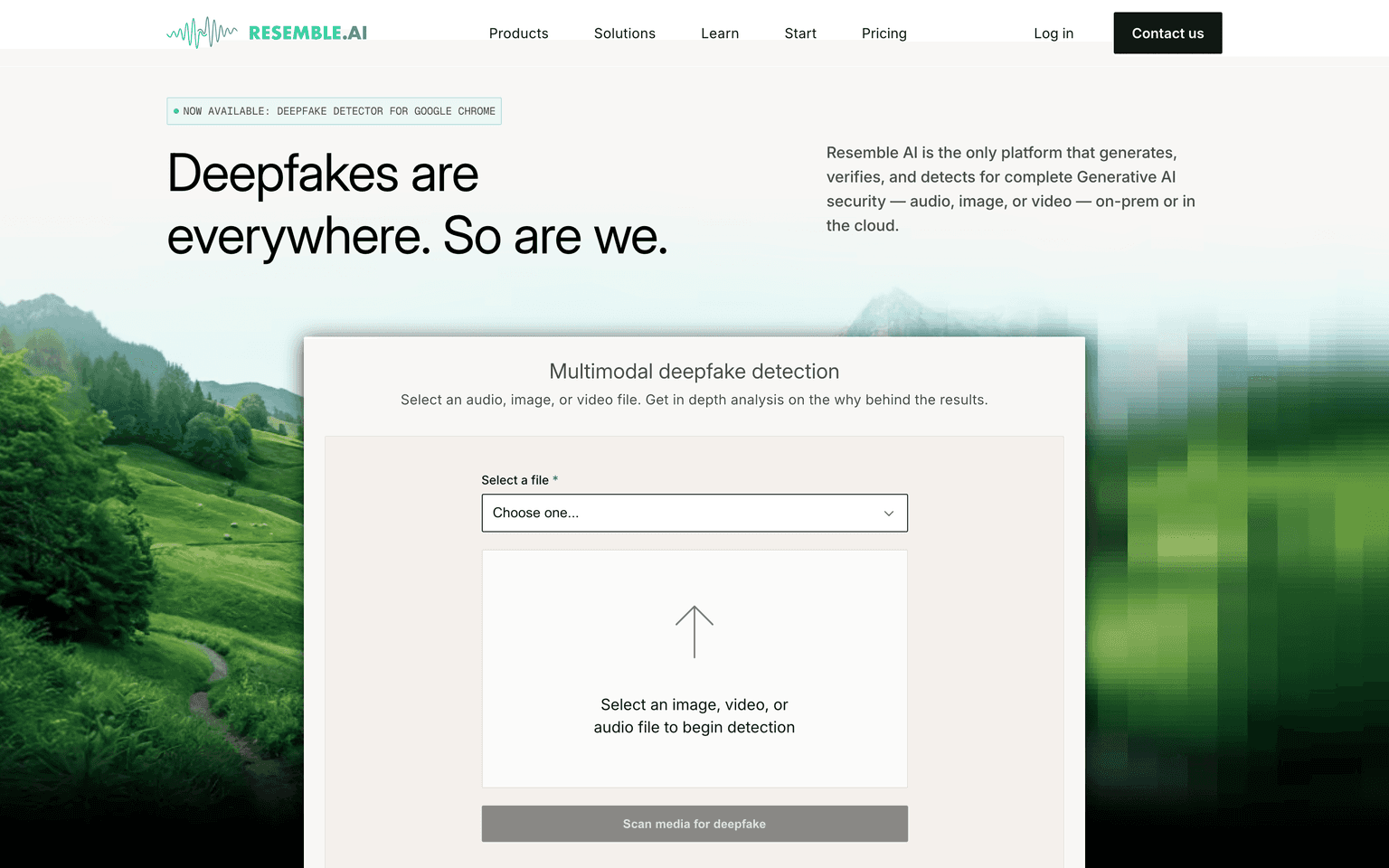
| Resemble AI | Voice cloning plus deepfake detection. Best for production voice work where consent verification and content authenticity matter. |
| Descript | AI podcast and video editor. Best for editing audio by editing the transcript — fundamentally easier UX than waveform editing. |
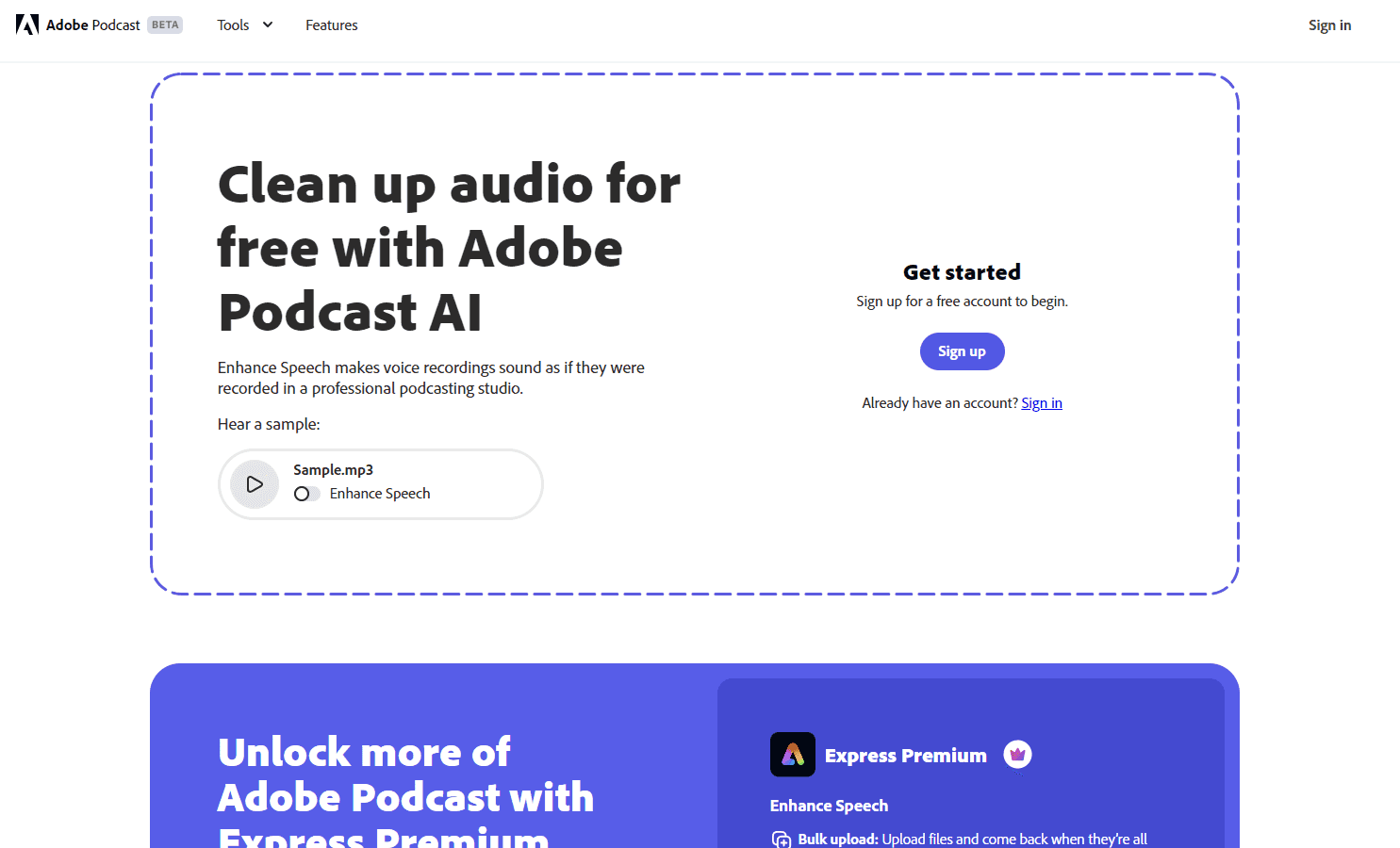
| Adobe Enhance Speech | Free speech cleanup. Best for turning bad recordings (Zoom, phone, untreated rooms) into broadcast-quality audio in seconds. |
Music Generation
The biggest qualitative leap in audio AI between 2024 and 2026 was music. Suno and Udio's 2025 model releases (Suno v5, Udio v2) moved the category from "plausible demos" to "finished tracks indistinguishable from human production for many genres." Both are now real creative tools with serious user bases — and the legal status of AI-generated music remains an active issue with multiple lawsuits in flight.
1. Suno — The Most-Used AI Music Generator
Suno leads the AI music category by user volume — the v5 model release in late 2025 set the bar for vocal coherence and arrangement quality across genres from pop to hip-hop to country. Type a description, get back a finished track with vocals, instrumentation, and structure.
What it wins at: full-song generation with usable vocals, breadth of genre coverage, and the most polished consumer-app experience in the category. Active community publishing prompt techniques.
Where it falls down: vocal quality varies — some genres (jazz, classical, complex orchestral) plateau noticeably. Subscription required for commercial-use licensing. The Suno-vs-RIAA litigation over training data is unresolved as of 2026 and may affect commercial use long-term.
2. Udio — Strong Alternative With Better Remix Tooling
Udio launched in 2024 with a similar core capability and has differentiated on remix tooling, stem extraction, and longer-format track generation. The model trades blows with Suno across genres; many creators run prompts through both and pick the winner.
What it wins at: remix and extension workflows, stem export for users who want to mix the AI output further in their DAW, and longer track lengths.
Where it falls down: smaller community than Suno; same legal-status overhang on commercial use. UX polish lags Suno on mobile.
3. Stable Audio — Open-Weights Structured Audio
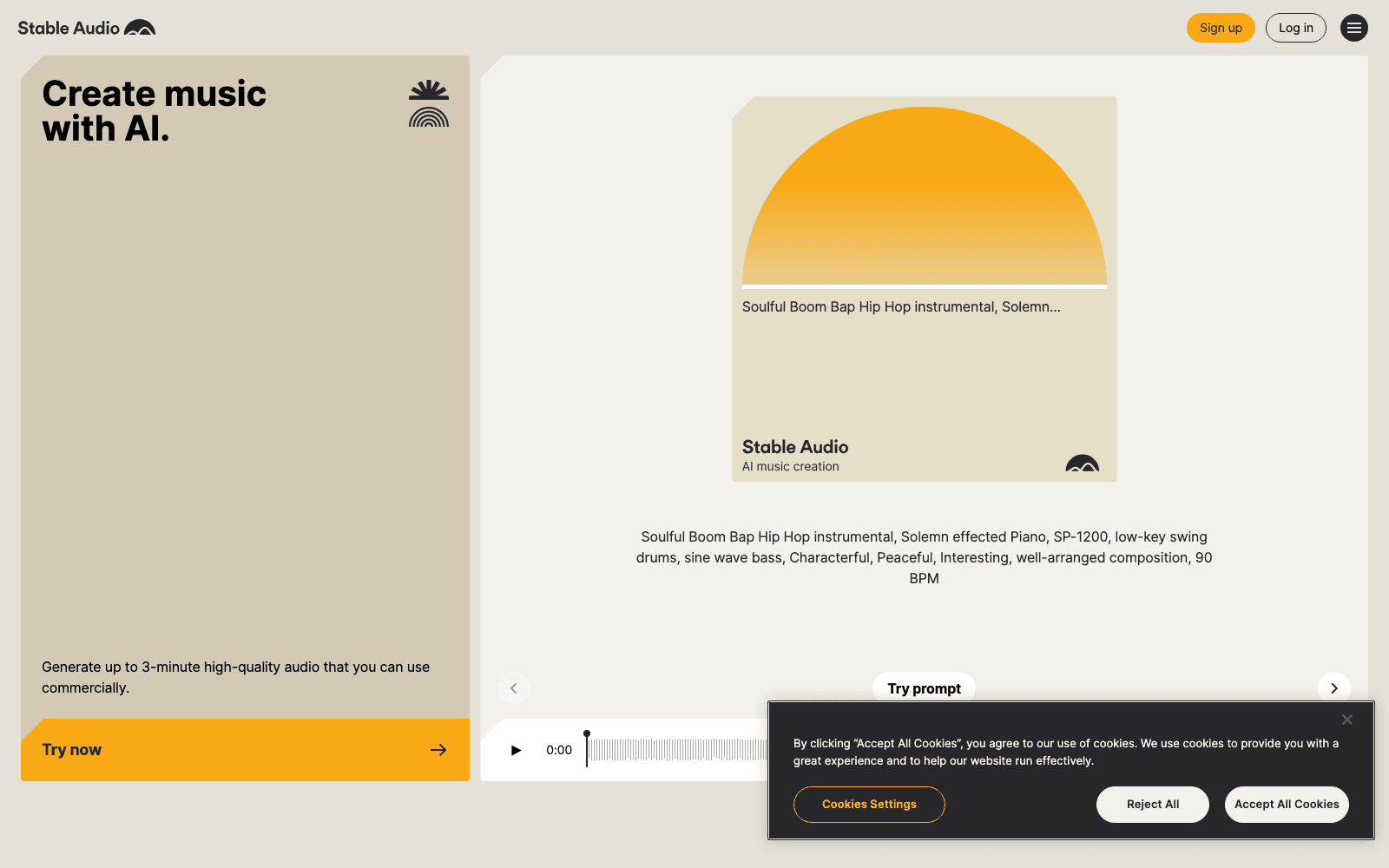
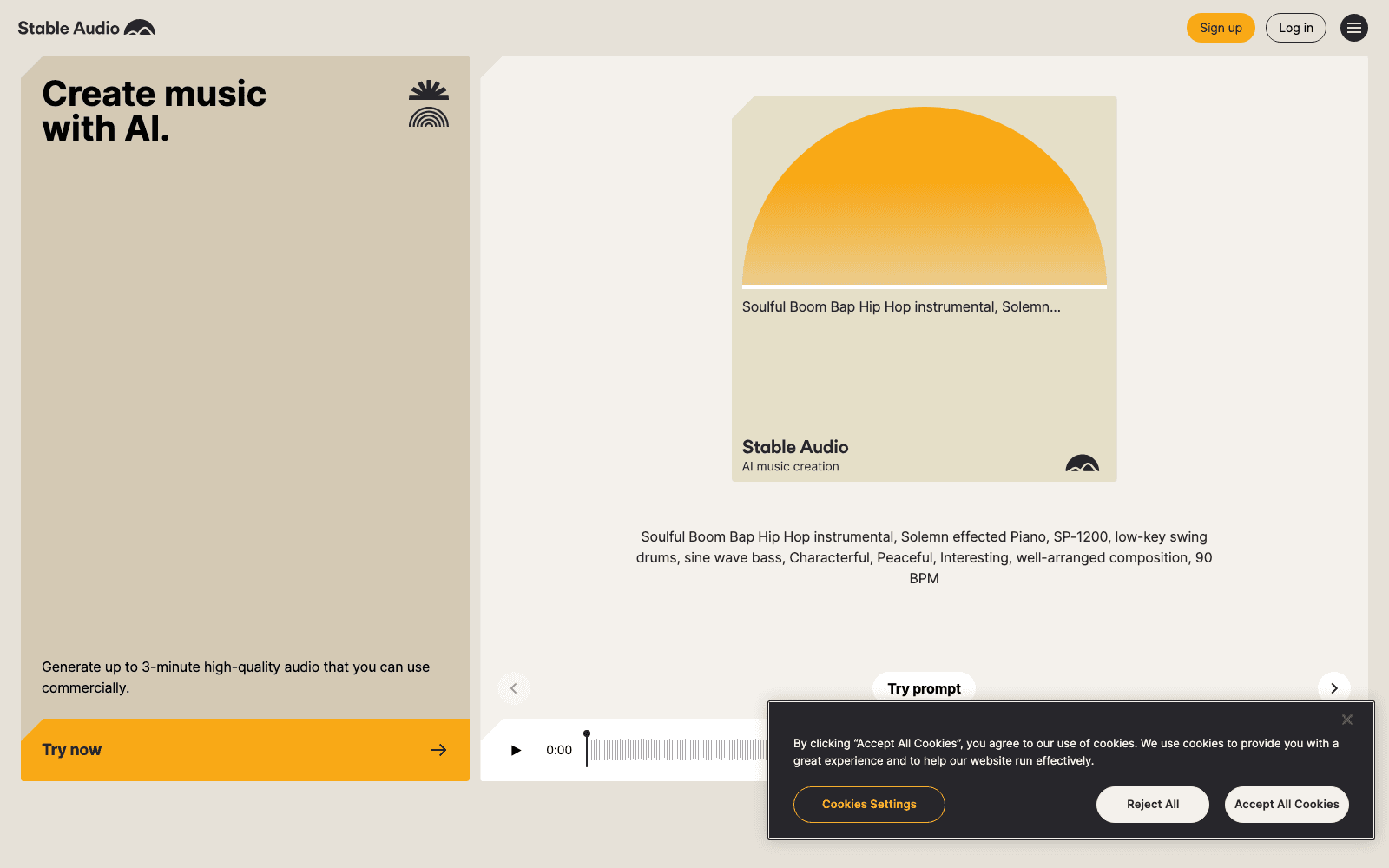
Stable Audio takes a different angle — Stability AI's open-weights audio model focused on structured audio (sound effects, loops, instrumental beds) rather than full vocal songs. Generates up to 3 minutes at studio quality, and the open-weights variant runs locally for engineers building it into their own products.
What it wins at: sound design, looping instrumentals, integration into custom apps and games, and licensing flexibility (the open variant has cleaner commercial terms than the closed alternatives).
Where it falls down: doesn't generate full vocal tracks like Suno or Udio. For "make me a song with words," wrong tool.
Voice Synthesis and Cloning
The voice category split in 2024–2025 between three real leaders. Each fits a different workflow shape — narration vs. real-time agents vs. production voice work with consent verification.
4. ElevenLabs — The Voice Synthesis Leader
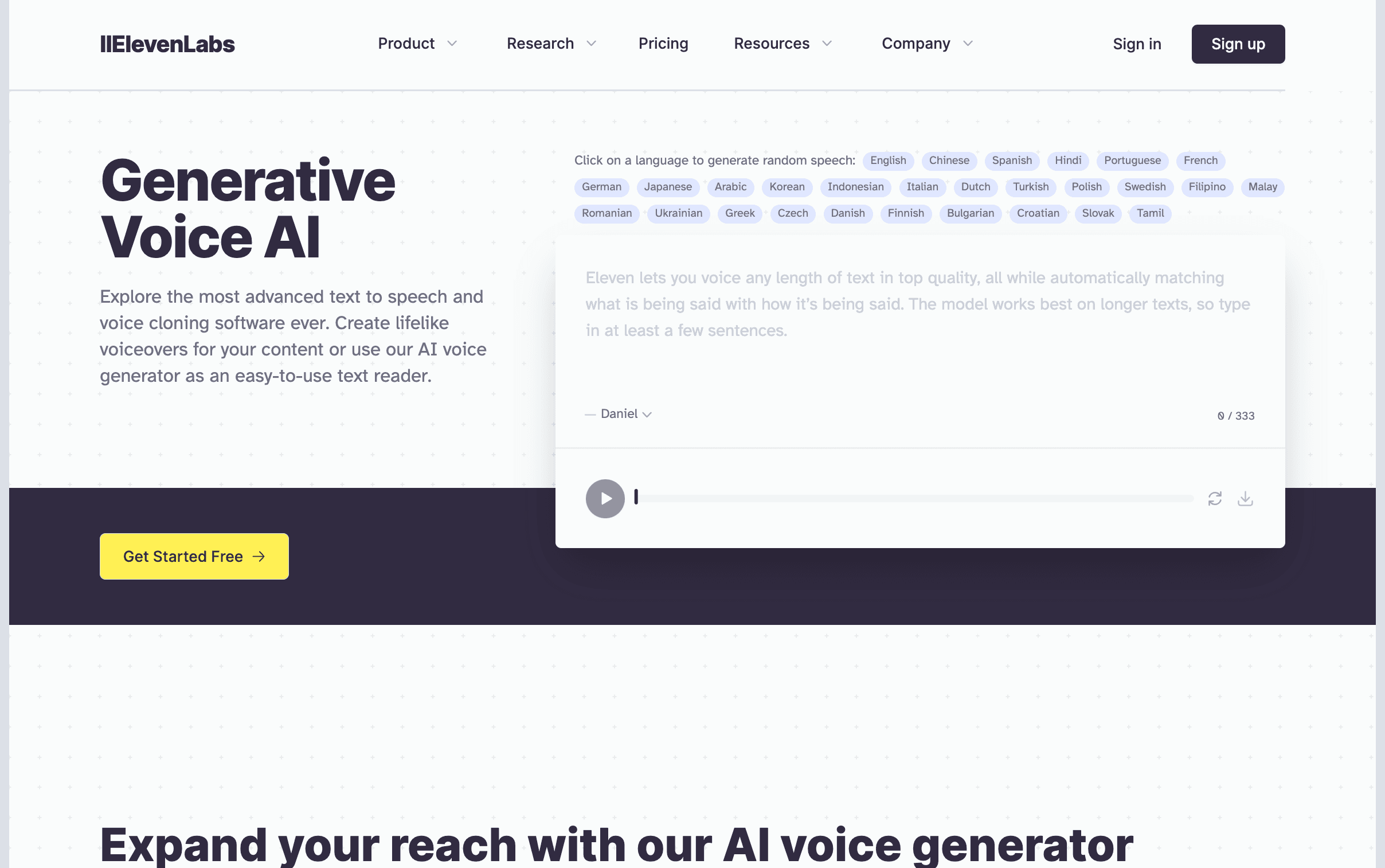
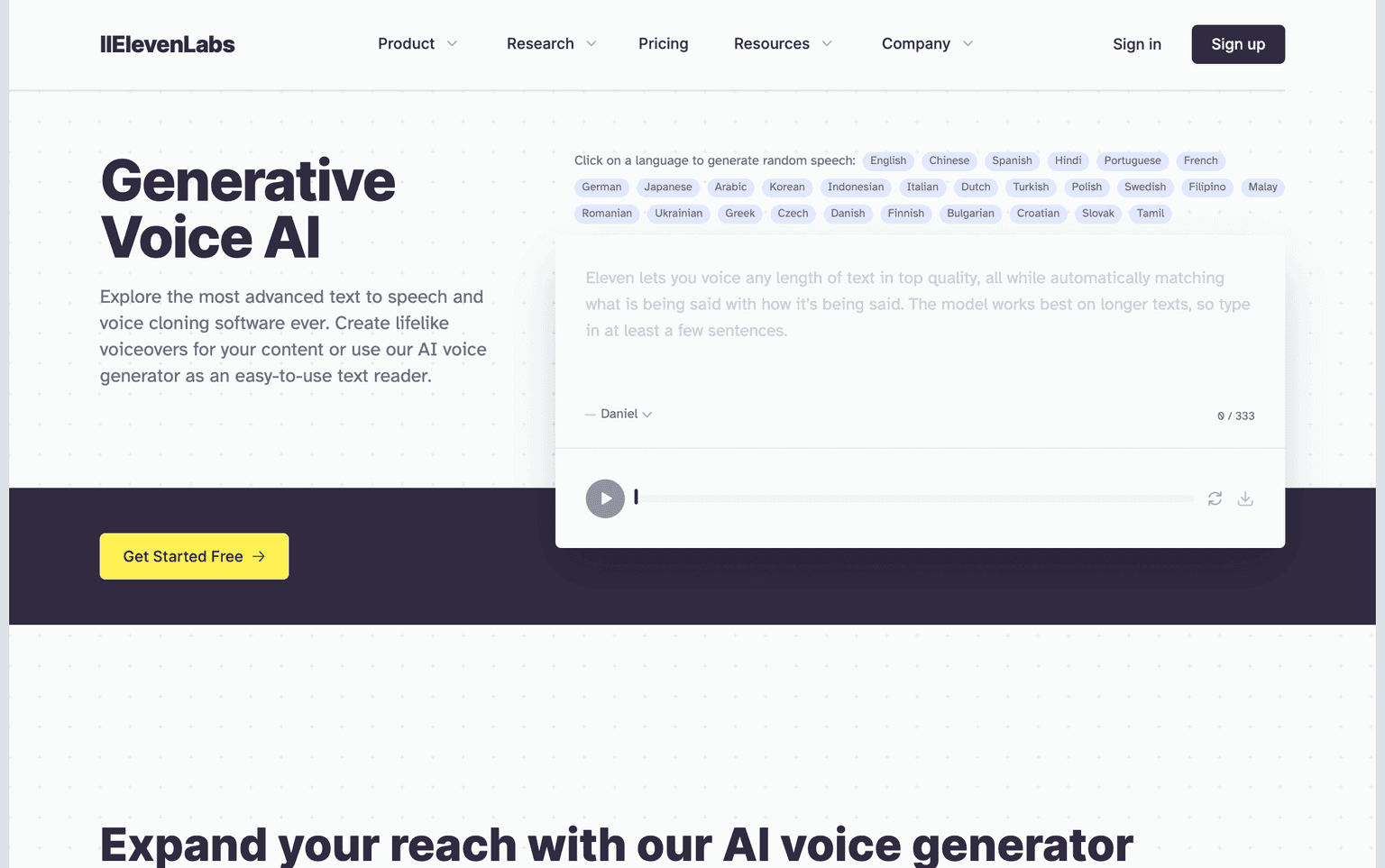
ElevenLabs is the category leader on output quality and ecosystem. The v3 model release brought emotion control and prosody to a level that handles audiobook narration, character voice work, and multi-language dubbing without the synthetic edge that older TTS carried. The voice library is the largest in the category and the API ecosystem is the most mature.
What it wins at: narration and audiobook production, multi-language dubbing, character voice work for indie game and animation studios, and broad API ecosystem support.
Where it falls down: real-time latency for live voice agents trails dedicated agent platforms (LMNT). Pricing scales meaningfully on high-volume API use.
5. LMNT — Developer-First Voice for Real-Time Agents
LMNT optimizes for the use case where ElevenLabs trails: real-time voice agents that need sub-300ms first-token latency for natural conversation. The API is designed around the live-agent workflow rather than the asynchronous narration workflow.
What it wins at: real-time voice agents (sales, support, AI companions), low-latency TTS in production, and a developer-focused API surface that's easier to drop into a voice agent stack.
Where it falls down: voice library and emotional range trail ElevenLabs for narration use cases. Best when latency is the primary constraint.
6. Resemble AI — Voice Cloning Plus Deepfake Detection
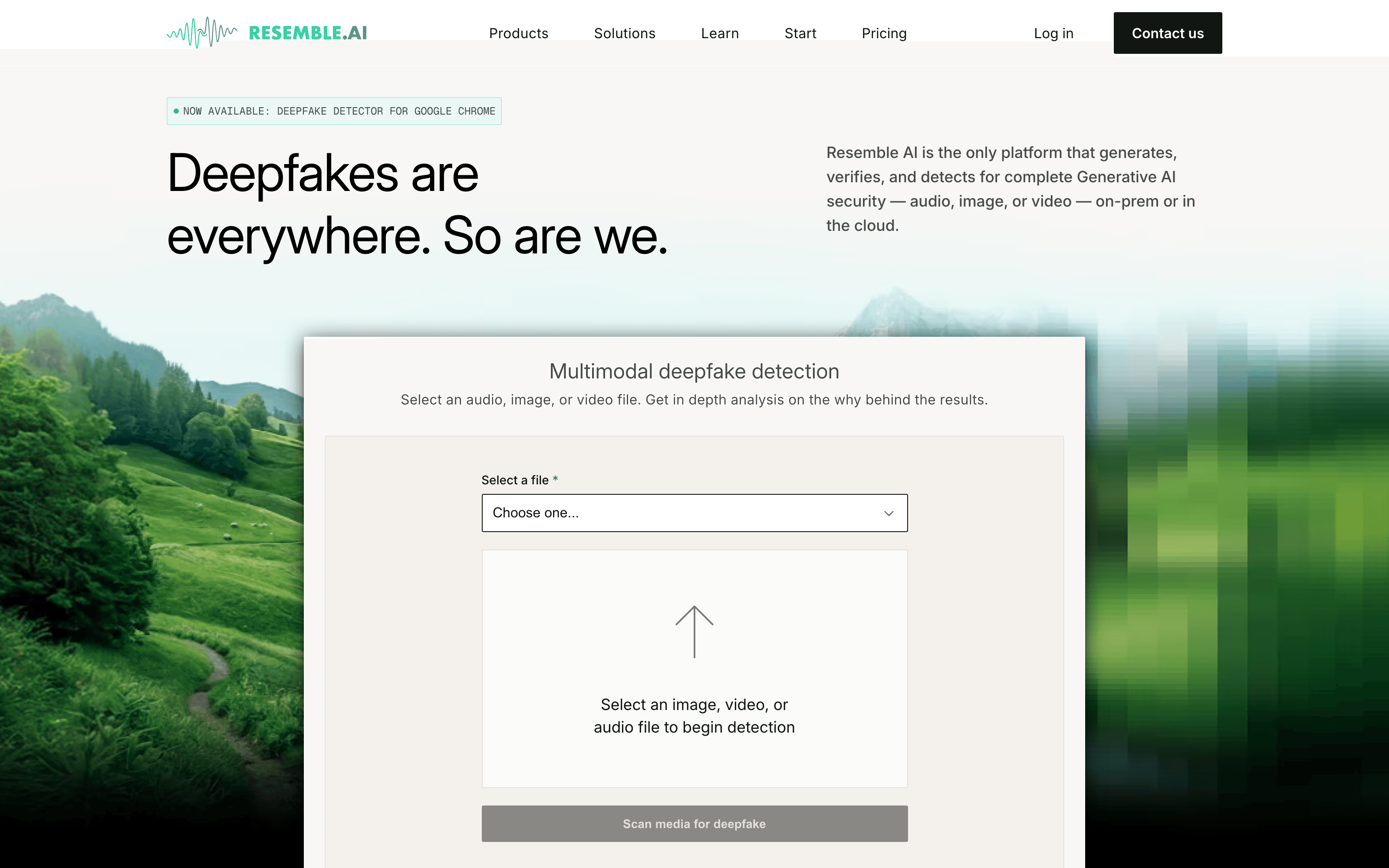
Resemble AI sits in the voice cloning category with a unique angle: the same platform offers deepfake-audio detection. For studios, agencies, and brands doing serious voice work in a 2026 regulatory environment that increasingly demands consent verification and content authenticity (the EU AI Act's voice-disclosure requirements, US state-level deepfake legislation), having the same vendor handle generation and detection simplifies the compliance story.
What it wins at: professional voice cloning with proper consent workflows, deepfake detection for content moderation, and regulated-industry deployments where voice authenticity matters.
Where it falls down: consumer-app polish trails ElevenLabs. The voice library is smaller. Best for B2B production work, not casual creator use.
Audio Production and Editing
7. Descript — Edit Audio By Editing the Transcript
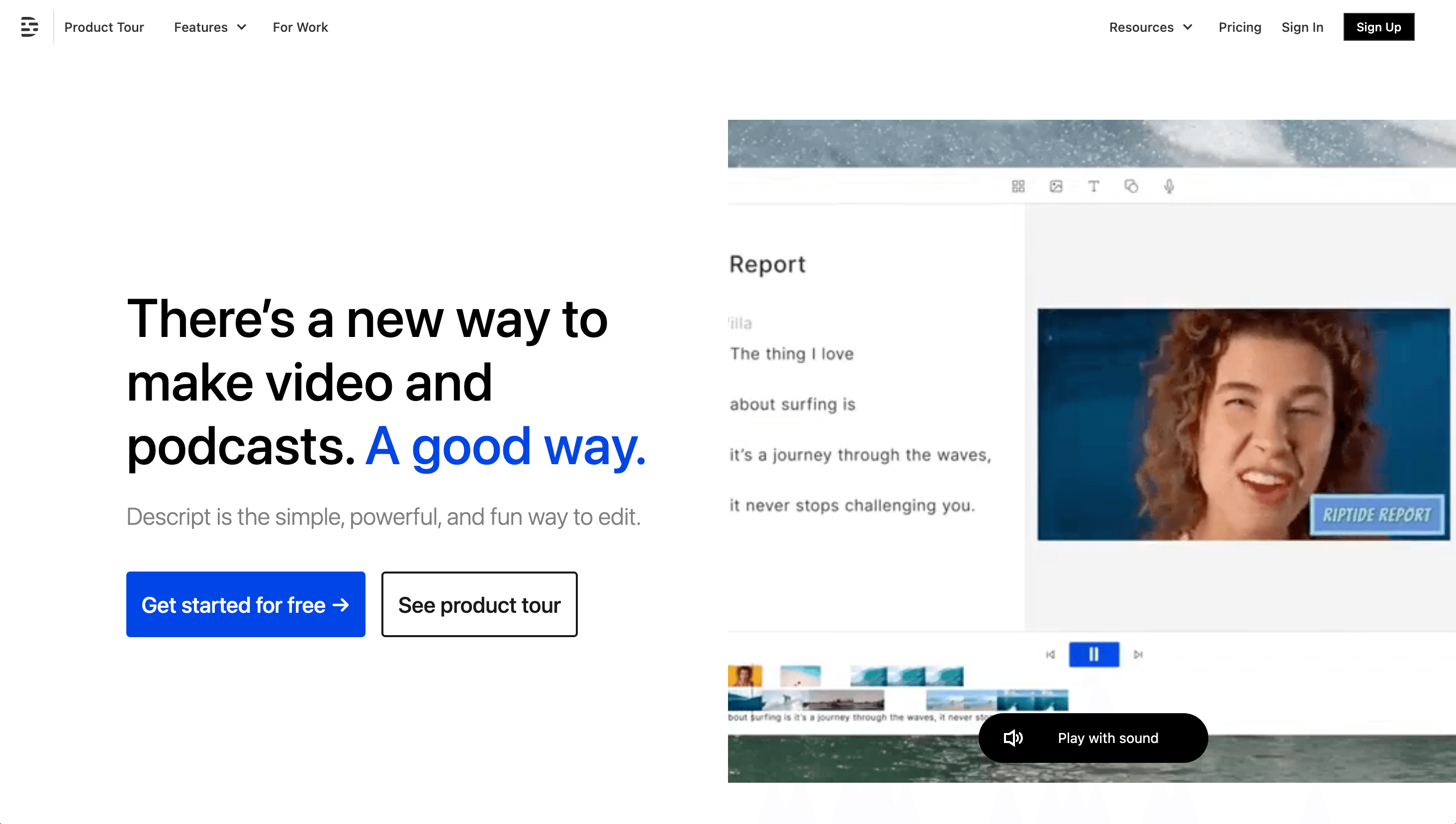
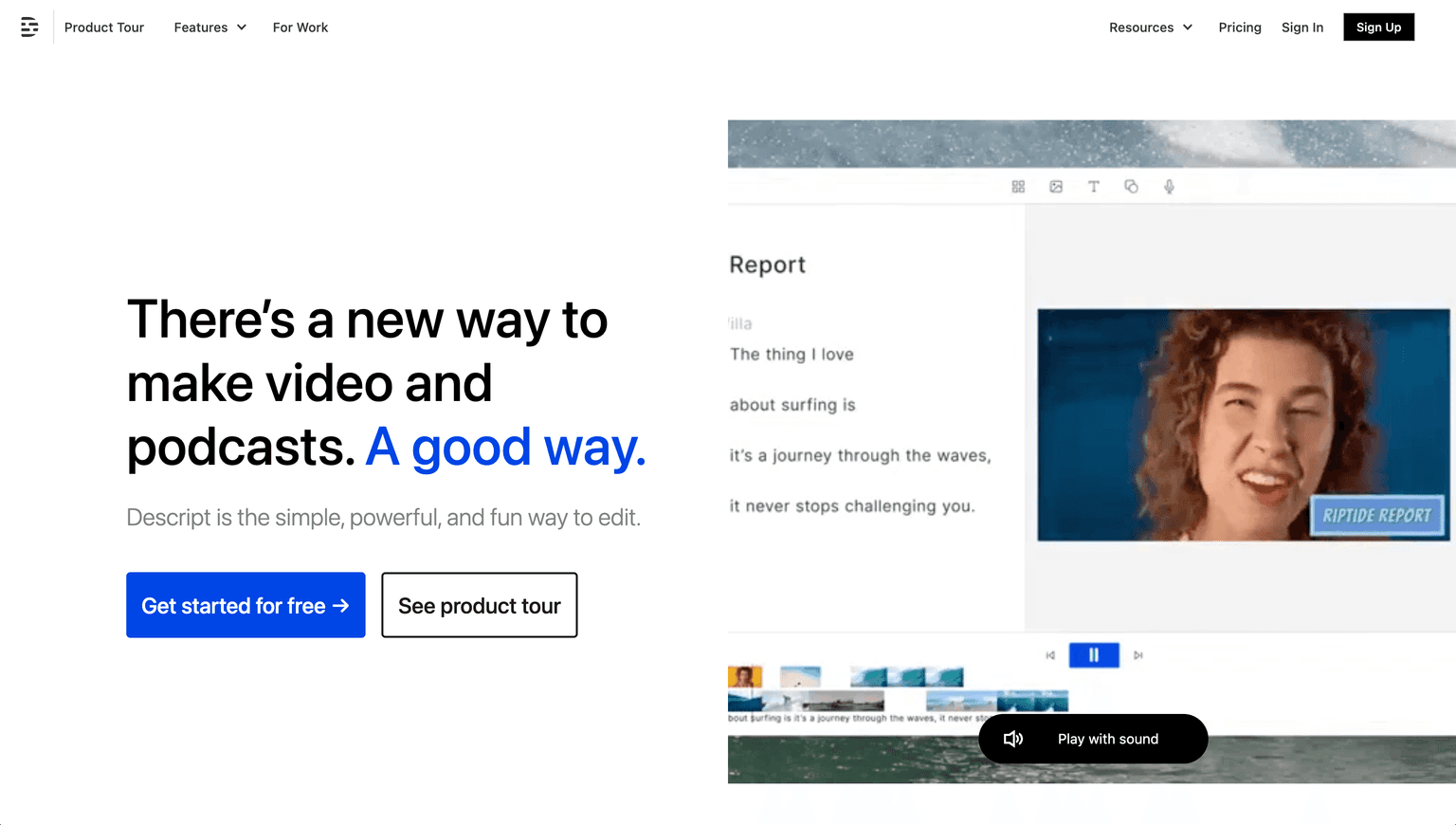
Descript reframed audio and video editing around the transcript. Edit the words on screen and the audio cuts to match — delete a sentence in the doc, the audio that contained it disappears from the recording. Fundamentally easier UX than waveform editing for podcasts, video interviews, and any spoken-content workflow.
What it wins at: podcast and video editing where most of the source is spoken content, editing workflows accessible to non-engineers, and a strong all-in-one feature set (transcription, screen recording, voice clone, AI editing).
Where it falls down: for music or non-spoken audio production, traditional DAWs (Logic, Ableton, Pro Tools) remain better. Pricing climbs once you cross the free tier's hour limits.
8. Adobe Enhance Speech — Free Studio-Quality Cleanup
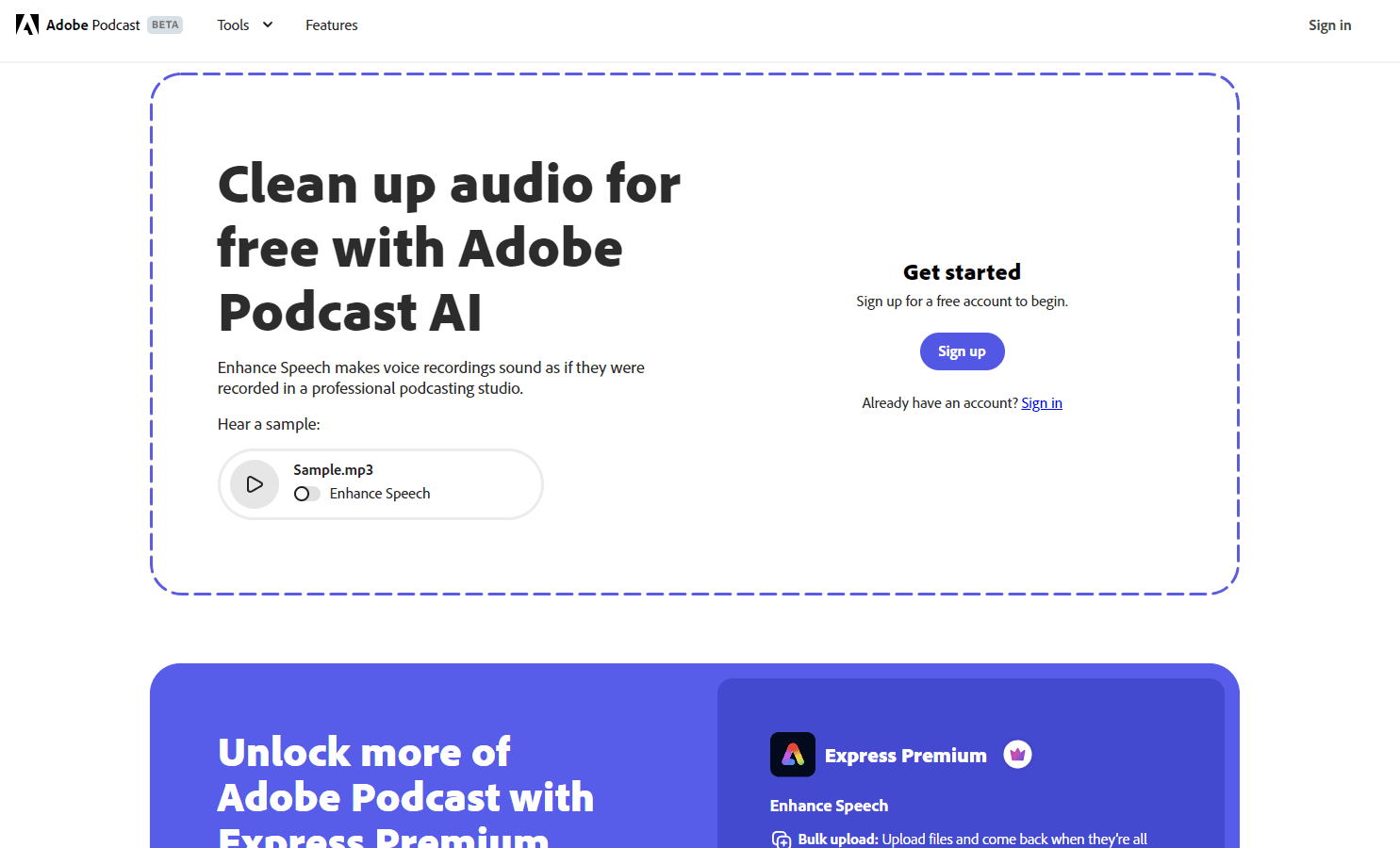
Adobe Enhance Speech is the easy answer for one specific job: take a recording made in a bad acoustic environment (Zoom call, untreated room, phone audio) and make it sound like it was recorded in a studio. The free tier handles short clips; paid Adobe Creative Cloud unlocks higher-volume use. For podcasters, journalists, and content creators salvaging on-the-fly recordings, it's the single best AI audio tool of the past two years.
What it wins at: speech cleanup at near-magical quality, free for casual use, and instant integration into the Adobe creative ecosystem for existing CC subscribers.
Where it falls down: speech only — for music or sound effects, wrong tool. Aggressive default tuning sometimes over-cleans, removing room ambience that some uses require.
How to Build Your 2026 Audio AI Stack
For most creators, the practical move is one tool per lane:
- Music: Suno or Udio for full songs; Stable Audio for instrumentals and sound effects
- Voice narration / audiobooks / dubbing: ElevenLabs
- Real-time voice agents: LMNT
- Voice cloning with consent verification: Resemble AI (skip if your use case is casual)
- Editing podcasts and video: Descript
- Cleaning up bad recordings: Adobe Enhance Speech (free tier covers most casual use)
The full stack costs around $50–100/month for serious creators (Suno + ElevenLabs Starter + Descript + free Adobe Enhance) and can be built free with looser quality (Stable Audio open-weights + Adobe Enhance free + Descript free tier). For commercial-use licensing, validate every tool's terms specifically — the legal status of AI-generated audio is more in flux than image generation.
For adjacent reading, see our Top 6 AI Image Generators Compared, Top AI Voice Tools for 2026, and Top 7 AI Video Generators (2026) collections — together they cover the full creative-AI quadrant.
Frequently Asked Questions
Can I use AI-generated music commercially? Depends on the tool's license tier and the unresolved litigation against the model providers. Suno and Udio's paid tiers grant commercial-use rights to the user, but the underlying training-data lawsuits (RIAA vs. Suno and Udio, ongoing as of 2026) could affect those rights retroactively. Stable Audio's open variant has cleaner licensing because Stability AI documented its training data more carefully. For high-stakes commercial use (advertising, film), get legal review before shipping.
Is AI voice cloning legal? Yes for cloning your own voice or a voice you have explicit consent to use. No for cloning real people without consent — multiple US states (California, Tennessee with the ELVIS Act, others) and the EU AI Act now have specific prohibitions on non-consensual voice deepfakes. Production-grade tools (ElevenLabs, Resemble AI) have consent-verification workflows; consumer tools that don't are increasingly on the wrong side of regulation.
Which AI music tool produces the best results? For 2026 production quality with vocals, Suno v5 and Udio v2 trade blows depending on genre — pop and hip-hop tend to favor Suno; experimental and remix-heavy work favors Udio. Most serious creators run prompts through both and pick the winner per track. For instrumental loops and sound design, Stable Audio wins.
What's better for podcasting: Descript or traditional DAWs? Descript for spoken-content editing where you'd normally cut by ear and visual waveform; the transcript-first workflow is genuinely faster. Traditional DAWs (Logic, Ableton, Pro Tools) remain better for music production, audio post on film, and any work where waveform-level precision matters. Many podcast teams use Descript for the rough cut and a traditional DAW for the final mix.
How realistic is AI voice in 2026? ElevenLabs v3 and Resemble AI's latest models are indistinguishable from human voice for most listeners on most content. The remaining "tells" are emotional range in extreme cases, prosody on long-form narration, and pronunciation of unusual proper nouns. For professional use (audiobooks, dubbing, character work), human direction in the prompt and per-clip review still matter; AI voice is a tool that amplifies a director, not a fully autonomous output.
Are these tools accessible to non-technical users? Most yes. Suno, Udio, Descript, ElevenLabs Studio, and Adobe Enhance all have polished web/desktop apps that work without coding knowledge. LMNT and Stable Audio are more developer-focused. Resemble AI sits between consumer and developer.
What's the cheapest credible audio AI stack? For casual creators: Suno's free tier (or Udio's) for music, ElevenLabs free tier (10,000 chars/month) for voice, Descript free tier for editing, Adobe Enhance Speech free for cleanup. Total: $0/month for genuine usable output. The paid tiers unlock commercial rights and higher volumes.
Final Thoughts
Audio AI in 2026 is past the experimental phase and into operational tooling for working creators. Music generation is no longer a curiosity — it's a credible creative input. Voice synthesis crossed the quality threshold where it competes with human VO for many use cases. Podcast and video editing are 2-3x faster than they were three years ago for spoken-content work.
The biggest mistake we see creators make is treating these tools as replacements rather than amplifiers. The output quality is high enough that AI-generated audio shipped without human direction or curation reads as generic. Used as leverage on a real creative point of view — Suno for the song idea you'd never have prototyped before, ElevenLabs for the narration you can iterate on in minutes — the compounding value is real.
Compare tools in this collection
Categories these tools span
More collections you may also like

Sign up for our newsletter
Receive weekly updates so you can stay up-to-date with the world of AI
Sign up for our newsletter
Receive weekly updates so you can stay up-to-date with the world of AI
The AI tools directory for discovering, exploring, and comparing the most innovative AI tools in the industry