ElevenLabs
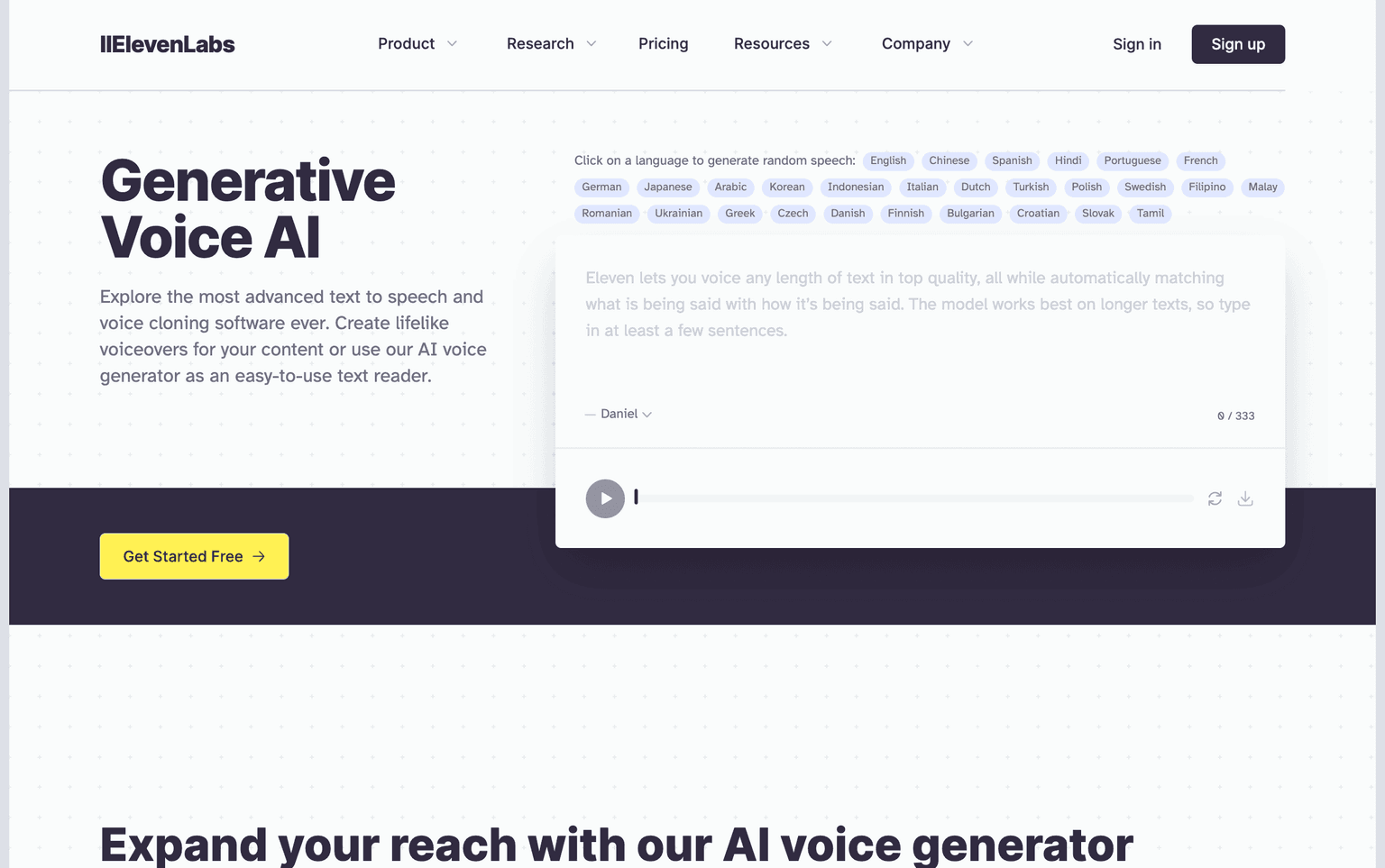
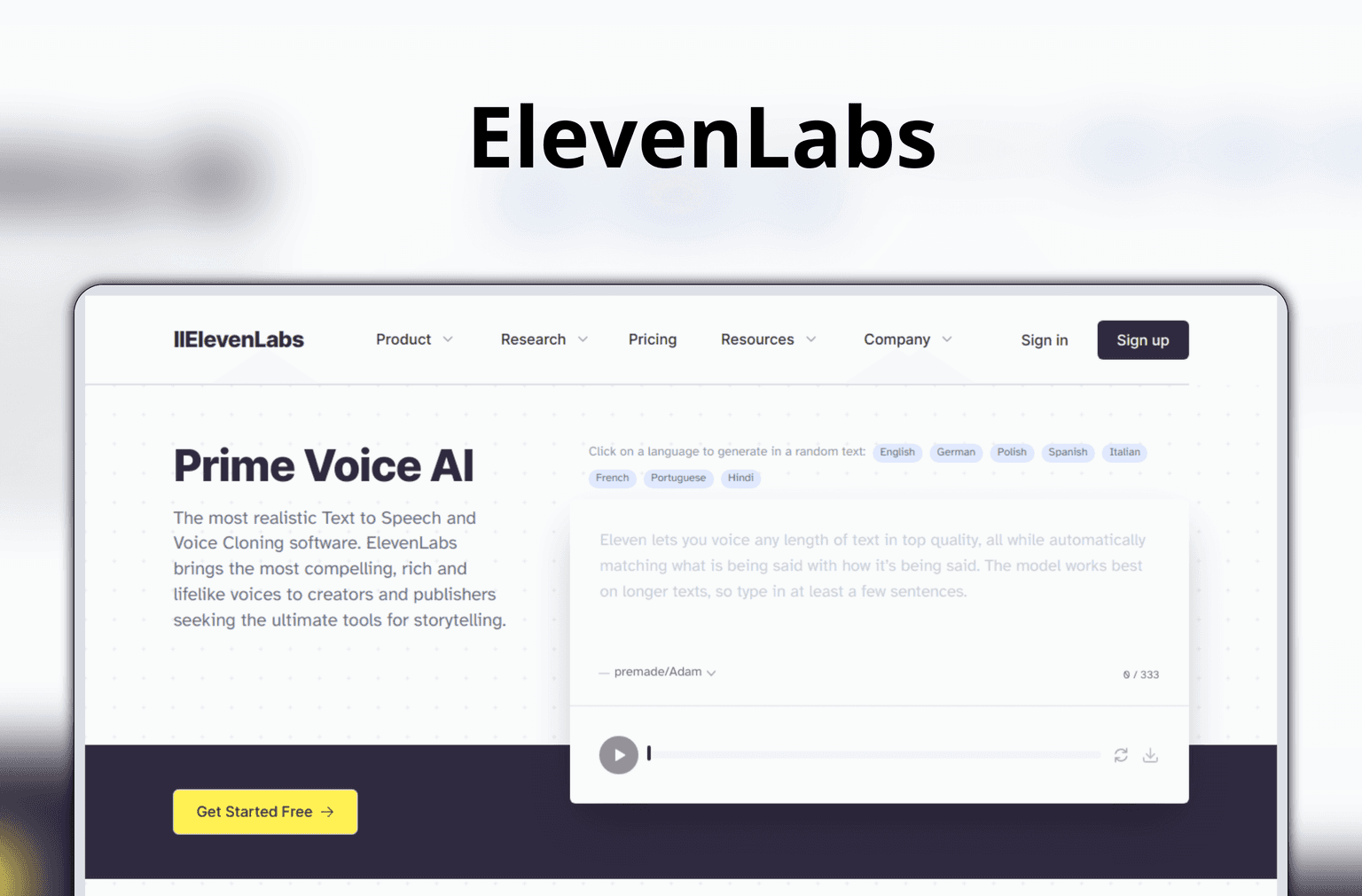
Explore advanced text-to-speech and voice cloning software for lifelike voiceovers and content generation.
Overview
Elevate Your Audio Experience with ElevenLabs Generative Voice AI
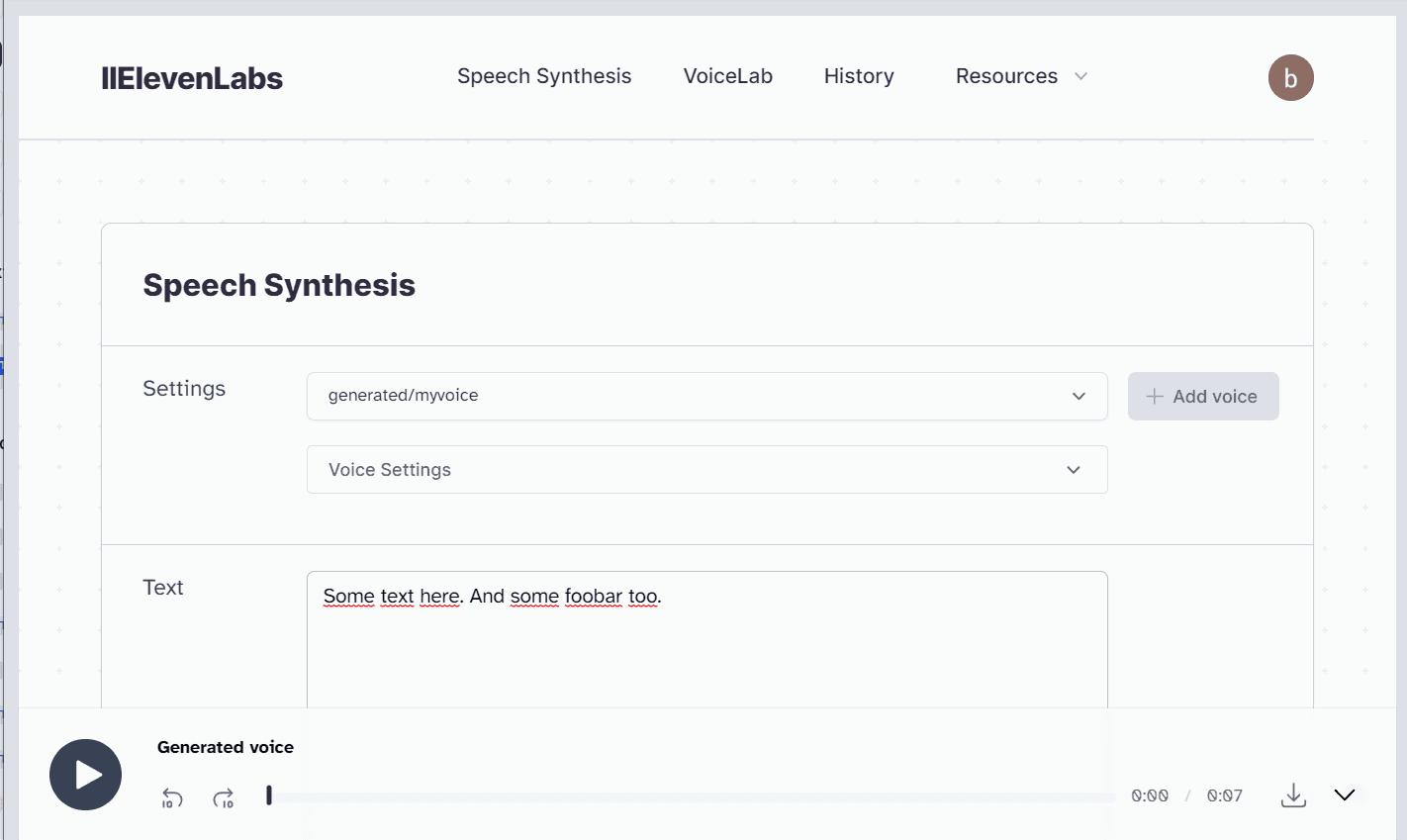
ElevenLabs presents a groundbreaking solution in the realm of voice technology. Their platform is not just another text-to-speech tool; it's a sophisticated voice AI that can generate lifelike voiceovers for various content types. Whether you're a content creator, game developer, or simply someone looking to convert text into high-quality audio, ElevenLabs has got you covered.
Key Features:
- Generative Voice AI: Craft lifelike voiceovers for diverse content, from videos to audiobooks.
- VoiceLab: Design or clone synthetic voices using a generative AI model.
- Projects Workstation: A dedicated space for directing and editing audio, ensuring complete creative control.
- Voice Library: Share and discover unique synthetic voices within the community.
- Multilingual Support: Generate AI voices in 28 languages, catering to a global audience.
Ideal Use Case:
For content creators, ElevenLabs offers an opportunity to design captivating audio experiences, bringing fictional characters to life with emotions. Game developers can immerse players in dynamic worlds with real-time narration and engaging NPC dialogues. Authors and publishers can convert long-form content into engaging audiobooks with a natural voice and tone. Additionally, businesses can enhance chatbot interactions, providing users with a more natural and engaging experience.
###Why use ElevenLabs:
- Quality and Authenticity: AI ensures each speech segment is contextually linked for genuine intonation.
- Cost-Effective: Achieve top-quality audio production at a fraction of traditional recording times and costs.
- Safety and Ethics: Committed to AI safety and ethical use, minimizing risks of harmful abuse.
- Innovative Features: From voice cloning to multilingual support, the platform is packed with cutting-edge features.
FAQ
What does ElevenLabs do? ElevenLabs is a text-to-speech and voice cloning platform that generates lifelike voiceovers and audio content. It uses AI to convert written text into natural-sounding speech with customizable voices.
Who should use ElevenLabs? ElevenLabs is ideal for content creators, podcasters, video producers, and businesses that need professional voiceovers without hiring voice actors. Anyone looking to add high-quality audio to their projects can benefit from its voice generation capabilities.
How much does ElevenLabs cost? ElevenLabs offers a free trial so you can test the platform before committing to a paid plan. Visit the ElevenLabs pricing page for current plans and details on available features at each tier.
How does ElevenLabs compare to similar tools? ElevenLabs competes with other voice AI platforms like Cartesia, Deepgram, and PolyAI, each offering different approaches to text-to-speech and voice synthesis. Your choice depends on which tool's voice quality, features, and pricing best match your specific needs.
tl;dr:
ElevenLabs offers a state-of-the-art voice AI platform that transcends typical voice generators. With the ability to produce lifelike voiceovers and support for 28 languages, it's a game-changer for content creators, game developers, and businesses alike.
Related
Looking for more options? Browse the AI Audio Creation directory or read our best AI audio tools listicle. ElevenLabs has a Wikipedia entry and is tracked on Crunchbase.
Why Use ElevenLabs
Editorial Review
Our take on ElevenLabs.

Still the reference point for synthetic voice. Eleven v3 went GA with 70+ languages, the Agents platform matured, and the May 2026 price cuts reversed two years of creep. Cloning-misuse liability and per-minute agent economics remain the things to model before you ship.
What works
- Eleven v3 (GA February 2026) adds audio tags, multi-speaker dialogue, and 70+ languages — Professional Voice Clone quality remains the output competitors are measured against
- Agents platform is production-grade: templates, experiments, guardrails, WhatsApp support, and ~75ms Flash v2.5 latency for real-time use
- May 2026 price cuts (TTS up to 55%, STT up to 45%, agents up to 20%) plus pay-as-you-go reversed the pricing-creep complaint
- Scribe v2 (sub-150ms real-time STT, 90+ languages, $0.22–$0.39/hour) and Eleven Music ($0.15/minute) consolidate the audio stack under one vendor
- Business durability is no longer a question: $500M ARR by April 2026, $11B Series D, IPO targeted within 2–3 years
What doesn't
- Voice-cloning misuse remains the reputational liability — enforcement is faster but still reactive, and enterprise buyers in regulated industries still ask first
- v3 is not real-time; interactive agents run on Flash v2.5, so the most expressive model can't power the conversational use cases that sell it
- Per-minute agent economics at scale still need forecasting before a customer-facing rollout — sticky usage can outrun the budget
- Agent turn-taking has improved with sub-100ms synthesis but can still mistime interruptions — the uncanny moment is the rhythm, not the voice
- Credit-based subscription tiers plus separate API/agent pricing make cost comparison across use cases harder than it should be
ElevenLabs has owned the voice-AI category since 2023, and the twelve months since our last review have been its strongest stretch: Eleven v3 reached general availability on February 2, 2026, the Conversational AI product matured into a full agents platform, a $500M Series D landed at an $11B valuation that same week, and ARR crossed $500M by April. The competitive question we posed last time — "is the price still right" — got a direct answer in May 2026, when the company cut API prices substantially and introduced pay-as-you-go. This is a company acting like it intends to be a public voice-infrastructure business, not a hot startup milking a lead.
Voice quality is the moat, still
Eleven v3 is the most expressive model the company has shipped: audio tags for emotional direction, multi-speaker dialogue in a single generation, and coverage of 70+ languages, up from the 32 we noted last review. Professional Voice Clones remain the output that competitors get measured against, and multilingual switching mid-sentence — a French phrase inside an English narration — still works more cleanly here than anywhere else. The important nuance: v3 is not a real-time model. It's built for produced content — narration, dialogue, character work — while real-time use cases run on Flash v2.5 at roughly 75ms latency across 32 languages. Know which model your use case needs before you benchmark.
Agents is the new business
Conversational AI has been rebranded and rebuilt as the Agents platform, and it now looks like a production system rather than a capable demo: agent templates, A/B experiments, upgraded guardrails, multimodal WhatsApp support, and a May 2026 launch that wraps an existing chat agent into a voice agent from a single prompt. The bespoke phone-agent build that used to cost $50K and three months is still the comparison, and the comparison still favors ElevenLabs by a wide margin. The rhythm gap we flagged — the stagey pause, the not-quite-human turn-taking — has narrowed with sub-100ms synthesis, though high-trust conversations can still land in the uncanny valley when the model mistimes an interruption.
The platform got wider
Two product lines that didn't exist at our last review now matter. Scribe covers speech-to-text with a real-time variant at sub-150ms latency across 90+ languages, priced at $0.22/hour for batch and $0.39/hour for real-time — aggressive against dedicated STT vendors. Eleven Music generates licensed-catalog-trained music at $0.15/minute. Neither is the reason to buy, but both reduce the number of vendors a voice-first product needs.
Pricing finally moved in the right direction
Our last review's biggest complaint was pricing creep. That reversed. The May 2026 repricing cut text-to-speech costs by up to 55%, speech-to-text by up to 45%, and agents by up to 20%, and introduced pay-as-you-go so early projects don't need a subscription commitment. Subscriptions held steady: Creator at $22/month (121K credits) and Pro at $99/month (600K credits), with annual billing effectively two months free and unused credits rolling over for up to two months. Per-minute agent economics at scale still require a forecast before a customer-facing rollout — sticky usage can still blow up a budget — but the trend line now points the right way.
The misuse-policy problem
Still the honest reputational risk. Voice cloning without consent remains the abuse vector the brand carries, and while Professional Voice Clones require verification, watermarking and takedown responses have improved, and enforcement is faster than it was, the enterprise sales motion still has to lead with the misuse story because risk-averse buyers still ask. Nothing in the past year removes this from the con list; it has been managed, not solved.
Who should buy
Creator at $22/month is the right tier for individual creators, podcasters, and small content teams. Pro at $99/month fits production users — audiobook publishers, educational content shops, agencies running client accounts. Companies shipping voice as a product feature should start on pay-as-you-go API pricing and negotiate agent rates before a customer-facing deployment. Casual, low-volume use is still better served by cheaper tools or built-in OS synthesis.
The honest comparison
ElevenLabs sits clearly above Murf, Speechify, Resemble, and PlayHT on voice quality. The frontier labs treat audio as a feature of a larger assistant; ElevenLabs treats it as the entire company, and it shows in the pace — v3, Scribe v2, Eleven Music, and the agents platform all shipped or matured within a year. Hume remains worth a look for emotion-forward use cases, and cost-sensitive real-time builds should benchmark the smaller specialist vendors, but for quality-first production voice there is one default answer.
Re-check triggers
We will re-rate when a frontier lab ships a credible standalone voice-cloning product with enterprise distribution, when agent turn-taking stops being distinguishable from human rhythm in blind tests, or when the IPO (targeted within two to three years of the February 2026 raise) changes the pricing posture.
User Reviews
Similar Tools