Cartesia
Real-time voice AI: Sonic-3.5 TTS, Ink-2 streaming STT, and Line voice agents behind one low-latency API.
Overview
Cartesia Review (July 2026): Real-Time Voice AI — Sonic-3.5 TTS, Ink-2 STT, and Line Voice Agents
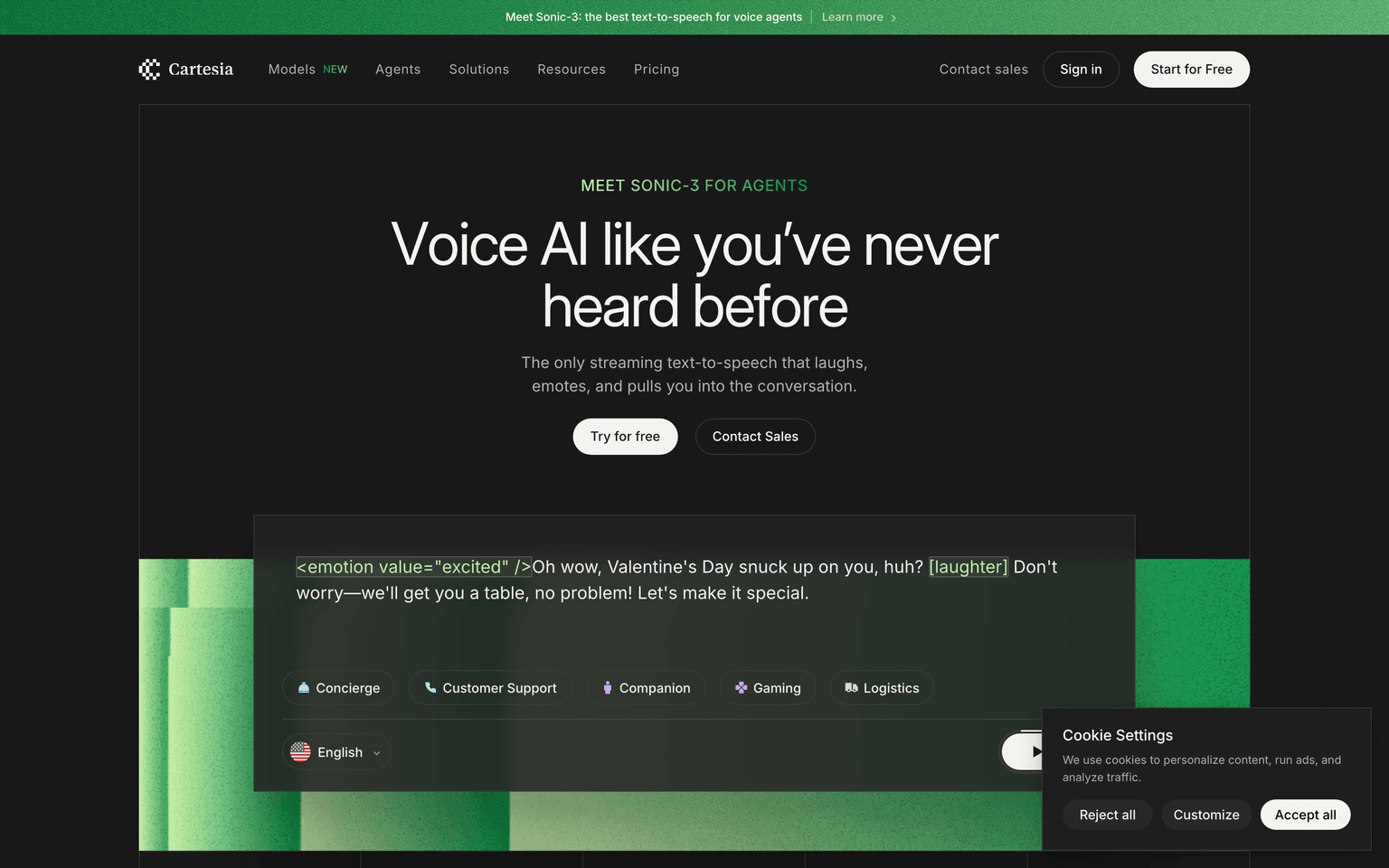
Cartesia (sometimes searched as "Cartesia IA") is the real-time voice AI platform built on state-space models for very low-latency speech. The current lineup is three products behind one API: Sonic-3.5 for text-to-speech, Ink-2 for streaming speech-to-text, and Line, a platform for building and shipping enterprise voice agents. Engineers pick Cartesia when speech latency and quality directly shape the product — voice agents, IVRs, dubbing, accessibility, and live assistants.
Credibility check (July 2026): Cartesia's models rank #1 on both the Artificial Analysis Speech Arena and Speech-to-Text leaderboards, and the platform runs in production at ServiceNow, Quora, and voice-agent companies like Retell. The state-space-model architecture (vs. transformers) is the technical bet behind the latency numbers.
Key Features:
- Sonic-3.5 TTS: the flagship speech generation model — fast, realistic, streaming-first.
- Ink-2 STT: streaming transcription built for live voice agents rather than batch files.
- Line: an end-to-end voice-agent platform (build, deploy, and observe agents) with prepaid usage.
- Instant and professional voice cloning (tier-gated), multilingual output.
- One API across TTS + STT, with enterprise options for SSO, DPAs/BAAs, and dedicated capacity.
Pricing (verified July 2026):
- Free: $0 — 20K credits a month (~27 minutes of TTS, ~1h51m of STT), limited concurrency, no cloning.
- Pro: $5 a month — 100K credits, commercial use license, instant voice cloning.
- Startup: $49 a month — 1.25M credits, professional voice cloning, organizations.
- Scale: $299 a month — 8M credits, high concurrency, priority support.
- Enterprise: custom — volume pricing, custom concurrency, compliance docs (DPAs/BAAs), SSO.
Each paid tier also carries a matching prepaid allowance for Line voice agents ($5/$49/$299).
Ideal Use Case:
- Teams shipping production voice agents where round-trip latency is the product.
- Developers who want TTS and STT from one vendor instead of stitching two APIs.
- Startups that need a real free tier to prototype, then a $5 on-ramp with commercial rights.
How Cartesia differentiates:
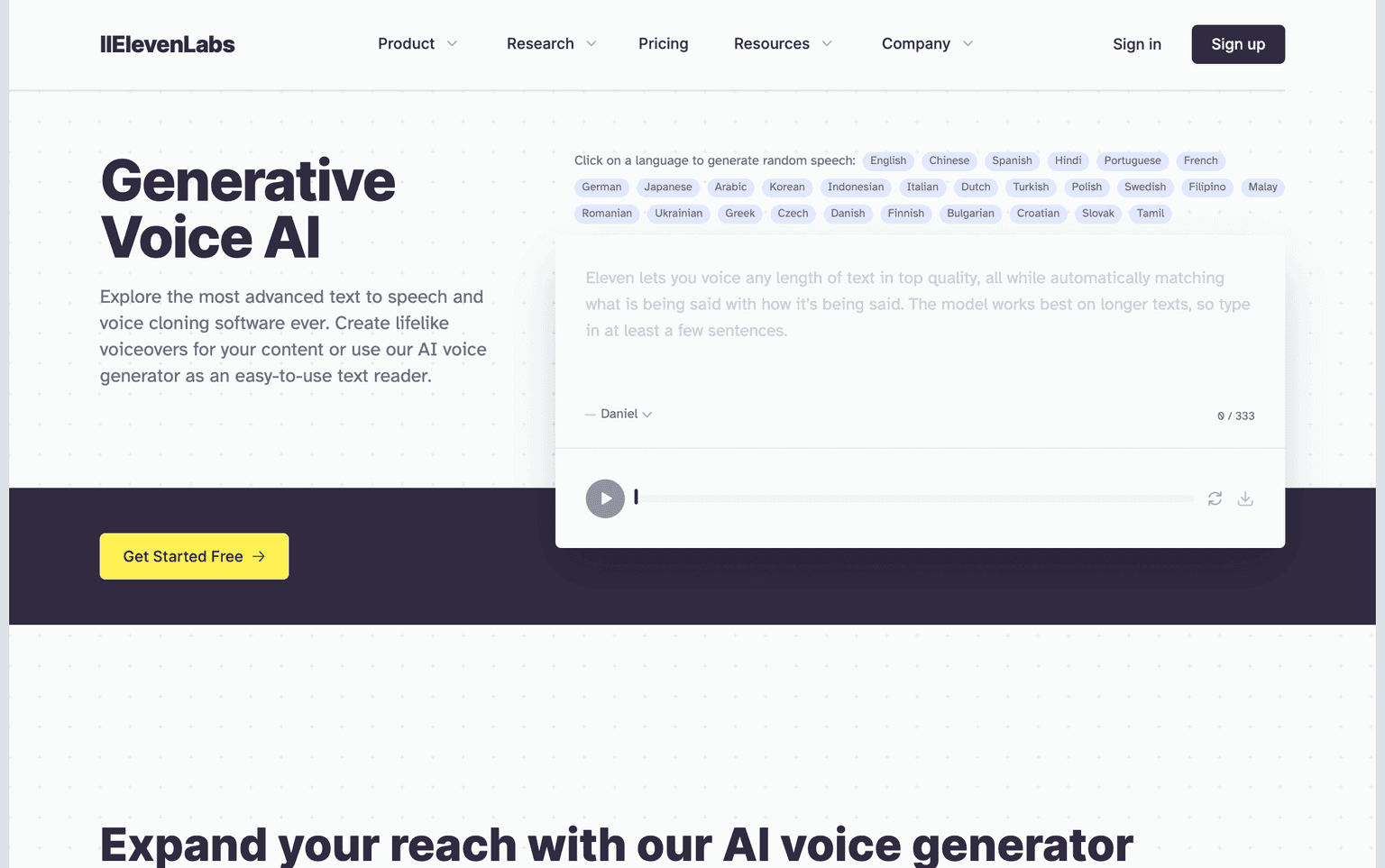
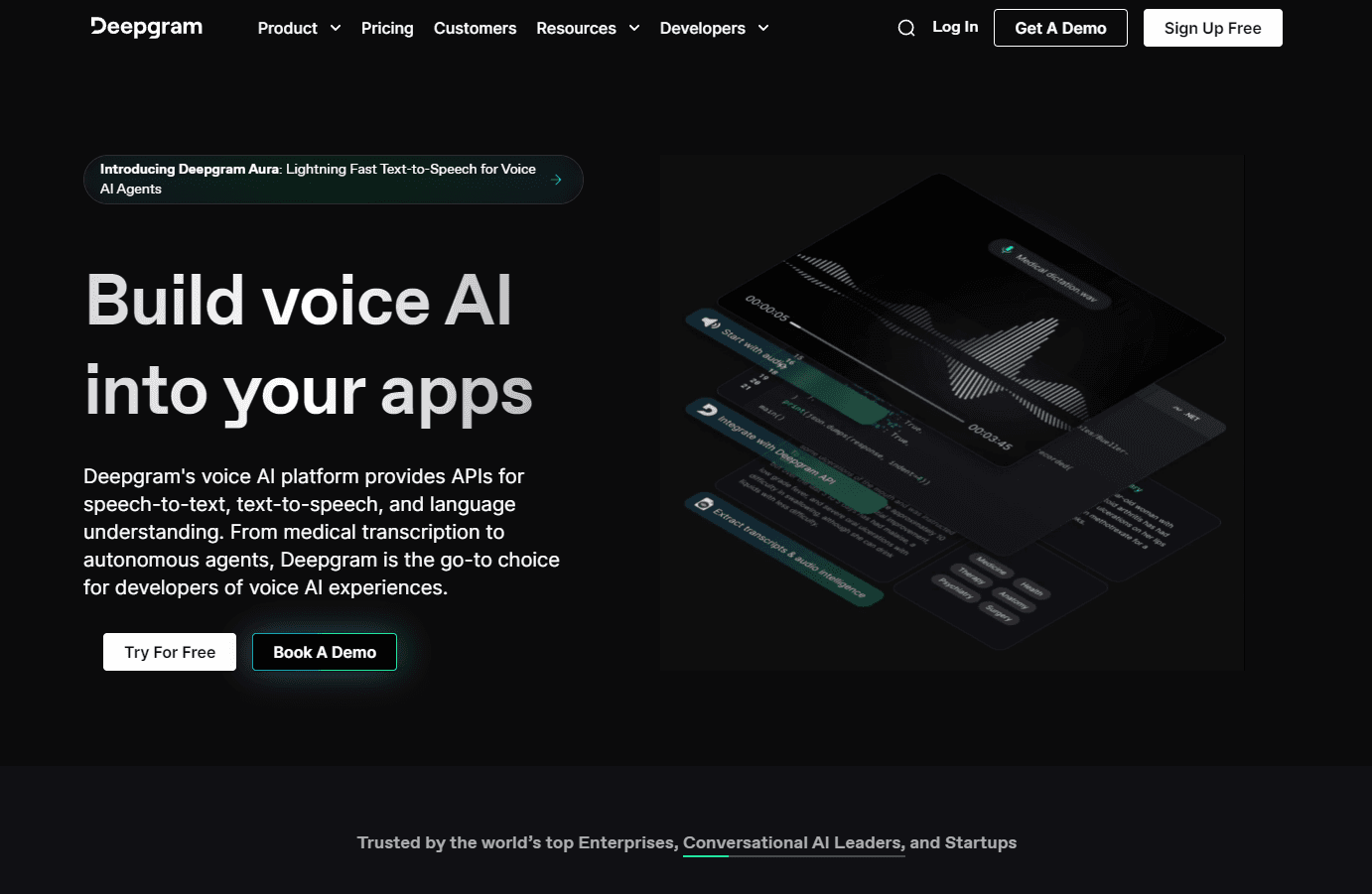
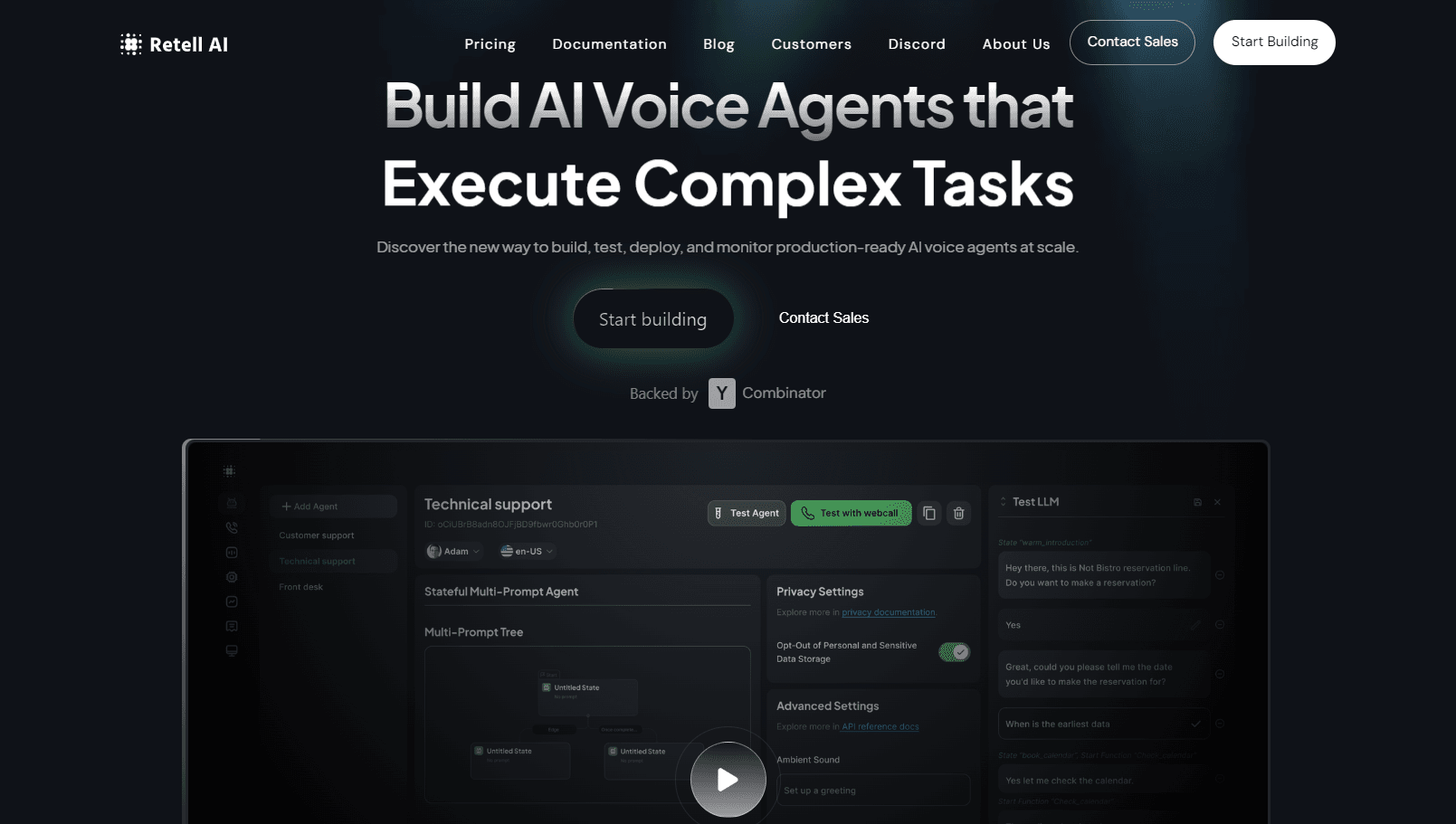
Against ElevenLabs, Cartesia leads with latency and a streaming-first developer API rather than a creator-facing studio; against Deepgram it bundles best-in-class TTS with its STT; against agent platforms like Bland or Retell, Line competes while Sonic/Ink also power several of them under the hood. The $5 Pro tier with commercial rights is one of the lowest paid entry points in voice AI.
FAQ
Q: What is Cartesia AI? A: Cartesia is a real-time voice AI platform offering Sonic-3.5 text-to-speech, Ink-2 streaming speech-to-text, and Line, an enterprise voice-agent platform — all built on low-latency state-space models and delivered through one API.
Q: Is Cartesia free? A: There is a genuine free tier: 20K credits a month (roughly 27 minutes of TTS and just under 2 hours of STT) with limited concurrency and no voice cloning. The Pro tier at $5 a month adds a commercial license and instant cloning.
Q: How much does Cartesia cost? A: Verified July 2026: Free $0, Pro $5 a month (100K credits), Startup $49 (1.25M credits, professional cloning), Scale $299 (8M credits, high concurrency), Enterprise custom with SSO and compliance documentation.
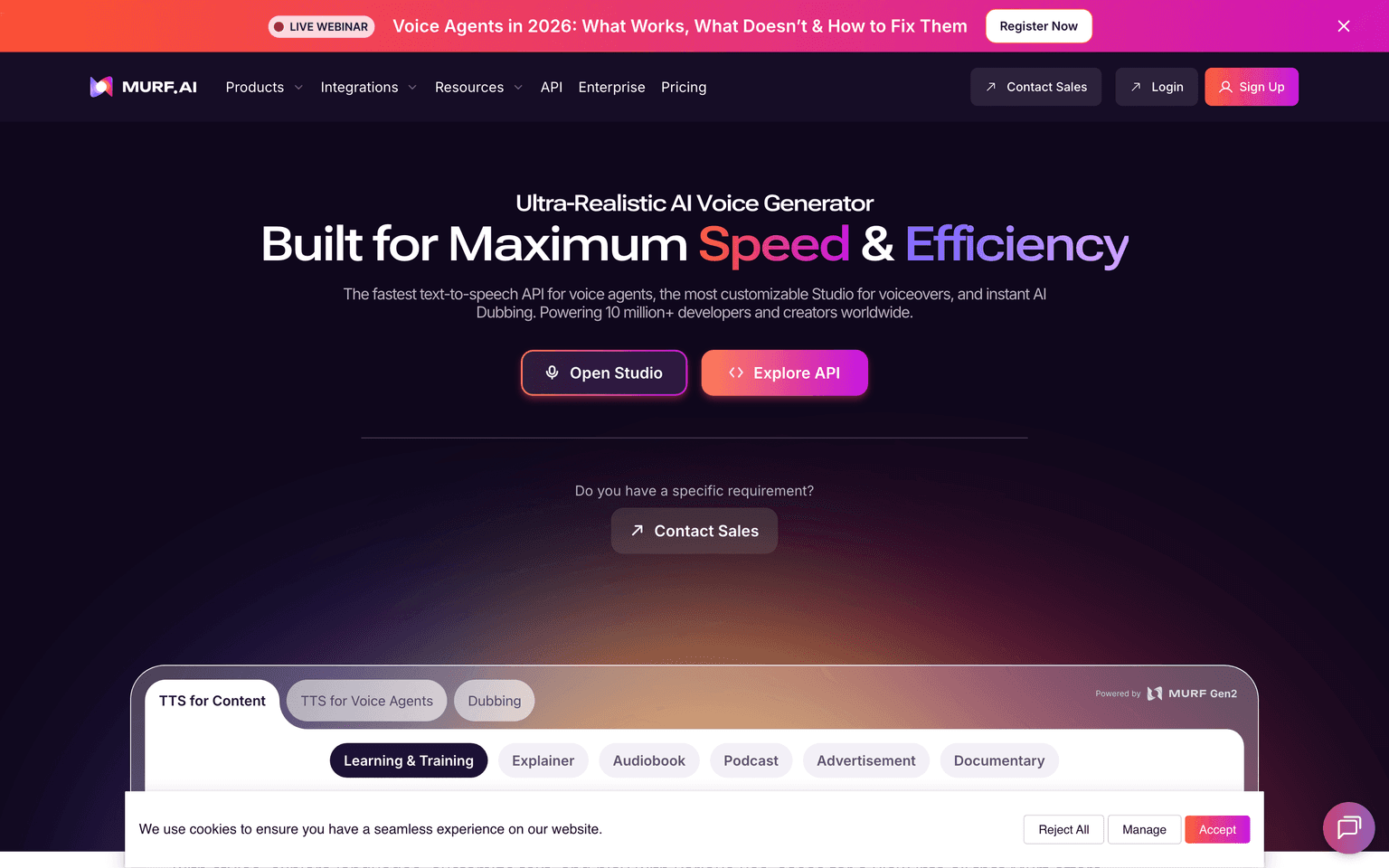
Q: What are the best Cartesia alternatives? A: ElevenLabs for creator-focused voice generation, Deepgram for transcription-first workloads, Murf for studio-style voiceover, and Bland AI or Retell for managed voice-agent platforms. Browse the directory for side-by-side comparisons.
tl;dr:
Cartesia is the latency leader in real-time voice AI — #1-ranked TTS and STT models plus a voice-agent platform behind one API, with a real free tier and a $5 commercial on-ramp (verified July 2026).
Related
Looking for more options? Browse the AI Audio Creation directory or read our best AI voice generator comparison. Cartesia is also tracked on Crunchbase.
Why Use Cartesia
Editorial Review
Our take on Cartesia.

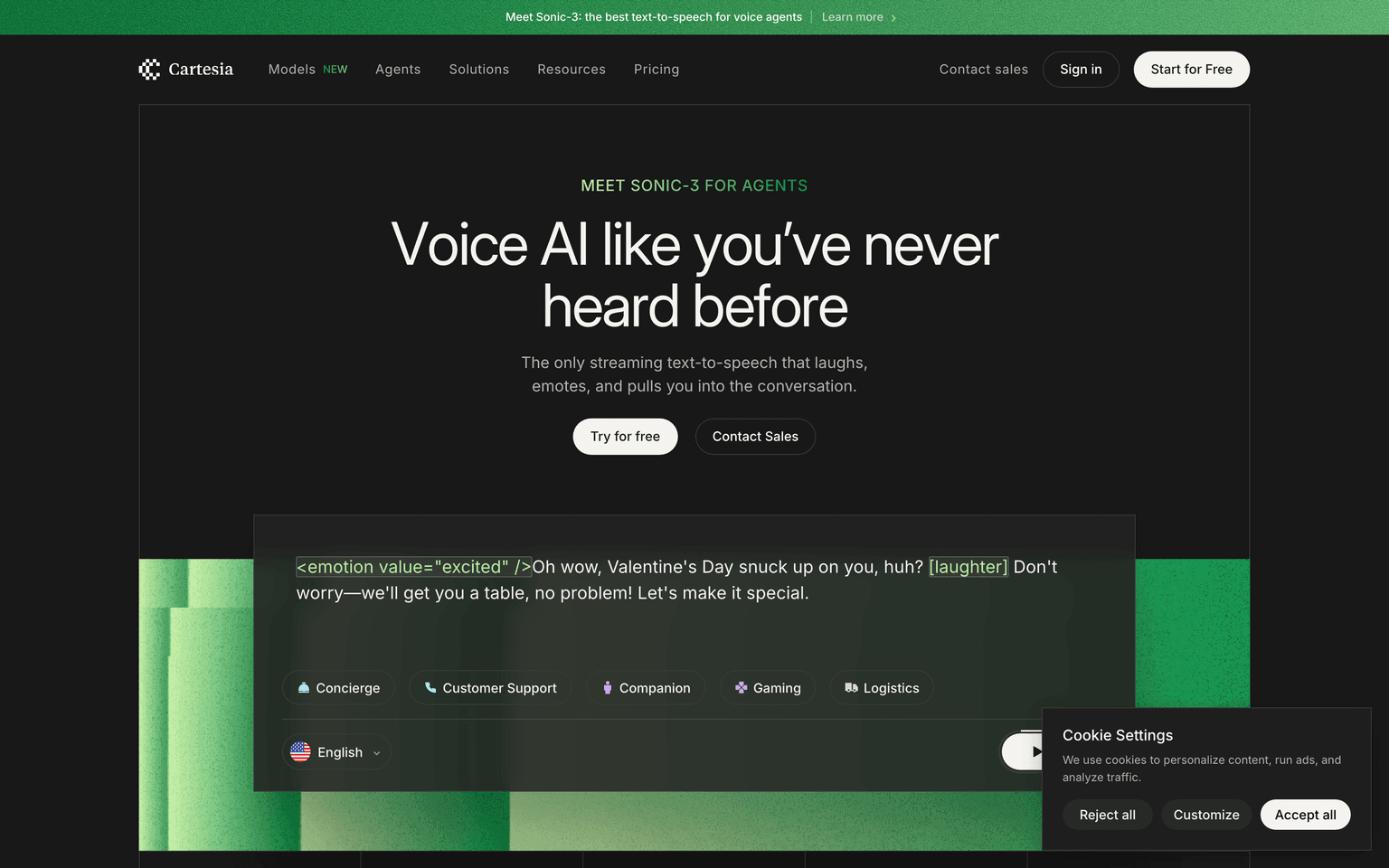
Low-latency voice AI with real-time streaming and cloning; solid alternative to ElevenLabs if you need sub-100ms response times.
What works
- Real-time, low-latency API—measurably faster for live voice apps
- Voice cloning available at higher tiers; solid foundation feature
- Freemium on-ramp; reasonable free tier to validate before cost
What doesn't
- Crowded market; not a clear win unless latency is your blocker
- Usage-based pricing can escalate; no predictable per-seat model
Cartesia positions itself around real-time voice synthesis and low-latency streaming, which matters if you're building conversational AI or live applications where lag kills the UX. They offer speech generation APIs (Sonic and Sonic-2 models) with usage-based pricing, plus voice cloning for custom voices. The freemium model lets you experiment with monthly character limits before committing to per-API-call costs.
ElevenLabs and Deepgram own mindshare, partly through earlier market timing. Cartesia's latency advantage is real for certain workloads—live chat, voice games, real-time customer service—but if you don't need sub-100ms response, you might not feel the difference. The feature set is table-stakes (cloning, multiple models, dedicated capacity at higher tiers).
Pricing is usage-based after the free tier, which is standard for the category but can surprise teams at scale. No specific rates in the facts, so you'll need to run the numbers for your volume. The Pro and Enterprise tiers add voice cloning and SSO, suggesting they're going after teams and enterprises, not just hobbyists.
User Reviews
Similar Tools