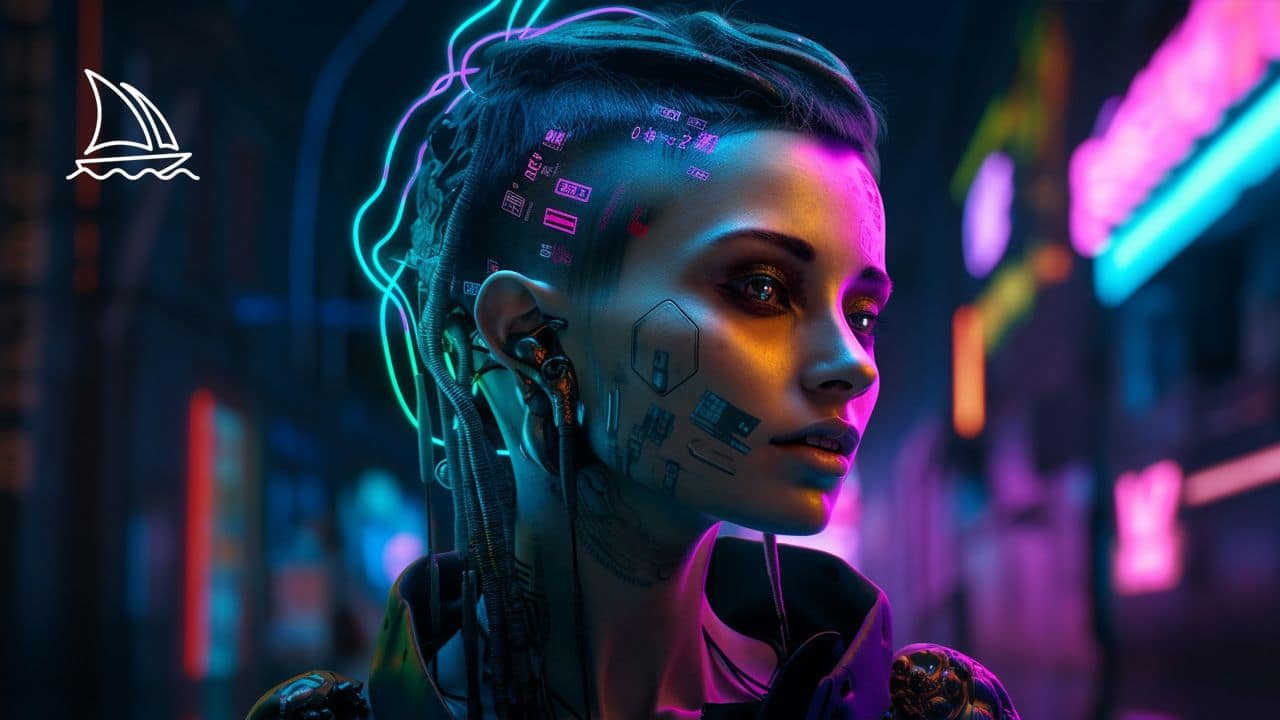
FLUX by Black Forest Labs
4.9Freemium468
Side-by-side comparison of FLUX by Black Forest Labs and Ideogram — pricing, features, and use cases. Reviewed by our editorial team in Oct 2026.

As of June 2026, FLUX by Black Forest Labs and Ideogram occupy clearly distinct lanes in AI image generation. They rarely compete head-to-head on the same task — the honest answer for most buyers is that the right tool depends entirely on what you are making.
FLUX is a model family first and a product second.
Black Forest Labs has shipped an increasingly broad lineup: FLUX.1 Pro, FLUX.1.1 Pro, FLUX.1.1 Pro Ultra (up to 4MP output, available since February 2026), FLUX.2 (released November 2025, a 32-billion-parameter model), FLUX Kontext (released May 2025 for in-context editing), and compact FLUX.2 Klein variants running at sub-second speed on consumer hardware.
Multiple independent benchmarks, including Artificial Analysis, Civitai, and HuggingFace leaderboards, ranked FLUX.2 Pro first overall on photorealism and prompt adherence in late 2025.
FLUX Kontext extended that lead into image editing: as a 12-billion-parameter multimodal flow transformer, it can modify specific regions of an existing image via simple text instructions while preserving character identity across multiple successive edits — a workflow that previously required masking, inpainting, and manual compositing.
Adobe, Microsoft, Google, and Meta have all integrated or offered access to FLUX models, signaling enterprise-level confidence in the underlying quality.
The open-weight variants (FLUX.1 Dev and FLUX.2 Dev) are deeply embedded in the ComfyUI, HuggingFace Diffusers, and CivitAI ecosystems, where thousands of community LoRAs exist for style and character fine-tuning.
Developers who want to self-host, fine-tune on proprietary datasets, or build image pipelines at scale will find no comparable alternative in the category for flexibility and API breadth.
Ideogram entered the market in 2023 with a single, audacious bet: every other AI image generator is useless for real commercial design work because none can render readable text. Three model generations later, that bet has paid off.
Ideogram 3.0, released March 26, 2025, achieves approximately 90-95% text rendering accuracy according to independent testing — against a baseline of 30-40% for Midjourney and comparable models. That gap is not closing fast.
The same custom typography module that handles letter spacing, font characteristics, and text placement also gives Ideogram an edge on logos, icons, and clean geometric graphic marks.
Style References (up to three reference images), Style Codes for reusable brand presets, an Infinite Canvas with Magic Fill inpainting and Extend outpainting, color palette controls, and a Layerize feature that converts generated text into editable layers round out a design-workflow-focused feature set that FLUX's API-centric experience does not replicate.
Ideogram's web interface at ideogram.ai and iOS app are polished and consumer-ready in a way that the BFL Playground is not: FLUX is more an engine accessed through Replicate, fal.ai, or ComfyUI than a self-contained product.
Where the tools genuinely overlap is product photography and commercial image production without embedded text. For photorealistic e-commerce product shots, FLUX 1.1 Pro and FLUX.2 Pro outperform Ideogram 3.0, whose photorealism is production-ready but not benchmark-leading on demanding portrait or product briefs.
For text-heavy creative work — posters, social media graphics, book covers, brand mockups, event graphics, signage — Ideogram is the only tool in the category that a creative professional can trust to ship without manual correction every time.
The 2026 consensus across independent reviewers and developer API guides is consistent: FLUX for photorealism and programmatic scale, Ideogram for typography and design-oriented output.
Photorealistic product and commercial photography
FLUX 1.1 Pro and FLUX.2 Pro top independent photorealism benchmarks as of late 2025 to early 2026, outperforming Ideogram 3.0 on demanding portrait and product shots. FLUX Kontext adds in-context editing — changing backgrounds, colors, and scenes without regenerating from scratch.
Typography, posters, logos, and text-in-image design
Ideogram 3.0 achieves 90-95% text rendering accuracy versus 30-40% for competing models. Its dedicated typography module handles multi-line text, curved text paths, and mixed font weights — making it the only reliable choice when readable text is non-negotiable.
Developer pipelines, fine-tuning, and self-hosting
FLUX open-weight models (FLUX.1 Dev, FLUX.2 Dev, FLUX.2 Klein) run locally via ComfyUI, HuggingFace Diffusers, and TensorRT, with a thriving ecosystem of community LoRAs on CivitAI. Black Forest Labs offers a tiered commercial licensing portal for product teams and agencies. Ideogram has an API but no open weights.
5 use cases scored. FLUX by Black Forest Labs wins 2, Ideogram wins 0.
FLUX by Black Forest Labs starts at $0.04 vs $8 on the other.
Both tools offer a free tier you can use indefinitely.
Both sit near 4.9 / 5 across user reviews.
FLUX by Black Forest Labs has 231 ratings vs 201 on the other.
Both sit in our Rising tier on the Top 100.
Where each tool earns its rating — and where it falls short.
Every spec on one page. Live-pulled from each tool's detail page.
Quick answers to the questions readers ask before picking between these two.
Ideogram wins, by a wide margin. Ideogram 3.0 achieves approximately 90-95% text rendering accuracy in independent testing, versus 30-40% for FLUX and other major generators. FLUX.2 and FLUX Kontext have improved typography handling, but complex typographic layouts and multi-line text still fail more often than not. If readable text is part of the deliverable, Ideogram is the only reliable choice.
FLUX wins on photorealism. FLUX.2 Pro and FLUX 1.1 Pro consistently rank at the top of independent photorealism benchmarks run by Artificial Analysis and Civitai as of late 2025. Ideogram 3.0's photorealism is production-ready for general commercial use but trails FLUX on demanding product photography and portrait briefs. For e-commerce product shots and lifestyle imagery, FLUX is the stronger choice.
Yes for FLUX, no for Ideogram. FLUX.1 Dev and FLUX.2 Dev are available as open-weight models on HuggingFace with support for ComfyUI, HuggingFace Diffusers, and TensorRT. A large community of LoRAs for style and character fine-tuning exists on CivitAI, and Black Forest Labs offers commercial licensing through their self-serve portal. Ideogram is entirely closed-source with no local deployment option.
Ideogram's free tier is more structured and practical for designers: 10 prompts per day (approximately 40 images) with no credit card required, accessible at ideogram.ai and via iOS. FLUX offers a free playground at bfl.ai for testing models, but production use requires API credits or a third-party platform account. For quick design evaluation without setup, Ideogram's free tier is the easier starting point.
No, not for typography-heavy work. FLUX Kontext (released May 2025) enables powerful in-context image editing — changing backgrounds, swapping objects, preserving character identity across scenes — and has improved text editing within existing images. However, it still trails Ideogram on generating new images with precise multi-line or complex typography from scratch. Teams doing visual editing of photorealistic images should consider Kontext; teams producing design-first assets with embedded text should still use Ideogram.
Ideogram is better for logo mockups and typography-heavy brand assets. The same architecture that renders text accurately also handles clean geometric forms, making it the strongest choice for early-stage logo iteration, icon sets, and any brief where the image is a graphic mark rather than a scene. FLUX produces higher photorealism for lifestyle brand imagery but struggles with the text accuracy that logo work requires.
FLUX is the clear choice for API-first development. The BFL API is available through the official endpoint and through Replicate, fal.ai, Cloudflare Workers AI, and AWS Bedrock, giving developers flexibility in infrastructure. Open-weight variants allow self-hosting at scale. Ideogram offers a well-documented API on the Pro tier with simple JSON requests and endpoints for generation, inpainting, and outpainting — solid for design-workflow automation but without FLUX's ecosystem depth or open-weight option.
FLUX by Black Forest Labs is the right choice for developers building image pipelines, ML teams who need to fine-tune on proprietary data, enterprises running self-hosted deployments, and any workflow where photorealistic output at scale is the primary requirement.
The combination of FLUX.2 Pro for quality, FLUX.2 Klein for speed, and FLUX Kontext for editing gives teams a single-provider solution that scales from prototype to production without switching providers.
The open-weight ecosystem on CivitAI and HuggingFace is unmatched, and the BFL API's presence across Replicate, fal.ai, Cloudflare, and AWS Bedrock means integration is rarely a bottleneck.
Ideogram is the right choice for graphic designers, brand managers, social media content teams, print-on-demand creators, and marketing agencies whose output routinely includes embedded text.
If a significant portion of your image briefs involve posters, logos, signage, social media graphics with copy, book covers, event graphics, or product packaging mockups, Ideogram 3.0 is the only tool in the category that delivers those outputs reliably enough to ship without manual correction.
The Canvas editor, Style Codes, and Figma integration mean it fits into a designer's existing workflow rather than requiring a new one.
For teams that need both — photorealistic campaign imagery and typography-heavy social assets — the strongest 2026 approach is to use both tools: FLUX.2 Pro for lifestyle shots and product photography, Ideogram 3.0 for any asset where readable text is part of the design. Both tools offer free tiers for evaluation, and neither requires long-term contracts to get started.
The one group that should not choose based on this comparison alone is enterprises with strict IP compliance requirements: neither tool provides full training data disclosure, and legal frameworks around AI-generated assets are still maturing in 2026. Adobe Firefly remains the only major image generator offering formal commercial indemnification for that specific concern.
More ai art & image creation head-to-heads.
 vs
vs vs
vs vs
vs vs
vs
 vsvs
vsvsReceive weekly updates so you can stay up-to-date with the world of AI
Receive weekly updates so you can stay up-to-date with the world of AI
The AI tools directory for discovering, exploring, and comparing the most innovative AI tools in the industry