Midjourney
Premier AI image and video generator known for cinematic, photorealistic, stylized output.
Overview
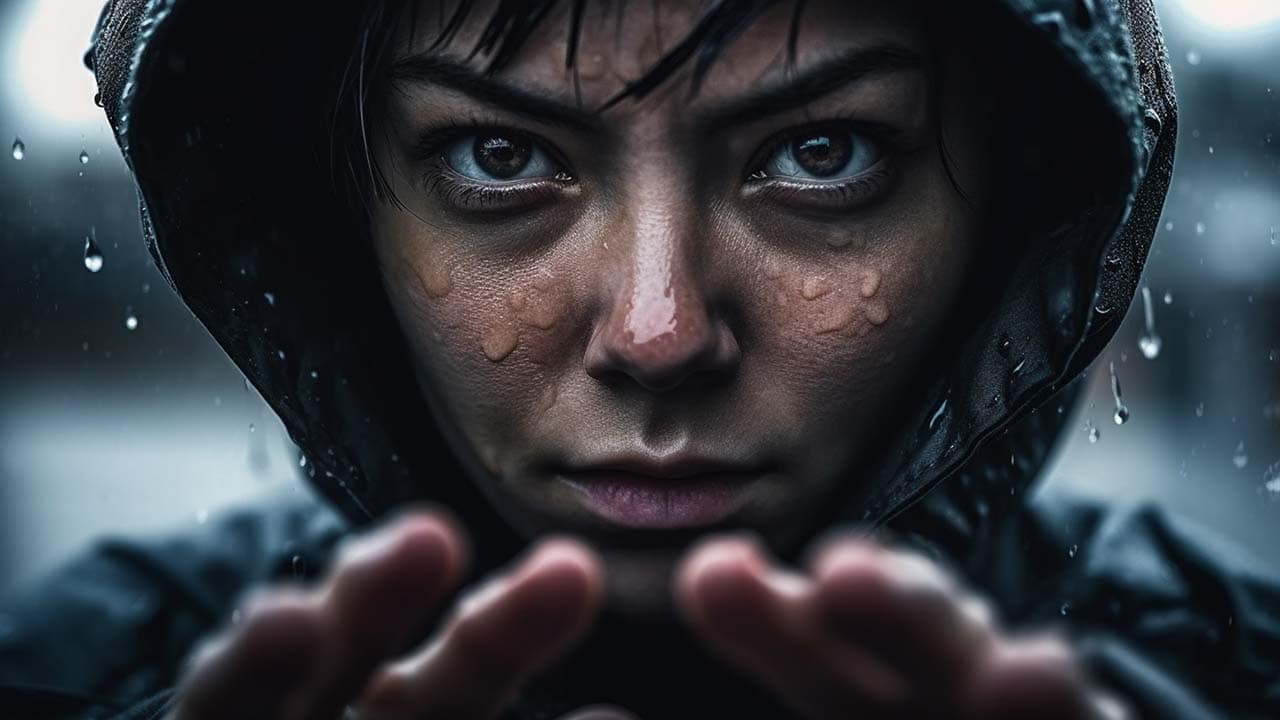
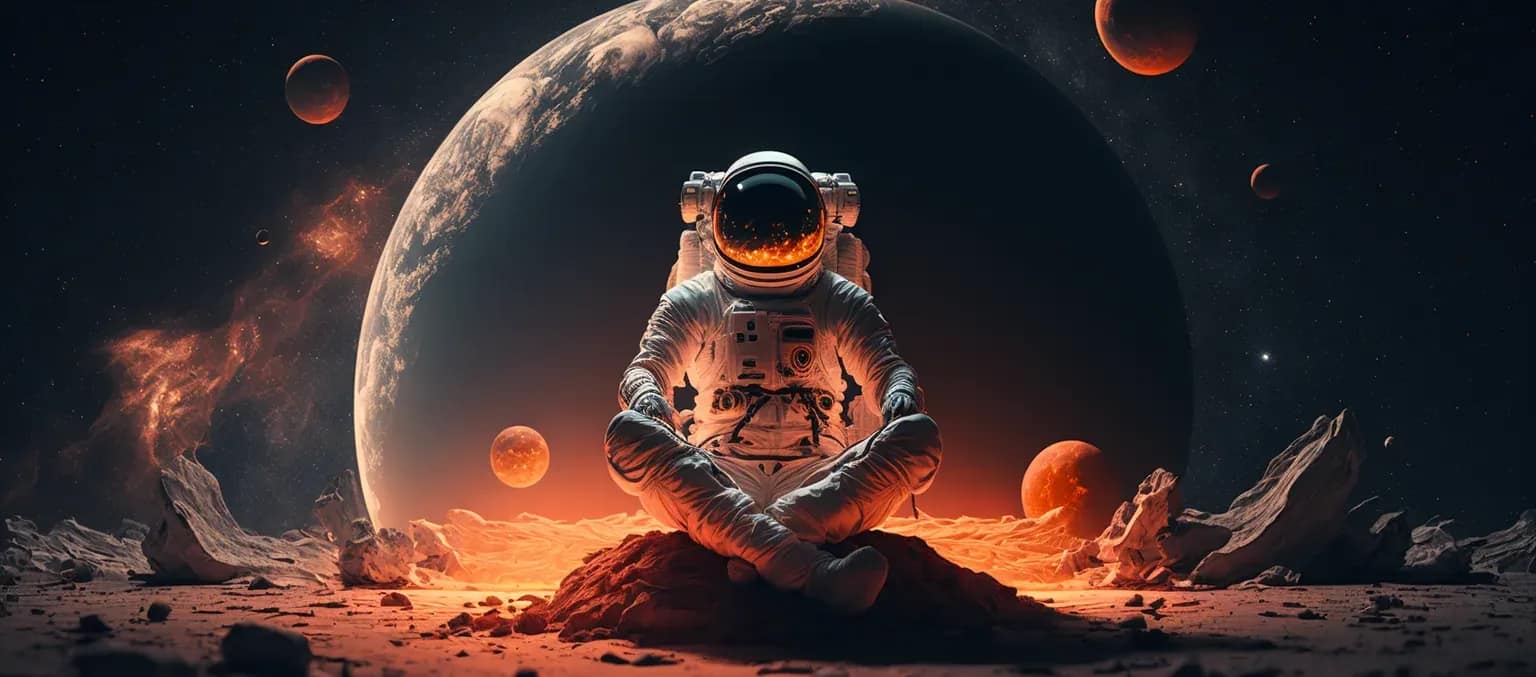
Midjourney is the leading AI image and video generator
Midjourney is a generative AI platform best known for producing some of the most cinematic, stylized, and photorealistic images on the market. Originally Discord-only at launch in 2022, Midjourney now runs as a full web app at midjourney.com, with a growing video pipeline alongside its flagship image models. As of 2026, Midjourney V7 is the default model and V8 (alpha) is rolling out with native 2K rendering and dramatically faster generation.
Models (2026)
- V7 — current default. Improved hands, bodies, and object coherence. Introduced Draft Mode for fast iteration and Omni Reference for character/style consistency.
- V8 Alpha — launched March 17, 2026. ~5x faster, native 2K resolution via
--hd, better text rendering,--q 4quality mode for complex scenes. - V8.1 Alpha — preview on alpha.midjourney.com (April 2026).
- Niji 6.5 — specialized anime/illustration model.
- V1 Video — image-to-video model (June 2025). Animates a single image into 4 × 5-second clips at 480p/24fps. Costs roughly 8× an image job.
Pricing
- Basic — $10/mo ($8 annual). ~3.3 fast GPU hours/mo.
- Standard — $30/mo ($24 annual). 15 fast hours + unlimited Relax image generation.
- Pro — $60/mo ($48 annual). 30 fast hours, Stealth Mode (private generations), unlimited Relax video.
- Mega — $120/mo ($96 annual). 60 fast hours, all Pro perks.
All paid tiers include a commercial-use license.
Best For
- Designers, marketers, and brand teams producing high-quality visuals fast.
- Concept artists and game studios generating moodboards, environments, and character sheets.
- Filmmakers and storyboarders prototyping scenes with V1 image-to-video.
- Solo creators on social, who need premium-feel imagery without a stock budget.
Midjourney vs. DALL·E 3 vs. Stable Diffusion vs. Flux
- Midjourney — best aesthetic and style coherence; closed-source; no free tier.
- DALL·E 3 — strong prompt adherence, integrated with ChatGPT; less stylized than Midjourney.
- Stable Diffusion / Flux — open-source; full control via local install or API; steeper learning curve.
FAQ
Is Midjourney free? No. Free trials were discontinued in 2023. The lowest paid tier is Basic at $10/mo (or $8/mo billed annually).
What's the difference between V7 and V8?
V8 is faster (~5x), renders natively at 2K with --hd, and has improved text and prompt understanding. V8 is currently in Alpha; V7 remains the default.
Does Midjourney generate video? Yes. The V1 Video model animates a single image into 4 × 5-second clips at 480p/24fps. Pro and Mega tiers include unlimited Relax-mode video generations.
Do I get commercial rights? Yes, on all paid tiers. Stealth Mode (Pro+) keeps generations private.
Can I still use Discord? Yes, but the web app at midjourney.com is now the primary interface and supports the full feature set.
Related
Looking for more options? Browse the AI Art & Image Creation directory or read our best AI image generators listicle. Midjourney has a Wikipedia entry and is tracked on Crunchbase.
Why Use Midjourney
FAQ
Editorial Review
Our take on Midjourney.
V8 fixed the two oldest complaints — prompt adherence and text rendering — while keeping the aesthetic lead. Pricing holds at $10–$120/mo. The API is still enterprise-gated, and the Disney/Universal suit hangs over commercial work. Still the craft tool of the field.
What works
- V8 (March 2026) holds the aesthetic lead while generating ~5x faster, with native 2K output via --hd and backward compatibility with V7 styles and moodboards.
- Style coherence across a series is still unmatched — --sref and --cref deliver same-character, same-palette, same-world workflows no competitor reliably matches.
- Text rendering and prompt adherence — the two loudest complaints of the v6/v7 era — are substantially fixed in V8. Complex multi-element briefs now render with high fidelity.
- Built-in video generation (text-to-video and image-to-video, up to 10 seconds at 60fps) ships inside the existing subscription, no separate product.
- Pricing is unchanged and honest: $10 / $30 / $60 / $120 monthly tiers with ~20% annual discount and predictable GPU-hour metering.
What doesn't
- The official API (late 2025) is gated to the Enterprise dashboard with an application process. Everyone else still relies on ToS-violating wrappers that risk account bans.
- The Disney/NBCUniversal/DreamWorks suit — consolidated with Warner Bros. in November 2025, trial set for late 2026 — is a live legal overhang on commercial use, and the studios are asking the court to halt the video products.
- Premium V8 parameters (--hd, --q 4, sref, moodboards) run 4x slower and cost 4x the GPU time — effective price creep for exactly the reference-driven workflows that justify the tool.
- Prompt adherence has narrowed but not closed; the most rigid specification-driven briefs still merit a second engine as a cross-check.
- Stealth mode still starts at the $60 Pro tier. Lower tiers publish generations to the community feed by default — budget for privacy on client work.
Midjourney in mid-2026 is a stronger product and a riskier bet at the same time. V8 — alpha on March 17, 2026, updated to V8.1 on April 30 — is the biggest upgrade since V5, and it fixed the complaints that anchored every review of this tool for two years. Meanwhile the Disney, NBCUniversal, and DreamWorks copyright suit (filed June 2025, consolidated with Warner Bros.' action in November 2025) is still in discovery — the court's November 2025 scheduling order set expert disclosures for October 2026 with expert discovery running into November, and no trial date has been set — and it hangs over exactly the work this tool is best at: commercial creative output.
The aesthetic lead is real, and V8 extended it
V8 generates roughly 5x faster than V7, renders natively at 2K with the --hd parameter instead of relying on upscalers, and — the fix nobody expected this soon — produces legible, usable text in images. It is backward compatible with V7 styles and moodboards, so a studio's accumulated style library carries forward instead of resetting, which has been the hidden tax of every prior version bump.
The qualitative gap is still the hardest thing to describe and the most important to feel. Generate the same prompt across Midjourney, OpenAI's image stack, Imagen, and Flux, and a designer will still pick the Midjourney output most of the time — composition, lighting, color, the sense that an art director was in the room. Competitors have studied the house style for three years and not replicated it.
Style coherence is still the under-rated feature
Style Reference (--sref) and Character Reference (--cref) carried into V8, and they remain the features that turn Midjourney from image generator into image-series generator: the same character in five scenes, the same brand palette across twenty assets. One budget note — sref, moodboard, --hd, and --q 4 jobs on V8 currently run 4x slower and burn 4x the GPU time of standard jobs, so the reference-heavy workflows that make Midjourney sticky are also the ones that drain a Standard plan fastest.
Video arrived — with a lawsuit attached
V8 does direct text-to-video and image-to-video, up to 10 seconds at 60fps, inside the same subscription. For animatics, motion tests, and social assets, that is a real addition rather than a demo. But the studios' suit explicitly asks the court to halt Midjourney's video products alongside monetary damages, and V8's training source code has itself been pulled into discovery disputes. If your client work involves anything adjacent to studio IP, read the current ToS and assume no indemnification is coming.
Where the platform story breaks down
An official API finally shipped in late 2025 — but access is gated to the Enterprise dashboard and an application process. For everyone below that tier, production automation still means unofficial wrappers that violate the ToS and risk account bans. If your use case is 'generate one hundred product variations overnight,' that reality has not changed since 2024.
The commercial-use story is the second, now sharper, caveat. The rules still live deep in the ToS and shift with version bumps, and the pending litigation adds a layer no ToS reading resolves. Risk-tolerant creative teams are shipping anyway; regulated brands are running Midjourney output through legal review.
The prompt-adherence gap has narrowed
V8 follows detailed multi-element prompts — specific palettes, spatial arrangements, lighting conditions, material textures — with noticeably higher fidelity than V7, and text rendering went from liability to usable. For the hardest specification-driven briefs, it is still worth running the prompt through a second engine and picking, but this is no longer the automatic loss it was in the v6 era.
Who should buy
Standard at $30/month remains the right tier for a serious creative user; Basic at $10 is a real on-ramp; Pro at $60 adds stealth mode for client work; Mega at $120 is for production-scale users. Annual billing runs roughly 20% off. Budget for the 4x GPU cost of premium V8 parameters if reference workflows are your daily driver.
It is still not the right tool for engineers shipping image generation as a product feature unless you can clear the Enterprise API bar.
The honest comparison
See /compare/dalle-3-vs-midjourney for the head-to-head we maintain. Short version: Midjourney wins on aesthetics and series coherence; OpenAI's image tools win on API maturity and programmatic access.
Re-check triggers
We will re-rate when V8 ships out of alpha to stable, when the API opens below the Enterprise tier, or when the Disney/Universal/Warner trial produces a ruling that changes the commercial-use calculus.
User Reviews
Similar Tools