LiveKit
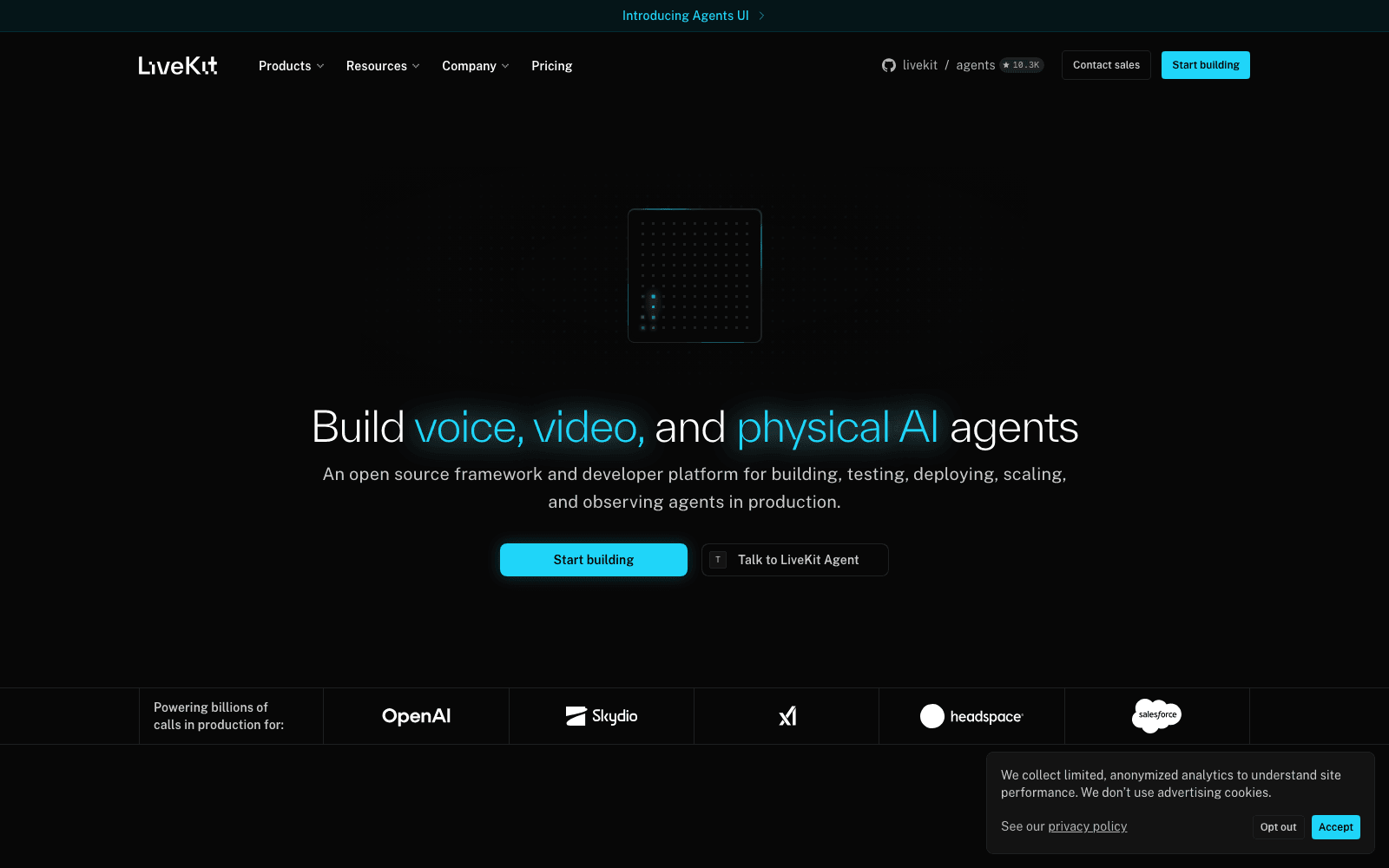
Build voice, video, and physical AI agents on real-time infrastructure — open-source LiveKit Agents framework + LiveKit Cloud managed deployment. Series C-funded.
Overview
LiveKit: Real-Time Infrastructure for AI Agents
LiveKit is the real-time infrastructure stack for voice, video, and physical AI agents — open-source LiveKit Agents framework plus managed LiveKit Cloud. Following its Series C, the company is positioning around the "voice-driven era of computing" thesis: every app eventually grows a voice interface, and that needs production-grade real-time infrastructure.
The Agents framework went 1.0 in April 2025 and ships native MCP (Model Context Protocol) tool support, adaptive interruption handling, and the broadest voice/video toolset for agent developers.
Key Features
- Open-source Agents framework (Python + Node.js) for voice/video/multimodal agents
- LiveKit Cloud — managed runtime with autoscaling, observability, telemetry
- WebRTC-based real-time audio/video infrastructure
- Native MCP tool support for agent extensibility
- LiveKit Inference — run AI models without managing API keys
Ideal Use Case
Developers building voice agents, video AI, or any real-time AI app where latency and reliability matter at scale. Especially strong for production deployments where Pipecat's framework needs commercial-grade infrastructure underneath.
Why Use LiveKit
The voice agent stack typically has Cartesia/ElevenLabs for TTS, Deepgram/AssemblyAI for STT, and an LLM — but the real-time orchestration layer was missing. LiveKit fills it with open-source DX plus managed scale.
FAQ
What can you build with LiveKit? LiveKit lets you create voice, video, and physical AI agents on real-time infrastructure. You get both an open-source Agents framework for building and a managed cloud deployment option for running your applications.
Who should use LiveKit? LiveKit is designed for developers who want to build AI-powered conversational agents with voice and video capabilities without managing infrastructure from scratch.
Does LiveKit have a free option? Yes, LiveKit offers a freemium model with free and paid tiers available. Visit the LiveKit pricing page for current plans and feature details.
How does LiveKit compare to other developer tools? Unlike code completion tools such as GitHub Copilot and Cursor, LiveKit is specifically built for real-time AI agent infrastructure rather than general coding assistance. It provides specialized deployment and infrastructure management for voice, video, and AI applications.
tl;dr
Real-time infrastructure for voice/video/physical AI. OSS Agents framework + LiveKit Cloud. Series C, MCP-native. The voice computing era's foundation.
Related
Looking for more options? Browse the Developer Tools directory or read our best AI coding tools listicle. LiveKit is also tracked on Crunchbase.
Why Use LiveKit
Editorial Review
Our take on LiveKit.

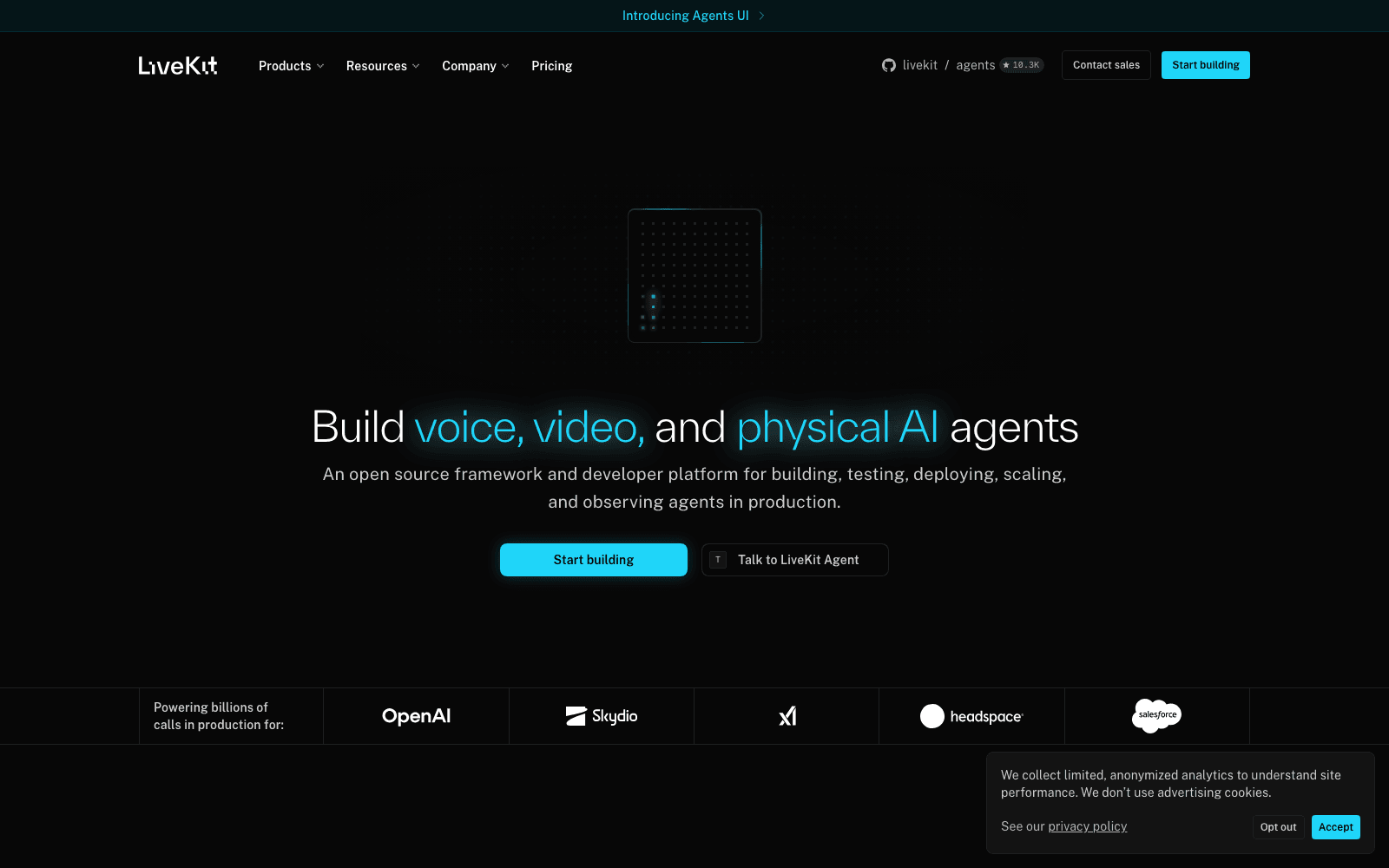
LiveKit Agents is an open-source framework for building voice and video AI agents with real-time infrastructure, backed by managed cloud deployment and Series C funding.
What works
- Open-source + managed cloud option reduces lock-in
- Sub-100ms latency handling for conversational agents
- Pre-built integrations with common LLM and TTS services
What doesn't
- Another framework to learn; ecosystem still maturing
- No end-to-end model hosting; you assemble your own stack
LiveKit Agents handles the hard part of real-time AI—low-latency voice and video pipelines—so you can focus on agent logic instead of codec negotiation and buffer management. The framework is open-source, which means you can run it locally or self-host, and LiveKit Cloud provides a managed option if you'd rather not operate the infrastructure yourself.
The core pitch is practical: you get pre-built connectors for LLMs, transcription services, and TTS, which cuts down glue code. Real-time means sub-100ms latency for voice interactions, which matters for conversational agents. The trade-off is that you're learning a new framework and integrating with whichever third-party services you already use for inference or speech processing—there's no built-in end-to-end model hosting. For teams already deep in the voice AI space or building agents that need tight round-trip timing, the infrastructure angle is real. For simpler async chatbots, you're probably overengineering.
User Reviews
Similar Tools