Letta
Memory-first AI agents — agents that learn from experience and improve over time.
Overview
Letta: Memory-First Agents That Learn
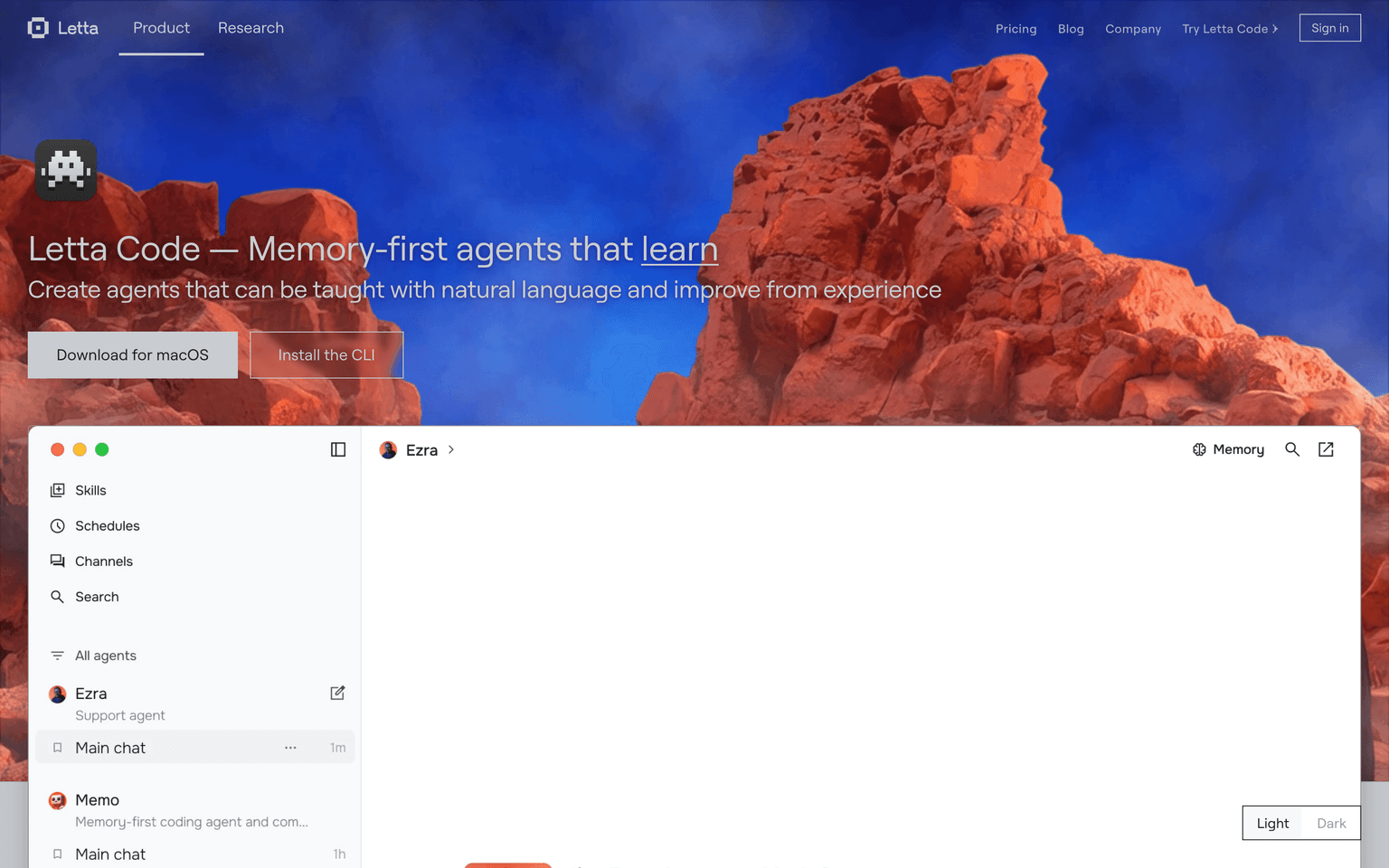
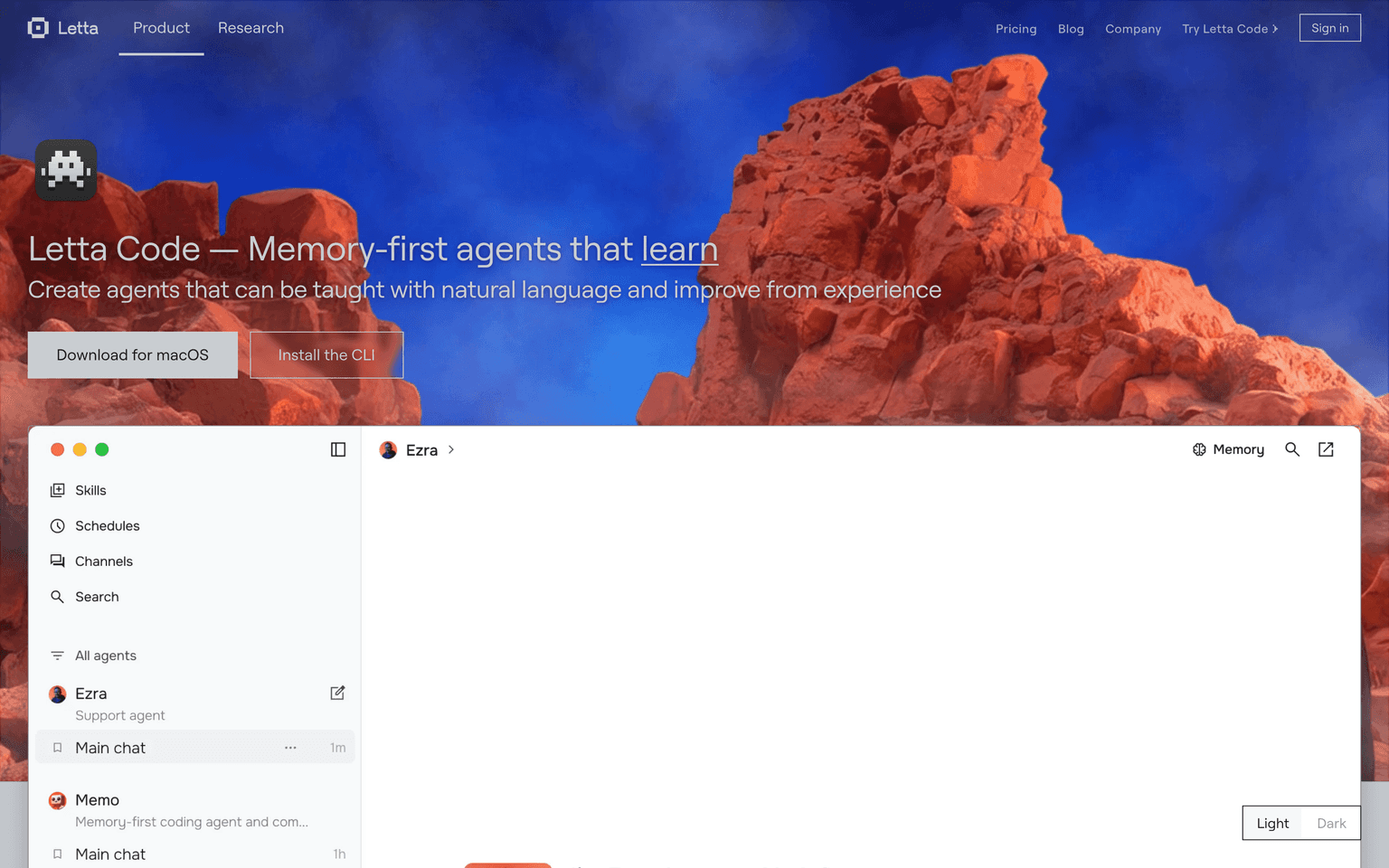
Letta (formerly MemGPT) is a memory-first agent platform — agents that can be taught with natural language and improve from experience over time. Where most AI agents forget every conversation, Letta agents persist memory across sessions, build durable knowledge, and refine behavior the way real coworkers do.
The platform ships with Letta Code (a desktop app + CLI for memory-first coding agents), the open-source Letta server for self-hosted deployments, and a hosted cloud for teams that don't want to run infrastructure. Built on the original MemGPT research that introduced practical long-term memory to LLM agents, Letta is the canonical platform for stateful, learning agents in 2026.
Key Features:
- Memory-first agent runtime — persistent across sessions
- Letta Code: desktop app + CLI for coding agents
- Open-source server for self-hosting
- Hosted cloud for teams
- Skills, schedules, channels — coworker-style abstractions
- Multi-agent orchestration with shared memory
- Memory layers: working, recall, archival
- API, SDKs, and integrations
- Built on MemGPT research
Ideal Use Case:
Letta is ideal for teams building agents that need to remember context across sessions — coding agents that learn your codebase, support agents that retain customer history, or research agents that build durable knowledge bases. Strong fit when "agents that forget" is the bottleneck.
Why Use Letta:
- Real long-term memory, not just context-window tricks
- Open source for self-hosting + hosted cloud
- Letta Code for coding-specific use cases
- Built on the original MemGPT research
- Active community and rapid release cadence
FAQ
Is Letta the same as MemGPT? Yes — Letta is the company behind MemGPT, named the platform after the research. Is Letta open source? The server is open source; the hosted cloud and Letta Code are commercial. What is Letta Code? A memory-first coding agent in a desktop app + CLI form factor. How does memory work? Multi-layer memory (working, recall, archival) with automatic management.
tl;dr:
Letta is the memory-first agent platform — agents that learn from experience. Built on MemGPT research, with open-source server and Letta Code coding agent.
Related
Looking for more options? Browse the Developer Tools directory or read our best AI coding tools listicle. Letta is also tracked on Crunchbase.
Why Use Letta
FAQ
Editorial Review
Our take on Letta.

Letta builds AI agents with persistent memory, so they learn from interactions and improve over time.
What works
- Persistent memory across sessions—agents actually learn patterns
- Freemium entry point; easy to prototype without commitment
- Focused design for stateful agent behavior, not generic
What doesn't
- Smaller community and fewer integrations than CrewAI
- Niche positioning means less documentation and third-party tooling
Letta is an AI agent framework designed around a simple insight: agents that retain context across conversations get better at their jobs. Instead of resetting after each interaction, Letta agents maintain memory of past exchanges, user preferences, and outcomes, letting them adapt and refine their responses. This memory-first architecture appeals to builders who want agents that feel less stateless and more like they're actually learning your needs.
The framework positions itself as infrastructure for developers—you're building and deploying custom agents rather than using a pre-built chatbot. It sits in the crowded AI agents category alongside CrewAI and Browser Use, each with different angles (multi-agent orchestration vs. browser automation vs. stateful memory). Letta's specific bet is that persistence matters more than most frameworks acknowledge.
If you're building a customer service bot, research assistant, or any agent that benefits from continuity, the memory-persistence angle is genuinely useful. The freemium model lets you start without friction. The tradeoff is familiarity: it's narrower than CrewAI's ecosystem and younger than established frameworks, so you'll be solving some problems yourself.
User Reviews
Similar Tools