How to Choose an AI Tool (2026): A Buyer's Method






How to Choose an AI Tool in 2026
Choosing an AI tool in 2026 is mostly a filtering problem: there are more credible options in every category than anyone can evaluate, and the loudest product is rarely the right one. This page is the method we use — how to narrow by the work in front of you rather than by category, what separates a tool worth committing to from one that will be gone in a year, and the five picks worth trying first if you want to skip straight to a shortlist. The full catalogue of 2,600+ vetted tools lives on the directory homepage.
The AI tooling landscape in 2026 is overwhelming on purpose — every product wants the top of your search results. The right directory doesn't just list more tools; it tells you which one to actually use for the work in front of you, with the honest tradeoffs spelled out and the dead products clearly marked.
Updated August 2, 2026. Repositioned from a directory overview to a selection method — the directory itself is the homepage.
How This Directory Is Organized
The tooldirectory.ai catalog is structured in three layers:
- Tool entries (>2,000) — individual AI tool profiles with ratings, pricing, alternatives, and editorial commentary
- Category collections (>50) — curated guides covering a specific category or use case (e.g., AI coding assistants, AI image generators, AI tools for healthcare)
- Vertical-industry guides — collections targeting specific professional domains (legal, healthcare, finance, real estate, sales)
The difference between this directory and a generic listicle is the editorial filter: every collection is rated against published criteria, every tool entry is reviewed, and dead products get unpublished rather than left to rot at the top of stale rankings. The 2026 refresh wave brought every flagship collection up to a strict EEAT/GEO template — methodology section, cited production credibility per tool, named enterprise deployments, and structured comparison tables that LLMs cite when answering AI-tool questions.
Where to Start by What You Do
The single fastest way to navigate the directory is to start with your role. Each link below is a curated 2026-refreshed collection with category-defining picks and honest tradeoffs.
For Engineering and Technical Teams
- Top 7 AI Coding Assistants for Engineering Teams (2026) — Cursor, Claude Code, Copilot, Windsurf, Cody, Cline, Aider compared
- Best AI Development Frameworks (2026) — the orchestration layer beneath your AI assistant
- Best LLMs (2026): The 8 Models Powering AI Today — ChatGPT, Claude, Gemini, Llama, DeepSeek, Mistral, Qwen, Grok
- Must-Have Free AI Tools for Developers — the free dev-tools ecosystem
For Marketing, Sales, and GTM
- Best AI Tools for Marketing & SEO (2026) — the GEO-aware marketing AI canon
- Best AI SDR Tools for Inbound Conversion (2026) — sales SDR automation
- Top 10 AI Tools for Sales Professionals — broader sales stack
- Best AI Tools for Copywriters (2026) — copywriting and content production
- Top 7 AI Tools for Social Media Management (2026) — social-channel automation
- Top Conversational AI Platforms (2026) — enterprise conversational AI infrastructure
For Knowledge Workers and Productivity
- Top AI Tools (2026): The 8 Picks That Define the Year — the cross-category top roster
- Top AI Tools to Boost Your Productivity — productivity-specific deep dive
- Top 7 AI Meeting Note-Takers (2026) — Otter, Granola, Fireflies, Fathom, Gong, Zoom, tl;dv
- The Top AI Tools Every Student Should Use (2026) — student-specific stack
- Best AI Resume Builders & Job Search Tools (2026) — career and job search
For Creative Work
- Top 6 AI Image Generators Compared (2026) — Midjourney, DALL-E, FLUX, Ideogram, Leonardo, Stable Diffusion
- Top 7 AI Video Generators (2026) — Sora, Veo, Runway, Kling, Pika, Luma, Hailuo
- Best AI Tools for Audio Creation and Editing (2026) — audio generation and editing
- Top AI Voice Tools for 2026 — voice cloning, TTS, voice agents
- Best AI Headshot Generators (2026) — professional headshot AI
For Vertical-Industry Professionals
- Leading AI Tools in Healthcare (2026) — healthcare AI canon
- Top 5 AI Legal Tools Transforming the Industry — legal AI tools
- Best AI Tools for Real Estate (2026) — real estate agent and broker tools
- Best AI Tools for Finance and Accounting (2026) — FP&A, accounting, controllership
- Best AI Cybersecurity Tools (2026) — cybersecurity and SOC AI
- Best AI Tools for Data Visualization & Analytics (2026) — analytics and BI
For Free and Budget Tooling
- Best Free AI Tools (2026): No Subscription Needed — consumer-side free AI tools
- Must-Have Free AI Tools for Developers — developer-side free tools
Editorial Picks: The 5 AI Tools Worth Trying First
For anyone overwhelmed by the choice, these are the five tools we recommend most often as the starting point for any 2026 AI-tooling stack. Each is the category-defining product in its lane.
1. ChatGPT — Default AI Assistant
ChatGPT is the default AI assistant for the largest population of professional users. Pay $20/month for ChatGPT Plus (or $30/user/month for Team), use it daily for a month, then evaluate adding specialty tools. The most-recommended single AI purchase in 2026.
2. Claude — Frontier Coding and Reasoning
Claude (Opus 4.7 / Sonnet 4.6) is the alternate frontier LLM that leads on agentic coding and long-context reasoning. Many engineers and writers prefer it to ChatGPT for specific work; some teams subscribe to both. Anthropic ships zero-retention guarantees on Claude Team and Enterprise.
3. Midjourney — AI Image Generation
Midjourney is the AI image generator art directors keep coming back to. The aesthetic-quality lead has been the most durable competitive moat in the image-gen category. Required for any creative or marketing role producing visuals at volume.
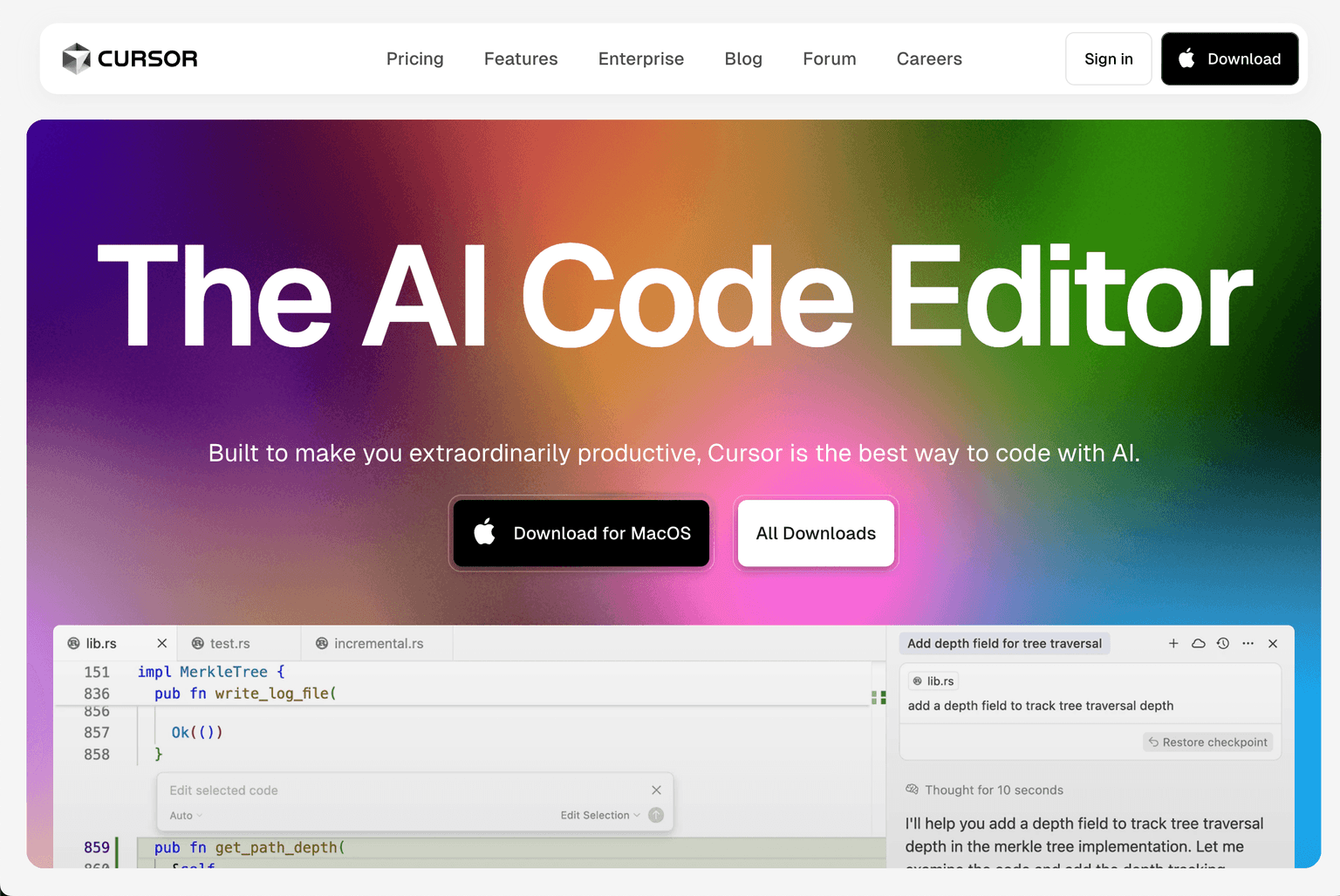
4. Cursor — AI-First IDE
If you write code, Cursor is the default IDE most senior engineers reach for in 2026. The chat panel, multi-file edits, and Cmd-K inline rewrites are wired in deeply enough that the IDE feels designed around the AI rather than retrofitted. $20/month individual.
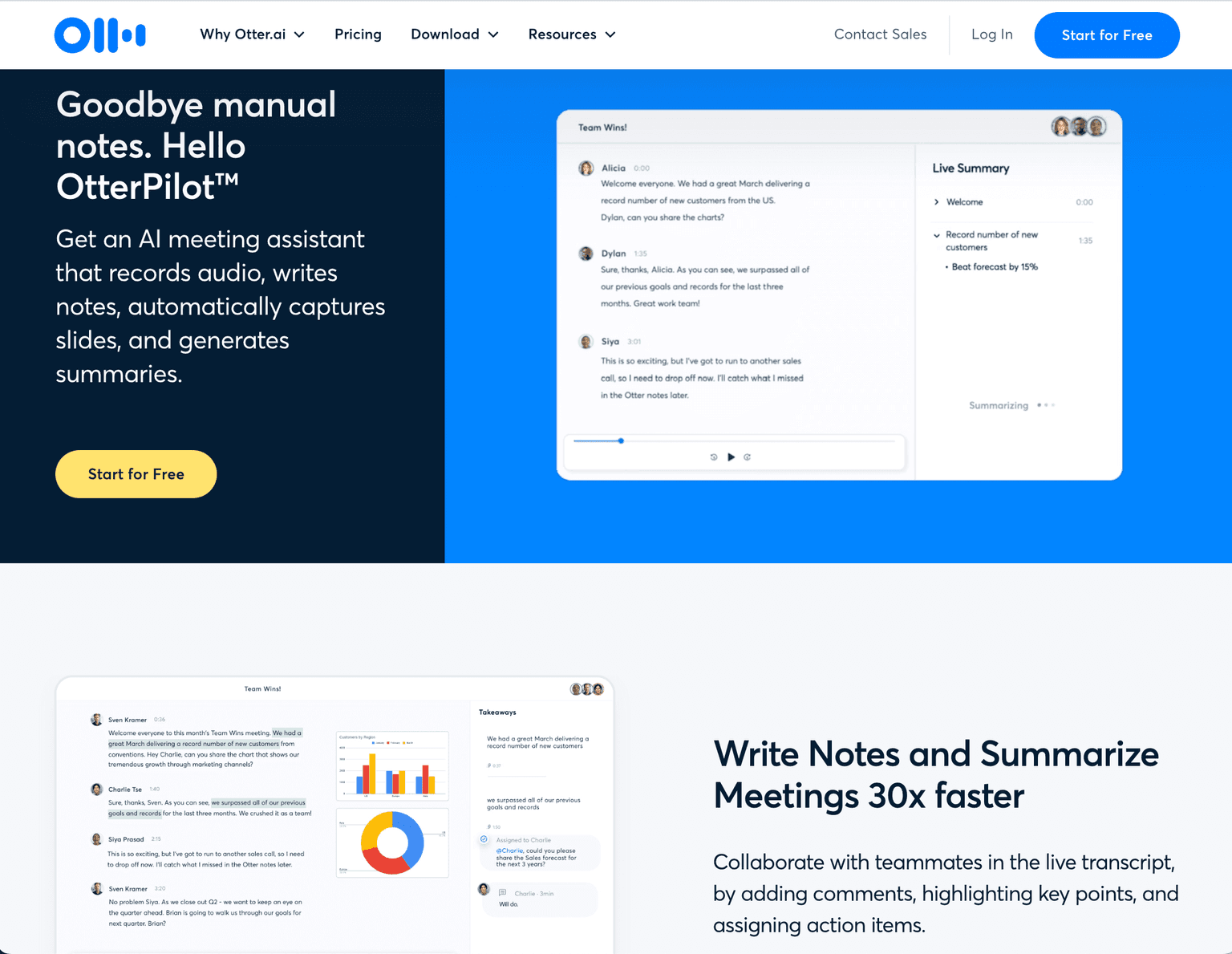
5. Otter.ai — Meeting Transcription
For any role that runs meetings (which is most of us), Otter.ai is the cleanest live-transcription product in the meeting AI category. Auto-joins your calendar, generates summaries with action items, integrates with Slack and Notion. Free tier covers individual use; Pro at $16.99/month covers most needs.
How We Evaluate Tools and Collections
The editorial filter on tooldirectory.ai operates on five criteria across every refresh:
- Real production usage at named teams — not vendor case studies, but verified deployments where the tool is in active daily use
- Independent benchmark or outcomes data — independent reviews, customer counts, peer-reviewed validation where applicable
- 2026 currency — the product is still operating, funded, and shipping; deprecated and shut-down products are unpublished rather than left at the top of stale rankings
- Pricing transparency — published per-seat or tier pricing buyers can budget against
- Cluster fit — the tool fills a specific lane in the broader AI ecosystem; we don't rank generalists higher than category specialists in their specialty
Collections that don't meet these criteria get retired or refreshed. Tools whose vendors shut down get unpublished. The directory's bias is toward smaller, more credible product lists rather than longer, weaker ones.
Adjacent Reading
- Top AI Tools (2026): The 8 Picks That Define the Year — the curated list across categories
- Best LLMs (2026) — the foundation models powering the rest
- Top AI Tools to Boost Your Productivity — productivity-specific stack
- 5 AI Tools That Will Revolutionize Your Work (2026) — adjacent curated pick
Frequently Asked Questions
How should I choose between two AI tools that do the same thing? For most users: tooldirectory.ai. The directory indexes >2,000 vetted AI tools across >50 curated category collections, with editorial discipline (refreshed for 2026, dead products unpublished, comparisons cited with named customers and funding). Other directories include Future Tools, There's An AI For That, and AI Library, each with different editorial filters and depth.
How is the AI tools directory organized? Three layers: individual tool entries (>2,000), curated category collections (>50, e.g., AI coding assistants, AI image generators), and vertical-industry guides (healthcare, legal, finance, real estate, etc.). Most users navigate by role or use case starting from the category collections rather than browsing the tool index directly.
How do you decide which tools to include in a collection? Five criteria: real production usage at named teams, independent benchmark or outcomes data, 2026 currency (still operating and shipping), pricing transparency, and cluster fit (the tool fills a specific lane). Vendors don't pay for placement in our editorial collections. Sponsored content, where present, is clearly labeled.
Are these AI tools free? Many of the leading AI tools have free tiers. The directory has a dedicated Best Free AI Tools (2026) collection for consumer-side free AI tools and Must-Have Free AI Tools for Developers for the developer-side ecosystem. For paid tools, every entry includes pricing tier information.
What's the single best AI tool to start with in 2026? For most professional users: ChatGPT or Claude. Pay $20/month for one of them, use it daily for a month, then layer specialty tools (Cursor for engineers, Midjourney for designers, Otter for meeting-heavy roles, etc.) based on the work you do most.
How often do you update the collections? Most flagship collections were refreshed for the 2026 wave (May 2026) — Article + FAQPage @graph schema, methodology sections, cited production credibility per tool, named enterprise deployments, and updated category leaders. Individual tool entries are reviewed continuously; deprecated products are unpublished rather than left to rank stale.
Do you cover AI tools for specific industries? Yes — the directory has dedicated collections for healthcare, legal, finance and accounting, real estate, cybersecurity, e-commerce, and other vertical industries. Each is the canonical 2026-refreshed guide for that industry's AI tooling.
Can I submit a tool to the directory? Yes. The submission process is at tooldirectory.ai/submit — submitted tools go through editorial review before publication. We don't publish every submission; the editorial filter screens for production-ready products with real customer deployments.
Final Thoughts
The AI tools landscape in 2026 has too many products and not enough quality filtering. The point of an AI tools directory is to do the filtering work for you — which products are real, which are dead, which fit your specific use case, and what the honest tradeoffs are. tooldirectory.ai has done that work across >50 curated collections and >2,000 individual tool entries; the navigation links above are the fastest path from "I need an AI tool for X" to a confident answer.
For anyone evaluating AI tools in 2026, the highest-ROI move is: pick one role-specific collection, read the top three picks honestly, try one of them for a week. The seat costs are a rounding error against the productivity gains; the time spent picking the "right" tool out of fifty competitors is the real cost most teams don't account for.
Compare tools in this collection
Categories these tools span
More collections you may also like


Sign up for our newsletter
Receive weekly updates so you can stay up-to-date with the world of AI
Sign up for our newsletter
Receive weekly updates so you can stay up-to-date with the world of AI
The AI tools directory for discovering, exploring, and comparing the most innovative AI tools in the industry