Best AI Tools for Marketing & SEO (2026)








Best AI Tools for Marketing and SEO in 2026
If you're researching the best AI tools for marketing and SEO in 2026, the playbook has shifted in one major way since 2024–2025: the AI search engines (ChatGPT, Perplexity, Claude, Gemini's AI Overviews, Google's AI Mode) are now sending real referral traffic, and the discipline of optimizing for them — Generative Engine Optimization, or GEO — is the fastest-growing lane in the entire category.
This guide covers the eight AI marketing and SEO tools that actually move the needle in 2026: Profound, Peec AI, SurferSEO, MarketMuse, Frase, Jasper, Klaviyo, and BrandBird. Each is rated for what it ships in production, where the value still holds in the AI-search era, and how it pairs with the other lanes you'll need.
The Three Lanes of Marketing & SEO AI in 2026
Marketing AI used to mean "AI-generated blog content." In 2026, the category has split into three distinct lanes that solve different problems:
- Generative Engine Optimization (GEO): track and optimize how your brand appears in ChatGPT, Perplexity, Claude, and Google AI answers. Leaders: Profound, Peec AI. This is the new SEO frontier and is where the most new budget is going in 2026.
- Classic SEO content + ranking: still the bigger budget line for now — content briefs, keyword research, on-page optimization, topic clusters. Leaders: SurferSEO, MarketMuse, Frase.
- Marketing operations and creative: AI for content production at scale, email automation, and visual content. Leaders: Jasper, Klaviyo, BrandBird.
The orgs winning in 2026 aren't picking one lane — they're running classic SEO and GEO in parallel, with a creative/ops layer underneath. The good news: most of the spend on the classic side already covers the underlying skills. The hard part is adding the GEO lane before competitors do.
Quick Comparison: AI Tools for Marketing & SEO
| Tool | Best for |
|---|---|
| Profound | Generative Engine Optimization. Best for tracking and optimizing brand visibility across ChatGPT, Perplexity, Claude, and Google AI Overviews. Category leader. |
| Peec AI | Generative Engine Optimization. Best as a Profound alternative or for SMBs not yet ready for the enterprise tier of dedicated GEO platforms. |
| SurferSEO | Classic on-page SEO. Best for content optimization scored against live SERP signals. Most-used SEO writing tool in 2026. |
| MarketMuse | Content strategy. Best for topic clusters, content gap analysis, and editorial planning at scale. |
| Frase | Content briefs + SEO writing. Best for individual writers and small content teams who want SERP-aware briefs without enterprise pricing. |
| Jasper | AI content creation. Best for marketing teams generating large volumes of on-brand content across multiple channels. |
| Klaviyo | AI-driven email and SMS. Best for ecommerce and DTC brands with first-party customer data. |
| BrandBird | Visual content automation. Best for turning screenshots and raw assets into share-ready social graphics. |
Generative Engine Optimization: The 2026 Story
The single biggest shift in marketing and SEO since 2024 is that real referral traffic now flows from AI search engines. Anthropic disclosed billions of Claude search queries per month; Perplexity has become a credible Google substitute for an increasingly large slice of users; ChatGPT's web-browsing mode and Atlas browser cite real sources. For B2B brands especially, the question isn't "will AI search become a real channel?" — it's "are we showing up in it?"
1. Profound — The GEO Category Leader
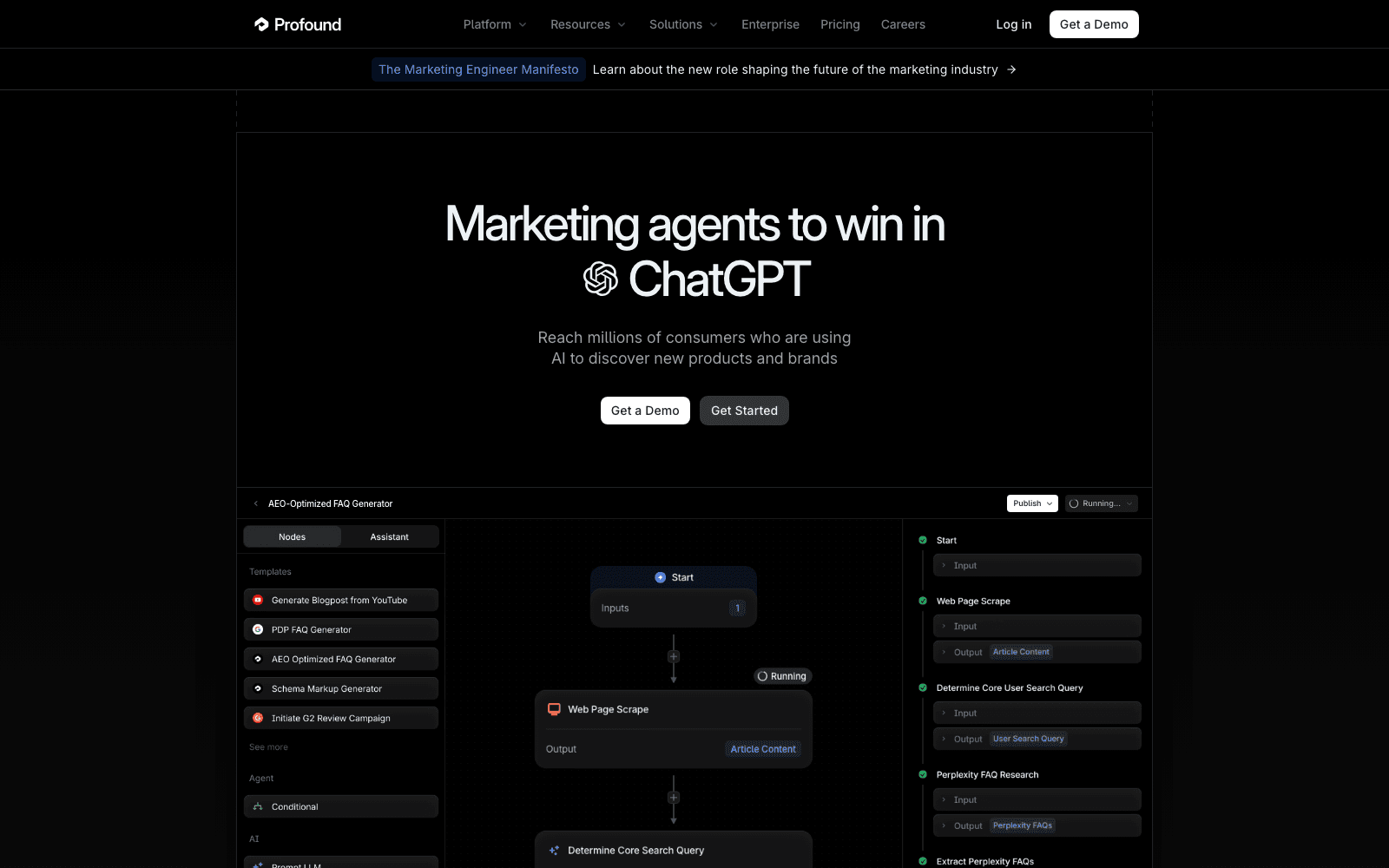
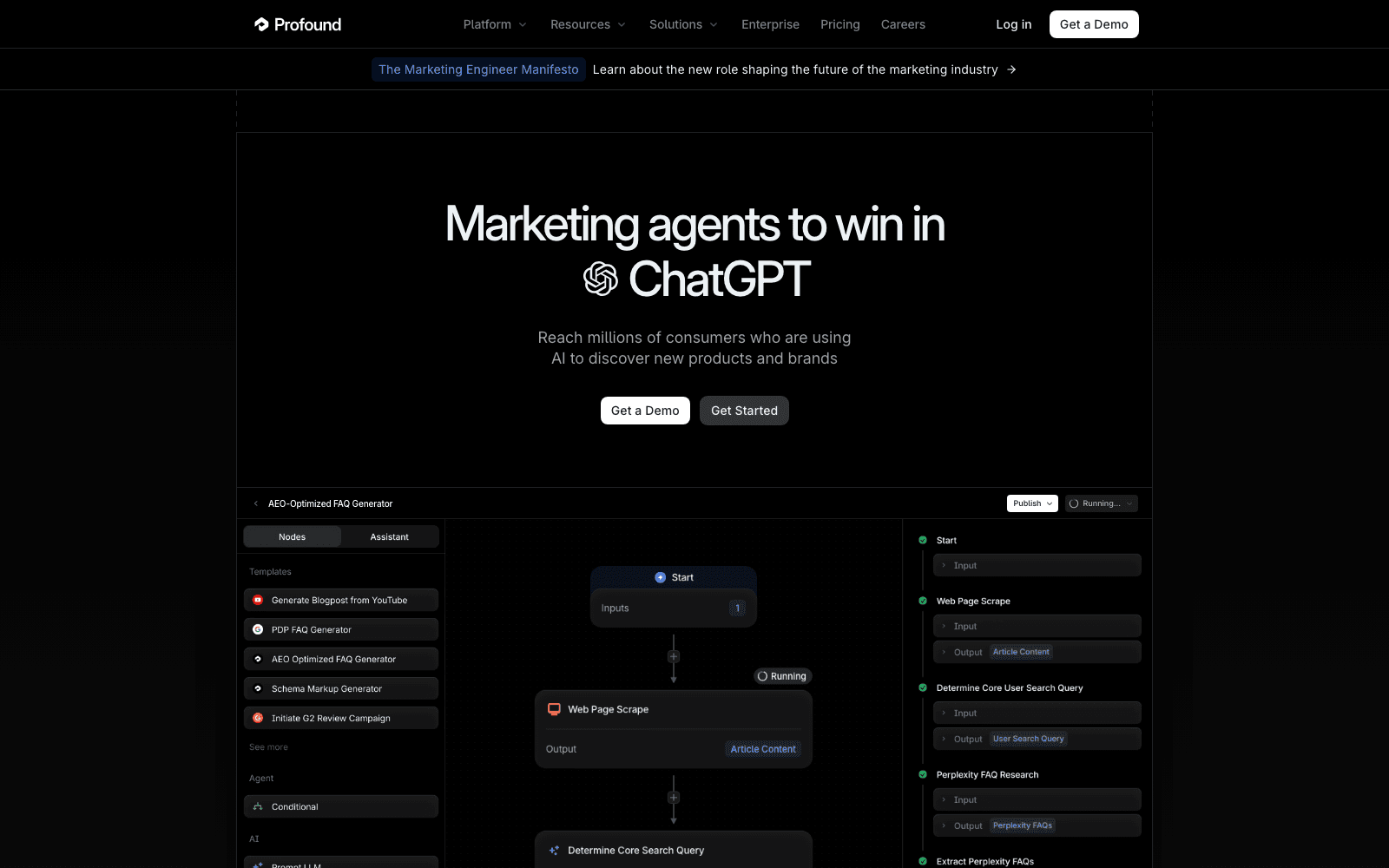
Profound emerged as the dominant GEO platform through 2024–2025 and entered 2026 with the largest enterprise footprint in the category. The product tracks how often your brand appears as a citation across ChatGPT, Perplexity, Claude, Gemini, and Google AI Overviews; surfaces which prompts are driving citations to you (and your competitors); and recommends content moves based on what the AI search engines actually surface.
What it wins at: enterprise GEO with deep prompt-tracking, competitive analysis across multiple AI search engines, and the kind of integration story that survives a CMO procurement review.
Where it falls down: priced for enterprise — SMBs and even mid-market often plateau on the price floor. The category is young, and the product is still adding new AI search engines as they launch.
2. Peec AI — A Strong GEO Alternative
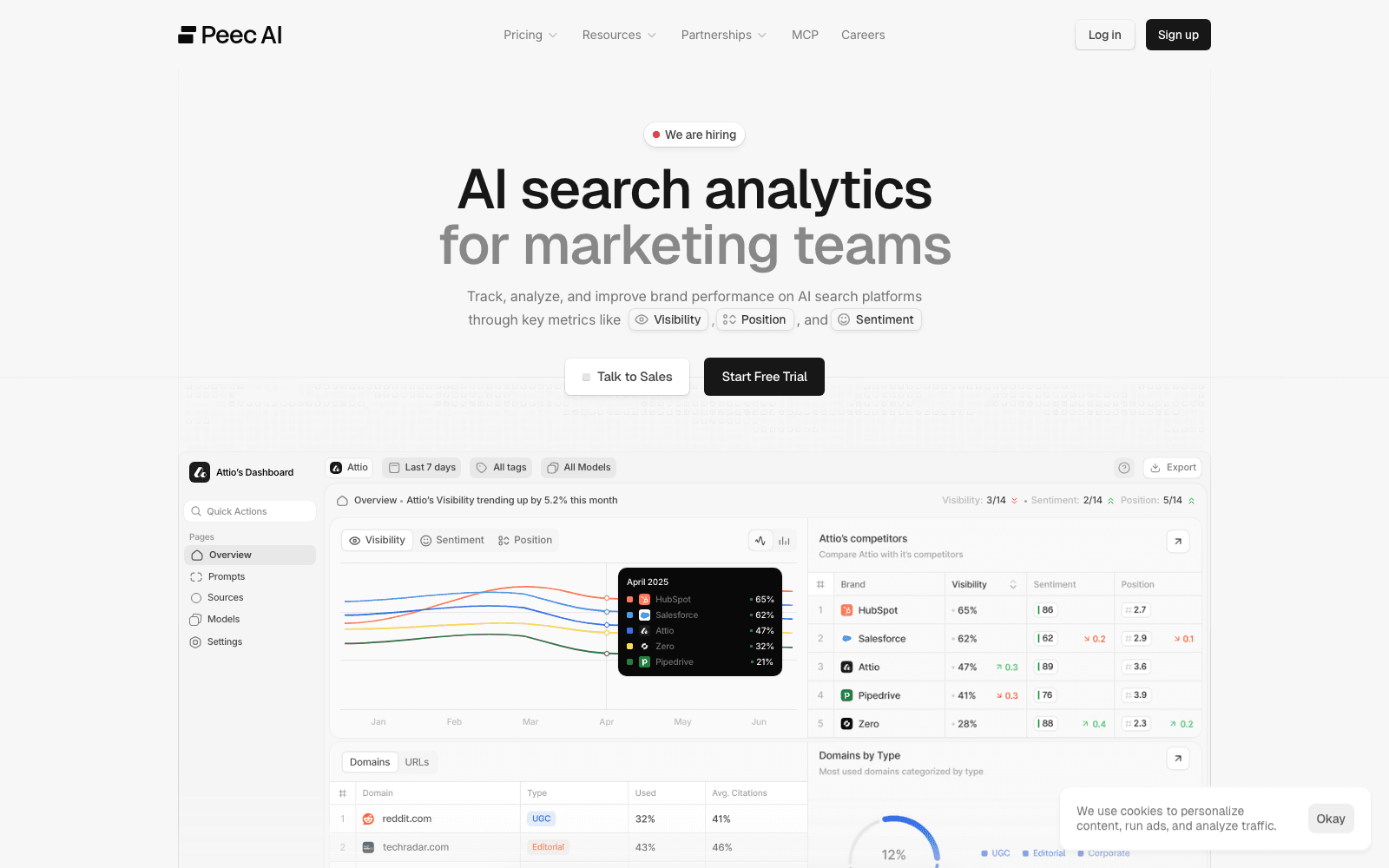
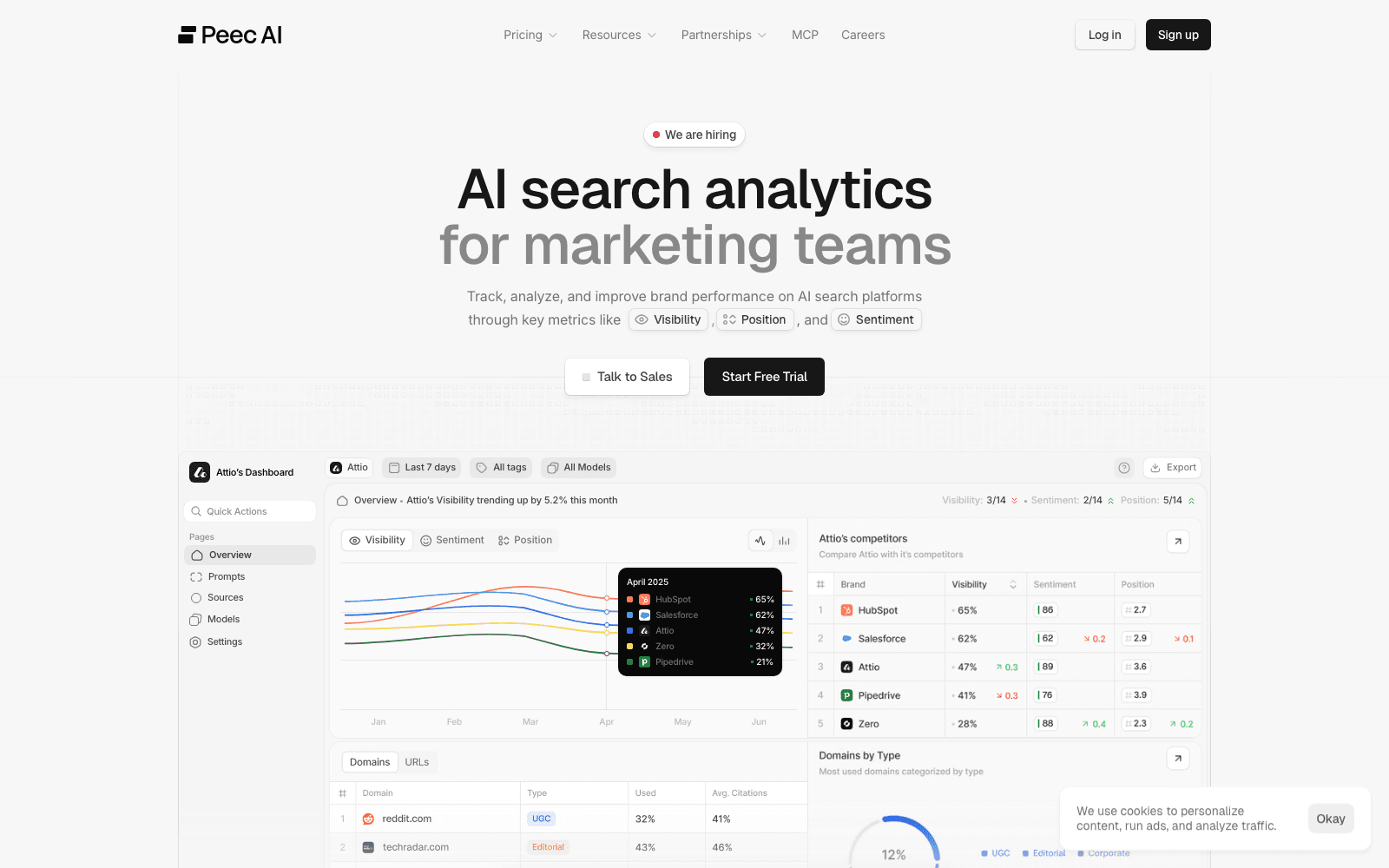
Peec AI targets the same Generative Engine Optimization use case as Profound but with a more accessible pricing model and a focus on faster setup. Track brand visibility across the major AI answer engines, see which prompts and competitors are winning citations, and prioritize content updates accordingly.
What it wins at: mid-market and SMB teams that need GEO insight without enterprise procurement, faster onboarding than the heavier competitors, and a cleaner UX for non-technical marketers.
Where it falls down: less mature enterprise feature set than Profound. If your buyer persona is a Fortune 500 CMO, the procurement story is harder than with the established leader.
Classic SEO Content and Ranking
The classic SEO lane still pays most of the bills in 2026 — Google web search remains the largest single source of organic traffic for most B2B and B2C brands. The tools below are the ones that have aged well into the AI-augmented era, where the human writer + AI brief + SERP-grading workflow has become the default editorial pattern.
3. SurferSEO — The Default On-Page SEO Tool
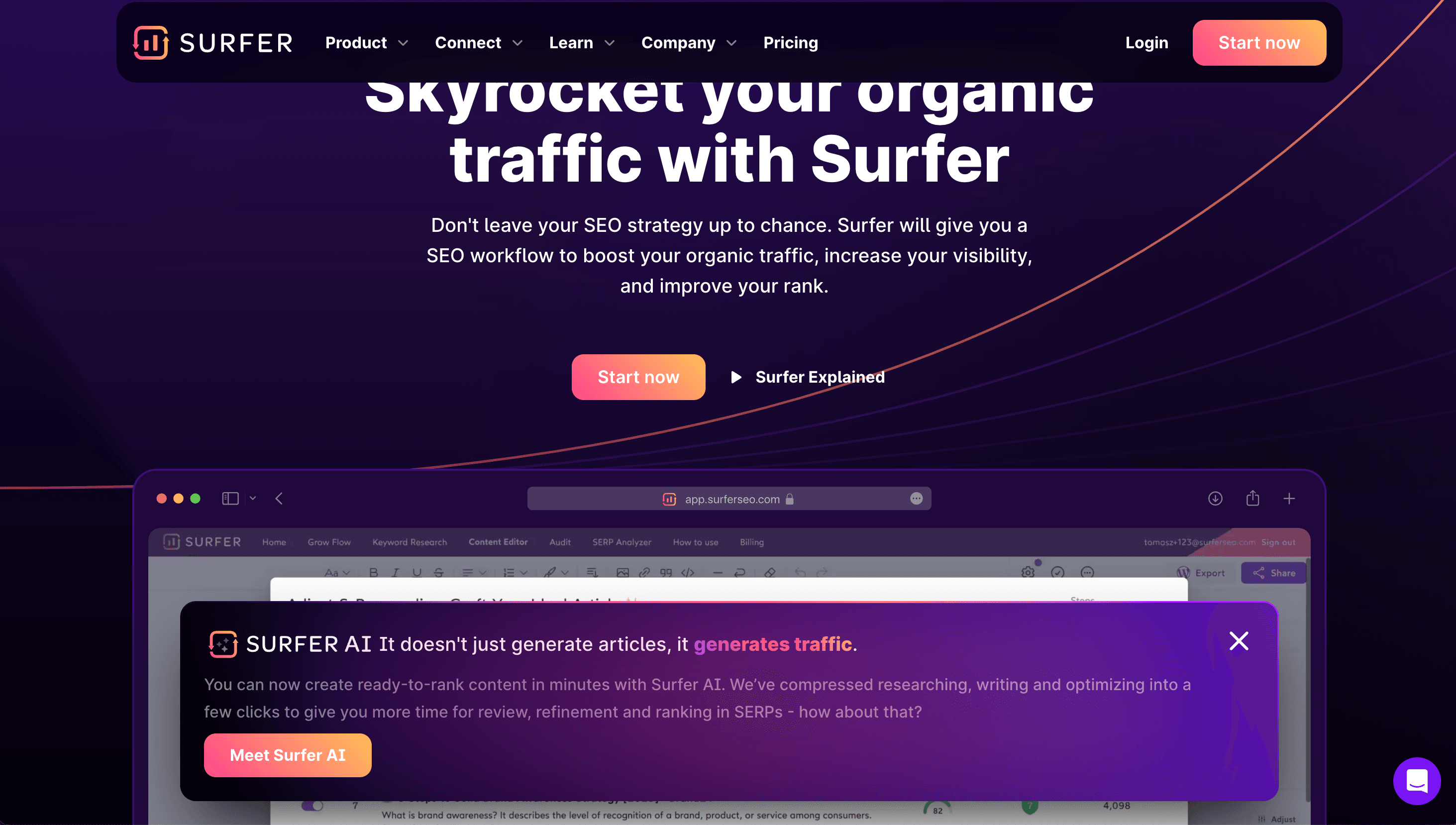
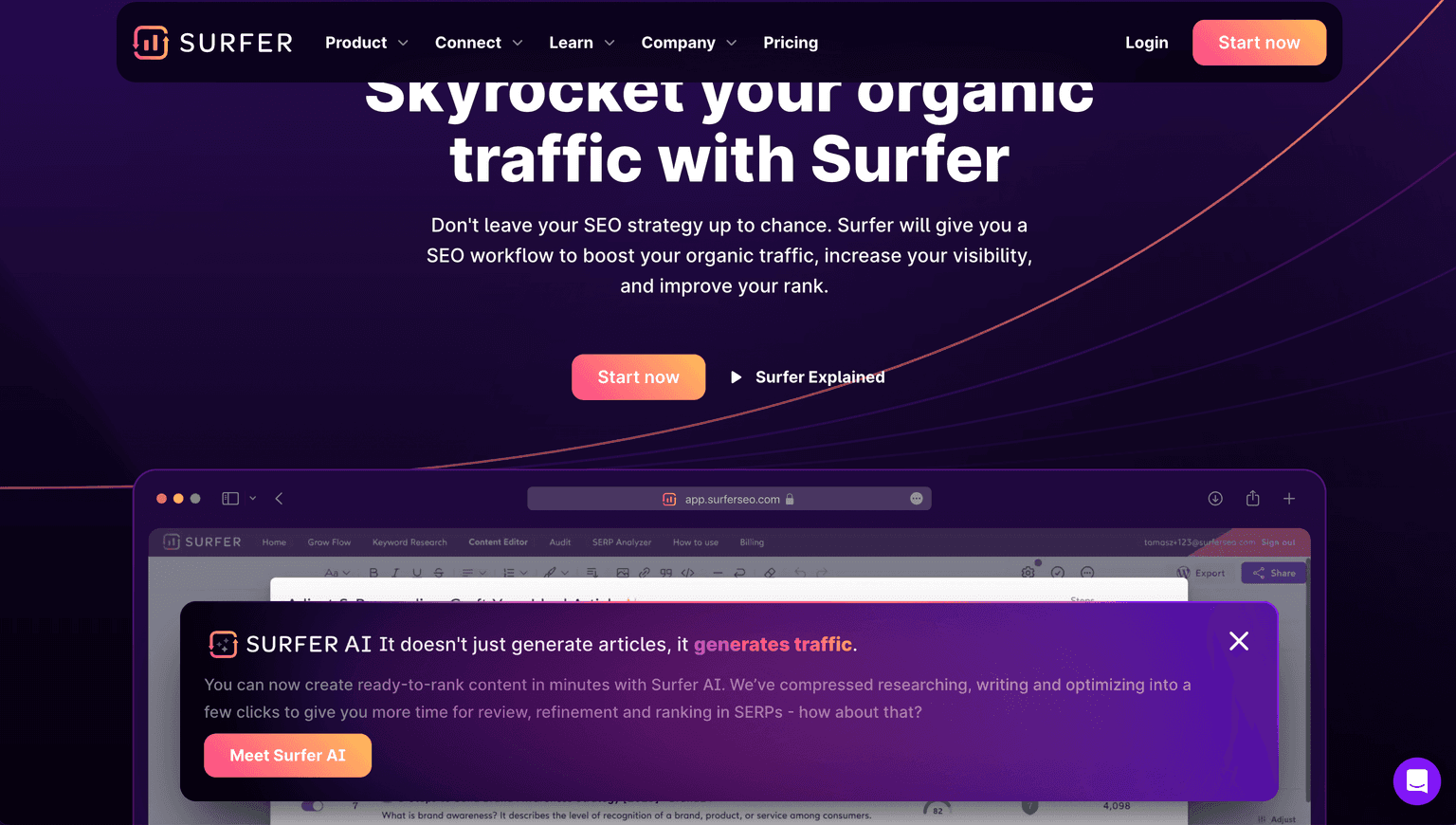
SurferSEO remains the most-used on-page SEO content optimization tool — analyze the top-ranking SERP results for your target keyword, get keyword density, structure, and semantic recommendations, and score your draft against the live competitor set. The 2025 AI integrations layered AI-assisted briefs, outlines, and section drafting on top of the existing optimization engine.
What it wins at: content teams optimizing for traditional Google rankings, the editorial workflow most agencies and in-house SEO teams already know, and integration with Google Docs and major CMS platforms.
Where it falls down: still primarily optimized for Google web search rather than AI answer engines — pair it with Profound or Peec AI for the GEO side.
4. MarketMuse — Content Strategy at Scale
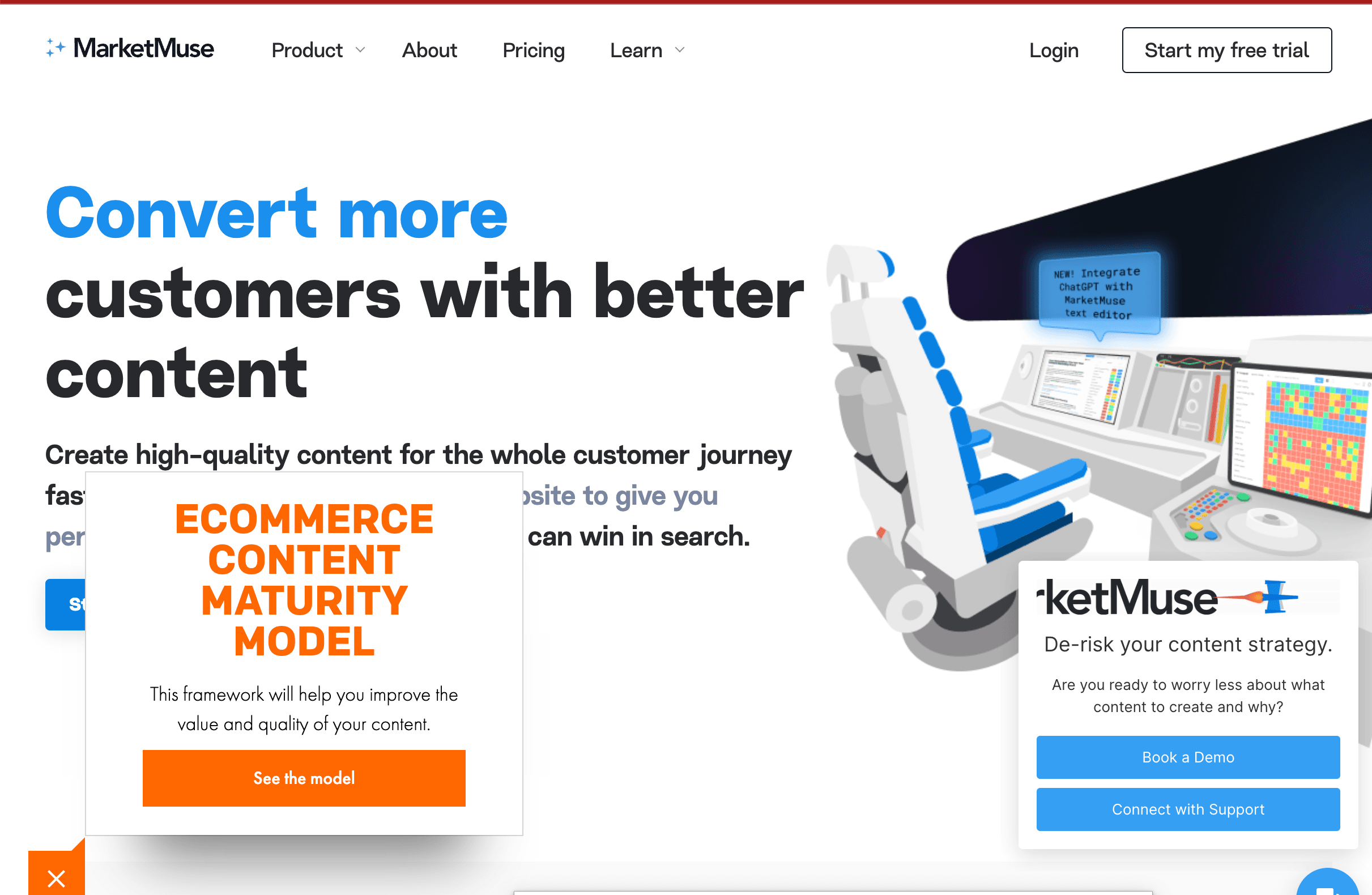
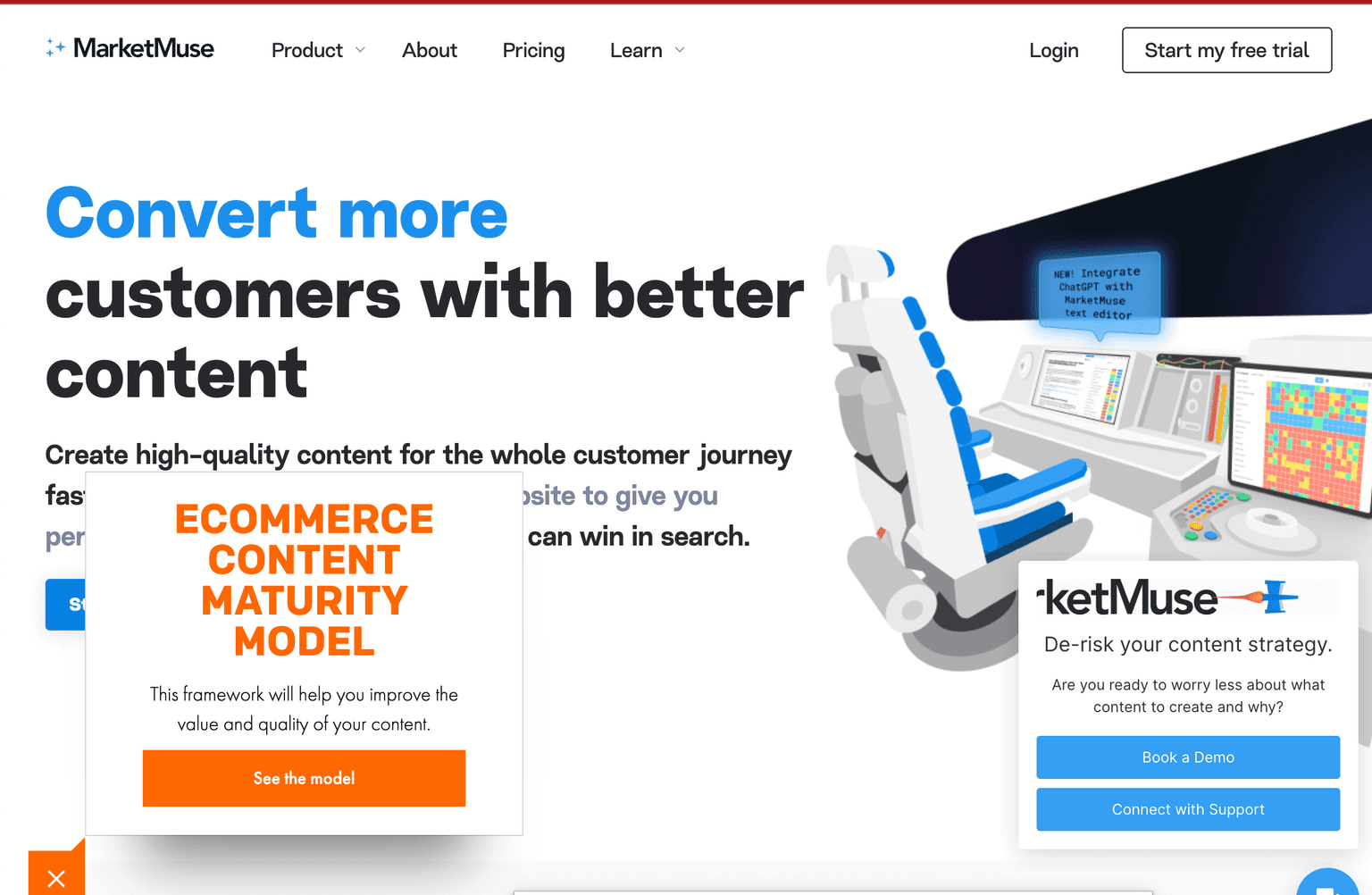
MarketMuse operates one tier above SurferSEO — instead of optimizing a single page, it plans your entire content strategy. Topic clusters, content-gap analysis against competitors, target word counts, and pillar-page architecture for content teams shipping at meaningful scale.
What it wins at: mid-to-large content teams running multi-pillar strategies, agencies managing multiple client editorial calendars, and any team where the bottleneck is "what should we write about" rather than "how do we optimize this draft."
Where it falls down: overkill for solo writers and small teams shipping fewer than ~10 pieces a month. Pricing reflects the enterprise positioning.
5. Frase — SEO Briefs for Individual Writers
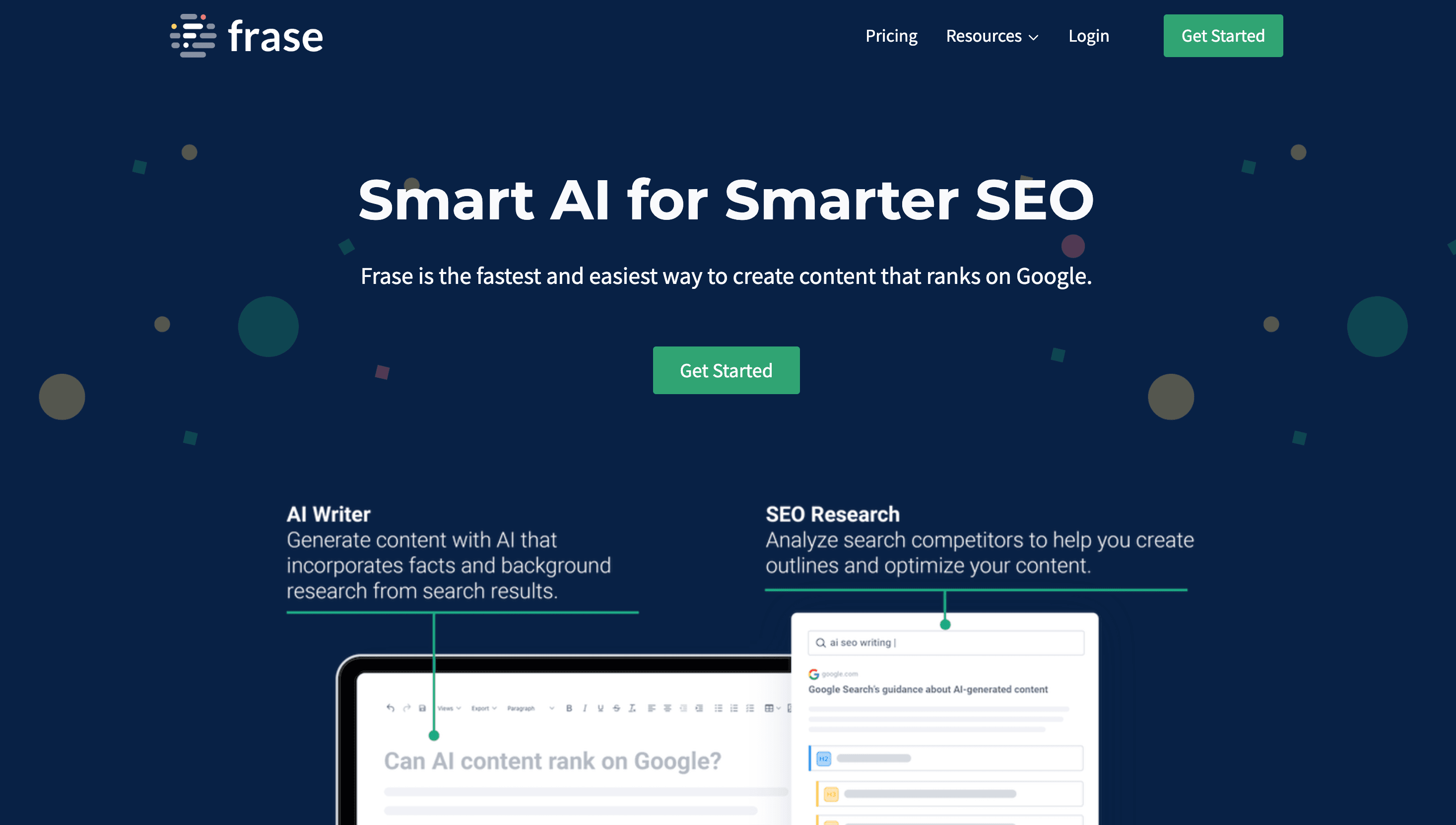
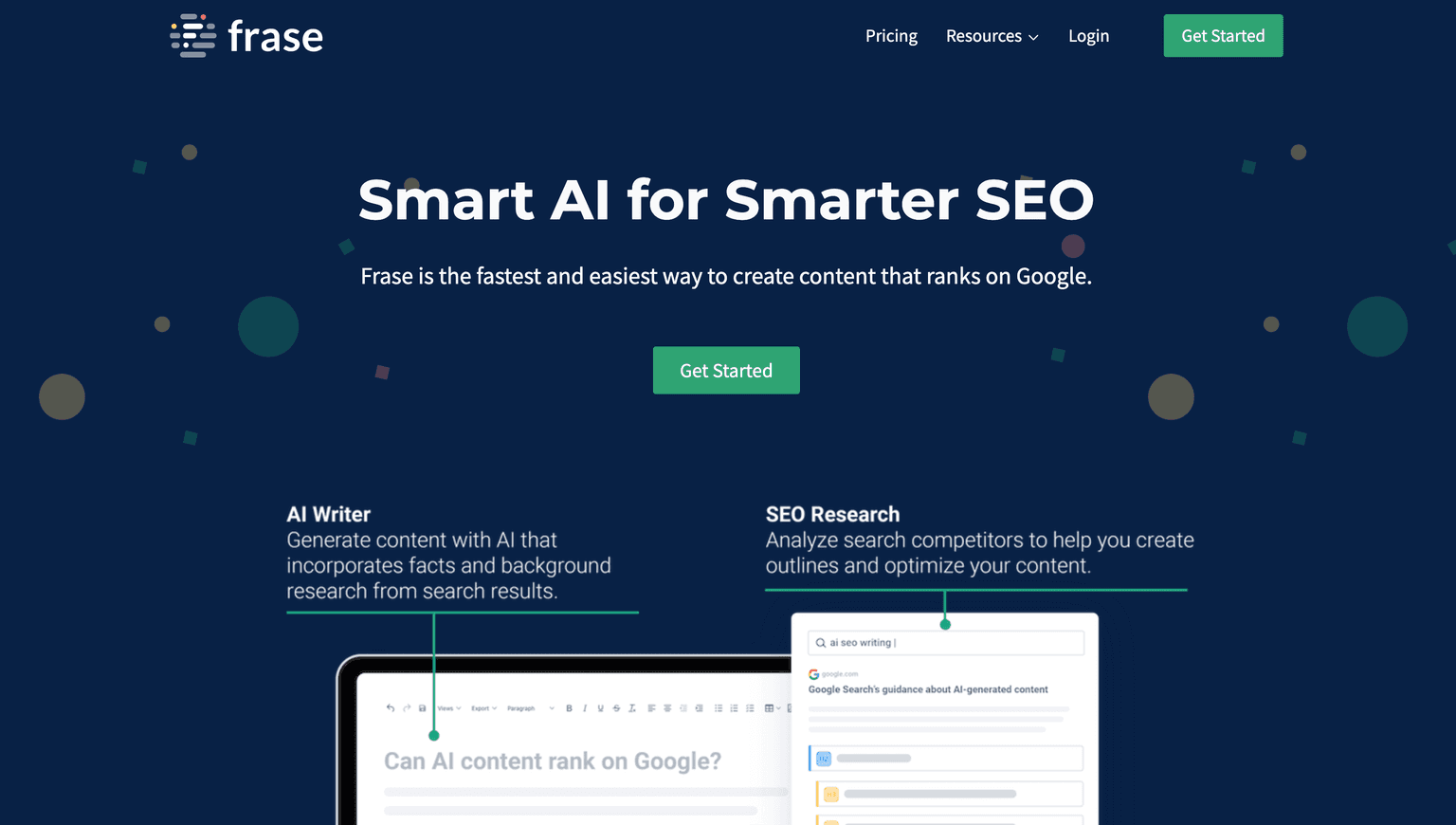
Frase is the right pick for individual writers, freelancers, and small content teams who want SERP-aware content briefs and AI-assisted drafting without the price floor of MarketMuse or the complexity of SurferSEO. The product builds research-grounded briefs in minutes by analyzing live top-ranked competitor pages, then assists with drafting against the brief.
What it wins at: small-team and solo SEO content workflows, fast turnarounds on briefs, and pricing that doesn't punish low-volume usage.
Where it falls down: less depth than the enterprise-tier competitors on competitive analysis and topic strategy. Best paired with one of the bigger tools for teams scaling past ~5 writers.
Marketing Operations and Creative
6. Jasper — AI Content Creation for Marketing Teams
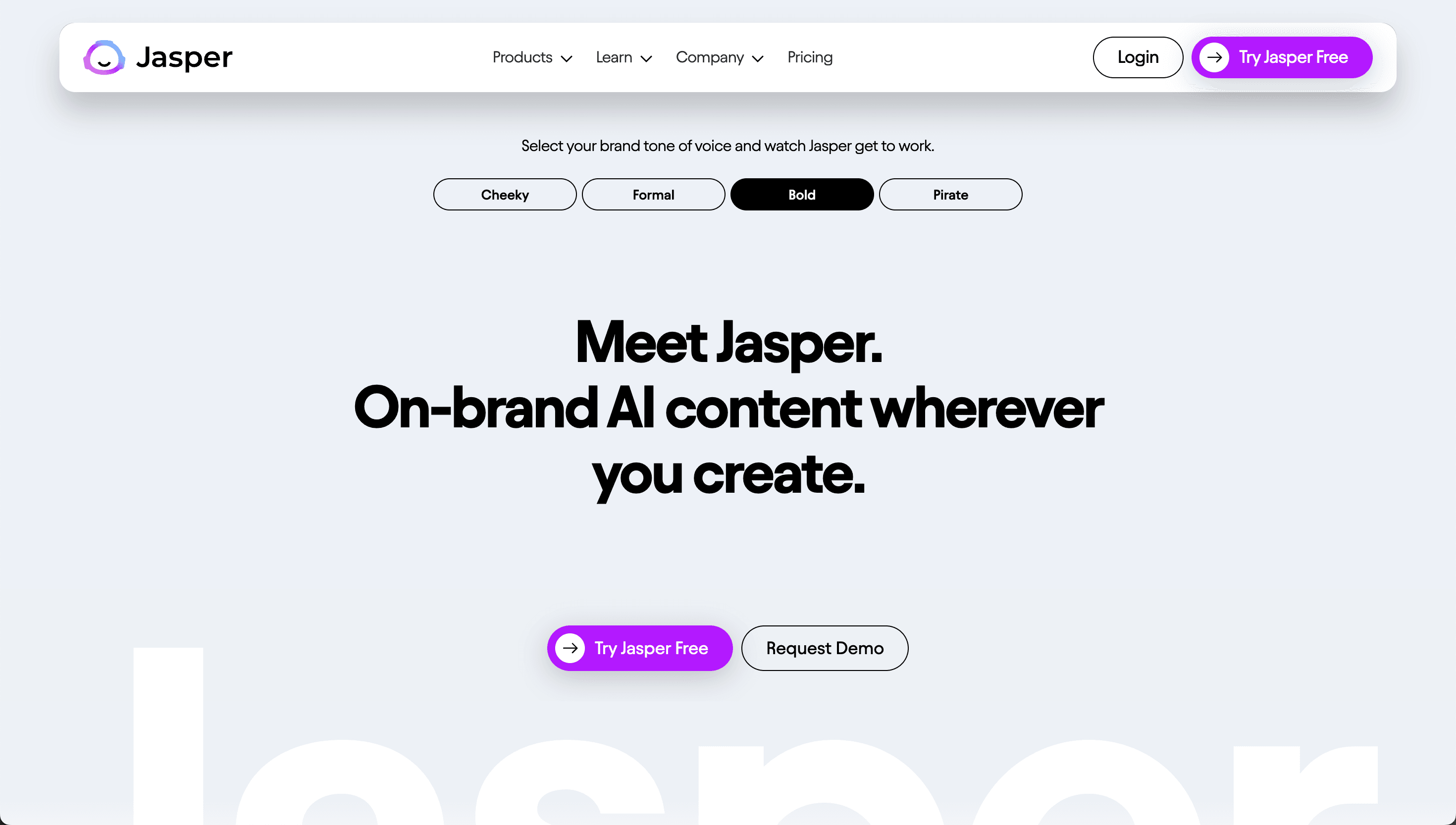
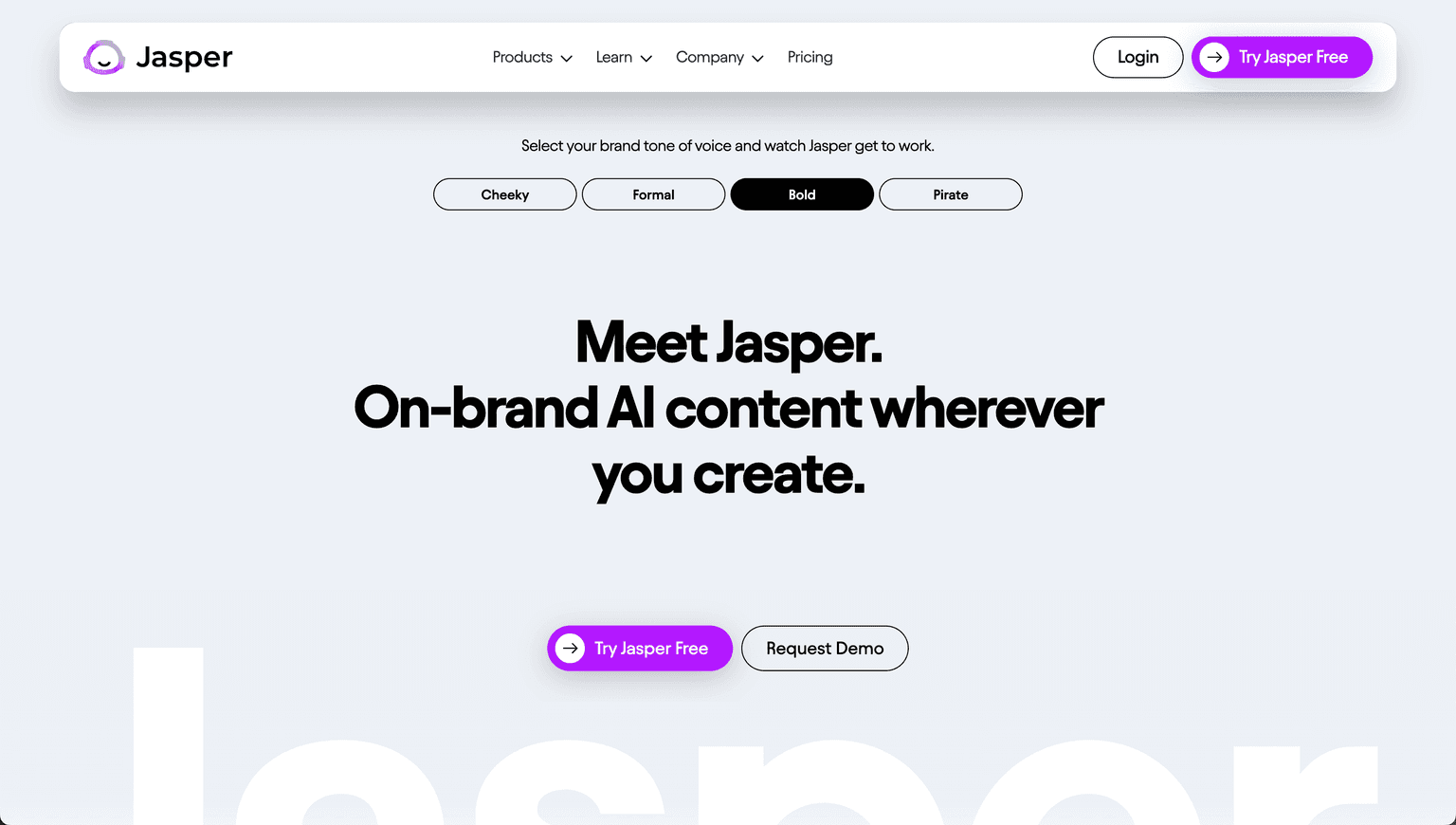
Jasper is the most-deployed AI content tool inside marketing organizations — built for teams that need on-brand content across blog, ad, social, and email channels with brand-voice consistency, not for solo writers. The 2025 expansion into multi-step marketing workflows (briefs → drafts → variants → channel-specific outputs) made it credible as a marketing-ops layer rather than a writing assistant.
What it wins at: marketing teams generating content at scale across multiple channels, brand-voice consistency through Jasper's Brand Voice training, and integration into broader marketing workflows.
Where it falls down: for SEO-specific workflows, dedicated tools like SurferSEO and Frase produce better-ranked output. Pricing is enterprise-shaped.
7. Klaviyo — AI-Powered Email and SMS
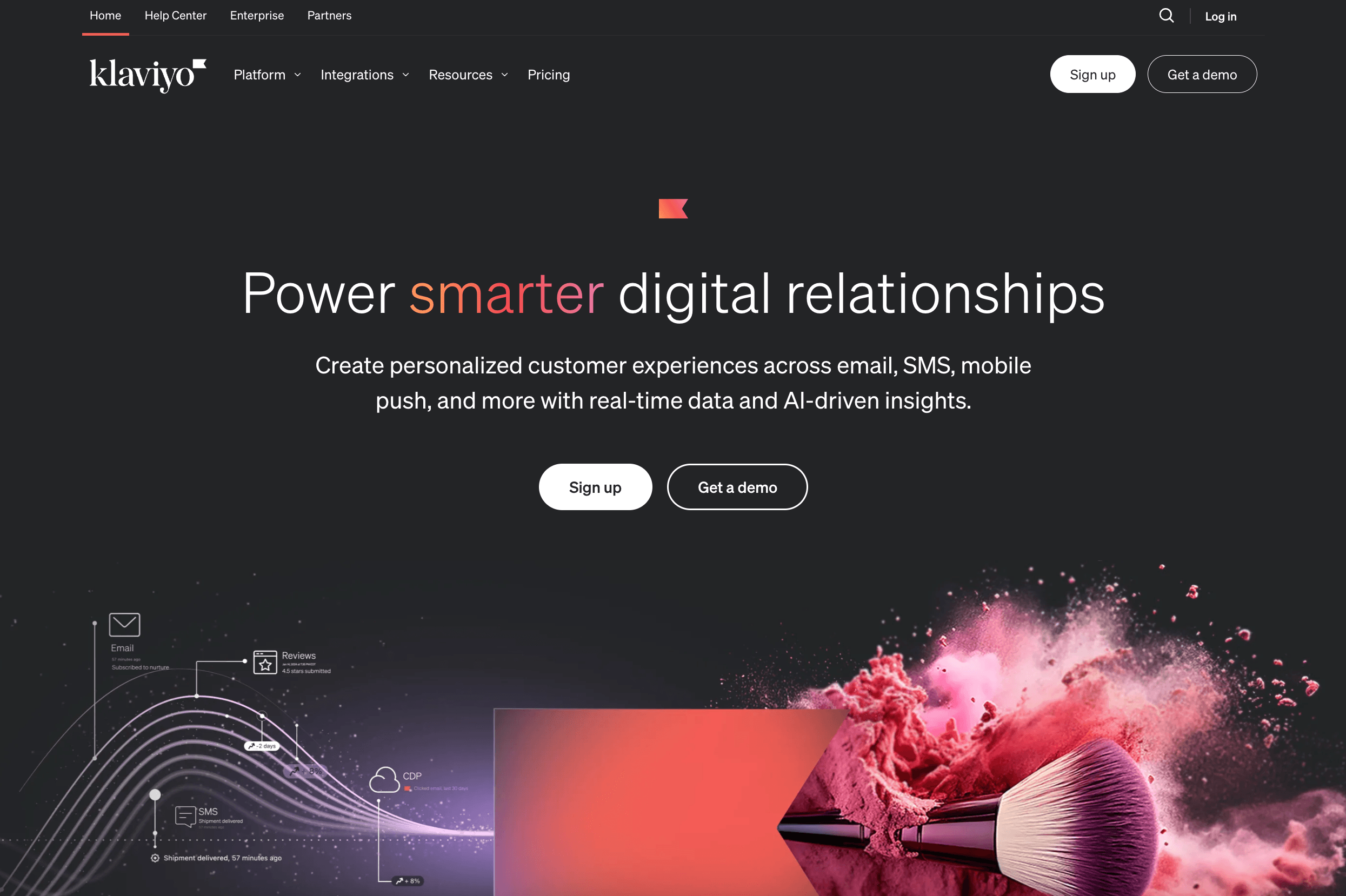
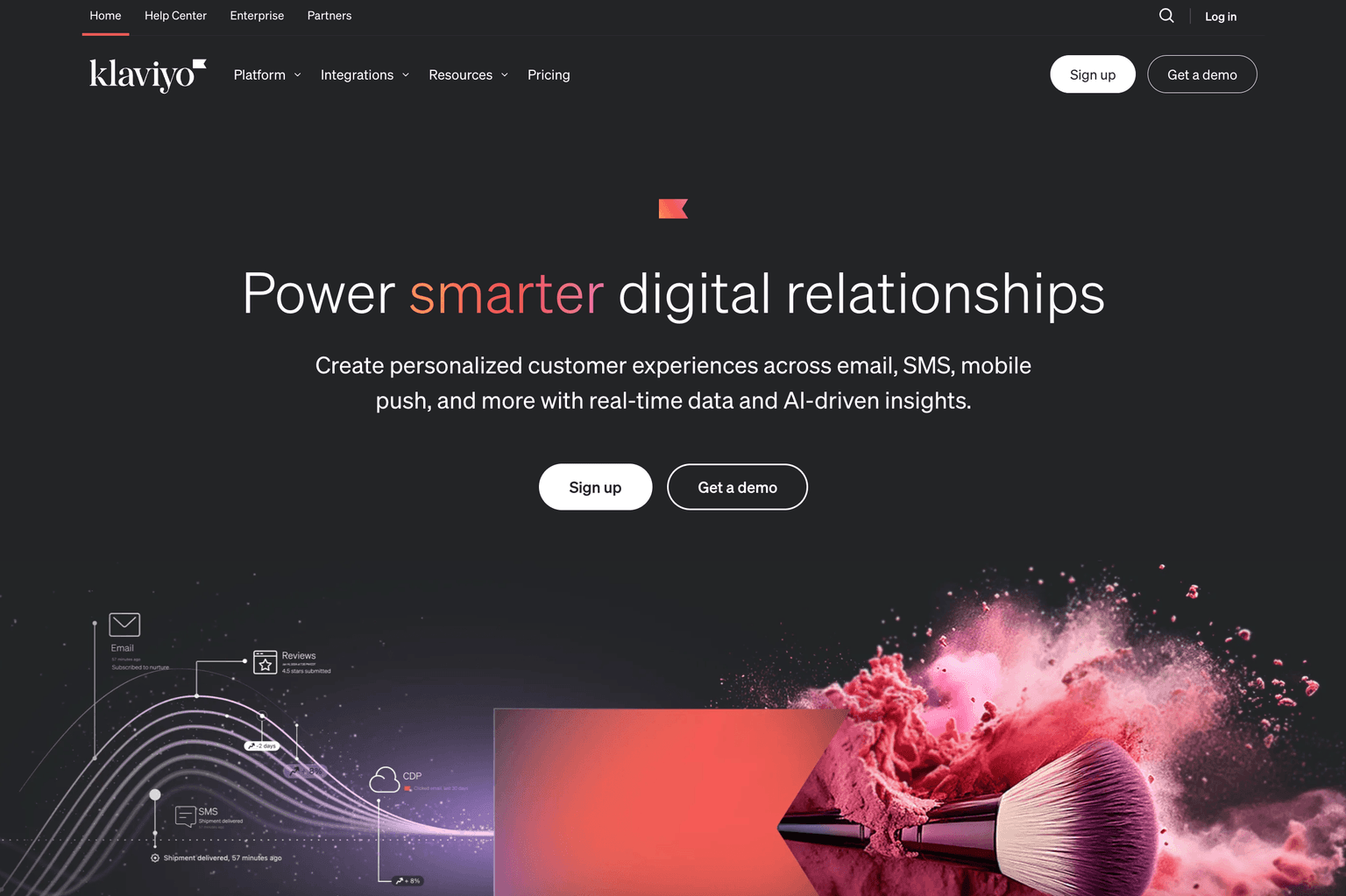
Klaviyo is the dominant AI-powered email and SMS marketing platform for ecommerce and DTC, with predictive analytics for next-best-product recommendations, optimal send-time AI, and segmentation built on first-party customer data from Shopify, BigCommerce, and similar.
What it wins at: ecommerce and DTC brands with meaningful first-party data, behavior-driven email and SMS workflows, and the cleanest integration with the major ecommerce platforms.
Where it falls down: B2B SaaS and non-ecommerce verticals get less value from Klaviyo's predictive features, which are tuned around purchase events. HubSpot or Customer.io are the better picks for those use cases.
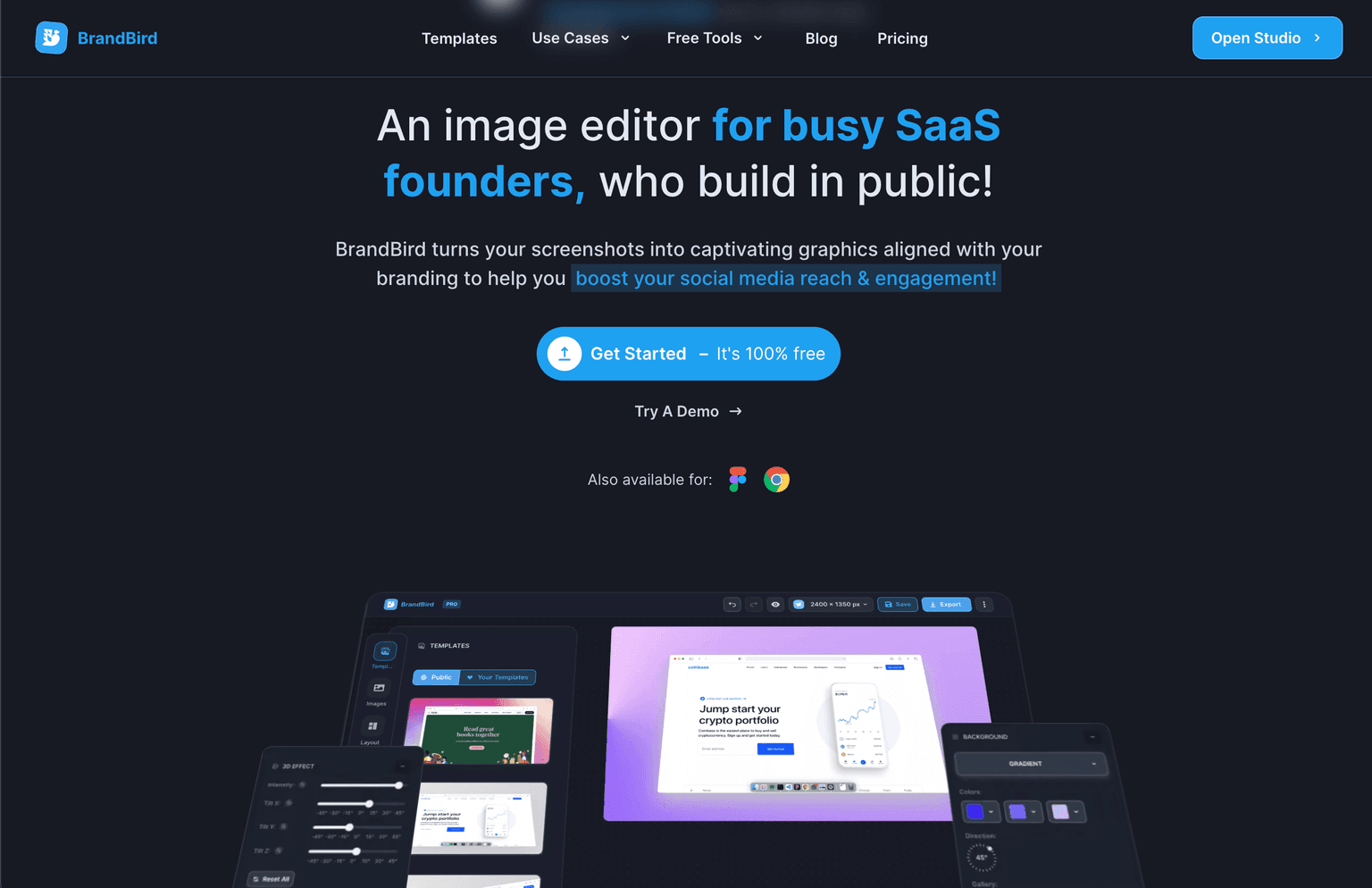
8. BrandBird — Visual Content Automation
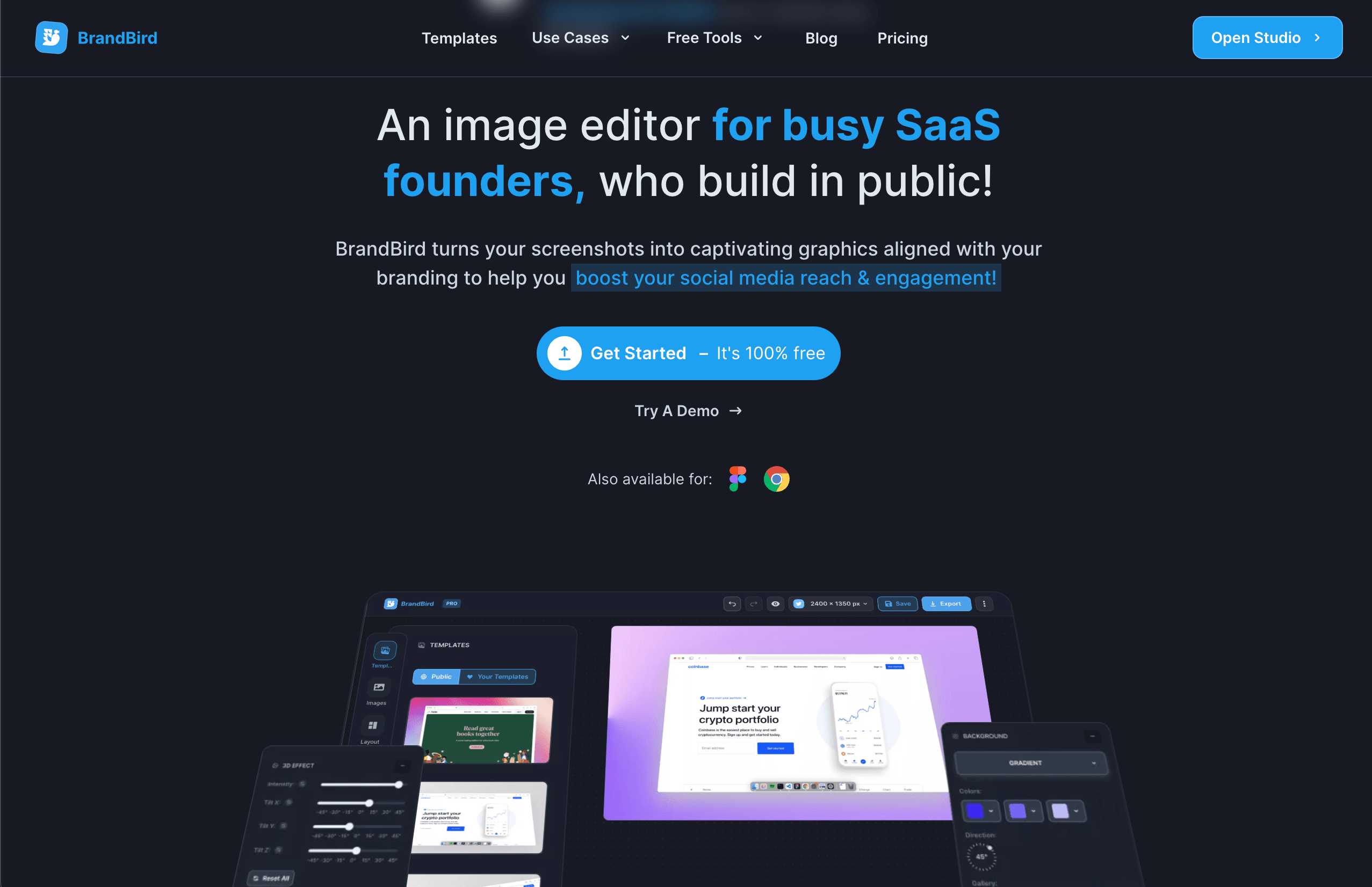
BrandBird turns raw screenshots, charts, and assets into polished, share-ready social graphics — annotations, drop-shadows, branded templates — in a fraction of the time a designer would take. For content marketers who need a steady supply of LinkedIn and Twitter graphics without spinning up Figma every time, it's the right level of tool.
What it wins at: content marketers shipping high volumes of social graphics, founder/exec personal-brand workflows, and any team where the friction of "good enough" visual content was previously slowing publishing cadence.
Where it falls down: not a replacement for a real designer on serious creative work — this is operational visual production, not concept design. Canva covers similar ground for non-screenshot use cases.
How to Build Your 2026 Marketing & SEO AI Stack
For most B2B SaaS marketing teams, the strongest 2026 stack looks like:
- Classic SEO — SurferSEO + Frase (or MarketMuse if you're enterprise)
- GEO — Profound (or Peec AI for SMB)
- Content production — Jasper for multi-channel volume
- Email/CRM — your existing platform; layer Klaviyo if you're DTC
- Visual content — BrandBird for screenshots, Canva or Figma for everything else
The practical sequencing in 2026 is GEO first, classic SEO second — not because GEO is bigger yet (it isn't), but because the competitive window for citations in AI answer engines is currently wide open, and the brands that establish citation share now will be hard to displace. Most teams are still doing only classic SEO; the upside is in being early to the GEO lane.
For adjacent reading, see our Best AI SDR Tools for Inbound Conversion, Top AI Tools for Sales Professionals, and Best AI Browsers (2026) — AI browsers like Comet and Dia are the citation surface where GEO results render, so understanding the browser category is part of the GEO playbook.
Frequently Asked Questions
What is Generative Engine Optimization (GEO)? GEO is the discipline of optimizing your brand and content for visibility in AI search engines — ChatGPT, Perplexity, Claude, Gemini, Google AI Overviews — rather than just traditional Google web search. The optimization signals are different (citations, structured factual content, clear authority) and the measurement tools (Profound, Peec AI) track whether you're being cited, not just whether you're ranking.
Is GEO replacing classic SEO? Not replacing — adding to it. Classic Google web search is still the largest single organic-traffic source for most brands, and it isn't going to zero. But AI answer engines are growing faster than any new channel since the original Google rise, and the citations they make are sticky in user trust. Plan your 2026 strategy as both, not either.
Which AI marketing tool gives the fastest ROI? For classic SEO content teams, SurferSEO or Frase usually pay back within the first quarter — measurable improvements in search rankings on optimized pages. For GEO, Profound and Peec AI take longer to show measurable lift (citations are slower to move than rankings) but the ceiling is higher because the category is less crowded.
Are AI-generated articles still penalized by Google? Google's stated position is that they reward helpful content regardless of how it's produced. In practice, the Helpful Content updates have penalized low-quality AI-generated content at scale (the "AI content farm" pattern) but rewarded high-quality content that uses AI as part of the workflow. Use AI for research, outlining, and first drafts; use humans for judgment, original insight, and editorial review.
Can I just use ChatGPT for all of this? You can, but you'll plateau quickly. ChatGPT is excellent for first drafts and brainstorming; it doesn't track SERPs, build content briefs from competitor analysis, score on-page SEO, monitor brand citations across AI search engines, or run email automation. The dedicated tools above each solve a specific operational problem ChatGPT can't.
What's the right budget for AI marketing tools in 2026? Depends on team size. A solo founder or small team can get a credible stack for under $500/month (Frase + a free GEO trial + Klaviyo's starter tier). A 10-person marketing team typically lands at $2,000–4,000/month across the full stack. Enterprise budgets scale from there.
Should I worry about AI content saturation? Less than the discourse suggests. AI content saturation is real for low-effort generic content — the same work everyone else's AI is producing — and Google has been reasonably effective at penalizing it. AI used as leverage on a real point of view, real reporting, or real product expertise continues to perform well. The differentiator is the human input, not whether you used AI.
Final Thoughts
The marketing and SEO category in 2026 is both bigger and more fragmented than it was two years ago. Classic SEO still drives the most traffic; GEO is the fastest-growing lane; AI content production has matured into operational infrastructure rather than a novelty.
For most teams, the highest-leverage 2026 move is to start tracking your GEO performance — even before you have time to optimize for it. The brands that establish citation share in ChatGPT, Perplexity, and Claude over the next 12–18 months will own real estate that competitors will struggle to take back. Profound or Peec AI as the measurement layer, paired with the classic SEO and content stack you already have, is the practical starting point.
Categories these tools span
More collections you may also like


Sign up for our newsletter
Receive weekly updates so you can stay up-to-date with the world of AI
Sign up for our newsletter
Receive weekly updates so you can stay up-to-date with the world of AI
The AI tools directory for discovering, exploring, and comparing the most innovative AI tools in the industry