Top Conversational AI Platforms to Watch (2026)









Top Conversational AI Platforms in 2026
If you're researching the top conversational AI platforms in 2026, the category has matured into a clear distinction between three different things people often lump together. Consumer AI assistants (ChatGPT, Claude, Gemini) are not the same product as customer-support agents (Intercom Fin, Decagon, Sierra), which are not the same product as the enterprise conversational AI platforms that companies use to build their own conversational experiences. This guide is about the third category — the engines, builders, and orchestration layers behind the scenes.
This guide covers the nine conversational AI platforms that actually move the needle for enterprise builders in 2026: Kore.ai, Cognigy, Yellow.ai, IBM Watsonx, Amelia, OneReach.ai, Boost.ai, Avaamo, and Spara. Each is rated on enterprise readiness, channel coverage, and which use case it fits.
What Counts as a "Conversational AI Platform" in 2026
Conversational AI used to mean "chatbot," then "NLP API," then "customer-service bot." In 2026 the category has converged on something more specific:
- Builder + runtime — a platform that lets non-engineers (and engineers) design, deploy, and update conversational experiences across multiple channels (web chat, voice, email, SMS, WhatsApp, in-app)
- LLM-augmented — modern platforms layer LLMs on top of intent recognition for the long tail of queries that scripted flows can't handle
- Enterprise governance — RBAC, audit logs, on-prem or sovereign-cloud options, compliance certifications
- Multi-use-case — handles customer service, internal employee support, sales qualification, voice agents, all from one platform
The 9 platforms below all qualify. Standalone customer-support tools (Intercom Fin, Decagon — see our customer support collection) and consumer chatbots (ChatGPT, Claude — see our Best LLMs (2026)) are different categories.
How We Evaluated These Tools
The nine conversational AI platforms below were evaluated on five criteria, in priority order:
- Real production deployments at named enterprises — not vendor case studies, but verified deployments at named Fortune 2000 customers running conversational AI at scale
- Analyst recognition (Gartner / Forrester) — Leader / Visionary placement in the relevant 2024–2026 analyst Magic Quadrants signals genuine enterprise procurement traction
- Channel and language coverage — does the platform handle the channels and languages your buyers and customers actually use, including voice, regional channels (WhatsApp, RCS), and language-specific compliance
- Governance and compliance posture — SOC 2 Type II, GDPR-native, on-prem and sovereign-cloud options, signed DPAs, regional data residency for the regulated workloads enterprises run on these platforms
- 2026 currency — has the platform shipped meaningful LLM-augmented capability in the last 12 months, or is the AI story bolted on without a coherent product evolution
We did not include consumer AI assistants (ChatGPT, Claude, Gemini — covered in Best LLMs (2026)) or autonomous customer-service agents (Sierra, Decagon, Ada — different buyer, covered in Best AI Customer Support Tools). The platforms below are the infrastructure layer enterprises buy to build their own conversational AI — a distinct procurement decision.
Quick Comparison
| Tool | Best for |
|---|---|
| Kore.ai | Enterprise agentic AI platform. Best for orgs running conversational AI across multiple use cases (customer, employee, developer agents) on one platform. |
| Cognigy | Generative + conversational AI for customer service. Best for European-headquartered enterprises and brands prioritizing GDPR-native deployment. |
| Yellow.ai | Dynamic CX automation. Best for global brands with high-volume CX automation needs across many channels. |
| IBM Watsonx | Enterprise AI suite. Best for Fortune 500 deployments with strict governance, sovereign-cloud, and existing IBM ecosystem. |
| Amelia | Enterprise digital agents. Best for industries (banking, telecom, insurance) where digital workers need to handle complex multi-turn workflows. |
| OneReach.ai | No-code conversational AI. Best for ops and CX teams without engineering capacity who need to ship conversational experiences themselves. |
| Boost.ai | AI-powered chat and voice. Best for Nordic and Northern European enterprises and the financial-services use case the platform was honed on. |
| Avaamo | Workflow-centric conversational AI. Best for transforming back-office workflows (HR, IT, procurement) into conversational interfaces. |
| Spara | Sales-specialized conversational AI. Best for inbound revenue conversion across chat, voice, email, and SMS — the sales-specific cut of conversational AI most platforms above don't tackle directly. |
1. Kore.ai — Enterprise Agentic AI Platform

Kore.ai is the most-deployed enterprise conversational AI platform in the Gartner / Forrester analyst rankings entering 2026. The product spans customer-facing virtual assistants, internal employee agents, and the developer tooling that engineering teams use to build agents into their own products. Three orchestration tiers (AI for Work, AI for Service, AI for Process) means one platform covers multiple agent use cases without separate vendor relationships.
Production credibility: raised $200M+ across funding rounds, most recently a $150M Series D in 2023 led by FTV Capital; deployed at >400 Fortune 2000 customers; named a Leader in the 2024 Gartner Magic Quadrant for Enterprise Conversational AI Platforms; SOC 2 Type II + HIPAA + ISO 27001 + FedRAMP-authorized; >2B conversations processed annually per company disclosures.
What it wins at: large enterprises with multiple conversational AI use cases (customer + employee + developer), governance-heavy deployment contexts (financial services, healthcare, government), and the orchestration layer for agent workflows that span systems.
Where it falls down: complexity scales with capability — implementation is multi-month rather than days. For single-use-case teams (just customer support), focused vertical tools ship faster.
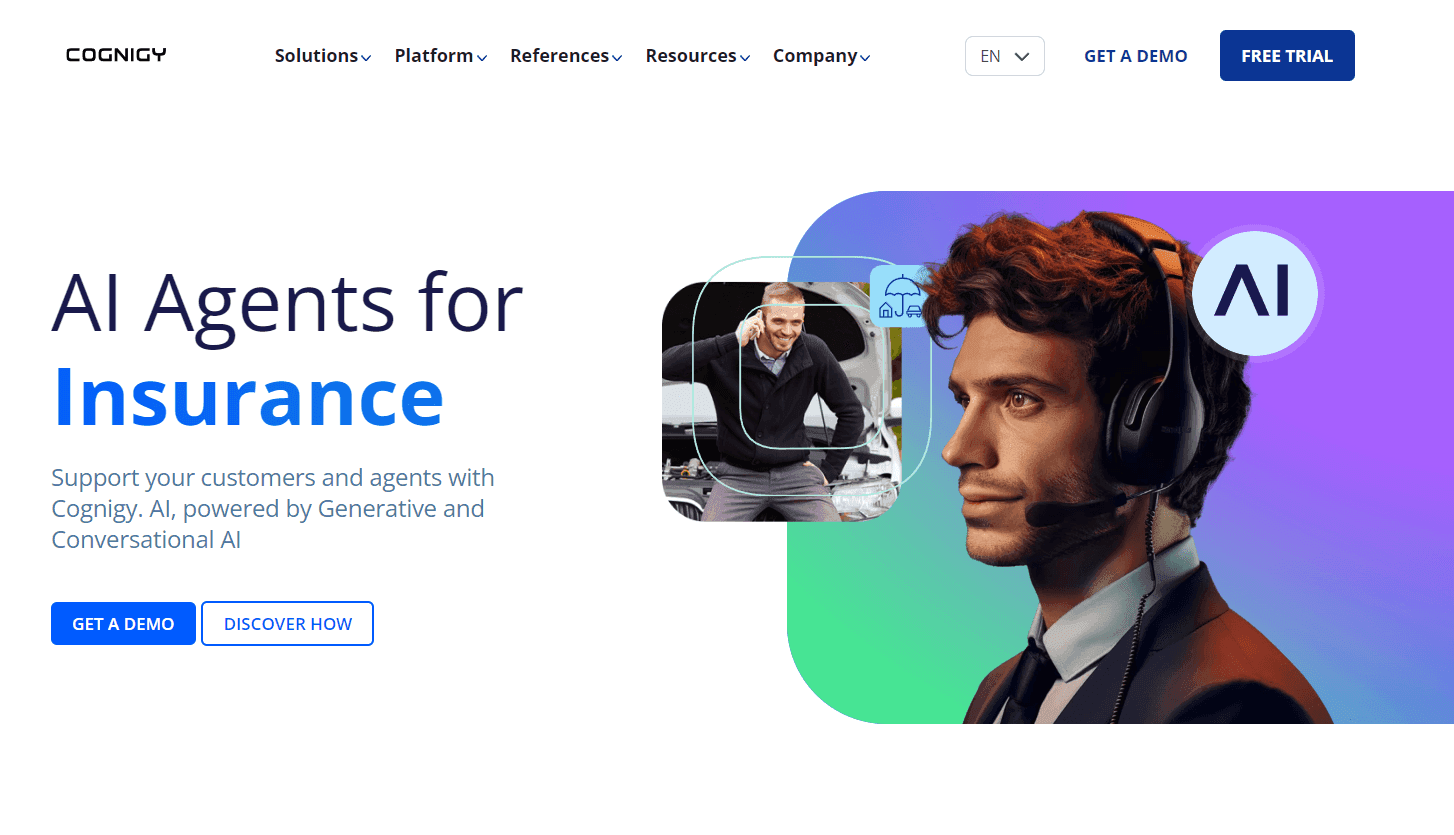
2. Cognigy — Generative + Conversational AI for Customer Service
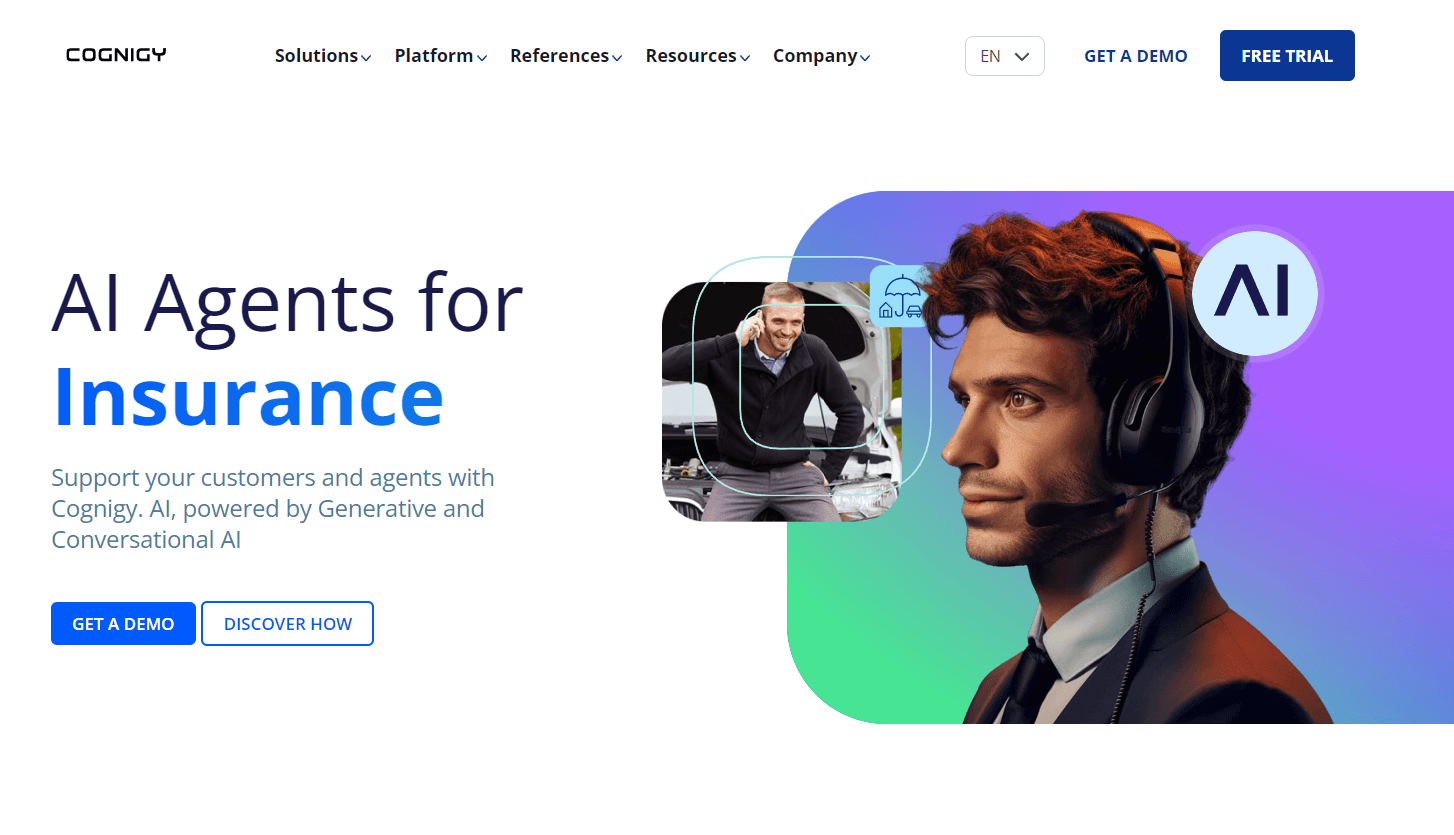
Cognigy is the European leader in enterprise conversational AI for customer service, with strong customer logo wall in DACH and Northern Europe. The product layers generative AI on top of an established conversational AI platform — meaning the LLM-driven 2024–2026 generation has a mature governance and channel-coverage foundation underneath rather than being a greenfield build.
Production credibility: German-headquartered (Düsseldorf); raised $100M Series C in 2024 led by Eurazeo with Insight Partners; deployed at Lufthansa Group, Toyota, Bosch, Mercedes-Benz, BioNTech, Allianz, ERGO Group; named a Leader in the 2024 Gartner Magic Quadrant for Enterprise Conversational AI Platforms; native EU data residency with GDPR-compliant architecture.
What it wins at: European enterprise deployments with GDPR-native data residency, voice + chat + email coverage from one platform, and the governance maturity that came from years of pre-LLM conversational AI work.
Where it falls down: less name recognition in the US market than Kore.ai or domestic competitors. For US Fortune 500 procurement, the brand familiarity gap is real.
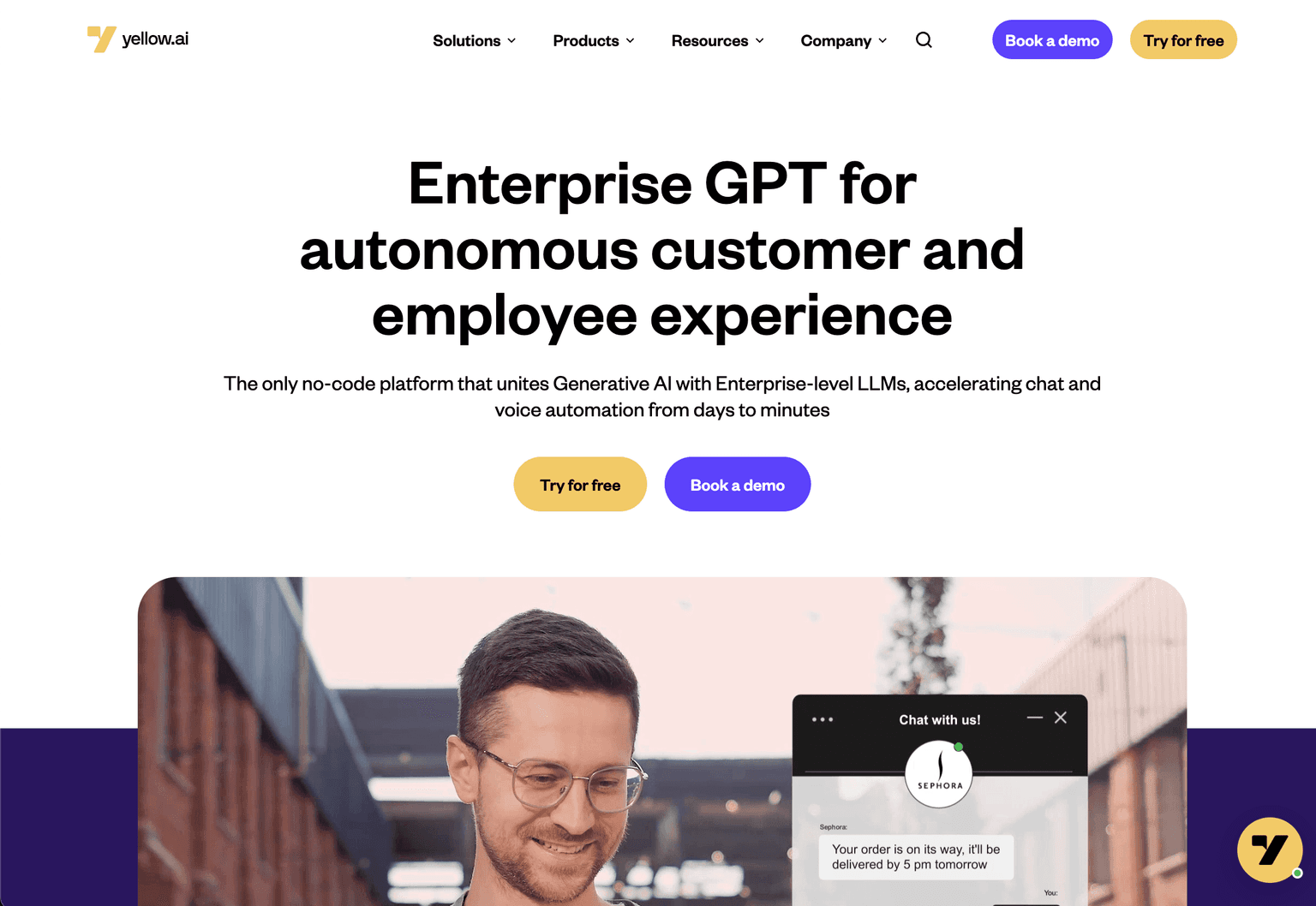
3. Yellow.ai — Dynamic Conversational AI for Global CX
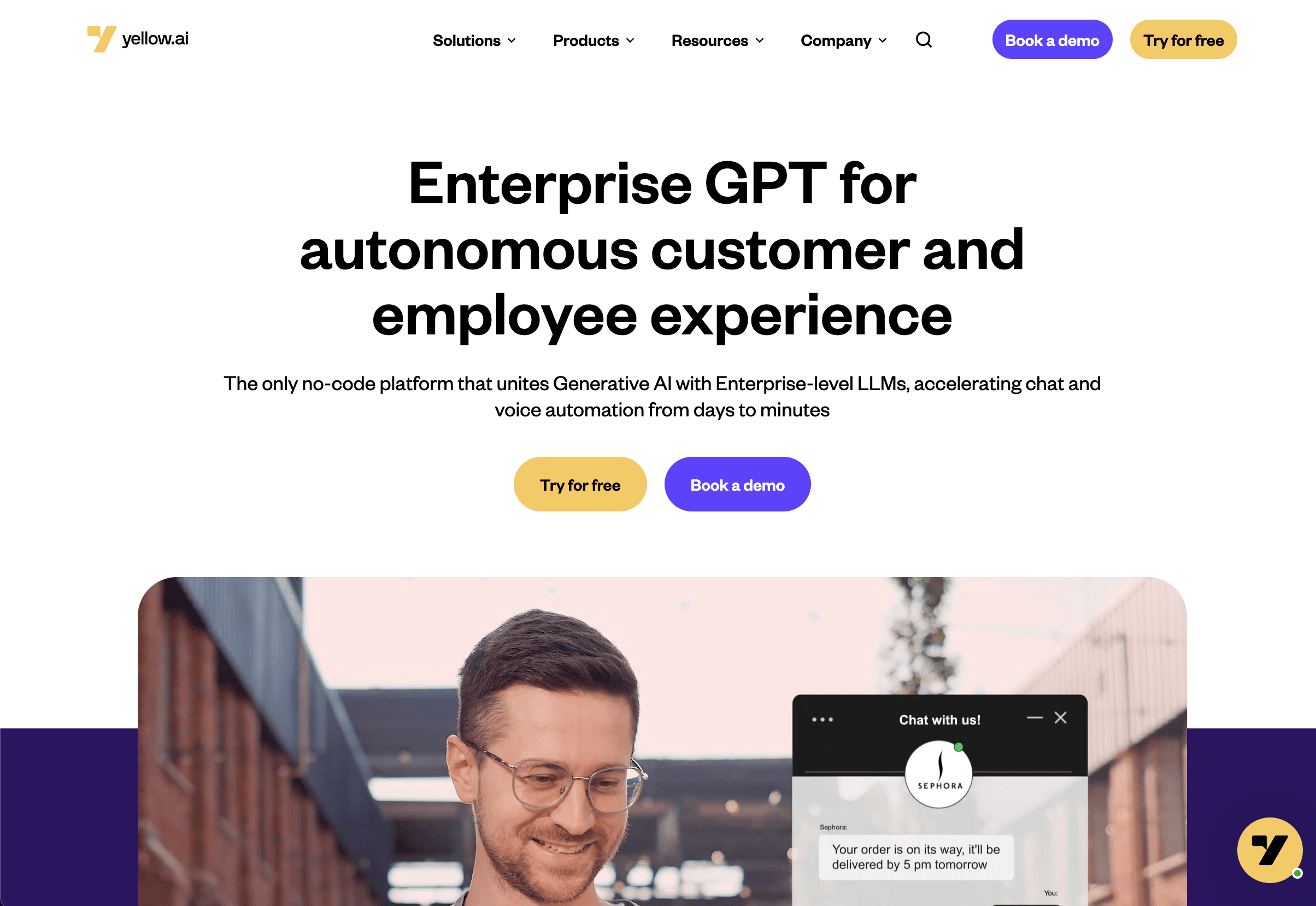
Yellow.ai targets the high-volume customer-experience automation use case — global brands needing conversational AI across 35+ channels (chat, voice, social, email, RCS, WhatsApp) with consistent brand voice and orchestration. India-headquartered with global enterprise deployment, particularly strong in retail and financial services.
Production credibility: raised $100M+ at $1B+ valuation (Series C 2022 led by WestBridge Capital, with Sapphire Ventures and Salesforce Ventures); deployed at >1,100 enterprise customers including Sony, Domino's, PepsiCo, Mondelez, Unilever, Hyundai; processes 2B+ conversations annually; positioned as a Leader in the 2024 Gartner Magic Quadrant for Enterprise Conversational AI Platforms.
What it wins at: multi-channel CX automation at scale, brands serving regions where WhatsApp, RCS, and regional channels matter more than Western web chat, and the operational discipline of running conversational AI at high call/message volumes.
Where it falls down: product breadth means the depth on any single channel sometimes trails specialist tools. For US-only brands focused on web chat, Cognigy or Kore.ai are tighter fits.
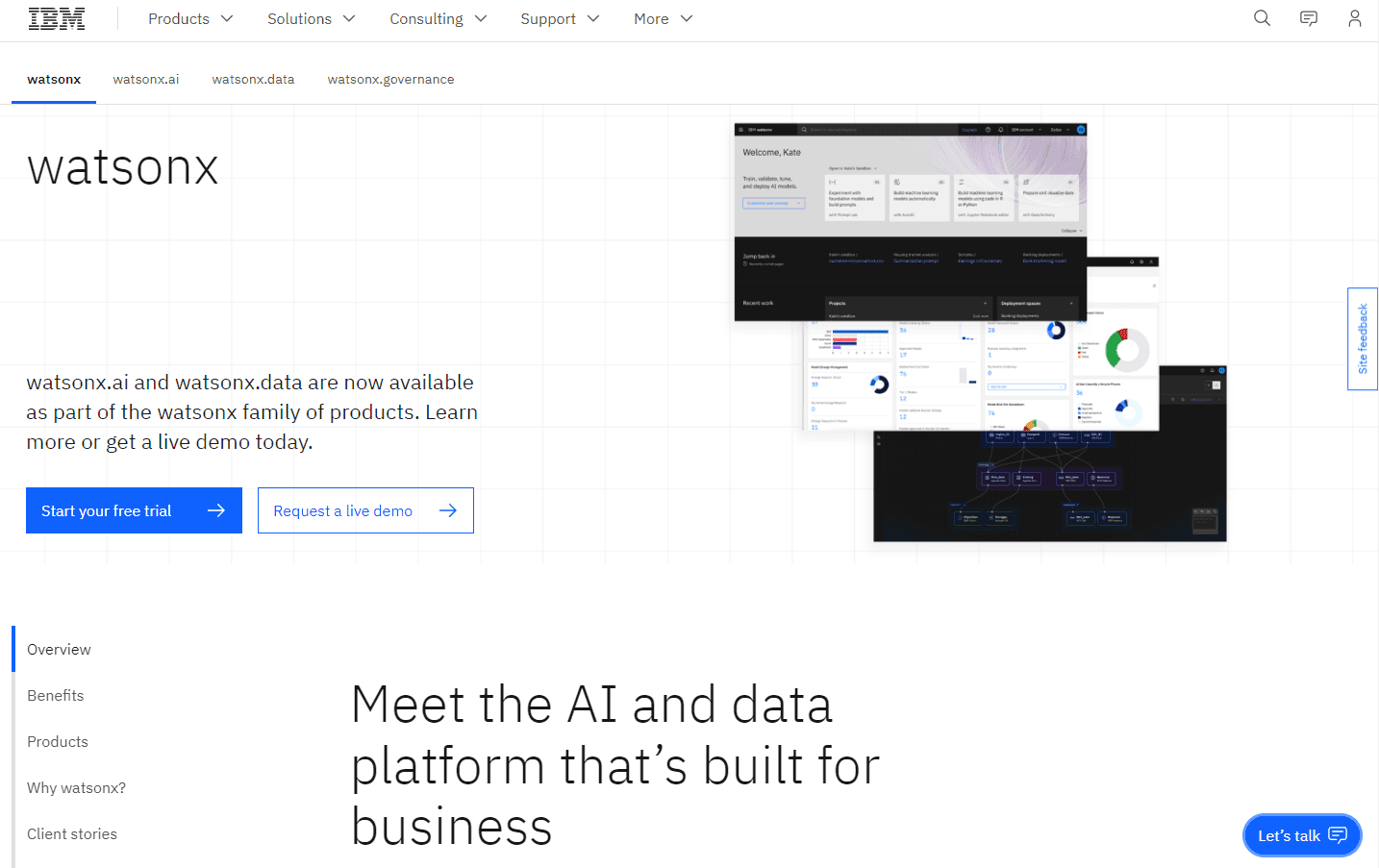
4. IBM Watsonx — Enterprise AI Suite
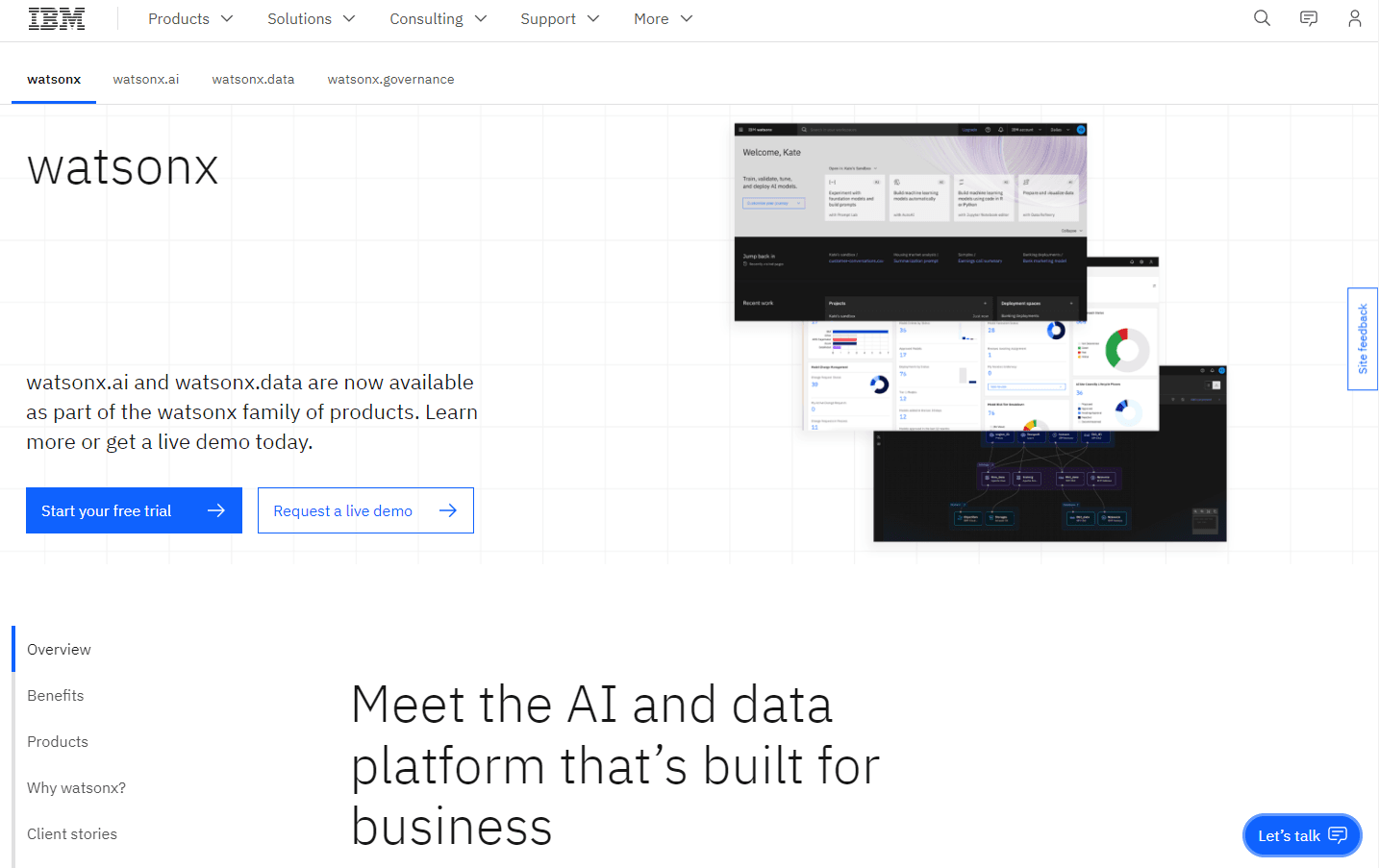
IBM Watsonx is the IBM enterprise AI platform that includes Watson Assistant for conversational AI alongside data and governance products. The product line sits at the highest end of the enterprise procurement spectrum — sovereign-cloud and on-prem deployment options, the deepest compliance certifications, and integration with the existing IBM ecosystem most large enterprises already touch via mainframes, DB2, or middleware.
Production credibility: IBM is a public company ($IBM ~$220B+ market cap entering 2026); Watsonx launched in 2023 as the unified rebrand of IBM's AI portfolio (Watson Assistant + watsonx.ai + watsonx.data + watsonx.governance); deployed across Fortune 500 customers and US federal government workloads; FedRAMP High, HIPAA, GDPR, FINRA + the deepest enterprise compliance certifications in the category.
What it wins at: Fortune 500 procurement contexts where IBM is already a vendor of record, regulated industries (financial services, healthcare, government) needing on-prem or sovereign-cloud AI, and strict-governance environments where data residency is non-negotiable.
Where it falls down: the IBM Watson brand still carries some baggage from the 2015–2022 "Watson can do anything" period that overshadowed early healthcare AI work. Modern Watsonx is genuinely improved but the perception lag persists. Pricing and implementation timeline reflect the enterprise positioning.
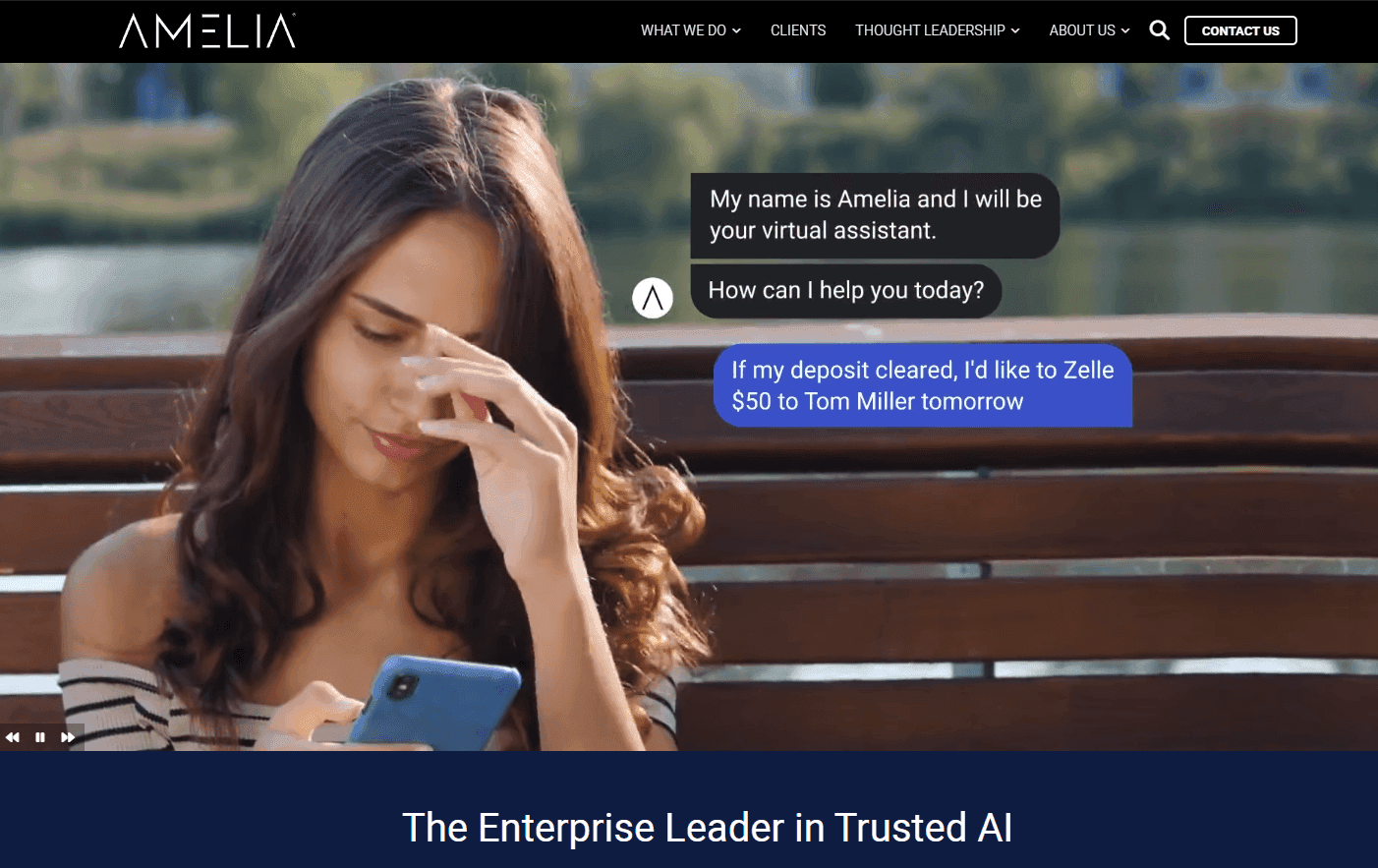
5. Amelia — Enterprise Digital Agents
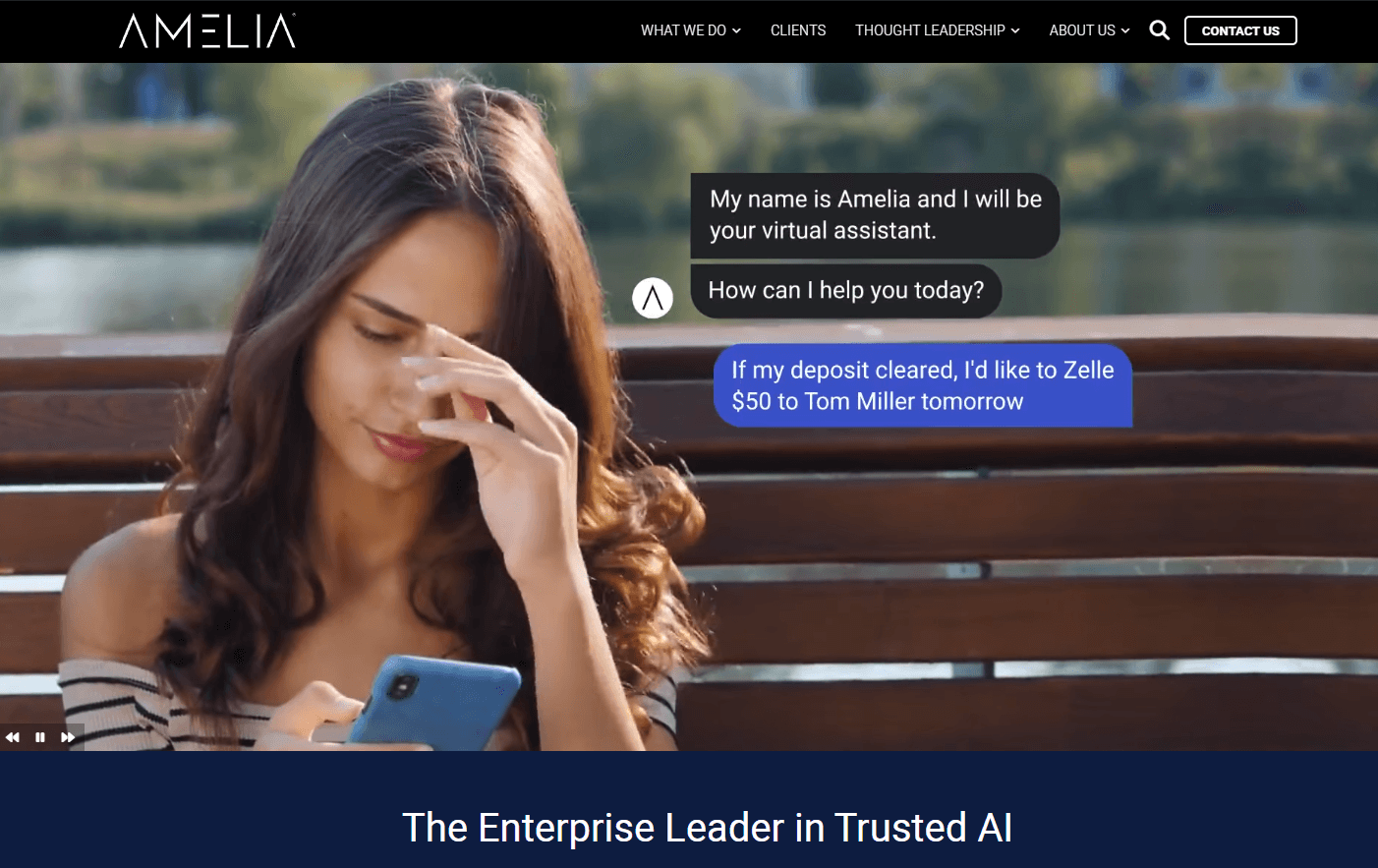
Amelia is the conversational AI platform for industries where digital agents need to handle complex multi-turn workflows that span backend systems — banking transactions, insurance claims, telecom service changes. The product was honed on these use cases over years and the depth shows in process complexity it can absorb.
Production credibility: IPsoft rebranded as Amelia in 2020; raised $200M+ across rounds; deployed at SEB Bank, BMC Software, Allstate, Dollar Bank, AT&T, Telefónica, Boots Pharmacy, and 200+ other enterprise customers; recognized as a Leader in the Gartner Magic Quadrant for Enterprise Conversational AI Platforms multiple years running.
What it wins at: banking, telecom, insurance digital-agent deployments where the conversation has to integrate with 5+ backend systems mid-workflow, regulated industries, and use cases where the agent's failure to complete a workflow has real customer-trust costs.
Where it falls down: for simpler customer-service use cases (FAQ resolution, ticket routing) the platform is over-engineered. Best for genuinely complex multi-system workflows, not for chatbot-grade deployments.
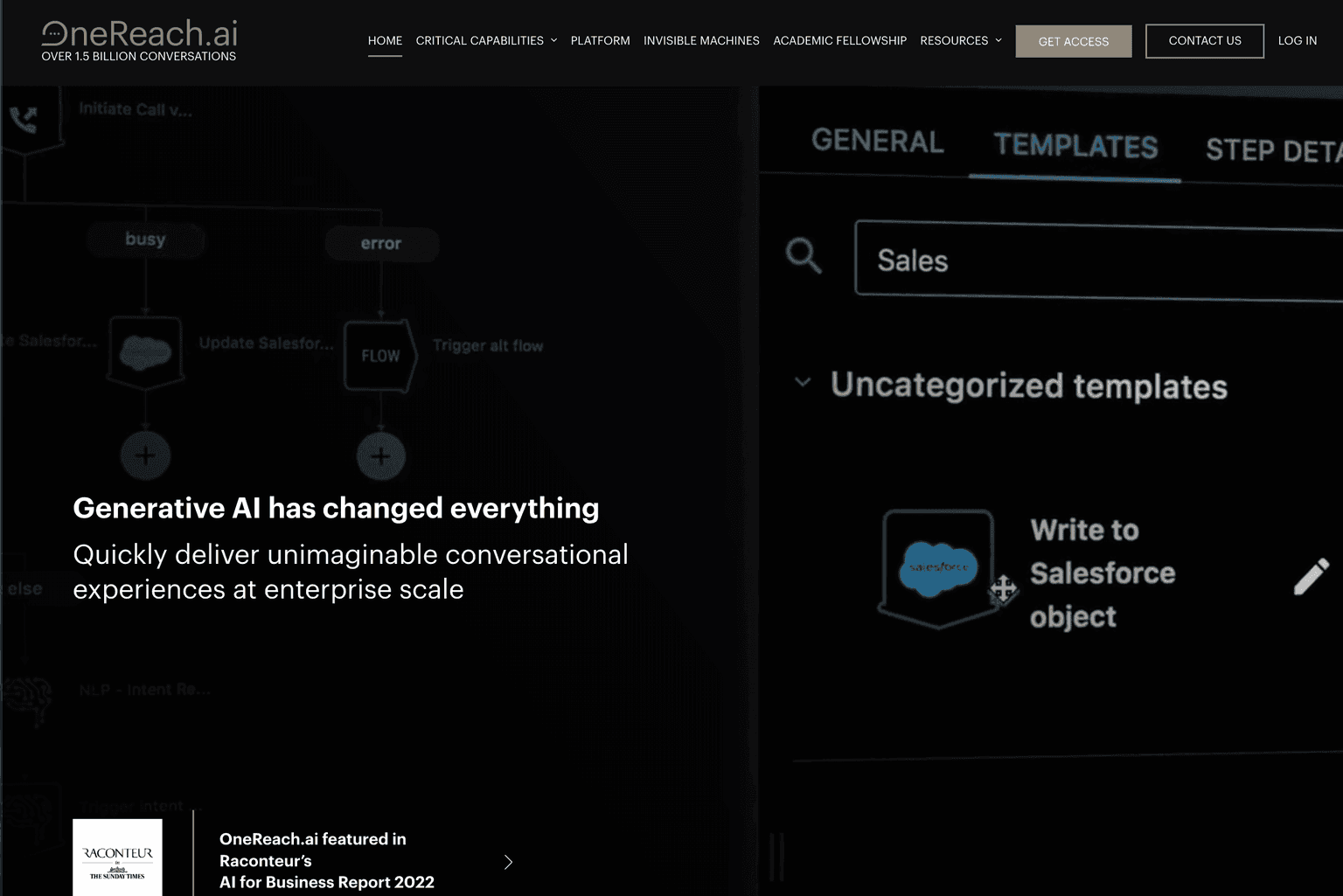
6. OneReach.ai — No-Code Conversational AI
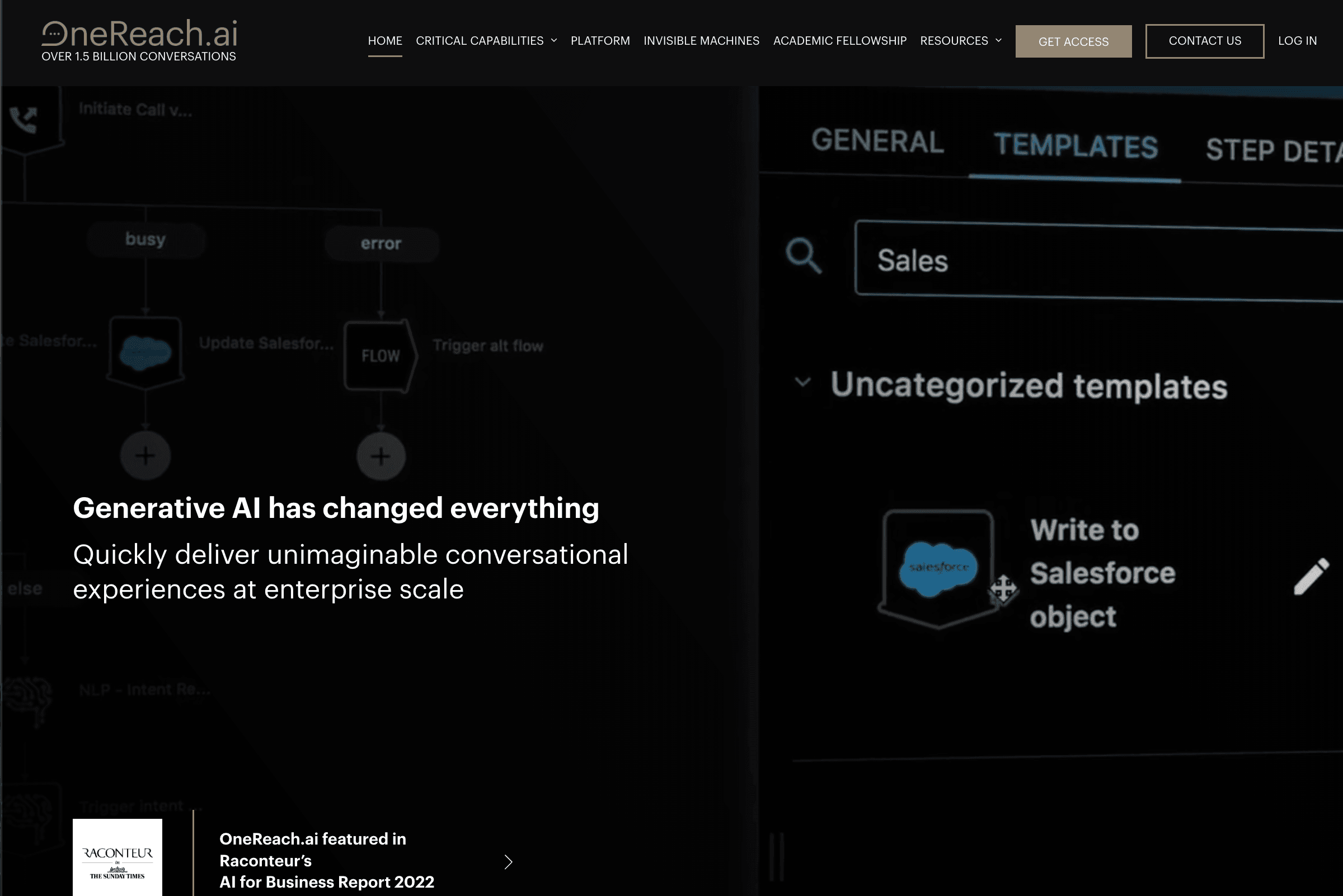
OneReach.ai is the no-code option for ops and CX teams that need to ship conversational experiences without engineering capacity. Visual flow builder, integration library, and multi-channel deployment from the same workspace. Used heavily by mid-market companies whose engineering teams have other priorities than building conversational infrastructure.
Production credibility: privately held; bootstrapped to profitability before later funding (rare in this category and a meaningful signal of operational discipline); recognized as a Leader in the 2024 Gartner Magic Quadrant for Enterprise Conversational AI Platforms — a notable inclusion alongside the venture-funded mega-platforms; deployed across mid-market and Fortune 1000 customers in retail, financial services, and healthcare.
What it wins at: mid-market ops and CX teams shipping their own conversational AI without dev resources, faster time-to-first-deployment than the enterprise platforms, and the right pricing tier for sub-Fortune-500 buyers.
Where it falls down: complex enterprise governance (audit logs, RBAC, on-prem) trails the larger platforms. For Fortune 500 procurement, the no-code positioning sometimes reads as insufficient on paper.
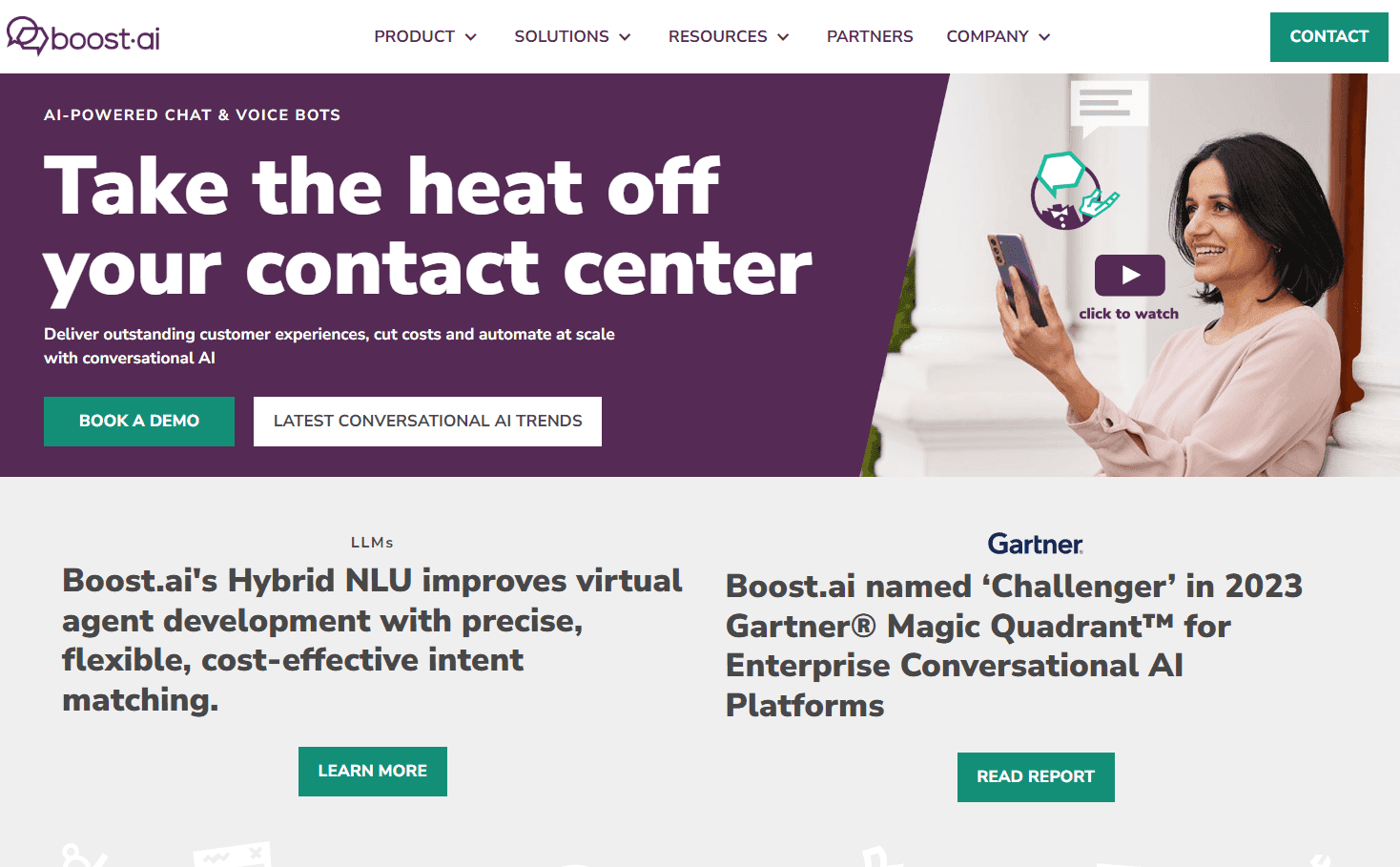
7. Boost.ai — AI-Powered Chat and Voice
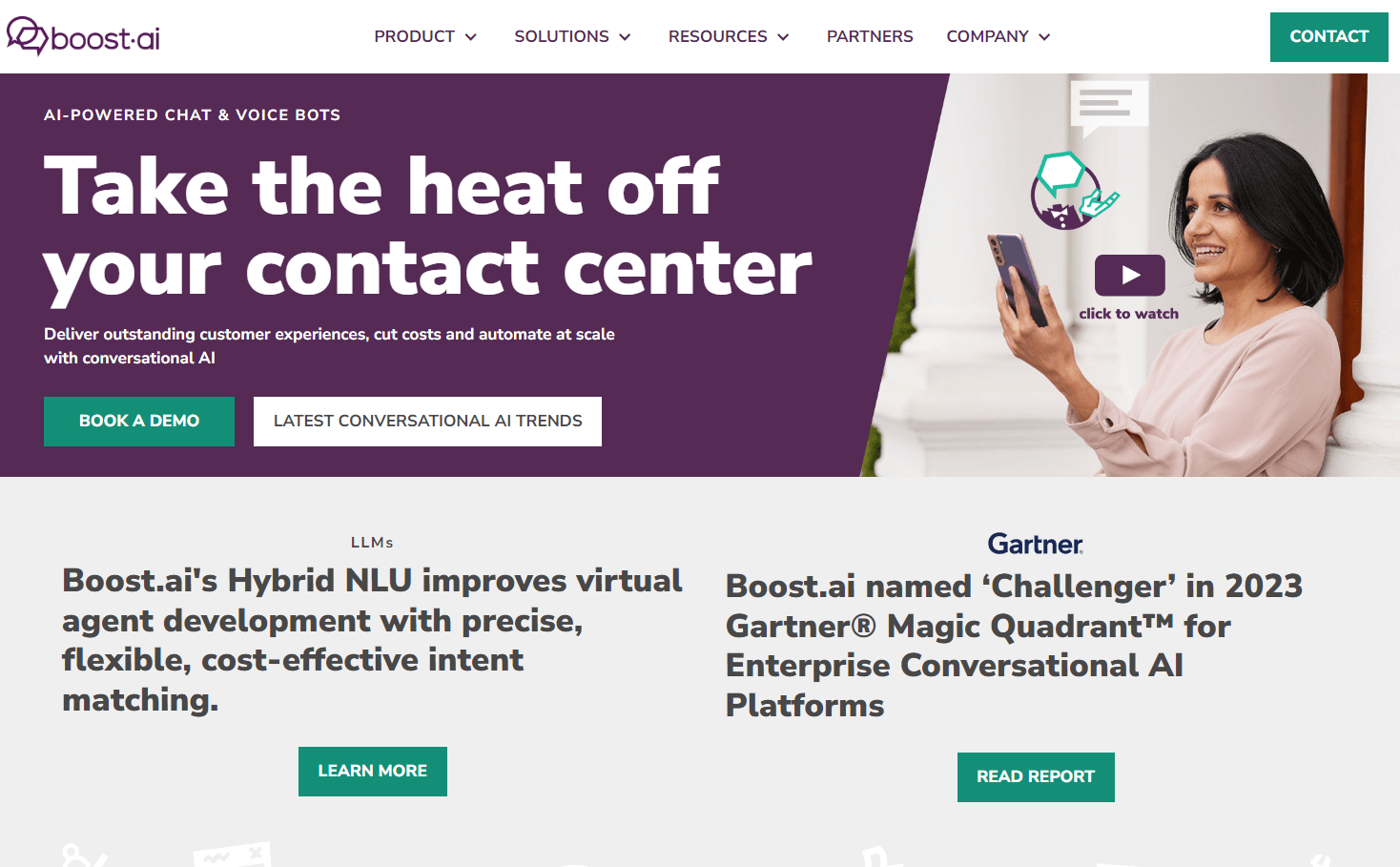
Boost.ai is the Nordic / Northern European conversational AI platform, with particularly strong product fit for the financial-services use case the company was honed on. Mature on chat, voice, and the integrations that European banks need (SEPA, PSD2-aware flows, regional language coverage).
Production credibility: Norwegian-headquartered (Sandnes); raised $23M Series B in 2021 led by Nordic Capital; deployed at DNB, Storebrand, Nordea, NorgesGruppen, IF Insurance, and other Nordic financial-services giants; SOC 2 Type II + GDPR + ISO 27001; particularly strong language coverage for Nordic and Northern European markets where regional language quality matters more than English-default tools deliver.
What it wins at: Nordic and Northern European deployments, financial services and insurance specifically, and the language-and-regulation coverage that matters in those markets.
Where it falls down: less brand recognition in the US market. For US-only deployments, the procurement-validation story is harder than with established US-market leaders.
8. Avaamo — Workflow-Centric Conversational AI
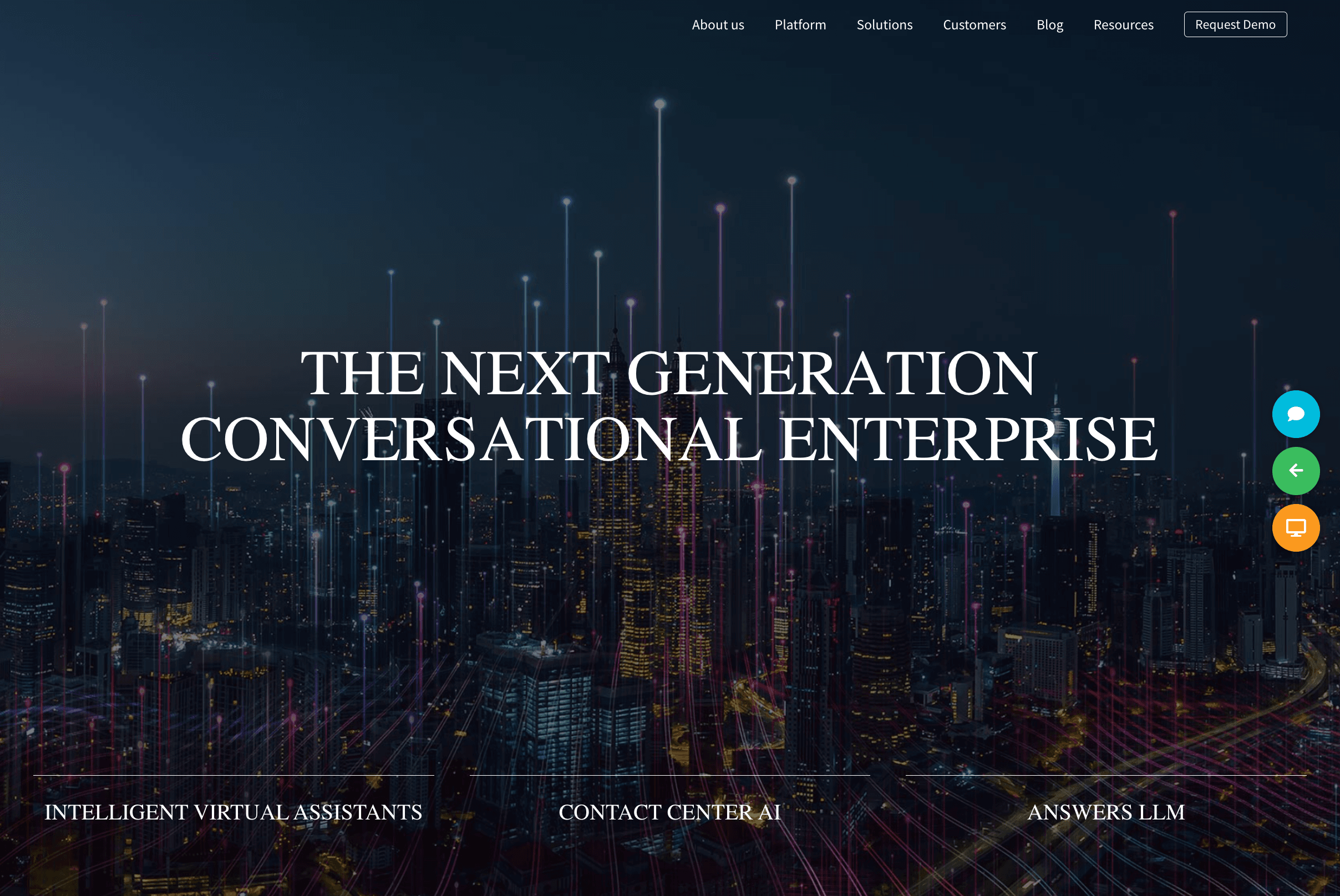
Avaamo targets the use case of transforming back-office workflows — HR onboarding, IT support, procurement requests, finance approvals — into conversational interfaces. The product is designed around the assumption that the conversation is the entry point to a multi-step workflow, not just a Q&A loop.
Production credibility: privately held with $30M+ raised across rounds; deployed at >200 enterprise customers including HCA Healthcare, Cigna, Sutherland, and ManpowerGroup; supports 38 languages out of the box (one of the broadest language footprints in the category); SOC 2 Type II + HIPAA + GDPR.
What it wins at: internal employee experience at scale (HR, IT, procurement workflows), companies replacing legacy ticketing systems with conversational front ends, and the workflow-orchestration depth that simpler chatbot platforms lack.
Where it falls down: narrower than the broader enterprise platforms — for customer-facing use cases, Kore.ai or Cognigy fit better. Best for internal employee experience specifically.
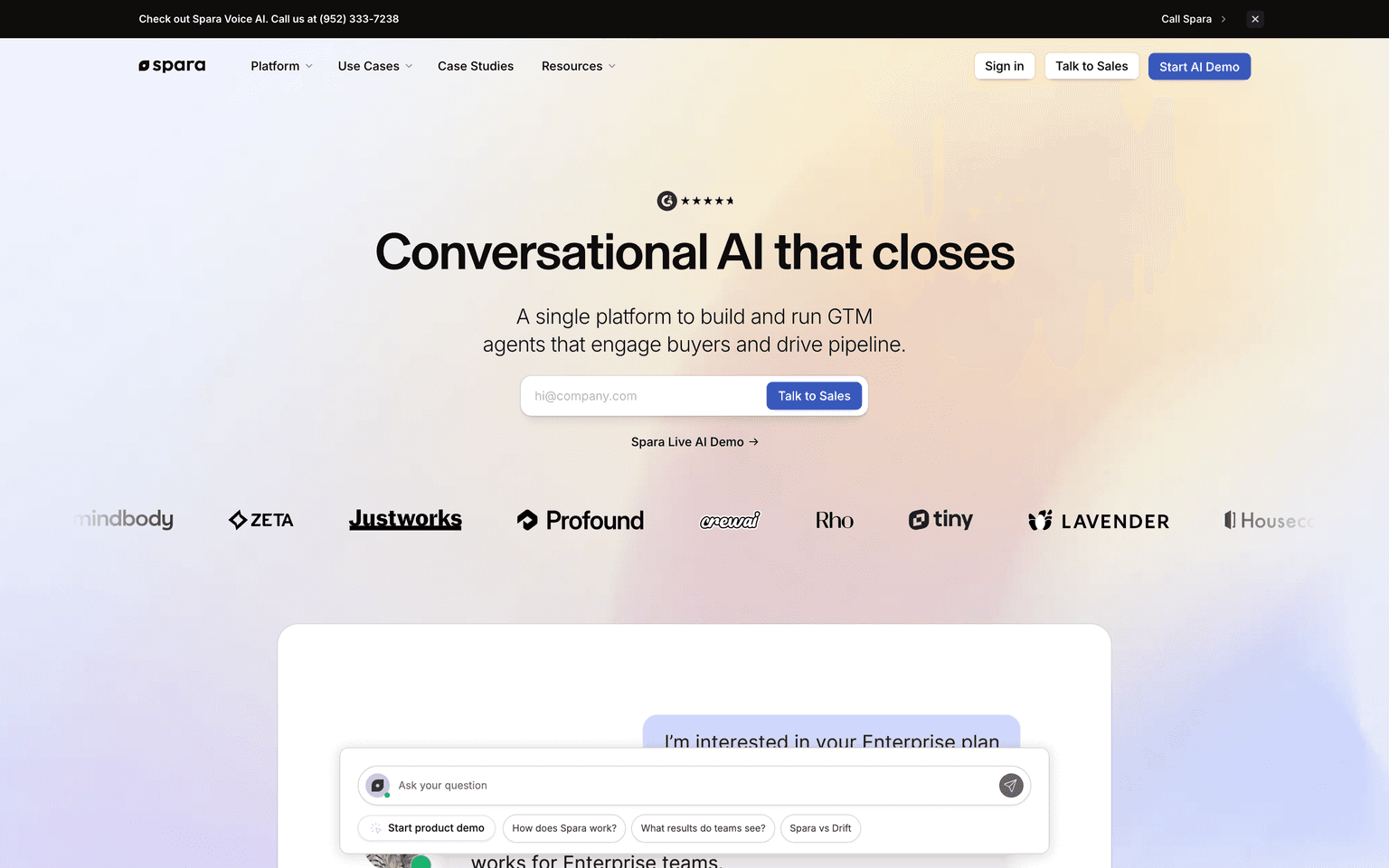
9. Spara — Conversational AI for Sales
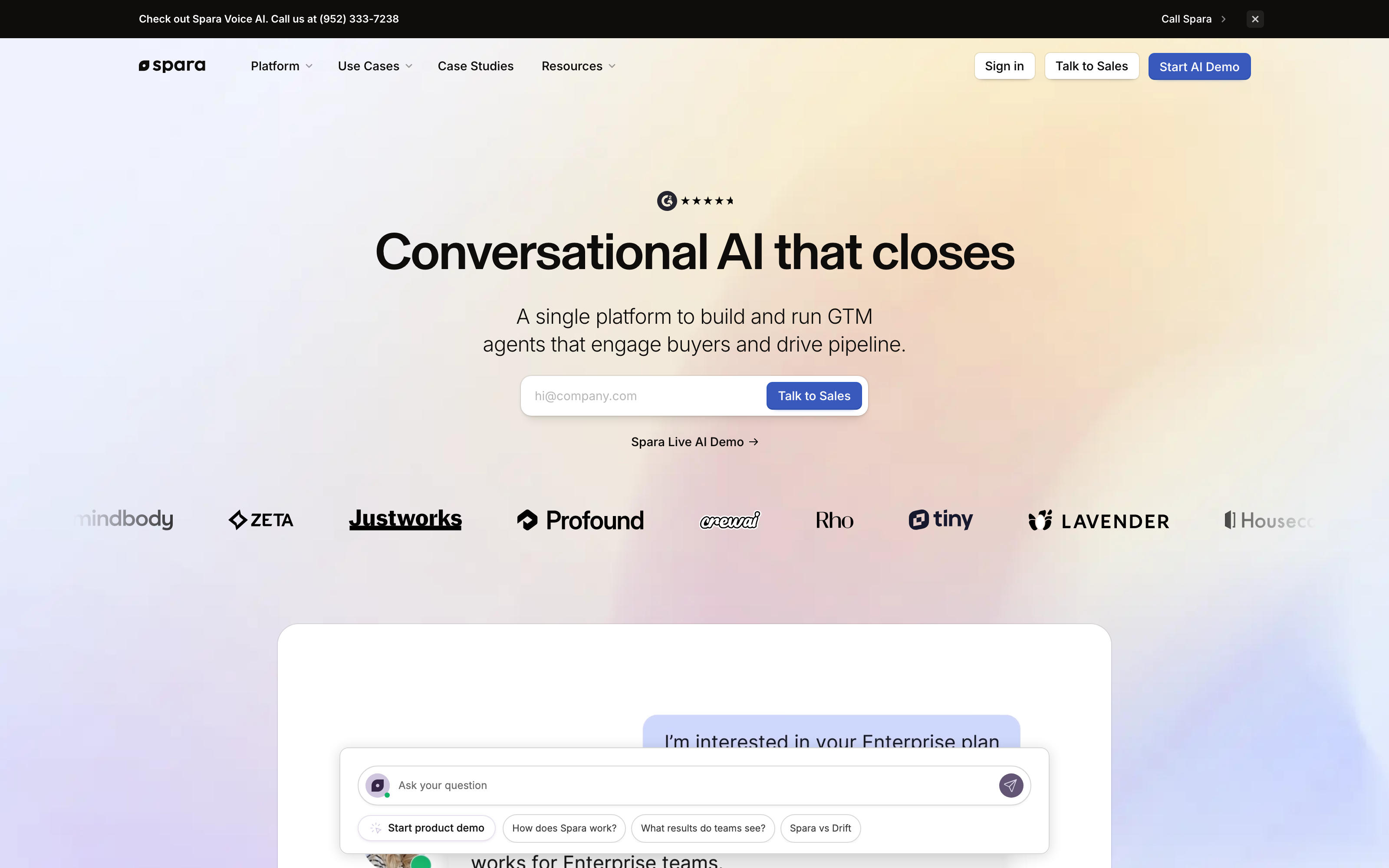
Spara is the sales-specialized cut of conversational AI — the platform built around the use case the broader enterprise tools handle as an afterthought. Inbound demo requests, free-trial signups, and high-intent website traffic get qualified by an AI agent that talks to the visitor in chat, voice, email, or SMS in real time, then hands the qualified meeting to the AE with full conversation context. Bi-directional Salesforce sync is built in.
The positioning matters: Kore.ai, Cognigy, and the other enterprise platforms above are infrastructure for building conversational experiences. Spara ships the experience — pre-built for the sales-conversion use case — so revenue teams don't need to spend the 3–6 months of platform-building before they can ship.
Production credibility: Y Combinator W24 startup; raised seed funding led by Bain Capital Ventures with participation from a roster of B2B-SaaS-experienced angels; built specifically for B2B SaaS inbound conversion workflows where speed-to-lead measured in seconds (not minutes) is the differentiating metric; bi-directional Salesforce sync, native voice + chat + email + SMS coverage in one platform; ranked #1 in our Best AI SDR Tools collection.
What it wins at: B2B SaaS demo-driven inbound funnels, voice-first qualification (the lane most enterprise platforms underweight), and revenue-team time-to-deployment measured in days rather than months.
Where it falls down: narrow scope by design. For customer support, internal employee experience, or general-purpose conversational AI, the platforms above are the better fit. Use Spara for sales conversion; layer it alongside Kore.ai or Cognigy for the rest of your conversational AI footprint.
For more on the sales-specific lane, see our Best AI SDR Tools for Inbound Conversion where Spara is the editor's pick.
How to Choose a Conversational AI Platform
Match the platform to the actual deployment shape:
- Multi-use-case enterprise (customer + employee + developer agents): Kore.ai
- European or GDPR-strict enterprise: Cognigy or Boost.ai
- Global multi-channel CX automation: Yellow.ai
- Fortune 500 with on-prem / sovereign-cloud requirements: IBM Watsonx
- Banking, telecom, insurance digital agents: Amelia
- Mid-market without dev resources: OneReach.ai
- Internal employee workflow automation: Avaamo
- Sales conversion (B2B SaaS inbound): Spara — pre-built for the use case the broader platforms treat as an afterthought
For most enterprise teams the practical move in 2026 is shortlisting 2 platforms — typically Kore.ai or Cognigy as the broad pick alongside a vertical-specialist (Amelia, Boost.ai, or Yellow.ai depending on geography and industry). Single-platform shortlists rarely produce the procurement-comfort enterprises need; comparative pilots produce the right answer faster.
Adjacent Reading
- Best AI Customer Support Tools (2026) — the customer-service-specific lane (Intercom Fin, Decagon, Sierra)
- Top AI Voice Tools for 2026 — voice agents and infrastructure (Vapi, Bland, Cartesia)
- Best AI SDR Tools for Inbound Conversion — Spara's sales-specific lane in depth
- Best LLMs (2026) — the foundation models powering these platforms
- Enhancing Efficiency: AI Tools for Operations — broader business-automation context
Frequently Asked Questions
What's the difference between a conversational AI platform and a chatbot? A chatbot is a single deployment — typically a customer-service bot on one website. A conversational AI platform is the infrastructure that companies use to build, deploy, and govern many chatbots, voice agents, and conversational experiences across channels. Think of chatbots as applications and conversational AI platforms as the operating system underneath. Most enterprises buy platforms, not single chatbots.
Aren't ChatGPT and Claude conversational AI? Yes, but they're a different category. ChatGPT and Claude are consumer AI assistants — they're general-purpose, single-vendor, and don't include the channel orchestration, governance, or workflow integration that enterprises need to deploy conversational experiences in production at scale. The platforms in this guide are the infrastructure used to build enterprise conversational AI; the consumer assistants are the products end users interact with directly.
Are these platforms eating each other's market share? Less than the analyst reports suggest. Kore.ai, Cognigy, Yellow.ai, IBM Watsonx, and the others largely compete in segmented markets (geography, industry vertical, deployment model). Direct head-to-head wins are typical only at the highest end of the market where Fortune 500 buyers run multi-vendor pilots.
Will general-purpose LLMs (GPT, Claude) replace these platforms? No. The LLM is one component inside a conversational AI deployment; the platform is what handles channel integration, intent management, governance, audit logging, agent orchestration, escalation flows, and the long tail of operational concerns. Enterprises that tried to deploy raw LLMs without a conversational AI platform consistently hit the operationalization wall around month 3.
How long does a typical deployment take? Mid-market deployments (OneReach.ai, similar tools): 4–12 weeks. Enterprise platforms (Kore.ai, Cognigy, Yellow.ai): 3–9 months for full production. IBM Watsonx Fortune 500 deployments: 6–18 months including procurement and integration. The variable is integration complexity (how many backend systems the conversation has to touch), not the platform itself.
Can I evaluate these tools on a free or trial basis? Most have evaluation programs but they're not the SaaS free-trial pattern. Expect a 4–6 week proof-of-concept with vendor support, scoped to a defined use case, with NDAs and sometimes a small commitment fee. None offer the "sign up, start building" experience consumer SaaS has trained buyers to expect. Spara is the partial exception — speed-to-deployment is days rather than weeks, but it's narrowly scoped to inbound sales conversion.
What's the typical pricing? Enterprise contracts in this category range from low-six-figures (mid-market deployments) to seven-figures (Fortune 500 multi-channel). None publish public pricing in any meaningful sense. Procurement is a significant component of the buying motion — budget 3–6 months of contract negotiation for serious enterprise deals.
Is the analyst Magic Quadrant ranking actually meaningful? For enterprise procurement, yes — Gartner / Forrester analyst placement is a real signal of customer adoption, product completeness, and enterprise readiness. The Leader quadrant in 2024 Gartner MQ for Enterprise Conversational AI Platforms includes Kore.ai, Cognigy, Yellow.ai, IBM Watson, Amelia, and OneReach.ai. The placements aren't perfect but they're a reasonable starting filter for shortlists.
Final Thoughts
The conversational AI platform category in 2026 is more crowded but also more clearly differentiated than it was three years ago. The leaders have specialized — by geography, by vertical, by deployment model, by use case — and the right answer for any given enterprise depends on those constraints more than on absolute platform quality.
For enterprises evaluating now, the practical move is to pick two platforms based on your geography, vertical, and deployment requirements, run comparative pilots scoped to a defined use case, and let the operational data decide. Demo-driven decisions in this category consistently produce buyer's remorse 6 months in; pilot-driven decisions don't.
Categories these tools span
More collections you may also like


Sign up for our newsletter
Receive weekly updates so you can stay up-to-date with the world of AI
Sign up for our newsletter
Receive weekly updates so you can stay up-to-date with the world of AI
The AI tools directory for discovering, exploring, and comparing the most innovative AI tools in the industry