Best AI Resume Builders & Job Search Tools (2026)








Best AI Resume Builders and Job Search Tools in 2026
If you're researching the best AI resume builders and job search tools in 2026, the category has split into two distinct lanes — building a strong AI-assisted resume, and getting that resume in front of the right hiring teams. The second lane (AI-powered job application tools, ATS optimizers, automated job-search agents) didn't really exist in 2023 and is now more important than the resume builder itself for most active job seekers.
This guide covers the seven AI tools that meaningfully change job search outcomes in 2026: Rezi, Kickresume, Jobscan, Resume Worded, Jobright AI Resume Builder, ResumeCheck.net, and LoopCV. Each is rated by what it does well, where it falls down, and how the leaders combine into a real job-search workflow.
The Two Lanes of Job Search AI in 2026
- AI resume builders: generate, edit, and optimize the resume itself. Leaders: Rezi, Kickresume, Jobright AI Resume Builder.
- AI optimization and feedback: evaluate the resume against ATS systems and against specific job descriptions. Leaders: Jobscan, Resume Worded, ResumeCheck.net.
- AI job application automation: apply to jobs at scale, with the AI tailoring applications per posting. Leader: LoopCV.
Most serious job seekers in 2026 use one tool from each of the first two lanes (build + optimize), and add the third only if they're running a high-volume search.
Quick Comparison
| Tool | Best for |
|---|---|
| Rezi | AI resume builder. Best for fast, ATS-friendly resume generation with strong defaults. 1M+ user base. |
| Kickresume | Resume and cover letter builder. Best for users who want both documents from one tool with templated polish. |
| Jobright AI Resume Builder | Tailored per-job resume generation. Best for users applying to many specific jobs and tailoring per application. |
| Jobscan | ATS optimization. Best for testing your resume against the actual systems hiring teams use to filter. |
| Resume Worded | Resume and LinkedIn feedback. Best for getting structured feedback on what your resume and LinkedIn profile are missing. |
| ResumeCheck.net | Resume analytics and correction. Best as a second-opinion grader complementing Resume Worded. |
| LoopCV | Automated job application. Best for high-volume job search where applying to dozens of postings per day is the bottleneck. |
AI Resume Builders
This is the lane most job seekers start in. The leaders all generate ATS-friendly resumes from your inputs in minutes; the differences show up in template quality, tailoring depth, and whether the same tool handles cover letters and LinkedIn profiles.
1. Rezi — The Most-Used AI Resume Builder
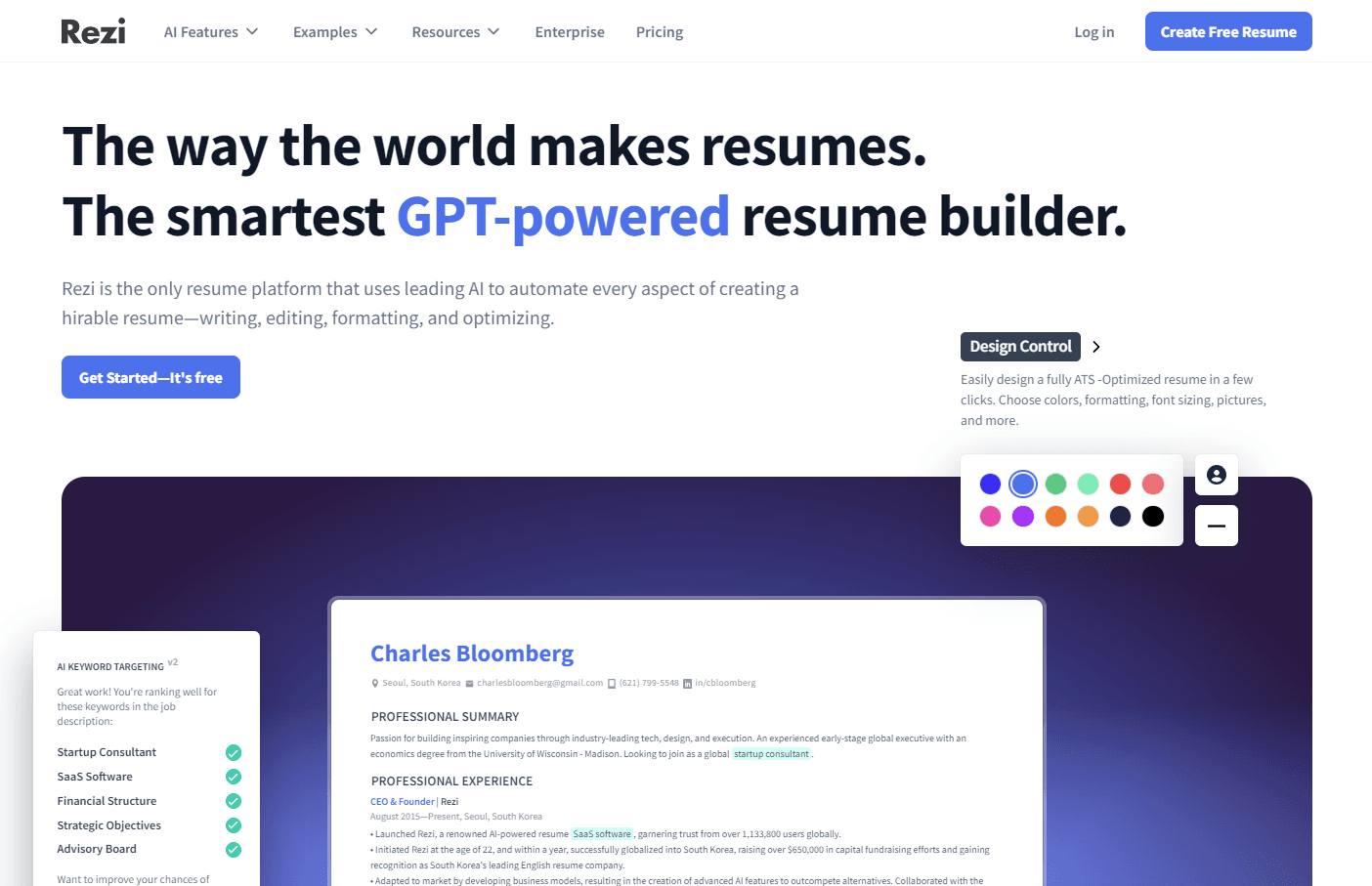
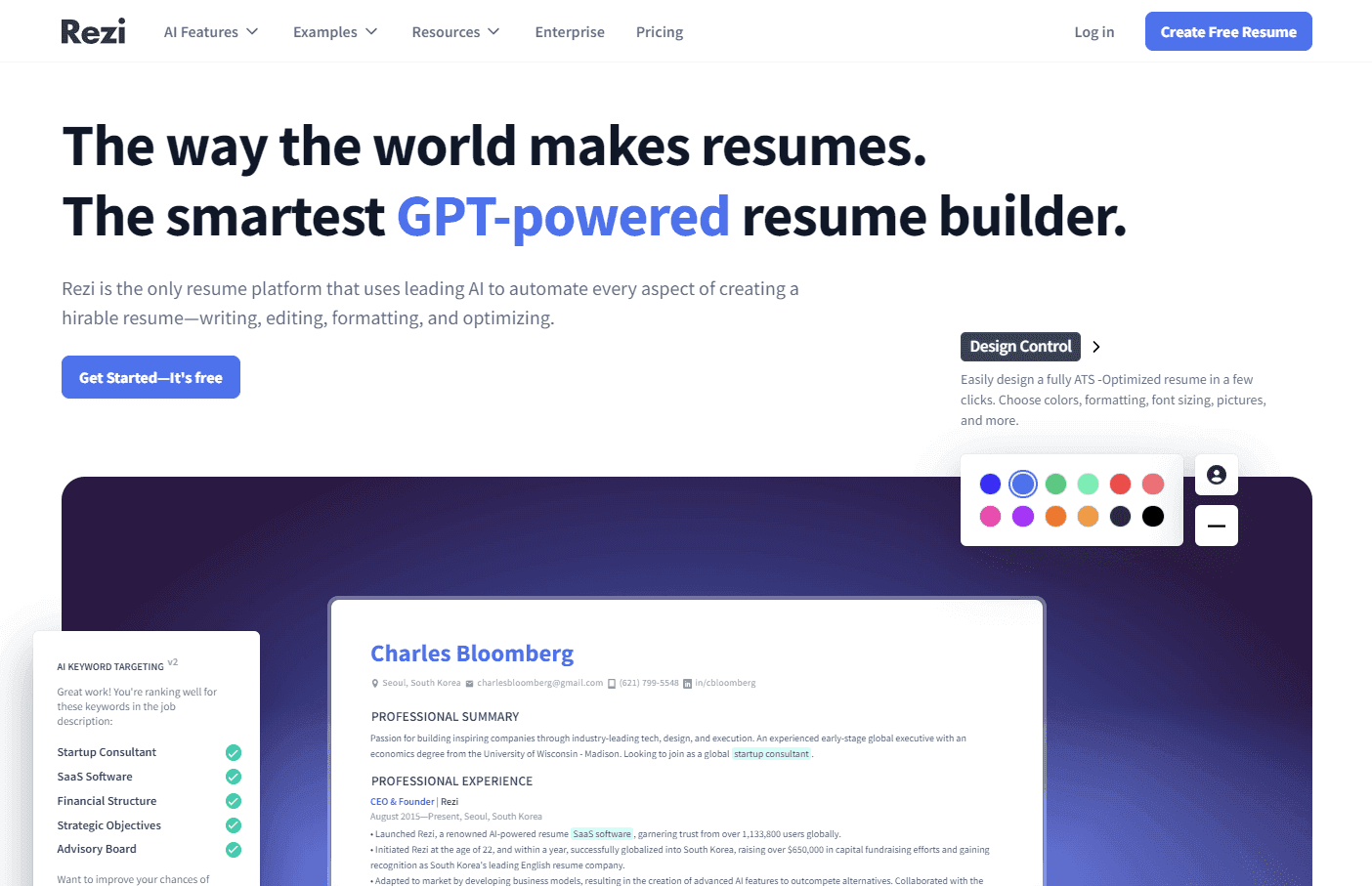
Rezi is the most-used AI resume builder in 2026 with over a million resumes generated. Type your experience, get back an ATS-friendly resume with proper formatting, action verbs, and metric-driven bullet points. The AI is tuned hard for ATS pass-through specifically — what you produce on Rezi is more likely to get through automated filtering than what you'd produce in Word.
What it wins at: ATS-friendly output by default, fast resume generation for users starting from scratch or major refresh, broad community and template library.
Where it falls down: templates are functional but conservative — for design-heavy fields (creative, marketing) the output doesn't stand out visually. Free tier is limited; meaningful use requires the paid plan.
2. Kickresume — Resume + Cover Letter From One Tool
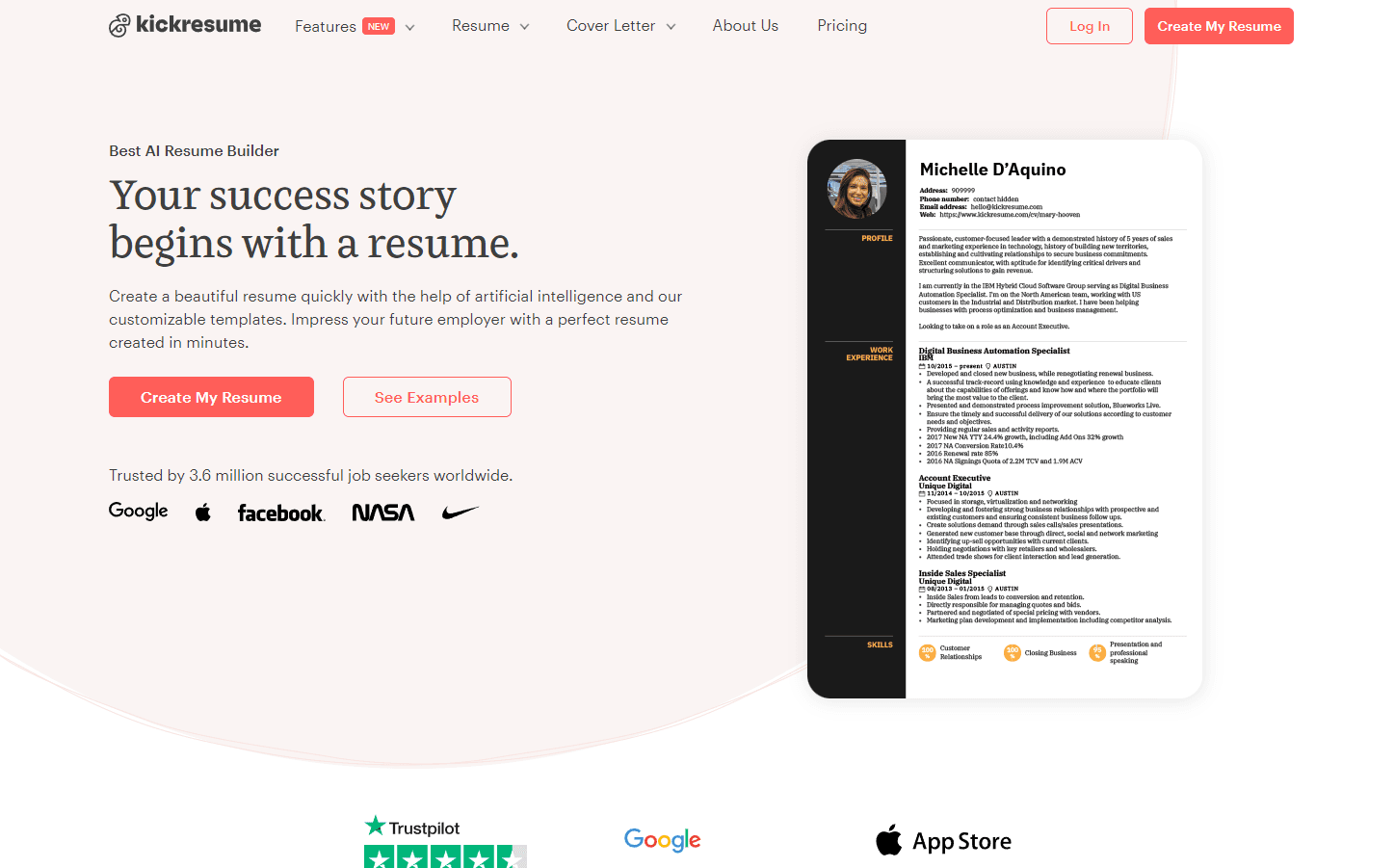
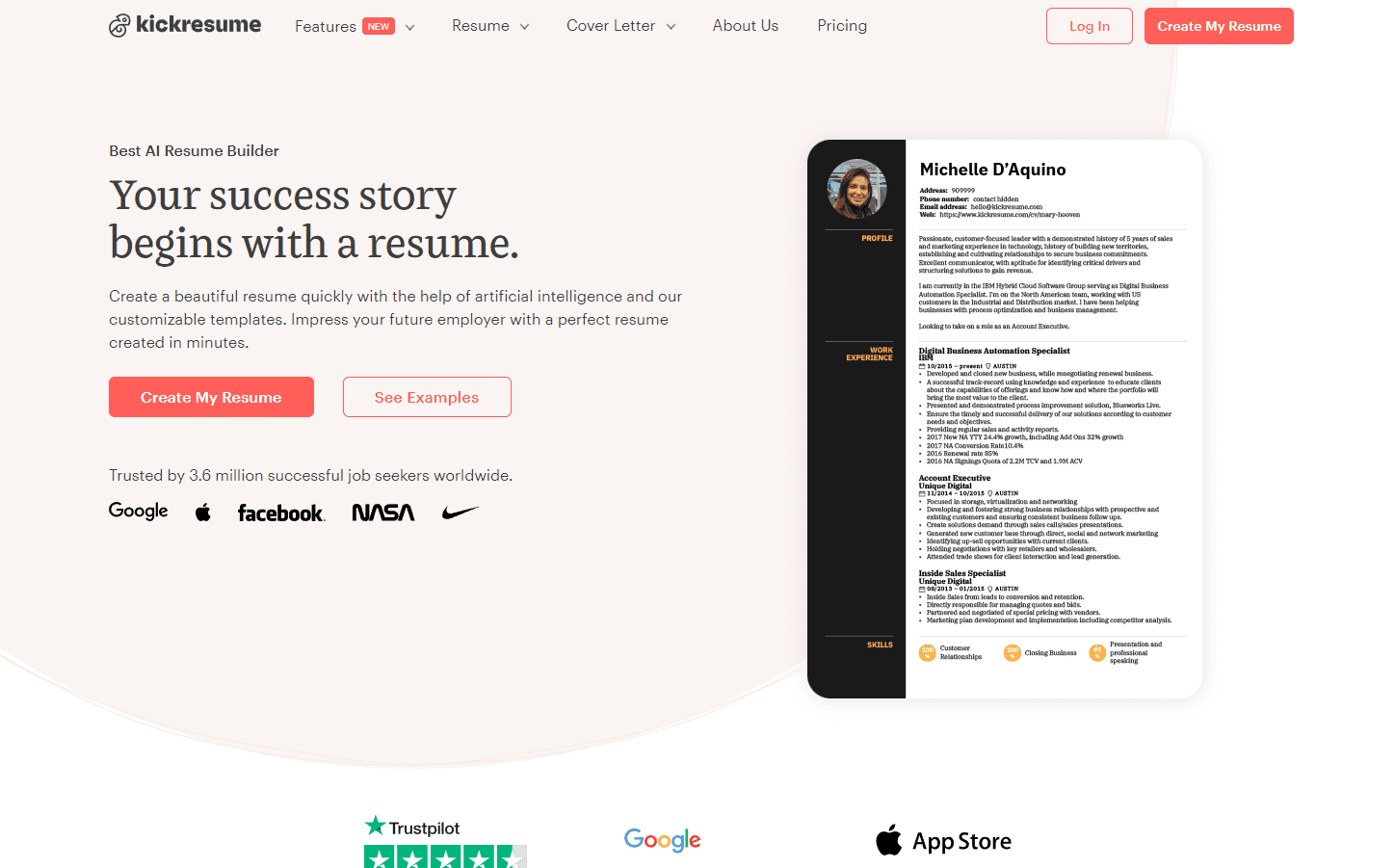
Kickresume covers both resume and cover letter generation in one workspace, with stronger template design than Rezi for users who need a resume that visually stands out. Better for design-conscious fields and users who want to avoid the "AI-generated resume look."
What it wins at: unified resume + cover letter workflow, template variety with stronger design across more aesthetic options, and the cleanest export-to-PDF UX in the category.
Where it falls down: slightly less ATS-tuned than Rezi by default — for purely-ATS-filtered postings, Rezi's templates may pass through more reliably.
3. Jobright AI Resume Builder — Per-Job Tailored Output
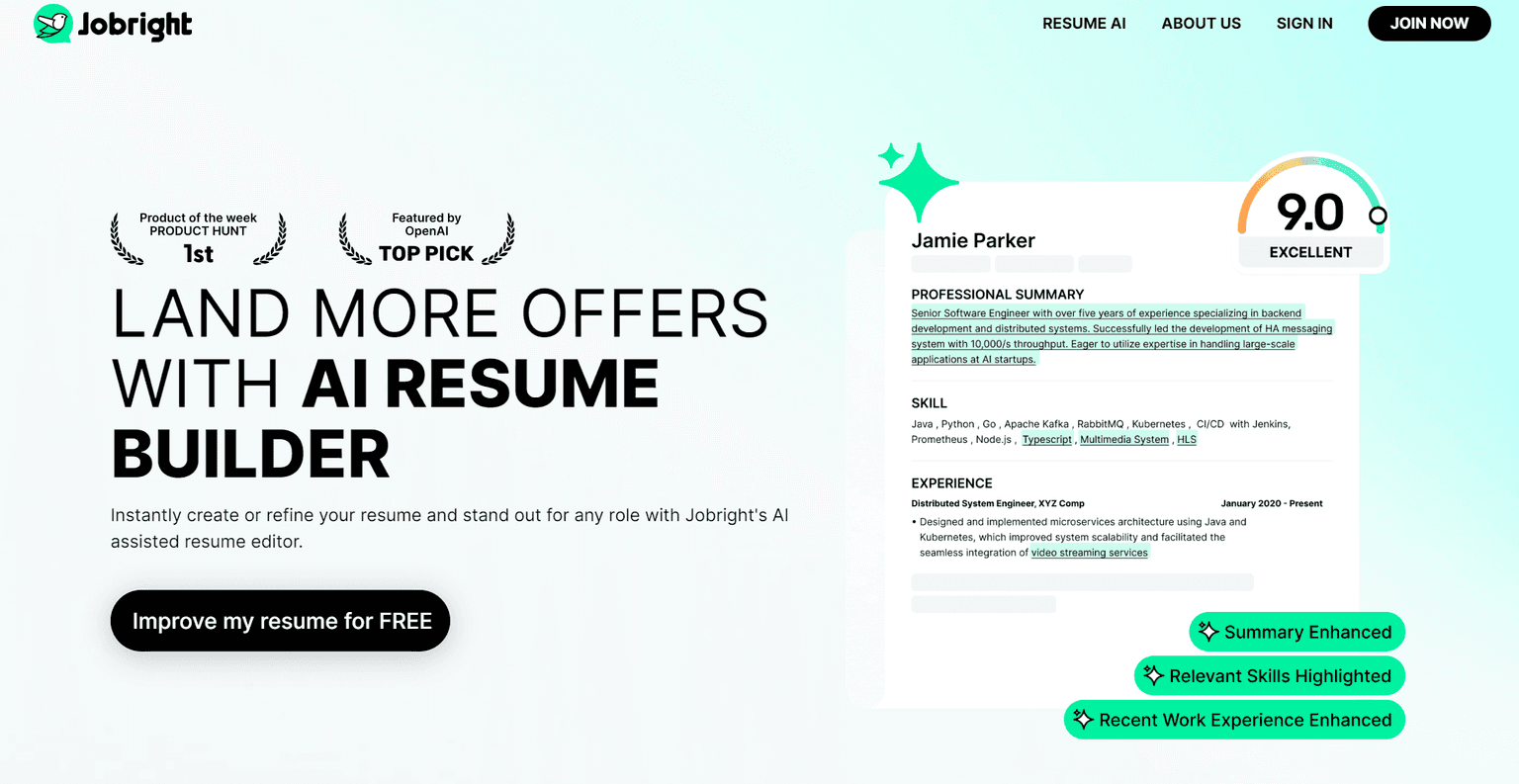
Jobright AI Resume Builder takes a different angle: paste a job description, paste your background, get back a resume tailored specifically to that posting. For job seekers applying to 5+ jobs per week where each posting deserves a different emphasis, this is meaningfully faster than rewriting the same resume seven times.
What it wins at: per-job tailoring at speed, strong ATS optimization that adjusts to each posting's specific keyword set, and a workflow built around the modern "apply to many jobs" reality.
Where it falls down: newer than the established players; UX is functional but less polished than Rezi or Kickresume. Best paired with one of those for the master-resume work.
ATS Optimization and Feedback
Resume builders generate something usable. ATS optimizers and feedback tools tell you if it's actually going to work. Pairing both is the standard 2026 workflow.
4. Jobscan — Test Your Resume Against the Actual ATS
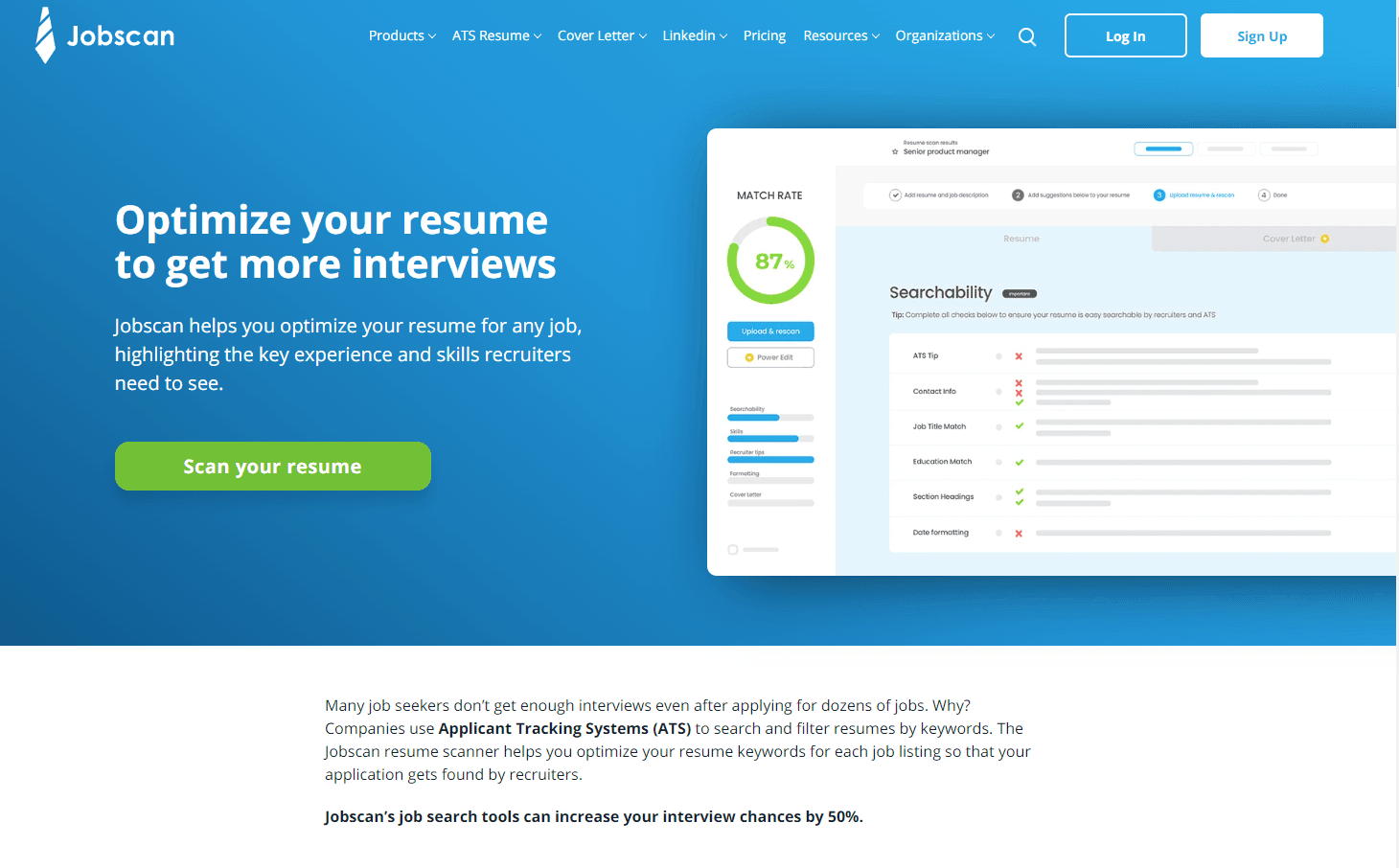
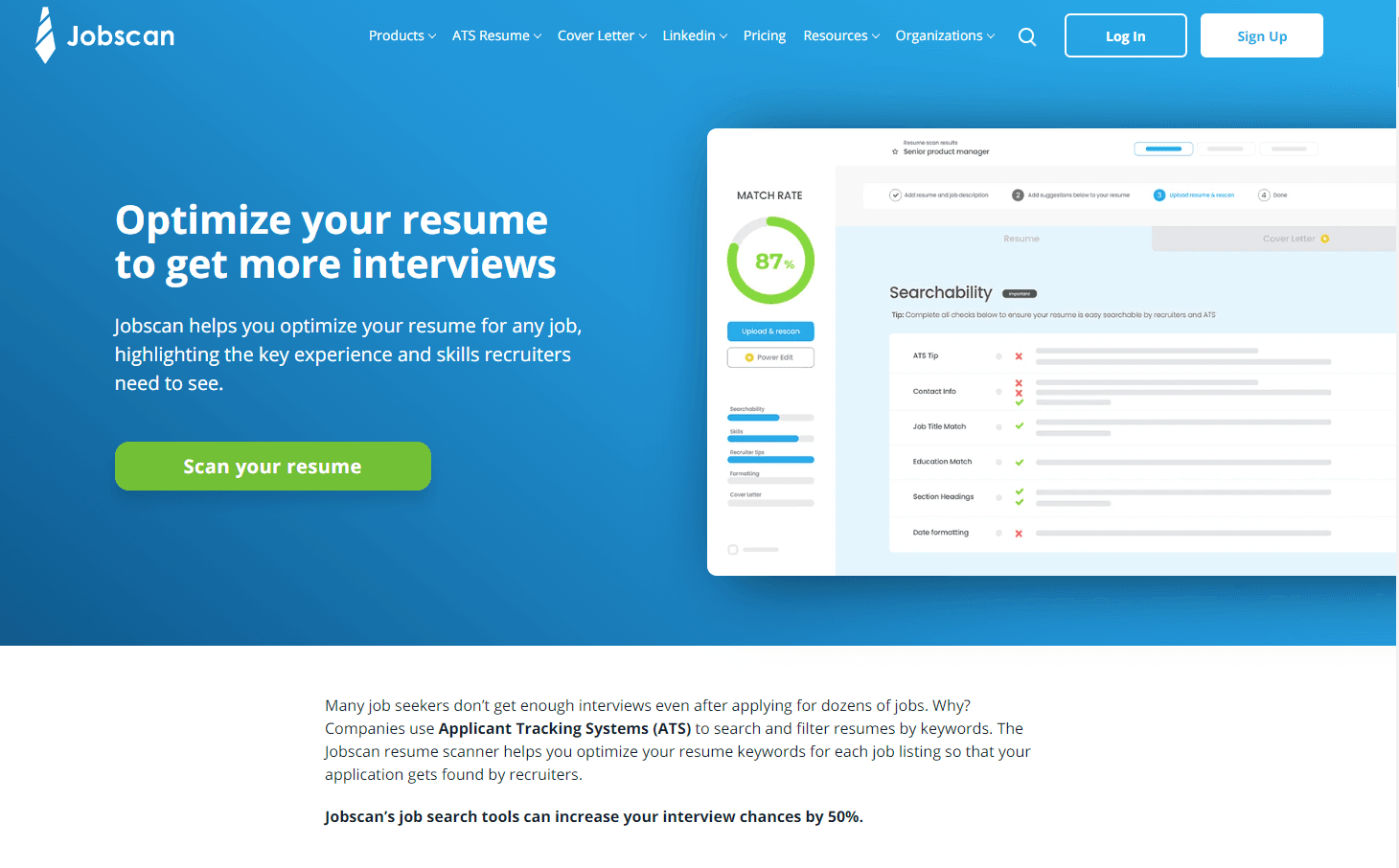
Jobscan is the standard tool for ATS optimization. Paste your resume and the job description; Jobscan scores how well the resume matches what the ATS will look for, identifies missing keywords, and suggests changes. Used by enough hiring managers and recruiters that the gap between "my resume is fine" and "my resume passes Jobscan at 80%+" is real and measurable in interview rates.
What it wins at: the most-trusted ATS scoring tool in the category, accurate prediction of automated-filter pass-through, and a sharp focus on the optimization problem without trying to also build the resume.
Where it falls down: doesn't write the resume for you — pair with Rezi or Kickresume for the building side. Scoring methodology can feel like keyword-stuffing if optimized too hard; balance against readability for the human reviewer.
5. Resume Worded — AI Feedback on Resume + LinkedIn
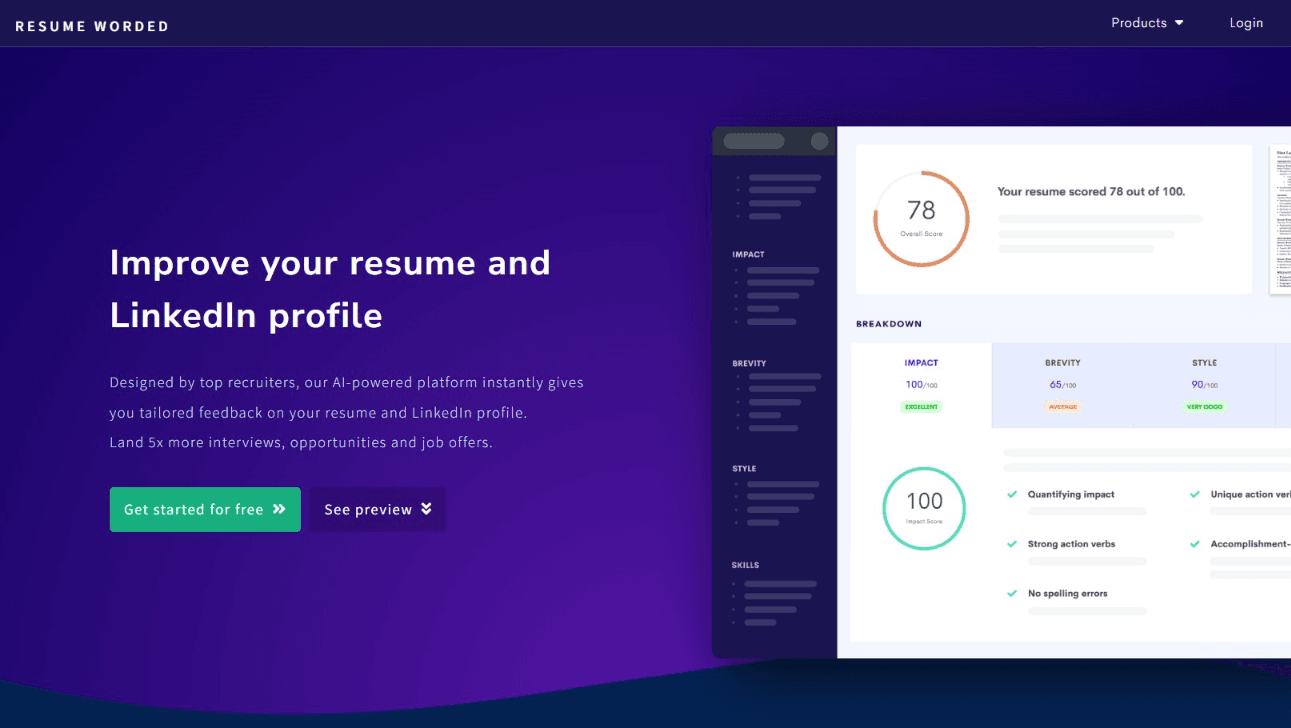
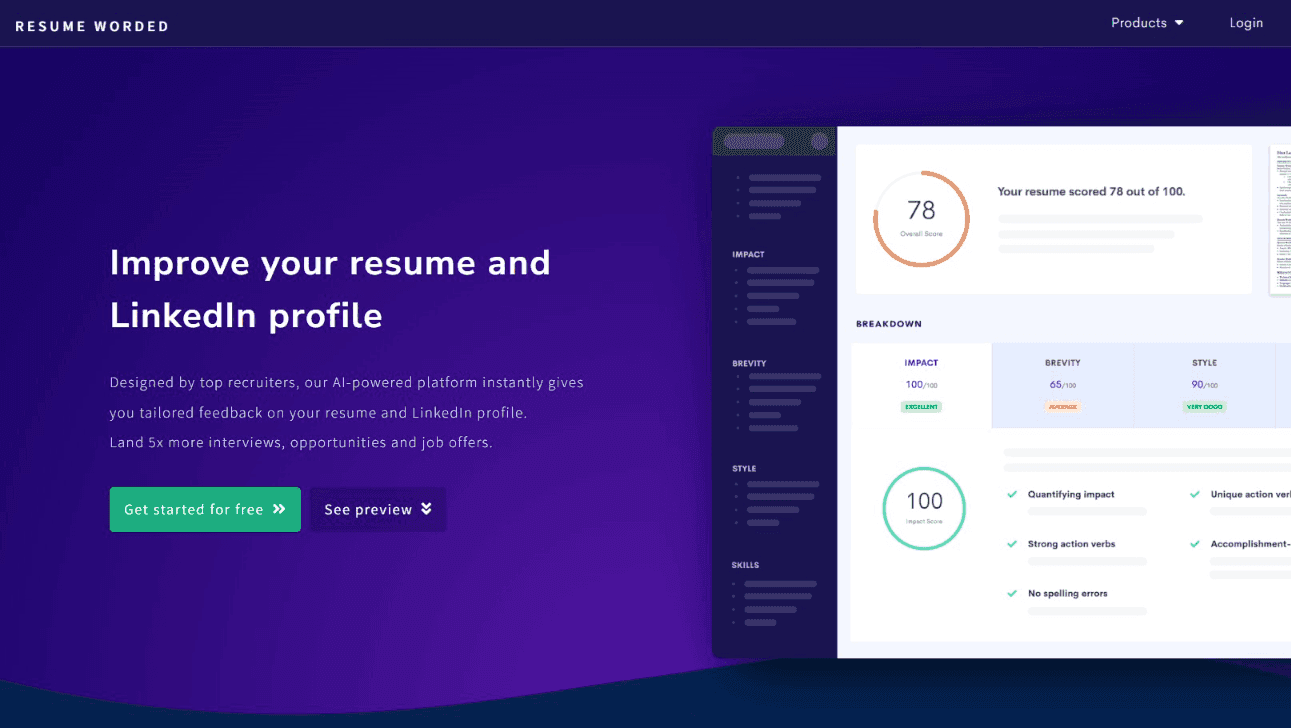
Resume Worded gives structured AI feedback on what your resume is missing — weak phrasing, vague impact statements, missing metrics, redundant content — and extends the same evaluation to your LinkedIn profile. For users who want to know why their resume isn't working, not just "how to make it ATS-friendly."
What it wins at: qualitative feedback that addresses storytelling and impact, the LinkedIn profile evaluation alongside the resume, and concrete rewrite suggestions on specific bullets.
Where it falls down: less ATS-focused than Jobscan — pair the two if you're worried about both human readability and automated filtering. Subscription required for full feature set.
6. ResumeCheck.net — Second-Opinion Grader
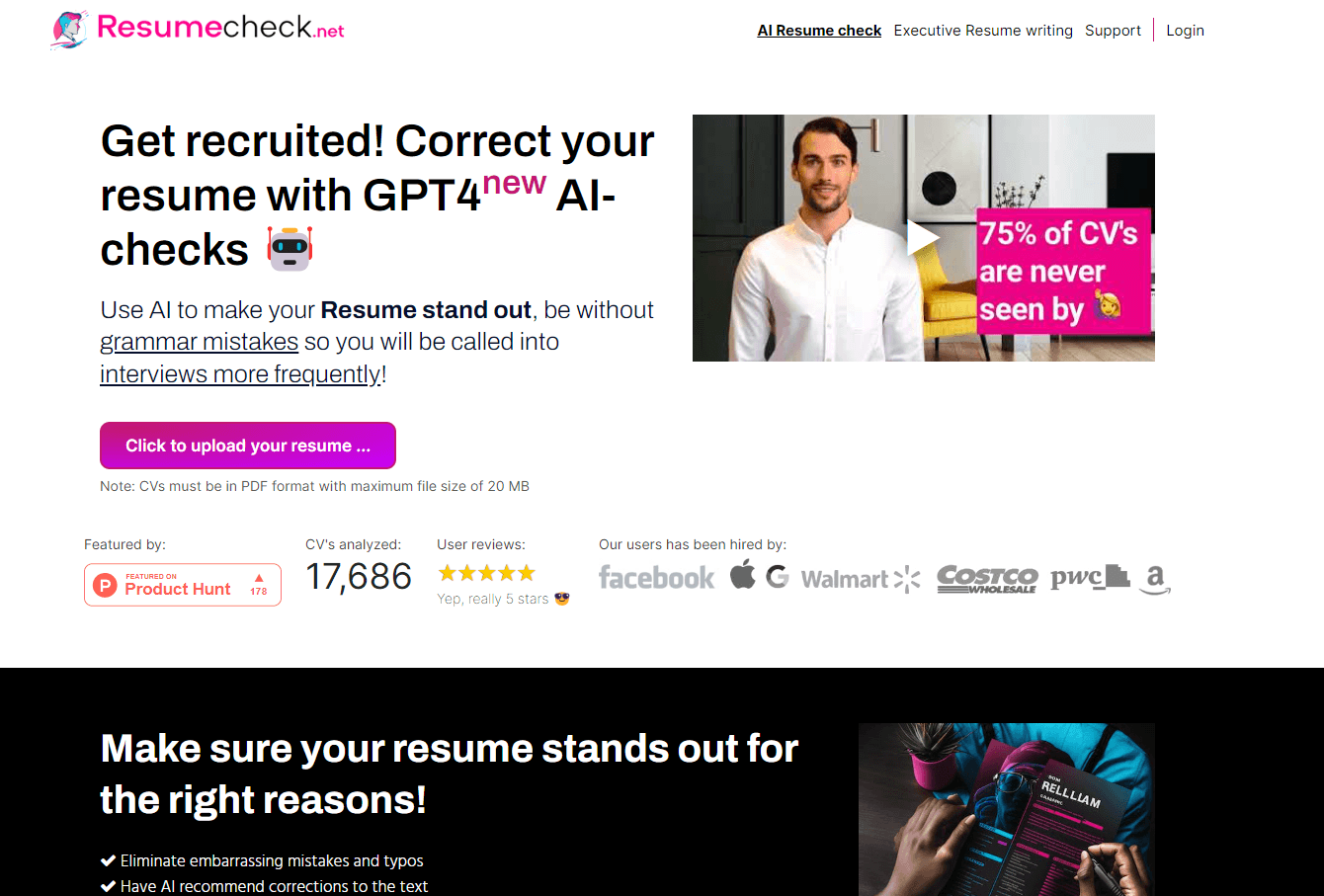
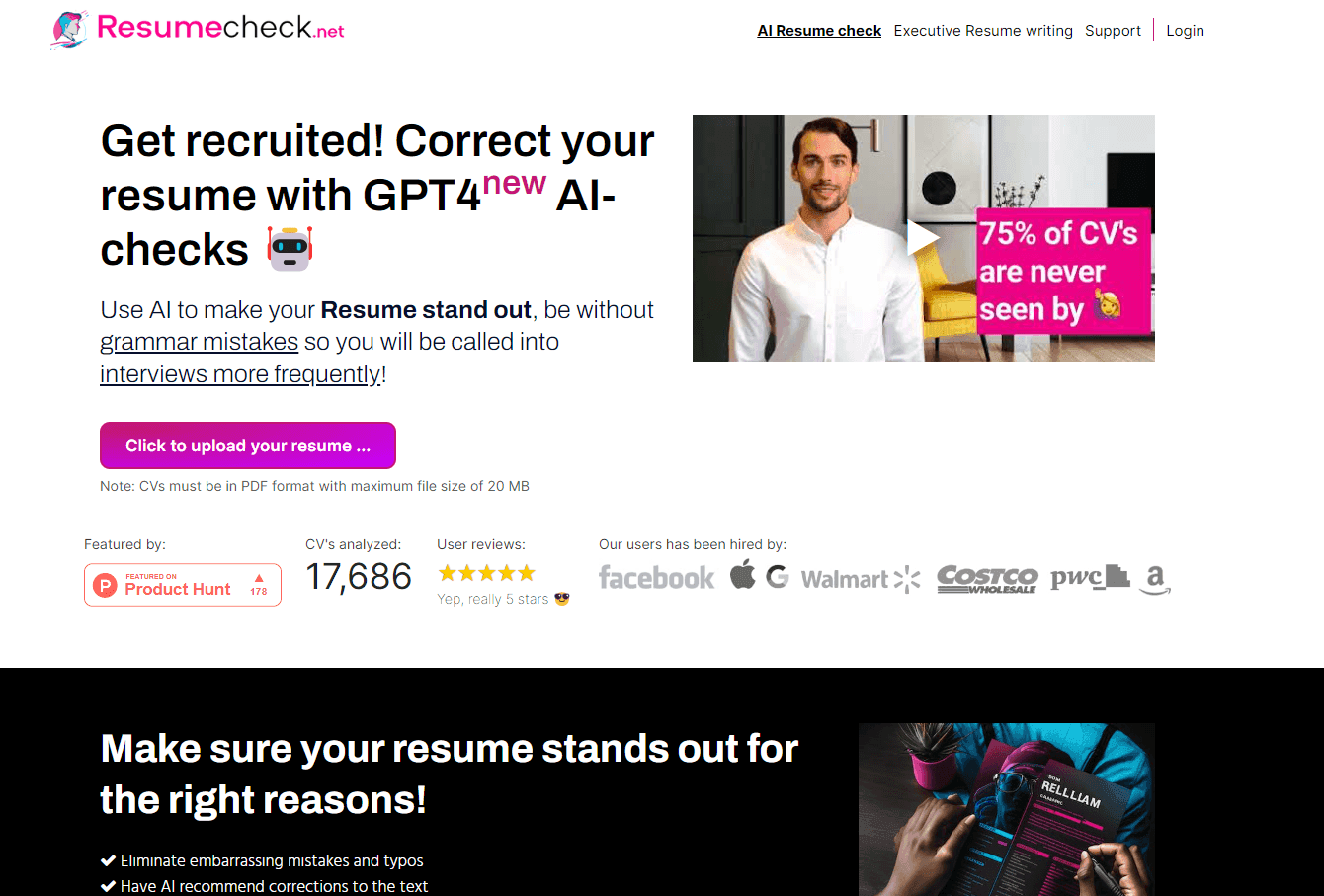
ResumeCheck.net is a lighter-weight resume analytics and correction tool — useful as a second-opinion grader when Jobscan or Resume Worded gives you a result you're not sure about, or for users on a tight budget who want one feedback tool rather than multiple.
What it wins at: quick second-opinion grading, lighter price point than the established competitors, and surfacing issues other graders sometimes miss.
Where it falls down: less established than Jobscan or Resume Worded; depth of feedback trails the leaders. Best as a complement, not a replacement.
AI Job Application Automation
7. LoopCV — Apply to Jobs at Scale
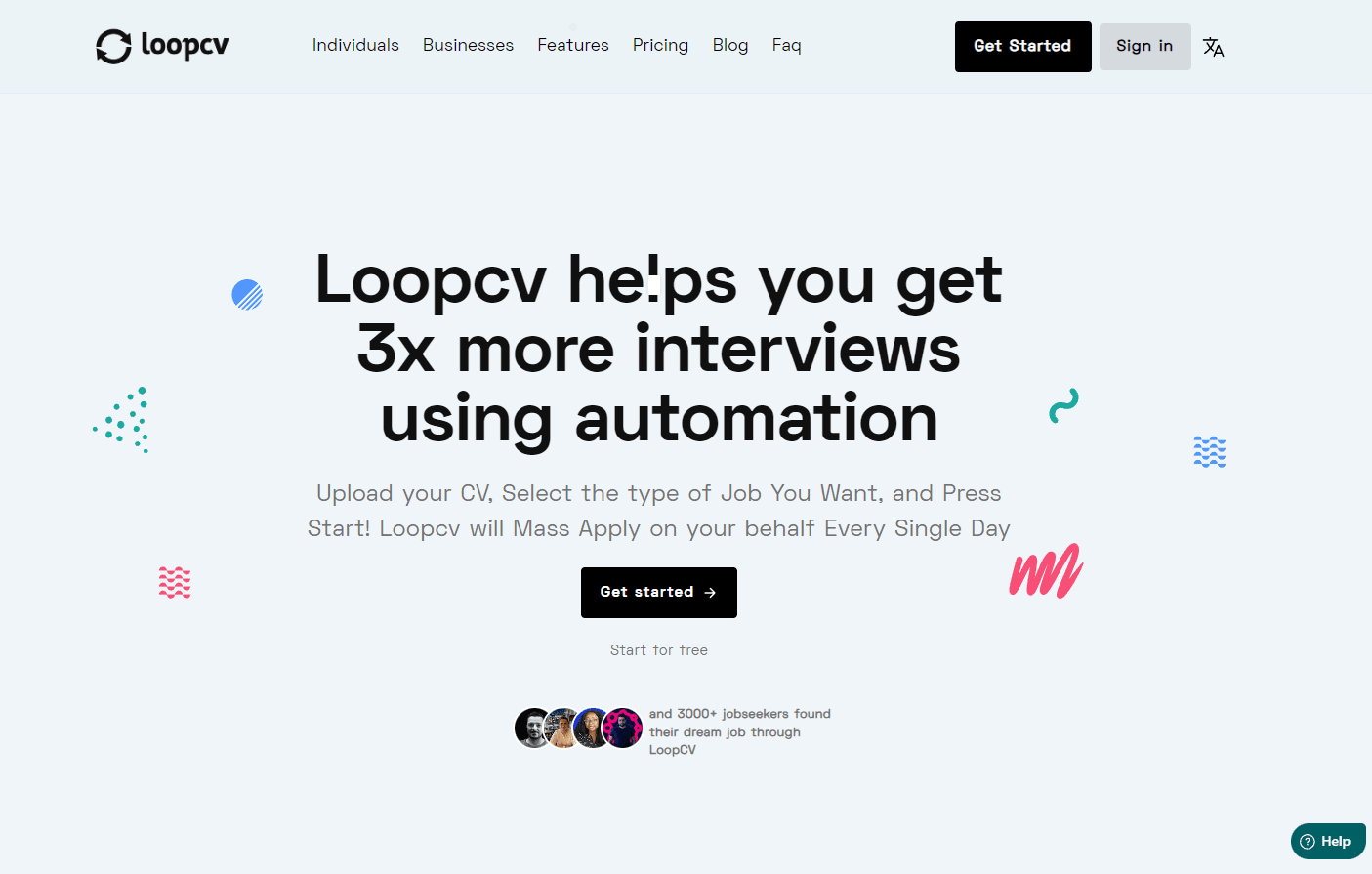
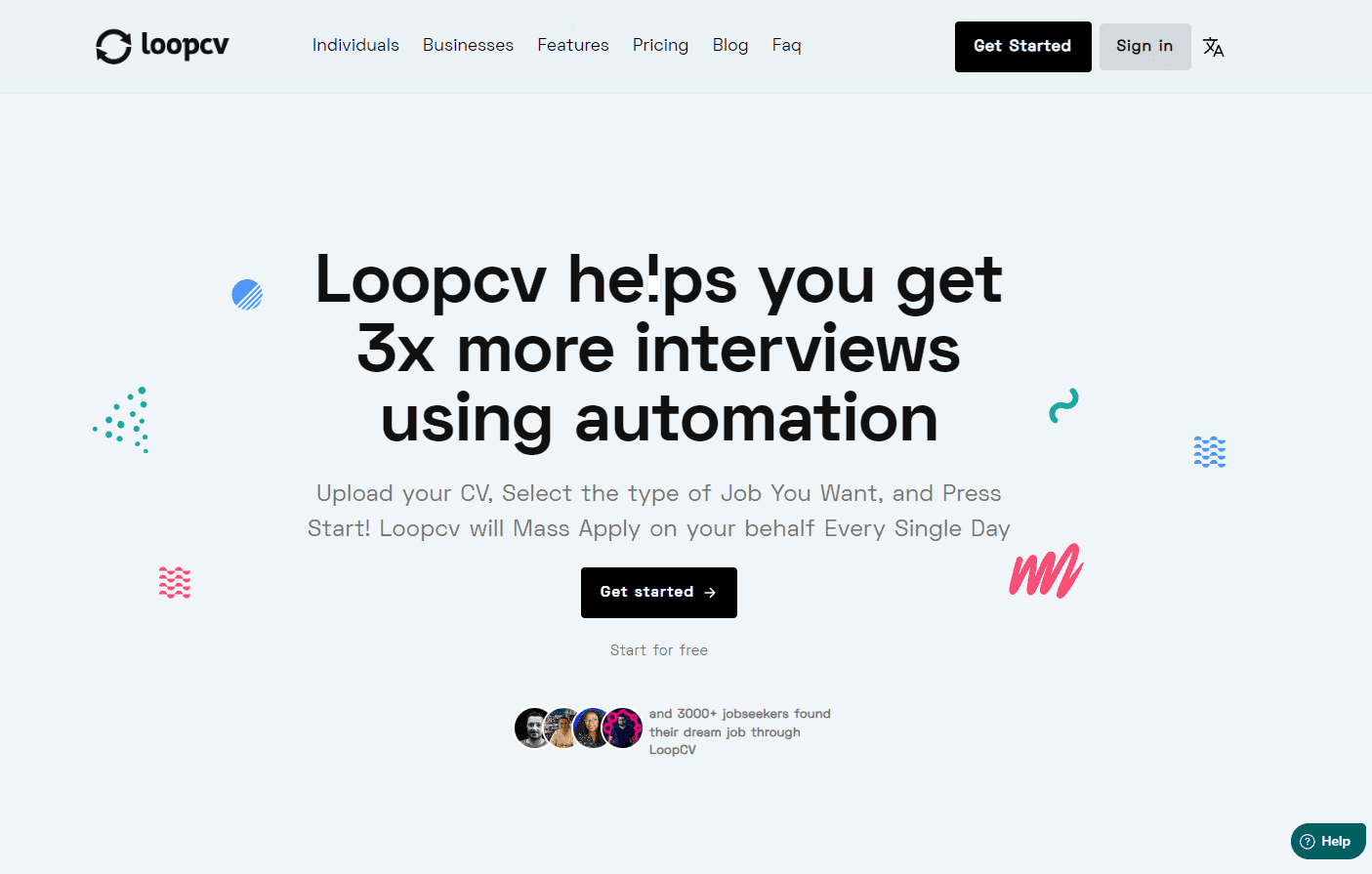
LoopCV takes the most repetitive job-search work — finding postings, customizing applications, hitting submit — and automates it. Configure your target roles and locations; LoopCV finds matching postings, generates tailored applications, and submits them on your behalf. Controversial in some hiring circles (it's automation against systems designed for human applicants) but undeniably effective for users running high-volume searches.
What it wins at: high-volume job search where applying to dozens of postings per day is the bottleneck, automating the repetitive part of search so you can focus on interviews, and a tireless application-pipeline assistant.
Where it falls down: quantity over quality is a real risk — automated mass applications underperform tailored individual ones for senior roles. Some companies actively detect and reject automated applications. Best for high-volume early- and mid-career searches; less effective at executive level.
How to Build Your 2026 Job Search Stack
For most active job seekers, the practical stack is:
- Build the resume: Rezi for fastest ATS-friendly output; Kickresume if design matters; Jobright if you tailor per posting
- Optimize per posting: Jobscan for ATS scoring; Resume Worded for qualitative feedback
- Apply at scale (optional): LoopCV if your search is high-volume; skip if you're targeting fewer than 5 jobs a week
- LinkedIn profile: Resume Worded extends here, or use the platform's own AI suggestions
The full stack costs around $50–100/month depending on tier choices, which pays back the first day of a new role. For students and budget-conscious users, free tiers of Rezi + Resume Worded cover most use cases.
For adjacent reading, see our The Top AI Tools Every Student Should Use (graduating into the workforce uses many of these tools), Best AI Tools for Productivity and Education, and AI-Powered Recruitment and HR Tools for the hiring side of the conversation.
Frequently Asked Questions
Can hiring managers tell when a resume was AI-generated? Increasingly yes for the obvious patterns — generic phrasing, identical bullet structures, and the "GPT-default" prose style that flat AI output produces. The signal isn't the use of AI; it's the lack of personal voice and specific detail. Resumes built with AI assistance and then edited for voice and concrete metrics are indistinguishable from human-written ones. Resumes shipped raw from a chatbot read as AI-generated and underperform.
Will AI replace recruiters? Not recruiters; replacing the volume of repetitive screening work recruiters used to do manually. Most major ATS platforms now have AI-augmented screening, and many companies use AI assistants for initial outreach. The interview, judgment, and relationship work remains human. Job seekers should expect the first pass to be AI; the second and beyond are still human.
Is using AI to apply to jobs ethical? Using AI to help write your application — yes, broadly accepted. Using AI to automatically apply at scale without reading the posting — controversial. Some companies treat the latter as spam and reject. Senior roles especially expect a tailored application; mass-automation tools work better for early-career and high-volume entry-level searches.
What's the difference between resume optimization and ATS optimization? Resume optimization is improving the document for human readers — clarity, impact, storytelling. ATS optimization is making sure the resume's keywords and formatting pass through the automated screening systems most companies use. Both matter; ATS gets you to the human reader, resume optimization gets the human reader to the interview.
Should I tailor my resume per application? Yes, especially for jobs you actually want. Tailoring takes 5–15 minutes with AI assistance and meaningfully changes interview rates. Tools like Jobright AI Resume Builder and Jobscan are designed around this workflow specifically.
Can these tools build a LinkedIn profile, not just a resume? Resume Worded extends to LinkedIn evaluation directly. Some general builders (Rezi, Kickresume) help with LinkedIn but it's secondary; LinkedIn's own AI features are surprisingly capable for this purpose now. Use one of these tools for the resume, then port the strongest content over to LinkedIn manually with platform-specific framing.
Are these tools good for executive job search? Depends on the level. For director-and-below, yes broadly — the tools are designed for that range. For VP+ and C-suite searches, the recruitment process is different (executive search firms, board introductions, less reliance on ATS) and these tools matter less. Senior roles benefit more from network and narrative work than from ATS optimization.
Final Thoughts
The AI job search category in 2026 is large enough that picking the tool matters less than building a workflow that combines two or three. Resume builders are commodities; the differentiation is in optimization, tailoring, and (for some users) automated submission. The best job-search outcomes in 2026 come from job seekers who treat AI as leverage on a real positioning story — not as a way to skip the work of figuring out what they actually want next.
If you're starting a job search and not using any of these tools, Rezi (free tier) and Jobscan (limited free use) are the right two-tool stack to start with. The compounding benefit shows up by week two, when you've optimized 5+ applications and the first interview requests start coming in.
Categories these tools span
More collections you may also like


Sign up for our newsletter
Receive weekly updates so you can stay up-to-date with the world of AI
Sign up for our newsletter
Receive weekly updates so you can stay up-to-date with the world of AI
The AI tools directory for discovering, exploring, and comparing the most innovative AI tools in the industry