Best AI Recruiting & HR Tools (2026)







Best AI Recruiting & HR Tools in 2026
If you're researching the best AI recruiting and HR tools in 2026, the category has matured into a clear set of category leaders across talent experience, talent search, conversational recruiting, talent lifecycle, and ATS-aware sourcing. The hype-cycle losers are gone; what's left is a tighter set of products that ship in production at real Fortune 500 hiring scale.
This guide covers the eight AI recruiting and HR tools real talent acquisition teams use in 2026: Phenom, Eightfold, Paradox, Findem, Beamery, Chatkick, SnapX, and Jobscan. Each is rated on which lane it owns, the production credibility behind the pitch, and which type of recruiting team it fits. For job-seeker-side resume builders and job-search tools, see Best AI Resume Builders & Job Search Tools (2026).
How We Evaluated These Tools
The eight AI HR tools below were evaluated on five criteria, in priority order:
- Real production deployments at named enterprises — verified usage at Fortune 2000 talent acquisition teams running real hiring volume
- Lane fit — does the tool own a clear lane (talent experience, search, conversational, lifecycle, ATS optimization) rather than being a generalist
- Bias and compliance posture — AI-driven hiring carries real legal exposure (EEOC, AI Bill of Rights, NYC Local Law 144); does the vendor address this transparently
- Pricing and procurement — published per-seat or per-org pricing that talent leaders can budget against
- 2026 currency — has the platform shipped meaningful AI capability in the last 12 months that supports modern hiring workflows
Quick Comparison
| Tool | Best for |
|---|---|
| Phenom | Talent experience platform. Best for enterprise career-site personalization + talent CRM. |
| Eightfold | AI talent management platform. Best for talent intelligence + internal mobility at scale. |
| Paradox | Conversational recruiting AI (Olivia). Best for high-volume frontline hiring. |
| Findem | AI talent search. Best for outbound passive-candidate sourcing at scale. |
| Beamery | Talent lifecycle management. Best for enterprise talent CRM + nurture. |
| Chatkick | All-in-one recruiting platform. Best for recruiting agencies and SMB talent teams. |
| SnapX | AI talent staffing platform. Best for staffing agencies and contract placement. |
| Jobscan | ATS-aware resume optimization. Best for understanding how candidates' resumes parse against your ATS. |
1. Phenom — Enterprise Talent Experience Platform
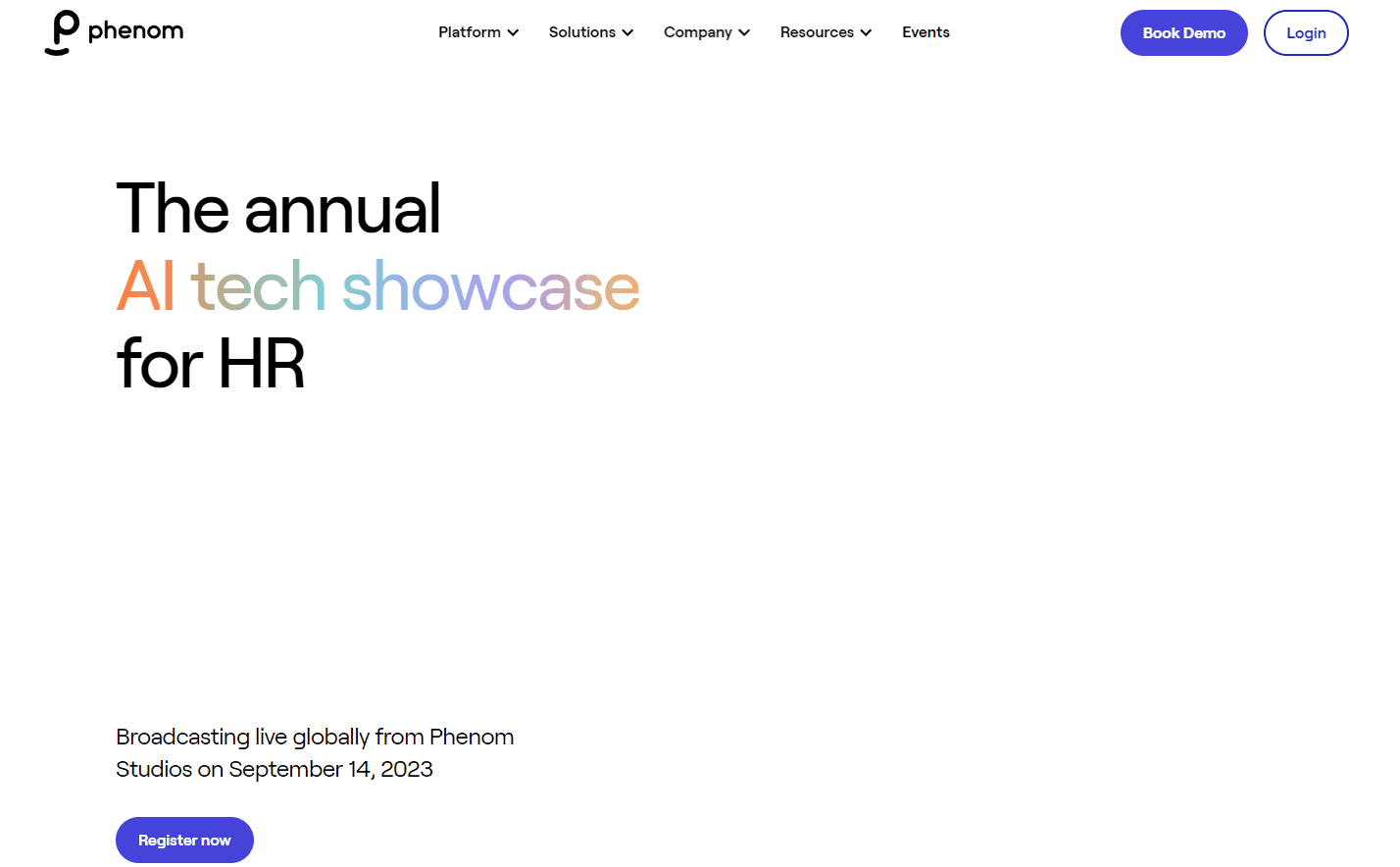
Phenom is the AI-driven talent experience platform that powers career sites, candidate CRM, and the broader talent-marketing motion at Fortune 500 enterprises. The 2024–2025 evolution toward agentic AI for recruiters extended the platform from a marketing-and-experience layer into the core recruiting workflow.
Production credibility: raised $375M+ at a $1.4B+ valuation; deployed at >500 enterprise customers including Microsoft, KraftHeinz, Conair, and Foot Locker; named a Leader in the Forrester Wave for Talent Acquisition multiple years; SOC 2 Type II + GDPR + the compliance posture Fortune 500 procurement requires.
What it wins at: enterprise career-site personalization, talent CRM at scale, and the use case where the candidate experience is the brand-marketing differentiator in a competitive talent market.
Where it falls down: for SMB hiring teams, the platform is sized for enterprise scale. Best for >500-employee companies with serious talent-acquisition operations.
2. Eightfold — AI Talent Management Platform
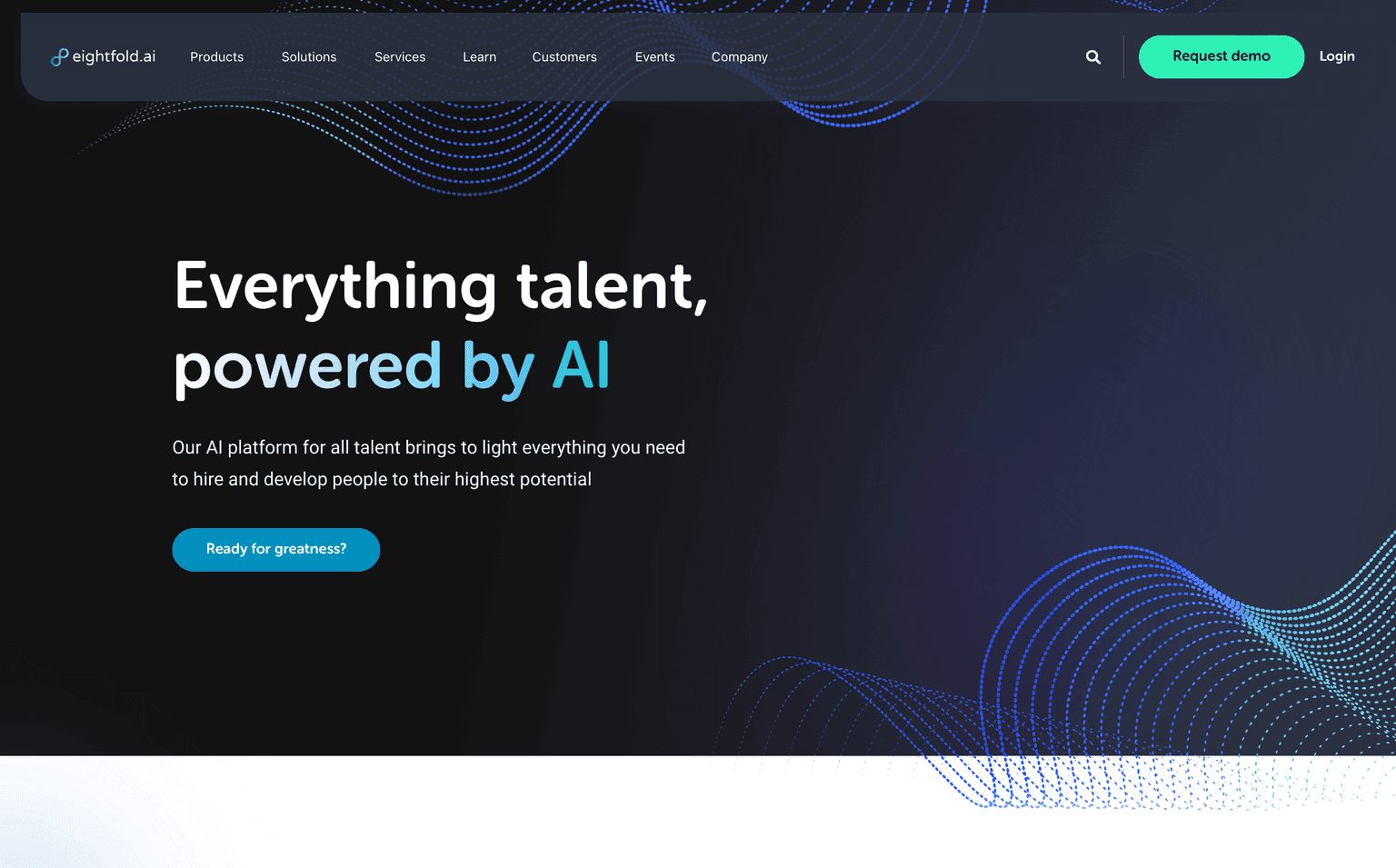
Eightfold is the AI talent intelligence platform that powers external recruiting + internal mobility + workforce planning at the enterprise tier. The differentiator: the talent graph spans both internal employees and external candidates, enabling internal-mobility recommendations that traditional ATS+CRM combinations don't deliver.
Production credibility: raised $410M+ at a $2B+ valuation; deployed at >100 enterprise customers including Bayer, Fox, Johnson Controls, Tata; named a Leader in Gartner Magic Quadrants and Forrester Waves for talent acquisition.
What it wins at: combined external recruiting + internal mobility, enterprise workforce planning, and the talent intelligence use case where understanding skill graphs across employees and candidates matters more than transactional ATS workflow.
Where it falls down: complexity scales with capability — implementation is multi-quarter at enterprise scale. For SMB or mid-market, simpler tools fit better.
3. Paradox — Conversational Recruiting AI (Olivia)
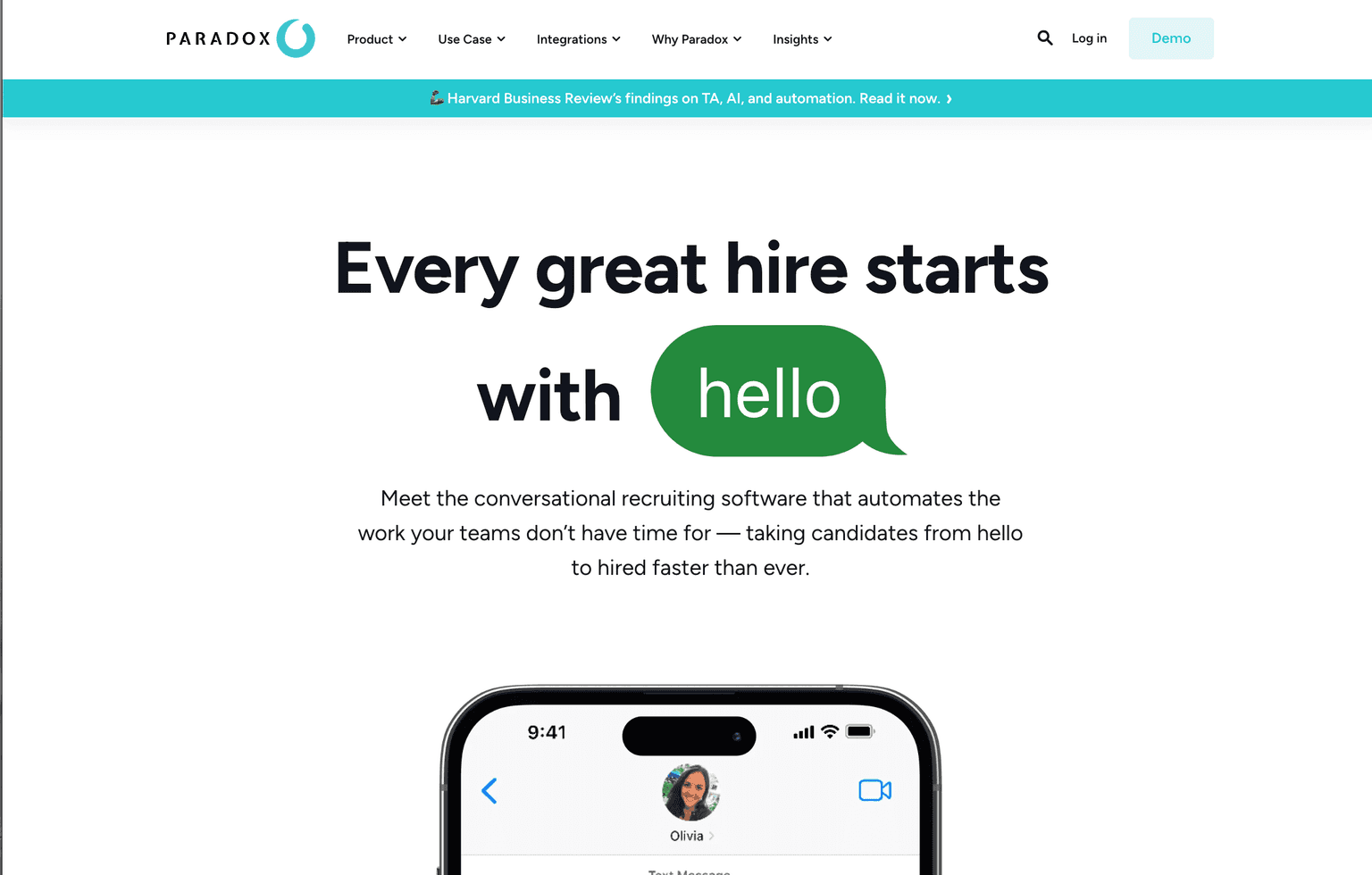
Paradox is the conversational recruiting AI (Olivia) that handles high-volume frontline hiring conversations — application capture, interview scheduling, candidate Q&A, and the operational layer that traditional recruiting motions handle through email back-and-forth. For enterprises hiring frontline workers at scale (retail, hospitality, logistics, healthcare), Paradox is the canonical pick.
Production credibility: raised $200M+ at a $1.5B valuation; deployed at McDonald's, GE Appliances, Lowe's, CVS, Wendy's, and many high-volume frontline hiring contexts; the Olivia conversational AI handles millions of recruiting conversations monthly.
What it wins at: high-volume frontline hiring, the conversational candidate experience that traditional recruiting motions don't ship, and the use case where time-to-hire and application-completion rate are the constraints.
Where it falls down: for executive search, knowledge-worker recruiting, or low-volume specialty hiring, the conversational-volume optimization is the wrong abstraction. Best for high-volume frontline hiring specifically.
4. Findem — AI Talent Search
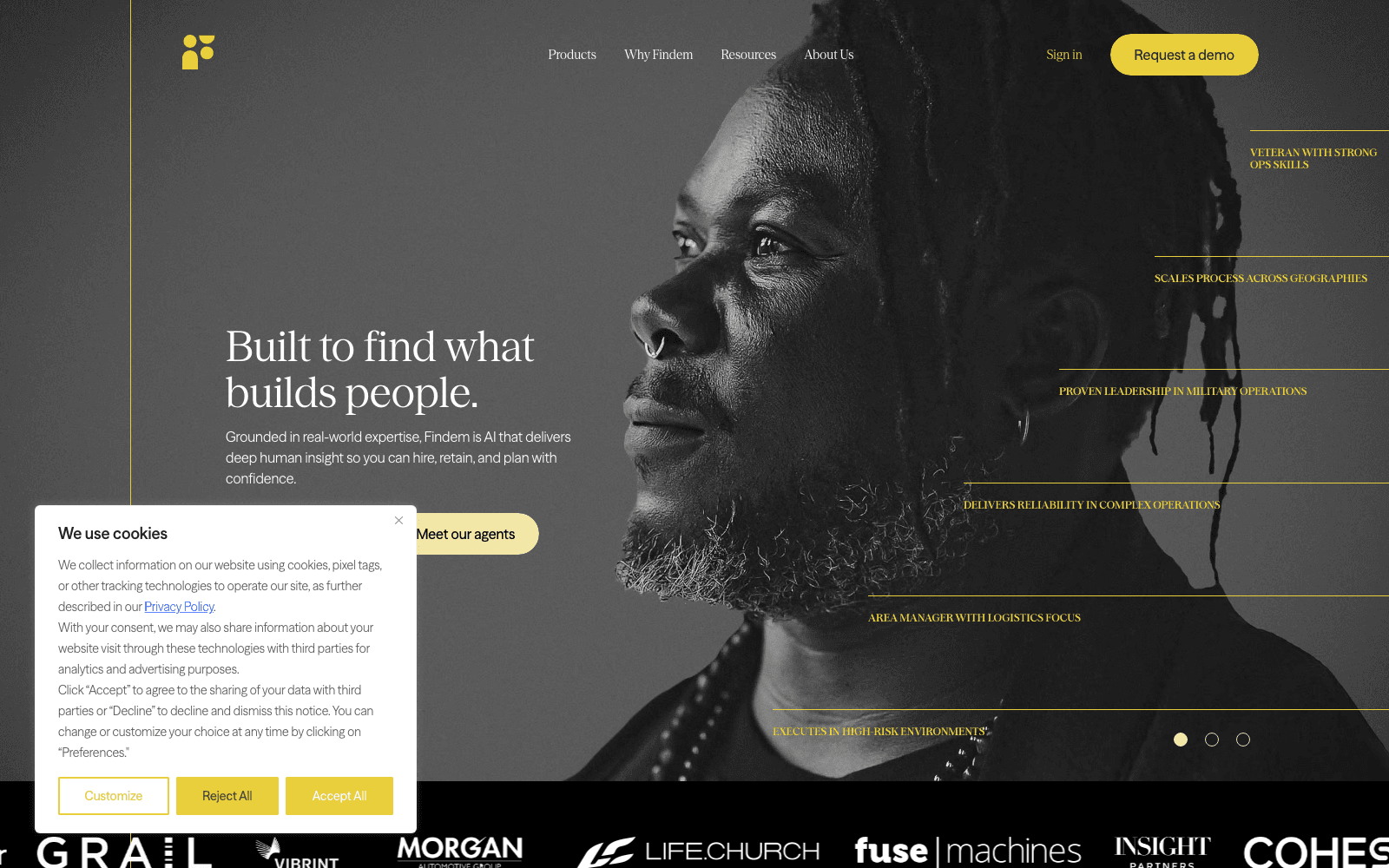
Findem is the AI-driven talent search platform — search across the entire passive talent market by attributes (companies worked at, education, skills, projects, seniority pattern) rather than by keyword matching against LinkedIn. For sourcing teams running outbound recruiting, Findem's attribute-based search is the differentiator vs LinkedIn Recruiter.
Production credibility: raised $97M+ Series B at a $300M+ valuation (2022); deployed at major enterprise sourcing teams including RingCentral, Oracle, Adobe, and many Fortune 500 talent acquisition organizations; the attribute-based search depth is the differentiator vs traditional LinkedIn-Recruiter workflows.
What it wins at: outbound passive-candidate sourcing, the attribute-search use case where keyword matching falls short, and high-volume sourcing teams running at Fortune 500 scale.
Where it falls down: for SMB hiring teams or contingent recruiting, LinkedIn Recruiter or simpler tools fit better. Best for enterprise sourcing teams specifically.
5. Beamery — Talent Lifecycle Management
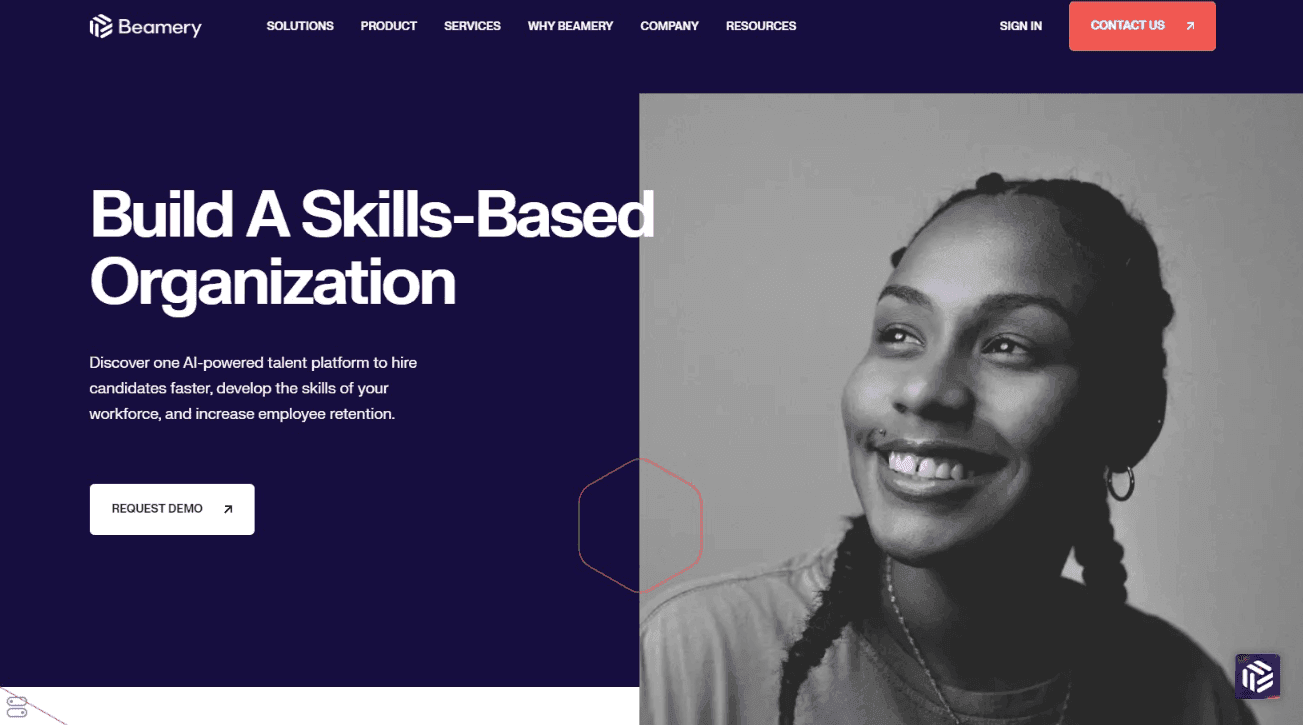
Beamery is the talent CRM and lifecycle management platform — track every candidate interaction across applications, events, sourcing, and hiring stages over the multi-year talent relationship. For enterprises running serious talent CRM and nurture programs, Beamery is the canonical pick.
Production credibility: raised $222M+ Series D at a $1B+ valuation (2022); deployed at >100 enterprise customers including Autodesk, Workday, Workhuman; SOC 2 Type II + GDPR; the talent-lifecycle architecture is the differentiator vs transactional ATS systems.
What it wins at: enterprise talent CRM, multi-year candidate nurture programs, and the talent lifecycle use case where reconnecting with previous candidates matters more than first-touch sourcing.
Where it falls down: for SMB hiring teams or transactional hiring, the lifecycle complexity is overkill. Best for enterprise talent operations specifically.
6. Chatkick — All-in-One Recruiting Platform
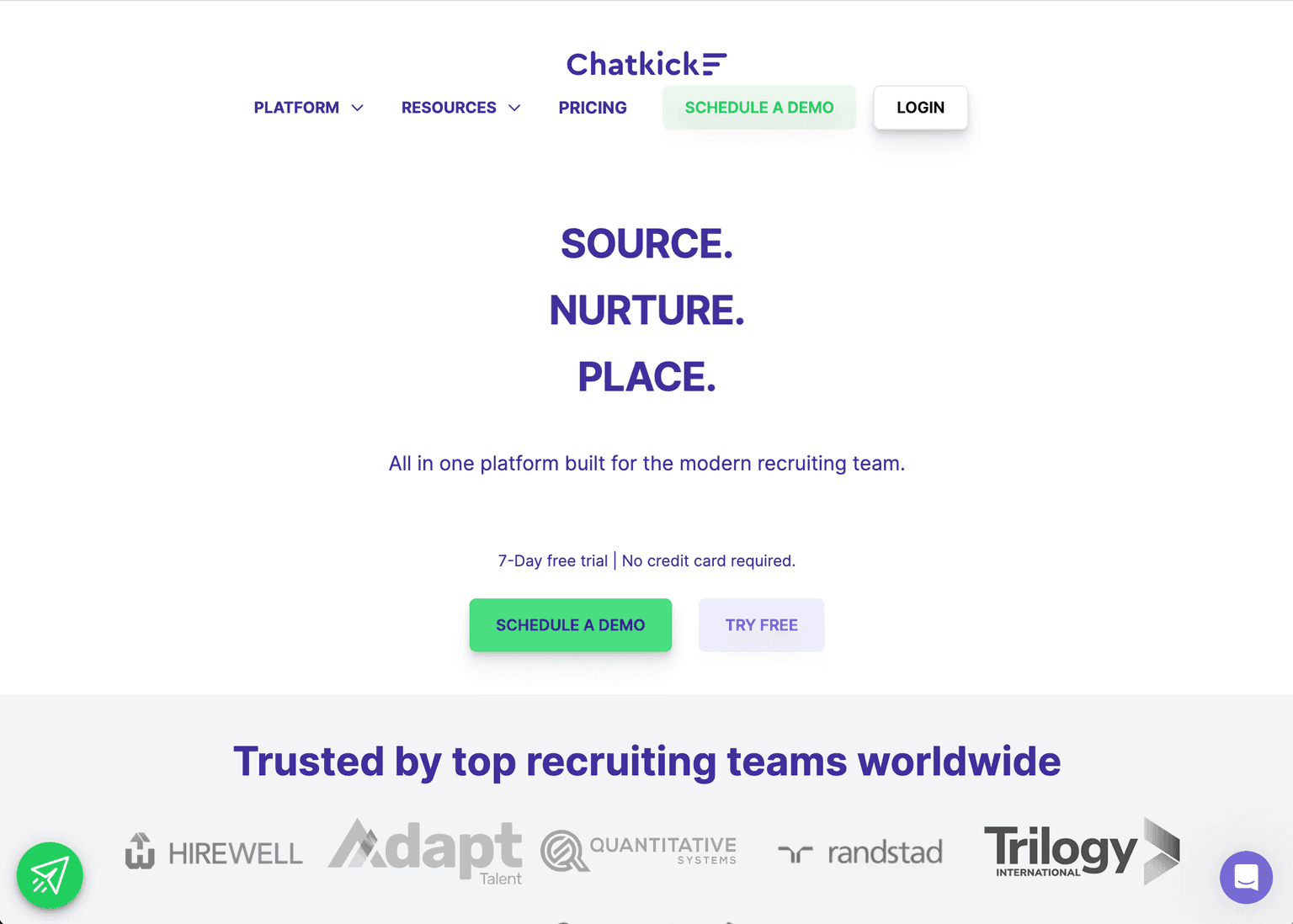
Chatkick is the all-in-one recruiting platform combining ATS + sourcing + candidate communications + workflow automation in one workspace. For recruiting agencies and SMB talent teams that don't want to procure separate ATS + sourcing + CRM tools, Chatkick is the integrated alternative.
Production credibility: privately held; deployed across recruiting agencies and SMB talent teams; the integrated all-in-one positioning is the differentiator vs specialist tools.
What it wins at: recruiting agencies running multiple client searches, SMB talent teams without dedicated talent ops, and the use case where one platform across the recruiting workflow matters more than depth on any single capability.
Where it falls down: for enterprise talent acquisition with dedicated talent ops, the specialist platforms (Phenom + Eightfold + Beamery) fit better. Best for SMB and agency scope specifically.
7. SnapX — AI Talent Staffing
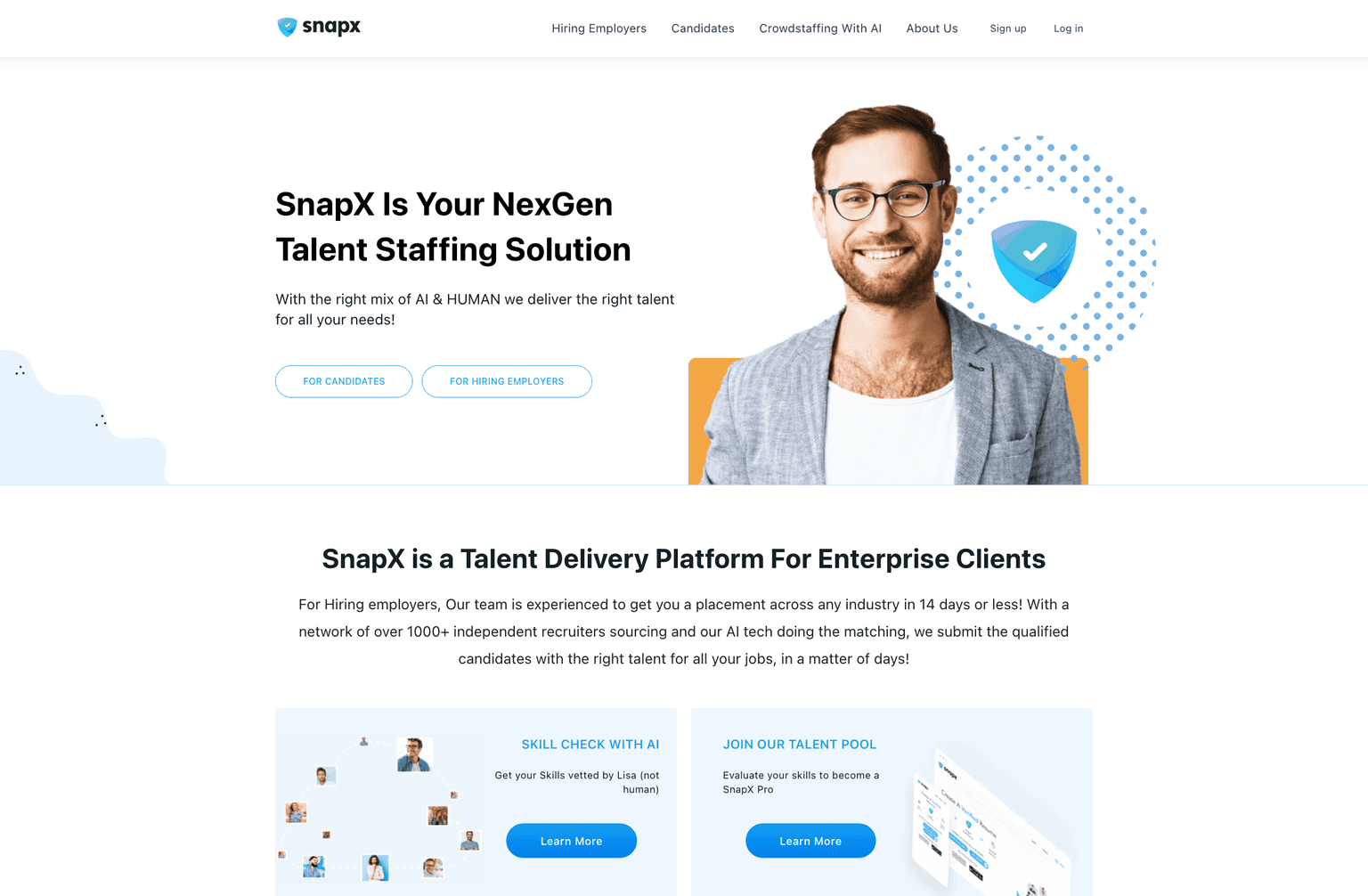
SnapX is the AI-driven talent staffing platform for staffing agencies and contract placement workflows. AI-driven candidate-job matching, automated outreach, and workflow features purpose-built for staffing operations rather than direct-hire recruiting.
Production credibility: privately held; deployed across staffing agencies; the staffing-specific positioning is the differentiator vs direct-hire-focused platforms.
What it wins at: staffing agencies, contract placement workflows, and the use case where AI matching across many candidates and many client jobs is the constraint.
Where it falls down: for direct-hire recruiting, the staffing-specific workflow is the wrong abstraction. Best for staffing operations specifically.
8. Jobscan — ATS-Aware Resume Optimization (Employer Side)
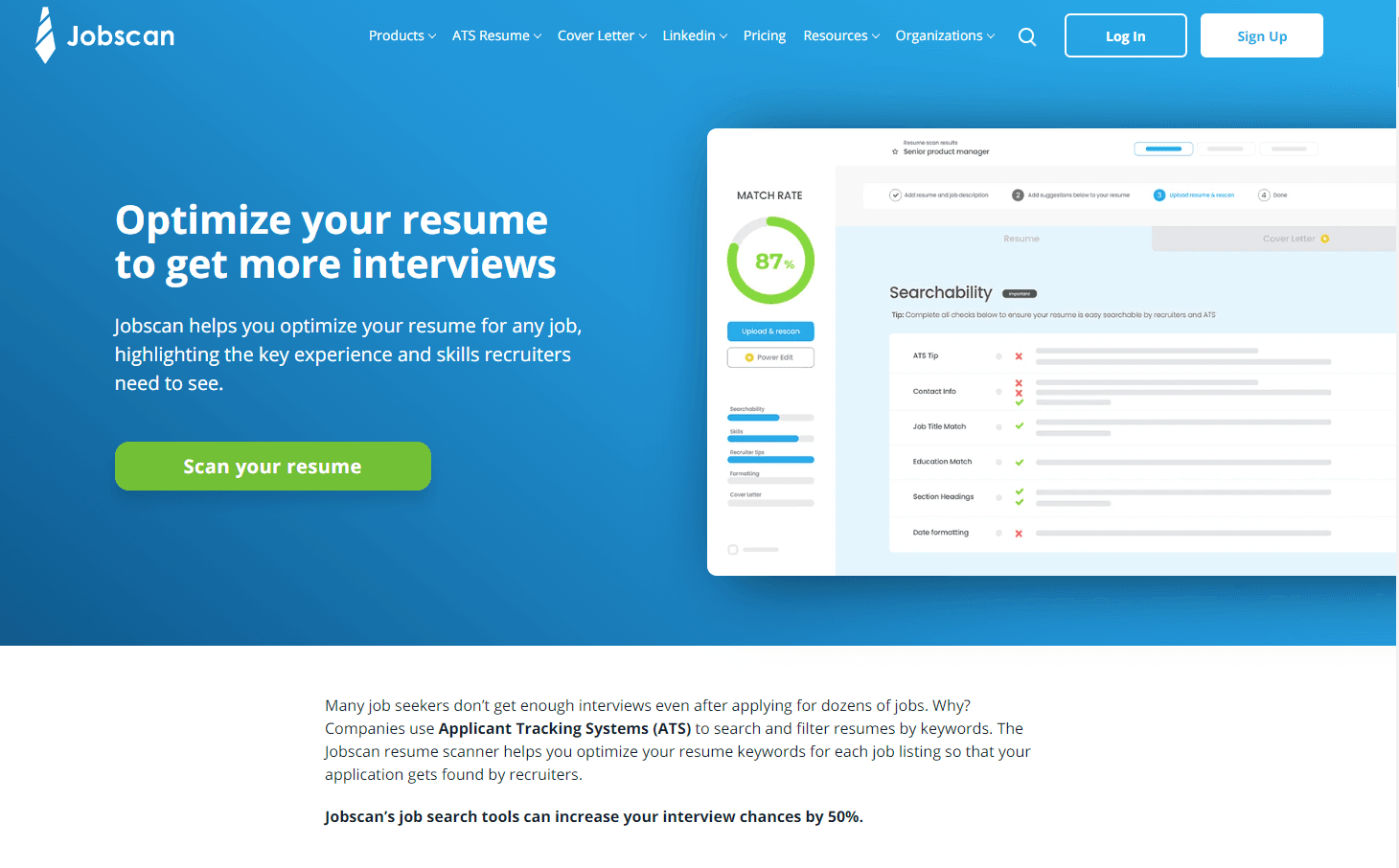
Jobscan is best known as a job-seeker tool, but recruiters and talent leaders use it on the employer side to understand how candidates' resumes parse against the company's ATS — diagnose why qualified candidates fail keyword screening, audit the ATS for inadvertent bias against non-standard resume formats, and validate job descriptions against the candidate market.
Production credibility: privately held, profitable; reported >1M users primarily on the job-seeker side, with significant employer-side adoption for the use cases above.
What it wins at: ATS audit and resume-parsing diagnostics from the employer side, validating job descriptions against the candidate market, and the use case where understanding ATS behavior matters more than running the ATS.
Where it falls down: Jobscan is a tool, not a workflow platform — it diagnoses, doesn't fix. Best paired with the platforms above for the underlying ATS and recruiting workflow.
How to Build the 2026 Recruiting AI Stack
Match tools to talent operation shape:
- SMB talent team or recruiting agency: Chatkick or SnapX as the all-in-one + Jobscan for ATS audit. ~$200–500/month total.
- Mid-market talent team (5–20 recruiters): Existing ATS + Findem for sourcing + Paradox for high-volume conversations + Jobscan. ~$2,000–8,000/month total.
- Enterprise talent acquisition (20+ recruiters): Phenom + Eightfold + Beamery + Findem + Paradox. Custom-priced enterprise contracts in the high-six-to-low-seven figures annually.
- High-volume frontline hiring (retail, hospitality, logistics): Paradox + Phenom for the candidate experience.
- Executive search and specialty recruiting: LinkedIn Recruiter + Findem + Beamery for the multi-year nurture.
Adjacent Reading
- Best AI Resume Builders & Job Search Tools (2026) — job-seeker side
- Top Conversational AI Platforms (2026) — conversational AI infrastructure that powers Paradox-style products
- AI Tools Every Business Should Utilize (2026) — broader business AI essentials
- Top 8 AI Tools for Small Businesses (2026) — SMB AI essentials
Frequently Asked Questions
What's the best AI recruiting tool for a new talent team in 2026? Depends on team size and operation. SMB or agency: Chatkick (all-in-one) + Jobscan. Mid-market: existing ATS + Findem for sourcing + Paradox for conversational. Enterprise: Phenom + Eightfold + Beamery as the canonical Fortune 500 stack.
Are AI hiring tools legal under bias laws (EEOC, AI Bill of Rights, NYC Local Law 144)? The enterprise tiers of all major AI recruiting tools have built-in bias auditing, NYC Local Law 144 compliance, and regular bias-impact assessments. For US compliance, verify the vendor's bias-audit publication during procurement. EU and UK have stricter requirements under the EU AI Act — verify regional compliance before deployment.
Will AI tools replace recruiters? No, but they meaningfully change what each recruiter can ship per week. AI tools handle the high-volume repetitive work (sourcing, scheduling, screening keyword filtering), and the recruiter focuses on candidate relationships, hiring-manager partnership, and offer negotiation. Top recruiters get more leveraged.
Are AI hiring tools safe with sensitive candidate data? The enterprise tiers of Phenom, Eightfold, Beamery, Findem, and Paradox all carry SOC 2 Type II compliance, GDPR, and signed DPAs. For GDPR-heavy markets, verify regional data-residency options during procurement. Candidate data is some of the most sensitive enterprise data; this matters more than in most software categories.
What's the typical cost for a 2026 recruiting AI stack? SMB: $200–500/month. Mid-market: $2,000–8,000/month. Enterprise: high-six to low-seven figures annually. The cost scales with hiring volume; for any organization hiring >100 people per year, the AI tooling spend is typically <5% of recruiter compensation costs.
Should I use one AI recruiting tool or multiple? Most mature 2026 talent acquisition teams use 3–5 specialty tools. The category is split into clearly differentiated lanes (experience, search, conversational, lifecycle, ATS), and no single tool wins all lanes. Most enterprise stacks combine specialist tools rather than rely on a single platform.
Final Thoughts
The AI recruiting and HR landscape in 2026 has consolidated around clearly differentiated tools by talent function. The category-defining products in each lane have built integration moats with the major ATS systems (Workday, Greenhouse, iCIMS) that newer entrants struggle to overtake.
For any talent acquisition team not yet using AI tools beyond their ATS, the highest-ROI 2026 move is: start with Findem for sourcing, layer in Paradox if you run high-volume conversations, add Phenom + Beamery as you scale to enterprise. The seat costs are typically <5% of recruiter compensation; the time saved on sourcing and scheduling alone justifies the spend at any meaningful hiring volume.
Categories these tools span
More collections you may also like


Sign up for our newsletter
Receive weekly updates so you can stay up-to-date with the world of AI
Sign up for our newsletter
Receive weekly updates so you can stay up-to-date with the world of AI
The AI tools directory for discovering, exploring, and comparing the most innovative AI tools in the industry