Top 8 AI Tools for Small Businesses (2026)







Top 8 AI Tools for Small Businesses in 2026
If you're researching the best AI tools for small businesses in 2026, the right answer is rarely the enterprise platforms that dominate Fortune 500 headlines. Small business owners need tools that ship value in a week (not a six-month rollout), price under $50/user/month, and don't require a dedicated RevOps or IT person to deploy. The category has matured into a specific roster of products built for that constraint.
This guide covers the eight AI tools that real small businesses actually use in 2026: Dante AI, SocialBee, SurferSEO, Durable, Dialpad, Zapier, Notion AI, and AdCreative.ai. Each pick is rated on what it ships at the SMB tier, the honest 2026 limitations, and which type of small business it fits.
How We Evaluated These Tools
The eight AI tools below were evaluated on five criteria, in priority order:
- SMB pricing accessibility — under $50/user/month at the entry tier, free tier or trial available, no "call sales" pricing
- Time-to-value under one week — the small business owner can deploy and see real value in days, not months — no implementation-team requirement
- Real production usage by SMBs — not enterprise case studies, but verified usage by small businesses (under 50 employees)
- Workflow fit — does the tool slot into existing tools (Google Workspace, QuickBooks, Shopify, Stripe) or require ripping and replacing
- 2026 currency — has the product shipped meaningful AI capability in the last 12 months at the SMB-accessible tier
We deliberately did not include enterprise-tier platforms (Salesforce Einstein, HubSpot Enterprise AI, Adobe Firefly Enterprise) — those are sized for organizations that don't fit the small-business profile this guide targets. For broader cross-category category-defining tools, see Top AI Tools (2026). For the broader business toolkit, see AI Tools Every Business Should Utilize.
Quick Comparison
| Tool | Best for |
|---|---|
| Dante AI | No-code AI chatbot for your website. Best for SMBs who want a knowledge-base chatbot without engineering. |
| SocialBee | AI-powered social media scheduling. Best for SMBs running their own social marketing. |
| SurferSEO | AI content + SEO optimization. Best for SMBs producing blog content for organic search. |
| Durable | AI website builder for solo founders and microbusinesses. |
| Dialpad | AI business phone system. Best for SMBs replacing legacy phone systems. |
| Zapier | AI automation across your tools. Best for connecting SaaS apps without code. |
| Notion AI | Productivity AI inside the workspace your team uses for docs and projects. |
| AdCreative.ai | AI ad creative generation. Best for SMBs running paid social and search ads at volume. |
1. Dante AI — No-Code AI Chatbot
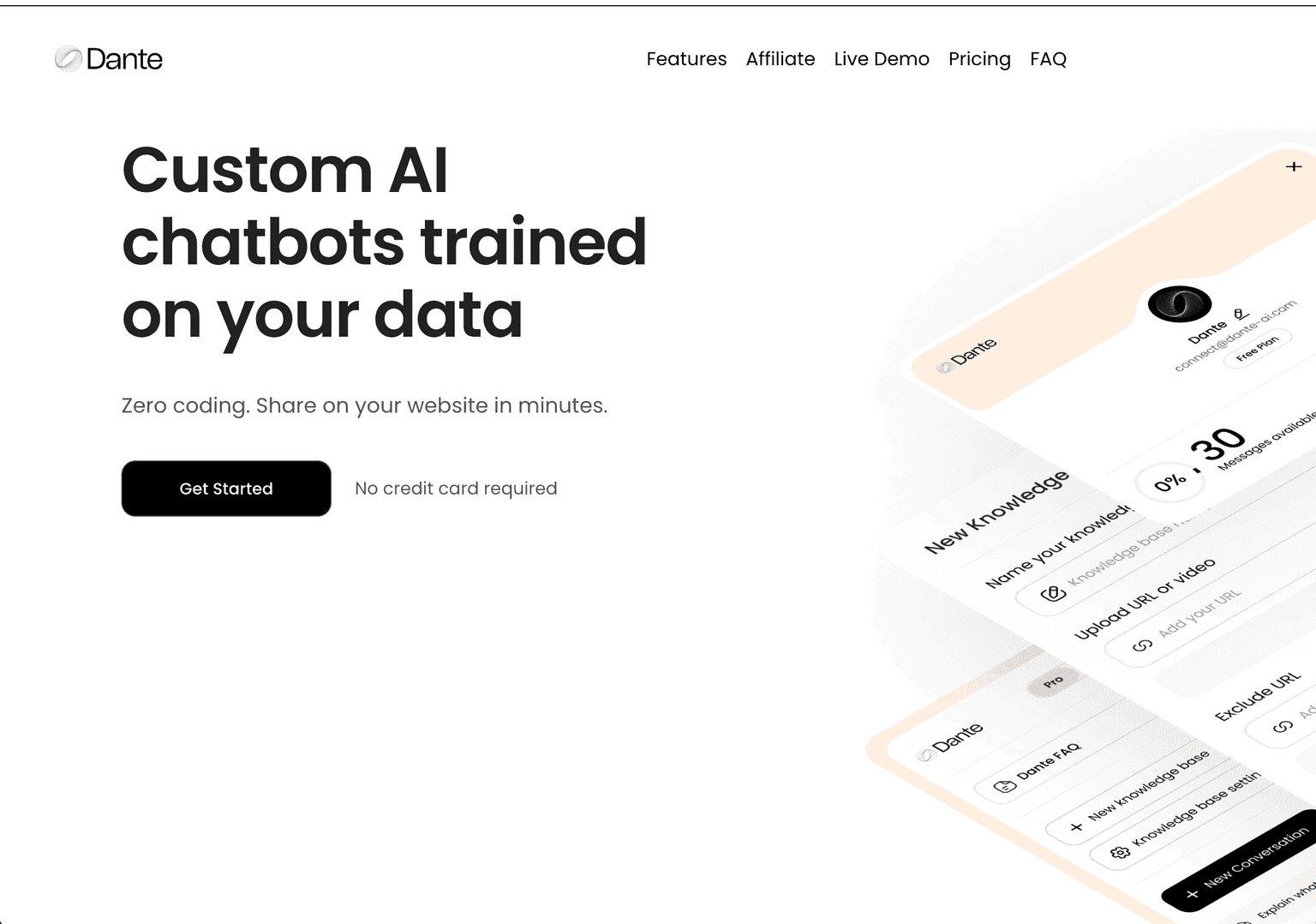
Dante AI is the no-code AI chatbot platform built for SMBs that want a knowledge-base assistant on their website without hiring engineers. Upload your website, support docs, or PDFs; Dante trains a custom chatbot that can answer customer questions on your site, in WhatsApp, or as an embedded widget.
Production credibility: privately held, bootstrapped to thousands of SMB customers; no-code training process tested for SMB usability; integrations into Slack, WhatsApp, Discord, Shopify, and embedded widgets cover the channels small businesses actually use; pricing starts at $10/month with no "call sales" tier.
What it wins at: SMBs who want a customer-facing AI assistant on their website without engineering capacity, knowledge-base chatbots fed by existing docs, and the under-$30/month price point that makes deployment a no-brainer.
Where it falls down: for enterprise customer-service deployments with complex routing, escalation, or CRM integration, the broader platforms (Sierra, Decagon, Ada — see our Best AI Customer Support Tools) fit better.
2. SocialBee — AI-Powered Social Media Scheduling
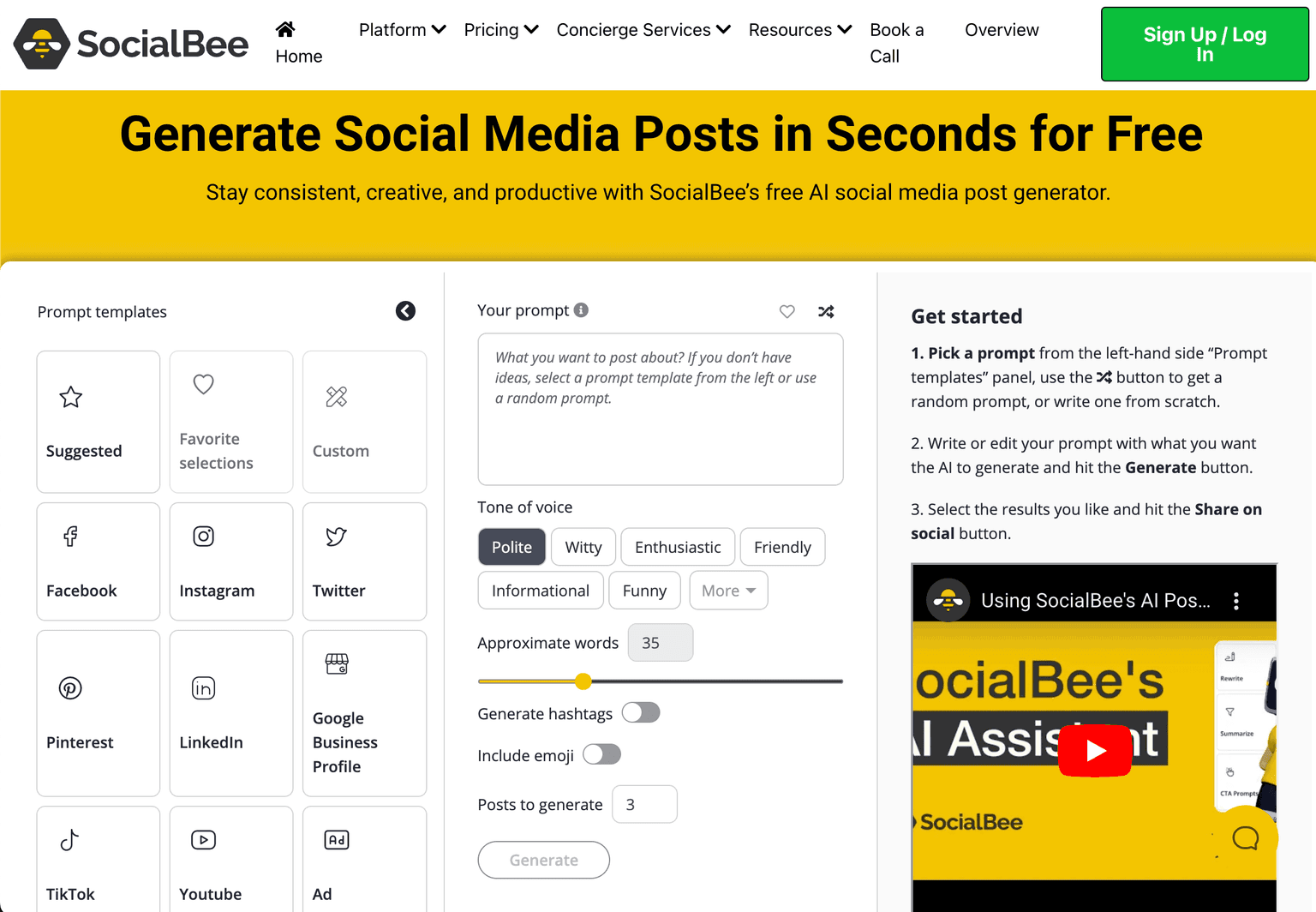
SocialBee is the social media management platform built around the SMB use case — schedule posts across Facebook, Instagram, LinkedIn, X, TikTok, Pinterest, Threads, and YouTube from one workspace, with AI that drafts post copy, repurposes evergreen content, and generates ideas for the editorial calendar.
Production credibility: privately held, profitable, bootstrapped; >55K customers per company disclosures; G2 rating consistently 4.7+/5 with thousands of reviews; pricing starts at $29/month for solo users.
What it wins at: solo founders, small marketing teams, and agencies running social for multiple SMB clients; the price-per-feature value prop is unmatched at the SMB tier.
Where it falls down: depth on any single network trails the network-specific specialty tools, and for enterprise multi-brand social, larger platforms (Sprout Social, Hootsuite Enterprise) fit better. For SMB scope, SocialBee is the right fit.
3. SurferSEO — AI Content + SEO Optimization
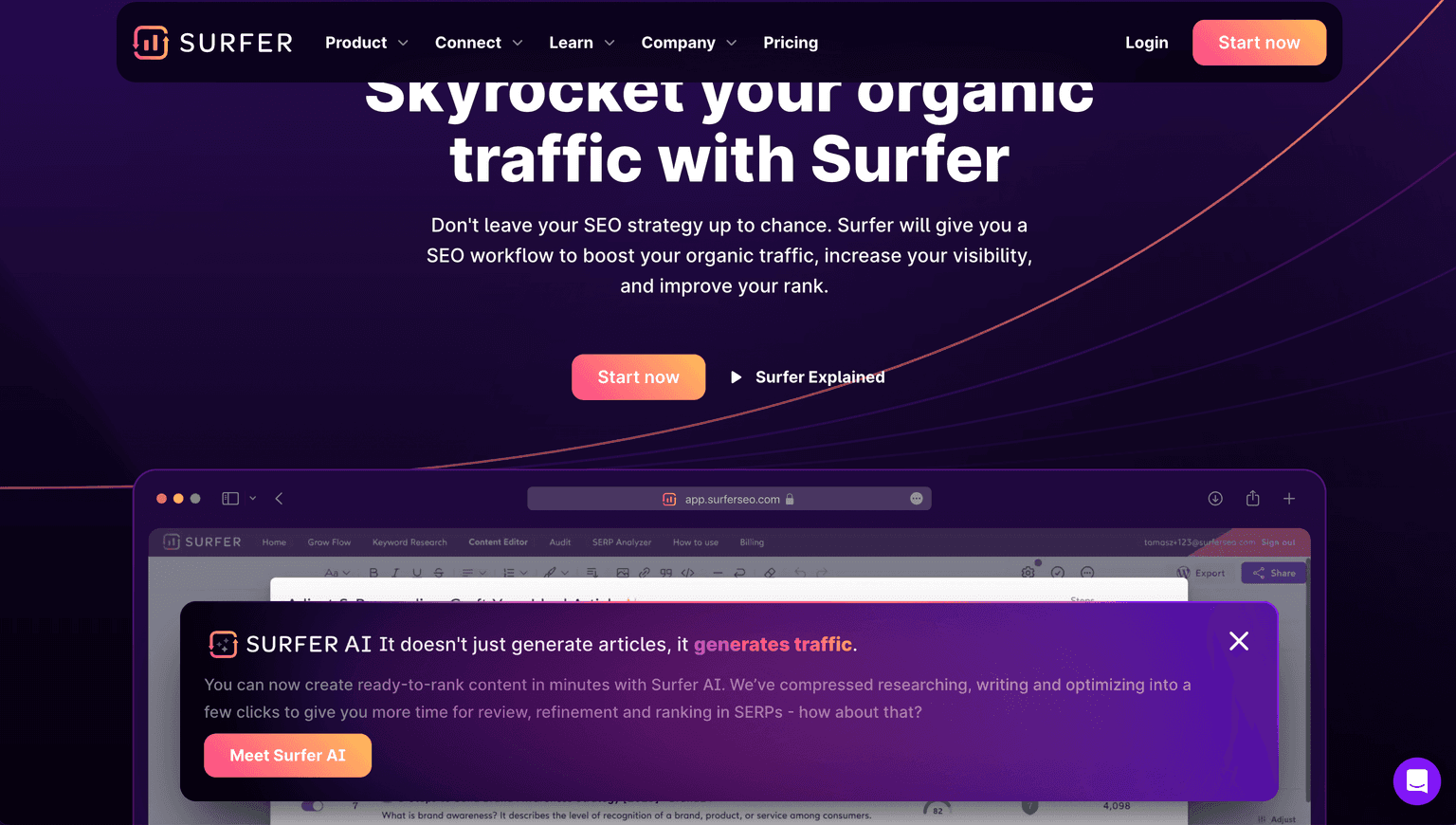
SurferSEO is the AI content optimization platform built for the SMB content-marketing use case: write a blog post, score it against the top-ranking results for your target keyword, get suggestions on what to add to compete. The 2024–2025 evolution toward AI-driven article generation extends this from "score what you wrote" to "draft + optimize in one workflow."
Production credibility: raised undisclosed funding, profitable; reported >150K users by 2025; G2 rating 4.8/5 with thousands of reviews; deployed across SMB content marketers and SEO agencies producing blog content for client SMBs at scale.
What it wins at: SMBs producing blog content for organic search at any meaningful volume, the optimize-existing-content use case, and the price tier ($99/month entry) that fits SMB content budgets.
Where it falls down: for enterprise-scale content production, the broader platforms (Clearscope + Frase + Writesonic combined) ship more sophisticated workflow features. For SMB scope, SurferSEO is the cleanest single-tool answer.
4. Durable — AI Website Builder for Solos
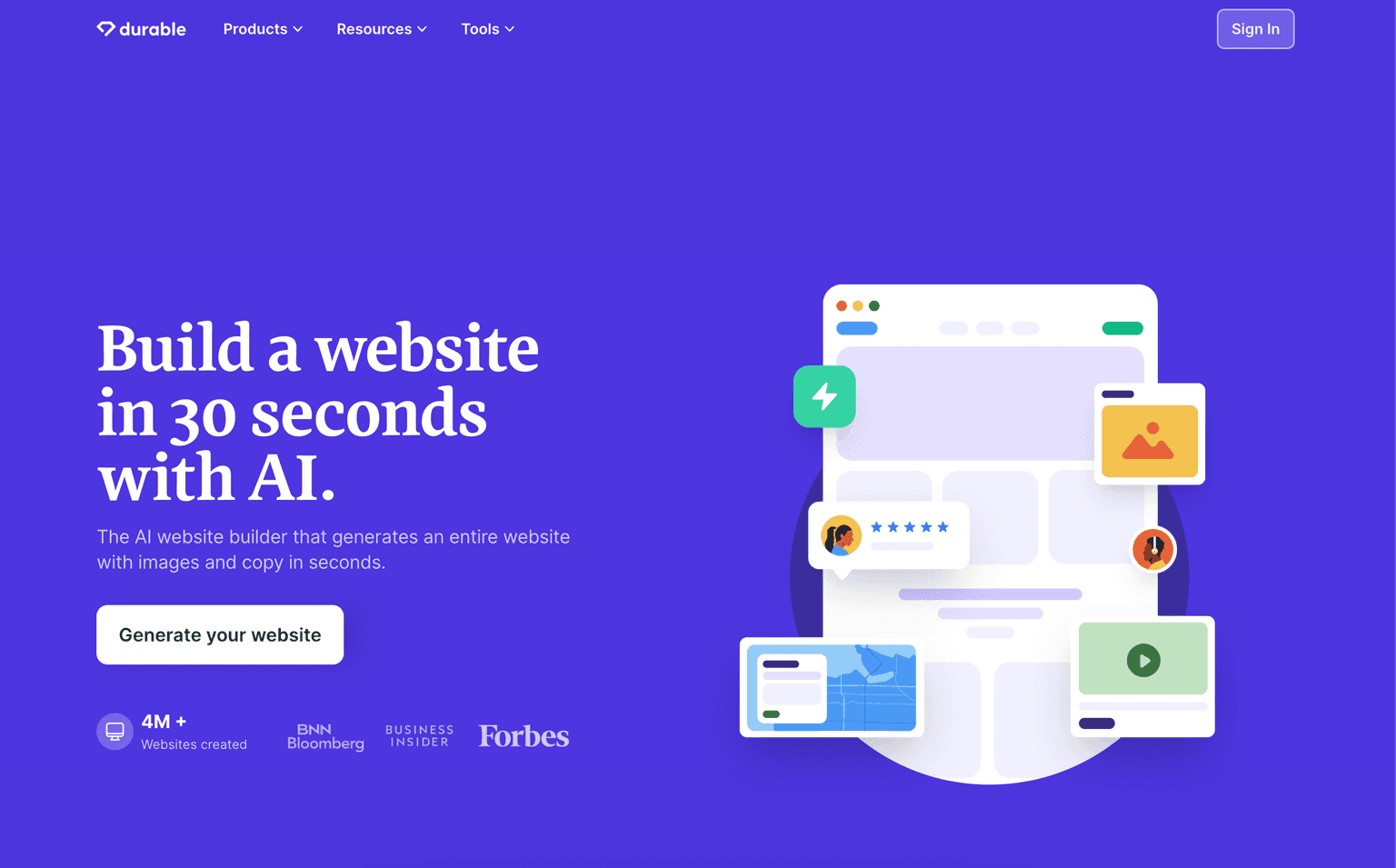
Durable is the AI website builder positioned squarely at the solo founder and microbusiness segment — generate a complete business website (including copy, design, and structure) from a 30-second prompt. The product also bundles invoicing, CRM, and basic business operations in the same workspace, targeting the segment that doesn't have a separate accountant, marketer, or web developer.
Production credibility: raised $9.4M Seed in 2022 led by Torch Capital and Acadian Ventures; reported >250K businesses created on the platform; pricing $12–25/month covers the website + business management bundle.
What it wins at: solo founders launching a service business (consultants, contractors, freelancers, microbusinesses) who need a website + operations stack in one place without piecing together five tools.
Where it falls down: for businesses that need real e-commerce, multi-page custom design, or the deeper integrations small-but-growing businesses develop (Stripe Connect, complex inventory), Shopify or Webflow fit better. Durable is the launch tool, not the long-term scaling tool.
5. Dialpad — AI Business Phone System
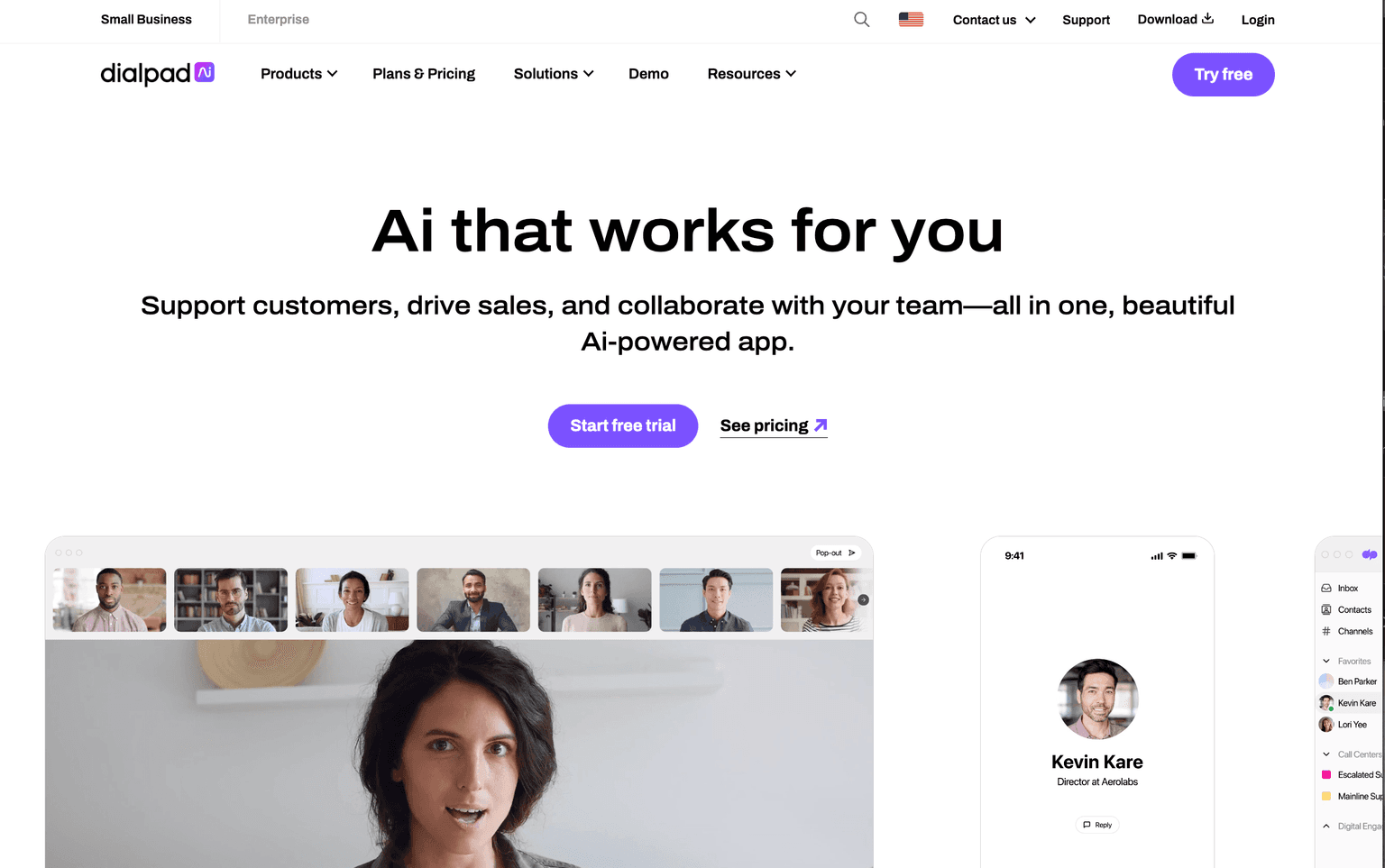
Dialpad is the AI-powered business phone system that replaced legacy PBX (RingCentral, Vonage) for the SMB segment in 2024–2026. AI features include real-time call transcription, sentiment analysis, post-call summaries with action items, and AI-powered call coaching for sales-led SMBs.
Production credibility: raised $570M+ across rounds at a $2.2B valuation (2021); reported >70K customers including TED, Twitter (now X), Uber, and many SMBs; pricing $15–35/user/month covers the AI features SMBs actually use.
What it wins at: SMBs replacing legacy phone systems, sales-led SMBs needing call coaching at small-team scale, and the single-vendor business-phone + AI-features bundle.
Where it falls down: for SMBs without a phone-based customer touchpoint, the AI features don't justify the seat cost. Best for sales-led, customer-call-heavy SMBs specifically.
6. Zapier — AI Automation Across Tools
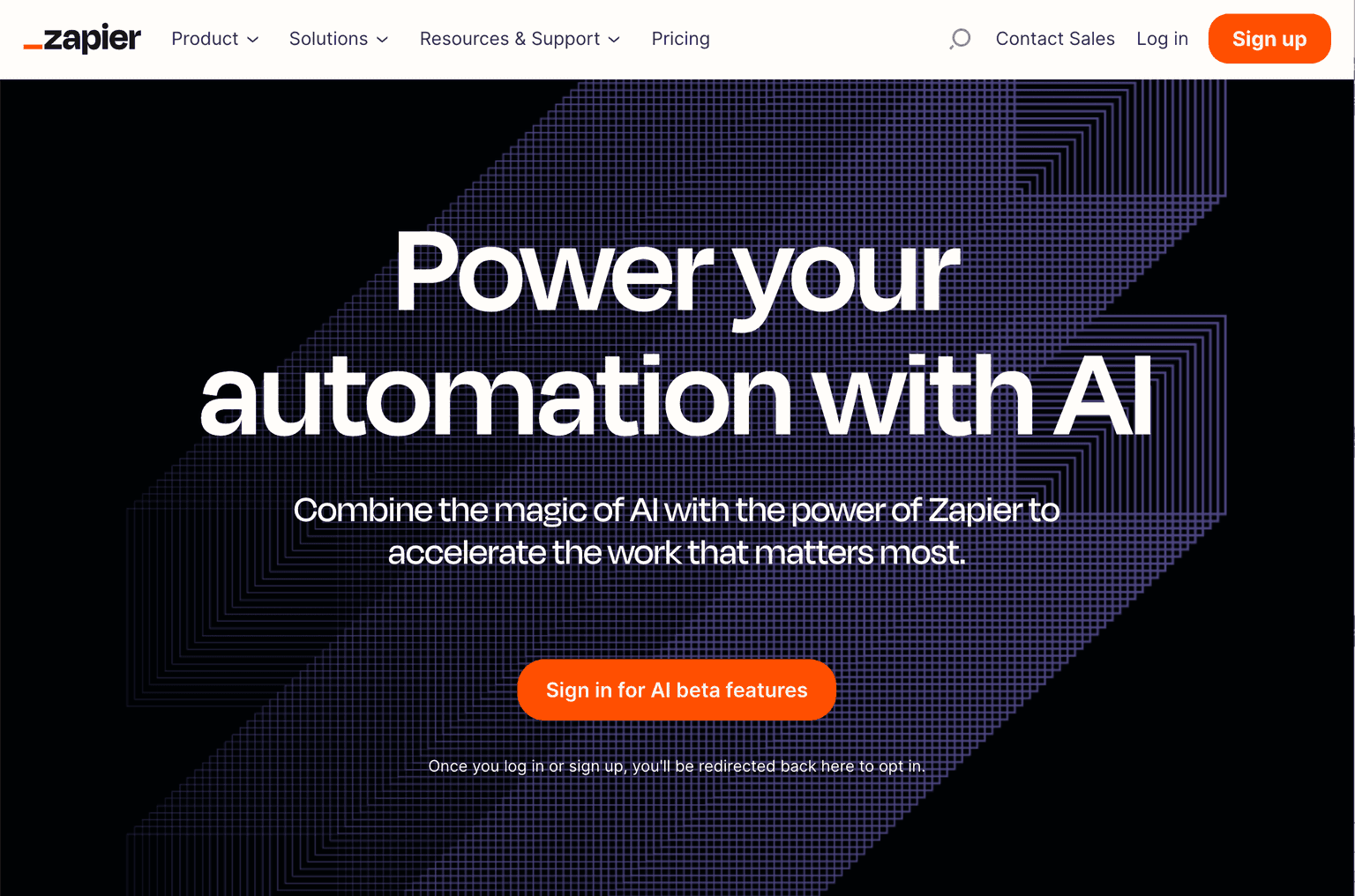
Zapier is the SMB-accessible automation layer that connects 7,000+ SaaS tools without code. The 2024–2025 AI features (Zapier AI Actions, Zapier Copilot for workflow building, AI-driven Zap recommendations) made the platform substantially more accessible for SMB owners who don't think in if-this-then-that diagrams.
Production credibility: raised $140M+ at a $5B valuation (2021); reported >2.2M users across SMB and mid-market; G2 4.5+/5 with tens of thousands of reviews; pricing $19.99–69/month covers most SMB automation needs.
What it wins at: connecting SaaS tools that don't have native integrations, automating cross-app workflows (lead → CRM → Slack alert → email follow-up), and the no-code automation use case for non-technical SMB owners.
Where it falls down: for high-volume automation (>10K runs/month) or complex enterprise workflows, lower-cost / more-flexible alternatives (Make.com, n8n self-hosted) fit better. For SMB scope and simplicity, Zapier remains the leader.
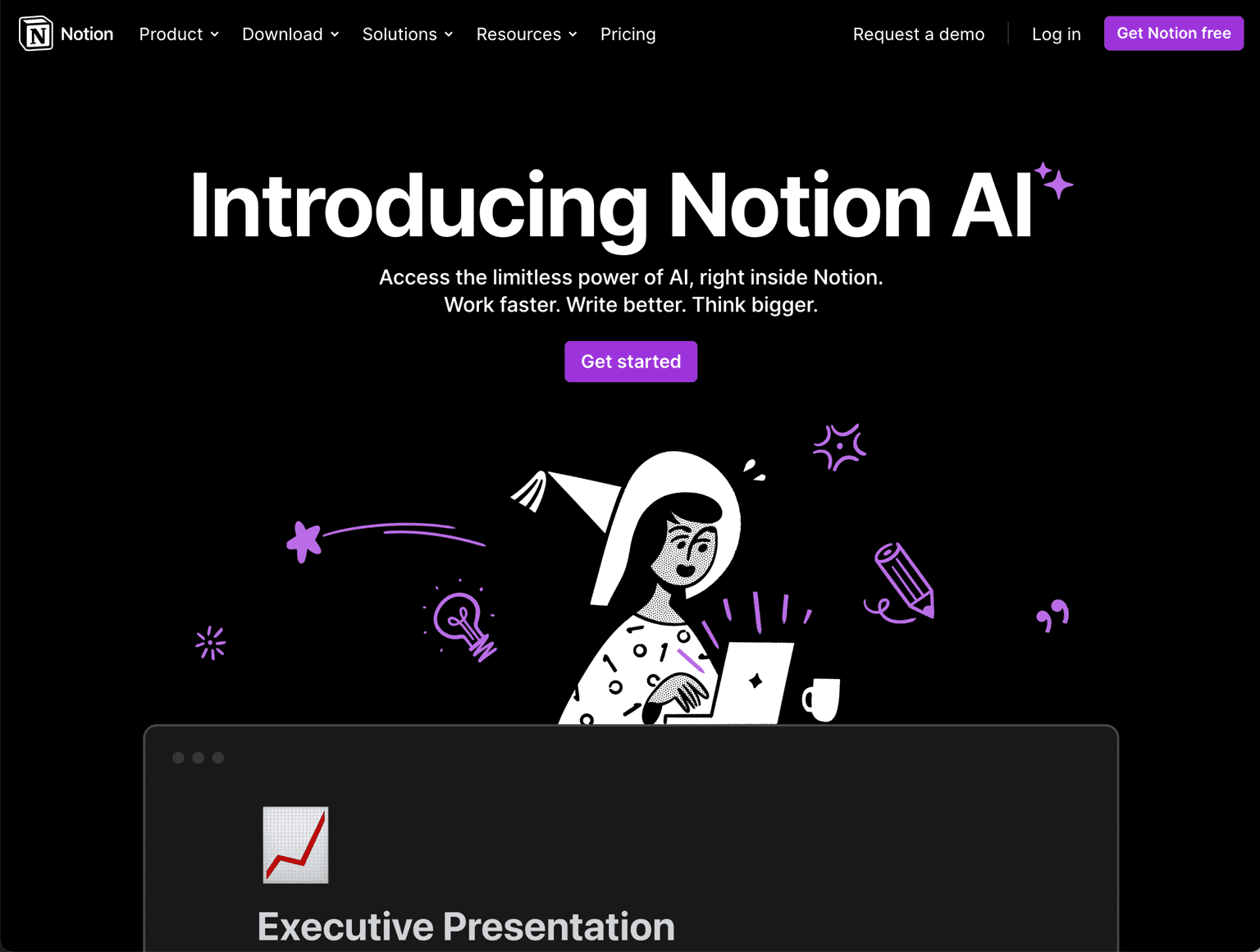
7. Notion AI — Productivity AI Inside Your Workspace
Notion AI is the productivity AI most SMB knowledge-work teams already touch — Notion is the canonical SMB workspace for docs, wikis, and project tracking, and the AI lives inside the workspace they already use rather than as a separate tool. Summarize meetings, draft documents, query the team wiki, generate task lists from project notes.
Production credibility: Notion crossed 100M+ users by late 2024; the company is valued at $10B+; Notion AI ships across all paid tiers; Anthropic Claude underneath powers most of the AI features. The 2025 push into Notion Calendar and database AI further widened the SMB-relevant productivity surface.
What it wins at: SMBs already using Notion for docs and project management, the productivity-AI-where-the-work-already-happens use case, and the no-net-new-tool path to AI-augmented knowledge work.
Where it falls down: for SMBs not on Notion, the answer is to use the AI inside whatever workspace you do use (Microsoft 365 Copilot for Microsoft shops, Google Workspace AI for Google shops). Notion AI specifically is the right pick if you're already on Notion.
8. AdCreative.ai — AI Ad Creative Generation
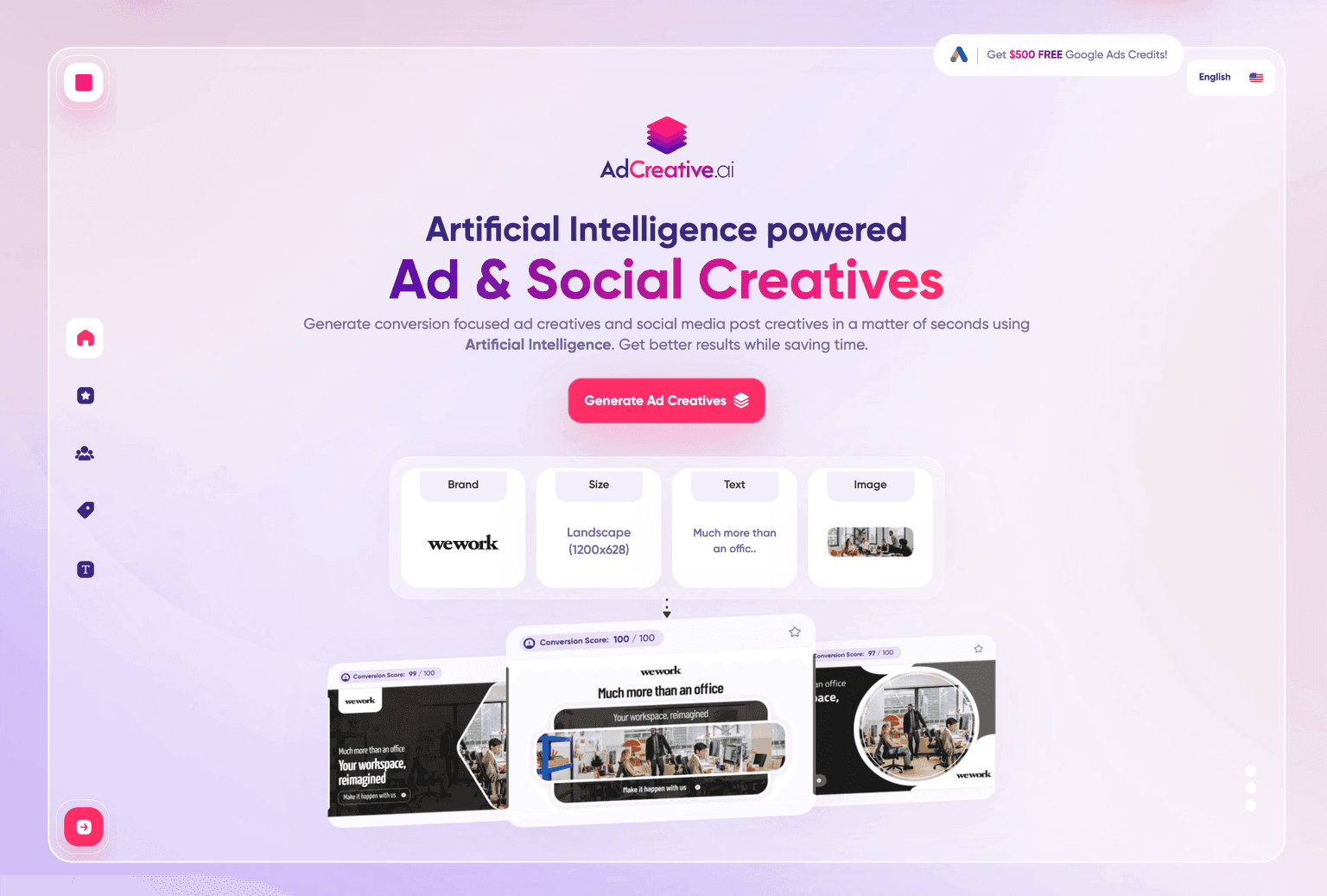
AdCreative.ai is the AI-driven ad-creative platform built for SMBs running paid social and search ads at volume. Generates ad creative variants (Facebook, Instagram, LinkedIn, Google) optimized against predicted performance scores, plus the underlying images and copy from product feeds or descriptions.
Production credibility: raised $20M+ across rounds; reported >2,000 customers including SMB direct-to-consumer brands and performance-marketing agencies; pricing $109–249/month covers the SMB performance-marketing tier.
What it wins at: SMB direct-to-consumer brands running paid social at volume, performance-marketing agencies serving multiple SMB clients, and the use case where ad-creative generation needs to keep pace with frequent campaign refreshes.
Where it falls down: for enterprise creative production with brand-voice depth and campaign-orchestration features, larger platforms (Adobe Firefly Enterprise, the broader marketing-AI suite) fit better. For SMB performance-marketing scope, AdCreative.ai is the right pick.
How to Build the 2026 Small Business AI Stack
Most SMBs don't need all eight. Match the tools to the actual operational shape:
- Solo founder / microbusiness: Durable + ChatGPT or Claude ($20/month). Covers website + general AI assistance.
- SMB with marketing focus: SocialBee + SurferSEO + AdCreative.ai. Covers social + content + ads.
- SMB with sales focus: Dialpad + Zapier + ChatGPT. Covers phone system + automation + general AI assistance.
- SMB on Notion for ops: Notion AI + Zapier + ChatGPT. Covers docs/projects + automation + general AI.
- SMB with website + customer service: Durable + Dante AI. Covers site + customer chat from one stack.
The most-recommended 2026 starting investment for an SMB without AI tools: ChatGPT or Claude ($20/month) + Zapier ($20–30/month) + one specialty tool matched to your business shape. Total: $50–80/month, covers ~80% of where AI productivity gains show up for small businesses.
Adjacent Reading
- Top AI Tools (2026): The 8 Picks That Define the Year — broader category-defining roster
- AI Tools Every Business Should Utilize — the cross-business essentials list
- Best AI Tools for Marketing & SEO (2026) — marketing-specific deep dive
- Top 7 AI Tools for Social Media Management (2026) — social-specific deep dive
- Best AI Tools for Copywriters (2026) — content / copy specifics
- Best AI Tools for E-commerce — e-commerce SMB depth
Frequently Asked Questions
What's the best AI tool for a small business to start with in 2026? For most SMBs: ChatGPT or Claude ($20/month) as a general-purpose AI assistant, plus one specialty tool matched to your business shape. Marketing-led SMB: add SocialBee or SurferSEO. Sales-led SMB: add Dialpad. Operations-led SMB: add Zapier. The total starting spend is under $80/month and the productivity lift shows up in week two.
Are these AI tools affordable for small businesses? Yes — all eight tools above ship SMB-tier pricing under $50/user/month at the entry tier. For comparison, the enterprise alternatives (Salesforce, HubSpot Enterprise, Adobe Creative Cloud Enterprise) typically run $100–500/user/month. SMB AI tooling is one of the highest-ROI software categories available in 2026.
Will AI tools replace small-business employees? No, but they meaningfully change what one employee can ship in a week. SMBs typically don't have the headcount to replace; they have the workload to redistribute. AI tools handle the high-volume repetitive work (drafting copy, scheduling posts, transcribing calls, automating data entry), and the SMB owner or employee gets that time back for higher-value work.
Are these AI tools safe for sensitive small-business data? The paid tiers of all eight tools above carry SOC 2 Type II compliance or equivalent. Free tiers usually don't. For SMBs in regulated industries (healthcare, financial services, legal), use the paid tier with the appropriate data-handling settings, and verify the vendor's DPA (data processing agreement) before connecting customer data.
How do I know which AI tool to start with first? Start with the one that addresses the most painful workflow problem in your business right now. If you spend hours every week drafting emails or copy, start with ChatGPT/Claude. If you spend hours scheduling social posts, start with SocialBee. If you spend hours on the phone with customers, start with Dialpad. The compounding value comes from solving real pain, not from owning the most tools.
Can I replace my full software stack with AI tools? No, AI tools layer on top of your existing software stack rather than replacing it. You still need a CRM, accounting software, email, and the operational tools your business runs on. AI tools augment those tools (or sit in the connections between them via Zapier) rather than replacing them wholesale.
What's the typical timeline for SMB AI adoption? Week 1: pick one tool, sign up, deploy on one workflow. Week 2–4: see the productivity lift, expand to a second use case. Month 2–3: add a second tool that addresses a different workflow. Month 4–6: build the muscle of evaluating new AI tools as they ship. Most SMBs that approach AI adoption this way report meaningful operational improvements within 90 days.
Final Thoughts
The AI tooling landscape for small businesses in 2026 is finally past the cycle of enterprise-only pricing and enterprise-only features. The leaders in each category have built SMB-accessible products with SMB-accessible pricing, and the productivity lift from picking one or two well-matched tools is real and measurable.
For any small business not yet using AI tools, the highest-ROI 2026 move is: pick the one workflow that consumes the most hours in your week, find the AI tool above that addresses it, and deploy it this month. The seat cost is rounded down to zero against the time recovered; the time spent picking the "right" tool out of fifty competitors is the real cost most SMB owners don't account for.
Categories these tools span
More collections you may also like


Sign up for our newsletter
Receive weekly updates so you can stay up-to-date with the world of AI
Sign up for our newsletter
Receive weekly updates so you can stay up-to-date with the world of AI
The AI tools directory for discovering, exploring, and comparing the most innovative AI tools in the industry