Best AI Tools for E-commerce (2026)










Best AI Tools for E-commerce in 2026
If you're researching the best AI tools for e-commerce in 2026, the category has matured into a clear set of category leaders across email/SMS automation, retail media, ad creative, on-site personalization, product photography, and AI marketing management. The hype-cycle losers are gone; what's left is a tighter set of products that ship in production at real DTC and e-commerce volume.
This guide covers the eight AI tools real e-commerce operators use in 2026: Klaviyo, CommerceIQ, AdCreative.ai, Aidaptive, HeyGen, PhotoRoom, tinyEinstein, and Quartile. Each is rated on which lane it owns, the production credibility behind the pitch, and which type of e-commerce business it fits. For Amazon-specific tools, see Best AI Tools for Amazon Sellers (2026).
How We Evaluated These Tools
The eight e-commerce AI tools below were evaluated on five criteria, in priority order:
- Real production deployments at DTC and e-commerce brands — verified usage at Shopify, BigCommerce, WooCommerce, and direct-to-consumer brands
- Lane fit — does the tool own a clear lane (email, retail media, ads, personalization, photos, marketing) rather than being a generalist
- Workflow integration — connects to Shopify, BigCommerce, Klaviyo, Meta Ads, Google Ads, and the major e-commerce stack components
- Pricing accessibility — entry tier accessible to SMB e-commerce ($50–500/month) plus enterprise tiers for at-scale brands
- 2026 currency — has the product shipped meaningful AI capability in the last 12 months that justifies the spend
We deliberately did not include Amazon-specific tools (Helium 10, Jungle Scout, etc.) — those are covered in our dedicated Amazon Sellers guide. The tools below are for the broader Shopify-DTC-multi-channel e-commerce world.
The Six Lanes of E-commerce AI in 2026
- Email and SMS automation: customer-data-driven email campaigns. Leader: Klaviyo.
- Retail media management: orchestrating ads across Amazon + retail-media networks. Leaders: CommerceIQ, Quartile.
- Ad creative generation: AI-driven ad design at volume for paid social. Leader: AdCreative.ai.
- On-site personalization: AI-driven product recommendations and shopper experience. Leader: Aidaptive.
- Product photography and content: AI-generated product images and videos. Leaders: PhotoRoom, HeyGen.
- AI marketing management: autonomous marketing operations for SMB e-commerce. Leader: tinyEinstein.
Updated August 2, 2026. Windsor.io was acquired by Front and the standalone product discontinued; the personalized-video slot is now HeyGen.
Quick Comparison
| Tool | Best for |
|---|---|
| Klaviyo | Email + SMS automation. Best for DTC brands on Shopify. |
| CommerceIQ | Retail media management. Best for brands selling across Amazon + Walmart + retailers. |
| AdCreative.ai | AI ad creative generation. Best for performance marketers. |
| Aidaptive | On-site personalization. Best for Shopify Plus brands optimizing on-site conversion. |
| HeyGen | Personalized and localized video at scale. Best for brands sending video customer outreach. |
| PhotoRoom | AI product photography. Best for product image editing at volume. |
| tinyEinstein | AI marketing manager for Shopify SMBs. Best for solo and SMB Shopify owners. |
| Quartile | Programmatic retail advertising. Best for brands with mature retail-media budgets. |
1. Klaviyo — E-commerce Email and SMS Automation
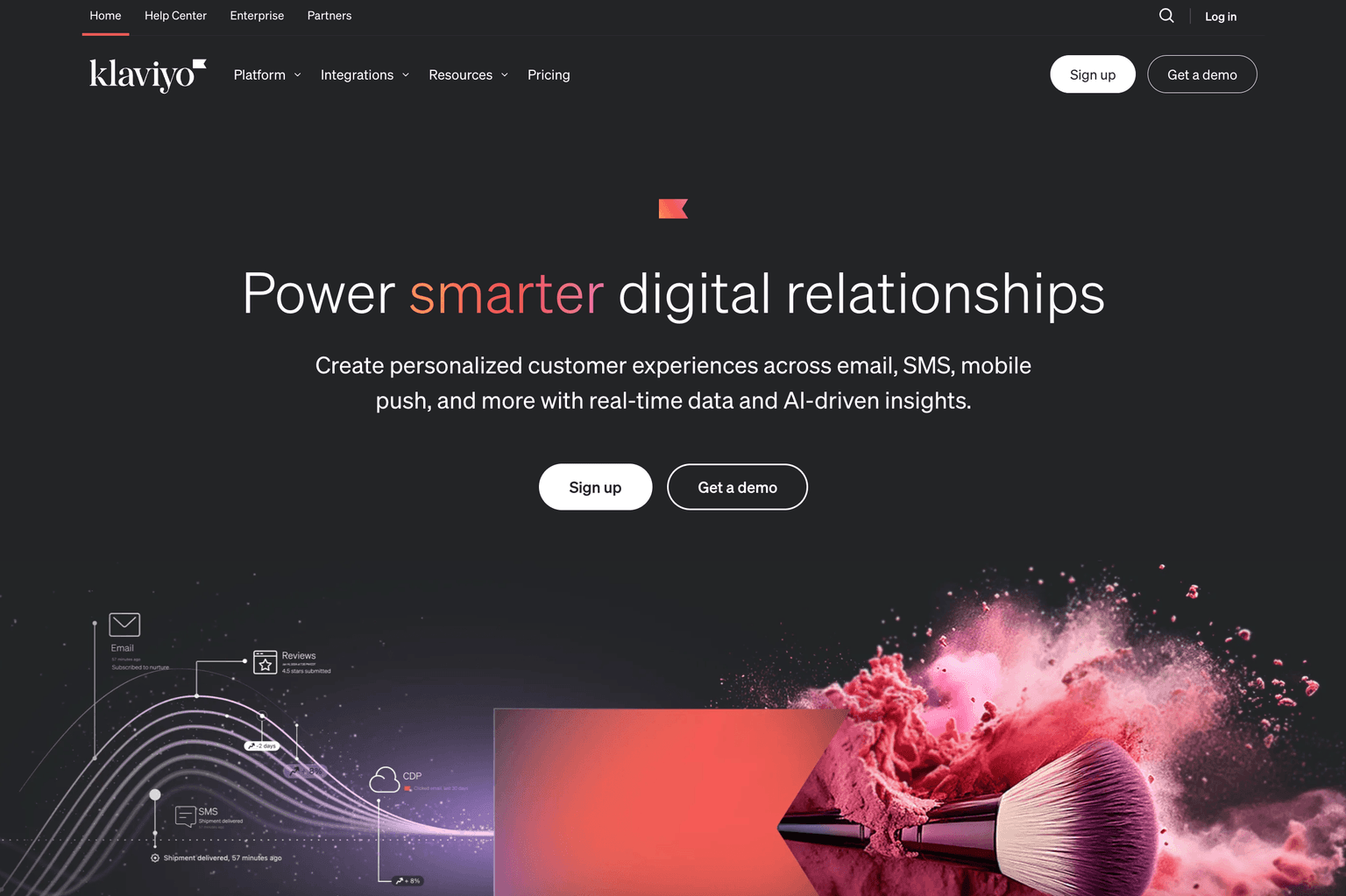
Klaviyo is the canonical email and SMS automation platform for DTC e-commerce. Deep Shopify, BigCommerce, and Magento integrations; customer-data-platform features; the 2024 launch of Klaviyo AI for predictive analytics, audience segmentation, and AI-driven email content generation made it the most AI-native email platform in the e-commerce space.
Production credibility: publicly traded ($KVYO) on NYSE since 2023 at ~$9B+ market cap entering 2026; reported >150K customers ranging from solo Shopify sellers to enterprise brands; deeply integrated across the e-commerce platform ecosystem.
What it wins at: DTC brands on Shopify or BigCommerce, customer-data-driven email and SMS automation, and the use case where the product catalog + customer behavior data drives the email content.
Where it falls down: for non-e-commerce email marketing, broader marketing automation (HubSpot Marketing, Marketo) fits better. Klaviyo is the e-commerce specialist.
2. CommerceIQ — Retail Media Management
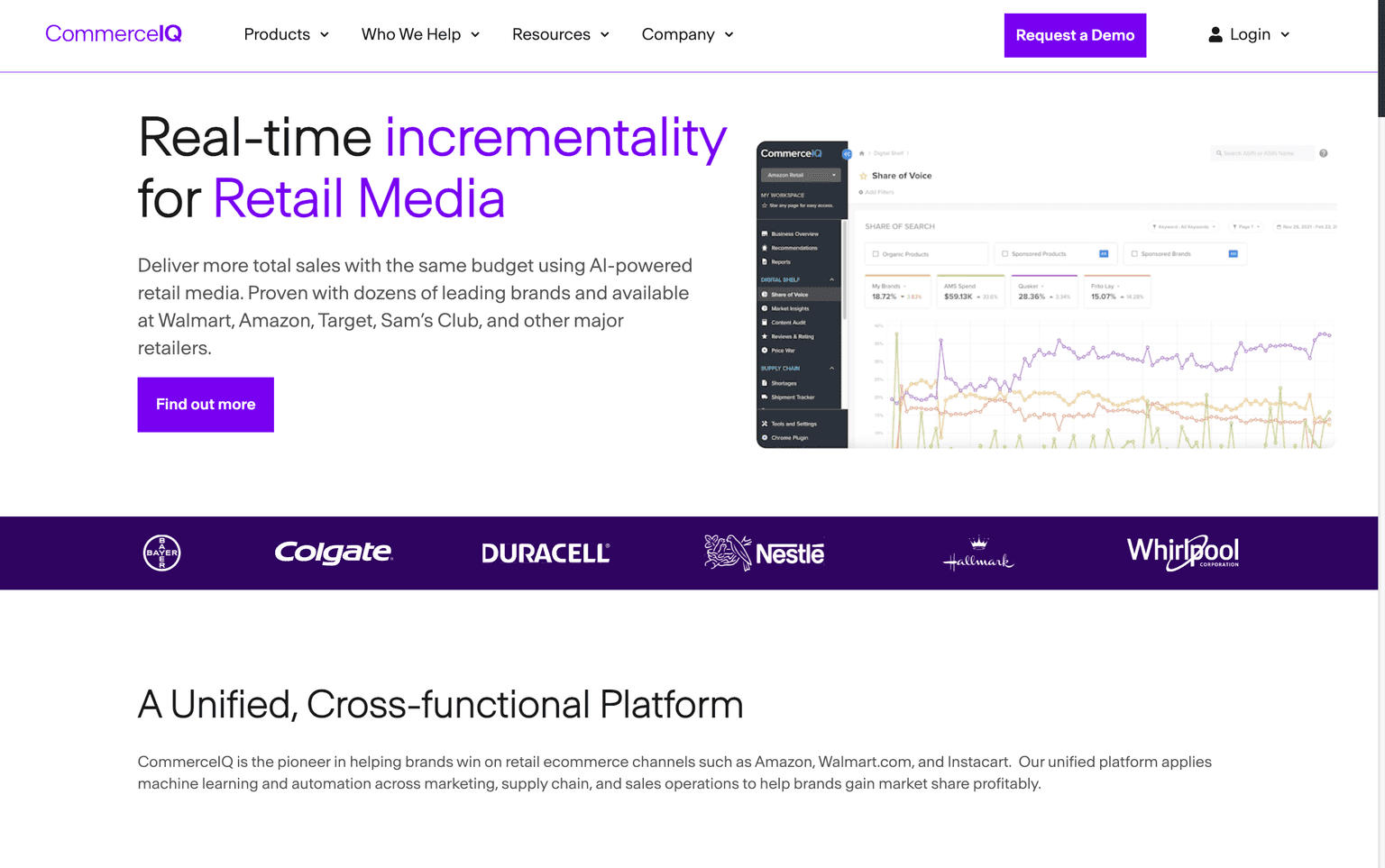
CommerceIQ is the retail-media management platform for brands selling across Amazon + Walmart + Target + Instacart + the broader retail-media network ecosystem. AI-driven bid management, content optimization, supply-chain intelligence, and the multi-channel orchestration most brands need above ~$10M retail-media spend.
Production credibility: raised $115M+ at a $1.5B valuation (2022); deployed at major CPG brands including Procter & Gamble, Mondelez, Nestlé, Hain Celestial, and many DTC brands at scale; the retail-media-specialist positioning is the differentiator vs general-purpose ad platforms.
What it wins at: brands selling across multiple retailer marketplaces, retail-media spend at scale, and the use case where Amazon + Walmart + Target need orchestrated optimization.
Where it falls down: for SMB brands selling on a single channel, the platform sophistication is overkill. Best for multi-channel brands at scale specifically.
3. AdCreative.ai — AI Ad Creative Generation
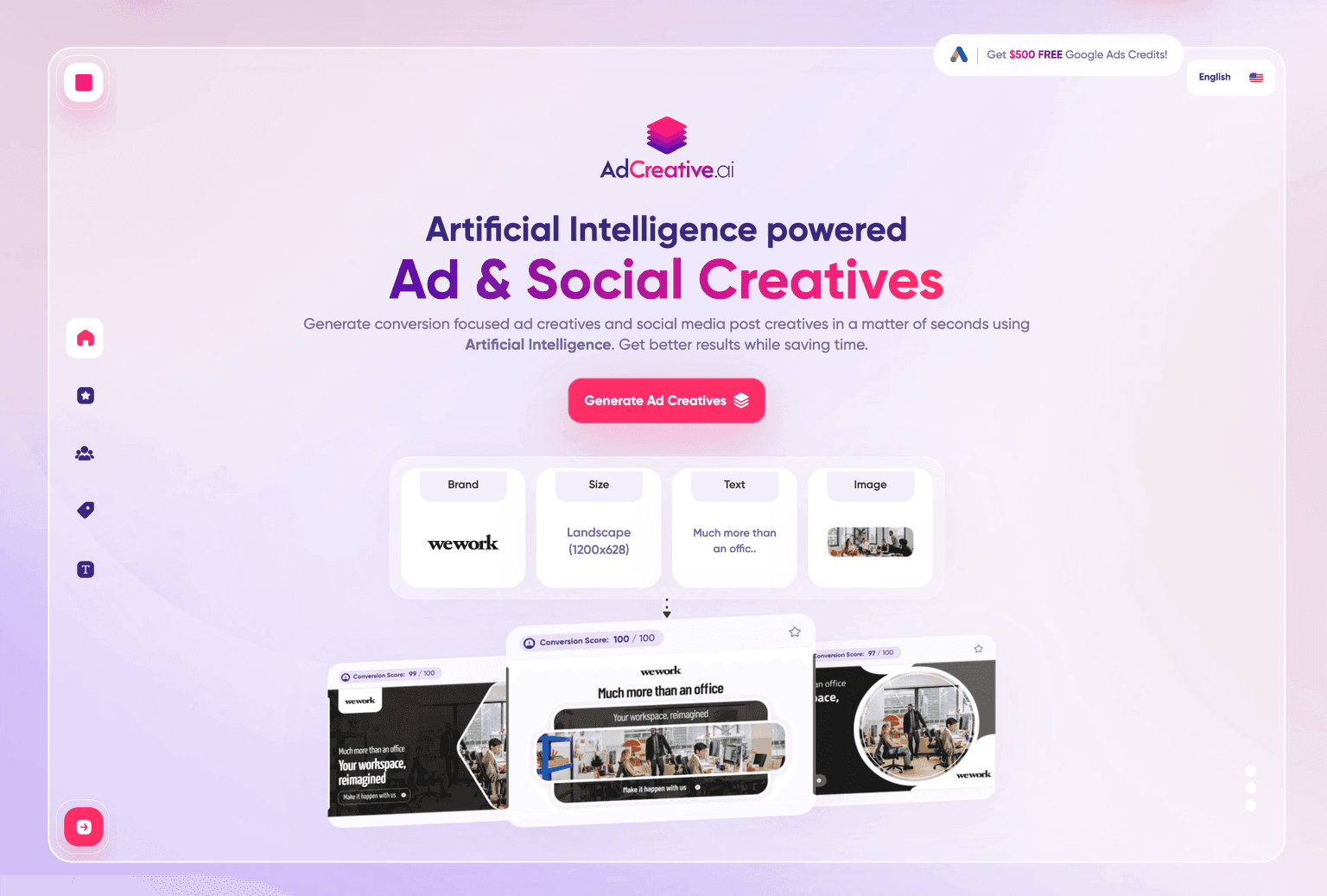
AdCreative.ai generates AI-driven ad creative variants (Meta, Instagram, LinkedIn, TikTok, Google) optimized against predicted performance scores, plus the underlying images and copy from product feeds or descriptions. For DTC brands running paid social at volume, AdCreative.ai is the canonical ad-creative AI tool.
Production credibility: raised $20M+ across rounds; reported >2,000 customers including SMB DTC brands and performance-marketing agencies; the predictive-performance scoring is the differentiator vs template-based ad creative tools; pricing $109–249/month covers the SMB performance-marketing tier.
What it wins at: DTC brands running paid social at volume, performance-marketing agencies serving multiple brands, and the use case where ad-creative generation needs to keep pace with frequent campaign refreshes.
Where it falls down: for enterprise creative production with brand-voice depth and campaign-orchestration features, larger platforms fit better. AdCreative.ai is the SMB and mid-market specialist.
4. Aidaptive — On-Site Personalization
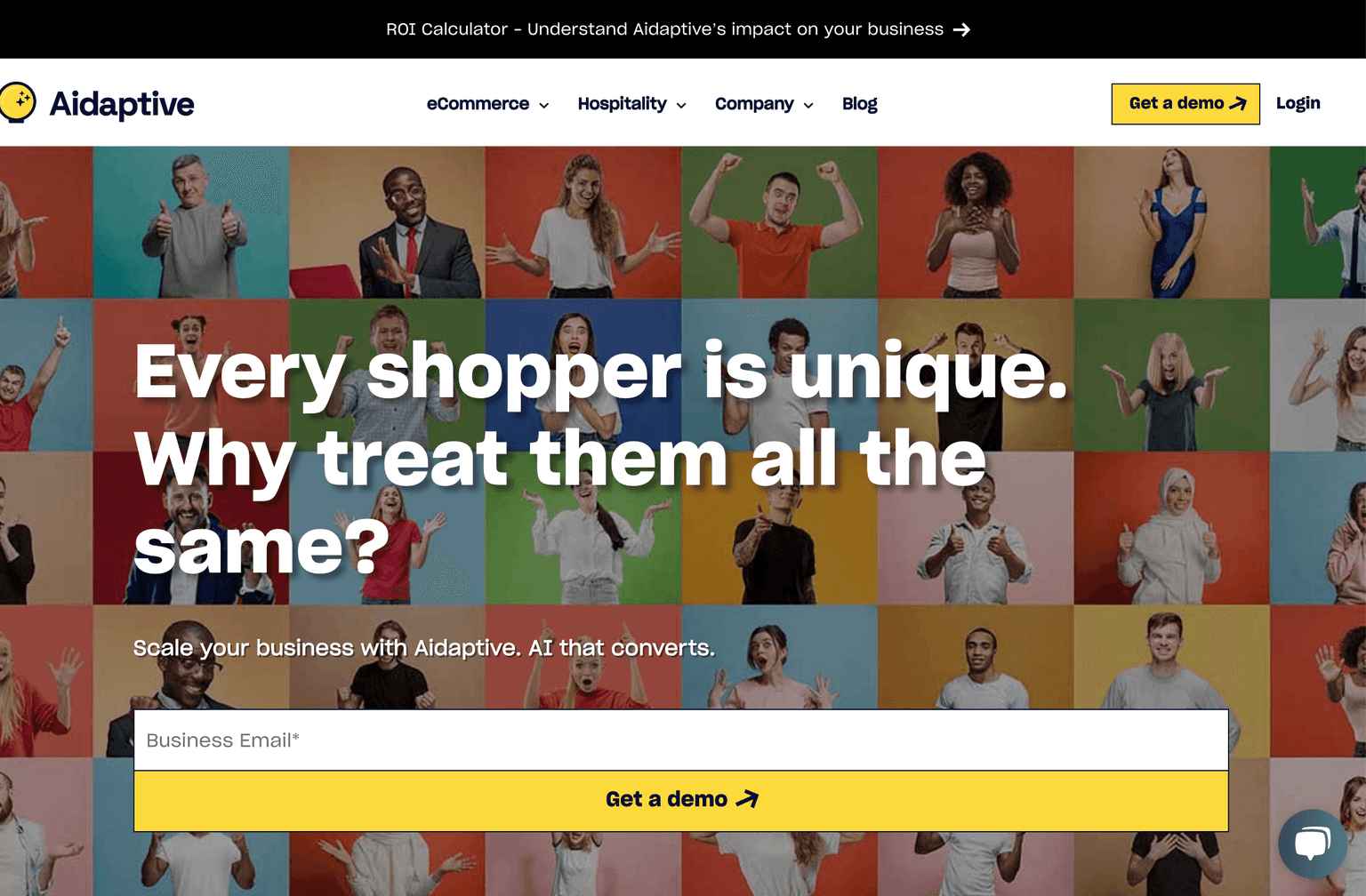
Aidaptive is the AI-driven on-site personalization platform for Shopify Plus and BigCommerce brands. AI-driven product recommendations, dynamic merchandising, personalized search results, and the on-site optimization layer that turns flat e-commerce sites into personalized shopping experiences.
Production credibility: privately held; deployed across Shopify Plus and mid-market e-commerce brands; the on-site personalization specialization is the differentiator vs general-purpose marketing platforms; the AI infrastructure was originally developed at NASA's JPL according to company disclosures.
What it wins at: Shopify Plus brands optimizing on-site conversion, the AI-driven product recommendation use case, and the on-site personalization that flat catalogs can't deliver.
Where it falls down: for SMB brands without the traffic volume to drive meaningful personalization signal, the platform value prop is muted. Best for mid-market and enterprise e-commerce specifically.
5. HeyGen — Personalized Video at Scale
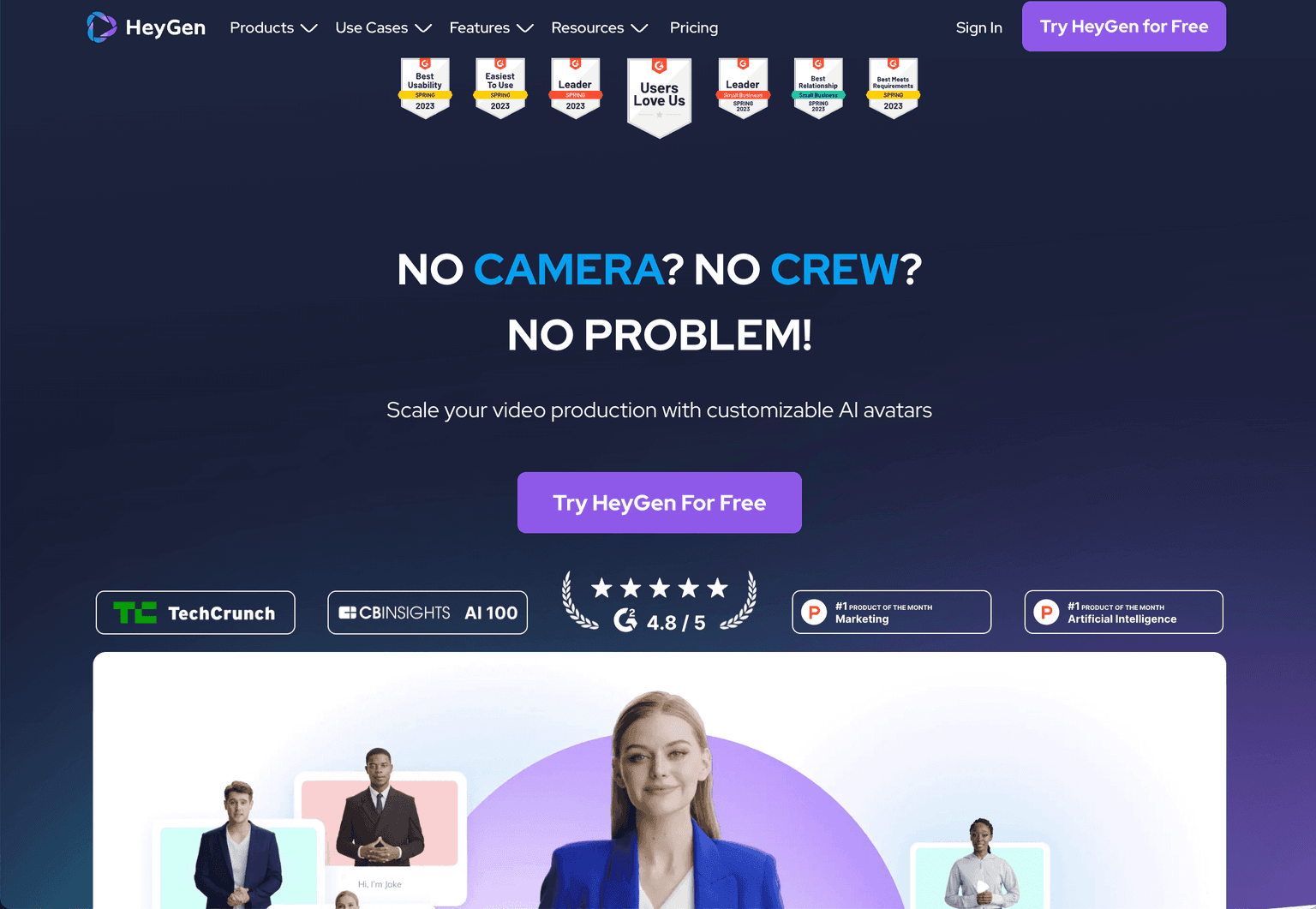
HeyGen produces video from a script and an avatar, which makes one recording into hundreds of variants — per customer, per product, per language. For brands running post-purchase, reactivation, or VIP outreach in video without booking studio time for every version, it is the pick that has actually scaled.
Production credibility: one of the most widely adopted AI video platforms in the market, with avatar and voice cloning, translation with lip-sync into dozens of languages, and an API for generating variants programmatically rather than by hand.
What it wins at: personalized and localized customer video at volume, turning existing scripts into multi-language variants, and any outreach programme where recording each version individually is the bottleneck.
Where it falls down: avatar video still reads as avatar video to some audiences, and consent and disclosure matter — clone only voices and likenesses you have rights to. For genuinely one-to-one founder video, a real recording still converts better.
A note on this slot: Windsor.io held this position until Front acquired it and discontinued the standalone product; it is now recorded in our AI graveyard.
6. PhotoRoom — AI Product Photography
PhotoRoom is the AI product-photography tool that handles background removal, scene generation, and product image editing for e-commerce at volume. For DTC brands and Shopify owners producing high-volume product images, PhotoRoom replaces the manual Photoshop workflow with one-click AI-driven editing.
Production credibility: raised $43M+ Series B led by Y Combinator, Index Ventures, Balderton; reported >100M images processed; deployed widely across Shopify and DTC brands; mobile-app-first workflow that fits how SMB e-commerce owners actually work.
What it wins at: product image editing at volume, background removal and scene generation, and the use case where SMB brands need professional-looking product photos without studio production.
Where it falls down: for high-end editorial product photography or video-first product content, traditional production fits better. PhotoRoom is the high-volume SMB workflow tool specifically.
7. tinyEinstein — AI Marketing Manager for Shopify SMB
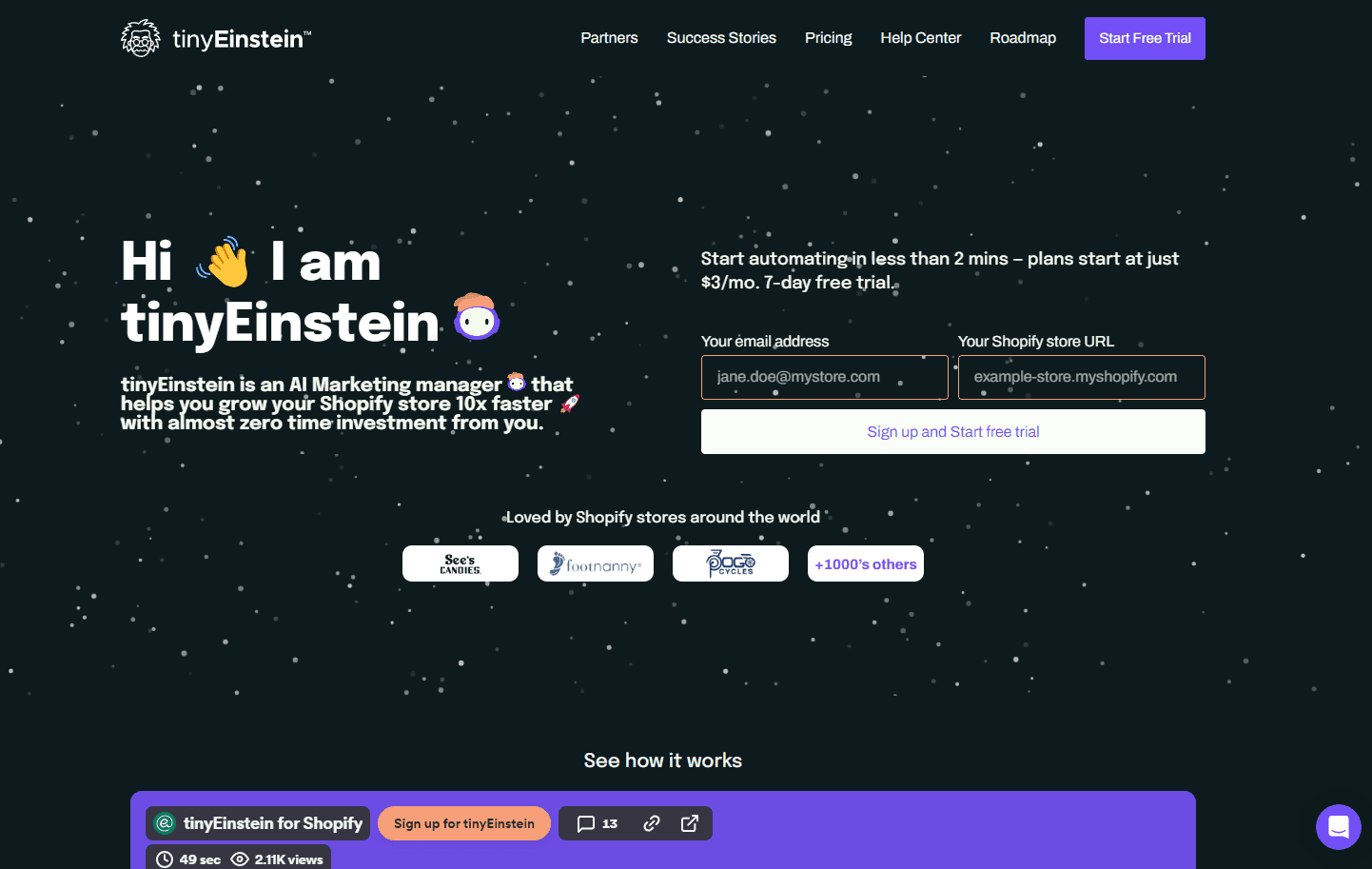
tinyEinstein is the autonomous AI marketing manager for solo and SMB Shopify owners — generates email campaigns, product copy, social posts, and customer-journey workflows automatically based on the Shopify store's data. For solo e-commerce owners without time to manage marketing themselves, tinyEinstein is the lowest-friction path to consistent marketing output.
Production credibility: privately held; deployed across solo and SMB Shopify stores; the autonomous-marketing-manager positioning is the differentiator vs traditional do-it-yourself marketing platforms.
What it wins at: solo and SMB Shopify owners without dedicated marketing capacity, autonomous marketing workflow generation, and the use case where consistent marketing output matters more than custom strategy.
Where it falls down: for brands with dedicated marketing teams, the autonomous approach is the wrong abstraction — Klaviyo + a marketing manager produces better results. tinyEinstein is the no-marketing-team specialist.
8. Quartile — Programmatic Retail Advertising
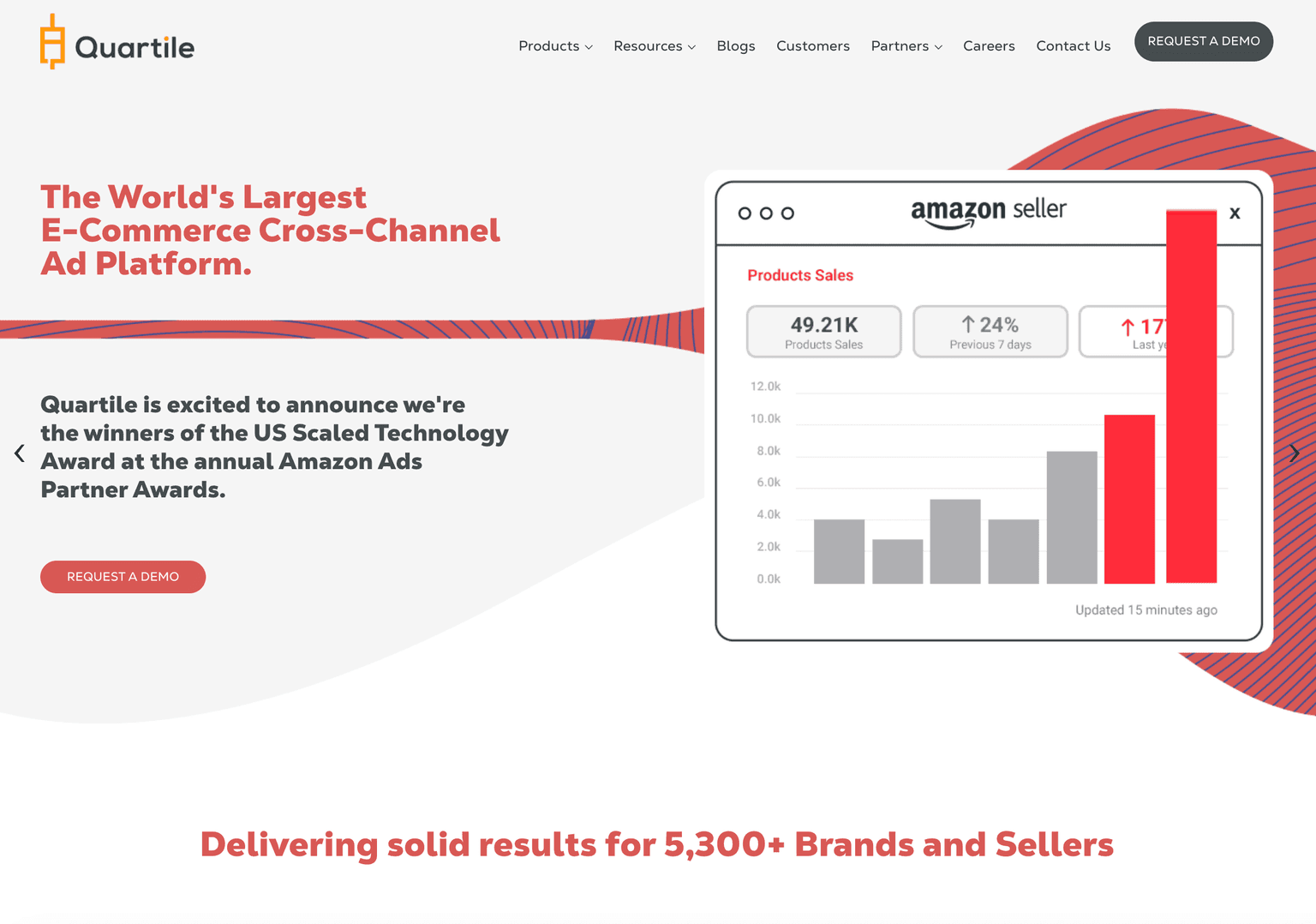
Quartile is the programmatic e-commerce advertising platform combining Amazon + retail-media + Google Shopping under one optimization layer. For brands at >$50K monthly retail-media spend, Quartile is the mid-market alternative to CommerceIQ and the canonical retail-advertising programmatic platform.
Production credibility: raised $20M+ across rounds; deployed at >5,000 brands and agencies including Procter & Gamble category teams, GoPro, and major DTC brands; the cross-channel optimization is the differentiator vs single-channel ad platforms.
What it wins at: brands at scale running multi-channel retail advertising, the cross-channel budget-allocation use case, and the procurement-friendly tier between SMB tools and CommerceIQ.
Where it falls down: for SMB brands with under $50K monthly ad spend, the platform sophistication is overkill. Best for mid-market retail-media scale specifically.
How to Build the 2026 E-commerce AI Stack
Match tools to brand size and channel mix:
- Solo Shopify owner (<$100K GMV): Klaviyo + tinyEinstein + PhotoRoom. ~$50–150/month total covers email + autonomous marketing + product photos.
- SMB DTC brand ($100K–$1M GMV): Klaviyo + AdCreative.ai + PhotoRoom + Aidaptive (entry tier). ~$300–700/month total.
- Mid-market multi-channel brand ($1M–$10M GMV): Klaviyo + CommerceIQ or Quartile + AdCreative.ai + Aidaptive + PhotoRoom. ~$2,000–5,000/month total.
- Enterprise brand ($10M+ GMV): Klaviyo Enterprise + CommerceIQ + custom personalization + agency-managed creative + retail-media-platform. Six-figure annual budgets.
- Amazon-focused brand: see our dedicated Amazon Sellers guide. Helium 10 + Quartile + brand-specific picks.
The most-recommended 2026 starting investment for an SMB e-commerce brand: Klaviyo + AdCreative.ai + PhotoRoom. Total ~$200–400/month at SMB volume, covers email automation + paid ad creative + product photography. Add Aidaptive when on-site conversion optimization becomes the constraint.
Adjacent Reading
- Best AI Tools for Amazon Sellers (2026) — Amazon-specific tools
- Best AI Tools for Marketing & SEO (2026) — marketing-AI canon
- Best AI Email Tools (2026) — email-specific deep dive
- Top 7 AI Tools for Social Media Management (2026) — social marketing
- Top 8 AI Tools for Small Businesses (2026) — broader SMB AI
Frequently Asked Questions
What's the best AI tool for an e-commerce brand to start with in 2026? For most DTC brands on Shopify: Klaviyo for email + SMS automation. The integration depth and customer-data-driven personalization make it the highest-ROI single tool for Shopify-based e-commerce. Add AdCreative.ai if you run paid social; add PhotoRoom for product images; add Aidaptive when traffic warrants on-site personalization.
Are these AI tools affordable for SMB e-commerce? Yes — the entry tiers of Klaviyo, AdCreative.ai, PhotoRoom, and tinyEinstein all ship at SMB-accessible pricing ($30–150/month at the entry tier for most). The total starting spend for a basic e-commerce AI stack is under $300/month. For comparison, hiring a part-time marketing manager would cost orders of magnitude more.
Will AI tools replace e-commerce marketing teams? No, but they meaningfully change what each marketer can ship per week. AI tools handle the high-volume repetitive work (drafting emails, generating ad variants, editing product photos, segmenting audiences), and the marketer gets that time back for strategy, brand voice, and creative direction. Top-performing marketers get more leveraged.
Are these AI tools safe for sensitive customer data? The paid tiers of Klaviyo, CommerceIQ, AdCreative.ai, and the others all carry SOC 2 Type II compliance and signed DPAs. For brands subject to GDPR or CCPA, verify the vendor's data-residency and data-handling settings during procurement. None publicly violate the standard practices the e-commerce industry has standardized on.
What's the typical pricing for a 2026 e-commerce AI stack? Solo Shopify owner: $50–150/month. SMB DTC brand: $300–700/month. Mid-market multi-channel brand: $2,000–5,000/month. Enterprise: six-figure annual budgets. Klaviyo's pricing scales with email-list size; CommerceIQ and Quartile scale with ad spend. The seat costs are typically <2% of monthly revenue at any meaningful brand scale.
Should I use one tool or multiple? For solo Shopify owners: 2–3 tools is sufficient (Klaviyo + tinyEinstein + PhotoRoom). For SMB and mid-market: 4–6 tools is typical (add AdCreative.ai, Aidaptive, possibly Quartile). For enterprise: a dedicated MarTech stack with specialty tools per lane. The seat costs are negligible against the GMV they support.
How do these tools handle multi-channel selling (Amazon + Shopify + retail)? Klaviyo and Aidaptive focus on direct-to-consumer (Shopify, BigCommerce). CommerceIQ and Quartile cover Amazon + retail-media specifically. Most multi-channel brands run Klaviyo + CommerceIQ or Quartile in combination, with Klaviyo for the DTC channel and CommerceIQ/Quartile for the retail-media channels. See Best AI Tools for Amazon Sellers for Amazon-specific depth.
Will general-purpose AI (ChatGPT, Claude) replace these tools? No. The e-commerce AI tools above handle the integrations, automations, deliverability, and platform-specific workflows that general-purpose AI doesn't. Most e-commerce teams use ChatGPT or Claude alongside these tools (for ideation, copywriting drafts, brainstorming) rather than as replacements.
Final Thoughts
The e-commerce AI landscape in 2026 has consolidated around clearly differentiated tools by lane. The category-defining products in each lane have built integration moats with Shopify, BigCommerce, Meta Ads, and the retail-media networks that newer entrants struggle to overtake.
For any e-commerce brand not yet using AI tools, the highest-ROI 2026 move is: start with Klaviyo for email + SMS automation, add AdCreative.ai for paid social creative, add PhotoRoom for product photography. Total $200–400/month, covers the foundational e-commerce AI stack. The seat costs are a rounding error against any meaningful GMV; the time spent over-deliberating tool selection is the real cost most brands don't account for.
Categories these tools span
More collections you may also like


Sign up for our newsletter
Receive weekly updates so you can stay up-to-date with the world of AI
Sign up for our newsletter
Receive weekly updates so you can stay up-to-date with the world of AI
The AI tools directory for discovering, exploring, and comparing the most innovative AI tools in the industry