Best AI Tools for Lawyers (2026)













Best AI Tools for Lawyers in 2026
The best AI tools for lawyers in 2026 are no longer general chatbots with a legal prompt — they are narrow, retrieval-grounded products that cite into a real corpus and leave a reviewable trail. That shift happened because the alternative got expensive: US courts imposed at least $145,000 in sanctions for AI-fabricated citations in the first quarter of 2026 alone. If you are choosing AI for law firms or an in-house team, the deciding question is not which model is smartest. It is which tool can show you where every proposition came from.
This guide ranks eleven legal AI software products across four lanes: firm-wide research and drafting assistants, contract drafting and AI contract review, e-discovery and litigation, and the plaintiff-side and small-firm tools that serve everyone without an enterprise budget. Each entry covers what it ships in production, what it wins at, and where it falls down.
How We Evaluated These AI Legal Tools
Five criteria, weighted in this order:
- Citation integrity. Does the tool ground its output in a real corpus and link every proposition back to a source you can open? This outranks everything else, because a fabricated citation is a sanctionable event and the liability sits with the filer, not the vendor.
- Real production deployments at named firms. Disclosed customer counts, AmLaw penetration, or public reference clients — not "trusted by leading firms" with no names attached.
- Confidentiality and data terms. Whether client material is excluded from training by contract, where it is processed, and what the retention terms actually say.
- Workflow fit. Whether the tool works where lawyers already are — inside Word, inside the DMS, inside the review platform — or asks them to adopt a new surface.
- 2026 currency. Pricing, ownership, and capability re-verified at the time of writing. This category is consolidating and repricing quickly.
The Four Lanes of Legal AI in 2026
The category is too broad for one ranking, so we split it four ways:
- Firm-wide research and drafting assistants — the horizontal platforms a whole firm adopts: Harvey AI, Legora, Lexis+ AI, CoCounsel.
- Contract drafting and review — where the money and the volume are: Spellbook, Ironclad, LinkSquares.
- E-discovery and litigation — AI inside the review platform: Everlaw, Relativity.
- Plaintiff-side and small-firm — the tools that work without a seven-figure technology budget: EvenUp, Legalese Decoder.
What changed in 2026 is capital and consolidation. Harvey raised at an $11 billion valuation in March; Legora raised $550 million at $5.55 billion the same month; Relativity filed for the first legal-tech IPO since 2021. Meanwhile Relativity and Everlaw both made generative AI review free inside their platforms — the clearest sign yet that AI is becoming a feature of the litigation stack rather than a product you buy alongside it.
Quick Comparison
| Tool | Best for |
|---|---|
| Harvey AI | Firm-wide adoption at scale. The default for large firms and in-house teams. |
| Legora | Collaborative drafting and review; the credible challenger to Harvey. |
| Lexis+ AI | Citation-grounded research from a publisher's own licensed corpus. |
| CoCounsel | Firms already inside the Thomson Reuters ecosystem. |
| Spellbook | AI contract review and drafting without leaving Microsoft Word. |
| Ironclad | Full contract lifecycle management with approvals and post-signature analytics. |
| LinkSquares | In-house legal ops that need CLM plus contract analytics in one place. |
| Everlaw | Modern e-discovery with strong collaboration; government and plaintiff work. |
| Relativity | The largest and most complex litigation, where market share and ecosystem matter. |
| EvenUp | Personal-injury demand packages and case evaluation. |
| Legalese Decoder | Translating contracts into plain language for clients and small firms. |
Firm-Wide Research and Drafting Assistants
1. Harvey AI — The Firm-Wide Default
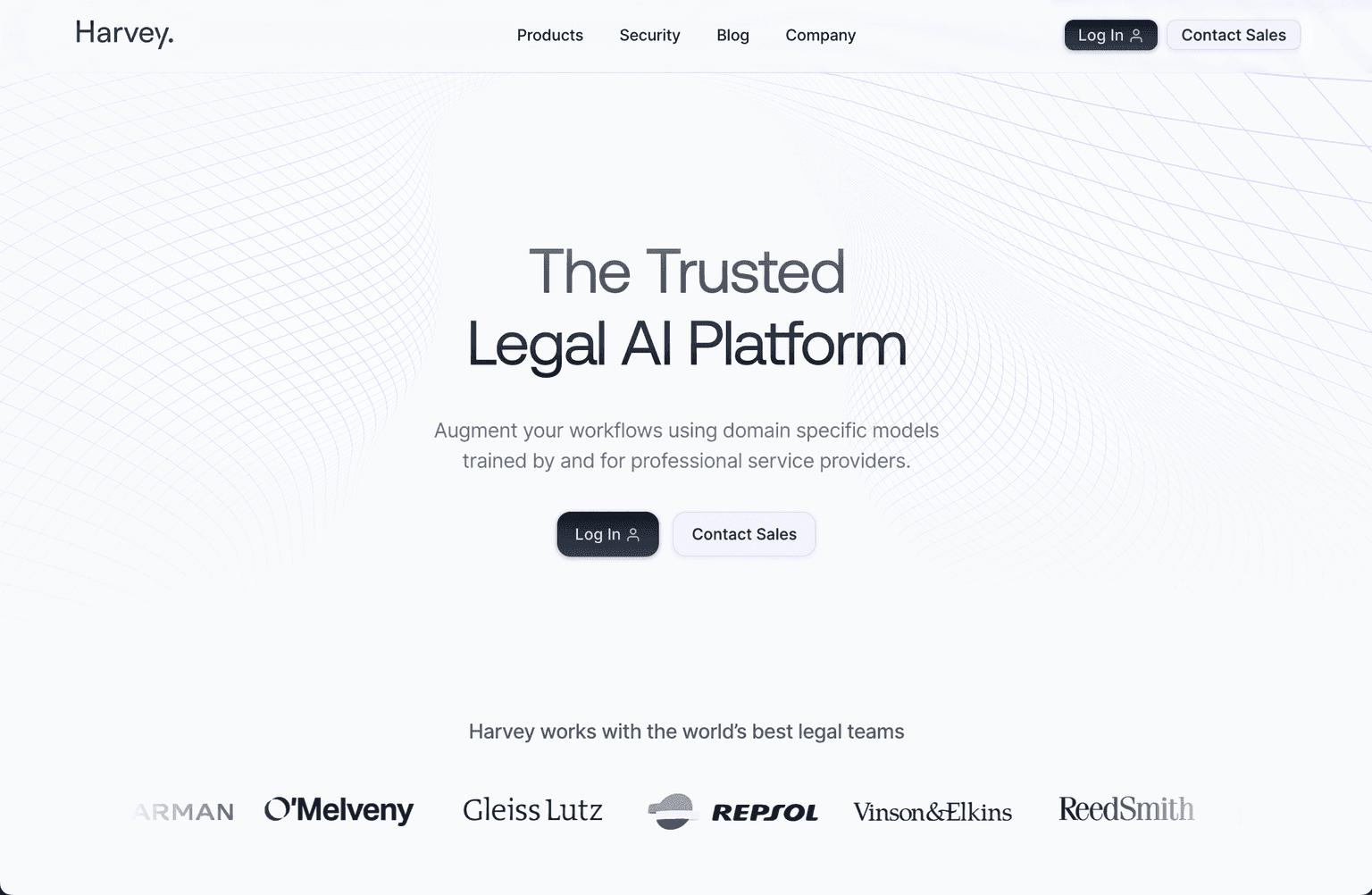
Harvey AI is the horizontal legal AI platform most large firms evaluate first: research, drafting, document analysis, and increasingly agentic workflows that run multi-step tasks across a matter. Its advantage is less any single capability than the fact that it has been deployed, configured, and security-reviewed at firm scale more times than anything else in the category.
Production credibility: raised $200 million in March 2026 co-led by GIC and Sequoia at an $11 billion valuation, up from $8 billion in December 2025, with more than $1 billion raised in total. Used by over 100,000 lawyers across 1,300 organizations, including the majority of the AmLaw 100, more than 500 in-house teams, and 50 asset-management firms across 60 countries. Annual recurring revenue reached roughly $190 million by January 2026.
What it wins at: firm-wide rollout, breadth across research and drafting and analysis, and the enterprise security and procurement posture large firms require before anything touches client material.
Where it falls down: enterprise pricing and a real implementation effort — this is a platform decision, not a seat you expense. Smaller firms will find the ratio of capability to cost harder to justify than a focused tool.
2. Legora — The Credible Challenger
Legora competes with Harvey on the same ground — firm-wide research, drafting, and review — with a collaborative interface built around lawyers working over the same documents rather than each querying an assistant alone.
Production credibility: raised $550 million at a $5.55 billion valuation in March 2026, the same month as Harvey's round. Between them the two companies now represent more than $16 billion of enterprise value in a market that barely existed five years ago.
What it wins at: collaborative review workflows, a modern interface that lawyers adopt without much training, and genuine competitive pressure on Harvey's pricing — worth having in any evaluation for that reason alone.
Where it falls down: a shorter deployment track record than Harvey at the very largest firms, and the same enterprise-budget reality.
3. Lexis+ AI — Research Grounded in a Licensed Corpus
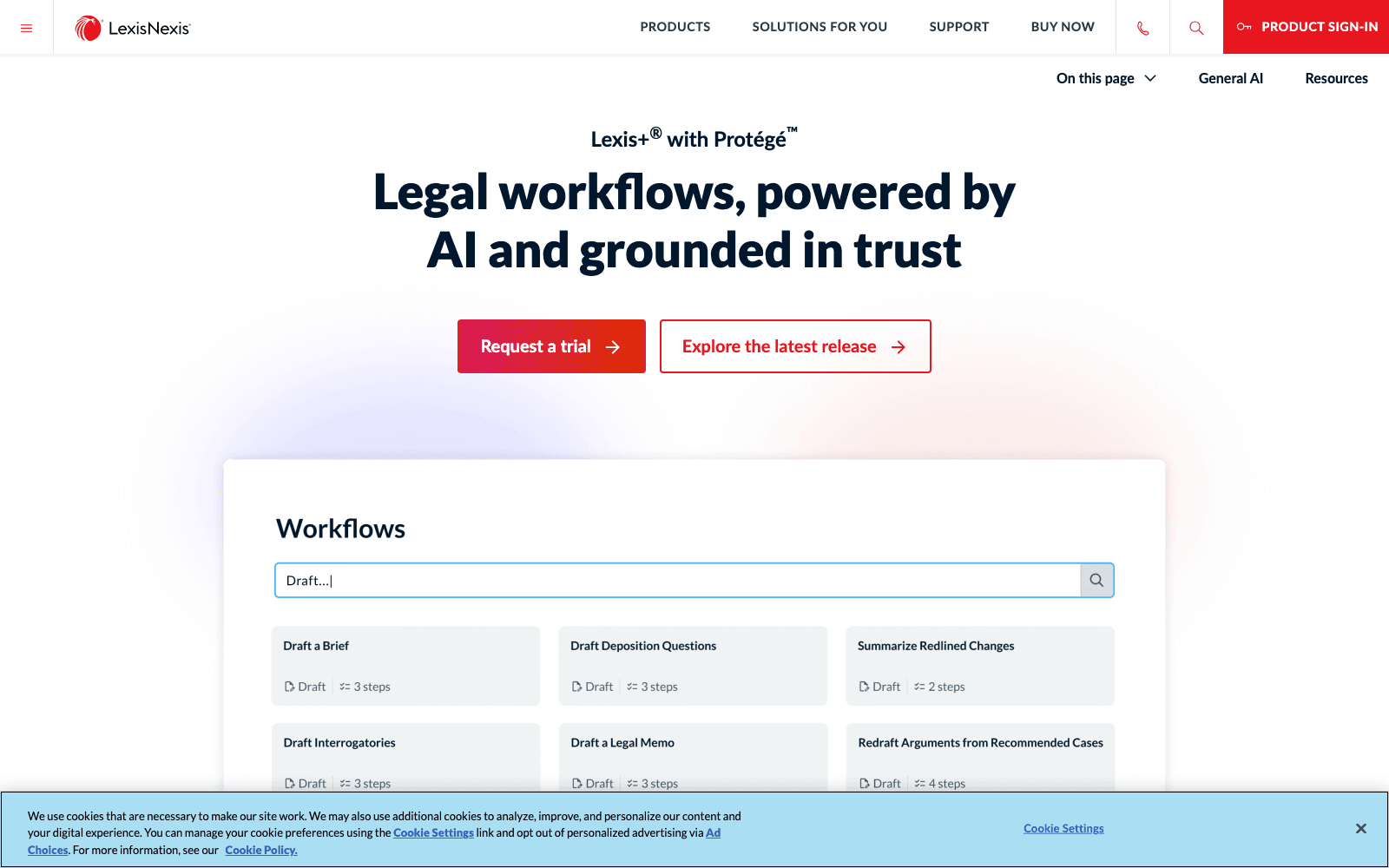
Lexis+ AI answers legal research questions against LexisNexis's own licensed corpus of cases, statutes, and secondary sources, with citation validation built in. When the fabricated-citation problem is your primary risk, a research tool that can only cite what it actually holds is a structurally different proposition from one that generates text and attaches sources afterwards.
Production credibility: built on a legal publishing corpus assembled over decades, with citation-checking tooling that predates generative AI by a long way and is already relied on in practice.
What it wins at: citation integrity, depth of primary and secondary sources, and validation of whether authority is still good law — the exact checks that catch the failure mode courts are sanctioning.
Where it falls down: it is a research product rather than a general assistant, so drafting and matter-wide analysis sit outside its lane. Subscription costs stack on top of existing research spend.
4. CoCounsel — The Thomson Reuters Path
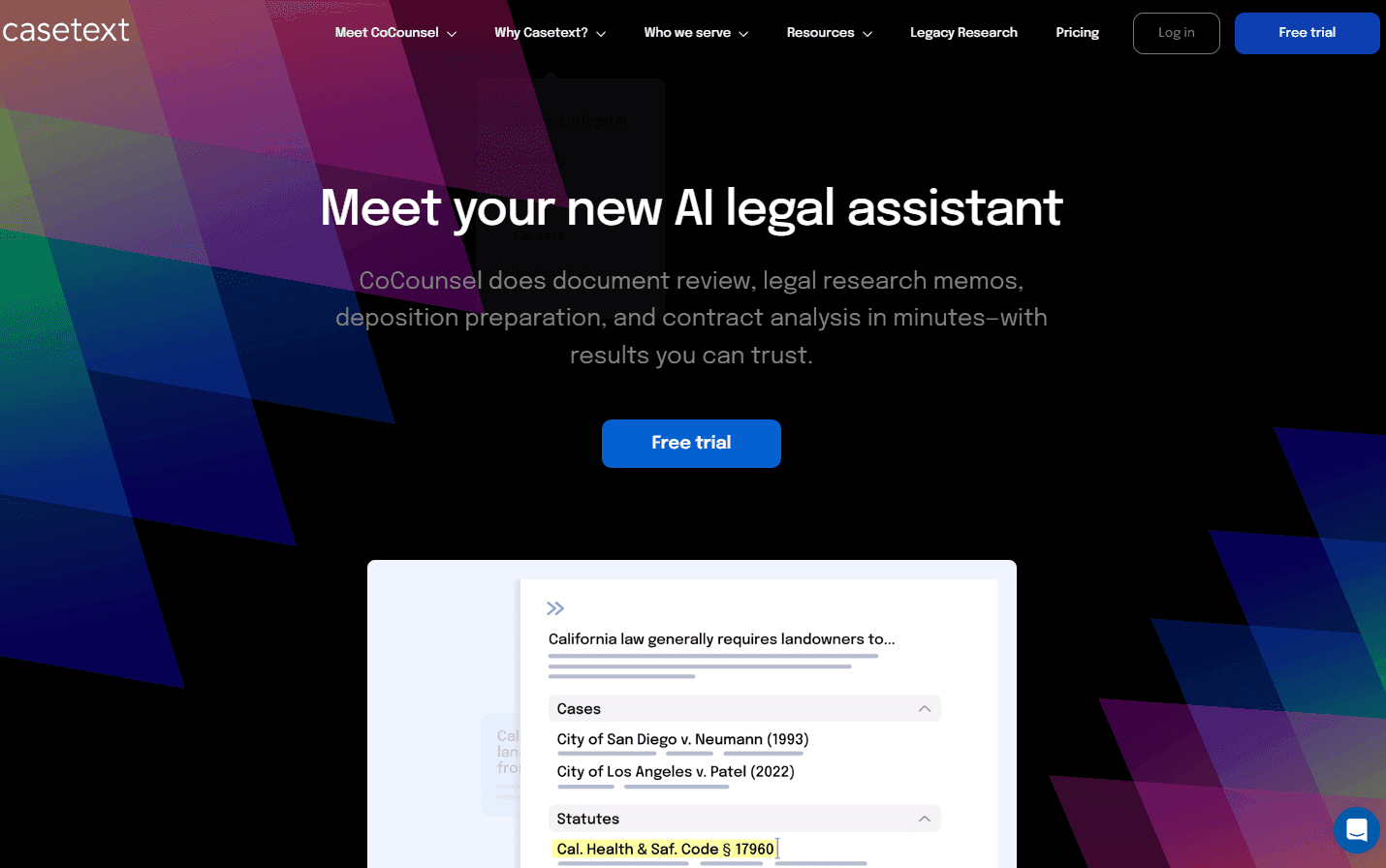
CoCounsel handles research, document review, deposition preparation, and contract analysis, and is now part of Thomson Reuters following its acquisition of Casetext. It continues to ship and expand under that ownership.
Production credibility: acquired by Thomson Reuters and integrated with Westlaw's corpus and the wider TR practice stack, which is the reason to pick it — grounding in a licensed research corpus rather than an open-web model.
What it wins at: firms already standardized on Westlaw and Thomson Reuters tooling, where integration removes a procurement conversation and a second research subscription.
Where it falls down: the value proposition weakens considerably outside the TR ecosystem, and the product's independence ended with the acquisition — roadmap priorities now follow a large vendor's strategy, not a startup's.
Contract Drafting and AI Contract Review
This is where most legal AI budget actually goes, because contract volume is the one legal workload that scales with the business rather than with disputes.
5. Spellbook — AI Contract Review Inside Word
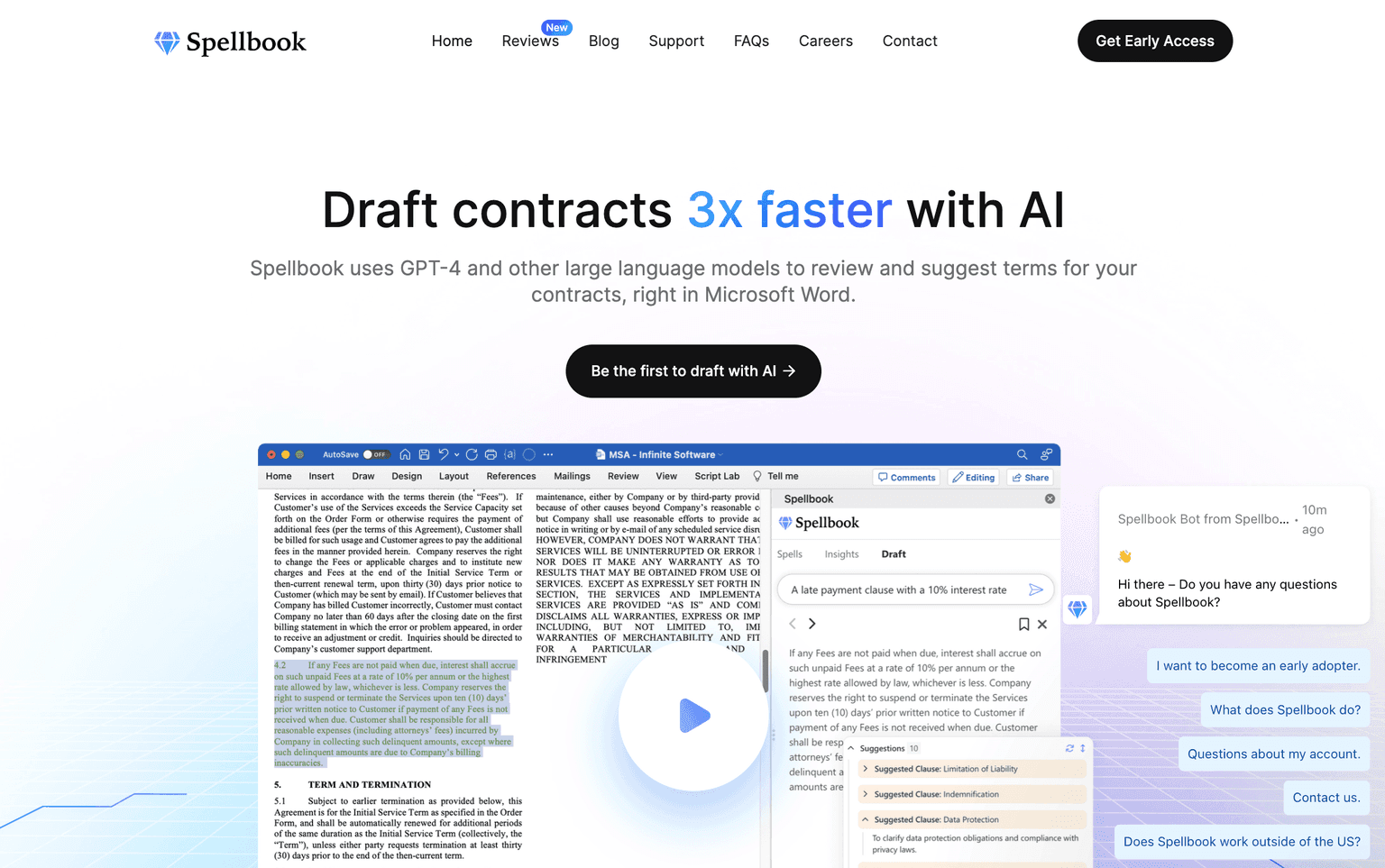
Spellbook reviews and drafts contracts inside Microsoft Word, where the work already happens. It suggests clause language, flags terms that deviate from your standards, and generates alternatives during a negotiation rather than after it.
Production credibility: raised a $50 million Series B in October 2025 at roughly $350 million post-money, followed by a $40 million debt facility in March 2026 earmarked for acquisitions. Used by more than 4,000 firms across 80 countries, with over 10 million contracts reviewed to date.
What it wins at: adoption. It requires no workflow change, which is why it lands in small and mid-size firms that would never complete a CLM implementation.
Where it falls down: it is a drafting and review tool, not a system of record. If you need intake, routing, approvals, and post-signature analytics, you want a CLM platform instead — or as well.
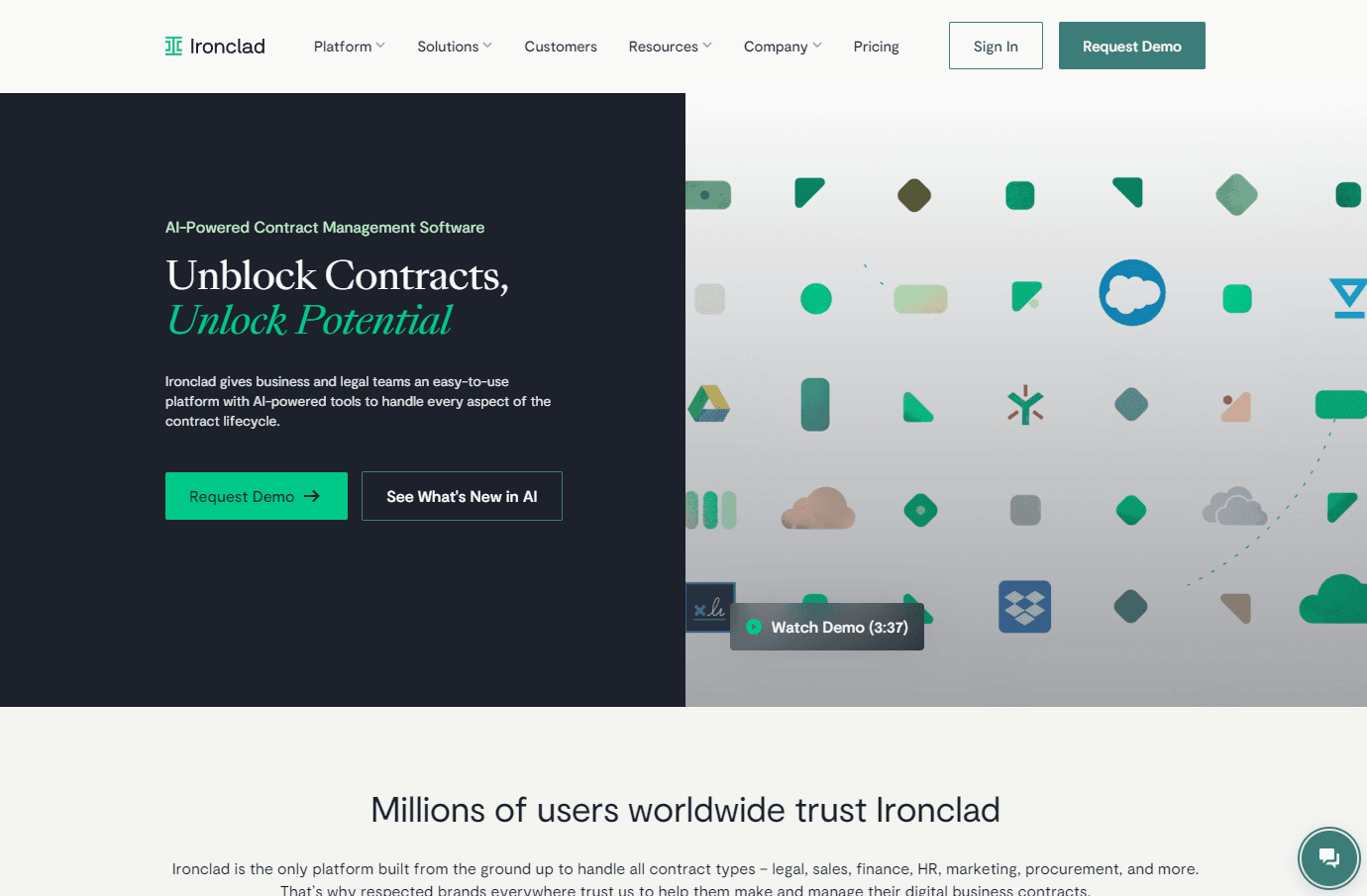
6. Ironclad — Contract Lifecycle Management
Ironclad covers the whole contract lifecycle: creation, negotiation, approval routing, execution, and the post-signature repository, with AI applied across each stage rather than bolted onto drafting.
Production credibility: approximately $150 million in annual recurring revenue, making it one of the largest independent contract platforms and a default consideration for in-house teams at scale.
What it wins at: contracting as an operational process — the approvals, the routing, and the reporting that a legal department is accountable for.
Where it falls down: implementation is a project with a timeline and an owner, not a download. Firms wanting drafting help alone will find it heavier than the job requires.
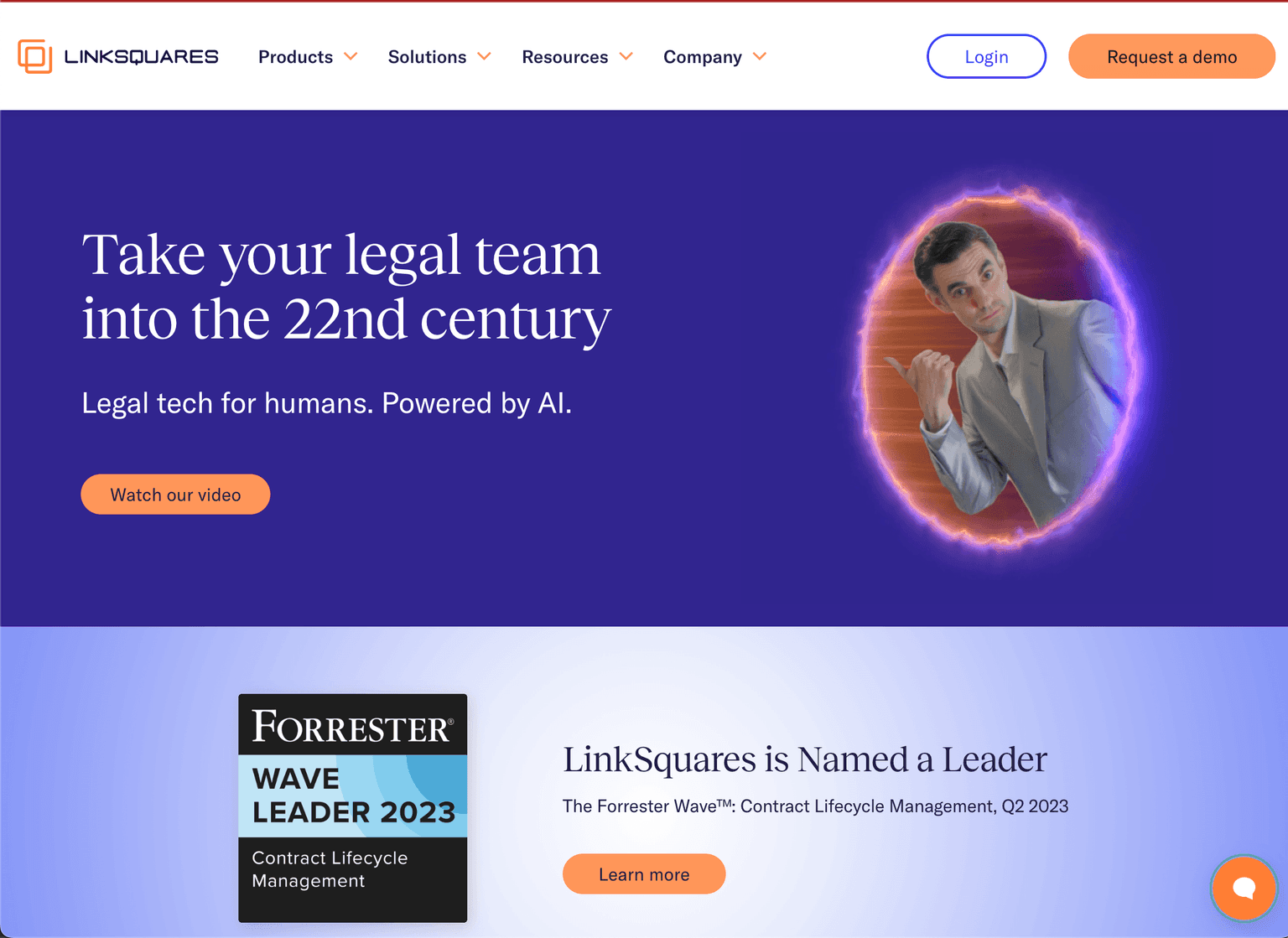
7. LinkSquares — CLM Plus Analytics for Legal Ops
LinkSquares pairs contract lifecycle management with AI-driven analytics over an existing contract repository, which matters when the pressing question is what is already in your agreements rather than how to draft the next one.
Production credibility: an established CLM vendor serving in-house legal departments, positioned around post-signature intelligence — extracting obligations, dates, and terms across a portfolio.
What it wins at: legal ops teams that inherited thousands of executed contracts and need to answer questions across all of them.
Where it falls down: overlaps meaningfully with Ironclad, and the analytics advantage depends on the quality of the repository you feed it.
E-Discovery and Litigation
Both leaders made generative AI review free inside their platforms in 2026 — a pricing move that ended the standalone "AI for document review" product category almost overnight.
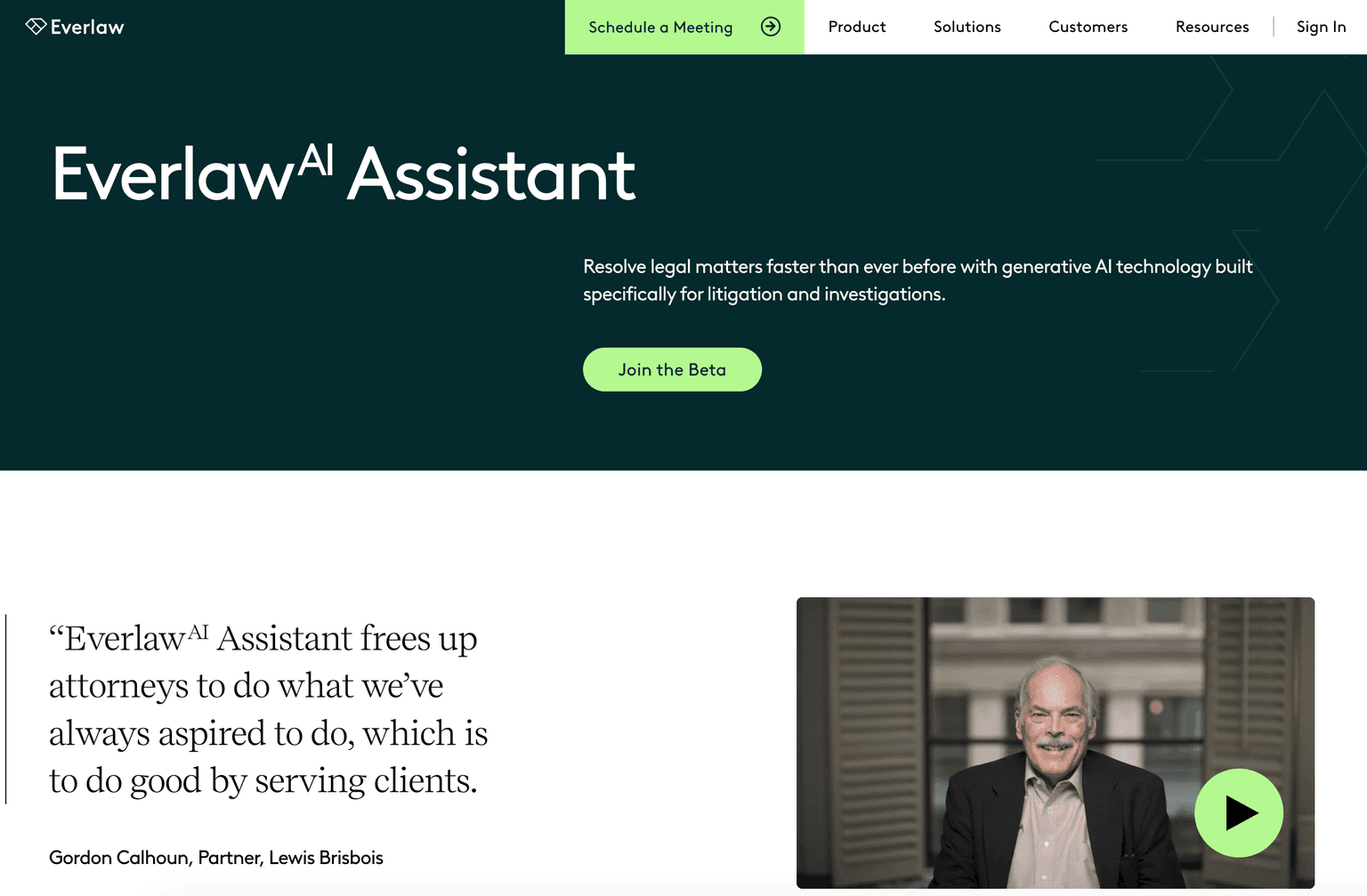
8. Everlaw — Modern E-Discovery with Collaboration
Everlaw runs the full discovery workflow — processing, review, analytics, and storytelling for trial — with AI assistance layered through review and an interface teams actually enjoy using.
Production credibility: led the G2 rankings in its category for four consecutive quarters through Winter 2026, and was last valued at $2 billion in a 2023 Series D led by TPG. Particularly strong in government and plaintiff-side work.
What it wins at: collaborative review across distributed teams, a genuinely modern interface, and trial-preparation features that go beyond review into narrative building.
Where it falls down: smaller ecosystem than Relativity, and the largest and most complex matters still tend to default to the incumbent.
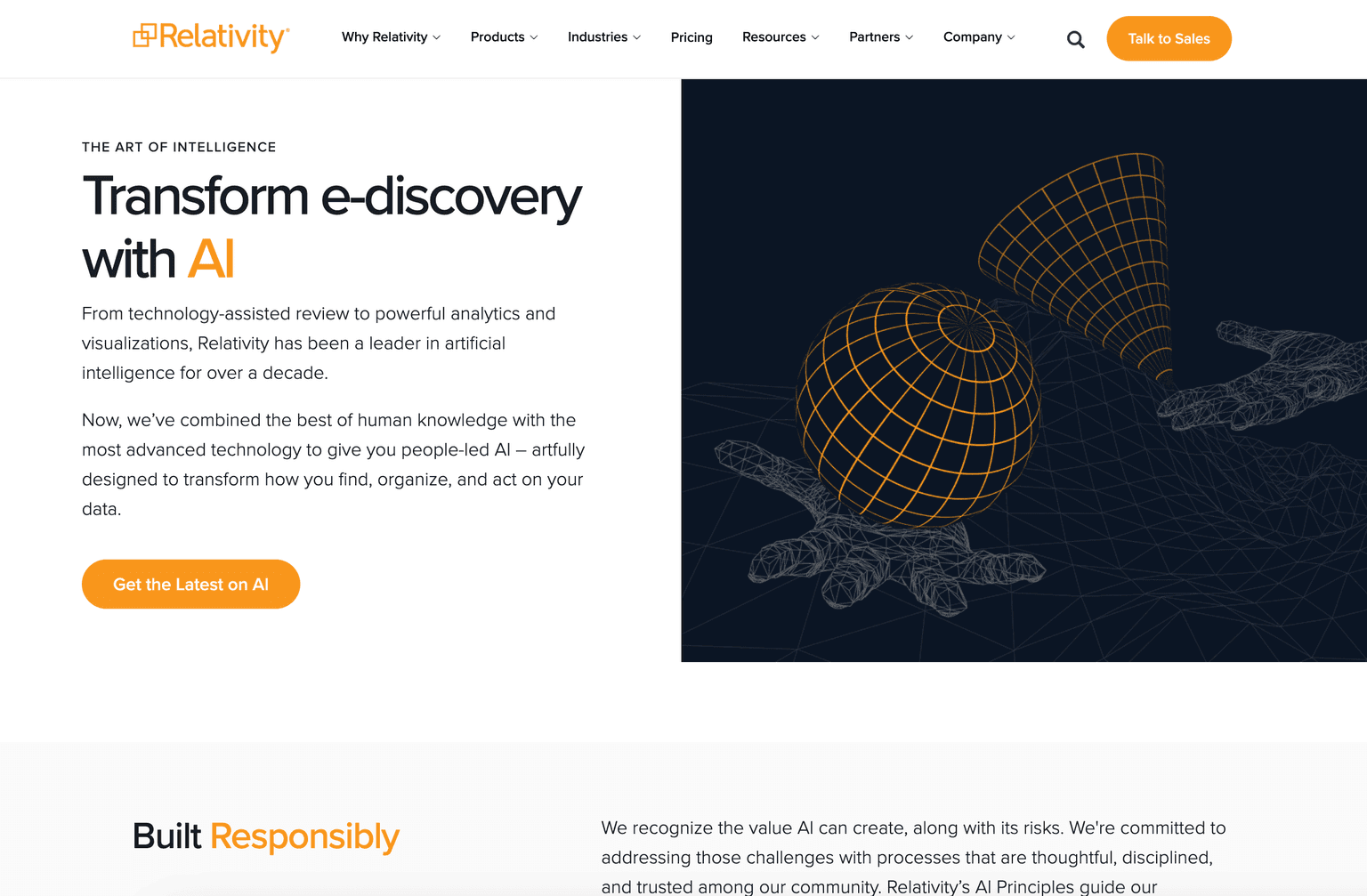
9. Relativity — The Incumbent, with an IPO Filing
Relativity is the market-share leader in e-discovery, with its aiR suite bringing generative AI to review, privilege, and case analysis inside the platform where the largest matters already live.
Production credibility: RelativityOne holds roughly 40% e-discovery market share with an ecosystem of more than 200 third-party applications, and the company filed for an IPO in 2026 — the first legal-technology public offering since 2021.
What it wins at: the largest and most complex litigation, ecosystem depth, and the fact that opposing counsel and vendors are already fluent in it.
Where it falls down: the interface shows its age against newer entrants, and the pricing and administration model assumes a dedicated litigation-support function.
Plaintiff-Side and Small-Firm Tools
Most legal AI coverage stops at products only AmLaw firms can buy. These two do not require that budget.
10. EvenUp — Demand Packages for Personal Injury
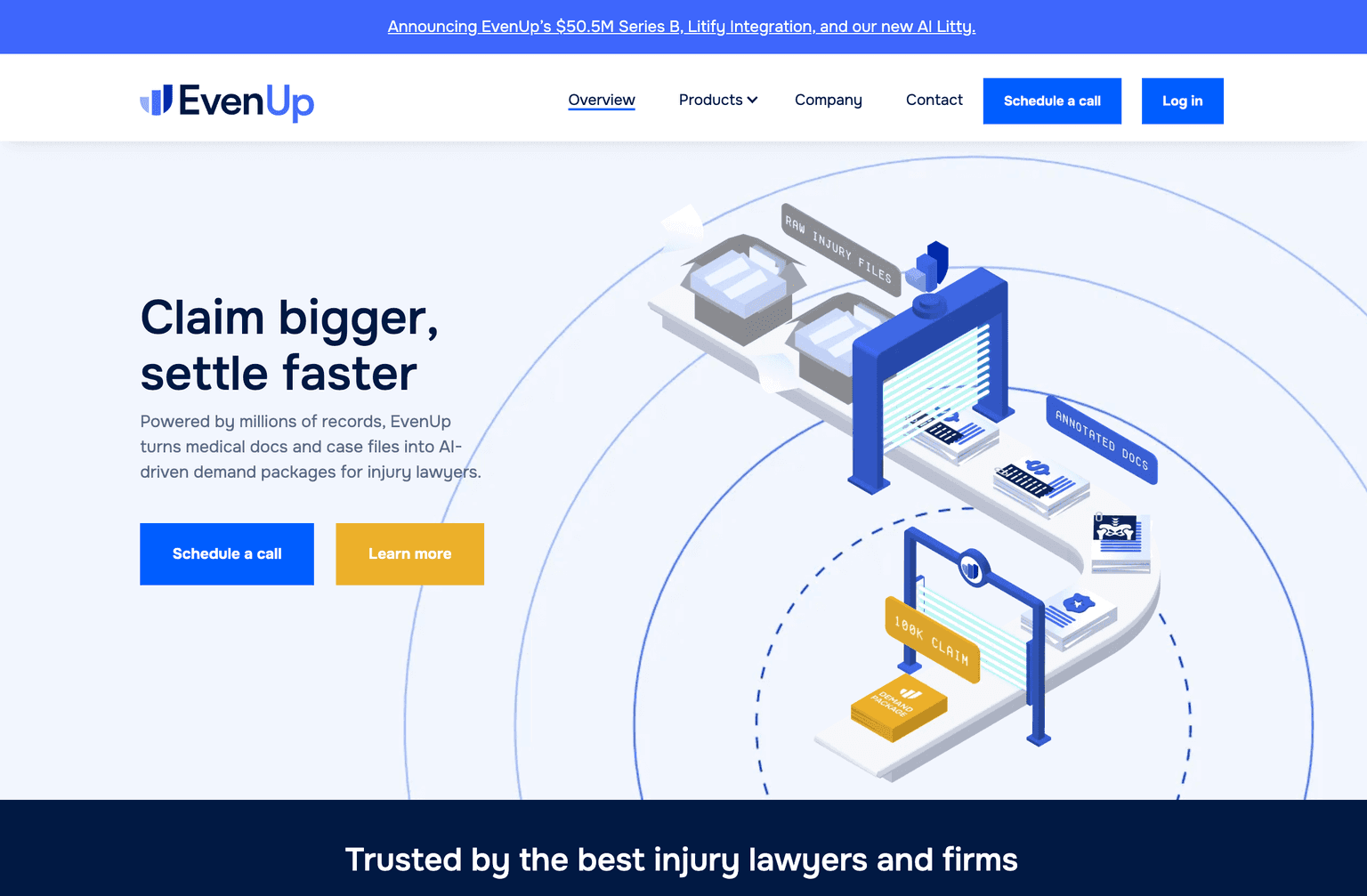
EvenUp builds demand packages and case evaluations for personal-injury firms, assembling medical records, treatment chronologies, and damages narratives into a document that would otherwise take a paralegal days.
Production credibility: reached a $1 billion valuation on the strength of a single workflow; adopting firms report saving 10 to 15 hours per case, which is the kind of specific, checkable claim this category usually avoids making.
What it wins at: the highest-volume repetitive document task in plaintiff-side practice, with an economic case that does not require a firm-wide platform decision.
Where it falls down: it is deliberately narrow — one practice area, one document type. Outside personal injury it does not apply.
11. Legalese Decoder — Plain-Language Translation
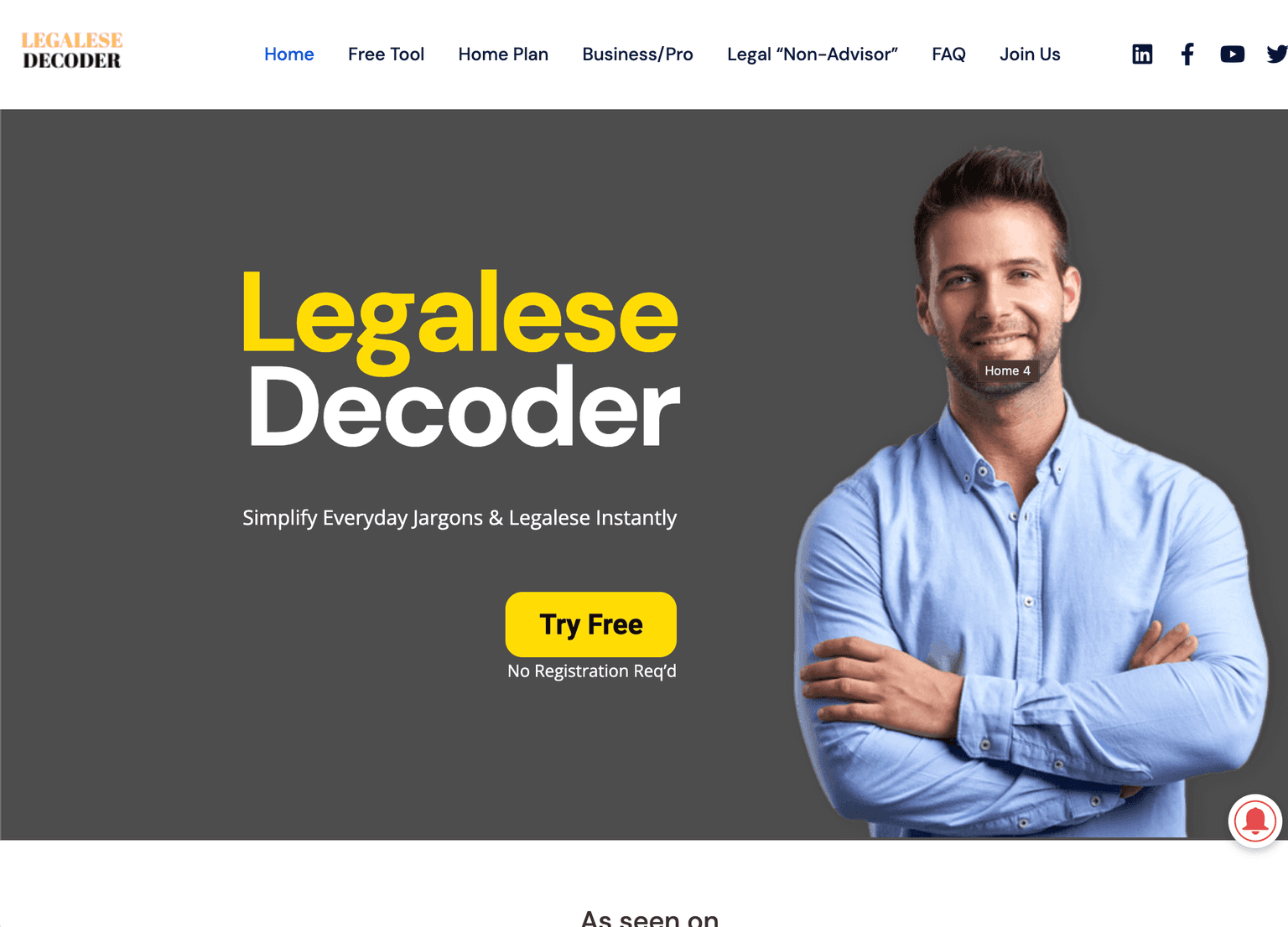
Legalese Decoder converts contracts and legal documents into plain language, which is useful for client communication, for small firms without a paralegal, and for anyone trying to understand an agreement before signing it.
Production credibility: a focused consumer and small-business product rather than an enterprise platform, and priced accordingly.
What it wins at: explaining a document to a non-lawyer quickly, and giving solo and small practices an AI paralegal function without an enterprise contract.
Where it falls down: it is a comprehension aid, not advice, and it should never be the last check on a document that matters. Anything consequential still needs a lawyer to read it.
The Citation Problem: What Courts Have Actually Done
This is the section vendor listicles skip, and it should drive your choice more than any feature comparison.
Courts have moved from warning to sanctioning. In the first quarter of 2026, US courts imposed at least $145,000 in penalties over fabricated citations. The Sixth Circuit sanctioned two attorneys $15,000 each after briefs across three consolidated appeals contained more than two dozen fake citations and misrepresentations of fact. In Fletcher v. Experian, the Fifth Circuit imposed a $2,500 sanction over a reply brief containing 16 fabricated quotations. A researcher tracking generative-AI court orders in the United States has now documented more than 1,148 instances of hallucinated material submitted by lawyers.
Three practical conclusions follow:
- Prefer tools that cite into a licensed corpus over tools that generate text and attach citations afterwards. The difference is architectural, not cosmetic.
- Verification is not delegable. Every authority in a filing gets opened and read by a human. No current tool removes that step, and no court has accepted a vendor's output as an excuse.
- The liability sits with the filer. Sanctions in every case above landed on the attorney who signed, not the software that drafted.
How to Choose Your Legal AI Stack
- Large firm, firm-wide rollout: Harvey or Legora as the platform, plus Lexis+ AI or CoCounsel for citation-grounded research. Run both platform vendors through a bake-off — the competitive pressure between them is currently in your favour.
- In-house legal department: Ironclad or LinkSquares for contracting as a process, plus Spellbook for the drafting itself if your team lives in Word.
- Small or mid-size firm: Spellbook alone covers more ground per dollar than anything else here. Add Lexis+ AI if research volume justifies it.
- Litigation-heavy practice: Relativity for the largest matters, Everlaw where collaboration and interface quality matter more than ecosystem depth. Generative review is now included in both.
- Plaintiff-side personal injury: EvenUp for demand packages, and little else is required to see a return.
Adjacent Reading
For the constraints behind all of this — professional liability, confidentiality, and what regulators require you to be able to prove — read our guide to AI in regulated industries, which covers legal alongside healthcare and finance. Our AI tools for finance and accounting collection covers the neighbouring regulated vertical, and our guide to telling whether an AI tool is legit covers vendor diligence. The full field lives in our legal AI category.
Frequently Asked Questions
What are the best AI tools for lawyers in 2026? Harvey AI and Legora for firm-wide research and drafting, Lexis+ AI and CoCounsel for citation-grounded legal research, Spellbook for AI contract review inside Word, Ironclad and LinkSquares for contract lifecycle management, Everlaw and Relativity for e-discovery, and EvenUp for personal-injury demand packages. The right pick depends on your practice area and whether you are making a platform decision or solving one workflow.
Is it safe to use AI for legal work? It is safe for drafting support and research assistance under a policy that requires human verification of every citation and prohibits putting privileged client material into tools without contractual terms excluding it from training. It is not safe to file AI output unverified — US courts imposed at least $145,000 in sanctions for fabricated citations in the first quarter of 2026 alone, and the penalty falls on the attorney who signed.
What is the best AI for contract review? Spellbook for reviewing and drafting inside Microsoft Word, which is the lowest-friction option for most firms. Ironclad or LinkSquares if you need contract review as part of a managed lifecycle with approvals, routing, and post-signature analytics rather than as a standalone drafting aid.
Can AI replace a paralegal? No, but it removes specific paralegal tasks. EvenUp assembles personal-injury demand packages that firms report saving 10 to 15 hours per case, and tools like Legalese Decoder give solo practices an AI paralegal function for document comprehension. Judgement, client contact, and the verification step all remain human work.
How much do AI legal tools cost in 2026? Firm-wide platforms like Harvey and Legora are enterprise purchases negotiated per deployment. Focused tools are far more accessible — Spellbook is a per-seat subscription used by more than 4,000 firms. E-discovery pricing shifted materially in 2026 when Relativity and Everlaw both made generative AI review free inside their platforms.
Do AI legal tools keep client data confidential? It depends entirely on the contract, not the marketing. Enterprise legal AI vendors generally offer terms that exclude client material from model training, but consumer tiers of general assistants usually do not. Read the specific plan's terms, confirm where processing happens, and check retention periods before anything privileged goes near a tool.
Which AI legal tool has the best citation accuracy? Tools grounded in a licensed legal corpus — Lexis+ AI and CoCounsel — are structurally better positioned than general models, because they can only cite documents they actually hold and include validation of whether authority is still good law. No tool removes the obligation to open and read every authority before filing.
Is legal AI worth it for a small firm? Yes, if you pick a focused tool rather than a platform. Spellbook covers drafting and contract review at a per-seat price without a workflow change, and delivers a return on contract volume alone. The enterprise platforms in this list are built for a different budget and a different procurement process.
Final Thoughts
Legal AI in 2026 has separated into two markets. At the top, Harvey and Legora are raising at valuations that assume they become firm-wide infrastructure, and Relativity's IPO filing suggests the litigation stack is consolidating around a handful of platforms. Underneath, focused products like Spellbook and EvenUp are winning on a much simpler argument: they do one job, they work where you already work, and the return is visible in a month.
The dividing line that matters is not price or capability. It is whether the tool can show its work. Courts have made that concrete, at increasing cost, to lawyers who assumed otherwise. Start with Spellbook if you want the fastest path to a return, and with Harvey AI if you are making a decision for the whole firm.
Categories these tools span
More collections you may also like


Sign up for our newsletter
Receive weekly updates so you can stay up-to-date with the world of AI
Sign up for our newsletter
Receive weekly updates so you can stay up-to-date with the world of AI
The AI tools directory for discovering, exploring, and comparing the most innovative AI tools in the industry