AI Graveyard / Shut down
AI tools that shut down
AI tools and AI startups that shut down operations. Curated by ToolDirectory.AI editorial — every entry was a real product on the site before going dark. 87 listed below.
2026 (43)

Notion Mail, the Gmail-based AI email client Notion launched in April 2025, was shut down across web, desktop and iOS on September 22, 2026. Notion announced the wind-down on June 25, 2026, saying more than half of Notion Mail users were managing email through Notion agents without opening the inbox. Emails stayed in users' Gmail accounts; drafts, scheduled emails, snippets and auto-label instructions had to be exported manually. Notion's email-capable agents continue.
Last known pricing: Free to use with a Gmail account; Notion AI features were tied to Notion's paid plans.

ArtificialPrinter's AI t-shirt design storefront has been closed since at least May 2026 — artificialprinter.com returns Shopify's "This store is currently unavailable" notice in every check since then, and no archival capture dates the closure more precisely. Confirmed offline on 13 September 2026.

OpenAI shut down ChatGPT Atlas on August 9, 2026, 292 days after launching it on October 21, 2025. The Chromium-based browser never left macOS — the promised Windows, iOS and Android builds never shipped, not even as public betas — and it made no measurable dent in Chrome's roughly 68% share. OpenAI folded the work into a ChatGPT Chrome extension and an upgraded browser mode in the ChatGPT desktop app rather than keep a standalone browser alive.
Last known pricing: Free download on macOS for Free, Plus, Pro and Go accounts; agent mode required a Plus, Pro or Business plan.

Reforged Labs built AI-generated video ad creative for mobile game studios and won real customers — Supercell, King, Ubisoft, Playtika, Scopely — on $3.9M of seed funding with 17 staff across Vietnam and the US. It wound down in July 2026 after three years. Co-founder and CEO Robert Huynh's reasoning was unusually direct: foundation models had improved enough that studios could build the same creative tooling in-house, and the gap the company sold into was closing. He chose a clean shutdown over a slow decline.
Last known pricing: Enterprise contracts, six figures at the top end (historical)

Zeda.io announced it was winding down in early 2026 and its site went dark in late July 2026 (last live capture 21 July 2026); zeda.io and every product path now return 404. Founded 2020, roughly $4M seed raised in 2022. Squeezed out as larger product-management platforms absorbed voice-of-customer AI.

Relay.app was the workflow automation tool that put a human approval step in the middle of the run — a design that aged well the moment AI steps arrived and teams needed somewhere safe to park generated output. It raised $8.1M led by Khosla Ventures and a16z and was benchmarked against Zapier, Make and n8n. It died healthy: Google hired founder Jacob Bank as VP of Product for Chrome along with several staff, but bought neither the product nor the brand. Free accounts were deleted on 15 August 2026 and the last paying customers lost access on 14 September 2026.
Last known pricing: Free tier plus paid subscription plans billed through Paddle, metered on workflow steps and AI credits. All subscriptions cancelled 16 July 2026.

ChatGPT Agent was OpenAI’s bet on an assistant that does the work instead of describing it — the July 2025 fusion of the Operator browser agent and Deep Research into one mode inside ChatGPT. It lasted almost exactly a year. On July 9, 2026 OpenAI launched ChatGPT Work as its successor, and the leftover agent mode was removed from ChatGPT in early August 2026. Like Operator before it, less a death than a promotion into the next product.
Last known pricing: Included with ChatGPT Plus, Pro, and Team plans

An LLM gateway that let agencies route client AI usage through one dashboard, apply per-client markups and track profit per account. The operator confirmed the product was discontinued; bizgraph.app now returns a 404.

Induced AI's browser-agent platform went offline in July 2026 without an announcement: induced.ai has served Vercel's disabled-deployment notice in every check since, meaning the deployment was switched off rather than merely broken. Last verified live 1 July 2026.

Midbound went offline in July 2026, two months after launch: midbound.ai has returned Vercel's disabled-deployment notice in every check since, with no wind-down announcement. Last verified live 1 July 2026.
CreativAI's content-creation platform stopped answering in mid-2026: the domain still resolves, but the host has refused every connection since the start of July across repeated checks, with no announcement. Last verified live 27 June 2026.

TeamSmart AI's Chrome extension of specialised AI assistants stopped serving in mid-2026; teamsmart.ai now redirects wholesale to AskAI.free, a separate web product whose landing page welcomes former TeamSmart users to a similar roster of assistants with no extension and no per-seat fee. Last verified live 27 June 2026.

Tinq.ai was a ready-to-use NLP API toolkit — rewriting, summarization, sentiment analysis, entity recognition and plagiarism checking behind a single API — launched in 2021 by Boulama Kandine and relaunched in 2026 as a context layer feeding company data into ChatGPT, Claude and Gemini. It was still shipping and publishing in June 2026; by August the domain had been repointed to Chirp, an unrelated Australian sales-AI startup, with no shutdown notice. Its companion product Unli.ai went dark in December 2025, and its founder has since moved on to aerospace engineering.
Last known pricing: Free tier (no card), then Personal $15/mo · Spark $55/mo · Growth $150/mo (as of May 2026)

Glyph AI's transcription and content-repurposing platform was taken offline without an announcement; joinglyph.com and its app hosts return a deleted-deployment error, with the last live capture on 8 June 2026.

Logome's AI logo and brand-identity generator went dark in mid-2026 without an announcement: the marketing site now returns 404 on both the apex and www, and the app host no longer publishes an address record. Last live capture 6 June 2026.

Accel-backed content-marketing copilot for startups, previously known as Coral, that raised $6M. The site was unpublished in mid-2026 with no acquisition; co-founder Ben Hacking moved on to Granola.

AI podcast toolkit for show notes, chapters and transcripts. The site was deleted and its app infrastructure switched off in mid-2026 with no announcement.
LOVO filed for Chapter 7 liquidation in the Southern District of New York on 27 May 2026, mid-way through the Lehrman voice-actor class action over unauthorised voice clones, which was stayed on the bankruptcy notice. Paying users had reported being locked out since April; lovo.ai has served a disabled-deployment page since the summer.

Sweephy's no-code ML and data-cleaning platform went dark quietly: the DNS zone behind sweephy.com was deleted, so the domain no longer resolves anywhere despite still being registered. Last live capture 20 May 2026.

marketingcopy.ai returns 4xx; product offline.

Forever Voices' AI voice-companion service went dark in mid-2026: forevervoices.com has returned its hosting provider's "Site Currently Unavailable" page since July, following a string of server errors. The company had operated largely as a Telegram bot since its founder's 2023 arrest. Last live capture 18 May 2026.

Hard 404 at root; product taken offline.

Roo Code was an open-source VS Code extension that put a team of specialised AI agents — Code, Architect, Debug — in the editor, reaching 24k GitHub stars and 1.5M installs. The repository was archived in May 2026 and roocode.com now redirects to Roomote, a cloud coding agent from the same team. The extension remains forkable under its open licence; it is no longer maintained.

Quilt's AI platform for answering RFPs, RFIs and security questionnaires went dark in mid-2026 without an announcement: quilt.app and its www host return 404 and the app subdomain no longer publishes an address record. Last live capture 14 May 2026.

DALL·E 3 was OpenAI’s third-generation text-to-image model and, for a stretch of 2023–2025, the default way millions of ChatGPT users made pictures. GPT Image replaced it as ChatGPT’s built-in generator in December 2025, and OpenAI shut the DALL·E API down on May 12, 2026 — closing the product line whose 2021 debut first showed the world what text-to-image could do.
Last known pricing: API usage-priced per image; bundled in ChatGPT Plus

Markprompt went dark without an announcement — markprompt.com, its www host and its docs all return a deleted-deployment error, and the site was last captured live on 12 May 2026. The Y Combinator-backed AI support agent had reached roughly $880K in revenue with a team of eight.
A fast Rust code-search engine that earned 9,500 GitHub stars and never found a business to match. The company wound down in April 2026, citing an inability to monetise a largely free user base; the repository was archived with its last commit in December 2024, and bloop.ai is now listed for sale on a domain marketplace. The source remains forkable — the product does not.
Last known pricing: Free tier plus paid plans, at the time it went dark.

Hydra AI stopped serving in mid-2026 — the domain keeps its nameservers but publishes no address record, and the app and blog hosts no longer resolve. Last live capture 9 May 2026.

AI text-to-website builder that generated sites from prompts. Its infrastructure was torn down in spring 2026 and the site went offline with no rebrand or successor.

OpenAI officially shut down its Sora AI video generation platform on March 24, 2026, roughly six months after its launch, due to extreme operational costs, declining user interest, and a shift in company strateg

Autoblocks, the platform founded in 2023 for testing and evaluating AI products (used by teams at Gamma and Hinge Health), was shut down by its founders in spring 2026. A co-founder wrote on LinkedIn that he shut it down despite real traction to pursue something more personally meaningful. The site was last seen live on April 20, 2026. It later redirected to co-founder and CEO Haroon Choudery's new AI consultancy, AI Ready.
libretto.ai returns 4xx; product offline.

CoWriter's AI writing assistant stopped serving in 2026 and its domain was subsequently recycled: cowriter.org now redirects wholesale to an unrelated agent-tooling product, and the original login and app paths return 404 at the destination. Last live capture 12 April 2026.

Essense's AI feedback-analysis tool stopped serving in spring 2026: the domain still resolves, but TLS handshakes have failed on both the apex and www hosts in every check since June, and the last archived response, in April, was a redirect away from the site. Last live capture 8 February 2026.

multilings.com now returns a "site not configured" 404 from its hosting provider — the AI translation and content-generation product is no longer deployed.

Yupp let anyone compare answers from competing AI models side by side and earn credits for their verdicts, selling the aggregated preference data back to AI labs. It signed up 1.3 million users and raised $33M led by a16z crypto's Chris Dixon, with Jeff Dean, Biz Stone, Evan Sharp and Aravind Srinivas among the backers. It closed on 31 March 2026, under a year after that round. The labs had moved to expert-sourced data and agentic systems; broad consumer preference signal stopped being the scarce input.
Last known pricing: Free to use; users earned credits for submitting model comparisons

Clockwise, the AI calendar assistant that its team says created over 8 million hours of Focus Time for customers such as Uber, Netflix and Atlassian, announced on March 16, 2026 that its team was joining Salesforce to work on Agentforce. Salesforce said it was not acquiring Clockwise or its technology. The product shut down on March 27, 2026, with Smart Hold events, Flexible Meetings and Scheduling Links removed. Terms were not disclosed.

Get your GIS Data right The site is no longer reachable as of our last health check; we've marked the tool as discontinued.

AI-powered platform for efficient content composition and enhancement. The site is no longer reachable as of our last health check; we've marked the tool as discontinued.

Zentask's AI productivity assistant went offline in 2026 and its domain now redirects wholesale to an unrelated product, with every path collapsing to the new owner's page rather than preserving its own. Last live capture 10 March 2026.

London LLM-evaluation and AI-safety startup backed by Y Combinator and Creandum. YC lists the company as inactive; its site was unpublished in early 2026.

Kreateable's design platform stopped serving in early 2026 — the marketing site, dashboard and white-label pages all return 404, with the last live capture on 11 February 2026. A 2026 audit had briefly restored it to active on the strength of a maintained domain; the product itself never came back.

Phind, a developer-focused AI answer engine that paired live web search with code-aware models, shut down on January 16, 2026 — abruptly, with no sunset period and just over a month after raising $10M. User data was deleted on January 30. As general-purpose foundation models (ChatGPT, Claude, Gemini) folded web search and coding help into their core products, a standalone developer answer engine lost its differentiator.
2025 (25)

BingBang's AI content platform stopped serving at the end of 2025 — the apex publishes no address record and both the www and app hosts return NXDOMAIN on every resolver tried. Last live capture 22 December 2025.

Market news monitoring platform for stock market trends. The site is no longer reachable as of our last health check; we've marked the tool as discontinued.
Open-source humanoid robotics startup that bet everything on the K-Bot launch. Shut down in November 2025 after a failed raise and an abortive sale to 1X — pre-orders were refunded and all hardware and software IP was open-sourced.

Accelerate financial data analysis with natural language to Python code. The site is no longer reachable as of our last health check; we've marked the tool as discontinued.

Stellaris AI, a University of Hong Kong spin-off that announced a large language model in 2023, never reached meaningful traction. Its site (stellaris-ai.com) was last archived live in October 2025 and now returns a Vercel 'deployment not found' error, with no successor product or domain.

Dot was a personalized AI companion app built by New Computer, founded by Sam Whitmore and ex-Apple designer Jason Yuan. Launched on iOS in June 2024, it aimed to act as a friend and confidante that grew more tailored to each user over time. In September 2025 the founders said their long-term visions had diverged, and rather than compromise either one they chose to wind down the company. The app ceased operations on October 5, 2025.
Last known pricing: Free tier plus paid subscription
Founded in 2018 by Michaël Villar and backed by $18.3M including a $14M Series A from Redpoint, Height shipped "2.0" — pitched as the first autonomous project collaboration tool — in October 2024, then announced its shutdown five months later on 22 March 2025. Users were given six months to migrate; the service went dark on 24 September 2025 and workspaces were deleted. No acquirer, no migration path.
Last known pricing: Free tier plus paid team plans, at the time of shutdown.

ML model deployment platform from the founders of Periscope Data. Quietly wound down in late 2025 — site, app and docs all went dark with no announcement; co-founder Harry Glaser moved on to found Kitewing.

Operator was OpenAI’s first computer-use agent — a research preview that could click, type, and browse on your behalf. Launched to Pro users in January 2025, it lasted seven months as a standalone product before OpenAI folded it into ChatGPT Agent on August 31, 2025. Less a death than a promotion: its capabilities became the agent layer inside ChatGPT itself.
Last known pricing: Bundled with ChatGPT Pro ($200/mo)
CodeParrot was a Y Combinator W23 developer tool from founders Vedant Agarwala and Royal Jain that converted Figma designs into frontend code for React, Flutter, and HTML. It raised about $500K but could not raise a follow-on round after Demo Day. The team spent roughly a year in what a co-founder called pivot hell and reached only modest revenue. CodeParrot shut down in July 2025.
Last known pricing: Free tier plus paid plans

Build self-maintaining apps for field teams using AI, eliminating technical debt and replacing legacy systems. AI digital transformation The site is no longer reachable as of our last health check; we've marked the tool as discontinued.

Subtl.ai was an Indian enterprise GenAI startup that built a RAG-based platform to search and answer questions across documents, reports, and emails. It worked with marquee customers including the State Bank of India and grew out of research linked to IIIT Hyderabad. After raising about $200K from angels and failing to convert investor interest into a committed round, co-founder and CEO Vishnu Ramesh announced the shutdown on July 3, 2025.
Last known pricing: Custom enterprise pricing

Woebot was the pioneering CBT chatbot, built on clinical research and used by roughly 1.5 million people. The consumer app closed on 30 June 2025 with no replacement offered; founder Alison Darcy cited the cost of meeting the FDA's requirements for marketing authorisation and the lack of a regulatory path for large language models. Woebot Health continues as an enterprise business selling into health systems and payers.

AI-powered writing assistant toolbar for enhanced content creation. The site is no longer reachable as of our last health check; we've marked the tool as discontinued.

Collapsed into insolvency and filed Chapter 7 in June 2025 after an audit revealed massively inflated revenue.

Moonhub, the AI recruiting startup founded in 2022 by ex-Meta engineer Nancy Xu, announced on June 2, 2025 that its team was joining Salesforce to work on AI strategy, including Agentforce. Salesforce, already a customer and investor, said it was not an acquisition: Moonhub was winding down operations and Salesforce was hiring most of its staff. Terms were not disclosed, and Moonhub's AI Recruiter service ended with the wind-down.

Crowdfire was a long-running social media management tool for scheduling, content curation, and audience growth across platforms. After more than a decade, it announced its shutdown on May 5, 2025, went offline on May 15, and deleted user data at the end of June. The crowdfireapp.com domain now hosts an unrelated "evolving" brand — the tool itself is gone.

Mr. Deepfakes was the internet's largest hub for non-consensual deepfake pornography. On May 4, 2025, the site went offline permanently after a critical service provider terminated support, causing major data loss. The shutdown came days after the U.S. passed the Take It Down Act, which criminalizes non-consensual intimate imagery, including AI-generated content. The operators said the site would not relaunch.
Last known pricing: Free
Noogata, an Israeli enterprise AI analytics startup built inside Team8's venture platform, raised about $28M and signed marquee customers including PepsiCo and Colgate. Enterprise growth never matched the pitch; deals stayed small or stuck in pilots. After missing business milestones and failing to raise again, the company wound down in May 2025 and sought a buyer for its underlying technology.
Last known pricing: Custom enterprise pricing

The DaLMatian BI 'AI data analyst' was discontinued; the YC W24 founding team pivoted the company to Fractal Labs, an unrelated AI game engine.

Tune AI, formerly NimbleBox, was a generative-AI platform offering Tune Chat for multi-model conversations and Tune Studio for deploying and fine-tuning LLMs. It was backed by Accel, Flipkart Ventures, Together Fund, Speciale Invest, and Techstars, raising about $4.4M. The company ceased operations on February 28, 2025, took both products offline, and said it processed refunds for affected customers.
Last known pricing: Free tier plus paid plans

Domain redirects to komoju.com (unrelated Japanese payments provider); Komodo AI tool no longer present.

Locale.ai was a geospatial operations-intelligence platform for companies with moving assets such as delivery fleets, vehicles, and field teams, working with customers including Bounce and Dunzo. It raised about $5M from investors including Chiratae Ventures and Better Capital. In early 2025 the founders wound the company down in a process widely described as an ethical closure, giving customers notice and returning remaining capital.
Last known pricing: Custom business pricing

pornpen.ai no longer resolves. The site was among the highest-traffic AI image generators in its category before going offline; San Francisco's 2024 city-attorney action against AI image-generation sites in this space is part of the broader context. Reviews still surface online but the product is unreachable.
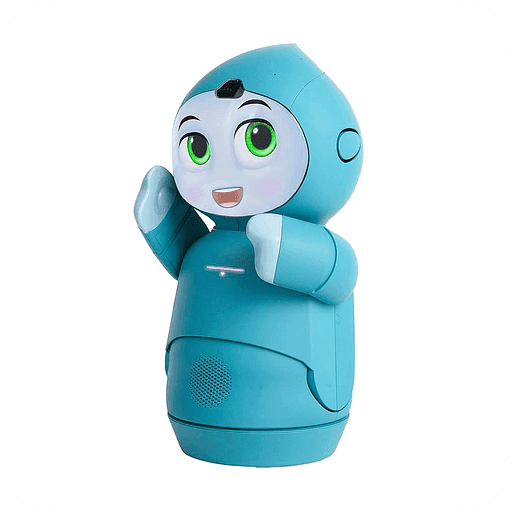
Moxie was an $799 social robot from Embodied Inc that talked with children aged 5 to 10 and became a genuine companion for many autistic kids. Embodied ceased operations in November 2024 after a lead investor pulled out of a funding round at the last minute. Because Moxie's conversation ran entirely on Embodied's cloud, the robots stopped working when the servers went dark on 30 January 2025 — no refunds, no offline mode. A volunteer project, OpenMoxie, later revived them on local servers.
Last known pricing: $799 device plus subscription (historical)
2024 (11)

TuSimple, founded in 2015, built autonomous semi-trucks to haul freight hub-to-hub and went public in 2021 at an ~$8.5B valuation. A lost Navistar partnership, a self-driving crash, and federal probes into its China ties unraveled it. TuSimple delisted from Nasdaq in January 2024, parted with most of its autonomous-driving staff, and by December 2024 had rebranded to CreateAI, abandoning trucking entirely to pivot into AI animation and gaming in China.
Last known pricing: Enterprise freight pilots

Cruise was the GM-funded autonomous driving company that operated robotaxis in San Francisco, Phoenix, and Austin. After an October 2023 incident in which a Cruise vehicle dragged a pedestrian 20 feet, the company suspended California operations and entered a year of regulatory and leadership crisis. GM announced the full wind-down of the robotaxi program in December 2024, citing $10 billion in cumulative losses. The remaining technology was folded into GM's consumer ADAS efforts rather than run as an independent service.

Forward Health was the AI-augmented primary care clinic chain founded in 2016 by Adrian Aoun (ex-Google, founder of Wavii). It reached a $1B+ valuation around 2021 by combining physical clinics with AI diagnostic tools. CarePods — self-service AI clinic kiosks — launched in 2023 to mixed reception and never scaled. Forward shut down all operations in November 2024, with Aoun citing operational complexity and inability to reach profitability. The shutdown became the canonical example of why AI primary care models that include physical clinics face economics that pure-software AI avoids.

AtOnce was a programmatic SEO writer and AI article generator that promised bulk, template-driven content for businesses. Its web app went dark around November 2024 — the hosted deployment was pulled and the site began returning a "deployment not found" error — with no announcement. A brief reappearance as an SEO-agency page followed, but the AI writing tool itself did not return.

SinCode's AI writing and content platform was wound down by its own team, which pointed remaining users towards other agent tools; Krater.ai published a migration notice for stranded customers. The domain has redirected off-site since late 2024 and now lands on an unrelated product, while sincode.ai's own paths return 404. Last stable capture 7 September 2024.

AllHere, founded in 2016 by Joanna Smith-Griffin, built AI chatbots to fight student absenteeism and later powered 'Ed,' a $6M student-support assistant for the Los Angeles Unified School District. Launched in March 2024, Ed was pulled within months as AllHere collapsed and filed for Chapter 7 bankruptcy in June 2024. In late 2024 the founder was arrested and charged with securities and wire fraud; prosecutors said she inflated revenue that was actually about $11,000.
Last known pricing: District and enterprise contracts

Ghost Autonomy built self-driving software for consumer vehicles and, late in its life, explored applying multimodal LLMs to driving with a $5M investment from the OpenAI Startup Fund. Having raised about $220M since 2017 without shipping a commercial product, it ceased operations on April 3, 2024, citing an uncertain path to profitability and the long road to commercializing autonomy.
Last known pricing: Enterprise / OEM licensing

Advanced blockchain analytics engine powered by AI. The product has since been folded into Chainintel; visitors to the original URL are now redirected to chainintel.info.
Instoried, an Indian emotion-analysis writing assistant founded in 2017, shut down around March 2024 after the founder went quiet with investors. Its domain (instoried.com) has since been repurposed and now redirects to an unrelated site.

Artifact was a personalized AI news app from Instagram co-founders Kevin Systrom and Mike Krieger, launched in 2023 as a "TikTok for text." Systrom announced the shutdown in January 2024, saying the market opportunity wasn't big enough to justify continued investment. The app went dark in early April 2024; Yahoo then acquired the underlying personalization technology and folded it into Yahoo News.
Last known pricing: Free

Coqui was founded by engineers from Mozilla's shuttered speech team — Eren Gölge, Josh Meyer, Kelly Davis and Reuben Morais — and became the reference open-source text-to-speech stack, with XTTS handling voice cloning from seconds of audio across dozens of languages. The commercial Coqui Studio and its API wound down at the turn of 2024, with founders citing competition and a preference for open source over commercialisation. The models remain on GitHub and Hugging Face and are still widely used.
Last known pricing: Free tier plus paid Coqui Studio subscription (historical)
2023 (4)
Olive AI was the healthcare automation startup that hit a $4B valuation in mid-2021 — the highest-valued healthcare AI company at peak hype. Founded by Sean Lane in 2012 in Columbus, Olive offered RPA-based automation for hospital revenue cycle work. Aggressive M&A expanded surface area faster than the tech could deliver. By 2022 customers complained 'Olive AI' was RPA marketing rather than real AI. The company sold core revenue-cycle assets to Waystar and Humata Health in October 2023 and wound down. Olive became the canonical example of the 2023 healthcare AI valuation reset.

Filed Chapter 7 bankruptcy on 2023-08-09 after MindMaze take-private deal collapsed. Once valued at $2B; UK business sold to eMed; US operations wound down.
Writesonic sunset the PhotoSonic subproduct; the subdomain no longer resolves.

Embark Trucks was the autonomous trucking company that went public via SPAC in November 2021 at ~$5B valuation, founded in 2016 by Alex Rodrigues and Brandon Moak (both Thiel Fellows). The company targeted Level 4 trucking on US interstates and ran a test fleet Houston-to-El Paso. Despite the SPAC valuation, Embark never generated meaningful revenue and laid off 70% of staff in late 2022. By March 2023 it wound down entirely. Remaining IP was sold to Applied Intuition. Embark became a flagship example of SPAC AV companies whose tech never reached commercial deployment.
2022 (1)
Argo AI was the autonomous driving software company that Ford and VW jointly invested ~$7B in across six years. Founded in 2016 by Bryan Salesky (ex-Google) and Peter Rander (ex-Uber ATG), Argo developed Level 4 tech and ran robotaxi pilots in Pittsburgh, Miami, and Austin. Ford and VW jointly pulled funding in October 2022, citing that the timeline to commercial Level 4 exceeded their planning windows. Ford spun up Latitude AI internally to absorb some Argo talent and refocus on Level 2/3 driver-assistance for production vehicles.
2021 (1)

ROSS Intelligence, founded in 2014 out of the University of Toronto, was an AI legal-research engine that let lawyers ask questions in plain English and get cited case law, taking on Westlaw and LexisNexis. In 2020 Thomson Reuters sued it for training on Westlaw headnotes; unable to fund the litigation, ROSS shut down on January 31, 2021. In February 2025 a federal judge ruled it had infringed Westlaw's copyrights, a landmark AI training-data decision.
Last known pricing: Per-attorney subscription (historical)
2020 (1)
Bossa Nova Robotics, a 2005 Carnegie Mellon spinout, built six-foot autonomous robots that roamed store aisles scanning shelves for out-of-stock items. Its marquee deployment put robots in roughly 500 Walmart stores. In November 2020 Walmart ended the contract, deciding human workers could track inventory faster and more cheaply. Bossa Nova laid off about half its staff and wound down its retail robotics business.
Last known pricing: Enterprise retail contracts
2019 (1)
Jibo, founded in 2012 by MIT roboticist Cynthia Breazeal, was billed as the world's first social robot, a swiveling, expressive desktop companion that danced, told jokes, and recognized faces. It raised about $73M and shipped in 2017 at $899, but cost far more than an Echo while doing less. The company ran out of money in 2018; its servers were shut down in March 2019, when Jibos delivered a farewell message and one last dance. The patents passed to NTT Disruption, which later closed too.
Last known pricing: $899 one-time hardware (2017)
Sign up for our newsletter
Receive weekly updates so you can stay up-to-date with the world of AI
Sign up for our newsletter
Receive weekly updates so you can stay up-to-date with the world of AI
The AI tools directory for discovering, exploring, and comparing the most innovative AI tools in the industry