Microsoft AutoGen
Microsoft's multi-agent conversation framework for building complex agentic systems.
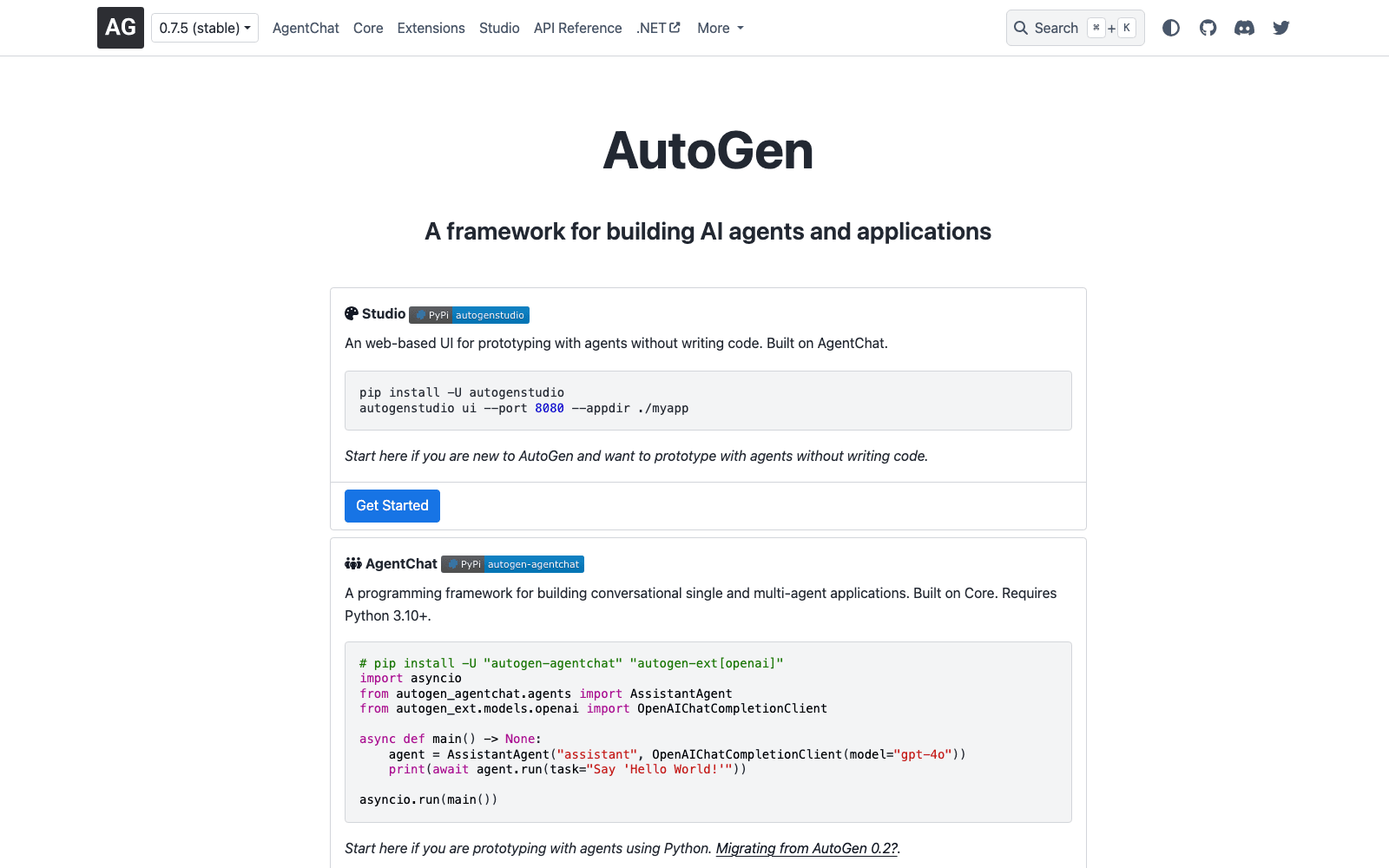
Overview
Microsoft AutoGen: Multi-Agent Framework from Microsoft Research
Microsoft AutoGen is Microsoft Research's flagship multi-agent framework. AutoGen popularized multi-agent conversation patterns that many later frameworks copied. Active development, Microsoft backing, and a healthy ecosystem of academic research validating its approach.
Key Features
- Microsoft Research's flagship multi-agent framework
- 35K+ GitHub stars; widely cited in AI agent research
- Agent-to-agent conversation, code execution, human-in-the-loop
- AutoGen Studio low-code GUI for non-developers
- Enterprise-grade with Azure integrations
Ideal Use Case
Research teams and engineers building multi-agent systems — particularly those who want a battle-tested framework with strong Microsoft / Azure integration.
Why Use Microsoft AutoGen
AutoGen popularized multi-agent conversation patterns that many later frameworks copied. Active development, Microsoft backing, and a healthy ecosystem of academic research validating its approach.
FAQ
What does Microsoft AutoGen help developers build? Microsoft AutoGen is a multi-agent conversation framework that lets developers create complex agentic systems where multiple AI agents can collaborate and communicate with each other to solve problems.
Who should use Microsoft AutoGen? Microsoft AutoGen is designed for developers and engineers who want to build sophisticated AI agent applications that require multiple agents working together in conversation-based workflows.
How much does Microsoft AutoGen cost? Microsoft AutoGen is completely free to use. Visit the Microsoft AutoGen documentation page for setup instructions and getting started guides.
How does Microsoft AutoGen compare to similar tools? While tools like GitHub Copilot, Cursor, and v0 focus on code generation and UI building, Microsoft AutoGen specifically specializes in multi-agent conversation frameworks, making it better suited for developers building complex agentic systems with agent-to-agent communication.
tl;dr
Microsoft's flagship multi-agent framework. 35K stars. Conversation patterns + AutoGen Studio low-code GUI.
Related
Looking for more options? Browse the Developer Tools directory or read our best AI coding tools listicle. Microsoft AutoGen is also tracked on Crunchbase.
Why Use Microsoft AutoGen
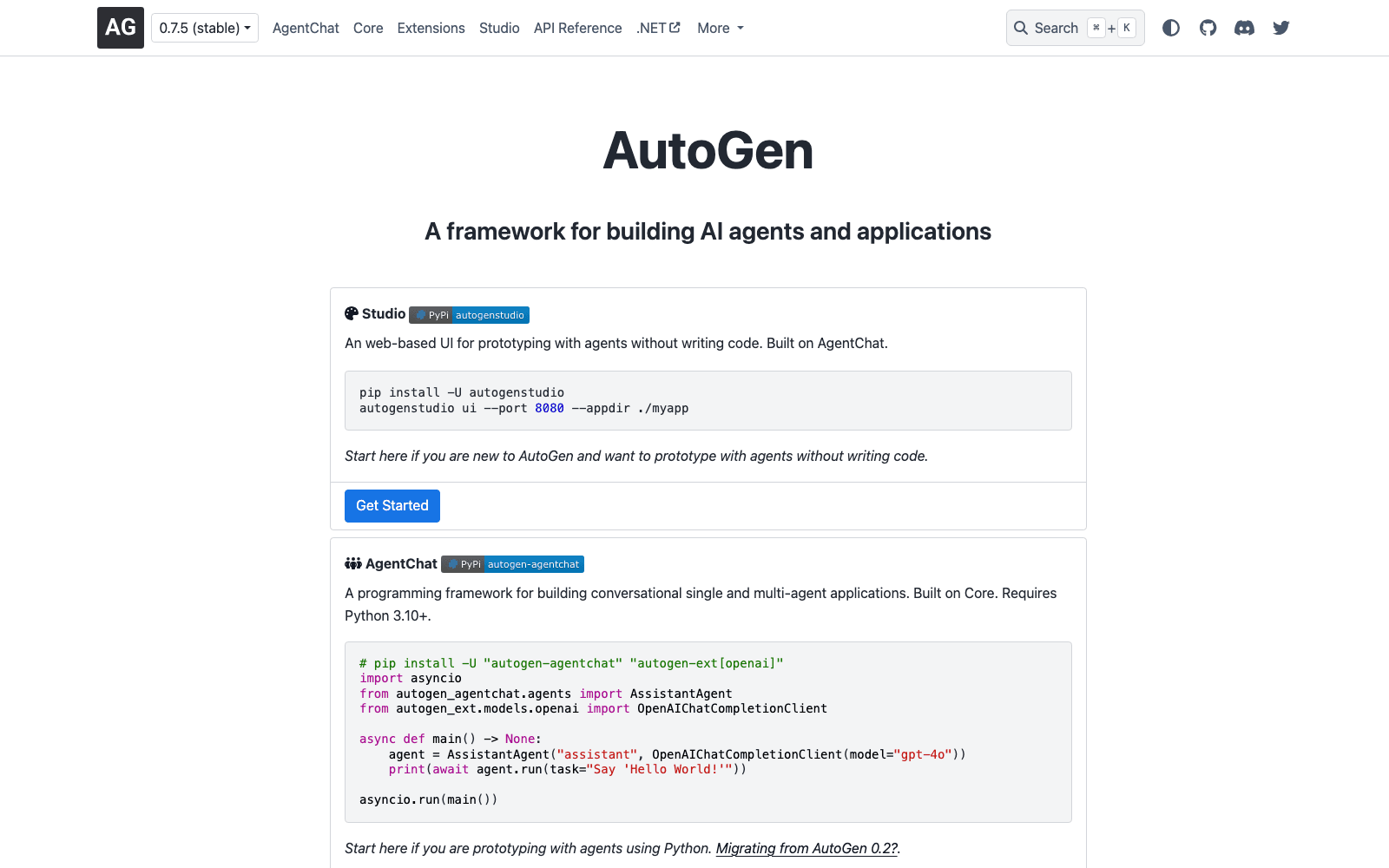
Editorial Review
Our take on Microsoft AutoGen.

Microsoft AutoGen is a free multi-agent framework for orchestrating conversations between LLMs, useful for building complex workflows but requires hands-on integration work.
What works
- Free and open-source, no vendor lock-in
- Fine-grained control over agent behavior and conversation flow
- Strong community rating suggests real production usage
What doesn't
- Requires significant integration work; not a finished product
- Market positioning unclear against simpler and more specialized tools
Microsoft AutoGen handles agent-to-agent and agent-to-human conversations through a conversation loop pattern. You define agents with specific roles and capabilities, then let them iterate on tasks—useful for scenarios where you need reasoning to compound across multiple LLM calls or where human feedback needs to feed back into the loop. It's open-source and free, which removes the activation cost.
The framework sits lower on the abstraction stack than fully managed agent platforms. You're responsible for designing the conversation flow, managing state, and handling the plumbing between agents. That's a strength if you want fine-grained control; it's friction if you just want to chain some API calls.
Best fit: teams comfortable with Python and willing to build scaffolding in exchange for flexibility. If you need something that works out of the box with minimal tuning, you'll probably hit limits faster than you expect.
User Reviews
Similar Tools