Best AI Tools for Your Creative Process (2026)









Best AI Tools for the Creative Process in 2026
If you're researching the best AI tools for your creative process in 2026, the right framing isn't "the best AI tools by benchmark" — it's "which AI tools fit the actual stages of creative work." Real creative process spans ideation, research, drafting, visualization, iteration, and finalization, and there's now a category-defining AI tool for each stage that fits into the workflow rather than replacing it.
This guide covers the eight AI tools that map to those stages of the creative process in 2026: ChatGPT, Claude, Midjourney, Gamma, Runway Research, Notion AI, Suno, and Perplexity. Each is rated on which stage of creative work it serves, the production credibility behind the pitch, and which type of creative practitioner it fits.
How We Evaluated These Tools
The eight AI tools below were evaluated on five criteria, in priority order:
- Process fit — does the tool serve a specific stage of creative work (ideation, research, drafting, visualization, iteration) rather than being a generalist trying to do everything
- Real production usage by working creatives — verified usage by designers, writers, filmmakers, musicians, and other working creative professionals (not just hobbyists)
- Workflow integration — fits into existing creative workflows (Figma, Adobe, Notion, web-based DAW) rather than requiring redesigning the workflow
- Pricing accessibility — entry tier under $30/user/month so individual creatives can deploy without enterprise procurement
- 2026 currency — has the product shipped meaningful AI capability in the last 12 months that supports actual creative work
We deliberately did not include category-leader specialty tools whose value is bounded by one creative output — those belong in dedicated guides like Top 6 AI Image Generators (2026) or Top 7 AI Video Generators (2026). The tools here are picked specifically for the process, not for the artifact.
The Six Stages of Creative Work
Creative process — across writing, design, video, music, and other disciplines — generally spans six stages where AI tools now produce measurable productivity gains:
- Ideation: brainstorming concepts, exploring directions, generating variations of a brief
- Research: finding references, gathering context, exploring the problem space
- Drafting: producing initial drafts, sketches, structures, frameworks
- Visualization: mood boards, image references, video concepts, style explorations
- Iteration: refining drafts, adjusting tone, varying compositions
- Finalization: polishing, formatting, preparing for delivery
The eight tools below own one or more of those stages in 2026.
Quick Comparison
| Tool | Best for |
|---|---|
| ChatGPT | Ideation + drafting. The default cross-stage AI for any creative discipline. |
| Claude | Long-form drafting + iteration. Best for writers and creators working on extended pieces. |
| Midjourney | Visualization + mood boards. Best for visual creatives exploring directions. |
| Gamma | Drafting + finalization for presentation-shaped creative work. |
| Runway Research | Visualization + iteration for video and motion creative. |
| Notion AI | Project organization + drafting inside the workspace your team uses. |
| Suno | Ideation + drafting for music creative work. |
| Perplexity.ai | Research stage. AI-native search for creative problem space exploration. |
Ideation and Drafting
1. ChatGPT — The Universal Creative Brainstorming Partner
ChatGPT is the default AI tool most working creatives use for ideation across disciplines. The conversational interface fits the brief → explore → narrow workflow that early-stage creative work runs on, and the breadth of capability (text, vision, image generation) makes it the broadest single tool.
Production credibility: OpenAI passed 800M weekly active ChatGPT users in 2025; reported $5B+ ARR by late 2025; deployed widely across creative agencies, studios, and individual practitioners. ChatGPT Plus ($20/month) ships GPT-5, image generation, voice mode, and the conversation-history features that make it usable as a creative partner over time.
What it wins at: open-ended ideation across disciplines, exploring multiple directions for a brief, and the breadth of cross-medium creative tasks (write the lyric, then describe the visual, then suggest the soundtrack — all in one thread).
Where it falls down: specialty creative work (long-form fiction, complex video editing, music production) is better served by purpose-built tools. ChatGPT is the brainstorming partner; specialty tools are the production tools.
2. Claude — Long-Form Drafting and Iteration
Claude (Opus 4.7 / Sonnet 4.6) is the alternate frontier LLM that many writers and creators prefer for long-form work and iterative drafting. The 200K+ token context window holds entire manuscripts in memory; the writing voice is widely cited as more nuanced than GPT-5's for narrative tasks.
Production credibility: Anthropic raised $4B from Amazon plus a $2B Google round; Claude is deployed via Anthropic's Pro and Team plans plus the API; powers Sudowrite (long-form fiction), Notion AI's Q&A features, and many creative-tool integrations as the underlying model.
What it wins at: long-form drafting (essays, articles, manuscripts), iterative editing across an entire document, and the use case where holding a lot of context (a screenplay, a brand guidelines document, a research corpus) matters more than instant turnaround.
Where it falls down: for image generation, multimodal video work, or instant-vibes brainstorming, ChatGPT's broader capability footprint fits better. Claude is the long-form drafting partner specifically.
Visualization
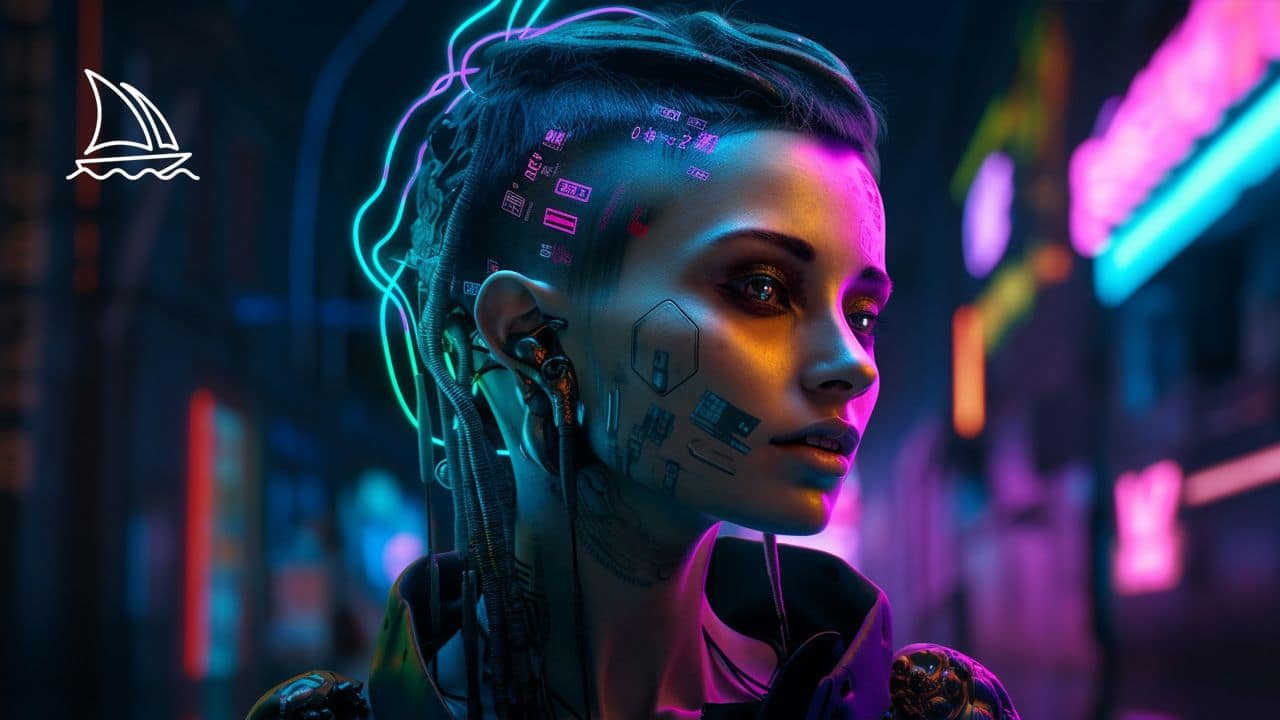
3. Midjourney — Visual Concepting and Mood Boards
Midjourney is the AI image generator art directors keep coming back to for visualization-stage creative work — generating mood boards, exploring visual directions, and producing reference imagery for downstream production. The aesthetic-quality lead has been the most durable competitive moat in the image-gen category.
Production credibility: bootstrap-funded under founder David Holz; reported $200M+ ARR by mid-2024; >20M Discord members at peak; standard tooling at major editorial publications, ad agencies, and design studios for the visual-concepting use case specifically.
What it wins at: mood boards, visual reference exploration, hero-image-shaped creative work, and any project where the brief is "explore this aesthetic" more than "render this exact thing."
Where it falls down: for typography-heavy work, Ideogram fits better; for game and production-art pipelines, Leonardo.ai fits better; for product photography or precise rendering, FLUX or DALL-E fit better. See Top 6 AI Image Generators (2026) for full image-gen depth.
4. Runway Research — Video and Motion Creative Exploration
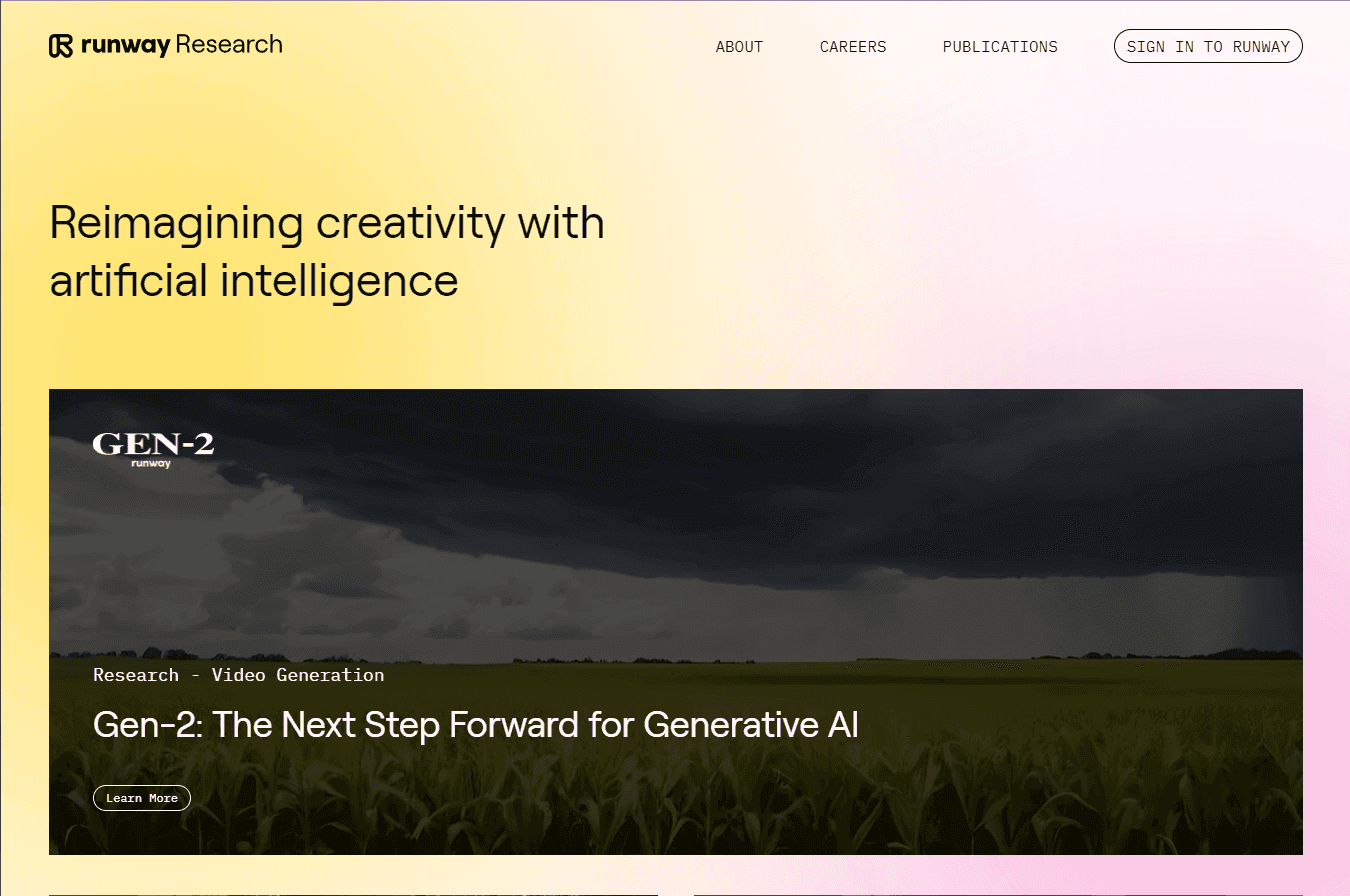
Runway is the AI-creative-technology platform for video and motion work — Gen-3 / Gen-4 models for video generation, plus the integrated editor for cuts, color, and AI-driven effects. For creative work that involves video, motion, or time-based media, Runway is the single most-deployed AI creative tool.
Production credibility: raised $230M+ Series C at a $1.5B valuation (2023) led by Google, Salesforce, Nvidia, and others; deployed across major film studios and ad agencies including Netflix, Madonna's tour visuals, Coca-Cola's AI campaign, and the New Balance + Studio Ghibli-inspired ad work; the platform consistently ships frontier video-generation capability quarterly.
What it wins at: video-and-motion creative exploration, AI-driven editing for time-based media, and the use case where visualizing motion and pacing matters before traditional production.
Where it falls down: for full traditional video production (multi-camera shoots, complex VFX pipelines), Runway is the AI-augment, not the replacement. Pairs with Adobe Premiere or DaVinci Resolve for production-grade video work.
Drafting and Finalization
5. Gamma — Presentation-Shaped Creative Work
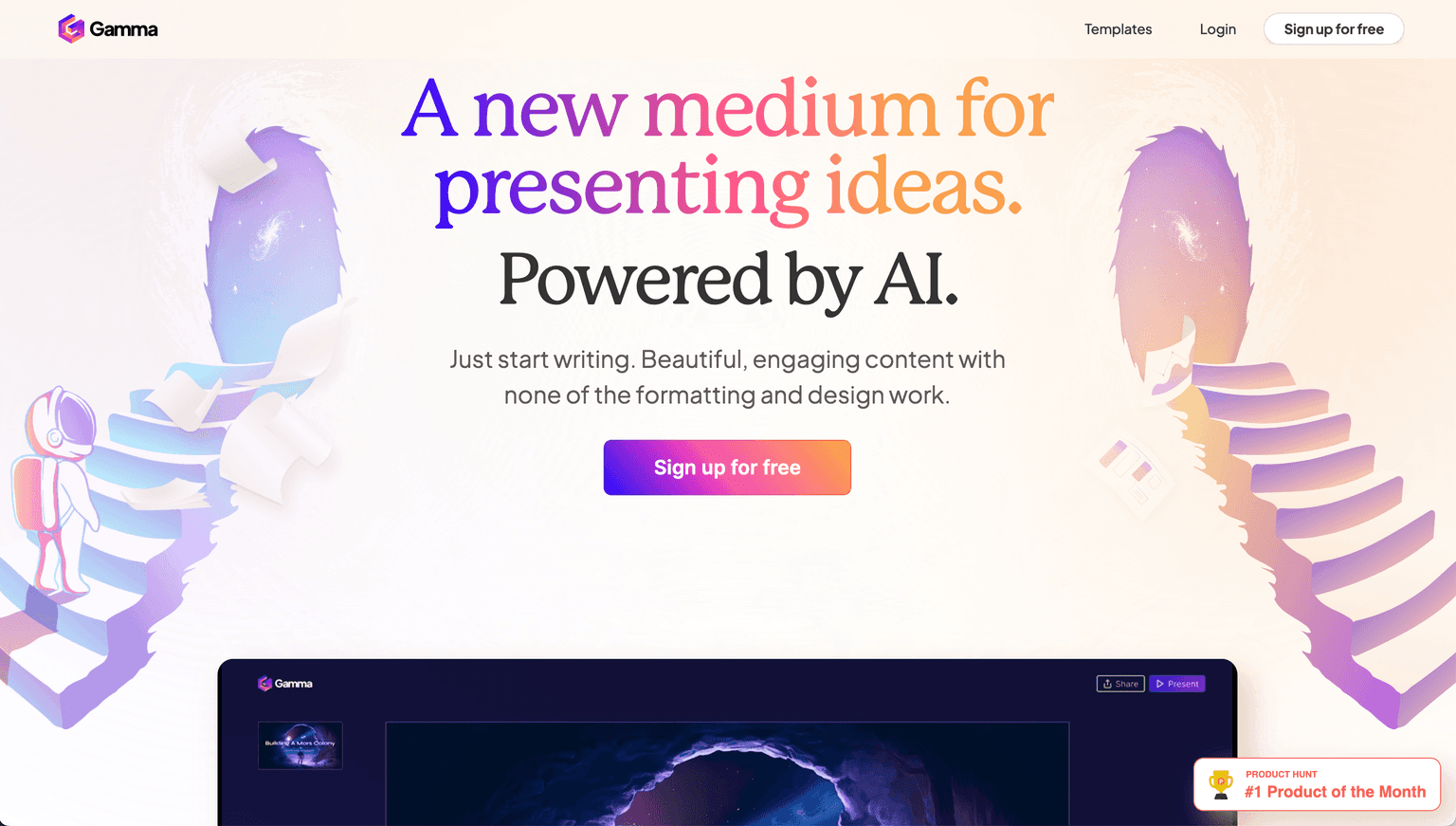
Gamma is the AI-driven presentation and document tool for creative work that ends up as a slide deck, a one-page pitch, or a similar presentation-shaped artifact. The product handles drafting (generate the deck from a prompt), iteration (refine slides individually), and finalization (export to clean PDF or live web link) in one workflow.
Production credibility: raised $20M+ across rounds; reported >50M decks created on the platform by 2025; consistently top-rated AI presentation tool in independent reviews; pricing $10–20/user/month at the entry tier covers individual creative use.
What it wins at: presentation-shaped creative work (pitch decks, mood-board decks, proposal documents), the rapid first-draft use case where typing in PowerPoint is the bottleneck, and the AI-iteration workflow for refining individual slides.
Where it falls down: for high-design custom decks (brand-critical investor pitches, agency client work where the deck IS the work), Figma + manual design fits better. Gamma is the rapid-draft tool, not the finishing tool for design-heavy decks.
Project Organization and Research
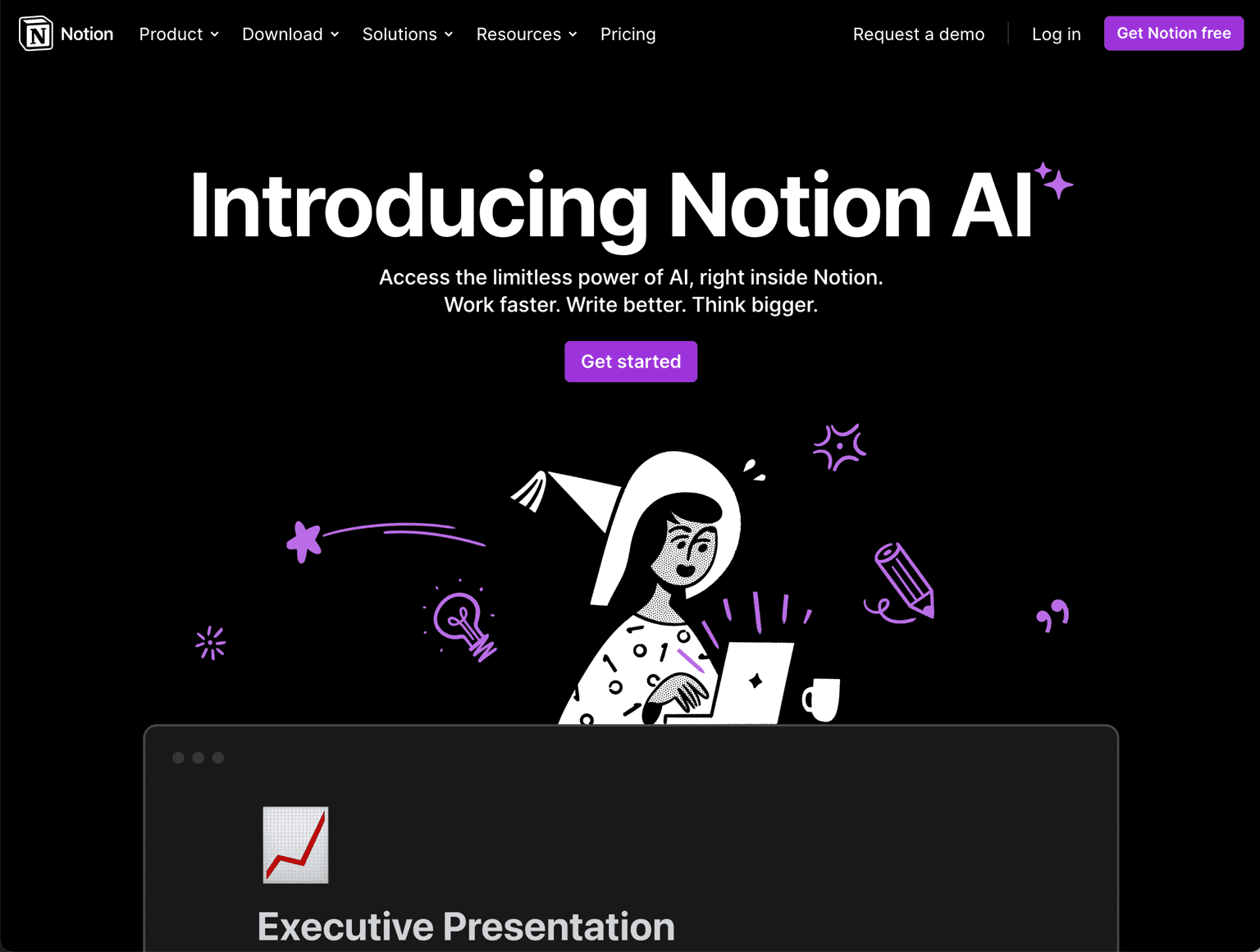
6. Notion AI — Project Organization Inside Your Workspace
Notion AI is the AI inside the workspace many creatives already use for project management, mood boards, and creative ops. For Notion users, the AI lives where the work already lives — summarize meeting notes, draft project briefs, query the team wiki, generate task lists from creative discussions.
Production credibility: Notion crossed 100M+ users by late 2024; the company is valued at $10B+; Notion AI ships across all paid tiers; Anthropic Claude underneath powers most of the AI features. Notion is the canonical workspace for creative agencies, studios, and individual creatives running their own ops.
What it wins at: creative project organization inside the workspace your team uses, summarization of creative discussions and feedback, and the productivity-AI-where-the-work-already-happens use case for creative ops.
Where it falls down: for non-Notion creative shops, the answer is the equivalent productivity AI in whatever workspace you use (Microsoft 365 Copilot, Google Workspace AI). Notion AI specifically is the right pick if your creative team is on Notion.
7. Suno — Music Ideation and Drafting
Suno is the AI music generator that handles the ideation and drafting stages of music-shaped creative work. Generates full songs (lyrics, vocals, instruments) from a text prompt; the v4 release dramatically improved production quality. For songwriters, producers, and creative directors who need music sketches at the speed of ideation, Suno is the category-defining tool.
Production credibility: raised $125M+ at a $500M+ valuation (2024) led by Lightspeed, Founders Fund, and others; reported 12M+ users by late 2024; deployed across consumer creators and increasingly inside professional music-production pipelines as a sketching tool.
What it wins at: music ideation from a text prompt, sketching for songwriters and producers, soundtrack exploration for video and creative projects, and the use case where "make me a song that sounds like X" is faster than recording it.
Where it falls down: for finishing-quality production music, vocals at studio quality, or use cases where the AI generation needs to be commercially-cleared, traditional production fits better. Suno is the ideation tool; finishing happens in a DAW.
Research
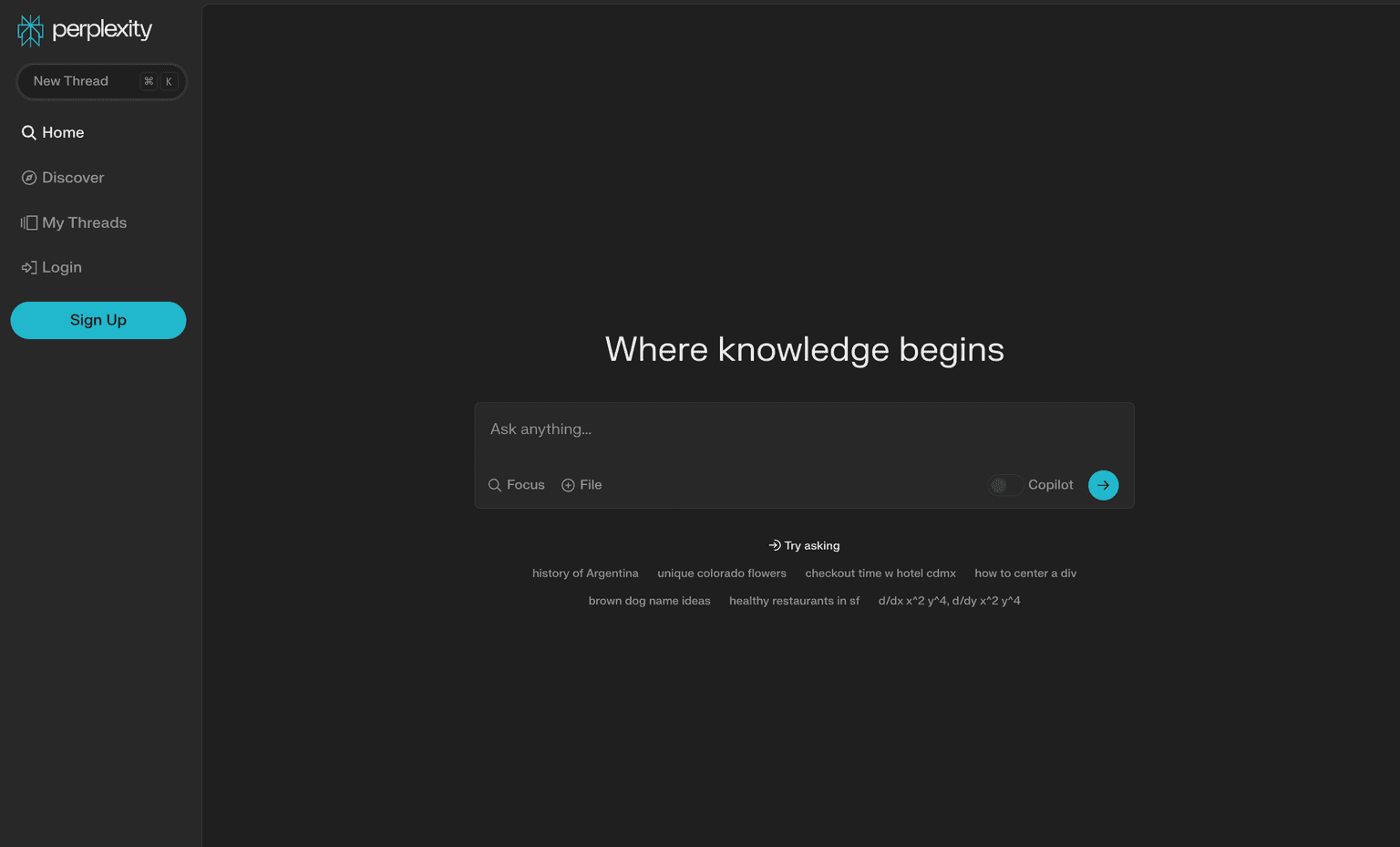
8. Perplexity.ai — AI-Native Search for Creative Research
Perplexity.ai is the AI-native search engine that the largest population of creative professionals replaced Google with for research-heavy queries. Cited sources, follow-up questions in the same thread, and the Pro Search reasoning mode for harder queries. For the research stage of any creative project — finding references, exploring problem space, gathering context — Perplexity is the most-cited AI research tool in 2026.
Production credibility: raised $1B+ across rounds at a $9B+ valuation; reported 22M+ monthly active users; partnerships with major publishers (Time, Fortune, Der Spiegel) for licensed content; the Comet browser launched in 2025 extending the AI-native paradigm into the browser layer.
What it wins at: research-heavy creative work (the journalism, documentary, brand-research use cases), queries where source citation matters, and the long-tail of "find me the right reference" questions where Google's classic results are too cluttered to skim quickly.
Where it falls down: for deep academic research with citation export, dedicated tools (Elicit, Consensus) fit better. For consumer-grade product or shopping queries, Google's classic results still win on commercial breadth. Perplexity is the creative-research search engine specifically.
How to Map Tools to Your Creative Process
Match the tools to the stages of work your creative practice actually runs:
- Ideation-heavy practice (creative directors, brand strategists, content marketers): ChatGPT + Midjourney + Notion AI. Brainstorm + visualize + organize.
- Long-form writing (writers, journalists, screenwriters): Claude + Perplexity + Notion AI. Long-form drafting + research + organization.
- Visual creative (designers, illustrators, art directors): Midjourney + ChatGPT + Notion AI. Visual + ideation + project ops.
- Video and motion creatives: Runway + ChatGPT + Notion AI. Motion exploration + ideation + project ops.
- Music creatives (songwriters, producers): Suno + ChatGPT + Notion AI. Music sketching + lyric ideation + project ops.
- Pitch and presentation work (founders, agencies): Gamma + ChatGPT + Midjourney. Deck drafting + ideation + visual concepting.
The most-recommended 2026 starting investment for any individual creative: ChatGPT or Claude ($20/month) + Midjourney ($10–30/month) + Notion AI (free if already on Notion). Total $30–80/month, covers ideation + visualization + organization across most creative practices.
Adjacent Reading
- Top 6 AI Image Generators Compared (2026) — full image-gen comparison
- Top 7 AI Video Generators (2026) — full video-gen comparison
- Best AI Tools for Audio Creation and Editing (2026) — audio production tools
- Top AI Voice Tools for 2026 — voice cloning and TTS
- Best AI Headshot Generators (2026) — professional headshots
- Best AI Tools for Copywriters (2026) — copywriting tools
Frequently Asked Questions
What's the single best AI tool for the creative process in 2026? For most working creatives: ChatGPT or Claude as the cross-stage AI brainstorming partner ($20/month). Add Midjourney for visual concepting if your practice involves visual work; add Suno for music; add Runway for video. The single tool that fits the most creative practices is ChatGPT or Claude — pick one and use it daily for a month before adding specialty tools.
Are AI tools replacing creative professionals? Not the good ones. The market for cheap commodity creative work has collapsed; the market for senior creatives who can prompt, edit, and curate at speed has expanded. The teams winning with these tools treat them as leverage on senior creatives rather than as a way to skip having them.
Should I use one AI tool or multiple for creative work? Most working creatives use 2–4 — typically a cross-stage tool (ChatGPT or Claude), a visualization tool (Midjourney or Runway depending on medium), and a project organization tool (Notion AI). The seat costs are a rounding error against billable hours; different tools win at different stages of the creative process.
Are these AI tools safe to use for client work? The paid tiers of ChatGPT, Claude, Midjourney, and the others ship commercial-use rights for paid users. For client work involving brand assets or unreleased products, use the enterprise tier with the appropriate data-handling settings, and verify the vendor's commercial-use license terms before delivering. Trademark and likeness laws still apply regardless of what the generator's terms say.
What's the typical cost for a creative AI stack in 2026? Individual creative stack: $30–80/month (ChatGPT + Midjourney + Notion AI). Visual specialist (designer, illustrator): $50–150/month (add specialty image tools). Video specialist: $80–200/month (add Runway Pro). Studio or agency: $300–1,000/month per creative depending on the specialty mix. The seat costs are typically <5% of billable hourly rates — the productivity lift more than covers the cost.
Can AI generate finished commercial-quality creative work? For specific use cases (stock-photo replacement, basic explainer video, demo music), yes. For high-stakes creative work (brand campaigns, hero films, signature original art), AI tools are accelerants for human creatives — they handle ideation, exploration, and iteration faster, but the finalization and creative direction remain human. The teams getting the most value treat the AI as a partner, not as a vending machine.
How do I know which stage of the creative process to apply AI to first? Start with the stage that consumes the most time in your current process. If you spend hours on brief-to-first-draft, start with ChatGPT or Claude. If you spend hours on mood boards, start with Midjourney. If you spend hours on project organization, start with Notion AI. Compounding value comes from solving real bottlenecks, not from owning the most tools.
Final Thoughts
The AI tooling landscape for creative work in 2026 is mature in a way it wasn't three years ago. The category-defining tools have separated from the pack across each stage of the creative process — ChatGPT and Claude for cross-stage ideation and drafting, Midjourney for visualization, Runway for video and motion, Suno for music, Gamma for presentations, Notion AI for organization, Perplexity for research.
For any creative not yet using AI tools, the highest-ROI 2026 move is: deploy one cross-stage tool (ChatGPT or Claude) plus one specialty tool matched to your medium, run them daily for 30 days, and let the productivity lift drive the next decision. The seat costs are a rounding error against billable hours; the time spent over-deliberating tool selection is the real cost most creative practices don't account for.
Compare tools in this collection
Categories these tools span
More collections you may also like

Sign up for our newsletter
Receive weekly updates so you can stay up-to-date with the world of AI
Sign up for our newsletter
Receive weekly updates so you can stay up-to-date with the world of AI
The AI tools directory for discovering, exploring, and comparing the most innovative AI tools in the industry