Top AI Voice Tools for 2026





Best AI Voice Tools for 2026
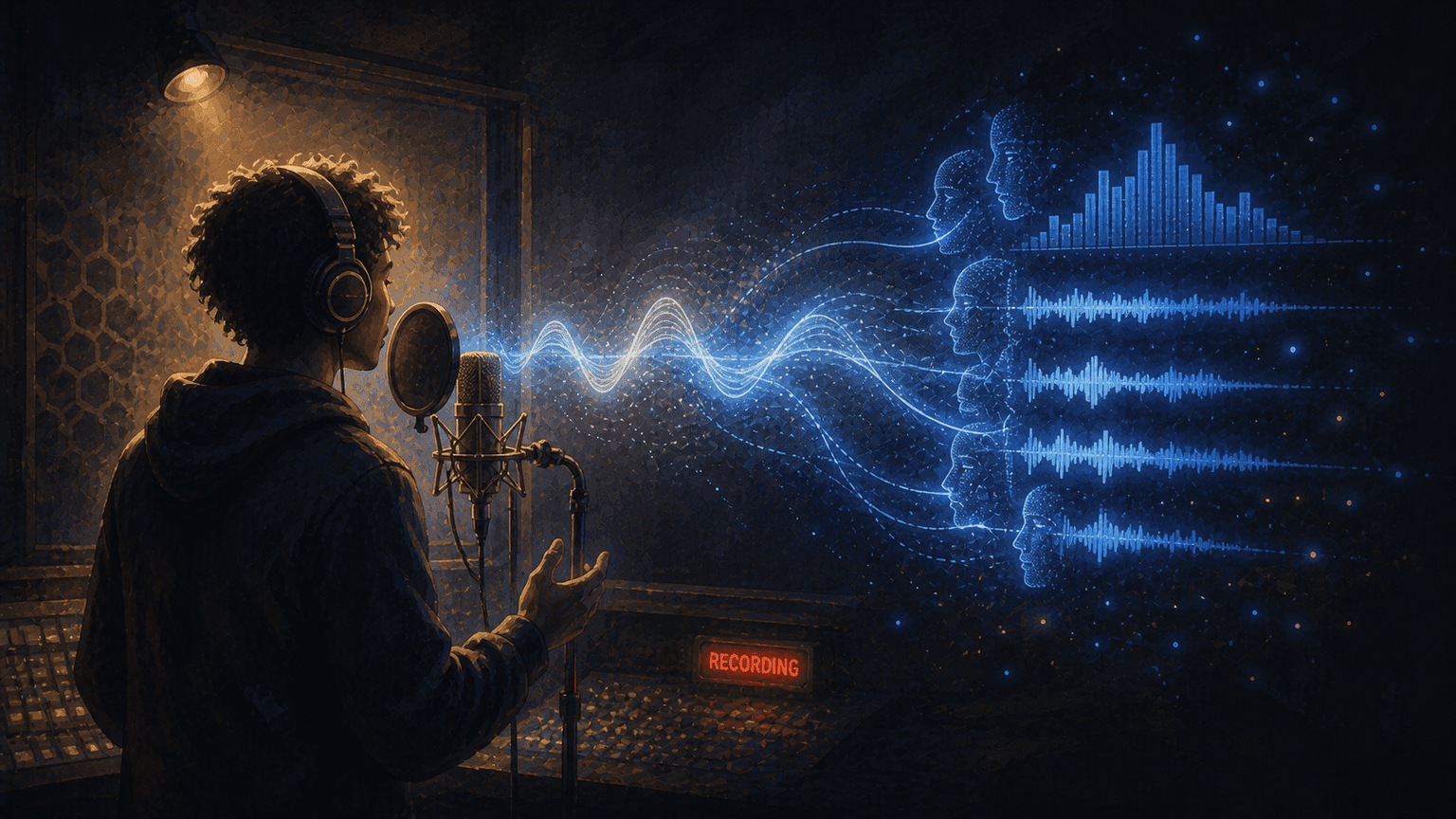
If you're researching the best AI voice tools in 2026, the category has split into two distinct lanes that solve different problems and have different leaders. The classic voice-synthesis lane (TTS for narration, audiobooks, dubbing, accessibility) is dominated by ElevenLabs and Murf. The newer voice-agent lane (AI that makes and answers phone calls, runs sales and support conversations) is the fastest-growing AI category period — Vapi, Bland, Cartesia, and Retell have raised hundreds of millions in 2024–2025 collectively.
This guide covers the seven AI voice tools that move the needle in 2026: ElevenLabs, Murf AI, LMNT, Vapi, Bland AI, Cartesia, and HeyGen. Each is rated by what it ships in production, the lane it fits, and where the regulatory landscape (voice-cloning legislation, AI-disclosure requirements) affects use.
Updated August 2, 2026. PlayHT was removed — it became PlayAI and was acquired by Meta, and the standalone product is gone. Replaced with LMNT in the same slot.
The Three Lanes of AI Voice in 2026
- Voice production (TTS for content): generate spoken audio from text for narration, audiobooks, dubbing, e-learning, accessibility. Leaders: ElevenLabs, Murf AI, LMNT.
- Voice agents (real-time conversational AI for phone calls): AI that makes and answers calls in production — sales, support, scheduling, qualification. Leaders: Vapi, Bland AI, Cartesia.
- Voice + avatars (video): combine AI voice with AI-generated talking-head video for explainers, training, multilingual content. Leader: HeyGen.
The biggest 2026 shift is voice agents going from "impressive demos" to actual production deployments running real customer calls at scale. Klarna, Nubank, and others have publicly disclosed AI handling material percentages of customer-facing calls.
Quick Comparison
| Tool | Best for |
|---|---|
| ElevenLabs | Voice synthesis leader. Best for narration, audiobooks, dubbing, and any voice production where output quality is the primary constraint. |
| Murf AI | Voiceover production specialist. Best for corporate training, e-learning, and explainer videos with mature studio tooling. |
| LMNT | Low-latency speech synthesis with a developer focus. Best when the same voices have to serve both recorded content and live agents. |
| Vapi | Voice agent developer platform. Best for engineering teams building voice agents with full control over the LLM, voice, and conversation flow. |
| Bland AI | Production voice agents at scale. Best for sales and support call automation in high-volume B2C and SMB B2B. |
| Cartesia | Low-latency voice infrastructure. Best for engineers who need the fastest possible TTS APIs for sub-300ms agent responses. |
| HeyGen | AI voice plus avatar video. Best for video content that needs a talking-head presenter without filming one. |
Voice Production: TTS for Content
This is the original AI voice lane and the most mature. The leaders compete on output quality (does the voice sound human?), voice library breadth (how many voices, languages, accents?), and ecosystem (does it integrate with your editing workflow?).
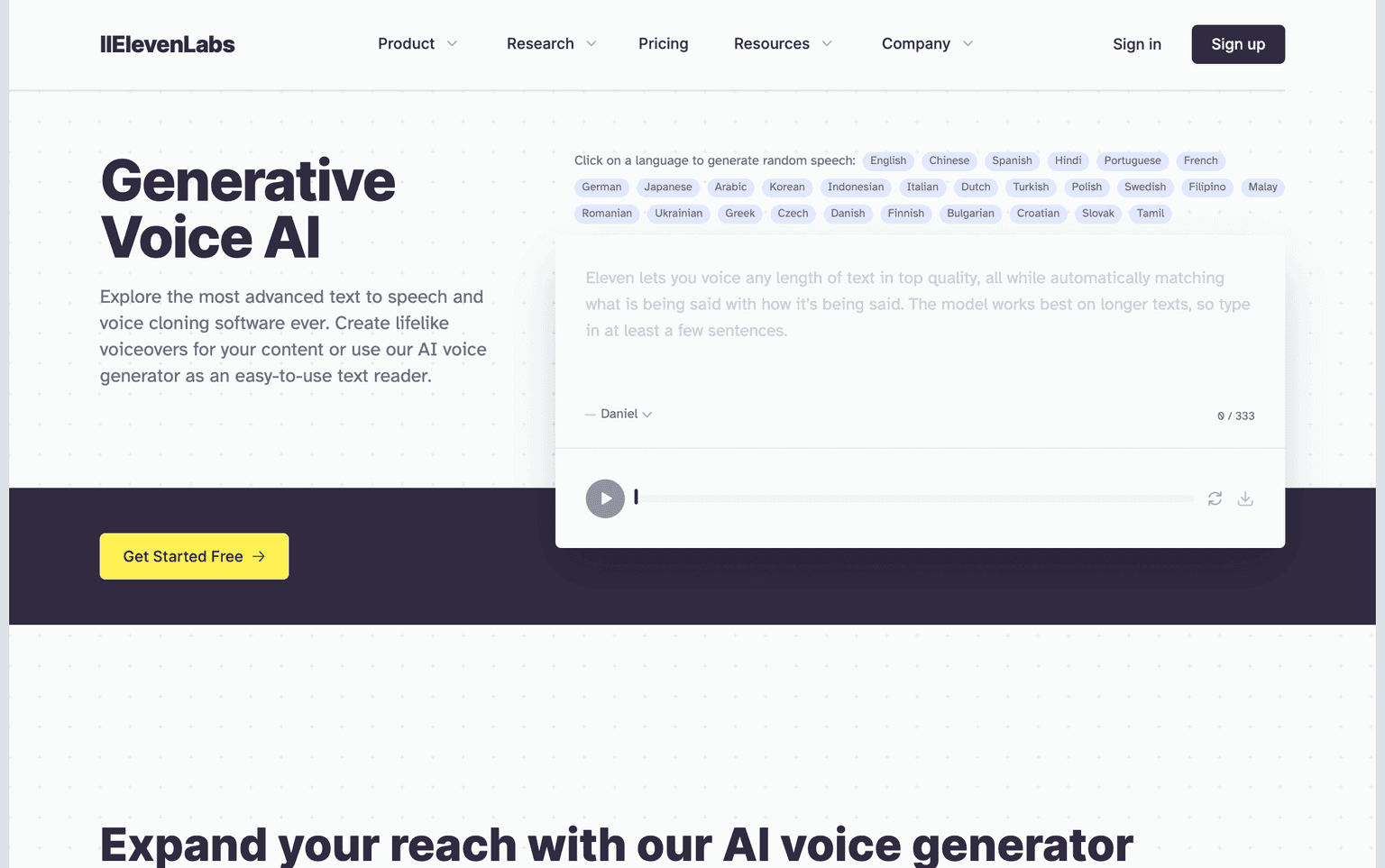
1. ElevenLabs — The Voice Synthesis Leader
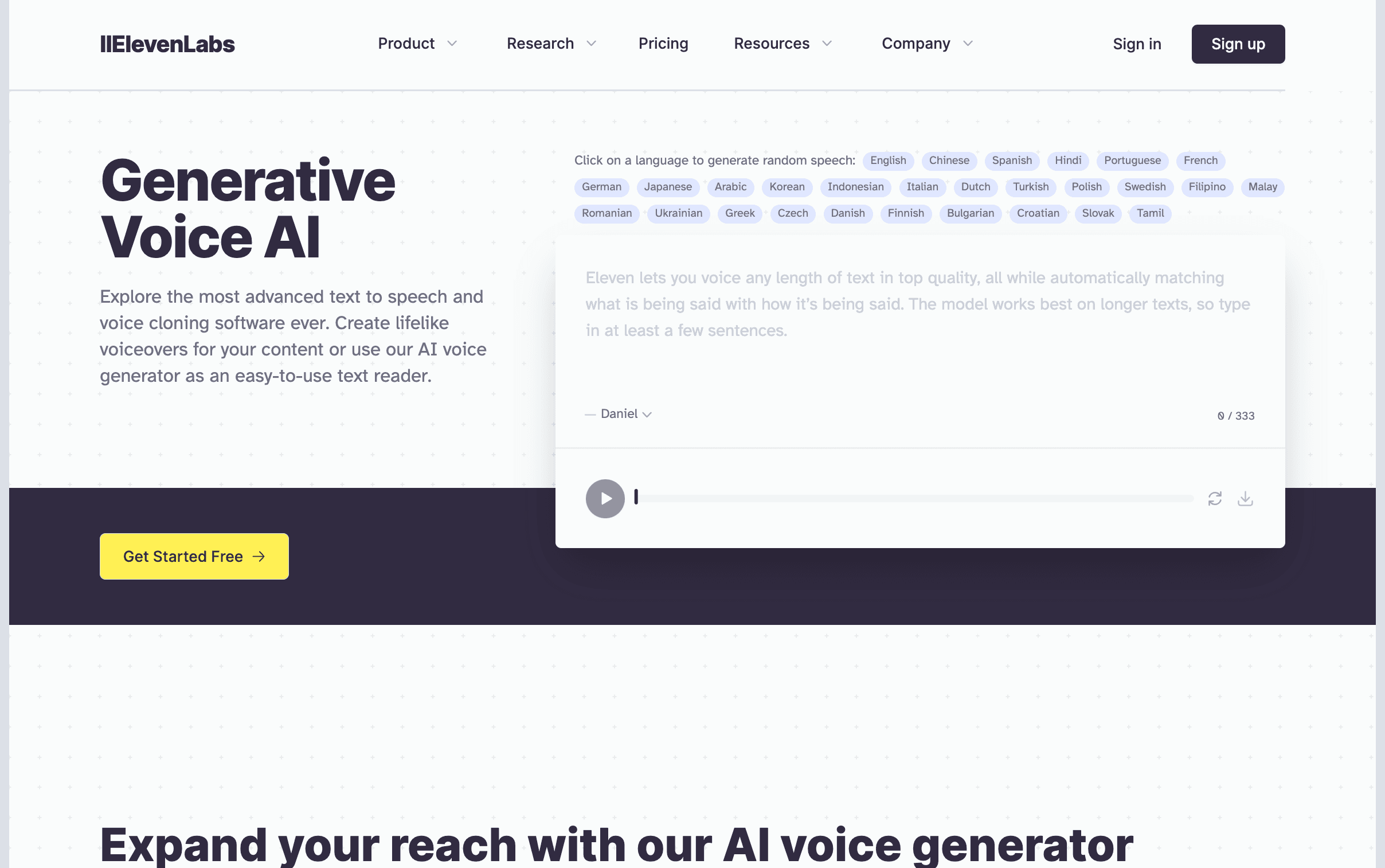
ElevenLabs is the category leader on output quality and the broadest voice library in the industry. The v3 model release brought real emotional control and prosody — the kind of subtle delivery that separates professional voice work from synthetic-sounding TTS. Used in production by audiobook publishers, dubbing studios, indie game and animation studios, and creators across nearly every content category.
What it wins at: narration and audiobook production at studio quality, dubbing across 30+ languages, character voice work for indie creators, and an API ecosystem with the most third-party tool integrations in the category.
Where it falls down: real-time agent latency trails dedicated voice-agent platforms (Cartesia, LMNT). Pricing scales meaningfully on high-volume API use; consumer-tier subscriptions are reasonable, but enterprise volumes need careful planning.
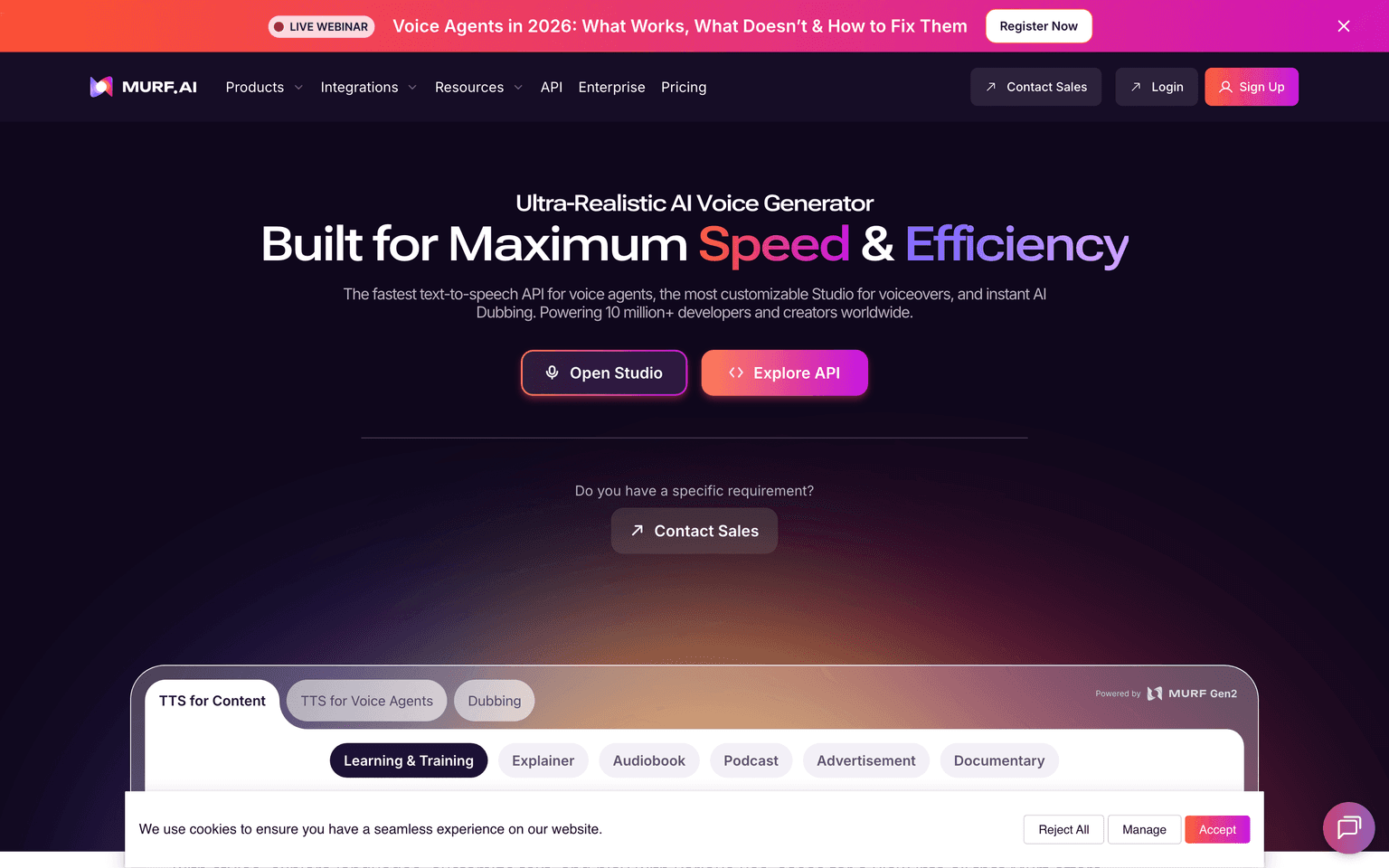
2. Murf AI — Voiceover Production Specialist
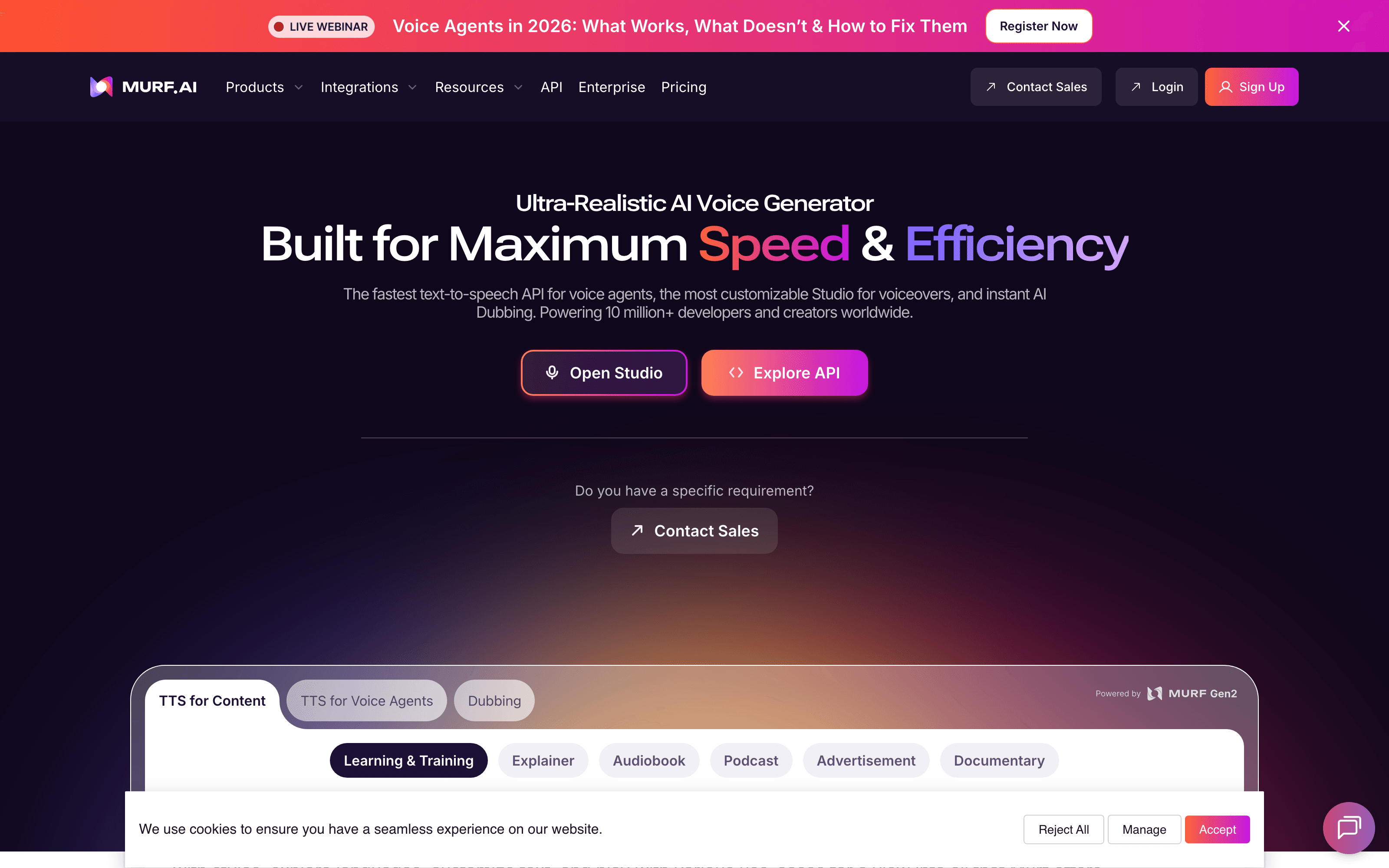
Murf AI targets the corporate voiceover use case specifically — e-learning, training videos, explainer content, marketing voiceovers. Studio-grade tooling for non-engineer voice users (volume control per word, pause insertion, emphasis tagging) that ElevenLabs handles via prompting but Murf gives you a UI for. The voice library skews toward business-appropriate voices over creative or character work.
What it wins at: corporate training and e-learning teams, marketing and explainer-video voiceover, and non-engineer users who want a polished UI rather than an API.
Where it falls down: narrower voice range than ElevenLabs for creative or character work. Output quality on the latest models is competitive but a tier behind the absolute leader.
3. LMNT — Bridge Between Voiceover and Voice Agents
LMNT sits between the voiceover-production tools and the voice-agent platforms — usable as either, with the low-latency synthesis that production-tier tools (ElevenLabs, Murf) trade away for top-end quality. For teams building voice agents that also need recorded content in the same voices, it is the pick that covers both without running two vendors.
What it wins at: streaming synthesis fast enough for live conversation, a straightforward API, and one voice set shared across recorded and real-time use.
Where it falls down: voiceover quality trails ElevenLabs at the top of the range, and the dedicated agent platforms (Vapi, Bland) handle the wider agent stack — telephony, turn-taking, tooling — that LMNT deliberately leaves to you.
A note on this slot: PlayHT held this position until 2025, when it became PlayAI and was acquired by Meta; the standalone product is gone and now sits in our AI graveyard.
Voice Agents: The 2026 Story
Voice agents went from "interesting demo" in 2023 to "running real customer calls in production" in 2025–2026. The leaders below have all raised serious capital, have public production deployments, and have moved past the "can you tell it's AI?" question into the "can it complete the task?" question. The category will consolidate; right now it's a competitive market with real differentiation.
4. Vapi — The Developer Platform for Voice Agents
Vapi is the right pick for engineering teams that want to build voice agents with full control — pick your LLM, pick your TTS provider, pick your STT provider, define your conversation flow, deploy to a real phone number in minutes. The platform handles the orchestration (latency, interruption handling, function calling, telephony integration); you handle the agent logic.
What it wins at: engineering teams building custom voice agents, product workflows that need full control over the conversation flow, and developer-facing UX with the cleanest abstractions in the category.
Where it falls down: requires engineering capacity. For a non-engineering team that wants "a voice agent for sales calls," Bland AI or Synthflow ship faster.
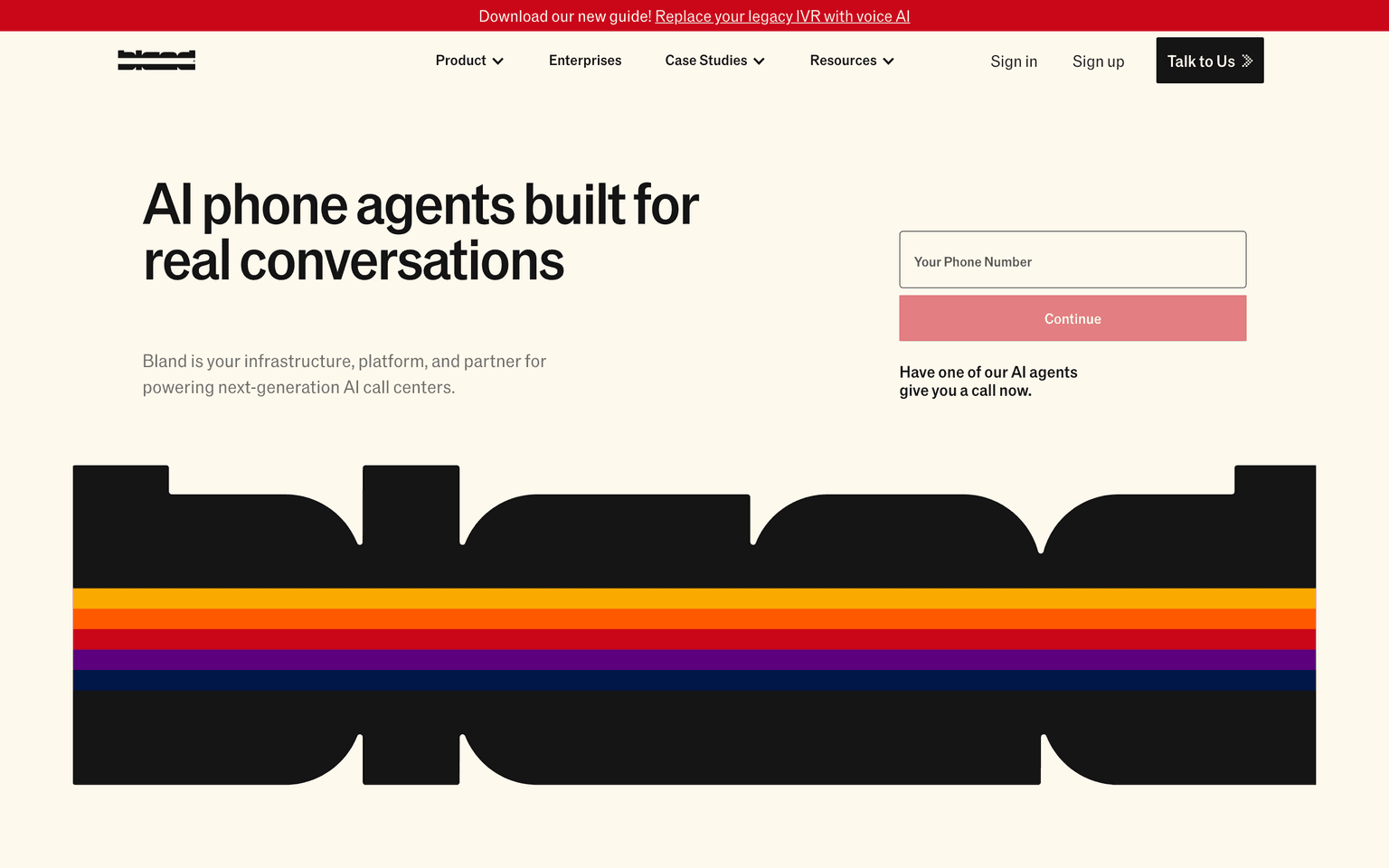
5. Bland AI — Production Voice Agents at Scale
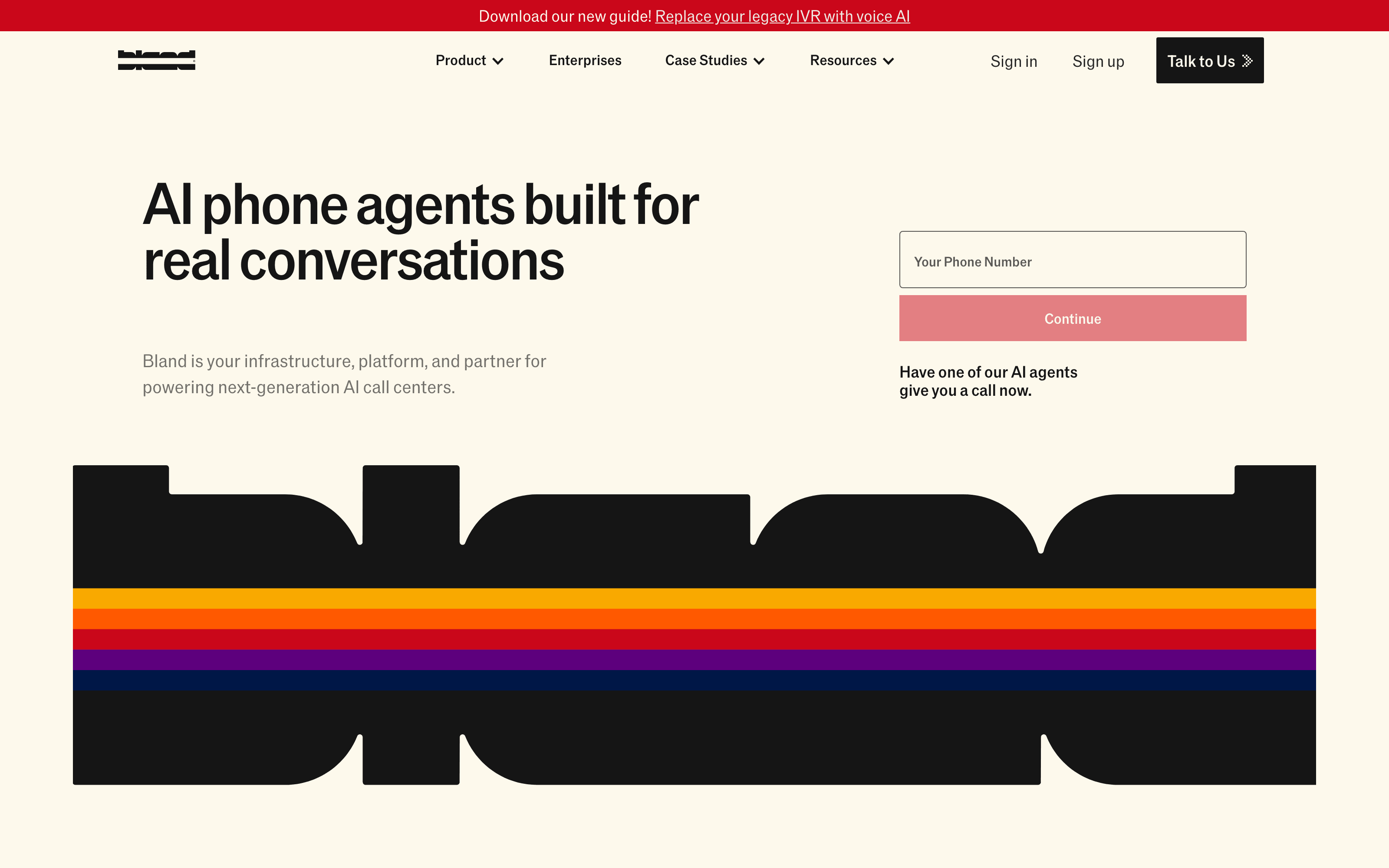
Bland AI targets the production voice-agent use case head-on — agents that make outbound sales calls, answer inbound support, schedule appointments, run lead qualification, all at scale across thousands of concurrent calls. Less developer-flexibility than Vapi; more out-of-the-box production features (CRM integrations, analytics, agent-quality monitoring).
What it wins at: SMB and mid-market companies wanting to deploy voice agents without building infrastructure, sales and support call automation at volume, and faster time-to-production than developer-platform alternatives.
Where it falls down: less customization than Vapi for engineering teams that want full control. Concentrated in B2C and SMB B2B; complex enterprise voice deployments often outgrow it.
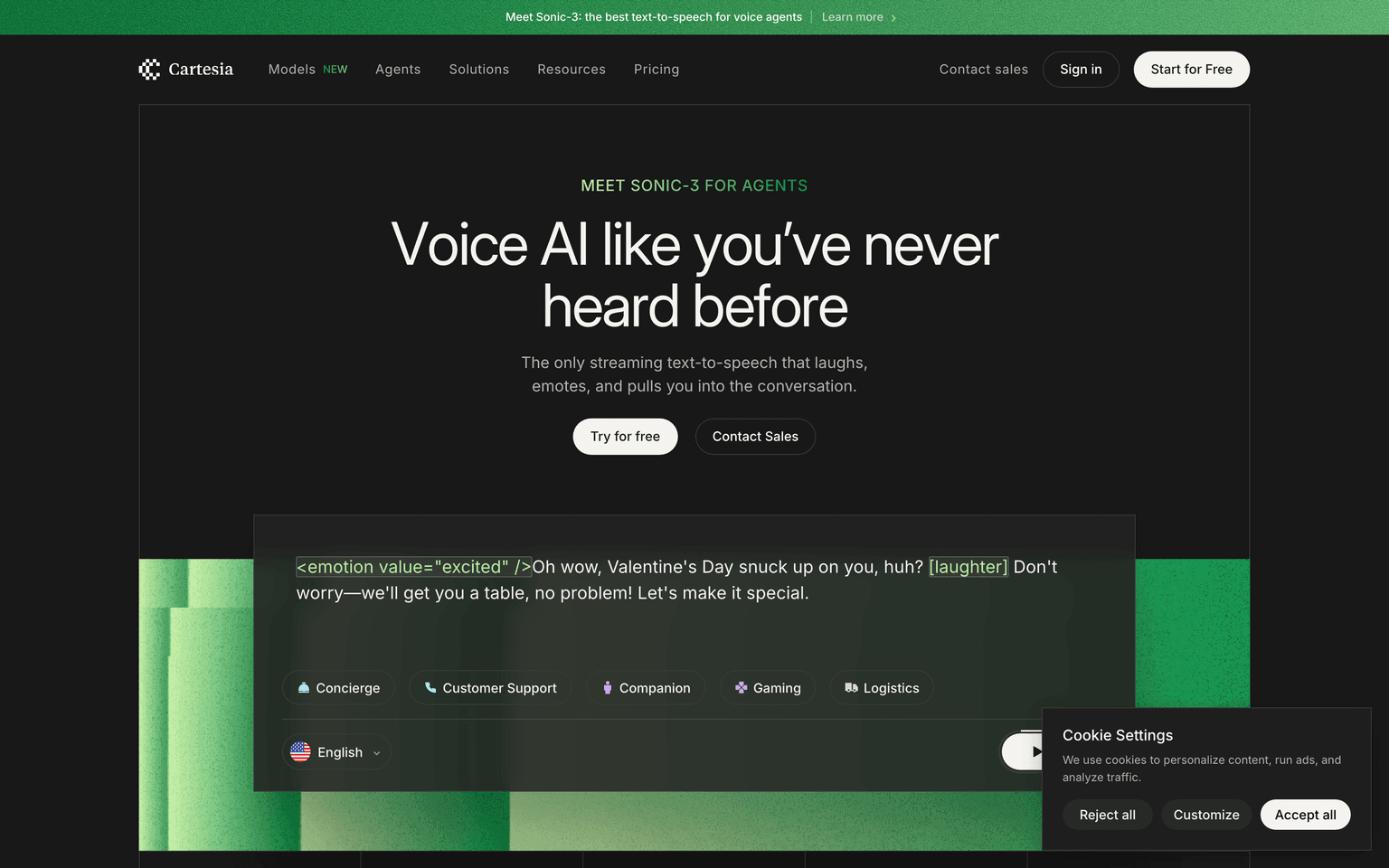
6. Cartesia — Low-Latency Voice Infrastructure
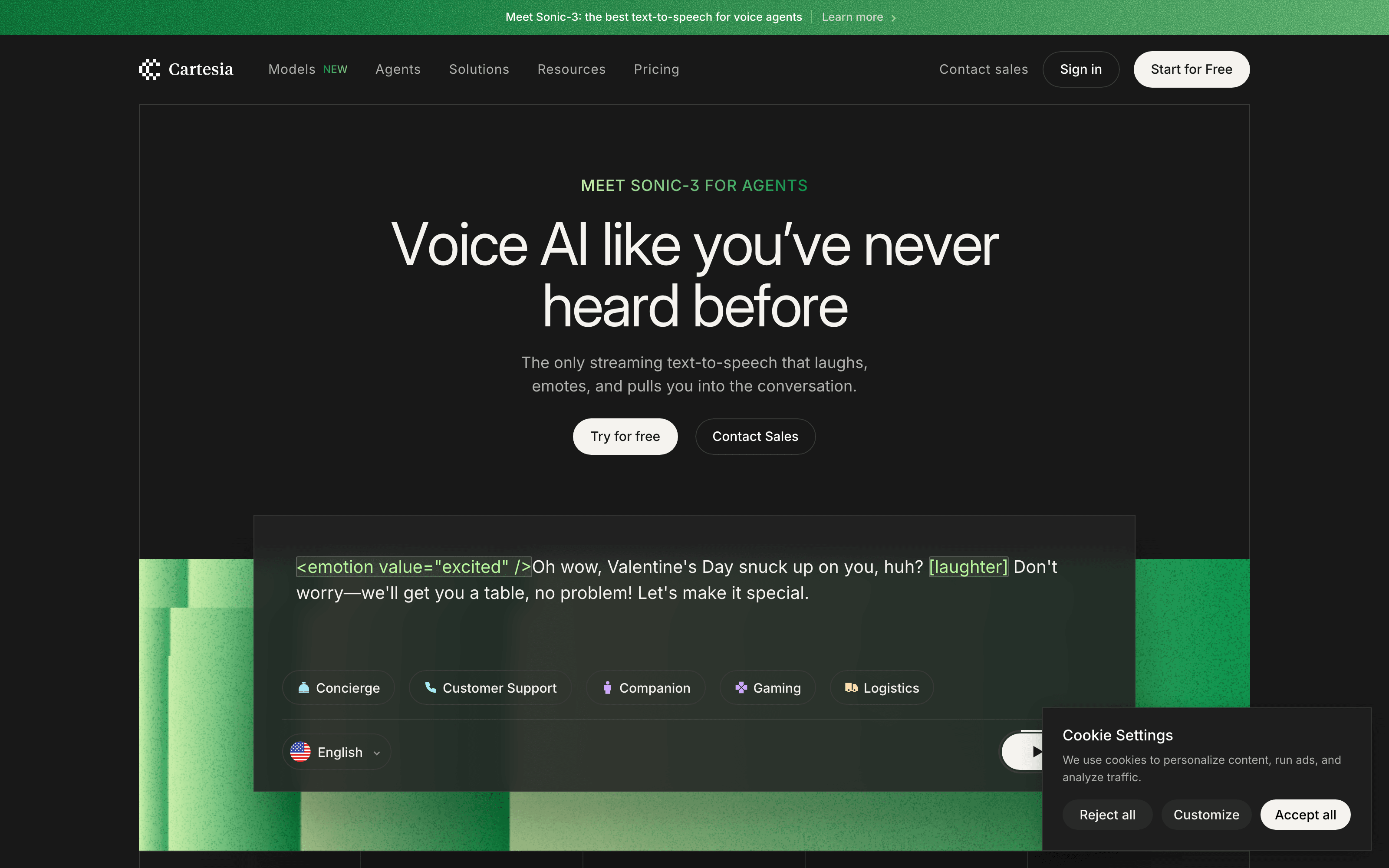
Cartesia competes on raw infrastructure performance — sub-100ms first-token latency, voice cloning, real-time streaming TTS. Engineers building voice agents where latency is the make-or-break constraint (the difference between a conversation that feels human and one that feels awkward) reach for Cartesia or pair it with the agent platforms above.
What it wins at: sub-100ms latency for production voice agents, real-time streaming use cases, and voice infrastructure for engineers building custom stacks.
Where it falls down: infrastructure layer, not a complete agent product. You're building on top of it, not deploying out of the box.
Voice + Avatar Video
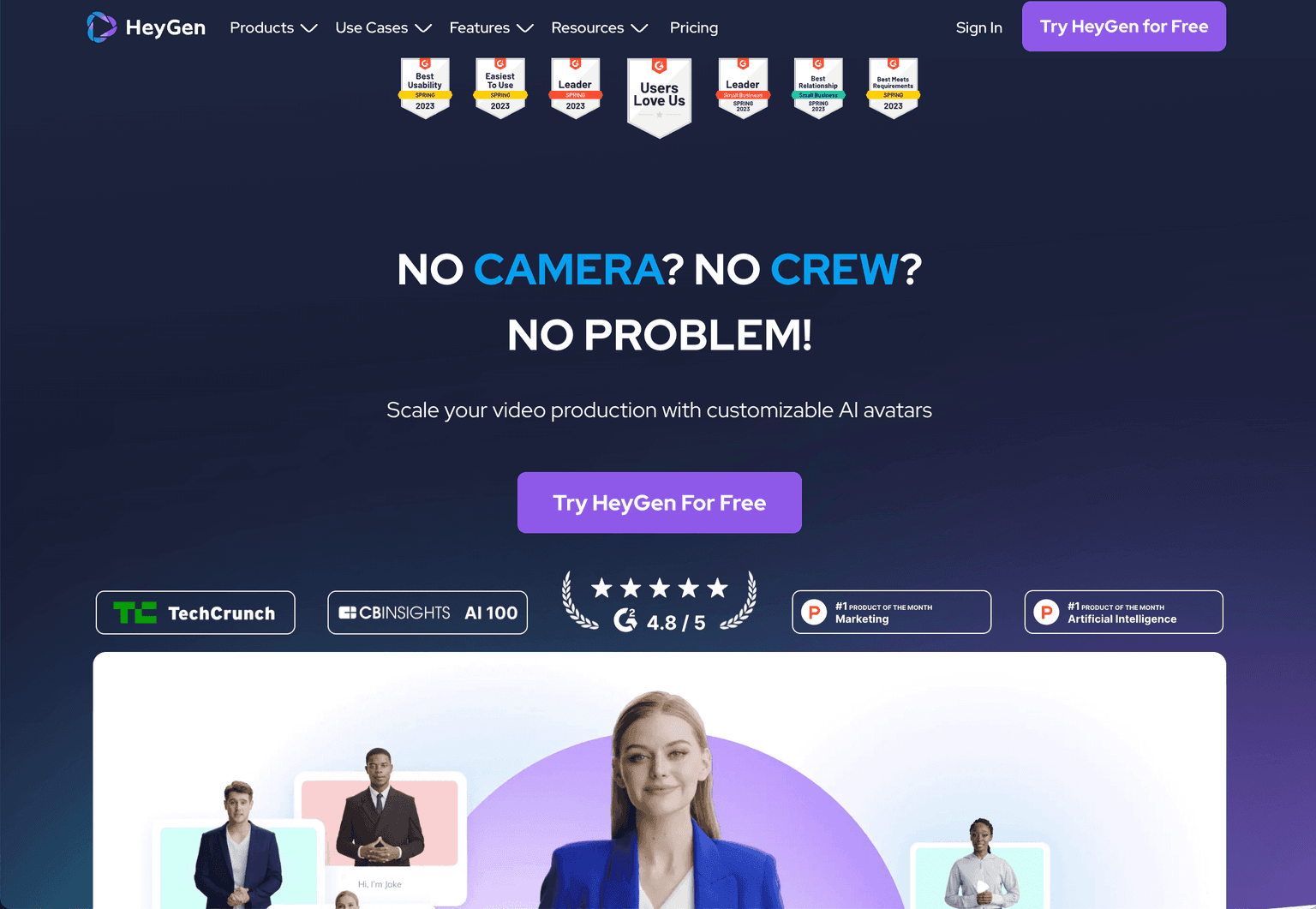
7. HeyGen — AI Voice Plus Talking-Head Video
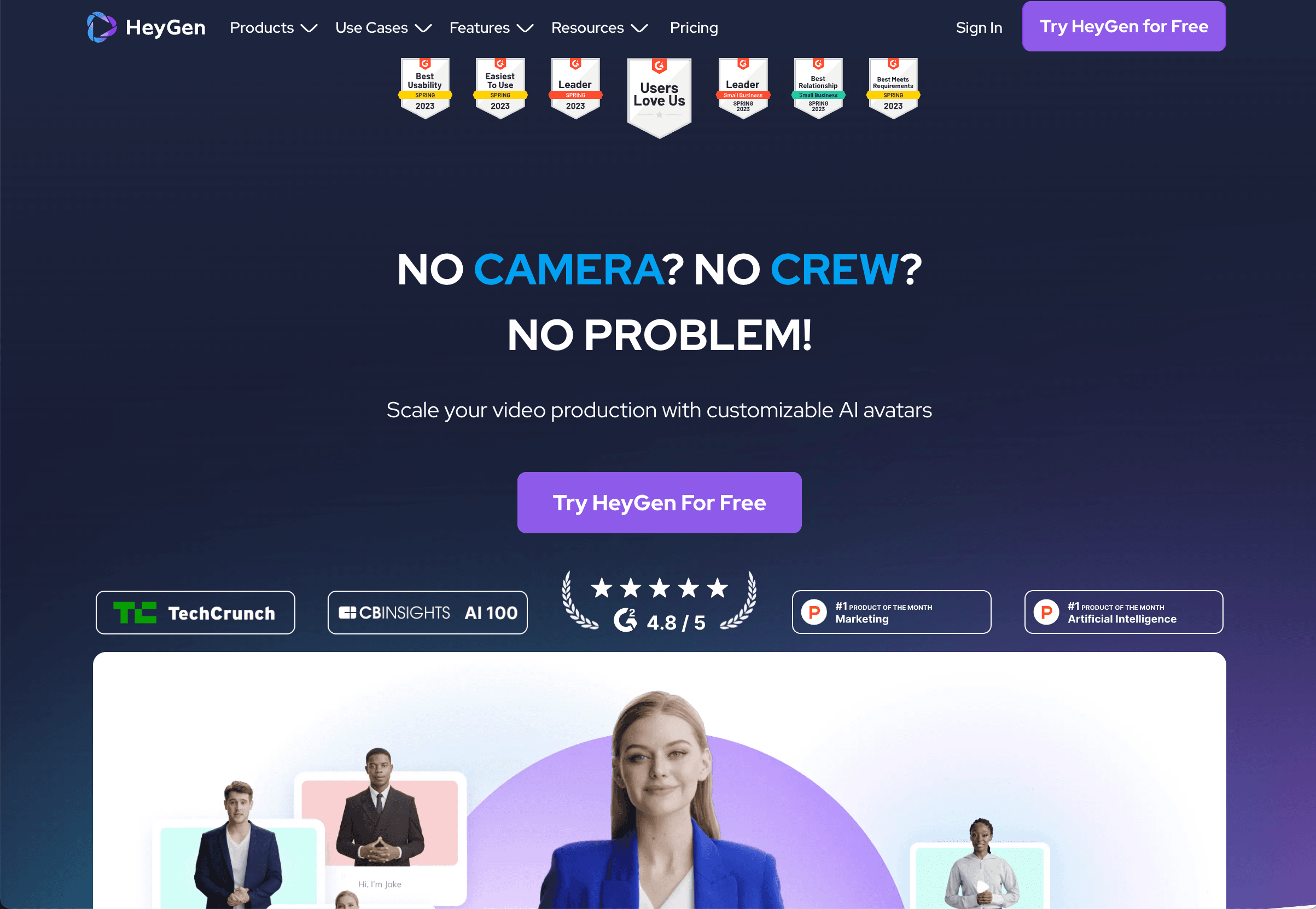
HeyGen extends voice synthesis into video — combine AI-generated voice with an AI-generated talking-head avatar to produce explainer videos, training content, and multilingual marketing without filming. The 2025 product expansion added near-instant lip-sync translation across 175+ languages, making HeyGen the default tool for brands creating talking-head content at scale across markets.
What it wins at: corporate training and explainer videos, multilingual content production without re-filming, and creators who want video presence without being on camera.
Where it falls down: AI avatars still read as AI in extended close-up — fine for short-form explainer content, less convincing for long-form video where viewers have time to notice. Real human presenters still win where authenticity is the value proposition.
How to Build Your 2026 AI Voice Stack
Match the tool to the actual use case:
- Audiobook, narration, dubbing, character voice: ElevenLabs (default), Murf if you need a voiceover-focused UI
- Voice agents, you have engineers: Vapi (developer platform) + Cartesia (latency) under the hood
- Voice agents, no engineers / SMB: Bland AI for production deployment
- Voice + video for content: HeyGen
- Both voiceover and voice agents from one vendor: LMNT
For most teams the practical 2026 stack is one tool — pick the lane that matches your problem and don't over-buy. The exception is engineering teams building voice agents seriously, who often run Vapi orchestration + Cartesia (or ElevenLabs) for TTS + Deepgram or AssemblyAI for STT as a layered stack.
For adjacent reading, see our Best AI Tools for Audio Creation and Editing for the broader audio category, Top 7 AI Video Generators (2026) for the video side that increasingly pairs with voice (HeyGen and similar avatar+voice tools), and Best AI SDR Tools for Inbound Conversion for the sales-specific voice-agent angle.
Frequently Asked Questions
What's the best AI voice generator in 2026? For voice production (narration, audiobooks, dubbing), ElevenLabs is the category leader. For voice agents (live phone calls), the answer depends on whether you have engineering capacity — Vapi for full control, Bland AI for out-of-the-box deployment. The two lanes have different leaders; one tool doesn't win both.
Are AI voice agents actually replacing call-center jobs? Replacing call volume on the simple, repetitive contacts (appointment scheduling, status updates, basic qualification), not replacing the agents themselves. Like AI customer support more broadly, the leaders show contact volume per human agent dropping while headcount stays stable, freeing humans for complex conversations. Companies trying full replacement consistently see customer-satisfaction collapse on the harder calls.
Is AI voice cloning legal? Yes for cloning your own voice or a voice you have explicit consent to use. No for cloning real people without consent — multiple US states (California, Tennessee with the ELVIS Act, others) and the EU AI Act prohibit non-consensual voice deepfakes. Production-grade tools have consent-verification workflows; consumer tools that don't are increasingly on the wrong side of regulation.
How realistic do AI voices sound in 2026? Indistinguishable from human voice for most listeners on most content. Remaining tells: emotional range in extreme cases, prosody on long-form narration, pronunciation of unusual proper nouns, and consistency across very long sessions. For professional use, human direction in prompting and per-clip review still matter; AI voice amplifies a director, doesn't replace one.
What's the difference between voice synthesis and voice agents? Voice synthesis (TTS) generates spoken audio from text — one-way, asynchronous, used for narration. Voice agents do live conversation — two-way, real-time, used for calls. The technology overlaps (agents need TTS) but the buyer and use case are different. Don't pick a TTS tool for an agent use case or vice versa.
What latency matters for voice agents? First-token latency (time from user finishing speaking to AI starting to respond) below 500ms feels natural; above 1 second feels awkward; above 2 seconds feels broken. The leaders (Cartesia, LMNT, Bland's stack) hit sub-300ms in production. End-to-end conversation latency is the metric, not just TTS speed.
Should I use one of these or stick with traditional voice talent? For scale (multilingual content, high-volume training material, real-time voice agents), AI voice wins on cost and turnaround. For brand-defining work (commercial spots, signature audiobook narration), human voice talent still wins on craft and authenticity. Most teams in 2026 use both — AI for volume, humans for hero pieces.
Final Thoughts
AI voice in 2026 is past the proof-of-concept phase. Voice production is mature; voice agents are deploying in real production at meaningful scale. The teams getting the most leverage pick the tool that matches their actual lane — voiceover production tools for content, voice-agent platforms for live calls — rather than trying to use one tool for everything.
If you haven't tried voice agents on a real workflow yet (inbound qualification, outbound follow-up, appointment confirmation, customer support), the production quality has crossed a real threshold in 2025–2026 and the cost-per-call is genuinely below the human equivalent for the right use cases. That's the experiment worth running this quarter for any team with phone-based workflows.
Categories these tools span
More collections you may also like


Sign up for our newsletter
Receive weekly updates so you can stay up-to-date with the world of AI
Sign up for our newsletter
Receive weekly updates so you can stay up-to-date with the world of AI
The AI tools directory for discovering, exploring, and comparing the most innovative AI tools in the industry