Top AI Tools (2026): The 8 Picks That Define the Year









Top AI Tools in 2026: The 8 Picks That Define the Year
If you're researching the top AI tools in 2026, the field has consolidated into a small group of category leaders that have crossed the line from "interesting product" to "the tool everyone in the category uses." The hype-cycle losers of 2023–2024 are mostly gone — Stability AI's near-collapse, Stable Diffusion's leadership reset, the Inflection AI talent acquisition, the Adept absorption — and what's left is a tighter, more credible roster of products that ship in production at real scale.
This guide covers the eight AI tools that define 2026 across the categories that matter: large language models, coding, image generation, productivity, search, and music. Each pick is a category-defining product — not the only option in its lane, but the one most teams reach for first when the workload arrives.
How We Evaluated These Tools
The eight AI tools below were evaluated on five criteria, in priority order:
- Category-defining position — the tool most teams default to in its lane, validated by paid-user counts, public revenue figures, and named enterprise deployments
- Real production usage at scale — not vendor demos, but verified daily usage by named teams shipping AI-powered products to customers
- 2026 currency — has the product shipped a meaningful capability upgrade in the last 6 months, or has the lab fallen behind
- Cross-category leverage — the tool is useful to a buyer outside its narrow specialty (e.g., an LLM that's also the best at coding)
- Pricing and access — published pricing, available free tier or trial, accessible API for the buyers who need to embed it
We deliberately picked one canonical winner per category rather than a 5-deep ranking — for category-by-category depth, see the linked specialty guides at the bottom of each section. This is the starting roster, not the comprehensive review.
Quick Comparison
| Tool | Best for |
|---|---|
| ChatGPT | The default LLM and AI assistant. The broadest production deployment in the category. |
| Claude | Frontier LLM that leads on agentic coding and long-context reasoning. |
| Gemini | Google's frontier LLM with the longest context window and the deepest Workspace integration. |
| Cursor | The AI-first IDE most senior engineers ship in. |
| Midjourney | The aesthetic benchmark for AI image generation. |
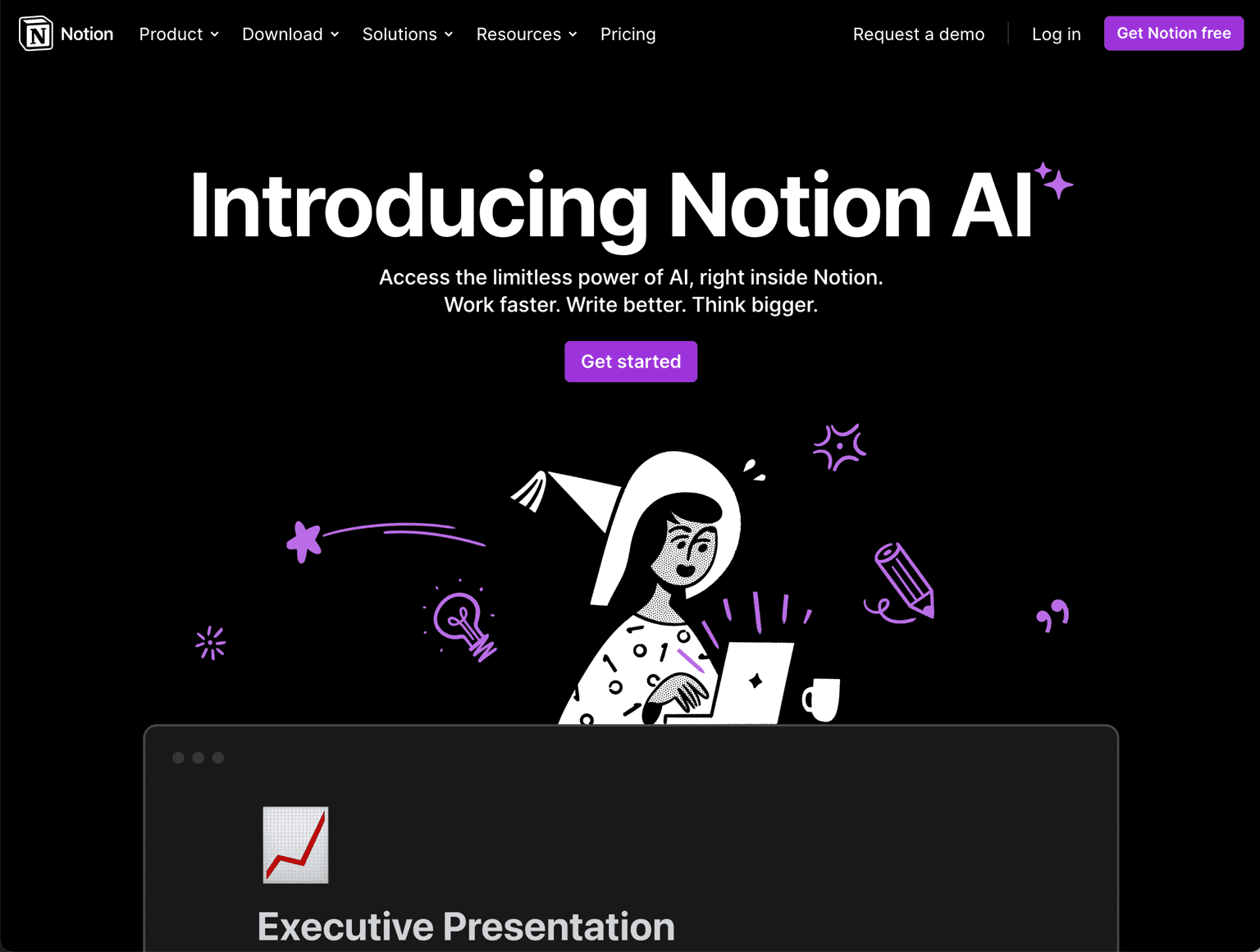
| Notion AI | The productivity AI most knowledge workers actually keep using. |
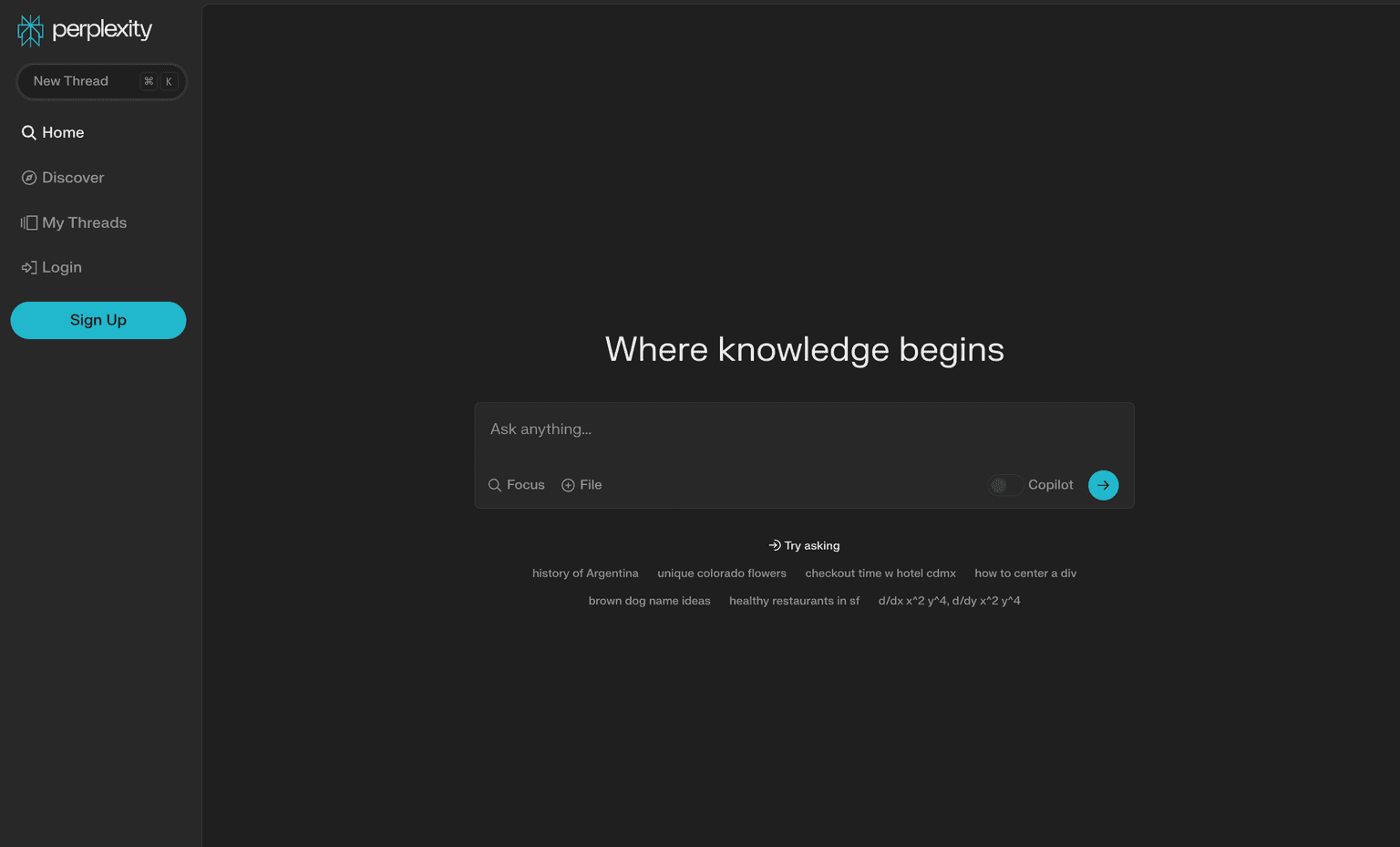
| Perplexity.ai | The AI-native search engine knowledge workers replaced Google with. |
| Suno | The category-defining AI music generator. |
1. ChatGPT — The Default LLM
ChatGPT (powered by GPT-5 and the GPT-4.5/4o family) is the default AI assistant for the largest population of professional users in the category. It's not a single-benchmark leader on every eval, but it leads on distribution, tool-use ecosystem maturity, and the breadth of multimodal capability (text, vision, audio, image generation, video understanding) all in one product. For most teams' "buy one AI tool" decision, ChatGPT is the answer.
Production credibility: OpenAI passed 800M weekly active ChatGPT users in 2025; reported $5B+ ARR by late 2025 per industry estimates; deployed at the majority of Fortune 500 enterprises via ChatGPT Team and Enterprise tiers. Microsoft Azure OpenAI Service is the de facto enterprise distribution channel.
Where it wins: broadest production deployments, most mature tool-use ecosystem, lowest-friction onboarding for non-technical teams. The right starting point for almost any organization.
2. Claude — Frontier Coding and Reasoning
Claude (Opus 4.7 and Sonnet 4.6) is the frontier LLM that overtook GPT-5 on agentic coding and long-context reasoning through 2025–2026. The Sonnet 4.6 release brought frontier-tier output at mid-tier pricing; Opus 4.7 is the model serious agent products fall back to when reliability on hard, multi-step tasks matters.
Production credibility: Anthropic raised $4B from Amazon plus follow-ons including a $2B Google round; Claude is deployed via Anthropic API, AWS Bedrock, Google Vertex; powers Claude Code, Cursor's premium tier, GitHub Copilot's Claude routing, Notion AI, and Quora's Poe. Constitutional AI is the most academically-cited safety methodology in the category.
Where it wins: agentic coding tasks (SWE-Bench leader most months in 2026), 200K+ token context windows that retrieve reliably, and use cases where honest refusals and lower hallucination rates outweigh pure benchmark wins.
For full LLM-by-LLM depth, see Best LLMs (2026): The 8 Models Powering AI Today.
3. Gemini — Long-Context and Multimodal Leader
Gemini 2.5 Pro is the third frontier closed-lab option, the right pick when Google Workspace integration, the longest production context windows (1M+ tokens), or native video understanding matter more than benchmark domination.
Production credibility: integrated across Google Workspace (Docs, Sheets, Slides, Gmail) for >3B users; powers Notebook LM, AI Overviews, the Gemini app, and Project Astra; deployed in production via Google Vertex AI for enterprise customers including Goldman Sachs, Ford, and the US federal government. Google's TPU compute moat keeps Gemini pricing aggressive on long-context workloads.
Where it wins: longest production context windows in the category, native video understanding (no other frontier model is truly first-class on video input), and the deepest Google Workspace integration for teams already there.
4. Cursor — The AI-First IDE
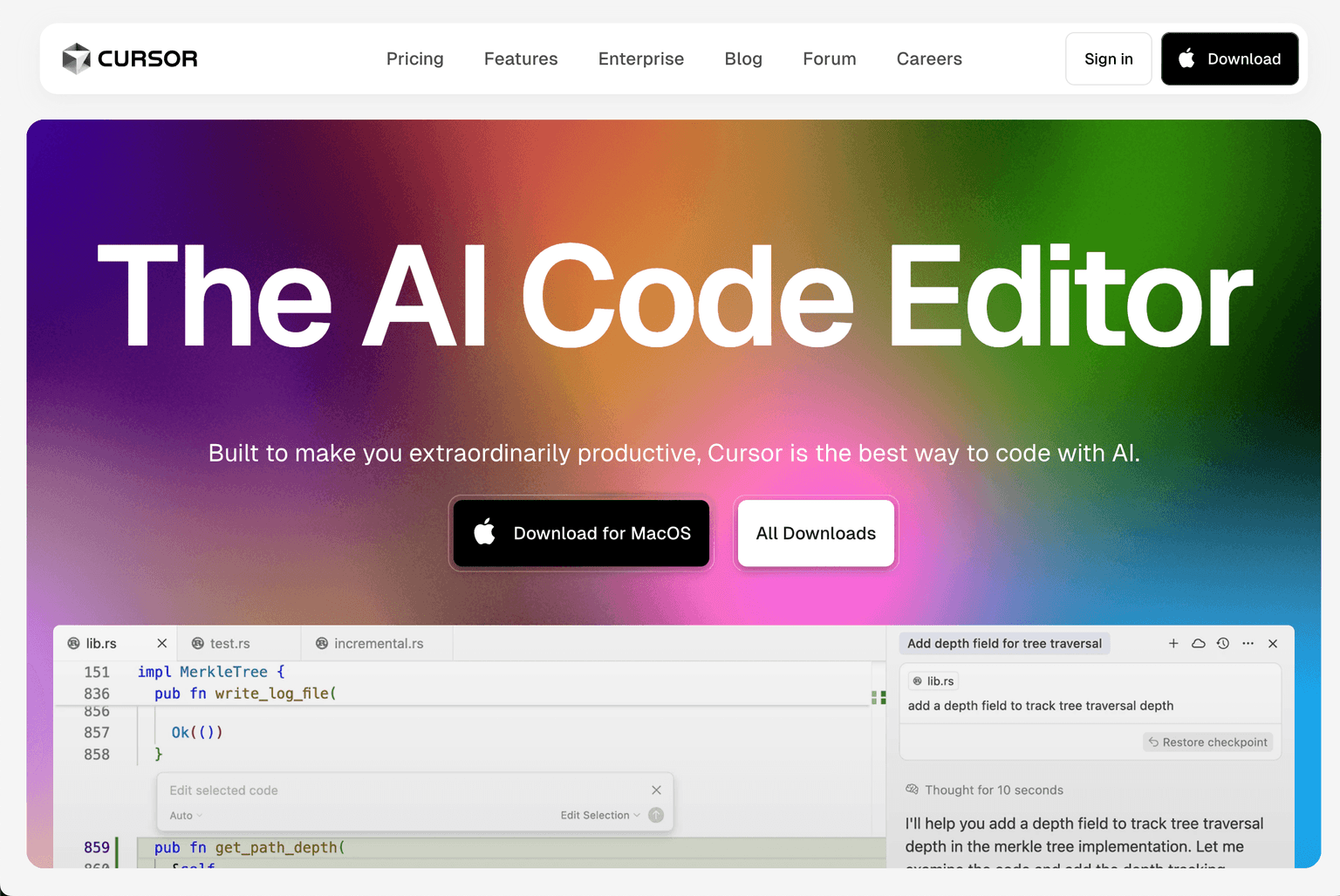
Cursor is the AI-first VS Code fork that most senior engineers default to in 2026. The chat panel, multi-file edits, and Cmd-K inline rewrites are wired in deeply enough that it stops feeling like a plugin and starts feeling like the IDE was designed around the model.
Production credibility: raised $900M Series C at a $9.6B valuation in mid-2025; reported $300M+ ARR by late 2025; deployed at Stripe, Shopify, Ramp, OpenAI, Perplexity, and most YC W24+ startups. The fastest enterprise sales velocity of any tool in the broader AI coding-assistant category.
Where it wins: tight feedback loops on a known codebase, the agent mode for end-to-end ticket implementation, and the deepest community of AI-first engineers shipping with it daily.
For full coding-assistant comparison, see Top 7 AI Coding Assistants for Engineering Teams (2026).
5. Midjourney — The Aesthetic Benchmark for Image Generation
Midjourney is the AI image generator art directors keep coming back to even when benchmarks say something else won. Its house style — cinematic lighting, painterly composition, confident color — is a real edge for editorial illustration, marketing visuals, and concept art. v7 closed most of the prompt-adherence gap that used to push power users to FLUX.
Production credibility: bootstrap-funded under founder David Holz; reported $200M+ ARR by mid-2024; >20M Discord members at peak; standard tooling at major editorial publications, ad agencies, and design studios. The aesthetic-quality lead has been the most durable competitive moat in the category.
Where it wins: hero images, editorial illustrations, mood boards, and any project where the brief is "make it look good" more than "render this exact thing."
For full image-generator comparison, see Top 6 AI Image Generators Compared (2026).
6. Notion AI — The Productivity AI That Stuck
Notion AI is the productivity AI that survived the 2023–2024 wave of standalone-AI-feature launches because it solves the right problem: the AI lives where the work already happens. For teams that document in Notion (which is most of mid-market and venture-backed startup land), Notion AI is the productivity AI most knowledge workers keep paying for after the trial.
Production credibility: Notion's Series C valued the company at $10B+ in 2021; the company has crossed 100M+ users by late 2024; Notion AI ships across all paid tiers; Anthropic Claude underneath powers most of the AI features. The 2024–2025 push into Notion Calendar and database AI further widened the productivity surface.
Where it wins: teams already on Notion who want AI that lives in the workspace they already use, summarization and Q&A across team docs, and the no-net-new-tool path to AI-augmented productivity.
7. Perplexity.ai — AI-Native Search
Perplexity.ai is the AI-native search engine that the largest population of knowledge workers replaced Google with for research-heavy queries through 2024–2026. Cited sources, follow-up questions in the same thread, and the Pro Search reasoning mode for harder queries. Most journalists, analysts, and researchers running professional information work in 2026 use Perplexity as primary search.
Production credibility: raised $1B+ across rounds led by IVP, NEA, Bessemer, and SoftBank, most recently at $9B+ valuation; reported 22M+ monthly active users entering 2026; partnerships with major publishers (Time, Fortune, Der Spiegel) for licensed content; the Comet browser launched in 2025 extending the AI-native paradigm into the browser layer.
Where it wins: research-heavy knowledge work, queries where source citation matters, and the long-tail of questions where Google's classic blue-link results are too cluttered to skim quickly.
8. Suno — AI Music Generation
Suno is the category-defining AI music generator entering 2026 — the product that drove most of the press cycle on AI music since 2024 and the one most consumers and creators reach for first. Generates full songs (lyrics, vocals, instruments) from a text prompt; the v4 release in late 2024 dramatically improved the production quality.
Production credibility: raised $125M+ at a $500M+ valuation in 2024 led by Lightspeed, Founders Fund, and others; reported 12M+ users by late 2024; the RIAA lawsuit against Suno (and competitor Udio) in 2024 confirmed the category had reached commercial significance; deployed across consumer creator workflows and increasingly inside professional music-production pipelines as a sketching tool.
Where it wins: consumer and prosumer music creation from a text prompt, sketching and ideation for songwriters, and any workflow where "make me a song that sounds like X" is faster than recording it.
How to Choose Among the Top 8
This is the starting roster, not a comparative ranking. Most teams running AI in 2026 use 3–5 of these tools daily across roles:
- Default for everyone: ChatGPT or Claude for general AI assistance; pick one and standardize
- Engineers: Claude + Cursor as the daily-driver pair; ChatGPT or Gemini as the second seat for non-coding work
- Designers / creatives: Midjourney + Suno for image and music, plus ChatGPT or Claude for writing and ideation
- Knowledge workers / researchers: Perplexity for search, ChatGPT or Claude for synthesis, Notion AI for the working doc
- Product / GTM teams: Gemini for long-context document analysis (1M+ tokens) and Workspace integration, ChatGPT for general-purpose work
The single most-recommended 2026 setup for individuals: Claude or ChatGPT (one) + Cursor (if you write code) + Perplexity (for search) + Notion AI (if you document in Notion) — four seats, $80–120/month total, covers ~80% of where AI productivity gains show up.
Adjacent Reading
- Best LLMs (2026): The 8 Models Powering AI Today — full LLM-by-LLM comparison
- Top 7 AI Coding Assistants for Engineering Teams (2026) — coding-specific depth
- Top 6 AI Image Generators Compared (2026) — image-generator-specific depth
- Top AI Tools to Boost Your Productivity — productivity-specific depth
- Top 7 AI Meeting Note-Takers (2026) — meeting-AI specifically
- Best AI Tools for Marketing & SEO (2026) — marketing-specific depth
Frequently Asked Questions
What's the single most useful AI tool to buy in 2026? For individuals: ChatGPT or Claude. Pick one (the differences matter for power users; for casual use either is fine), pay $20/month, use it daily for a month, then evaluate adding a second. For teams: ChatGPT Team or Claude Team — same logic, with billing and admin you'd want for org-wide rollout.
Are these the only AI tools that matter in 2026? No — these are the category-defining picks across the broadest categories. Specialty work (sales SDRs, customer support, finance, legal, healthcare, real estate, etc.) has its own canonical tools we cover in dedicated guides. The 8 above are what most professional knowledge workers use; the specialty guides are what specific roles add on top.
Should I use one LLM or multiple? For most users, one LLM (ChatGPT or Claude) plus the others used contextually (Gemini for long documents, Perplexity for search) is the right answer. For engineers, Claude + ChatGPT is a common pair because the strengths differ on coding vs general tasks. For organizations doing serious AI development, an LLM router that picks the right model per task is the mature setup.
Are these tools safe for sensitive work? The enterprise tiers of ChatGPT (Team / Enterprise), Claude (Team / Enterprise), Gemini (via Vertex), and Cursor (Business) all carry SOC 2 Type II compliance, signed DPAs, and zero-retention guarantees. Free and consumer tiers usually don't. For regulated workloads (PHI, attorney-client, financial advice), use the enterprise tier with a signed DPA.
What's the typical cost for the top 8? Individual user with all 8 (overlapping): roughly $130–200/month. Realistic individual setup with 4 (ChatGPT + Cursor + Perplexity + Notion AI): $60–80/month. Team / business tiers run roughly 2–3× per-seat. Enterprise contracts vary widely; ChatGPT Enterprise lands at $60+/seat/month at typical scale.
Are any of these going to be obsoleted soon? Not in the 12-month horizon. The category has consolidated; the leaders are entrenched at the distribution layer (ChatGPT, Cursor) or the brand layer (Midjourney, Suno). Newer entrants (DeepSeek, Qwen, Sora, FLUX) compete at the model layer but the leaders above remain the category-defining products users actually reach for.
Should I be using AI tools for X specific job? Probably yes if X is a category covered in our specialty guides — coding, customer support, sales, marketing, legal, finance, healthcare, real estate, image generation, video generation, music, voice, productivity, education, e-commerce, recruitment, or any of the 50+ collections we cover. The base 8 above plus the specialty pick for your role is the standard 2026 setup.
Final Thoughts
The AI tooling landscape in 2026 looks far less chaotic than it did in 2023. The category-defining products in each lane have separated from the pack — ChatGPT and Claude in LLMs, Cursor in coding, Midjourney in images, Suno in music, Perplexity in search, Notion AI in productivity. The hype-cycle losers have either pivoted, been acquired, or quietly shut down.
For anyone evaluating AI tools in 2026, the highest-ROI move is: pick one LLM, pick one specialty tool for the work you actually do most, and stop deliberating. The seat costs are a rounding error against the productivity gains; the time spent picking the "right" tool out of five competitors is the real cost most teams don't account for.
Compare tools in this collection
Categories these tools span
More collections you may also like


Sign up for our newsletter
Receive weekly updates so you can stay up-to-date with the world of AI
Sign up for our newsletter
Receive weekly updates so you can stay up-to-date with the world of AI
The AI tools directory for discovering, exploring, and comparing the most innovative AI tools in the industry