Best AI image generator in 2026: Midjourney v7 vs FLUX 1.1 vs Ideogram v3
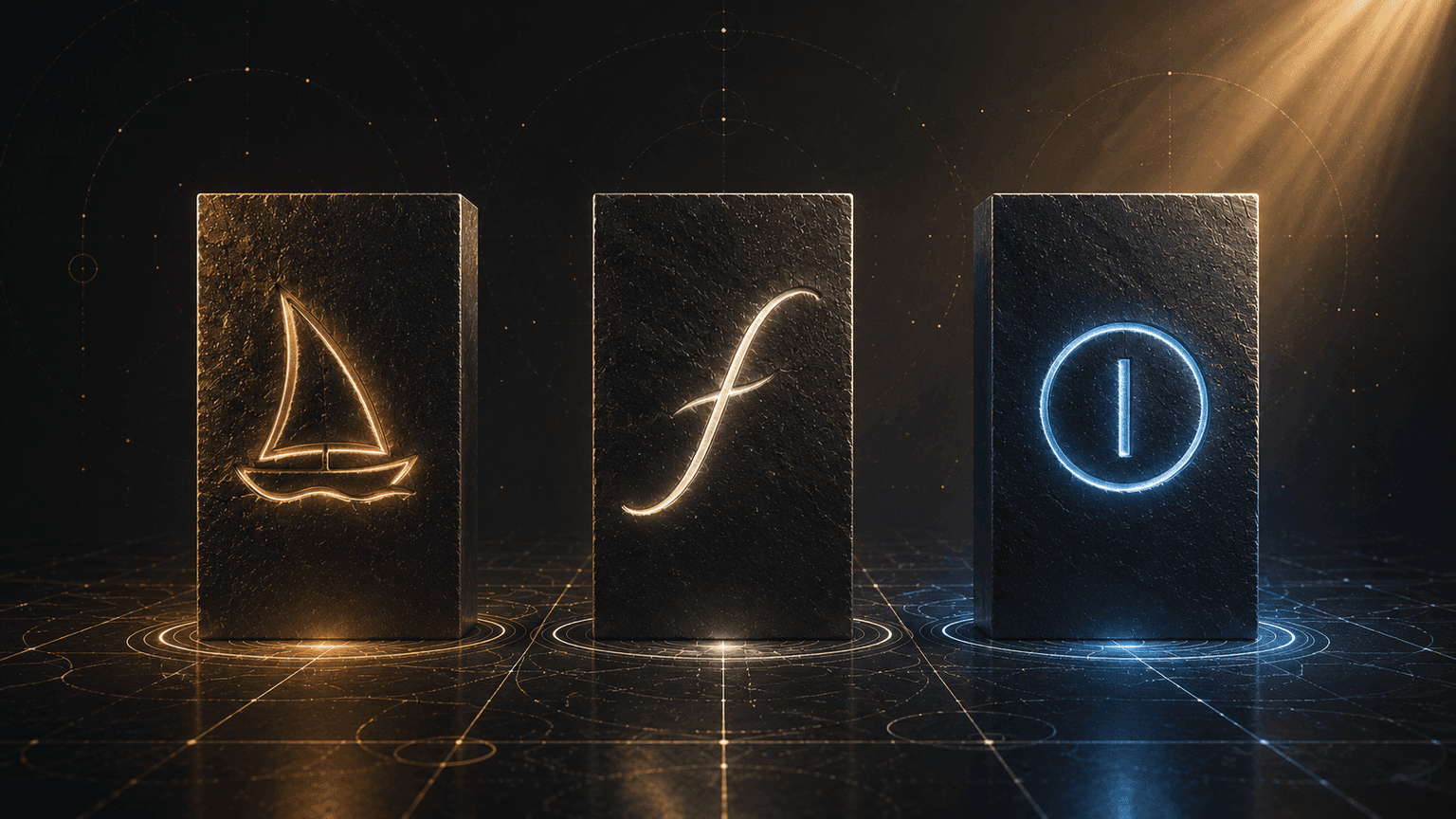
The best AI image generator in 2026 depends on what you're actually making — a cinematic key art frame, a photorealistic product shot, a poster with readable typography, an icon set, a brand campaign. Three AI image generators have pulled clearly ahead of the field this year: Midjourney v7, FLUX 1.1 Pro by Black Forest Labs, and Ideogram v3. Each owns a different lane, and the right AI image generator for you is the one whose lane matches your work. We spent thirty days running Midjourney, FLUX, and Ideogram against the same set of real briefs — editorial illustration, photorealistic product imagery, typography-heavy poster art, brand-consistent character work, and the kind of catch-all "make me a hero image" task most teams actually use these tools for. This is the honest read on which to pay for, when, and why.
The category consolidated this year in a way it hadn't in 2024 or 2025. We won't pretend there's a single winner — there isn't — but we will tell you which one wins each fight.
Update, September 8, 2026: all three have shipped new versions since we ran this
The comparison below was run in May 2026 on Midjourney v7, FLUX 1.1 Pro and Ideogram v3. Every one of those has been superseded. Here is what changed, what it does to the verdicts, and one correction we owe you.
Midjourney is on v8.1, the default since June 2026 — materially faster, with better prompt adherence and noticeably better text rendering. That last part matters here, because the section below hands typography to Ideogram partly on the strength of Midjourney being bad at it. That verdict is now the one most in doubt.
FLUX is on FLUX.2 — a family rather than a single model, spanning Pro, Flex, Dev and the Apache-2.0-licensed Klein. And we owe a correction: FLUX.2 shipped on 25 November 2025, six months before this post published. We compared against FLUX 1.1 Pro when a newer generation was already out. That was our error at publication, not drift, and the photorealism verdict below should be read as "FLUX 1.1 Pro beat Midjourney v7", not as a current-generation result.
Ideogram is on 4.0, released 3 June 2026, and the change is strategic rather than incremental: it is now an open-weight model under Apache 2.0 — 9.3B parameters, native 2K output, JSON layout control. The post below frames Ideogram as the closed consumer option with a strong free tier. That framing is out of date. If you need to self-host a text-rendering model, Ideogram is now a candidate, which it was not in May.
And there is a competitor missing entirely. Google's Nano Banana line has become a front-rank image model since this published, and it is not assessed below at all. Any "best in 2026" read that omits it is incomplete.
What we would still stand behind: the shape of the market. These remain three genuinely different tools rather than three ranks of one tool — stylistic house-look, photorealism, and typography are still the axes that separate them, and serious teams still run two. What we would not stand behind without re-testing is any specific head-to-head call below, because all three sides of it have moved.
On pricing, the section below deliberately avoids precise figures because they shift quarterly, and that has aged well. For reference as of September 2026: Midjourney runs Basic $10, Standard $30, Pro $60 and Mega $120 per month, with roughly 20% off annual; Ideogram starts around $15 per month. Verify before buying — that is the whole reason we did not bake numbers into the body.
Quick verdict
| Task | Winner | Close second |
|---|---|---|
| Artistic aesthetics and cinematic style | Midjourney v7 | Ideogram v3 |
| Photorealism and realistic textures | FLUX 1.1 Pro | Midjourney v7 |
| Readable text and typography in images | Ideogram v3 | (no one close) |
| Complex prompt adherence | FLUX 1.1 Pro | Midjourney v7 |
| Speed of iteration | FLUX 1.1 Pro | Ideogram v3 |
| Character consistency across shots | Midjourney v7 | FLUX 1.1 Pro |
| Editorial and brand campaign work | Midjourney v7 | Ideogram v3 |
| Logo, icon, and graphic design | Ideogram v3 | FLUX 1.1 Pro |
| Free or low-cost tier | Ideogram v3 | FLUX (via Black Forest Labs API) |
For a wider view, our Top 6 AI Image Generators Compared (2026) collection covers the field beyond the top three.
How we compared them
Three of us — one art director, one product marketer, one indie illustrator — used each AI image generator as the primary tool for ten working days, in rotation. Same briefs, same prompts, same definition of "done": a deliverable we'd actually publish to a client, a feed, or a campaign.
We bought the highest individual paid tier for each: Midjourney's Pro plan, FLUX 1.1 Pro via the Black Forest Labs API and via fal.ai for batching, and Ideogram's Plus tier. No vendor knew this was happening.
What we measured:
- Number of regenerations to reach "ship it" quality
- Cost per usable image
- Frequency of brand-unsafe or off-target output
- Time from prompt to deliverable
- How often we reached for a different tool to finish the job
We didn't run synthetic benchmarks — the category has plenty of leaderboards and most stopped predicting real-world quality a year ago. The judgments below are based on which AI image generator earned the prompts we actually paid for.
Aesthetic quality and artistic style: Midjourney wins, and the gap is real
This is the category that built Midjourney's brand and the one the company has defended with each version release. Midjourney v7 produces the most visually arresting output of any AI image generator in 2026. Editorial illustrations, cinematic key art, mood-driven concept frames, painterly illustration in the style of a New Yorker tech feature — Midjourney is the default for creatives whose work is judged on aesthetic merit rather than literal accuracy.
The model's strengths show up in lighting (volumetric, cinematic, with proper falloff), composition (balanced, intentional, with a clear focal point), and texture (paint, oil, watercolor, ink wash all render distinctly). Midjourney's hand on color is the best in the field — it picks palettes with the eye of an art director, not a probability distribution. For ad agencies, magazine art teams, concept artists, and indie filmmakers, this is the tool that earns the credits.
Production credibility: Midjourney is a self-funded independent company, founded by David Holz (former Leap Motion co-founder). The product started as a Discord-only bot in 2022 and grew to a multi-million-user paid subscription service without taking external venture funding — an outlier in the AI tooling landscape. Used widely across advertising, magazine illustration, concept art, indie film, and the creator economy.
Where Midjourney loses: photorealism that holds up under scrutiny, readable text in images, and complex prompt adherence on dense instructions. Midjourney interprets prompts artistically rather than literally, which is the right call for aesthetic work and the wrong call for "render a 32oz blue cylindrical product bottle with a white label that reads ACME on it."
Photorealism and realistic textures: FLUX 1.1 Pro pulls ahead
If your brief is photorealism — product photography, real-person portraits, realistic environments, anything where the image needs to be mistakable for an actual photograph — FLUX 1.1 Pro is the right default in 2026.
The model's edge is in physical accuracy: skin renders cleanly with realistic pores and translucency, fabric drapes with believable weight, glass refracts and reflects correctly, depth-of-field falls off like an actual lens. The other two tools can approach photorealism but neither holds it as consistently across complex scenes.
Production credibility: FLUX is built by Black Forest Labs, founded by the team behind the original Stable Diffusion — Robin Rombach, Andreas Blattmann, and Dominik Lorenz. The company raised early venture funding in 2024 and shipped the FLUX.1 model family the same year, with FLUX 1.1 Pro arriving in late 2024 and continuing to lead photorealism benchmarks through 2025-26. Available through the Black Forest Labs API, fal.ai, Replicate, and as open-weights variants for self-hosting.
The FLUX family also includes FLUX.1 Schnell, the fastest model in the category for batch and real-time use cases, and FLUX 1.1 Pro Ultra for high-resolution work. The lineup means a single workflow can scale from rapid iteration to final-deliverable quality without switching providers.
Where FLUX loses: aesthetic flair on illustrative or stylized work (Midjourney wins this), readable text in images (Ideogram wins), and the polished UX layer that consumer-facing tools like Midjourney and Ideogram offer. FLUX is more an engine than an app — most users access it through third-party interfaces.
Text and typography in images: Ideogram, and it isn't close
This is the category where Ideogram is the only AI image generator in 2026 that actually solves the problem.
Every other model on this list — including Midjourney v7, FLUX 1.1 Pro, DALL·E 3, and the rest — still produces malformed, illegible, or wrong-spelling text when asked to render readable typography in an image. Ideogram v3 renders text inside images with accuracy that still feels like a magic trick. Posters with headlines, branded marketing assets, social-media graphics with overlay copy, logo concepts, packaging mockups, signage — these are jobs Ideogram does that nobody else does reliably.
Production credibility: Ideogram was founded by former Google Brain researchers including Mohammad Norouzi, one of the original Imagen researchers, along with co-founders from Google's text-to-image research line. The company raised a Series A in 2024 and shipped Ideogram v3 in 2025 with significant gains in both typography and overall image quality. The free tier is the strongest in the category — usable for real work, not just sampling.
Ideogram's secondary strength is logo and icon work. The same architecture that renders text correctly also renders clean geometric forms cleanly, which makes it the best AI image generator for early-stage logo iteration, icon set generation, and any brief where the image is a graphic mark rather than a scene.
Where Ideogram loses: outright artistic flair (Midjourney wins editorial illustration) and the most demanding photorealism briefs (FLUX wins). Ideogram is the third strongest on both categories and the only one that's first on typography.
Prompt adherence and complex instructions
For "render exactly what I describe," the order changes. FLUX 1.1 Pro is the most literal of the three on complex multi-element prompts — describe a scene with five specific objects in specific positions and FLUX is more likely to deliver all five than Midjourney is.
Midjourney's strength is interpretation: it makes the scene beautiful, sometimes at the cost of dropping a specified element. For artistic work, that's the right tradeoff. For commercial work where the client briefed specific deliverables, FLUX wins.
Ideogram is the middle ground and the best of the three on prompts that mix visual elements with text overlay — "a poster showing X with the headline Y in Z style" is a brief Ideogram handles natively.
DALL·E 3 (and OpenAI's newer image model) is worth a mention here: it remains the strongest of the field on understanding natural-language complex instructions, particularly in the ChatGPT integration where conversational refinement of an image is part of the workflow. It's not in our top three on output quality, but on "understand what I mean from a paragraph of context," it's a real player.
Editing, control, and character consistency
Midjourney's recent versions added the editing surface that creator tools have been asking for — inpainting, outpainting, character reference (a feature called --cref that lets you carry a face or figure across multiple generations), style reference, and a fairly mature web app for managing iterations. For multi-shot work where the same character or object needs to appear across several images, Midjourney v7 is the most reliable of the three.
FLUX has strong control surfaces through the open-weights variant and tools like ComfyUI for power users, plus character-consistency features in the Pro tier that are improving rapidly but not yet as polished as Midjourney's. For technical artists comfortable with node-based workflows, FLUX gives the most control of any tool in the category.
Ideogram has a cleaner web app than FLUX but a more limited control surface than Midjourney — solid for single-image work, weaker for multi-shot consistency. The platform is built around generation rather than iteration.
For dedicated stylized work that needs to match a specific brand or art direction across dozens of images, Krea AI, Leonardo AI, and Recraft are worth knowing about — they're not in the top three on raw quality but each offers control workflows the leaders don't match.
Pricing in 2026
We won't quote precise prices because they shift quarterly. The shape of the market right now:
Midjourney is subscription-based: Basic, Standard, Pro, and Mega tiers ranging roughly from low-double-digit dollars per month to triple-digit. Heavy commercial users land on Pro or Mega. There is no free tier — Midjourney has always been paid-only.
FLUX 1.1 Pro is API-priced through Black Forest Labs and resellers like fal.ai and Replicate. Pay-per-image at a few cents to low double-digit cents depending on resolution and model variant. Heavy users land in the hundreds per month; open-weights self-hosting is an option for teams with GPU infrastructure.
Ideogram offers the strongest free tier in the category — usable for real work without payment — with Plus and Pro tiers in the consumer subscription price range. Best value-per-image if you're not running thousands of generations a week.
The honest version: serious creative teams use two of these. Midjourney plus FLUX is the most common pairing — Midjourney for editorial and stylized work, FLUX for photorealism and high-volume iteration. Ideogram lives in the same workflow as the third tool for typography work, often alongside or in place of Adobe Firefly for brand-safe commercial use.
A note on Stable Diffusion: the original open-source image gen lineage is still alive and widely used, particularly via FLUX's open-weights variants and tools like Stable Diffusion 3.5. If your workflow requires self-hosting or full model control, the open ecosystem is where you live — but the polish on the closed leaders has widened the gap meaningfully in 2026.
Who should pick which
Pick Midjourney v7 if your work is judged on aesthetic merit — advertising key art, editorial illustration, concept art, cinematic mood boards, anything where "make it beautiful" is part of the brief. This is the best AI image generator 2026 has produced for artistic and editorial work, and the gap to second place on aesthetics is real.
Pick FLUX 1.1 Pro if your work depends on photorealism — product photography, brand campaigns with realistic imagery, character work that needs to look photographed rather than illustrated. Also the right choice for technical teams who want API-level control and the option to self-host.
Pick Ideogram v3 if your work involves readable text in images — posters, marketing assets with overlay typography, logo and icon iteration, packaging mockups, social graphics with headlines. No other AI image generator in 2026 does typography well, and Ideogram does it close to magic.
If you're not sure: start with Ideogram's free tier to see if your work fits its sweet spot, then pay for Midjourney if your output needs aesthetic depth, or move to FLUX if photorealism is the requirement.
Frequently asked questions
What is the best AI image generator in 2026? There isn't a single best AI image generator in 2026. Midjourney v7 wins on artistic aesthetics and cinematic style. FLUX 1.1 Pro by Black Forest Labs wins on photorealism, prompt adherence, and speed. Ideogram v3 wins on text and typography in images and on free-tier quality. Most professional teams pay for two of the three.
Is Midjourney still the best AI image generator? For artistic and editorial work, yes — Midjourney v7 produces the most visually arresting output of any AI image generator in 2026. For photorealism, FLUX is now better. For text in images, Ideogram is the only correct answer. The "single best" framing stopped being useful in 2025.
What is the difference between FLUX 1.1 Pro and Midjourney? FLUX 1.1 Pro is the photorealism and prompt-adherence leader; Midjourney is the artistic aesthetics leader. FLUX is API-priced and is more often used through third-party interfaces; Midjourney is subscription-based and has a polished web app. For commercial product photography, pick FLUX. For editorial illustration, pick Midjourney.
Which AI image generator does text best? Ideogram v3, by a wide margin. Every other major AI image generator in 2026 — including Midjourney, FLUX, and DALL·E 3 — still produces malformed or illegible text when asked to render readable typography in images. Ideogram is the only model that handles posters, branded graphics, and text overlays reliably.
What is the cheapest AI image generator? Ideogram has the strongest free tier of the major AI image generators in 2026 — genuinely usable for real work, not just sampling. FLUX via API is the most cost-flexible for high-volume use, since you pay per image rather than a monthly subscription. Midjourney has no free tier; the lowest paid plan starts in the low double-digit dollars per month.
Is FLUX better than Stable Diffusion? FLUX is built by the team that originally created Stable Diffusion, and the FLUX 1.1 family generally produces higher-quality output than current Stable Diffusion variants. For self-hosting and open ecosystem work, both have their place; for commercial output, FLUX is the stronger default in 2026.
Should I use Midjourney or DALL·E in 2026? For aesthetic and artistic work, Midjourney is meaningfully ahead of DALL·E 3 on output quality. For conversational, complex-instruction prompt understanding inside ChatGPT, DALL·E 3 (and OpenAI's newer image models) is more capable than Midjourney's UX. Most professional creatives pick Midjourney for output; many use DALL·E inside ChatGPT for ideation.
Can I use AI image generators for commercial work? Yes, with caveats. Midjourney, FLUX 1.1 Pro, and Ideogram all allow commercial use on their paid tiers. Adobe Firefly is the strongest choice if your legal team requires guaranteed clean training data, since it's trained on Adobe Stock. Read each provider's commercial-use terms before shipping client work — they differ on indemnification, ownership, and brand safety.
Where to go next
If you're picking one tool, our individual reviews are the next read: Midjourney, FLUX by Black Forest Labs, Ideogram. For the broader landscape including the open-source ecosystem and the second-tier specialists, see our Top 6 AI Image Generators Compared (2026) collection and the full AI art and image creation category.
Two tools is the right answer for most professional creative teams in 2026. Pick one for aesthetics, pick one for photorealism, and reach for Ideogram when text needs to be readable.
— The ToolDirectory.AI editorial team

Midjourney
Premier AI image and video generator known for cinematic, photorealistic, stylized output.
Paid
4.88
530
FLUX by Black Forest Labs
Frontier image generation and editing models from Black Forest Labs, the FLUX family.
Freemium
4.93
468
Ideogram
Image generator with best-in-class text rendering, posters, logos, and typography.
Freemium
4.92
452
Get the weekly roundup.
One email each Friday. The week's additions, the week's deaths, and one thing we changed our mind about. No drip sequences, no AI-generated filler.