Best AI Tools for Podcasters (2026)








Best AI Tools for Podcasters in 2026
If you're researching the best AI tools for podcasters in 2026, the category has matured into a clear set of category leaders across recording, editing, audio cleanup, clipping, and video repurposing. The hype-cycle losers are gone; what's left is a tighter roster of products that ship in production at real podcaster volume — Descript's >5M users, Riverside.fm's enterprise-grade recording, Adobe's voice-cleanup AI hitting consumer-accessible pricing.
This guide covers the eight AI tools real working podcasters use in 2026: Descript, Riverside.fm, Podcastle, Adobe Enhance Speech, Swell AI, Headliner, Podium, and Captions. Each is rated on which stage of the podcast workflow it serves, the production credibility behind the pitch, and which type of podcaster it fits.
How We Evaluated These Tools
The eight podcaster AI tools below were evaluated on five criteria, in priority order:
- Real production usage by working podcasters — verified usage by independent podcasters, podcast networks, and content creators publishing on a schedule
- Workflow stage fit — does the tool own a clear stage of the podcast workflow (record, edit, clean, clip, repurpose) rather than being a generalist
- Audio quality output — does the AI produce output that passes a podcast editor's review or does it require constant correction
- Pricing accessibility for indie creators — entry tier under $30/user/month so individual podcasters can deploy without enterprise procurement
- 2026 currency — has the product shipped meaningful AI capability in the last 12 months that supports actual podcast production work
We deliberately did not include podcast hosting platforms (Buzzsprout, Libsyn, Transistor) — those are distribution products, not AI production tools. For the broader audio creation ecosystem, see Best AI Tools for Audio Creation and Editing (2026).
The Five Stages of the 2026 Podcast Workflow
Most podcast producers in 2026 run through five distinct workflow stages where AI tools now produce measurable productivity gains:
- Recording: capturing high-quality audio from remote guests with proper levels, sync, and isolation. Leaders: Riverside.fm, Podcastle.
- Editing: removing filler words, restructuring conversations, generating transcripts. Leaders: Descript, Podcastle.
- Audio cleanup: restoring noisy or low-quality audio to broadcast-ready quality. Leader: Adobe Enhance Speech.
- Clipping and SEO: generating short-form clips for social, optimizing show notes, generating chapters. Leaders: Swell AI, Podium, Headliner.
- Video repurposing: generating subtitle-burned video clips for YouTube Shorts, TikTok, Reels. Leader: Captions.
Most serious podcasters in 2026 use 2–4 of these tools across the workflow. Solo indie podcasters typically pick one all-in-one (Descript or Podcastle) and add specialists by need.
Quick Comparison
| Tool | Best for |
|---|---|
| Descript | All-in-one podcast editor with text-based editing. Best for most independent podcasters. |
| Riverside.fm | Studio-quality remote recording. Best for podcasters interviewing remote guests. |
| Podcastle | All-in-one alternative with AI-first workflow. Best for podcasters who want recording + editing in one platform. |
| Adobe Enhance Speech | AI audio cleanup. Best for cleaning up low-quality recordings. |
| Swell AI | AI clip generation + show notes. Best for podcasters repurposing for SEO and social. |
| Headliner | Audiogram and video-clip generation. Best for visual podcast promotion. |
| Podium | AI-driven podcast clipping and engagement. Best for clip-driven growth. |
| Captions | AI video captions and subtitle burning. Best for short-form video repurposing. |
Recording and Editing
1. Descript — The All-in-One Podcast Editor
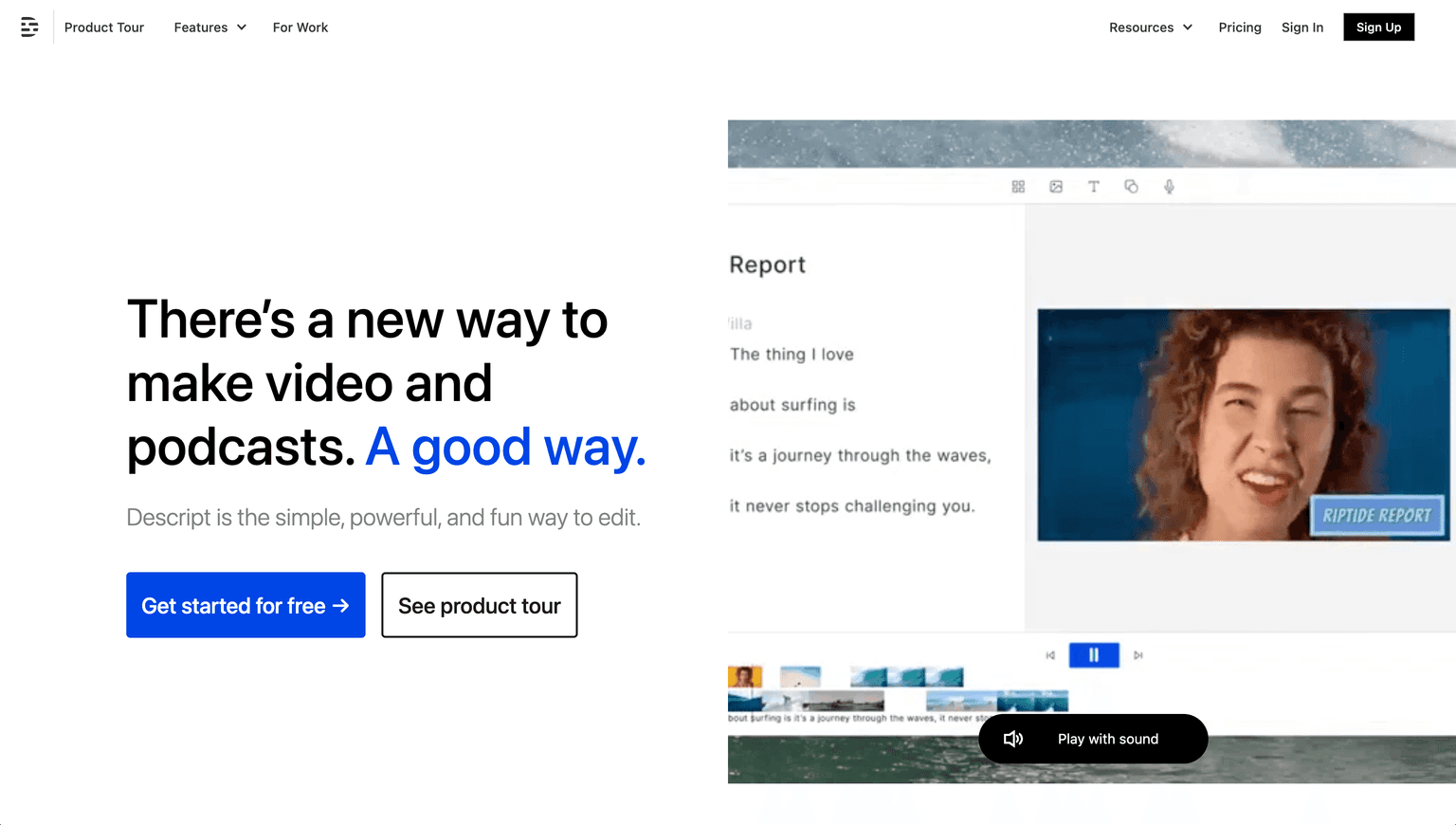
Descript is the AI-first audio and video editor that introduced text-based editing — edit your podcast like editing a Word document, with the audio cuts following automatically. The product also handles transcription, AI voice cloning (Overdub), filler-word removal, screen recording, and video editing for podcasters who repurpose to YouTube. For most independent podcasters, Descript is the daily-driver editor.
Production credibility: raised $100M+ Series C at a $553M valuation (2022) led by OpenAI Startup Fund and Andreessen Horowitz; reported >5M users by 2025; deployed across major podcast networks (NPR, This American Life ecosystem, podcasts at scale); pricing $19–35/user/month at the entry tier covers individual podcasters.
What it wins at: the text-based editing workflow that's faster than waveform editing for most podcast use cases, the all-in-one stack covering record + transcribe + edit + clip + export, and the procurement-friendly pricing for indie podcasters.
Where it falls down: for studio-quality multi-track remote recording specifically, Riverside.fm fits better; for video-first podcasts with motion graphics, traditional video editors fit better. Descript is the audio-first all-in-one.
2. Riverside.fm — Studio-Quality Remote Recording
Riverside.fm is the studio-quality remote recording platform that records each guest's audio and video locally on their device (rather than over a compressed Zoom-style stream), then uploads to the cloud. For podcasters interviewing remote guests, Riverside is the recording platform that produces broadcast-ready audio without Zoom's compression artifacts.
Production credibility: raised $44M+ Series A at a $200M+ valuation (2021); deployed at major podcast networks (iHeartRadio, NBC News, Spotify) and indie podcasters; reported >100K podcasters using the platform; the local-recording technology is the differentiator vs Zoom-based alternatives.
What it wins at: remote-guest podcasts where audio quality matters, multi-track recording with separate stems for each speaker, and the cloud-based recording workflow that doesn't require guests to install heavy software.
Where it falls down: for solo-recorded podcasts (one-person shows recording locally), Riverside is overkill — Descript or any local DAW fits better. Best for remote-interview podcasts specifically.
3. Podcastle — All-in-One AI Podcasting
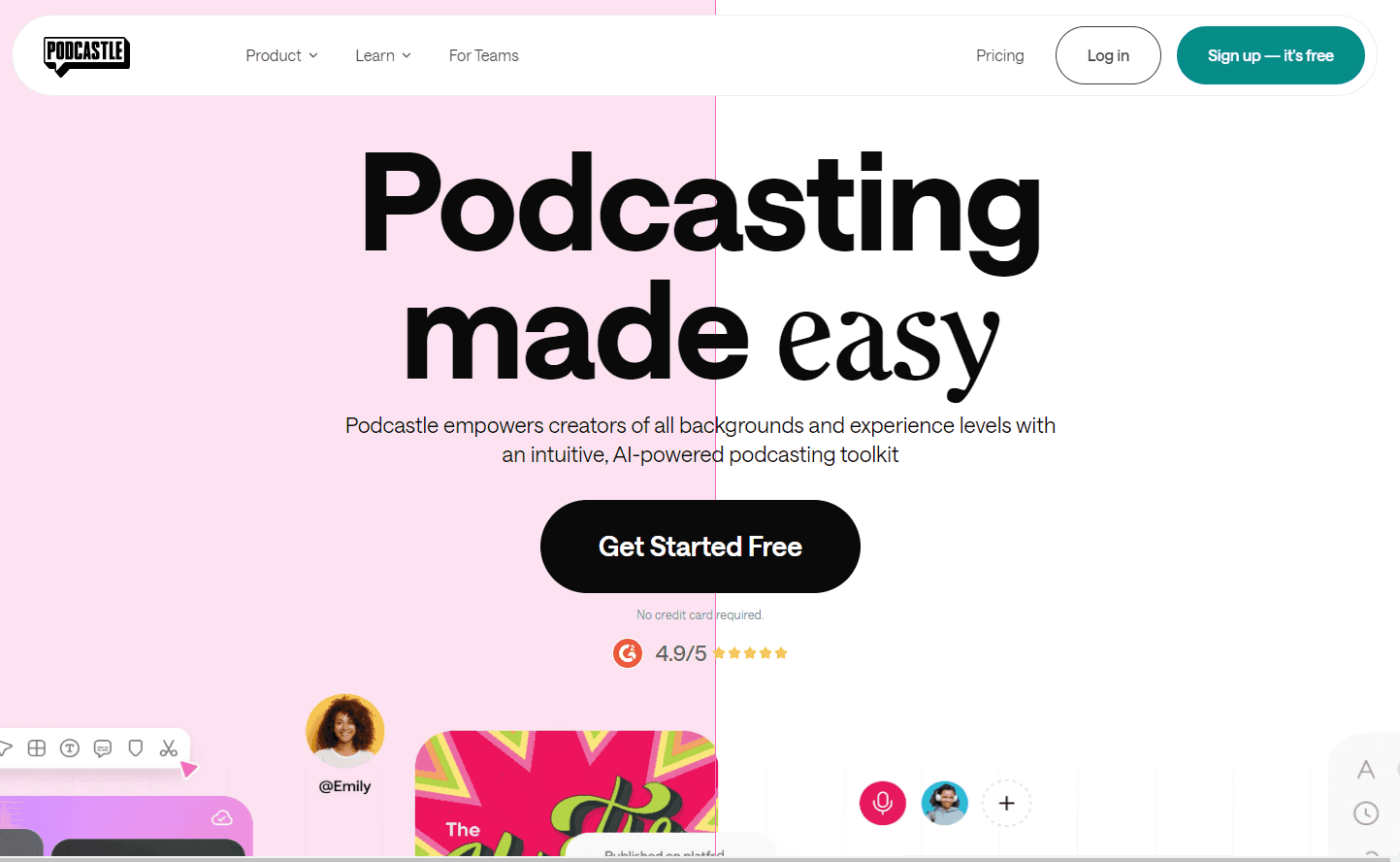
Podcastle is the AI-first all-in-one podcasting platform that combines remote recording, AI editing, AI voice generation (text-to-speech for ad reads or intro/outros), and audio cleanup in a single browser-based workspace. For podcasters who want one platform end-to-end without context-switching between Descript and Riverside, Podcastle is the integrated alternative.
Production credibility: raised $4M+ seed funding; reported >1M users by 2024; G2 rating consistently 4.7+/5; pricing $14.99–34/user/month covers indie creators and small podcast teams.
What it wins at: indie podcasters who want everything in one platform, the AI voice generation for show intros and ad reads, and the price-per-feature value prop at the entry tier.
Where it falls down: depth on individual capabilities trails the specialists — Descript's editing is more mature, Riverside's recording is more reliable, Adobe's audio cleanup is better. Best for podcasters who prioritize one-platform simplicity over best-in-class per-stage capability.
Audio Cleanup
4. Adobe Enhance Speech — AI Audio Cleanup
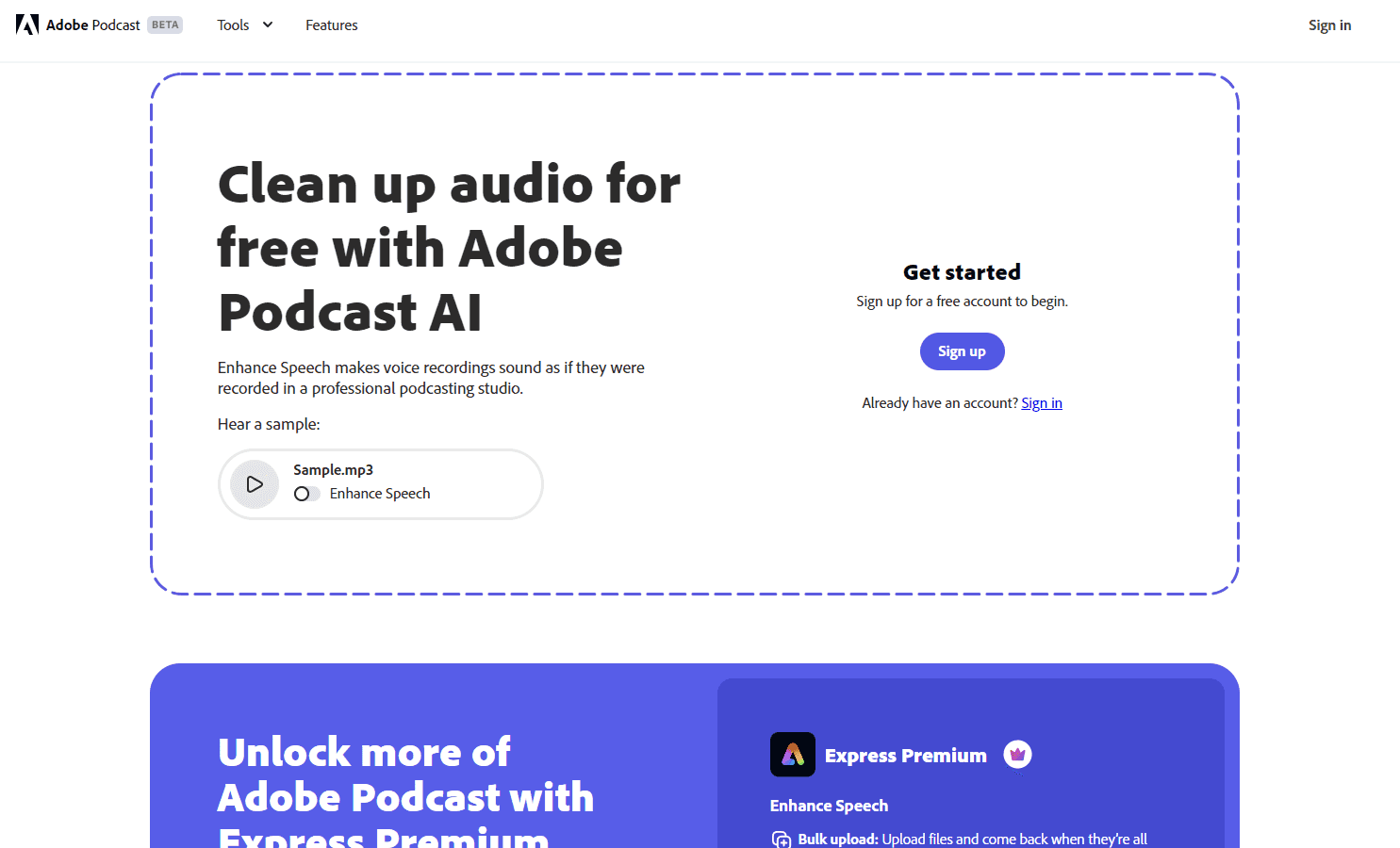
Adobe Enhance Speech is the AI audio-cleanup tool that turned the "my recording sounds bad" problem from a multi-hour audio-engineer task into a one-click web upload. Removes background noise, restores muffled speech, evens levels, and outputs broadcast-ready audio. Available free as a web tool plus integrated into Adobe Podcast and Premiere Pro.
Production credibility: Adobe Inc. ($ADBE, public company at >$200B market cap); Enhance Speech launched in 2023, hit broad adoption among podcasters in 2024–2025; deployed across professional podcasters, agencies, and indie creators; free at adobe.com/products/podcast/enhance with paid tier integrated into Adobe Creative Cloud.
What it wins at: salvaging poor-quality recordings (Zoom audio, phone interviews, noisy environments), the one-click no-DAW workflow, and the no-cost-to-try free web tier that lets podcasters validate before paying.
Where it falls down: for live-recording quality enhancement, Riverside.fm's separate-track recording solves the problem upstream. Adobe Enhance is the post-production fix; Riverside is the pre-production prevention.
Clipping and SEO
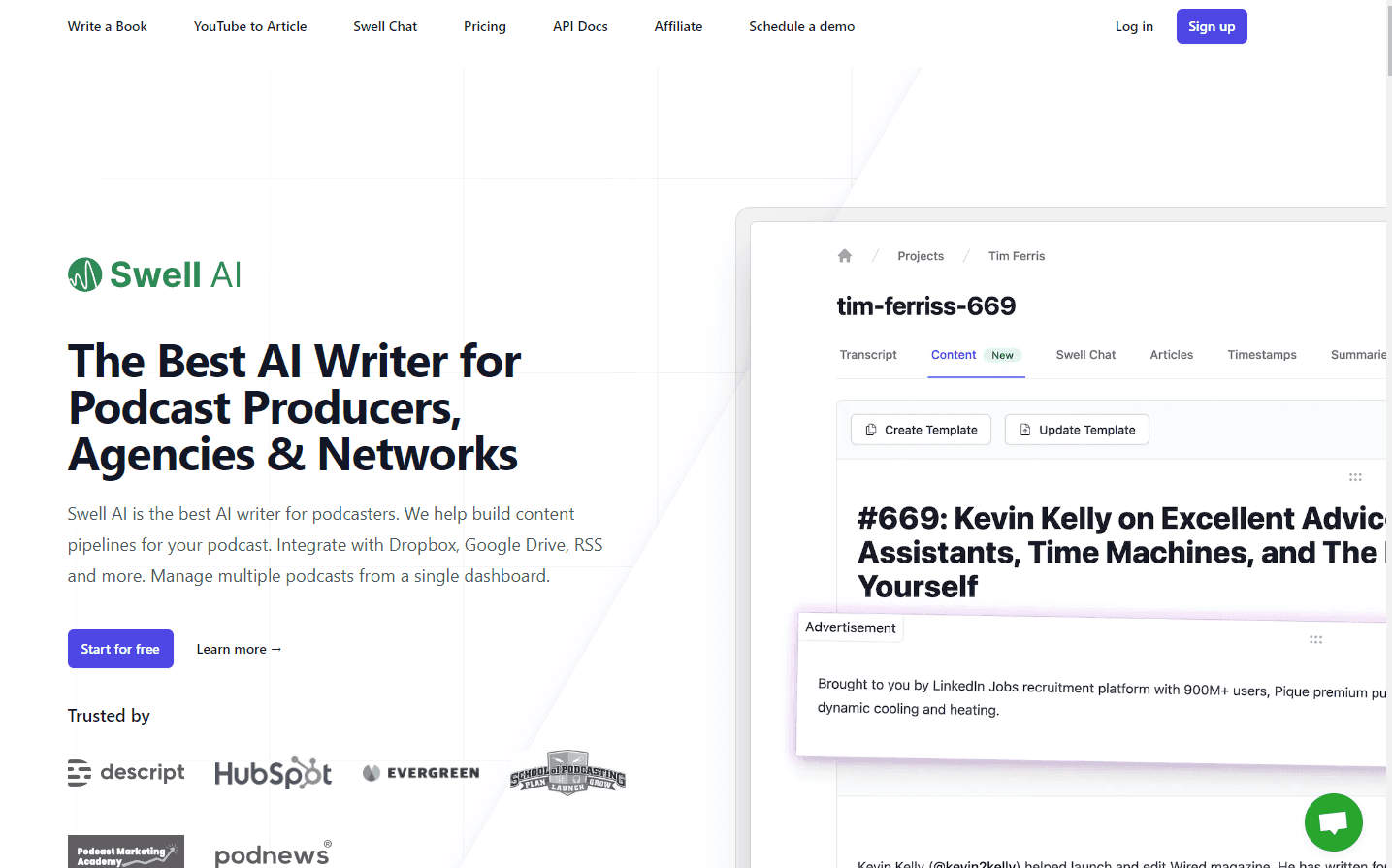
5. Swell AI — Podcast Content + SEO
Swell AI generates the post-production content that compounds podcast SEO and discoverability — show notes, chapter markers, social posts, blog articles repurposed from the episode transcript. For podcasters serious about content marketing around the show, Swell AI handles the work that would otherwise consume hours of editorial time per episode.
Production credibility: privately held; deployed across indie podcasters and small networks who treat the show notes and transcript as primary SEO assets; pricing $35–199/month covers individual through agency tiers.
What it wins at: podcasts where the show notes + transcript drive meaningful search traffic, podcast SEO workflows where chapter markers and timestamps matter, and the use case where each episode is the seed for 5+ derivative content pieces.
Where it falls down: for podcasters who don't repurpose to long-form derivatives, the workflow doesn't justify the seat cost. Best for content-marketing-led podcast operations specifically.
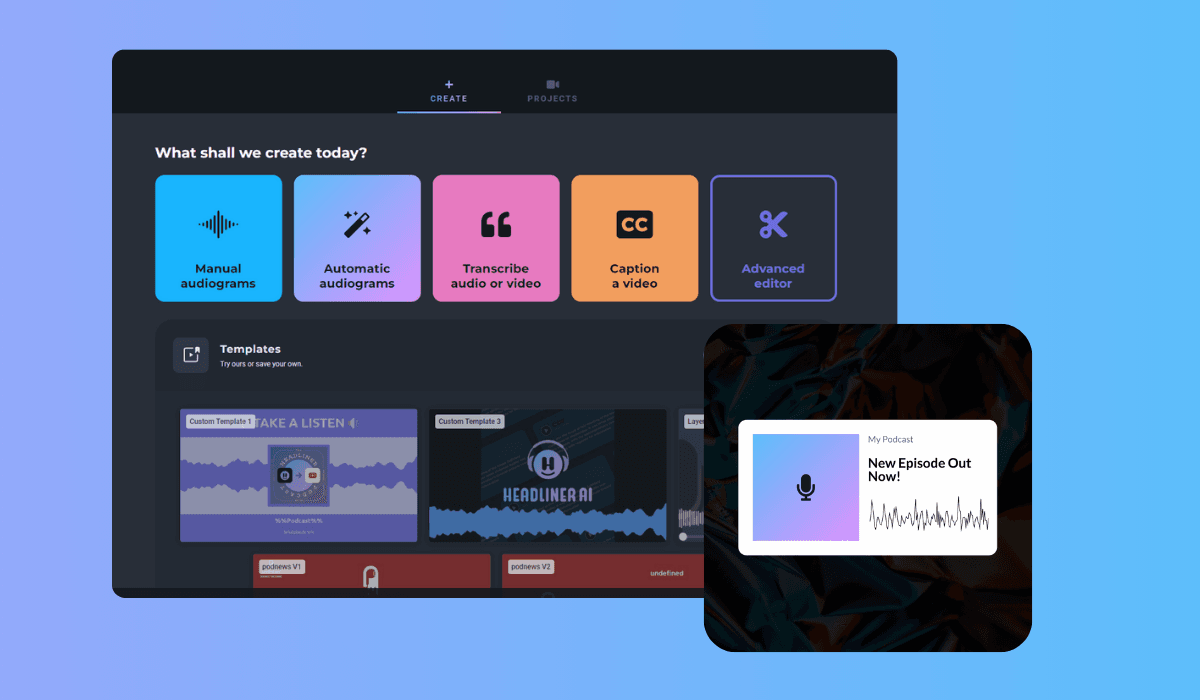
6. Headliner — Audiograms and Promotional Video
Headliner generates audiograms (audio + waveform + cover art video) and promotional clips for sharing podcast snippets on social media. The 2024–2025 evolution toward AI-driven moment selection ("find the most shareable moment in this episode") extended the product from a manual-clip tool to an AI-driven promotion tool.
Production credibility: privately held, profitable; deployed across major podcasts and indie creators; the audiogram format is the canonical podcast-promotion format that Headliner pioneered; pricing free–$24/month covers indie creators.
What it wins at: social-media podcast promotion via audiograms, the visual-share format that converts on Instagram and Twitter, and the one-click workflow from podcast file to promotional clip.
Where it falls down: for video-first podcasts where the cameras are already rolling, traditional video clipping (Descript, Captions) fits better. Headliner is the audio-only-podcast promotion tool.
7. Podium — AI-Driven Podcast Clipping
Podium is the AI-driven clipping platform that finds the most engaging moments in a podcast episode automatically and generates short-form clips for social distribution. For clip-driven podcast growth (where each episode produces 5–10 short-form derivatives that drive new listener discovery), Podium is the AI-first option that doesn't require manual moment-selection.
Production credibility: privately held; deployed across podcasts at scale focused on social-driven listener growth; the AI-driven moment-selection is the differentiator vs traditional manual-clipping tools.
What it wins at: clip-driven growth strategies, podcasts whose discovery channel is social-media short-form, and the use case where automating moment selection saves the most editorial time.
Where it falls down: for podcasts that don't prioritize social-clip distribution, the workflow is overkill — Headliner or manual clipping in Descript covers the basic case. Best for clip-driven growth specifically.
Video Repurposing
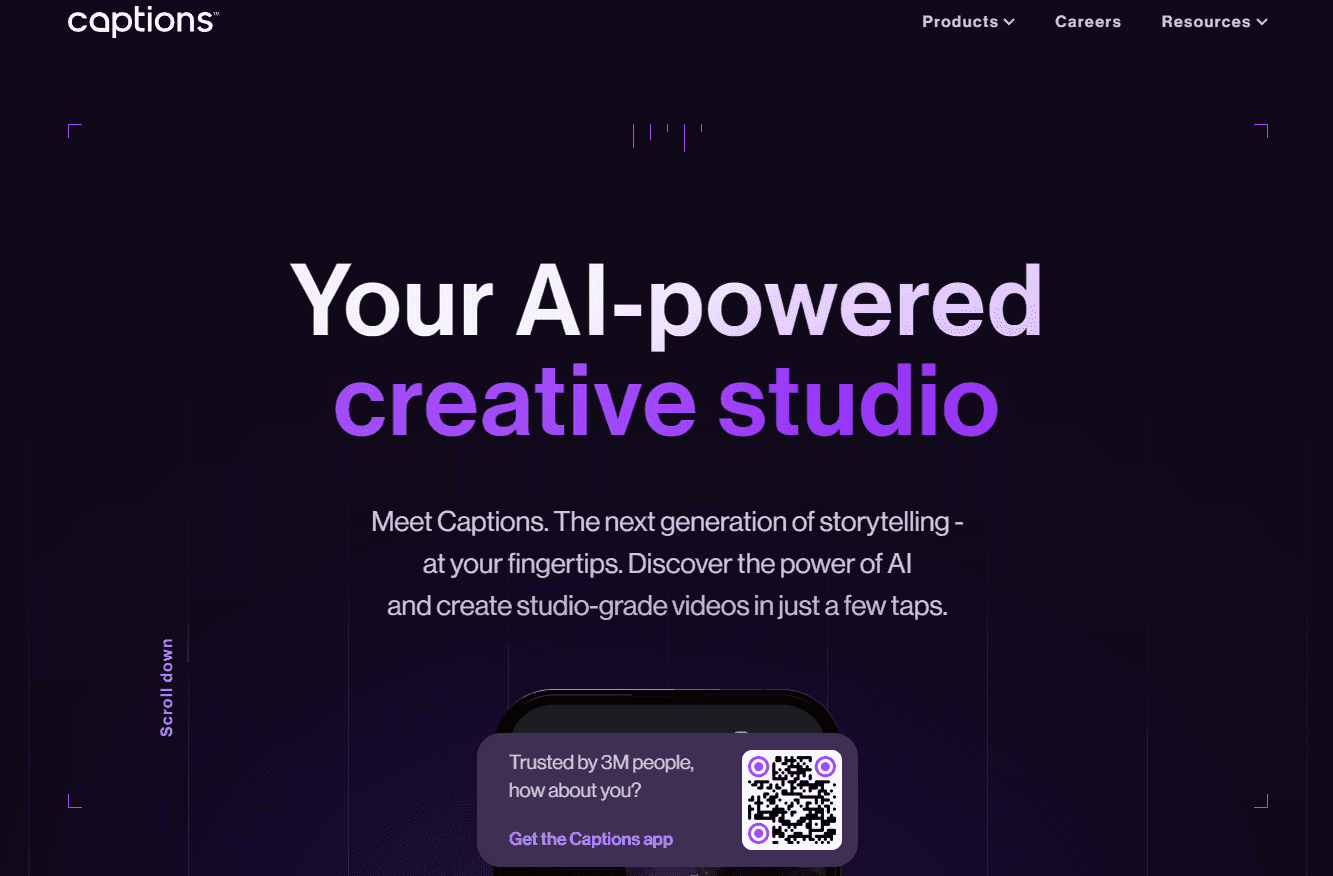
8. Captions — AI Video Captions
Captions is the AI video-editing app for short-form video — automatic subtitle burning, AI-driven cuts, B-roll generation. For podcasters who repurpose audio to video for YouTube Shorts, TikTok, and Reels, Captions handles the subtitle generation and visual treatment that makes podcast clips work as video.
Production credibility: raised $100M+ at a $500M+ valuation (2024) led by Index Ventures, Andreessen Horowitz, and others; reported >5M downloads on the iOS app; deployed across creators repurposing podcast content to video-first platforms.
What it wins at: podcast-to-video repurposing for short-form platforms, the auto-subtitle generation that drives engagement on muted-autoplay social feeds, and the AI-driven visual treatment that elevates raw clips into shareable video.
Where it falls down: for full-length video podcasts (1+ hour video as primary distribution), traditional video editing fits better. Captions is the short-form repurposing tool specifically.
How to Build the 2026 Podcast Production Stack
Match the tools to the actual podcast operation:
- Solo indie podcaster (audio-first, weekly cadence): Descript + Adobe Enhance Speech (free). $19–35/month total.
- Remote-interview podcast (multi-guest, professional quality): Riverside.fm + Descript + Adobe Enhance Speech. $40–80/month total.
- Content-marketing-led podcast (SEO + social compound): Descript + Swell AI + Captions. $80–180/month total.
- Clip-driven growth podcast (social-first audience): Descript + Riverside.fm + Podium + Captions. $100–250/month total.
- Studio-grade podcast network (multiple shows): Riverside.fm + Descript Pro + Adobe Premiere + Swell AI + Headliner. Custom-priced enterprise/network tier.
The most-recommended 2026 starting investment for a new podcaster: Descript ($24/month) + Adobe Enhance Speech (free). Total $24/month, covers ~80% of where AI productivity gains show up for indie podcasters. Add Riverside.fm if you interview remote guests; add Swell AI or Captions if you repurpose for SEO or social.
Adjacent Reading
- Best AI Tools for Audio Creation and Editing (2026) — broader audio production ecosystem
- Top AI Voice Tools for 2026 — voice cloning, TTS, voice agents
- Top 7 AI Meeting Note-Takers (2026) — adjacent transcription tools
- Top 7 AI Tools for Social Media Management (2026) — distribution channel tools
- Best AI Tools for Your Creative Process (2026) — creative-stage AI tools
Frequently Asked Questions
What's the best AI tool for a new podcaster in 2026? Descript ($24/month) + Adobe Enhance Speech (free). Descript covers recording, transcription, text-based editing, and clip generation; Enhance Speech handles audio cleanup. Total under $30/month, the canonical starting stack for indie podcasters. Add Riverside.fm if you interview remote guests; add specialty tools as your operation matures.
Can AI tools replace a podcast editor? For most indie podcasts, yes — Descript and Podcastle handle 80% of what manual editing does, faster. For high-production podcasts (NPR-quality, multi-source mixed shows, music-bed editing), human editors still produce better results. The market for cheap commodity podcast editing has collapsed; the market for senior editors who use AI tools to ship faster has expanded.
Are AI-generated podcasts (full AI voice + AI scripts) viable in 2026? For specific niches (audio-summary feeds, news roundups, language-learning content), yes — Wondercraft and similar tools ship full-AI podcasts. For human-driven storytelling and interview-based shows, AI generation can't replicate the quality. Best framing: AI as the production partner, not the host.
Are these AI tools safe for sensitive interview content? The paid tiers of Descript, Riverside, Adobe, and the others ship SOC 2 Type II compliance or equivalent. For interviews involving NDAs, off-the-record content, or regulated topics, use the paid tier with appropriate data-handling settings. Always disclose to guests when AI tools record or process the conversation.
What's the typical cost for a 2026 podcast production stack? Indie solo podcaster: $24–60/month (Descript + free Enhance Speech). Remote-interview podcast: $40–80/month (add Riverside.fm). Content-marketing-led: $80–180/month (add Swell AI + Captions). Studio-grade network: $300–1,000+/month per show. Seat costs are typically negligible compared to ad-rev or sponsorship revenue at any meaningful download volume.
How does podcast workflow change in 2026 compared to 2023? AI handles substantially more of the workflow: text-based editing (Descript), audio cleanup (Adobe Enhance), AI-driven clipping (Podium), subtitle burning (Captions), and content repurposing (Swell). What used to take a 4-hour edit cycle for a 60-minute episode now takes ~1 hour for most indie podcasters. The bottleneck has shifted from production speed to content quality — "can I produce more episodes" is no longer the constraint; "do my episodes have something worth saying" is.
Should I use one all-in-one tool or multiple specialists? For solo indie podcasters: one all-in-one (Descript or Podcastle) is sufficient. For remote-interview podcasts: Riverside.fm + Descript is the canonical pair. For content-marketing-led operations: 3–4 specialty tools layered on top of Descript. The seat costs are a rounding error against the time saved.
Are these tools available outside the US? Most are global SaaS products available worldwide. Riverside.fm and Descript ship worldwide; Adobe Enhance Speech is a global Adobe product; Captions and others have international footprints. For non-English podcasts, transcription quality varies by language — verify language support during evaluation.
Final Thoughts
The AI tooling landscape for podcasting in 2026 is more capable and more accessible than it was three years ago. The category-defining tools have separated from the pack across each stage of the workflow — Descript for editing, Riverside for remote recording, Adobe for audio cleanup, Swell for SEO content, Headliner and Podium for clipping, Captions for video repurposing, Podcastle for the integrated all-in-one alternative.
For any podcaster not yet using AI tools in their workflow, the highest-ROI 2026 move is: start with Descript + Adobe Enhance Speech, add Riverside.fm if you interview remote guests, and let the productivity lift drive the next decision. The seat costs are negligible against any monetization path; the time spent over-deliberating tool selection is the real cost most indie podcasters don't account for.
Categories these tools span
More collections you may also like
Sign up for our newsletter
Receive weekly updates so you can stay up-to-date with the world of AI
Sign up for our newsletter
Receive weekly updates so you can stay up-to-date with the world of AI
The AI tools directory for discovering, exploring, and comparing the most innovative AI tools in the industry