Reflex
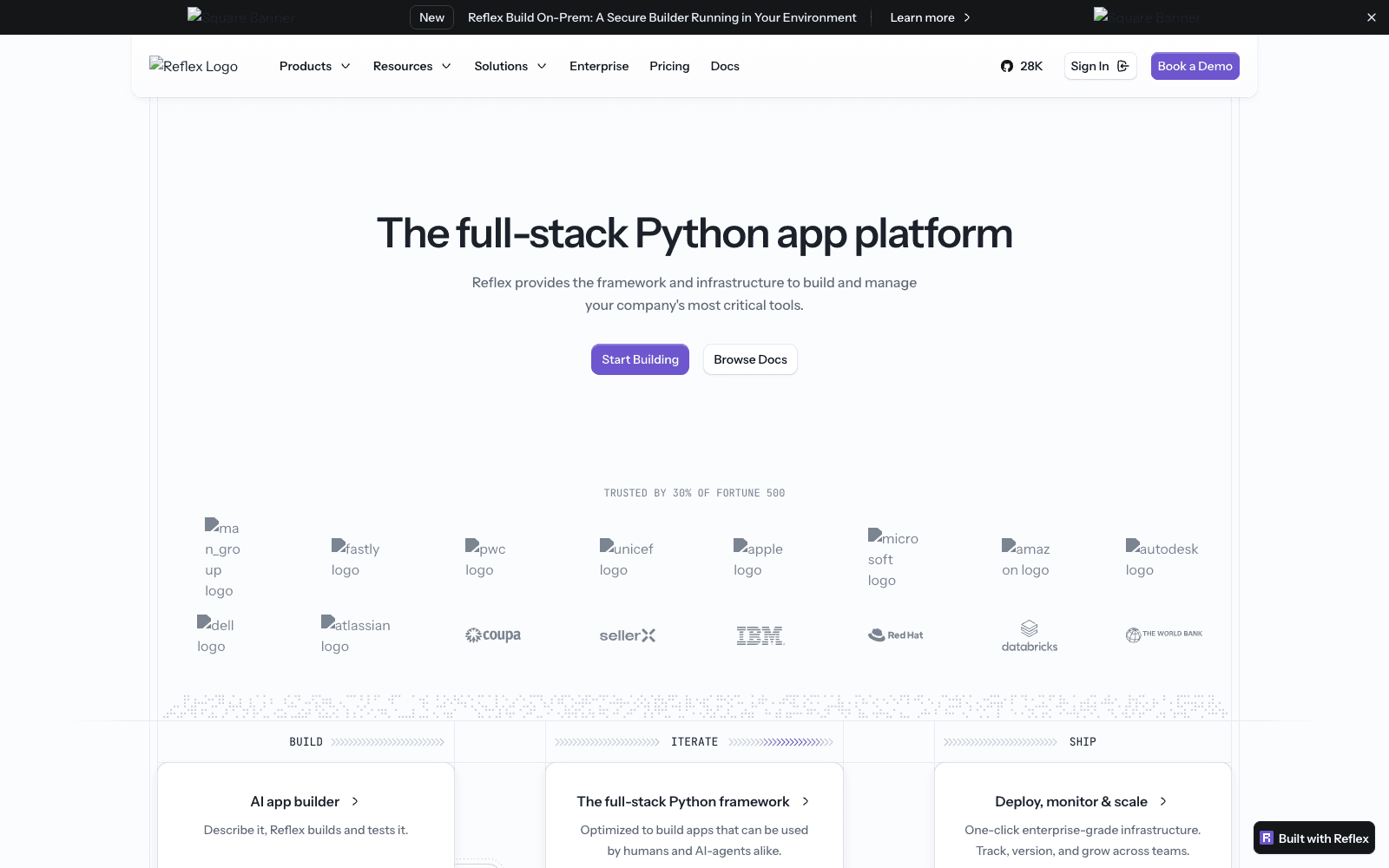
Reflex is the open-source Python framework for building AI apps without JavaScript. Backed by Lux Capital; pip install full-stack web apps from pure Python
Overview
Reflex: Open-Source Python AI App Framework
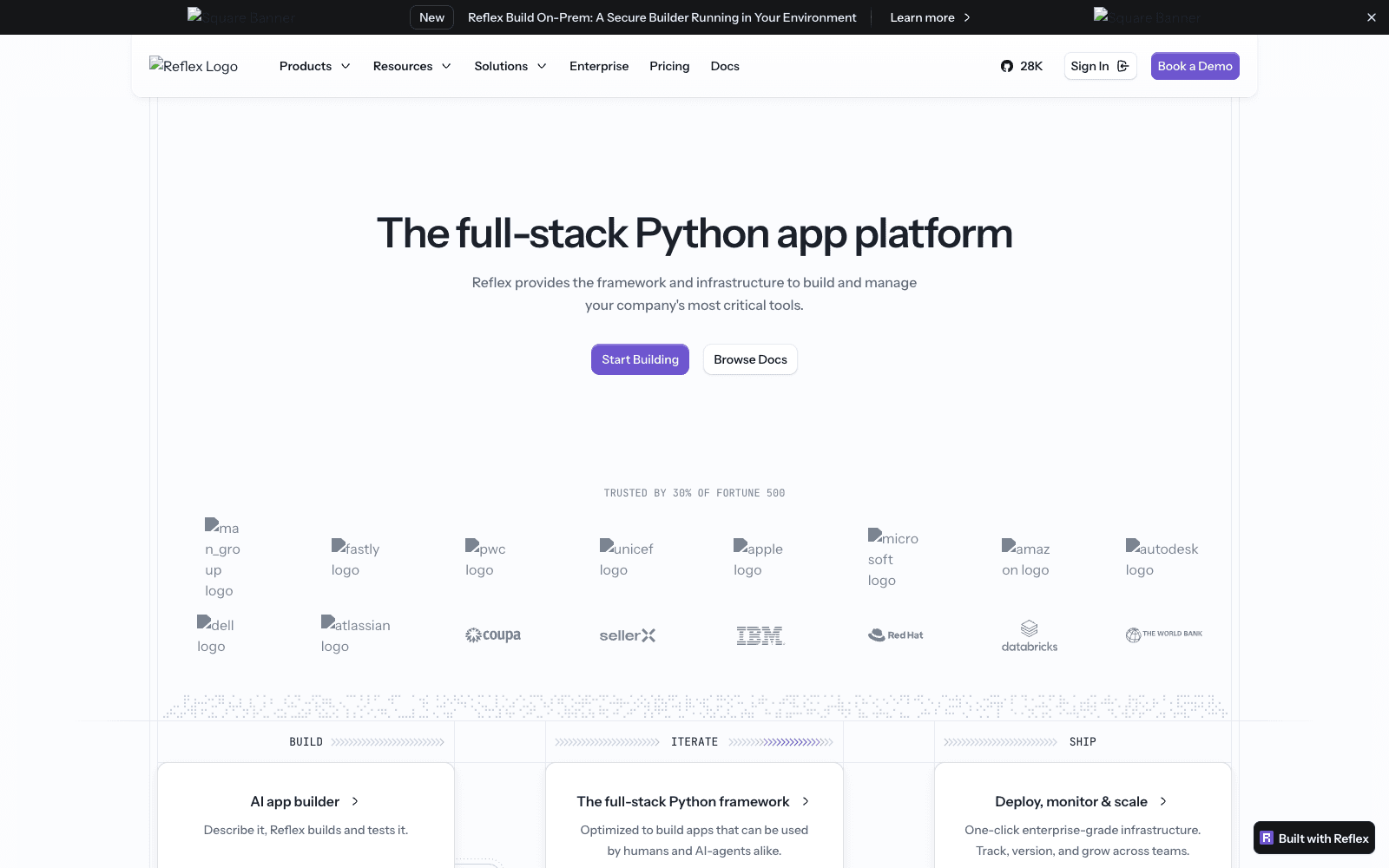
Reflex is Open-source Python framework for building AI applications without JavaScript. Most AI prototypes get stuck in Jupyter because the path to a shareable web app requires JavaScript, React, and a full-stack rewrite. Reflex's pitch is full-stack web apps in pure Python — write the UI, state, and backend in one language using familiar idioms — with first-class support for the LLM and ML libraries Python developers already use.
Key Features
- Open-source Python framework for building AI applications without JavaScript
- Founded in 2022 by Nikhil Rao and Alek Petuskey as Pynecone, rebranded to Reflex in 2023
- Y Combinator alum (W23); subsequent investment from Lux Capital
- Build full-stack web apps in pure Python — UI, state management, and backend in one language
- Native integration with the Python AI ecosystem — LangChain, LlamaIndex, OpenAI, Hugging Face
- Apache 2.0 license open-source; commercial Reflex Cloud for managed deployments
- Used by AI researchers and Python-first developers building demos, internal tools, and full applications
Ideal Use Case
Python-first AI developers building demos, internal tools, and full-stack web applications who don't want to learn React/Next.js. Particularly strong fit for ML researchers turning notebook prototypes into shareable web applications.
Why Use Reflex
Most AI prototypes get stuck in Jupyter because the path to a shareable web app requires JavaScript, React, and a full-stack rewrite. Reflex's pitch is full-stack web apps in pure Python — write the UI, state, and backend in one language using familiar idioms — with first-class support for the LLM and ML libraries Python developers already use.
FAQ
Q: Who founded Reflex? A: Nikhil Rao and Alek Petuskey co-founded Reflex in 2022 (originally as Pynecone, rebranded to Reflex in 2023). The company graduated from Y Combinator's W23 batch.
Q: Is Reflex open-source? A: Yes — Reflex is Apache 2.0 licensed open-source. The team also offers Reflex Cloud as a commercial managed-deployment service.
Q: Who has invested in Reflex? A: Y Combinator and Lux Capital have participated. Total disclosed funding is approximately $10M+.
Q: Reflex vs Streamlit vs Gradio? A: Streamlit and Gradio are great for simple demos but break down on full applications. Reflex generates real React under the hood, supports complex state management, and is designed for production applications — not just notebooks-with-UI.
Q: Why was Reflex renamed from Pynecone? A: The Pynecone name conflicted with Pinecone (the vector database) and the team rebranded to Reflex in 2023 to avoid confusion.
tl;dr
Reflex is the open-source Python framework for building AI apps without JavaScript. YC W23 + Lux Capital. Apache 2.0; full-stack web apps in pure Python with first-class LangChain, LlamaIndex, OpenAI, Hugging Face integration. Production-grade alternative to Streamlit and Gradio.
Related
Looking for more options? Browse the Developer Tools directory or read our best AI coding tools listicle. Reflex is also tracked on Crunchbase.
Why Use Reflex
User Reviews
Similar Tools