Fivetran
Simplify data integration with automated, scalable pipelines.
Overview
Streamline Your Data Management with Fivetran – Automated Data Integration for Seamless Analytics
Fivetran is a leader in data integration, providing a fully managed and automated data pipeline solution that consolidates data from various sources into a single, ready-to-analyze format. By automating the data integration process, Fivetran enables businesses to focus on deriving insights rather than managing data infrastructure, thereby increasing efficiency and reducing time to insight.
Merger note (June 2026): Fivetran and dbt Labs completed an all-stock merger on June 1, 2026, announced October 13, 2025. The combined company operates as Fivetran + dbt Labs, with Fivetran co-founder George Fraser as CEO and dbt Labs founder Tristan Handy as President, and supports more than 100,000 data teams. This was a merger of two data-infrastructure vendors rather than an acquisition by an outside buyer. Both products continue to run independently for now — existing pipelines and dbt models keep working — with tighter integration and bundled pricing expected over time rather than immediately.
Key Features:
- Fully Managed Data Pipelines: Automate and manage the entire data integration lifecycle without the need for ongoing maintenance.
- Real-Time Data Synchronization: Ensure data is always up-to-date with continuous, automated synchronization.
- Pre-Built Connectors: Quickly connect with hundreds of data sources using pre-built connectors that simplify setup and integration.
- Centralized Data Storage: Consolidate data into a central warehouse, making it easier to perform comprehensive analytics.
- End-to-End Encryption: Secure data during transfer and at rest with robust encryption protocols.
Ideal Use Case:
- Perfect for businesses of all sizes that require reliable and efficient data integration to power their analytics platforms. Especially beneficial for organizations that deal with large volumes of data from multiple sources, such as e-commerce, marketing, and SaaS companies.
Why Use Fivetran:
- Eliminate the complexity of data integration with automated processes.
- Enhance decision-making with access to real-time, unified data.
- Reduce resource allocation for data management, allowing focus on strategic initiatives.
- Ensure data accuracy and consistency with reliable synchronization.
- Secure sensitive data with industry-leading security measures.
FAQ
What does Fivetran do? Fivetran simplifies data integration by automating and scaling data pipelines. It connects your data sources and moves information where you need it with minimal manual effort.
Who should use Fivetran? Fivetran is designed for teams and organizations that need reliable, automated data movement across multiple sources. It works well for businesses looking to streamline their data workflows without building custom integrations from scratch.
What is Fivetran's pricing model? Fivetran operates on a paid subscription basis. Visit the Fivetran pricing page for current plans and detailed pricing information.
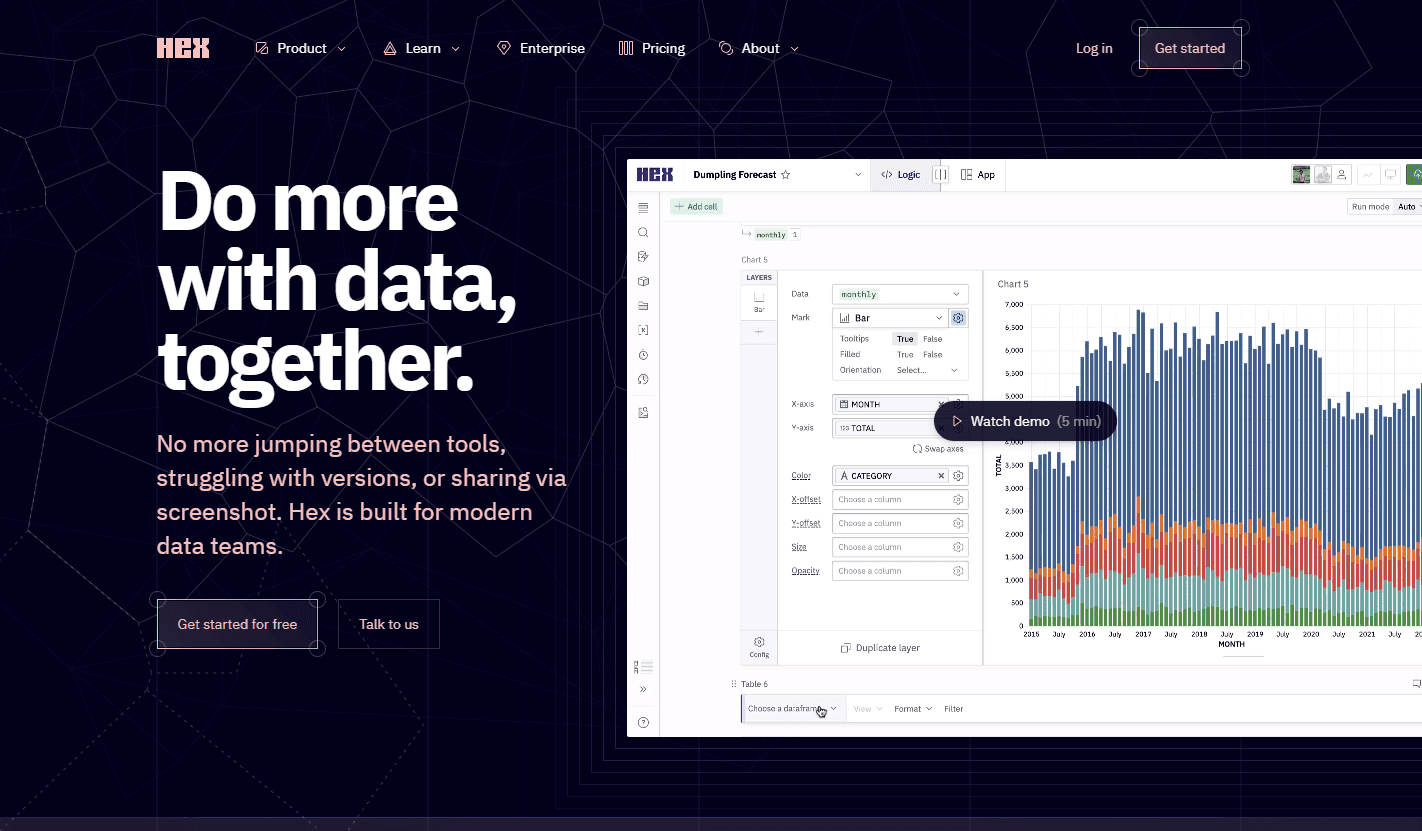
How does Fivetran compare to similar tools? Fivetran competes with alternatives like Hex, Quantexa IQ, and Triple Whale in the data integration and analytics space. Each tool has different strengths, so comparing their specific features and pricing will help you find the best fit for your data integration needs.
Did Fivetran merge with dbt Labs? Yes. Fivetran and dbt Labs completed an all-stock merger on June 1, 2026, announced October 13, 2025. Fivetran was not acquired by an outside buyer: the two merged into one company, Fivetran + dbt Labs, with George Fraser as CEO and Tristan Handy as President. Both products still run independently, so existing pipelines and dbt models keep working.
tl;dr:
Fivetran offers a powerful, automated solution for data integration, enabling organizations to efficiently prepare data for analytics, thereby unlocking valuable insights and driving business growth.
Related
Looking for more options? Browse the BI & Analytics directory or read our best AI analytics tools listicle. Fivetran is also tracked on Crunchbase.
Why Use Fivetran
Editorial Review
Our take on Fivetran.

Fivetran merged with dbt Labs in June 2026, putting ingestion and transformation under one roof at combined ARR approaching $600 million. The pipeline utility became a platform.
What works
- Connector library covers essentially every common source with little maintenance
- Merger with dbt Labs puts ingestion and transformation on one roadmap
- Combined business is substantial — ARR approaching $600M — so vendor risk is low
What doesn't
- Value stays warehouse-dependent; unusual sources still need custom development
- Post-merger brand, pricing and product overlap are still being reconciled
Fivetran automates the tedious half of analytics: point it at a source, configure a connector, and it lands data in the warehouse on a schedule without anyone maintaining bespoke ETL. That remains the core value, and for a team pulling twenty-plus standard SaaS sources into Snowflake, BigQuery or Redshift the case is easy to make.
What changed in 2026 is the shape of the company. Fivetran and dbt Labs completed an all-stock merger in June 2026, having signed in October 2025, combining ingestion with the transformation layer most of their customers already ran downstream. George Fraser leads the combined business with dbt's Tristan Handy as President; it currently trades as "Fivetran + dbt Labs" with the final brand undecided. Analysts put combined ARR near $600 million and the valuation above $10 billion — Fivetran was marked at $5.6 billion in 2021 and dbt Labs at $4.2 billion in 2022. Fivetran had already bought Census for reverse ETL and Tobiko Data for transformation, so the direction was set before the merger closed.
Two caveats. The value is still warehouse-dependent and connector-dependent: unusual or custom sources often need hand-written code regardless, and the "automated" promise is strongest for common systems. And a merger of this size carries its own risk — an undecided brand, two overlapping product surfaces and a roadmap being reconciled in public. That is worth a direct question in procurement rather than an assumption.
User Reviews
Similar Tools