AI notetakers in 2026: Otter vs Fireflies vs Granola vs Fathom vs Read

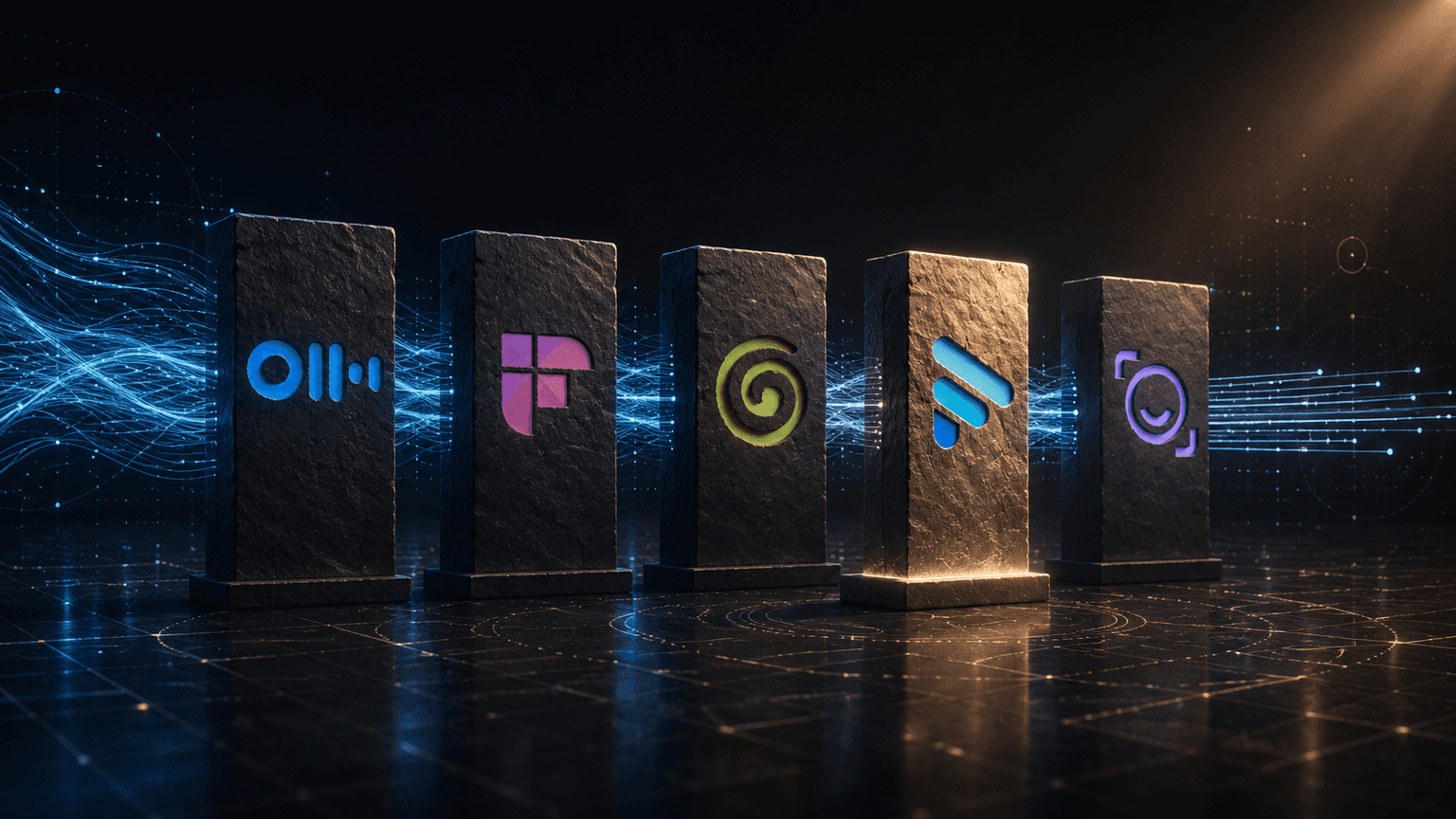
The best AI notetaker in 2026 is the one you stop thinking about — but choosing one just got harder, because the feature is now free. Every paid Zoom, Google Workspace, and Microsoft Teams plan ships an AI notetaker built in, so the real question is whether a standalone AI notetaker is still worth paying for. The honest answer is sometimes. We compared the five names that still matter — Otter, Fireflies, Granola, Fathom, and Read — against each other and against the free built-ins. The twist of the year: the category's protagonist isn't the biggest brand, it's the one that got rid of the bot.
If you want the whole field at a glance, our Top 7 AI Meeting Note-Takers collection ranks the broader set. This piece is the opinionated, head-to-head read: who each tool is actually for, what it costs, and when the free option is genuinely good enough.
Quick verdict
| Use case | Best fit in 2026 | Close second |
|---|---|---|
| You live in meetings and want notes you trust | Granola | Otter |
| You're a revenue team wired into a CRM | Fireflies | Otter |
| You want a genuinely useful free plan | Fathom | the built-in tools |
| You want engagement and sentiment analytics, not just notes | Read AI | Otter |
| All your calls are on one platform (Zoom / Meet / Teams) | the built-in tool | Fathom |
| In-person meetings, not just video calls | Granola | hardware recorders |
| Consent and privacy matter | Granola or Fathom, bot-free with training opt-out on | none of them exempt you — get consent anyway |
If you only remember one thing: the summary is now free, so pay only for what the free tools can't do — cross-platform reach, CRM depth, analytics, or a bot-free capture mode. Just don't buy bot-free as a consent shield — the August 2026 update below explains why that argument stopped working.
Update, September 20, 2026: Fathom sold, the built-in defaults on, and a case citation we got wrong
Three weeks after the last update, one of the five tools has a new owner, the free built-in most of our readers already have is about to turn itself on, and one line in the August update cited the wrong lawsuit. Prices for all five were re-read on September 20 and are unchanged, so the pricing verdicts below stand.
Fathom belongs to Superhuman now. On September 14 Superhuman, the productivity company built around Grammarly, acquired Fathom for an undisclosed sum; Fathom reports more than 400,000 monthly active users, and Superhuman bought the AI detector GPTZero in June. Pricing is unchanged — a free plan, Premium at $20 a month or $16 annual, Team at $19, Business at $34 — and the bot-free capture mode is still a Mac-only beta, so "free-tier favourite" holds. What changes is who you are contracting with, and, for anyone weighing the privacy question, who would be sued.
The correction. The August 28 block below names Cruz v. Fireflies.AI Corp. as the biometric case against Fireflies. Cruz was voluntarily dismissed without prejudice on March 10, 2026, before we wrote it. The live case is Fricker v. Fireflies.AI Corp. in the Northern District of Illinois, consolidated with a second suit in June, on the same voiceprint theory; Fireflies moved to dismiss in July and the motion was fully briefed on August 26, with a ruling pending. Both passages are corrected. The other two cases moved as expected: Otter filed its answer on September 17 with discovery under way, and Granola has until a date set by agreement to respond, with a first hearing on October 28. Our notetaker lawsuits piece has the docket detail.
Granola answered the complaint on its pricing page, if not in court. Its plans — free, Business at $14, Enterprise at $35 — are unchanged, but the page now advertises that any user can opt out of model training at any time, and that the enterprise tier can notify an organisation that Granola is in use. We cannot tell whether those lines predate the suit; they address exactly what it alleges. Granola added 32-language support on September 2.
The built-in is about to be on by default. From September 21 Google Meet's "Take notes for me" turns on automatically for meetings with three or more guests on Workspace Business Standard and Plus, unless an administrator or user switches it off. The free-built-ins section below was written when that feature was something you enabled; it is now something you disable. Zoom's paid plans still include unlimited summaries (Pro $16.99, Business $21.99, the free tier capped at three a month), and Microsoft is running a discounted Copilot Business add-on through the end of the year. For a team that already pays for one of those platforms, the "do you need a standalone notetaker at all" question below is sharper than it was.
Otter, Fireflies and Read AI are unchanged. Otter lists Pro at $16.99 and Business at $30 and is now selling an SDR agent; Fireflies holds at Pro $18, Business $29 and an annual-only Enterprise tier; Read AI holds at Pro $19.75 and Enterprise $29.75 and has published nothing since July. One number of ours we have softened: Read AI's total funding, which we put at about $121 million, is reported anywhere between $81 million and that figure depending on the tracker; only the $50 million Series B is confirmed by the company.
Update, August 28, 2026
The consent story flipped, and it is the reason to re-read this piece. For two years the risk argument in this category was simple: bots that join and record get you sued, so a tool without a bot is the safe one. That argument no longer survives contact with the docket. Three of the five tools here now face privacy litigation, and the newest case targets the bot-free design specifically.
Granola was sued over the very thing we praised it for. Chamberlain v. Granola was filed July 30, 2026 in the Northern District of California — the same district hearing the Otter case. The complaint alleges Granola recorded a meeting participant without notice that an AI notetaker was present, and that meeting contents were used by default for commercial purposes including AI model training unless a user turned that off. Plaintiffs' attorneys pointed at Granola's own marketing copy — that other participants "won't know it's there" — and argued it showed the design was deliberate rather than an oversight. The claims run under the federal Electronic Communications Privacy Act and California's Invasion of Privacy Act, which carries statutory damages of $5,000 per violation or treble actual damages, whichever is greater.
Otter's case got past the pleadings. On August 13, 2026, Judge Eumi K. Lee granted Otter's motion to dismiss only in part. The federal Wiretap Act claim, the California Invasion of Privacy Act claim, and both Illinois biometric-privacy claims survive and head into discovery, on the theory that Otter plausibly acted as a third-party eavesdropper. The CFAA counts, the CDAFA claim, the Washington Privacy Act claim, and most intrusion-upon-seclusion claims were dismissed with leave to amend. This is a ruling on the pleadings, not a finding of liability — but "a judge let the wiretap claim through" is a materially worse posture than "a suit was filed."
Fireflies has a biometric case of its own. Fricker v. Fireflies.AI Corp. (1:26-cv-02675), filed in the Northern District of Illinois in 2026 and consolidated with a second suit in June — the earlier Cruz v. Fireflies.AI Corp. was voluntarily dismissed in March 2026 — is a class action under the Illinois Biometric Information Privacy Act. It alleges that the Speaker Recognition feature necessarily generates voiceprints — biometric identifiers under BIPA — without a published retention schedule, written notice, or a written release, including from non-account-holders who were simply present in a recorded meeting. Early stage, no settlement.
We've written the three cases up in full — what each alleges, what survived Otter's motion to dismiss, and who isn't a defendant — in AI notetaker lawsuits in 2026.
What this actually changes for you. The exposure was never really about the bot. It is about two things the bot merely made visible: whether every participant consented, and whether your meeting content trains a vendor's model by default. A tool that records invisibly can be worse on the first count, which is precisely the argument in the Granola complaint. So the practical guidance shifts: pick on fit, then do the two things that actually reduce risk — tell people before recording, and check the training default on whichever tool you choose. Granola lists a model-training opt-out on its free Basic tier and a team-wide opt-out at Enterprise; that setting is worth finding on day one, whatever you pick.
Pricing re-verified against every vendor's own page. Otter is unchanged since July: Pro $16.99 a month ($8.33 annual), Business $30 ($19.99 annual), free tier still 300 minutes a month. Granola is unchanged: Basic free, Business $14 a user, Enterprise $35. Fathom has restructured — Premium $20 a month ($16 annual), Team $19 ($15 annual), Business $34 ($25 annual), Enterprise on quote; the free plan still lists unlimited recordings, transcription and instant AI summaries, with advanced summaries and action items now sitting in Premium. Fathom's bot-free capture is still in beta, still Mac-only. Granola shipped an Apple Watch recording app in July 2026 and added speaker tags in August.
Update, July 13, 2026
We re-verified every price in this comparison against the vendors' public pricing pages. Current state, for anyone comparing an AI note taker by cost: Otter's Pro plan is $16.99 a month ($8.33 on annual billing) with Business at $30 ($19.99 annual), and its free tier remains 300 minutes a month with a 30-minute cap per meeting. Fireflies runs $18 a month Pro ($10 annual), $29 Business ($19 annual), and $39 Enterprise, with transcription still unlimited on every tier including free. Granola's Business plan is $14 a user with Enterprise at $35, and it now runs on Windows and Android alongside Mac and iPhone. Fathom's free plan still lists unlimited recordings, transcription, and instant AI summaries — and it has a bot-free capture mode in beta, a direct run at Granola's signature feature.
Two shifts since June worth knowing: Fathom chasing the no-bot posture confirms where the category is headed, and the free built-ins keep improving — which strengthens this piece's core advice. Whether you call it an AI notetaker, an AI note taker, or an AI note taking app, pay only for what the built-ins can't do.
What is an AI notetaker — and why the category just got harder
An AI notetaker records a meeting, transcribes it, and produces a summary with action items, so nobody has to type notes while trying to listen. For three years that was a product. In 2026 it's a feature the big platforms give away.
Zoom bundles AI Companion into every paid Zoom plan at no extra cost. Google's "Take notes for me" ships inside Workspace Business and Enterprise editions — and by Google's own count, more than 110 million meeting attendees used it in a single recent month. Microsoft 365 Copilot writes Teams recaps, though it remains a paid per-user add-on rather than a freebie. When the summary is included with software you already pay for, "it writes a summary" stops being a reason to buy anything.
So the standalone tools had to become something more than a transcript. The ones that survived in 2026 did it in four different directions — and one of them did it by removing the part everyone had come to resent.
The bot problem: fatigue, consent, and now three lawsuits
The standard AI notetaker works by sending a bot into your call. By 2026 that design has a cost. Workers describe "bot fatigue" — three different notetaker bots silently sitting in the same meeting — and surveys suggest a large share of professionals hold back what they say once they know a bot is recording. Teams have started carving out human-only channels for the conversations they don't want transcribed.
It also became a legal question. In August 2025, a lawsuit — Brewer v. Otter.ai — alleged that a sales call was recorded without one participant's consent because another attendee was running Otter, and challenged the design where only the meeting host is asked for permission. The case (since consolidated as In re Otter.AI Privacy Litigation) is unresolved, but it crystallized a worry buyers already had: an always-joining bot that records by default is a liability, not just a convenience.
That backlash is the single best explanation for why the breakout product of 2026 doesn't use a bot at all. What the backlash did not do is make the bot-free approach legally safe — Granola was sued in July 2026 over recording without notice and training on meeting content by default, which is the same complaint aimed at the bots. See the August 28 update above before you treat "no bot" as a compliance answer.
Granola: the bot-less notepad that won 2026
Granola is the AI notetaker that removed the bot. Instead of sending a participant into your call, it runs locally, listens to your computer's audio, lets you jot a few sparse notes yourself, and then uses AI to expand and structure your own notes after the meeting. Nothing visibly joins the room, and the human stays in the loop. For a category drowning in intrusive bots, that design landed at exactly the right moment.
Production credibility: Granola, founded by Chris Pedregal, raised a $20M Series A led by Spark Capital, a $43M Series B at a $250M valuation in May 2025 (led by Nat Friedman and Daniel Gross), and then a $125M Series C at a $1.5B valuation in March 2026, led by Index Ventures — roughly $192M raised in under two years. Its Series C named enterprise customers including Vanta, Gusto, Asana, Cursor, and Mistral, and reframed Granola from a personal notetaker into an enterprise "AI context" layer that feeds tools like Claude and ChatGPT. It's free to start, with paid team plans. See the full profile in our Granola listing.
The 2026 complication: on July 30, 2026, Granola was named in Chamberlain v. Granola, a class action alleging it recorded participants without notice and used meeting content for model training by default. The irony is exact — the invisibility that makes Granola pleasant to use is the thing the complaint calls deliberate concealment. It doesn't make Granola a bad product, and the case is unresolved, but it does retire the idea that going bot-free settles the consent question. Turn on the training opt-out and tell people you're recording.
Where Granola wins: meetings you actually attend (it's built for the person in the call, not for blanket recording of every call you skip), in-person conversations, and any setting where sending a recording bot is awkward or off-limits. Where it doesn't fit: if you want a hands-off bot that joins and captures meetings you're not in, Granola's human-in-the-loop model is the opposite of what you want.
Otter: the incumbent betting on voice agents
Otter is the brand most people think of first, and it's trying to outrun commoditization by becoming more than a notetaker. Its 2025 pivot turned the passive transcriber into voice "meeting agents" that can speak up in a call and serve as a searchable, company-wide meeting knowledge base.
Production credibility: Otter reported crossing $100M in annual recurring revenue in March 2025, and launched an AI agent suite the same month — a Meeting Agent plus a Sales Agent and an SDR agent that push it into live-call coaching and even autonomous demos (the same territory as the tools in our AI SDR comparison). Its funding is older — about $70M total, last a 2021 Series B — and it does not publish a current valuation, so the ARR figure is the number that matters. Pricing runs from a free tier (300 minutes a month) to Pro at $16.99 a month and Business at $30 a user. One caveat buyers should weigh: Otter is the named defendant in the consent litigation above, and on August 13, 2026 a judge let the federal Wiretap Act, California privacy, and Illinois biometric claims proceed into discovery — so its recording-by-default model deserves a careful look if privacy is a concern. Full details in our Otter listing.
Where Otter wins: teams that want a meeting system of record and are interested in the agent features. Where it struggles: it's a bot-based recorder at a moment when that model is under the most scrutiny.
Fireflies: the profitable, CRM-native one
Fireflies (its assistant is named "Fred") is the notetaker built for revenue teams. It joins calls across Zoom, Meet, and Teams, then pushes structured notes and signals into the CRM — the workflow depth that a free built-in summary doesn't touch.
Production credibility: Fireflies crossed a $1B valuation in June 2025 — though through a secondary tender offer (existing shareholders selling), not a fresh raise; the company says it hasn't raised primary capital since 2021 and has been profitable since 2023. Fireflies states it has 20M+ users across 500,000+ organizations and is used by people at most Fortune 500 companies (vendor figures, so read "used by someone there," not "bought company-wide"). In 2025 it added "Talk to Fireflies," a voice assistant built with Perplexity. Pricing runs from free to roughly $18–$39 a seat a month by tier. See the Fireflies listing.
Worth knowing before you roll it out: Fricker v. Fireflies.AI Corp. (Northern District of Illinois, 2026; motion to dismiss fully briefed August 26, 2026) is a BIPA class action alleging that the Speaker Recognition feature generates voiceprints without the notice, retention schedule, or written release the statute requires. If you have Illinois employees, that is a live governance question, not a footnote.
Where Fireflies wins: sales and customer-facing teams that want meeting intelligence flowing into their pipeline. Where it struggles: for a solo user who just wants clean personal notes, it's more machinery than the job requires.
Fathom: the free-tier favorite
Fathom built its growth on the most generous free tier in the category — unlimited recording and transcription at no cost — and used it to win sales reps and small teams from the bottom up.
Production credibility: Fathom raised a $17M Series A led by Telescope Partners in September 2024, notably including about $2M raised from its own users through a Wefunder crowdfunding round — a real signal of how much its base likes it. It reports 500,000+ users (vendor-stated). The catch to understand before you commit: the free plan's advanced AI summaries are capped at around five calls a month, with Premium at $20 a user ($16 annual) once you need more, a $19 Team tier ($15 annual), and Business at $34 ($25 annual) adding Salesforce and HubSpot sync. See the Fathom listing.
Where Fathom wins: individuals and small sales teams who want a free, no-friction recorder and only occasionally need the heavier AI features. Where it struggles: heavy users hit the summary cap fast, and the math then looks like everyone else's.
Read AI: analytics across more than meetings
Read AI competes on a different axis: not just notes, but engagement and sentiment analytics — who talked, for how long, how the room responded — and it stretches beyond meetings into email and messaging, positioning itself as a cross-app copilot rather than a call recorder.
Production credibility: Read AI raised a $50M Series B at a $450M valuation in October 2024, led by Smash Capital, only about six months after its Series A — with total funding reported at between roughly $81M and $121M depending on the tracker; only the $50M Series B is confirmed by the company. It runs a free tier alongside paid plans and has pushed into surfaces like a free Gmail extension that consolidates Slack, Teams, and Zoom activity. See the Read AI listing.
Where Read AI wins: managers and teams who care about meeting quality metrics, and anyone who wants one assistant spanning calls, inbox, and chat. Where it struggles: if you just want an accurate transcript and summary, the analytics layer is more than you need.
The free built-ins: when you don't need any of them
Be honest about the free option, because for a lot of people it's the right one. If your calls all happen on a single platform, the native tool is probably enough: Zoom AI Companion is included with paid Zoom, Google's "Take notes for me" is included with Workspace Business and Enterprise, and Microsoft 365 Copilot adds Teams recaps (as a paid add-on). They write a competent summary and action-item list, and they're already in the tool you're using.
What they don't do is follow you across platforms, push into your CRM, score engagement, or avoid the consent problem — they're bots that join and record like the rest. The standalone tools earn their price exactly where the built-ins stop. If none of those gaps matter to you, save the money.
How we evaluated
We didn't run every one of these against a quarter of real meetings, and you should be wary of any 2026 guide that claims it did. After a year in which three of these companies were sued over how they record and what they train on — including the one with no bot at all — and another's "user numbers" turned out to be analyst estimates, the honest method is to weight what's verifiable over what's marketed.
So we anchored each pick to fundamentals: funding and investor quality as a proxy for diligence, named customers and concrete facts (a real lawsuit, a disclosed valuation, an on-record customer) over round user-count claims, and the structural fit between the product's design and how you actually meet — bot versus bot-less, single-platform versus cross-platform, notes versus analytics. Vendor-stated metrics — "20M users," "75% of the Fortune 500," "500K users" — we treated as marketing until a third party stood behind them.
So which AI notetaker should you use?
Use Granola if you attend your meetings and want notes you trust, you meet in person as well as on video, or sending a recording bot into the room is awkward or not allowed. It's the best standalone AI notetaker in 2026 for the human-in-the-room use case, and the no-bot design is a real edge, not just marketing.
Use Fireflies if you're a revenue team and the value is meeting intelligence flowing into your CRM, not the notes themselves.
Use Otter if you want a company-wide meeting system of record and you're interested in its voice-agent direction — and you're comfortable with a bot-based recorder.
Use Fathom if you want the strongest free plan and only occasionally need heavy AI summaries.
Use Read AI if engagement and sentiment analytics — across meetings, email, and chat — matter as much as the transcript.
Use the built-in tool if all your calls live on one platform and you just need a summary. Don't pay for a standalone until you hit something the free tool can't do.
Frequently asked questions
Who owns Fathom? Superhuman, the productivity company built around Grammarly, acquired Fathom on September 14, 2026 for an undisclosed sum. Fathom's plans were unchanged at the time — a free tier, Premium at $20 a month, Team at $19 and Business at $34 — and its bot-free capture mode remains a Mac-only beta. Superhuman also acquired the AI detector GPTZero in June 2026.
Does Google Meet take notes automatically? From September 21, 2026, yes by default on Workspace Business Standard and Plus: "Take notes for me" turns on for meetings with three or more guests unless an administrator or a user turns it off. It was previously something a meeting host enabled. Zoom's paid plans include unlimited AI summaries, and Microsoft sells Copilot meeting notes as an add-on.
What is an AI notetaker? An AI notetaker is software that records a meeting, transcribes it, and generates a summary with action items automatically. In 2026 they split into bot-based tools that join your call to record (Otter, Fireflies, Fathom, Read AI), a bot-less tool that enhances notes you take yourself (Granola), and free built-in versions inside Zoom, Google Meet, and Microsoft Teams.
What's the best AI notetaker for meetings in 2026? For most people who attend their meetings, Granola — its bot-less design produces trustworthy notes without sending a recorder into the room. Revenue teams are better served by Fireflies, free-plan seekers by Fathom, and anyone who wants analytics by Read AI. If your calls all live on one platform, the built-in tool may be enough.
What's the difference between Granola and Otter? Otter sends a bot into the call to record and transcribe everything, then increasingly acts as a company-wide meeting assistant. Granola sends no bot — it runs locally, listens to your audio, and enhances the sparse notes you jot yourself. Otter is built for blanket capture and a searchable record; Granola is built for the person actually in the meeting. What Granola does not do is avoid the consent problem: both companies are now defendants in Northern District of California privacy class actions, and Granola's complaint turns on the fact that nothing visibly announced itself.
Is there a good free AI notetaker? Yes, two ways. Fathom offers the most generous standalone free plan (unlimited recording, transcription and instant AI summaries, with the advanced summaries and action items reserved for Premium at $20 a user), and the built-in tools — Zoom AI Companion and Google's "Take notes for me" — are included free with plans you may already pay for.
What's the best AI notetaker for in-person meetings? Most bot-based tools only work on video calls. Granola handles in-person conversations because it listens to local audio rather than joining a meeting link, and dedicated hardware recorders are the other option. The platform-native tools are video-call-only.
What is the best AI note taking app in 2026? Same answer as the notetaker question, phrased the way most people search it: Fathom for the best free AI note taker, Granola for bot-free and in-person capture, Fireflies for CRM-wired revenue teams, Otter if you want the incumbent. See the verdict table above for the full breakdown.
Are AI notetakers a privacy or consent risk? Yes, and as of 2026 it is not a hypothetical. Three of the five tools here are defendants: Otter, where a judge allowed federal wiretap, California privacy, and Illinois biometric claims into discovery in August 2026; Granola, sued in July 2026 over recording without notice and training on meeting content by default; and Fireflies, facing an Illinois BIPA class action over voiceprints (Fricker, with a motion to dismiss pending as of September 2026). Note what those have in common — it is consent and training defaults, not the bot. Going bot-free does not fix it, and can make the notice problem worse. The things that genuinely lower risk are telling every participant before recording starts and turning off model training in your tool's settings.
Where to go next
If the privacy question is what brought you here, the companion piece covers it properly: AI notetaker lawsuits in 2026: the bot was never the legal problem.
If you're shortlisting, the individual profiles are the next read: Granola, Otter, Fireflies, Fathom, and Read AI. For the full ranked field — including options like tl;dv and Supernormal — see our Top 7 AI Meeting Note-Takers collection, and our productivity tools collection for the wider set.
The rule that should guide the choice in 2026: the summary is free now, so pay only for the part the free tools can't do. And if the part you care about is consent, buy nothing on that basis — no tool in this category currently sells you out of the obligation. Ask the room, and check the training setting.
— The ToolDirectory.AI editorial team


Get the weekly roundup.
One email each Friday. The week's additions, the week's deaths, and one thing we changed our mind about. No drip sequences, no AI-generated filler.