Wrike
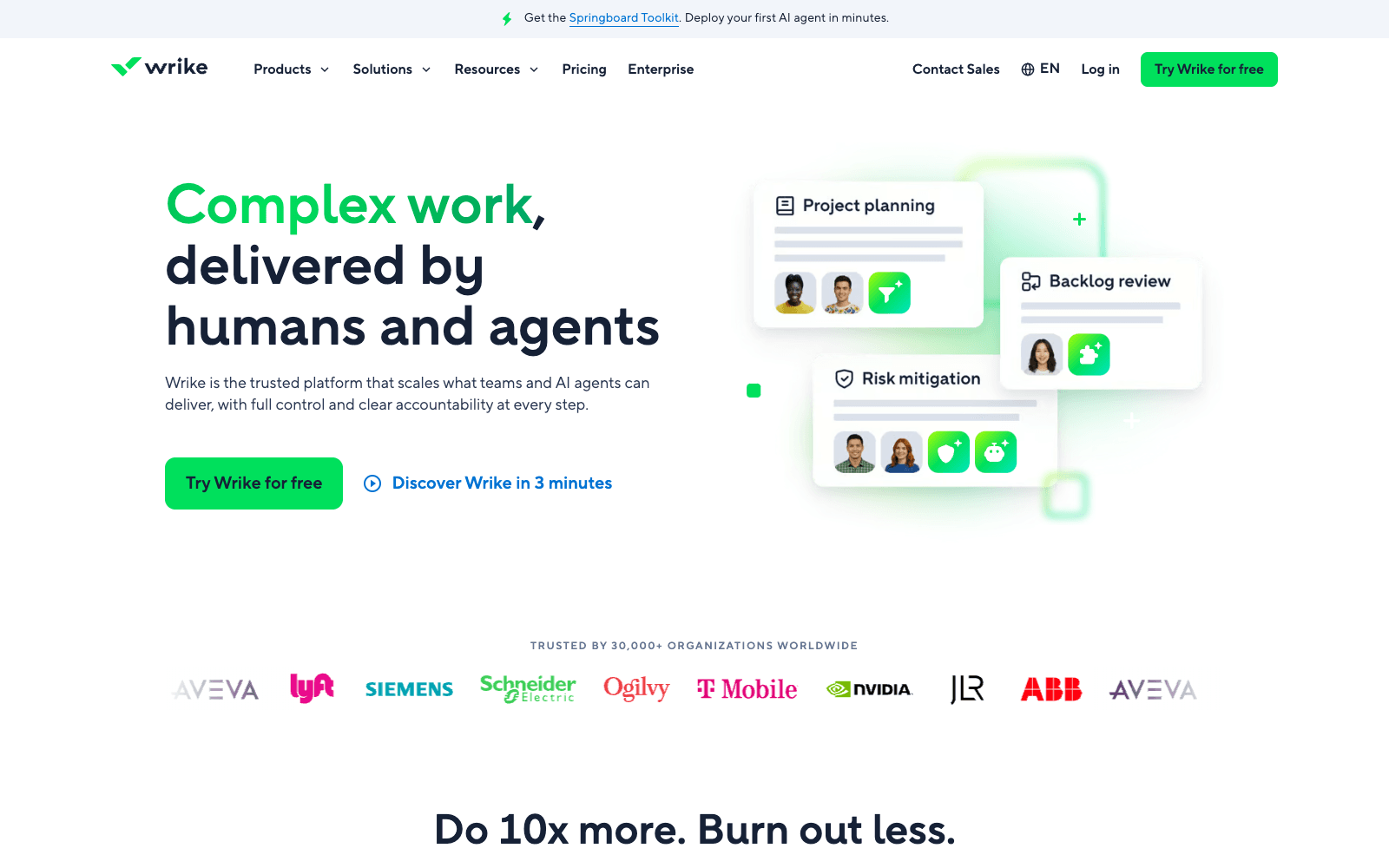
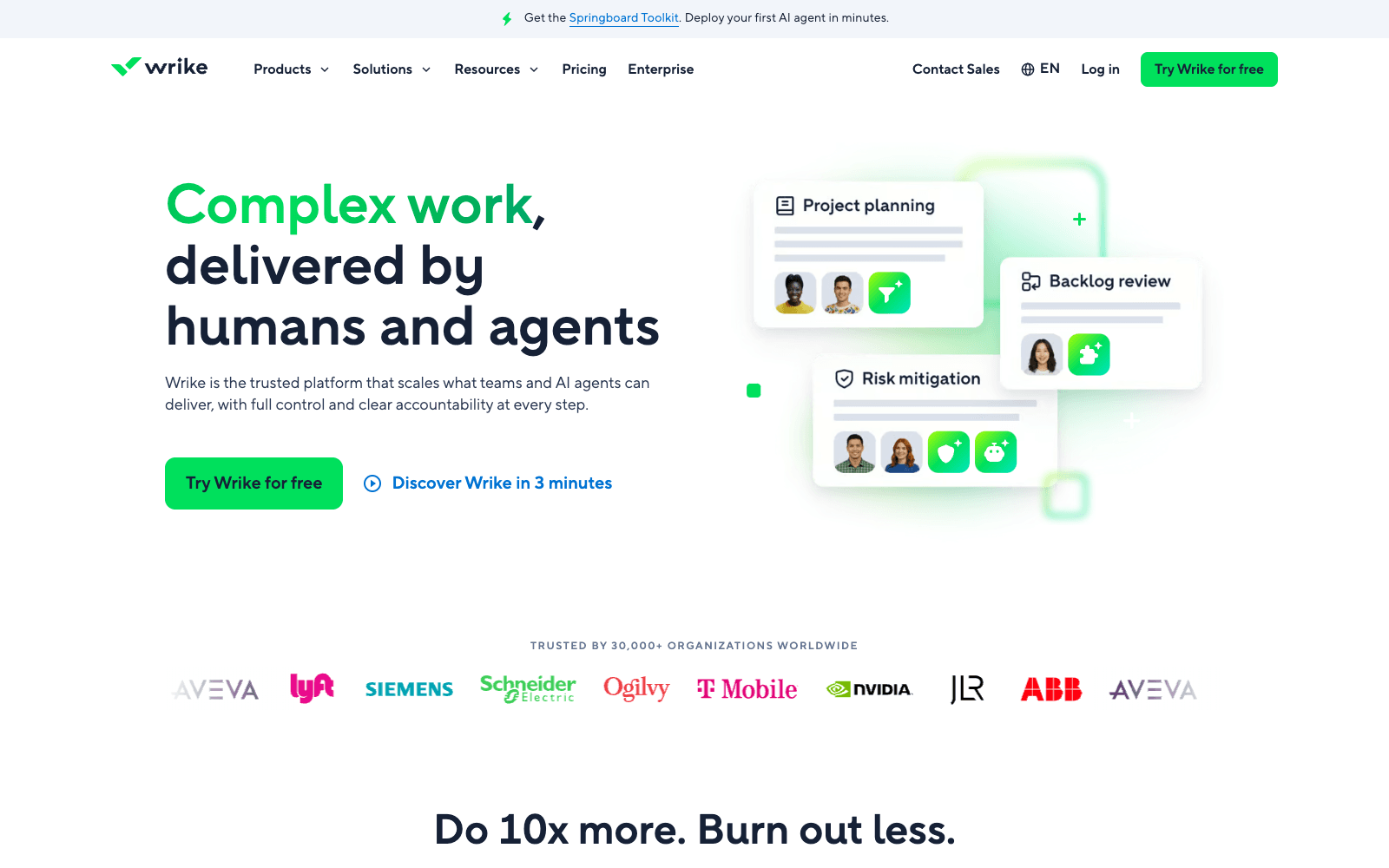
Wrike is an enterprise work management tool with Wrike Work Intelligence — AI risk prediction, content generation, and resource management.
Overview
Wrike
Wrike is the enterprise work management platform that combines project planning, resource management, and cross-team collaboration with Wrike Work Intelligence — its AI layer for risk prediction, content generation, task creation from notes, and smart replies. Wrike serves 20,000+ organizations and is purpose-built for marketing, professional services, and operations teams running complex high-volume work.
Production credibility: 20,000+ organizations including Estée Lauder, Sony Pictures Television, and Siemens. Founded 2006 by Andrew Filev; acquired by Citrix in 2021 for $2.25B, then by Symphony Technology Group in 2022. Wrike Work Intelligence (project risk prediction, AI content generation, smart task creation) ships as the AI layer.
Key Features
- Wrike Work Intelligence predicts at-risk projects before deadlines slip
- AI content generation and smart task creation from meeting notes
- Resource management and capacity planning across teams and portfolios
- Custom workflows, request forms, and cross-tagging across projects
- Proofing and approval flows for creative and marketing teams
- Founded 2006 by Andrew Filev; now owned by Symphony Technology Group
- Enterprise security including SOC 2, ISO 27001, and granular access controls
Ideal Use Case
Marketing teams, professional services firms, and operations groups at mid-market and enterprise companies running high-volume project work who need AI-driven risk prediction, resource planning, and creative-approval workflows in one platform.
How Wrike differentiates
Asana and Monday.com target broad horizontal work management. Wrike's positioning is depth for specific high-volume verticals — marketing campaign management, professional-services delivery, and operations — with Wrike Work Intelligence's risk prediction as the standout AI feature. The trade-off is a steeper learning curve than Trello or Asana; the upside is purpose-built depth (proofing, resource management, request management) that lighter tools lack.
FAQ
Q: What is Wrike? A: Wrike is an enterprise work management platform combining project planning, resource management, and collaboration with Wrike Work Intelligence — AI for risk prediction, content generation, and smart task creation.
Q: What is Wrike Work Intelligence? A: Wrike Work Intelligence is Wrike's AI layer — it predicts at-risk projects before deadlines slip, generates content, creates tasks from notes, and provides smart replies.
Q: Wrike vs Asana vs Monday.com? A: Asana and Monday.com target broad horizontal work management. Wrike offers depth for specific high-volume verticals — marketing, professional services, operations — with project-risk prediction as its standout AI feature.
Q: Who owns Wrike? A: Wrike was founded in 2006 by Andrew Filev, acquired by Citrix in 2021 for $2.25B, then by Symphony Technology Group in 2022.
Q: Is Wrike free? A: Wrike has a free tier for small teams. Team, Business, and Enterprise plans unlock Work Intelligence AI, resource management, and advanced workflows.
tl;dr
Wrike is the enterprise work management platform with Wrike Work Intelligence — AI risk prediction, content generation, and smart task creation. 20,000+ organizations (Estée Lauder, Siemens, Sony Pictures TV). Owned by Symphony Technology Group. Deep for marketing, professional services, and operations.
Related
Looking for more options? Browse the Productivity directory or read our best AI productivity tools listicle. Wrike is also tracked on Crunchbase.
Why Use Wrike
User Reviews
Similar Tools