Wispr
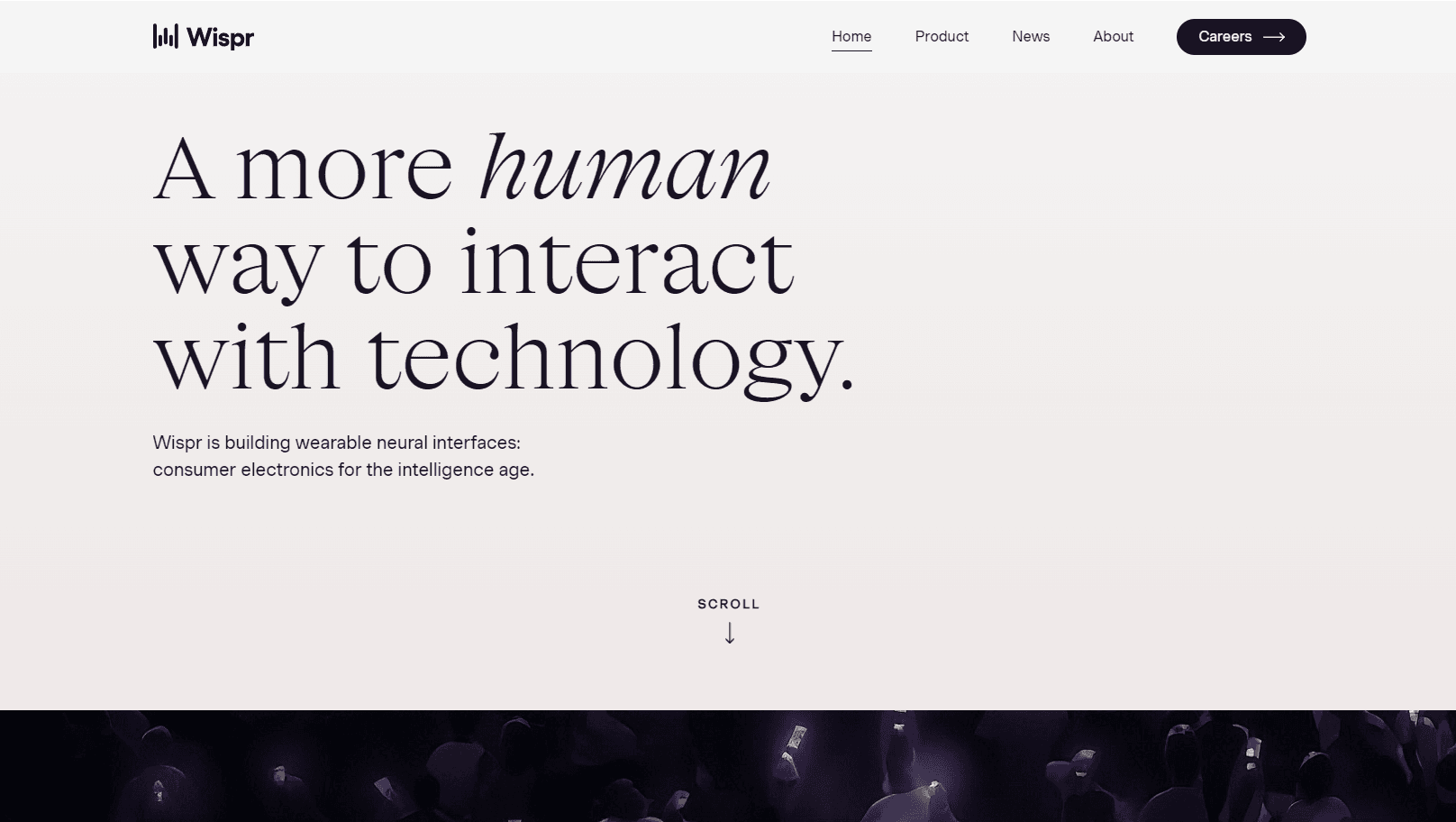
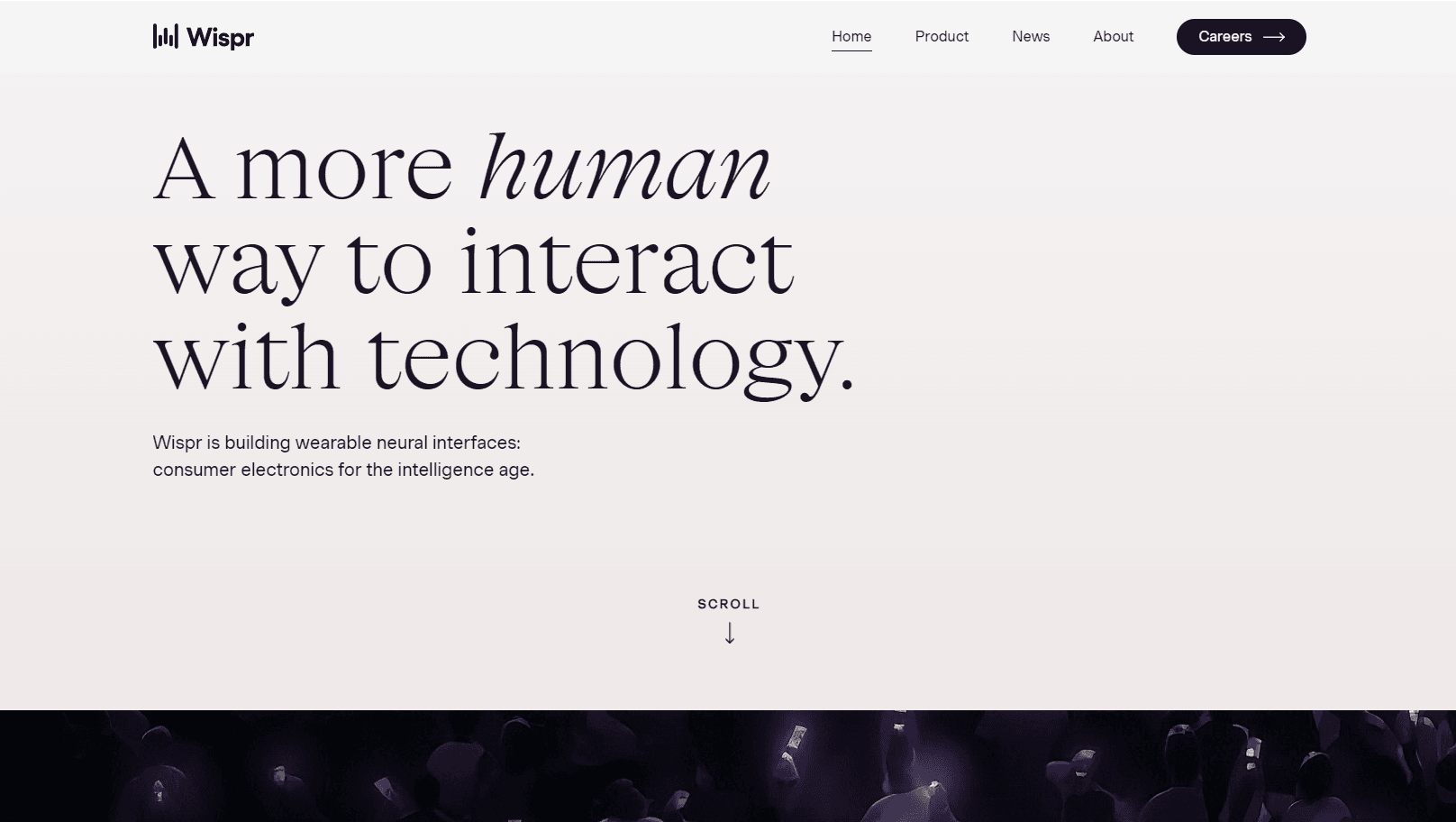
Wearable neural interfaces for natural interaction with technology.
Overview
Transform the Way You Interact with Technology with Wispr
Wispr is pioneering the next generation of consumer electronics through the development of wearable neural interfaces. By creating a more natural way to interact with technology, Wispr aims to replace traditional input methods such as screens and keyboards with direct neural interfaces. This innovative approach allows users to access and control technology using their thoughts, leading to more intuitive and efficient interactions.
The vision of Wispr is to usher in an era where technology is seamlessly integrated into our daily lives without the need for cumbersome physical interfaces. This leap forward in personal computing is set to revolutionize how we access information, communicate, and perform tasks, enhancing both productivity and user experience.
Key Features:
- Neural Interface Technology: Leverages advanced neural interfaces to allow direct communication between the brain and devices.
- Wearable Devices: Provides wearable consumer electronics that are comfortable and easy to use.
- Intuitive Interaction: Enables users to interact with technology naturally, without the need for physical input devices.
- Seamless Integration: Integrates with existing technology ecosystems to enhance functionality and user experience.
- High Accuracy: Utilizes cutting-edge AI to ensure accurate interpretation of neural signals.
- Real-Time Processing: Delivers instantaneous responses to user commands, making interactions smooth and efficient.
- Data Privacy and Security: Ensures all user data is handled with the highest standards of security and privacy.
- Scalability: Designed to be scalable for various applications, from personal computing to enterprise solutions.
- Continuous Improvement: Incorporates feedback and continuous learning to refine and enhance device performance.
Ideal Use Case:
- Wispr is ideal for tech enthusiasts, professionals, and everyday users looking to interact with technology in a more natural and efficient way. It is particularly beneficial for individuals with physical disabilities, providing them with an alternative means to control and interact with devices. Additionally, it can be a game-changer for industries that rely heavily on quick and efficient information processing, such as healthcare, logistics, and customer service.
Why Use Wispr:
- Enhanced Interaction: Provides a more natural and intuitive way to interact with technology.
- Increased Efficiency: Reduces the time and effort required for traditional input methods.
- Innovative Technology: Leverages the latest in neural interface technology and AI.
- User-Centric Design: Focuses on comfort, usability, and seamless integration into daily life.
- Accessibility: Offers new opportunities for individuals with physical limitations.
- Future-Proof: Positions users at the forefront of technological innovation.
FAQ
What does Wispr do? Wispr is a wearable neural interface designed to enable natural interaction with technology. It bridges the gap between your thoughts and digital devices through advanced neural sensing technology.
Who should use Wispr? Wispr is ideal for users seeking hands-free, natural ways to interact with their devices and applications. It's particularly valuable for those who want to streamline their workflow through neural interface technology rather than traditional input methods.
How is Wispr priced? Wispr operates on a paid pricing model. For details on current pricing and available options, visit the Wispr pricing page at https://wisprflow.ai/.
How does Wispr compare to other AI tools? While tools like ChatGPT, Gemini, and Perplexity.ai focus on conversational AI and information retrieval, Wispr takes a different approach by providing a wearable neural interface for technology interaction. It's designed as a hardware-based solution rather than a software platform, offering a unique way to control and communicate with your devices.
tl;dr:
Wispr offers wearable neural interfaces that transform how users interact with technology by using thought control instead of traditional physical inputs, enhancing both efficiency and user experience.
Related
Looking for more options? Browse the Productivity directory or read our best AI productivity tools listicle. Wispr has a Wikipedia entry and is tracked on Crunchbase.
Why Use Wispr
Editorial Review
Our take on Wispr.

Wispr abandoned the neural wearable in 2024 and became Wispr Flow, a dictation app shipping on macOS, Windows, iPhone and Android. Judge it as software that works today, not as the hardware bet the name still suggests.
What works
- Pivoted off the neural wearable in 2024; the shipping product is Flow dictation
- Works inside any application across macOS, Windows, iPhone and Android
- Strips fillers, fixes grammar and adapts tone rather than raw transcription
What doesn't
- Voice input is situational - unusable in shared offices or quiet spaces
- The neural-interface research that drew early attention is no longer the roadmap
Wispr was founded in 2021 to build a non-invasive neural wearable for silent text entry. That is no longer the company. In 2024 it abandoned the wearable and refocused entirely on Wispr Flow, a voice dictation product — and that pivot, not the original science, is the reason to pay attention.
Flow turns speech into clean, formatted text inside any application, combining speech recognition with a language model that strips filler words, fixes grammar, adapts tone, and learns the vocabulary you actually use. It runs on macOS and Windows, with an iPhone app and an Android app that landed in February 2026. The practical case is straightforward: most people speak considerably faster than they type, and Flow removes the editing tax that normally makes dictation not worth it.
The commercial trajectory reflects that. Funding stood at roughly M — a M Series A led by Menlo Ventures in June 2025 and a M extension in November 2025 at a M post-money valuation — and in May 2026 Bloomberg reported the company in talks to raise around M at a valuation close to B, again led by Menlo. Treat the last figure as reported rather than closed.
Two honest limits. Voice input is situational: it is excellent alone and unusable in a shared office or a quiet carriage, which caps how much of your day it can absorb. And anyone who followed the company for the neural interface should reset expectations — that research is not the roadmap any more.
User Reviews
Similar Tools