Sapiom
Sapiom is an OpenAI-compatible platform that routes each AI call to the most efficient capable model, plus a studio and runtime to ship agents.
Overview
Sapiom
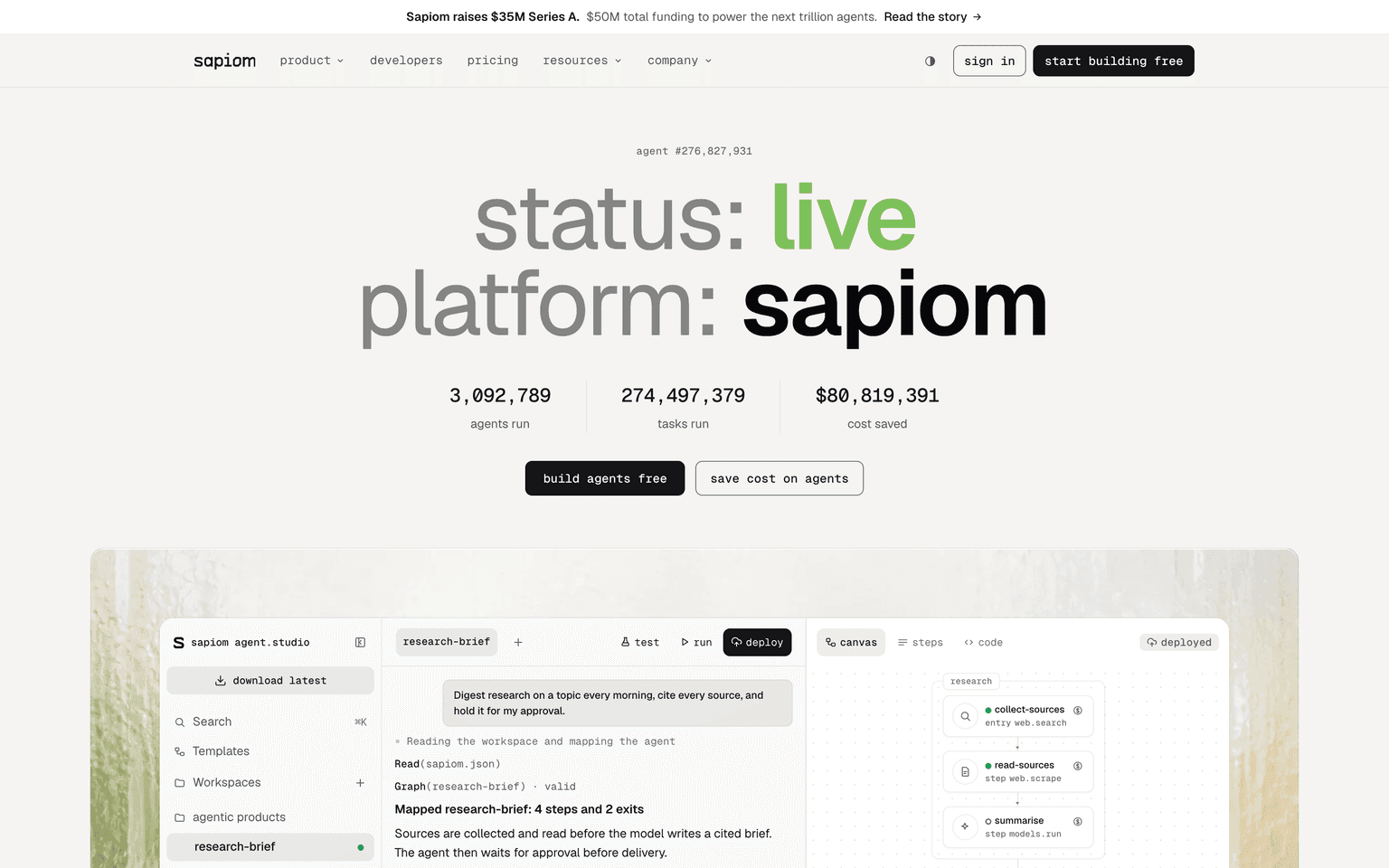
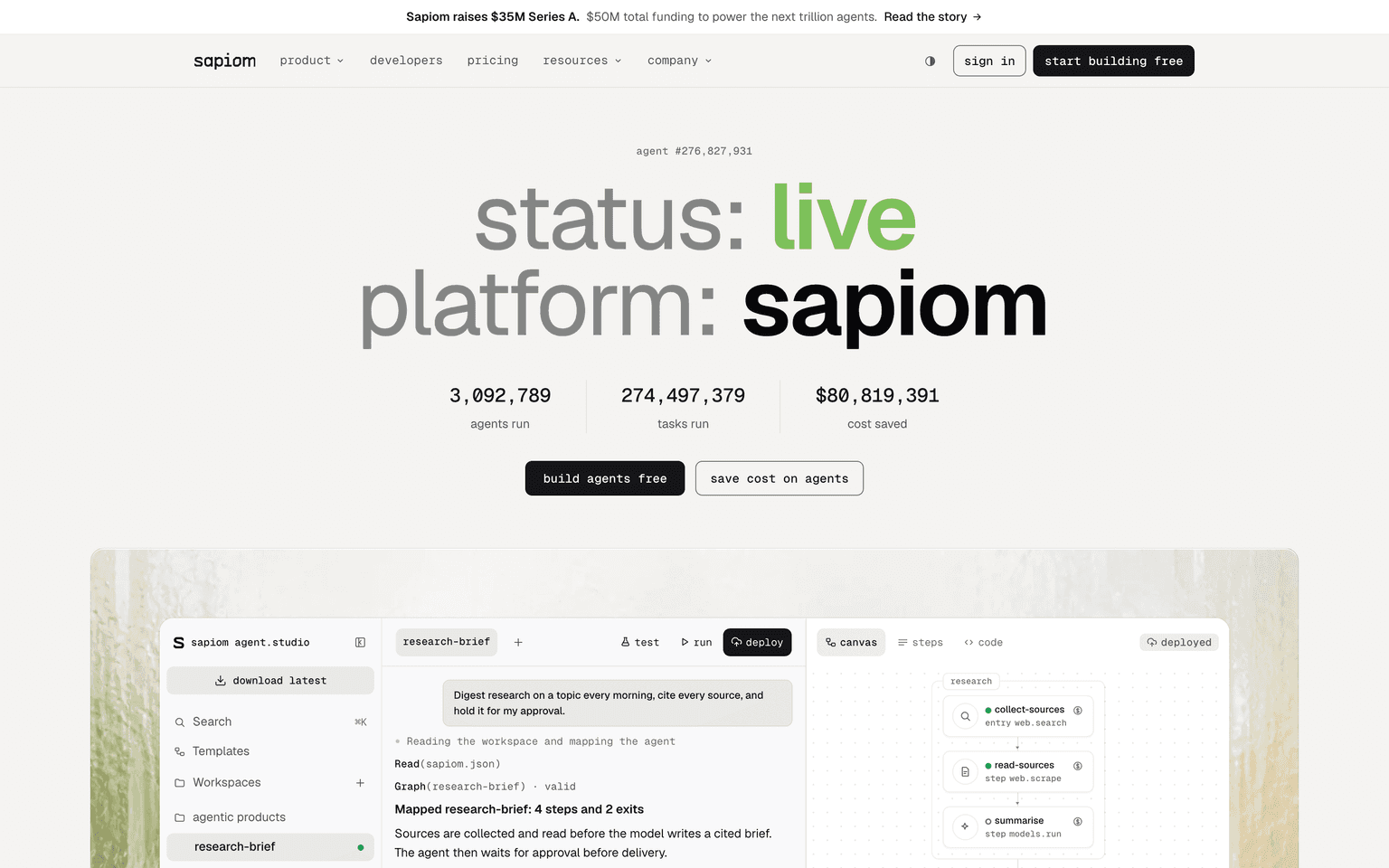
Sapiom is AI-agent infrastructure centered on an intelligent inference router exposed through an OpenAI-compatible API. Sapiom meters every call and routes it by task shape, context size, cost, quality, latency, reliability, and policy across efficient, mid-tier, and frontier models, so teams stop hand-managing model selection. Around the router, Sapiom adds agent.studio for building agents, a managed runtime with runs, retries, signals, traces, and schedules, and MCP integration with Claude Code, Cursor, and Codex. Developers validate locally then deploy to the cloud, making Sapiom both a routing layer and a place to build and operate agents behind one API.
Production credibility: Sapiom states roughly $50M in total funding — a $35M Series A plus a $15.75M seed led by Accel. Its canonical domain is sapiom.ai; sapiom.com redirects there. The company displays traction counters of roughly 2.8M agents running and 271M tasks completed, and lists capability providers including YugabyteDB and name.com; those figures are its own. Founders are not named on the site. It competes as a routing-plus-runtime platform rather than a routing-only proxy, with native MCP and IDE integration as part of its pitch.
Key Features
- An OpenAI-compatible API endpoint for drop-in routing across model tiers
- Automatic model selection per task by cost, quality, latency, and policy
- Per-call metering and traces
- agent.studio with Chat, Canvas, Steps, and Code surfaces
- A managed runtime with retries, signals, schedules, and step graphs
- MCP integration with Claude Code, Cursor, and Codex
- Local validation before cloud deployment
- Policy-aware routing across efficient, mid-tier, and frontier models
Ideal Use Case
Sapiom fits engineering teams running agents across multiple LLM providers who want automatic cost and quality routing without hand-managing model selection. It also suits teams that want a managed runtime with retries, traces, and policy controls behind one API. It is less relevant for a team committed to a single model with no routing needs, where a plain provider SDK is enough.
How Sapiom differentiates
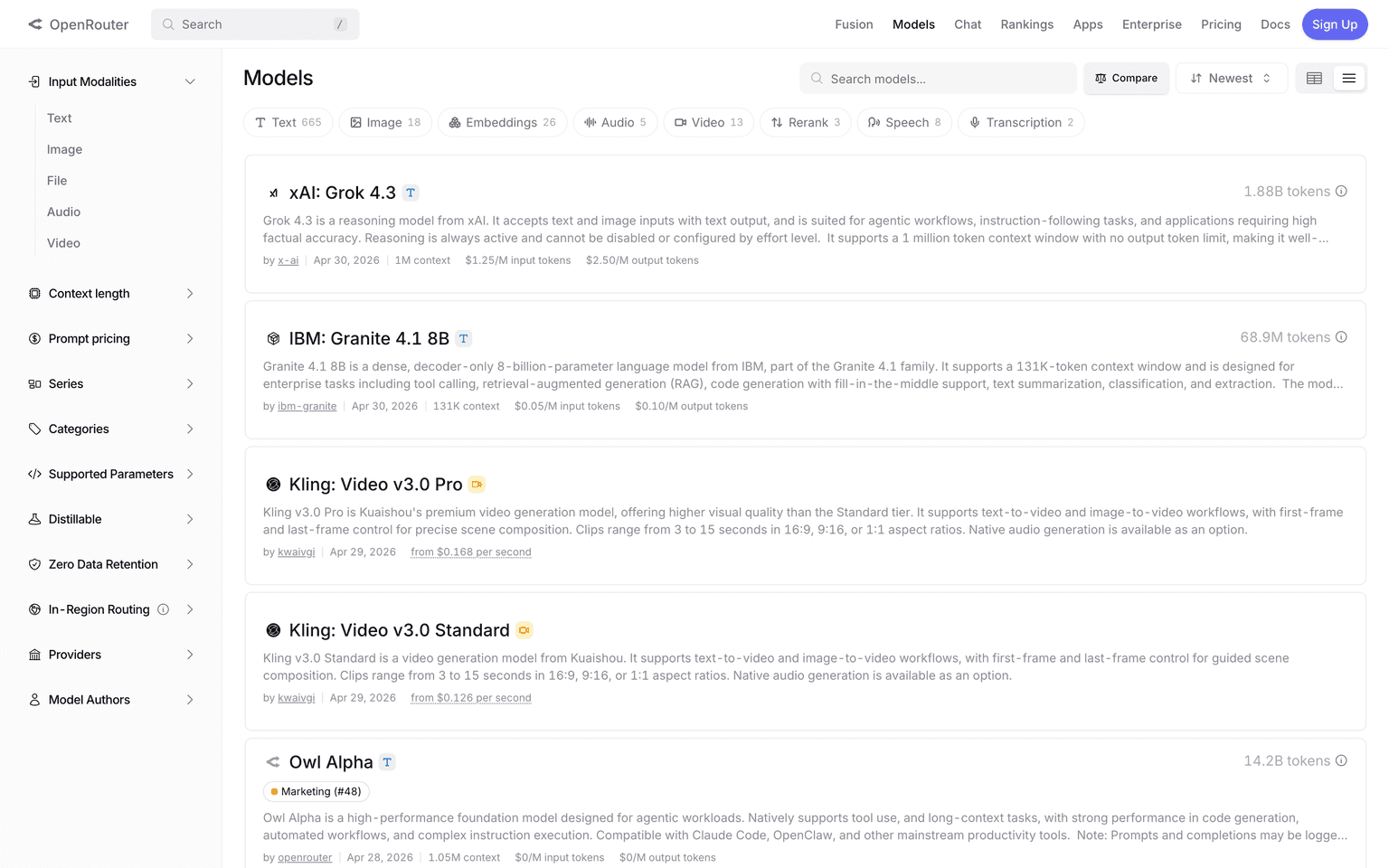
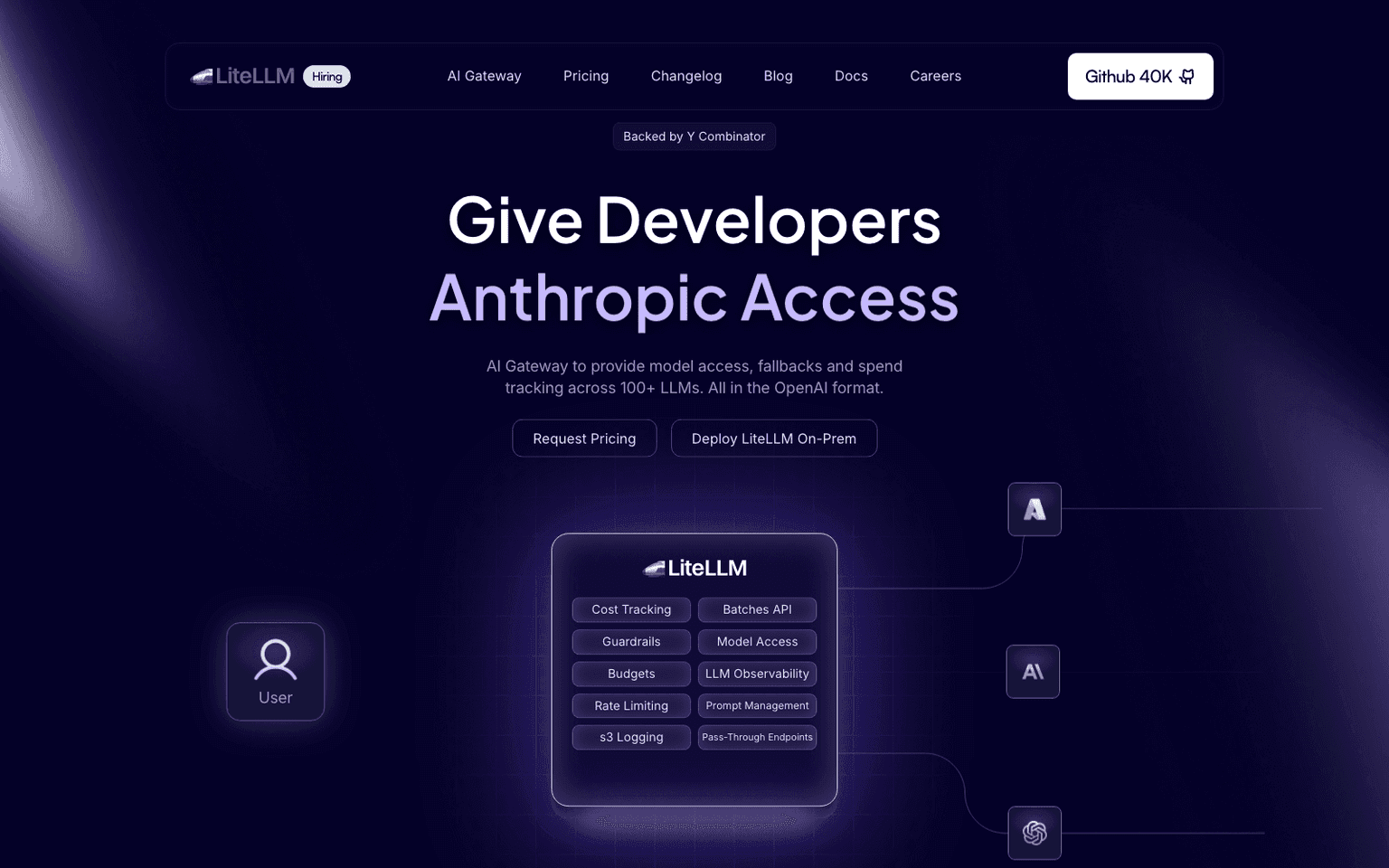
Sapiom competes with LLM gateways and routers like OpenRouter, Portkey, and LiteLLM, but bundles routing with a full agent studio and managed runtime rather than being routing-only. Policy-aware routing plus native MCP and IDE integration is its distinguishing combination.
FAQ
Q: What is Sapiom? A: Sapiom is an OpenAI-compatible platform that routes each AI call to the most efficient capable model, with a studio and managed runtime for building and operating agents behind one API.
Q: What is its canonical domain? A: sapiom.ai — sapiom.com redirects there. The OpenAI-compatible endpoint and studio live on the sapiom.ai site.
Q: How is it different from OpenRouter or LiteLLM? A: Those are routing-focused; Sapiom pairs routing with an agent studio, a managed runtime with retries and schedules, and native MCP and IDE integration.
Q: How does pricing work? A: Sapiom is usage-based, metered per capability and call, with rates on its pricing page; enterprise detail is arranged with the company.
Q: Who funds Sapiom? A: Sapiom states roughly $50M total — a $35M Series A plus a $15.75M seed led by Accel.
tl;dr
Sapiom is an OpenAI-compatible platform that routes each AI call to the most efficient capable model, plus agent.studio and a managed runtime with retries, traces, and schedules, and native MCP integration with Claude Code and Cursor. It states roughly $50M in funding, with a seed led by Accel. Best for teams running agents across many models that want automatic cost and quality routing plus a runtime.
Why Use Sapiom
User Reviews
Similar Tools