
Lightning AI
Platform to train, deploy, and build AI with PyTorch; merged with Voltage Park in January 2026 to form a $2.5B AI cloud.
Acquired Lightning AI
Acquired · January 2026
Lightning AI merged with GPU infrastructure provider Voltage Park in a deal completed on 21 January 2026, valuing the combined business at $2.5B with over $500M of annual recurring revenue. Unusually for this registry, the surviving company kept the Lightning AI name: the merger pairs the PyTorch Lightning ecosystem with 35,000+ GPUs of on-demand compute rather than folding the brand into an acquirer.
Acquired by Voltage Park.
Is Lightning AI shut down?
No — Lightning AI is still operating. Its acquisition by Voltage Park was announced on January 21, 2026, and the product continues to ship. We list it in the ToolDirectory.AI graveyard's acquired-but-operating section and watch for post-acquisition changes.
What to use instead



Overview
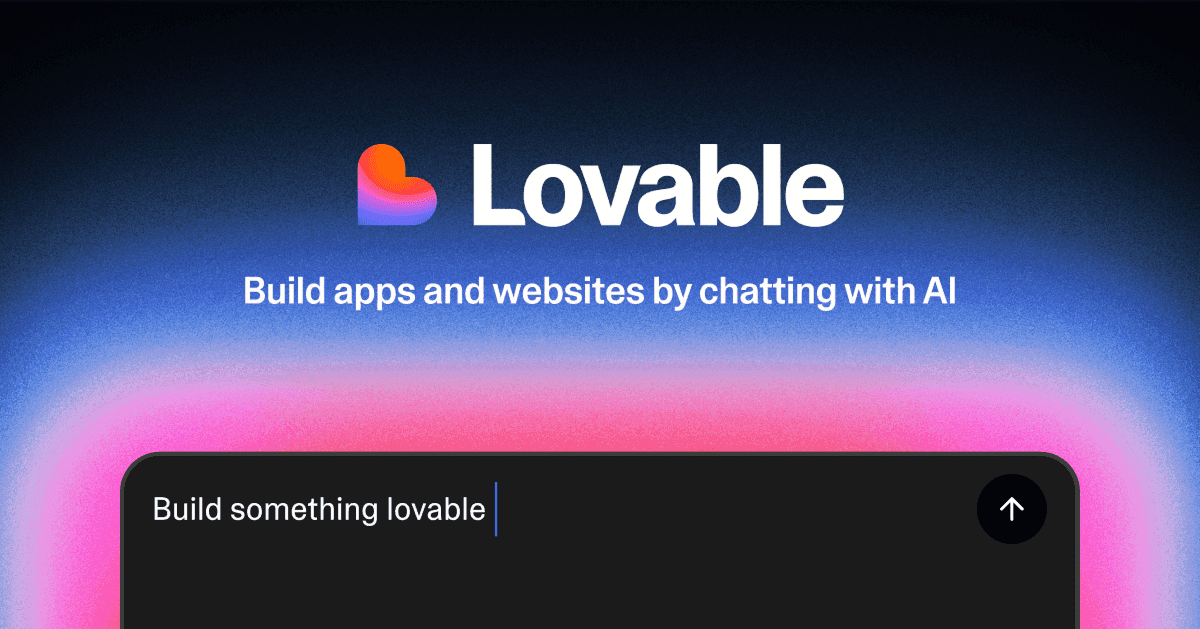
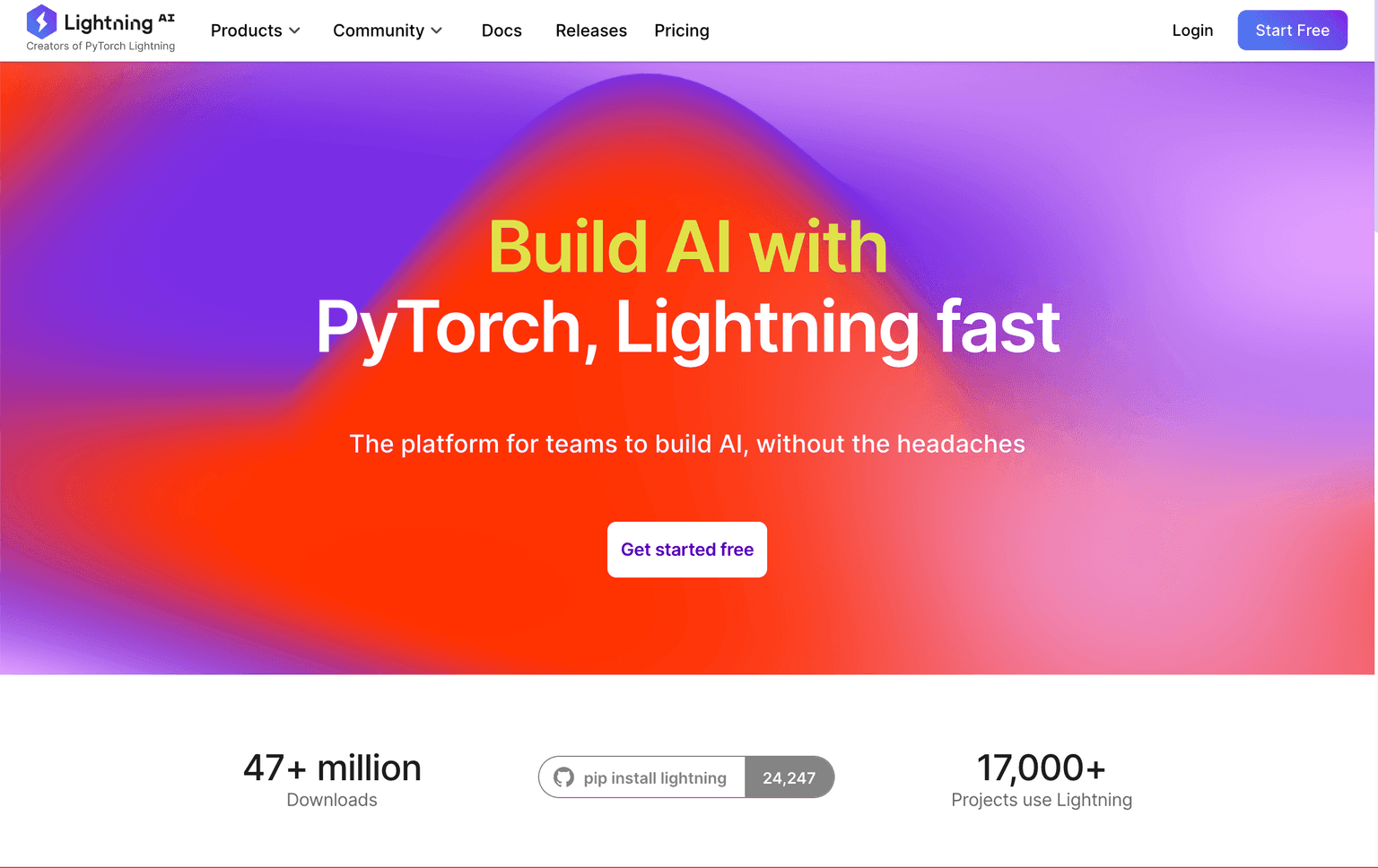
Lightning AI: The Platform for Teams to Build AI with PyTorch, Lightning Fast
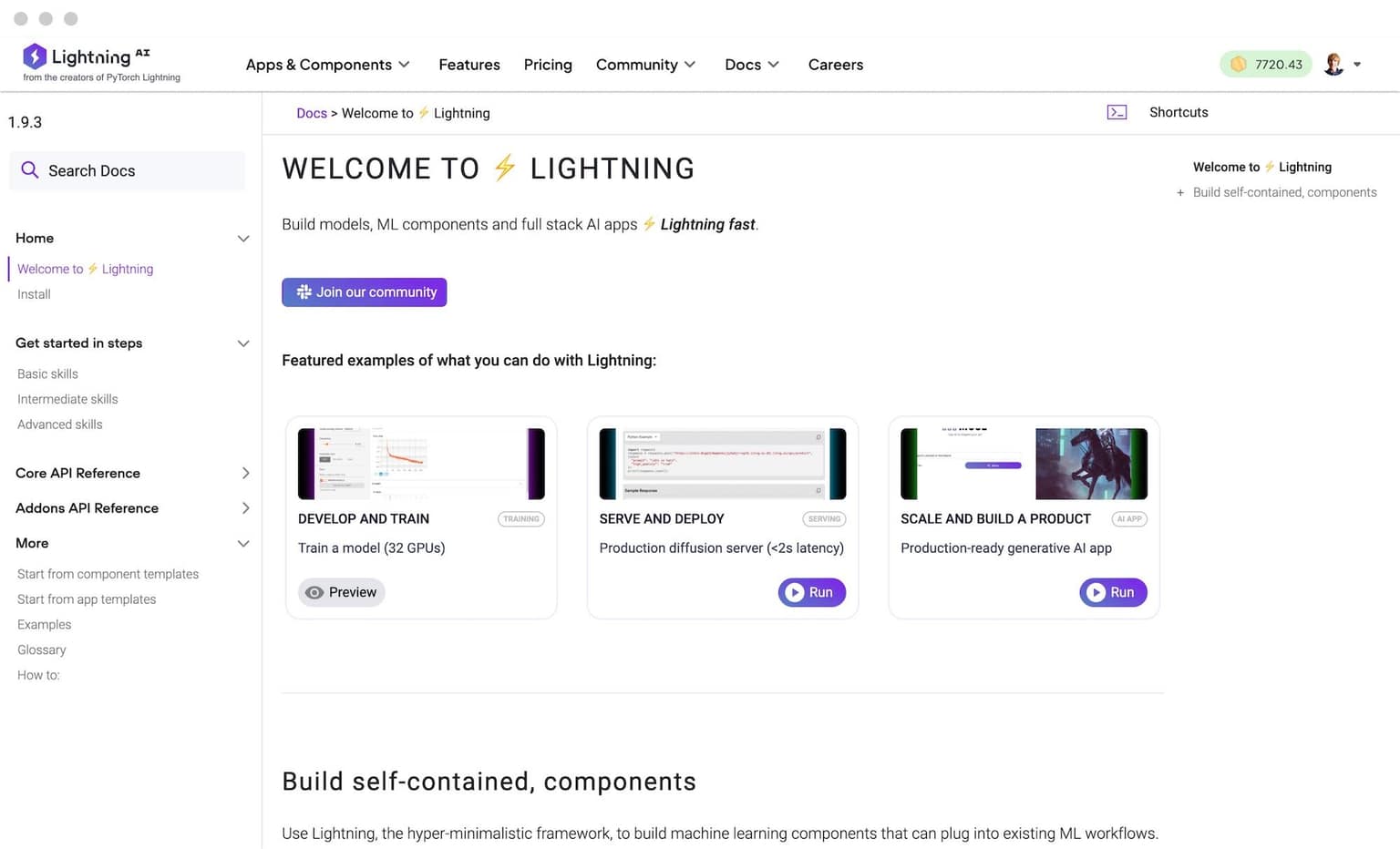
Lightning AI is a platform designed for teams to build AI without the headaches. It offers a comprehensive suite of tools for developing, training, and deploying AI models with PyTorch. The platform is powered by PyTorch Lightning, an open-source library that simplifies the process of training and deploying PyTorch models. Lightning AI provides a seamless experience for teams to develop models and AI products without cloud headaches, train large language models (LLMs) with fault-tolerance, and deploy high-availability, scalable models.
Key Features:
- Develop, Train, and Deploy AI Models
- Integration with PyTorch
- Support for Large Language Models (LLMs), Transformers, and Stable Diffusion
- Compatibility with S3, Snowflake, BigQuery
- Private VPC Environment
- Open Source Libraries: PyTorch Lightning, Lightning Fabric, TorchMetrics
Ideal Use Case:
Perfect for AI developers, data scientists, and organizations looking to build, optimize, and deploy AI models efficiently using PyTorch.
Why use Lightning AI:
- Simplifies the AI development process
- Offers fault-tolerance and scalability
- Ensures high availability and security
- Supports a wide range of AI models and data sources
- Open-source libraries for flexibility and control
FAQ
What does Lightning AI do? Lightning AI is a platform designed to help developers train, deploy, and build AI applications using PyTorch. It streamlines the workflow from model development to production, enabling faster iteration and deployment cycles.
Who should use Lightning AI? Lightning AI is built for developers and machine learning engineers who work with PyTorch and want to accelerate their AI development process. It's ideal for teams looking to move from experimentation to production more efficiently.
How much does Lightning AI cost? Lightning AI operates on a paid pricing model. Visit the Lightning AI pricing page for current plans and to inquire about pricing that matches your needs.
How does Lightning AI compare to similar tools? Unlike code-focused tools like GitHub Copilot and Cursor, Lightning AI specializes in the full AI model lifecycle—training, deployment, and building—rather than general code generation. It serves a different use case than UI generation tools like v0, focusing on PyTorch-based machine learning workflows.
tl;dr:
Lightning AI is a robust platform that empowers teams to create AI solutions without the complexities. With its integration with PyTorch and a focus on speed and efficiency, it's a valuable tool for modern AI development.
Related
Looking for more options? Browse the Developer Tools directory or read our best AI coding tools listicle. Lightning AI is also tracked on Crunchbase.
Why Use Lightning AI

Editorial Review
Our take on Lightning AI.

Merged with Voltage Park in January 2026 to become a vertically integrated AI cloud — PyTorch-native software running on its own GPU fleet. Still the lowest-friction path for PyTorch teams, and pricing is still not public.
What works
- PyTorch-native, minimal friction for existing model codebases
- Since the January 2026 merger, the software runs on in-house GPU capacity rather than resold compute
- End-to-end workflow reduces the DIY infrastructure burden
What doesn't
- Pricing remains opaque ("Inquire"), which makes fit hard to assess before talking to sales
- Still specialist infrastructure — not a general AI platform or a code-generation tool
- The merger is recent enough that the combined roadmap is not yet proven
Ownership note (verified 28 August 2026). Lightning AI and Voltage Park completed a merger on 21 January 2026, forming a combined company valued at over $2.5 billion with roughly $500 million in annual recurring revenue. This was a merger rather than a takeover, and the combined business operates under the Lightning AI name. It pairs Lightning's PyTorch platform — around 400 million downloads and 240,000 developers — with Voltage Park's 35,000 NVIDIA GPUs across six US data centres, making it the third-largest "neocloud" by GPU count behind CoreWeave and Nebius. Voltage Park is unusual in being funded by a $900 million grant from the Navigation Fund, so the combined entity carries no acquisition debt.
That changes the shape of this product. Lightning AI wraps PyTorch in a workflow covering training, deployment and inference without making you learn another DSL, and if you already live in PyTorch the friction is genuinely lower than assembling Ray, Kubernetes and a custom CI/CD rig yourself. What is new is that the compute underneath is now its own. The earlier read on this listing — that the positioning was narrow — is no longer the right frame: this is now a software-plus-compute cloud rather than a layer on top of someone else's.
The standing caveat has not moved. Pricing is still a black box ("Inquire"), which usually signals bespoke or expensive, and that remains a real friction point when you are trying to size a build before you have talked to sales. If you are committed to PyTorch and need managed scale, you will probably still end up paying it.