Jira
Jira is an agile project management tool from Atlassian for software teams — with Atlassian Intelligence and Rovo AI agents for issue work.
Overview
Jira
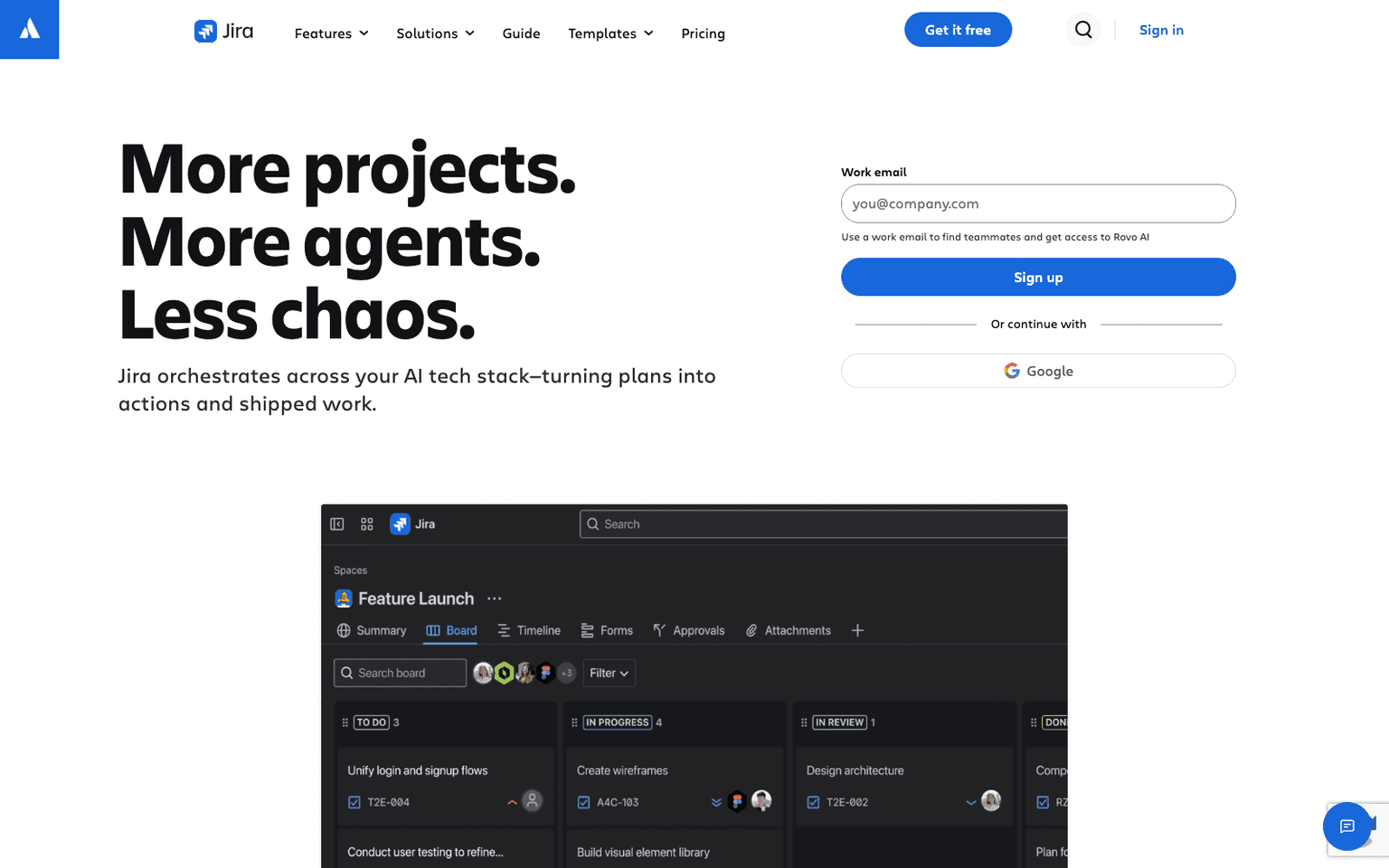
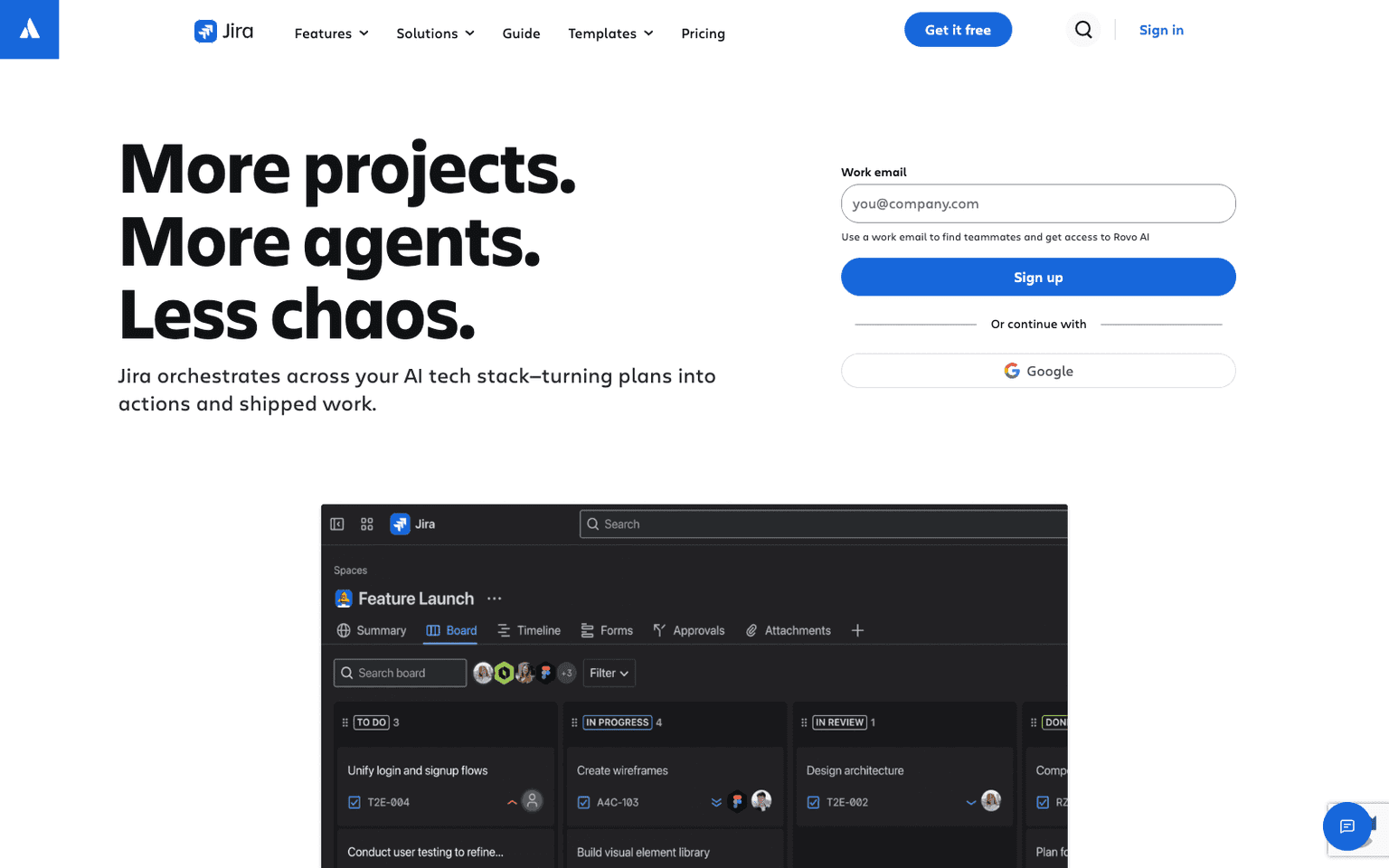
Jira is Atlassian's agile project-management and issue-tracking platform — the industry standard for software development teams running Scrum, Kanban, and large-scale agile. Jira now embeds Atlassian Intelligence and Rovo AI agents that draft issues from natural language, summarize long issue threads, suggest automation rules, and answer questions about project state. Jira anchors the Atlassian product suite used by 300,000+ customers.
Production credibility: Owned by Atlassian (NASDAQ: TEAM); 300,000+ customers across the Atlassian suite. Founded as Atlassian's flagship product in 2002. Atlassian Intelligence plus Rovo (AI agents, AI search, AI chat across Atlassian data) ship as the AI layer. The de-facto standard issue tracker for software engineering teams worldwide.
Key Features
- Agile boards for Scrum and Kanban with sprints, epics, and backlogs
- Atlassian Intelligence drafts issues from natural language and summarizes threads
- Rovo AI agents answer questions and act across Jira, Confluence, and connected tools
- Advanced Roadmaps for cross-team and portfolio-level planning
- Automation engine with no-code rules triggered by issue events
- Deep developer integrations — GitHub, GitLab, Bitbucket, CI/CD pipelines
- Owned by Atlassian (NASDAQ: TEAM); the industry-standard software issue tracker
Ideal Use Case
Software engineering teams running agile development at any scale — from startups managing a single backlog to enterprises coordinating hundreds of teams via Advanced Roadmaps — who want AI issue drafting, thread summaries, and Rovo agents on top of the standard agile tracker.
How Jira differentiates
Linear competes on speed and developer-experience polish; Asana and Monday.com on general work management. Jira's positioning is depth and ubiquity for software engineering specifically — the most configurable agile tracker, deepest dev-tool integrations, and now Rovo AI agents that operate across the whole Atlassian data graph. The trade-off is complexity (Jira can be over-configured into slowness); the upside is that it scales to the largest engineering orgs where lighter tools break down.
FAQ
Q: What is Jira? A: Jira is Atlassian's agile project-management and issue-tracking platform — the industry standard for software teams running Scrum and Kanban — now with Atlassian Intelligence and Rovo AI agents.
Q: Does Jira have AI? A: Yes — Atlassian Intelligence drafts issues from natural language and summarizes threads, and Rovo AI agents answer questions and act across Jira, Confluence, and connected tools.
Q: Jira vs Linear vs Asana? A: Linear competes on speed and developer-experience polish; Asana on general work management. Jira's strength is depth and ubiquity for software engineering — most configurable agile tracker, deepest dev-tool integrations, plus Rovo AI agents across the Atlassian graph.
Q: Who owns Jira? A: Jira is owned by Atlassian (NASDAQ: TEAM), where it launched as the flagship product in 2002.
Q: Is Jira free? A: Jira has a free tier for up to 10 users. Standard, Premium, and Enterprise plans unlock more users, Advanced Roadmaps, Atlassian Intelligence, and Rovo AI features.
tl;dr
Jira is Atlassian's agile project tracker — the software-engineering industry standard for Scrum and Kanban, now with Atlassian Intelligence and Rovo AI agents for issue drafting, thread summaries, and cross-suite automation. 300,000+ customers. Scales from single backlog to hundreds of coordinated teams.
Related
Looking for more options? Browse the Productivity directory or read our best AI productivity tools listicle. Jira is also tracked on Crunchbase.
Why Use Jira
User Reviews
Similar Tools