
Auctor
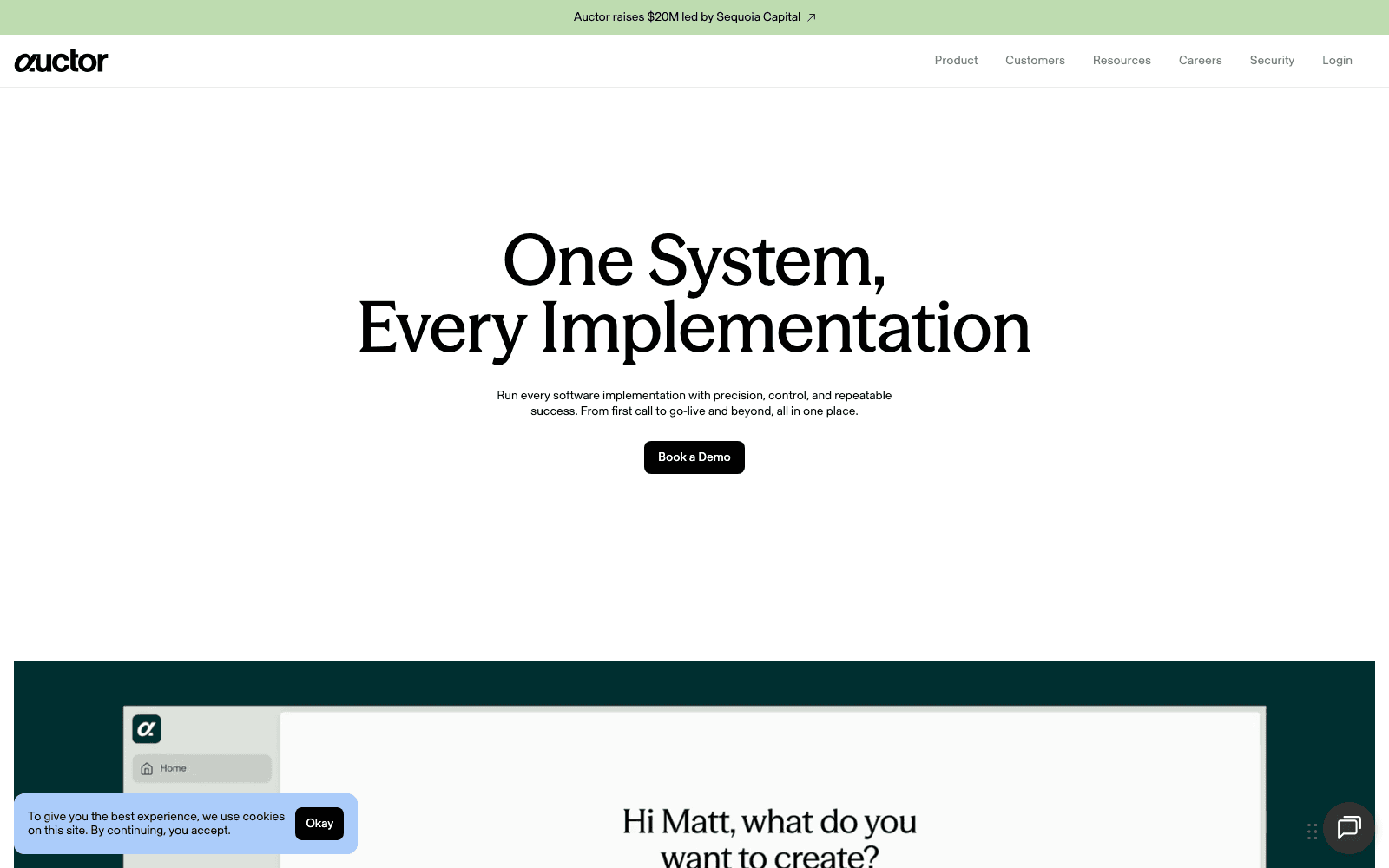
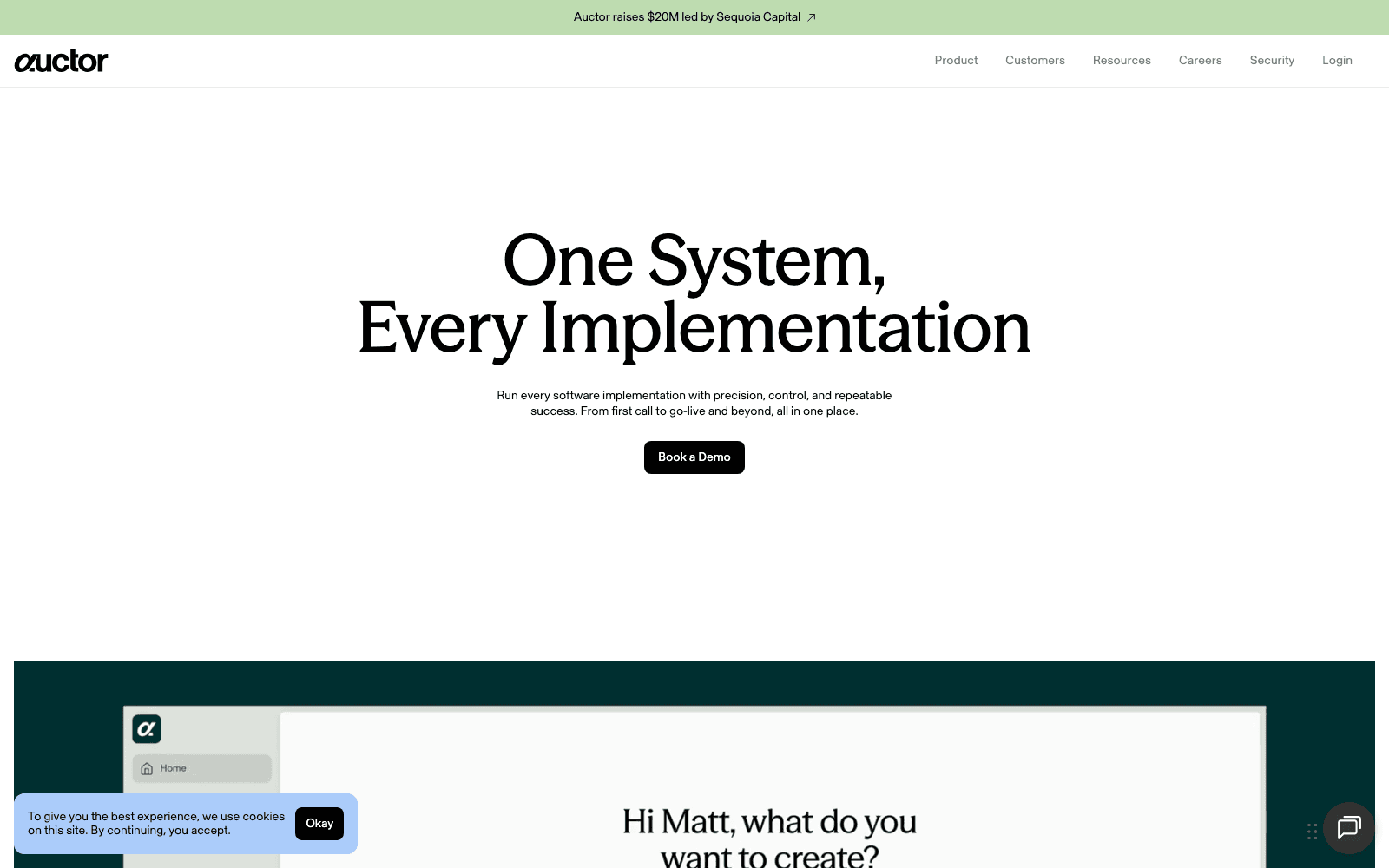
AI system of action for enterprise software implementations — captures discovery, generates execution-ready artifacts. 80% efficiency gains. $20M Sequoia Series A.
Overview
Auctor: AI System of Action for Implementations
Auctor is the AI-native system of action for the full enterprise software implementation lifecycle — letting services teams and system integrators deliver what they sold faster and more consistently. The platform captures discovery sessions, workshops, notes, and unstructured data, then distills inputs into structured requirements and generates execution-ready artifacts: rough orders of magnitude, resource plans, process flows, user stories, scopes of work, architecture documents.
April 2026: $20M Series A led by Sequoia Capital with Y Combinator, M12 (Microsoft Ventures), Workday Ventures, HubSpot Ventures, OneStream, Tercera, Dig Ventures. Early customers reporting 80% efficiency gains across discovery and design.
Key Features
- Captures discovery sessions, workshops, notes automatically
- Generates execution-ready artifacts (SOWs, ROMs, user stories, architecture)
- Resource planning + process flow automation
- Learns from past projects → reusable knowledge base
- $20M Sequoia Series A — Y Combinator alum
Ideal Use Case
System integrators, enterprise consulting firms, and services teams running complex software implementations (SAP, Workday, ServiceNow, custom) where discovery → SOW → delivery is currently a patchwork of spreadsheets, docs, and tribal knowledge.
Why Use Auctor
System integration is a $400B industry with shockingly little software automation. Auctor's wedge: AI replaces the spreadsheet-and-tribal-knowledge stack with a system of record for implementations. Sequoia + Microsoft Ventures + Workday Ventures + HubSpot Ventures together is a strong signal.
FAQ
What does Auctor do for enterprise software implementation? Auctor is an AI system that automates enterprise software implementations by capturing discovery information and generating ready-to-use execution artifacts. It streamlines the implementation process to deliver significant efficiency gains.
Who should use Auctor? Auctor is built for enterprises undertaking software implementations that need to accelerate their discovery and artifact generation phases. It's particularly useful for teams managing complex implementation projects where time-to-execution is critical.
How much does Auctor cost? Auctor operates on a paid pricing model. Visit the Auctor pricing page for current plans and detailed pricing information.
How does Auctor compare to other developer tools like GitHub Copilot or Cursor? While GitHub Copilot and Cursor focus on code generation for individual developers, Auctor is specifically designed for enterprise-scale software implementations, handling discovery capture and multi-artifact generation across entire projects rather than snippet-level code assistance.
tl;dr
AI system of action for software implementations. 80% efficiency gains. $20M Sequoia Series A.
Related
Looking for more options? Browse the Developer Tools directory or read our best AI coding tools listicle. Auctor is also tracked on Crunchbase.
Why Use Auctor
Editorial Review
Our take on Auctor.

Auctor is an AI agent for enterprise software implementations that turns discovery work into execution-ready artifacts.
What works
- Targets a specific, painful workflow: implementation artifact generation
- Strong community rating suggests real user satisfaction
- Designed for enterprise context, not generic AI chat
What doesn't
- Efficiency claims not independently verified; unclear what they measure
- Niche positioning means limited reviews and comparisons to alternatives
Auctor positions itself as an AI system of action for the implementation phase of enterprise software—the messy handoff between discovery and build. It captures requirements and context, then generates artifacts (playbooks, specs, configs) meant to be immediately actionable. The appeal is straightforward: implementation work is expensive, repetitive, and documentation-heavy. If Auctor can compress that cycle, the ROI math works fast for consulting firms and in-house teams.
What's less clear from the supplied facts is what "80% efficiency gains" actually measures—time saved on artifact generation, number of discovery sessions, cost per implementation? That's the kind of specificity that matters when you're evaluating against alternatives like ChatGPT Agent or Monday.com, which solve different parts of the workflow.
If you're running enterprise implementations and drowning in discovery documentation, Auctor's premise is worth testing. Just go in clear-eyed about what phase it's solving for—it's not a discovery tool or a project manager, it's a bridge between them.
User Reviews
Similar Tools