Apollo GraphQL
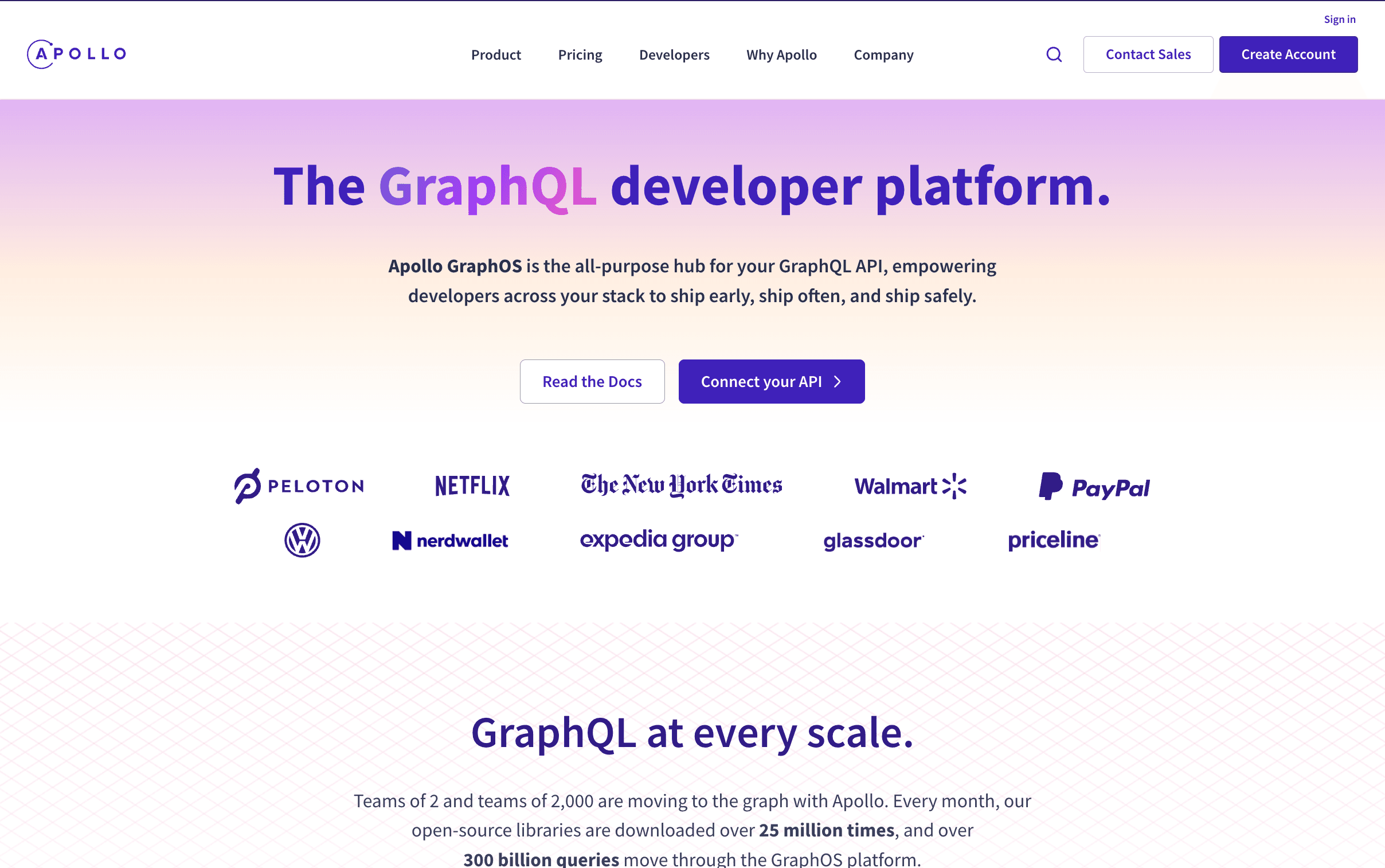
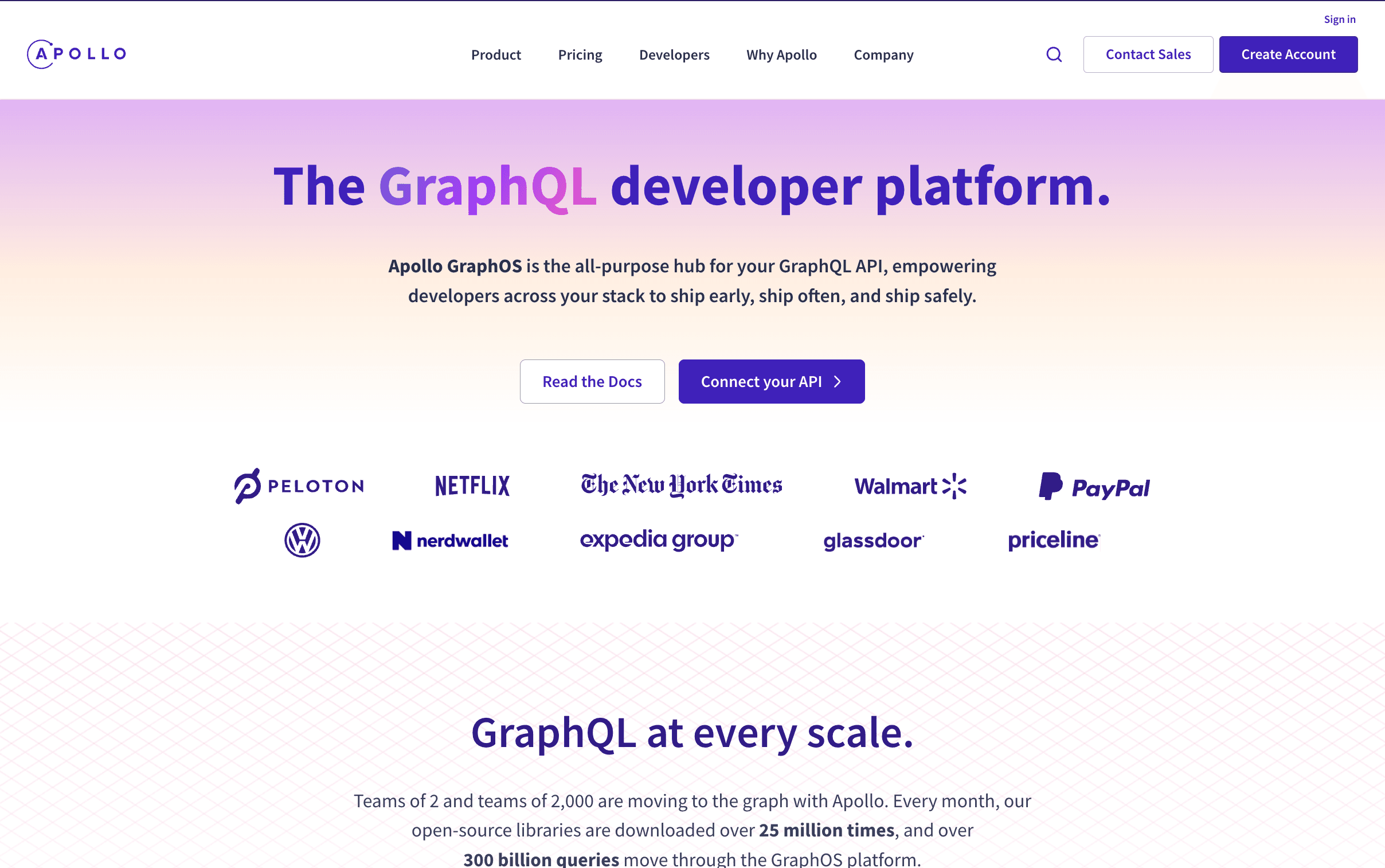
Apollo GraphOS: The hub for GraphQL API, empowering developers for efficient and safe deployments.
Overview
Apollo GraphOS: Empowering Developers with Efficient GraphQL API Management
Apollo GraphOS stands as a comprehensive hub designed for GraphQL API. It's tailored to empower developers across various spectrums, ensuring they can deploy early, frequently, and with utmost safety. With the rise of GraphQL, Apollo has positioned itself as a pivotal player, offering tools and services that streamline the development process, making it more efficient and robust.
Key Features:
- GraphOS: An end-to-end cloud platform for building, observing, and evolving your graph.
- Apollo Federation: Distributes your graph across multiple services, allowing backend teams to maintain different subgraphs.
- Framework Support: Extensive support for various open-source GraphQL frameworks across popular languages.
- Apollo Client: Connects apps to the graph, providing tools for fetching, caching, and data interaction.
Ideal Use Case:
Businesses and developers looking to unify APIs, microservices, and databases into a cohesive graph will find Apollo GraphOS invaluable. It's especially beneficial for teams that require a centralized platform to manage their GraphQL API, ensuring seamless integration, monitoring, and evolution.
Why use Apollo GraphQL:
- Unified Platform: Apollo offers a singular platform to manage all GraphQL-related tasks.
- Scalability: Suitable for both small teams and large enterprises.
- Safety: Tools and features designed to ensure safe deployments.
- Collaborative Features: Facilitates team collaboration with features like API reference publishing and operation sharing.
FAQ
What does Apollo GraphQL help developers accomplish? Apollo GraphQL provides a hub for managing GraphQL APIs, enabling developers to deploy and maintain their APIs more efficiently and safely. It streamlines the workflow for teams working with GraphQL technology.
Who should consider using Apollo GraphQL? Apollo GraphQL is built for development teams and engineers who work with GraphQL APIs and need centralized tools for deployment, monitoring, and collaboration across their API infrastructure.
How much does Apollo GraphQL cost? Apollo GraphQL offers a free trial so you can test the platform before committing. Visit the Apollo GraphQL pricing page for current plans and paid tier options.
How does Apollo GraphQL compare to similar developer tools? While tools like GitHub Copilot, Cursor, and v0 focus on code generation and AI-assisted development, Apollo GraphQL specifically targets GraphQL API management, deployment, and governance, making it a more specialized solution for GraphQL-specific workflows.
tl;dr:
Apollo GraphOS provides a centralized platform for GraphQL API management, ensuring developers can deploy safely and efficiently. With tools for building, observing, and evolving graphs, it's a must-have for teams leveraging GraphQL.
Related
Looking for more options? Browse the Developer Tools directory or read our best AI coding tools listicle. Apollo GraphQL is also tracked on Crunchbase.
Why Use Apollo GraphQL
Editorial Review
Our take on Apollo GraphQL.

Apollo GraphQL is a platform for managing and monitoring GraphQL APIs in production, with federation and schema management built in.
What works
- Federation and subgraph tooling reduces coordination complexity
- Schema governance and change validation built in
- Strong community sentiment (4.86 rating)
What doesn't
- Requires buy-in to Apollo ecosystem (Server, Client, etc.)
- Paid tier required for production features and monitoring
Apollo GraphQL (via GraphOS) gives teams a control plane for GraphQL APIs—schema registry, federation tooling, and production observability in one place. It's aimed at shops that have already committed to GraphQL and need to coordinate multiple services or enforce governance.
The federation story is the main draw here: if you're running multiple GraphQL services and need them to talk cleanly, Apollo's subgraph composition and query planning can save real headaches. Schema checks and change validation are table stakes for API governance, and Apollo delivers those. The free tier exists, but production-grade features live behind a paid plan, which is standard for this category.
Main trade-off is lock-in: you're buying into Apollo's stack (Apollo Server, Apollo Client, schema tooling). If you're already using those, the platform layer makes sense. If you're GraphQL-agnostic or favour other libraries, the value proposition thins. Also worth noting the alternative space here is thick—GitHub Copilot and Cursor compete more on code generation than API platform, so direct comparison is loose.
User Reviews
Similar Tools