Best AI Tools for Stock Trading (2026)









Best AI Tools for Stock Trading in 2026
If you're researching the best AI tools for stock trading in 2026, the right framing is the AI-augmented trader's toolkit — pattern detection, charting analytics, AI-driven trading ideas, automated portfolio management, and the news + sentiment monitoring layer that fast traders need. The hype-cycle losers are gone; what's left is a tighter set of products with real track records.
Important: This is an editorial market overview, not financial advice. AI trading tools are decision-support tools that work alongside human judgment. Trading involves substantial risk of loss, including total loss of capital. Past performance does not guarantee future results. Always consult a licensed financial advisor for investment decisions, and never trade with capital you can't afford to lose. None of the tools below provide personalized investment advice; all are general-purpose analytics platforms that experienced traders use to inform their own decisions.
This guide covers the eight AI trading tools real working traders use in 2026: Trade Ideas, Tickeron, TrendSpider, LuxAlgo, Composer, TOGGLE AI, AlphaSense, and QuantumStreetAI. Each is rated on which lane of the trader's workflow it fits.
How We Evaluated These Tools
The eight AI trading tools below were evaluated on five criteria, in priority order — recognizing that financial AI is YMYL (your-money-or-your-life) content where vendor claims warrant a higher evidentiary bar:
- Real production usage by retail and prosumer traders — verified active user bases, not vendor case studies
- Honest treatment of risk — does the vendor present AI signals as decision support, or does it overpromise returns
- Regulatory posture — does the platform stay clearly on the side of trading-tools-not-investment-advice (avoiding the SEC and FINRA categories that require licensing)
- Workflow fit — does the tool integrate with brokerages and existing trader workflows (Interactive Brokers, TradeStation, Tradier, Alpaca)
- 2026 currency — has the platform shipped meaningful AI capability in the last 12 months at the trader-accessible tier
We deliberately did not include products promising guaranteed returns, products that look like signals-services rather than analytics tools, or products with regulatory red flags. AI trading is one of the categories with the highest density of marketing exaggeration; the tools below ship genuine analytical capability without overpromising.
Updated August 2, 2026. Uptrends.ai shut down and has been replaced in the news-and-sentiment slot by AlphaSense.
Quick Comparison
| Tool | Best for |
|---|---|
| Trade Ideas | AI-driven trade alerts and pattern detection. Best for active intraday traders. |
| Tickeron | AI pattern recognition + AI Robots. Best for swing traders and pattern-driven strategies. |
| TrendSpider | Automated technical analysis + scanning. Best for chart-driven traders. |
| LuxAlgo | TradingView indicators + AI-driven signals. Best for TradingView-based traders. |
| Composer | AI-built automated portfolios. Best for systematic strategy backtesting + execution. |
| TOGGLE AI | AI trading insights from natural-language queries. Best for non-technical traders. |
| AlphaSense | AI search across news, filings, and transcripts. Best for research-driven and event-driven trading. |
| QuantumStreetAI | AI investment research platform. Best for fundamental analysis with AI. |
1. Trade Ideas — AI-Driven Trade Alerts
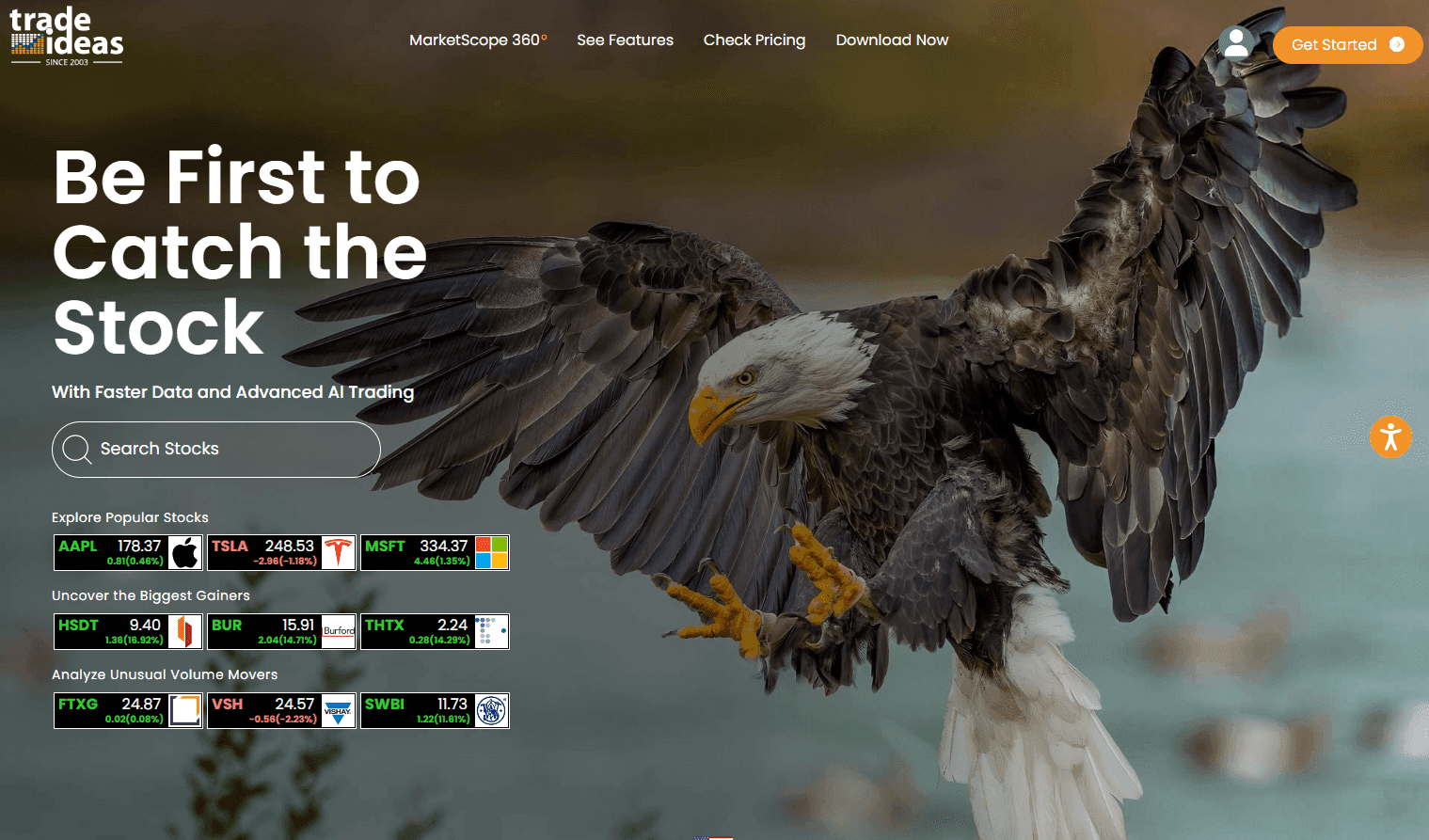
Trade Ideas is the AI-driven trade-alert platform with a long track record (founded 2003, AI features since the early 2010s). The Holly AI engine generates real-time trade ideas based on pattern detection across thousands of tickers; backtesting + paper-trading workflows let traders validate signals before deploying real capital.
Production credibility: privately held, profitable, established platform with >20-year operating history; deployed across active retail traders, day traders, and prop trading firms; the Holly AI track record is the most-published in the consumer AI-trading category.
What it wins at: active intraday traders, real-time alert workflows, and the use case where pattern detection across thousands of tickers needs to happen in seconds.
Where it falls down: for buy-and-hold investors or long-horizon swing traders, the active-trading workflow is the wrong abstraction. Best for active intraday and short-horizon trading specifically.
2. Tickeron — AI Pattern Recognition + AI Robots
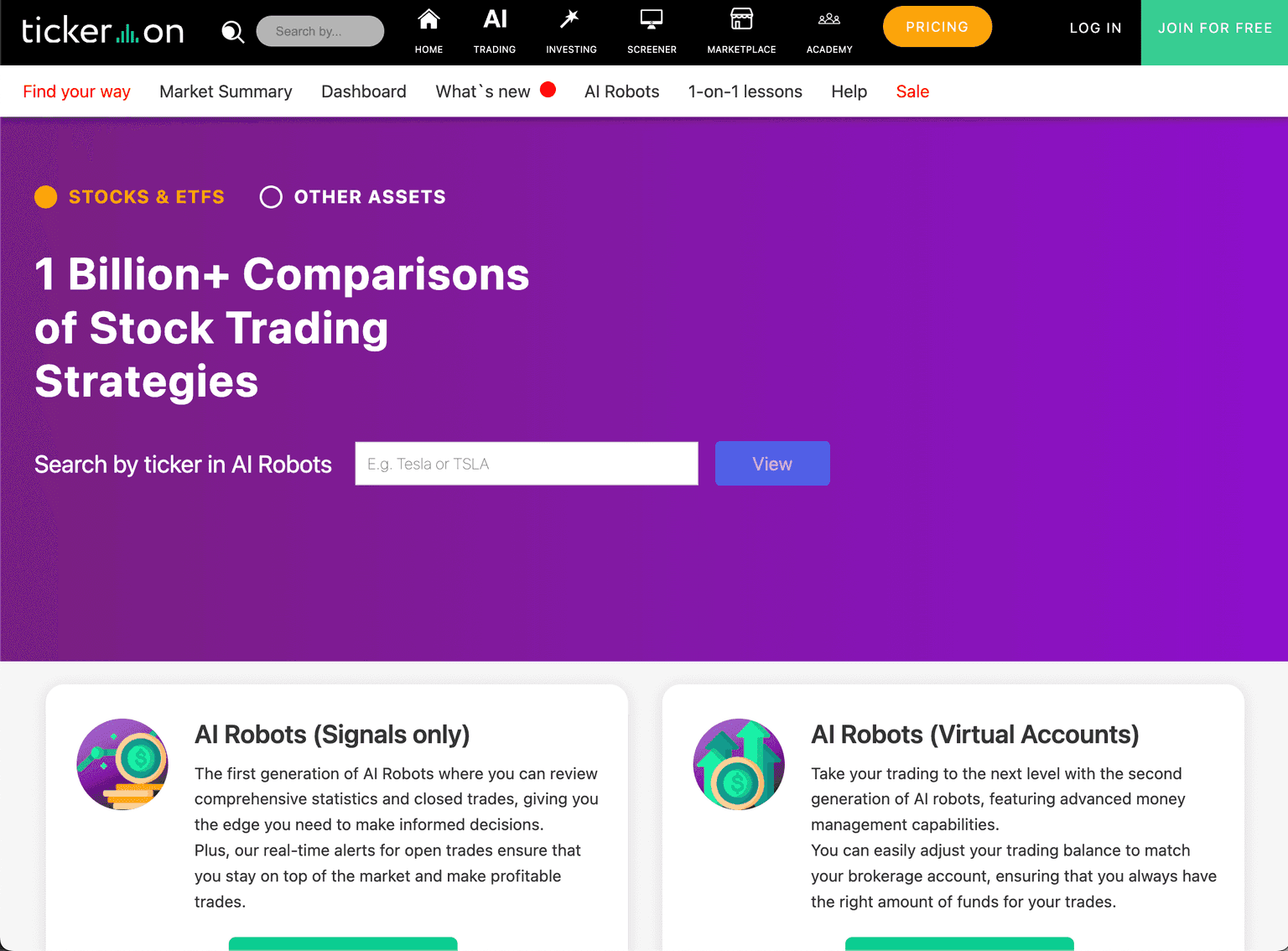
Tickeron combines AI pattern recognition (chart-pattern detection across 100+ patterns) with the AI Robots feature — automated swing-trading strategies that traders can subscribe to and follow. For pattern-driven traders, Tickeron's AI features ship a different angle than Trade Ideas' alert-stream approach.
Production credibility: privately held; deployed across retail and prosumer traders; the AI Robot transparency (published track records, win rates, drawdown statistics) is more transparent than many AI-trading competitors.
What it wins at: swing traders and pattern-based strategies, the AI Robot use case for traders who want to follow systematic strategies without building them, and pattern recognition across many tickers simultaneously.
Where it falls down: the AI Robot returns are real but variable; treat them as decision support, not guaranteed outcomes. The platform is best for traders who use the AI features as input to their own decisions, not as autopilot.
3. TrendSpider — Automated Technical Analysis
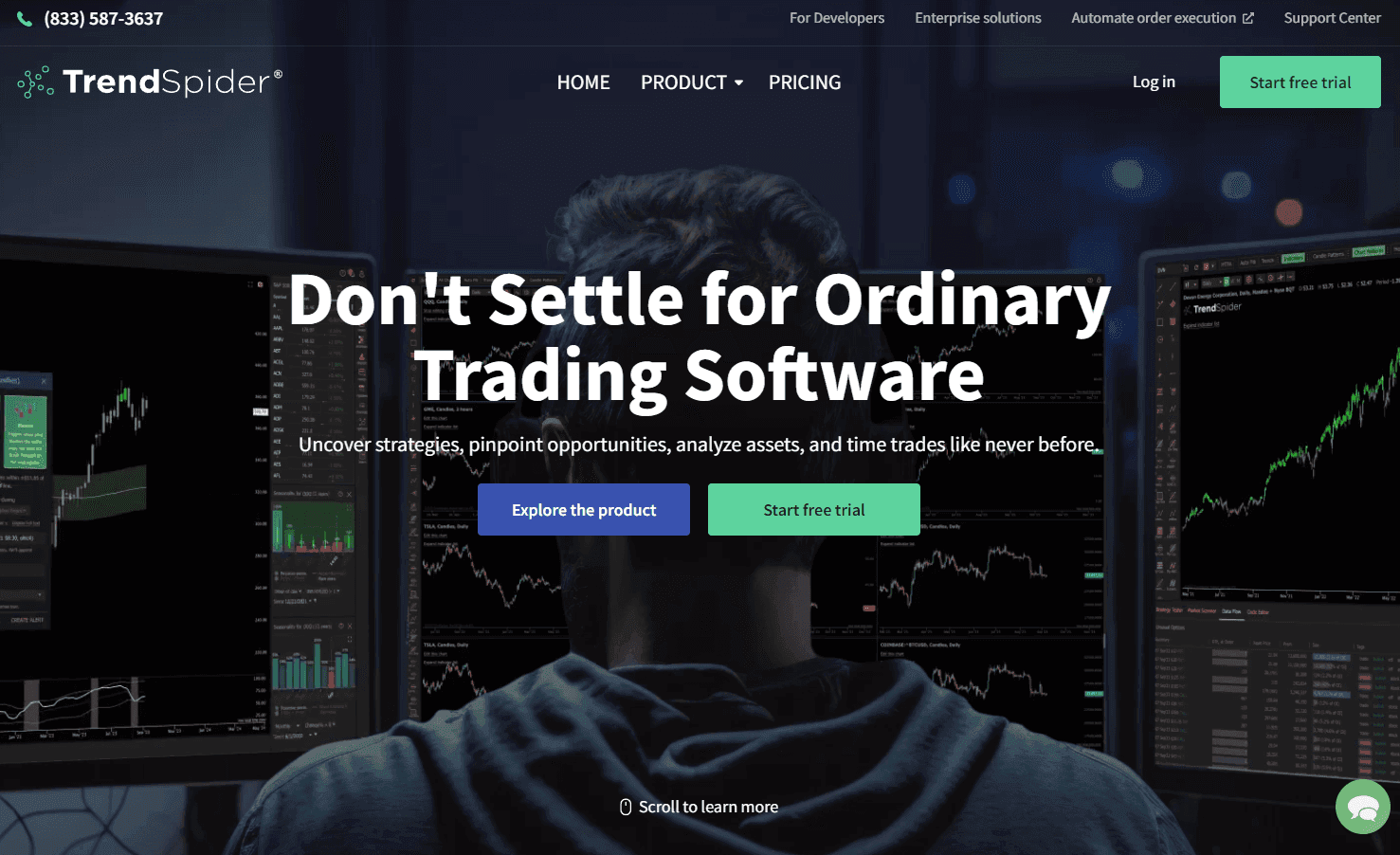
TrendSpider is the automated technical analysis platform — automatically draws trendlines, identifies chart patterns, sets dynamic price alerts, and runs market scans across thousands of tickers. The 2024–2026 evolution toward AI-driven strategy generation extends the platform from charting analytics into systematic strategy development.
Production credibility: privately held; reported tens of thousands of active traders; G2 rating consistently 4.5+/5; the chart-automation specialization is the differentiator vs general-purpose charting tools.
What it wins at: chart-driven traders, automated technical analysis, and the use case where drawing trendlines and identifying patterns manually is the bottleneck.
Where it falls down: for fundamental-analysis-driven trading, the chart-focus is the wrong abstraction. Best for technical-analysis-driven trading specifically.
4. LuxAlgo — TradingView Indicators + AI Signals
LuxAlgo is the TradingView indicator suite + AI-signal layer for traders who already work in TradingView's ecosystem. Signal indicators, real-time alert generation, and the AI Backtester for strategy validation. For the large population of traders who use TradingView as their primary charting platform, LuxAlgo is the AI-augmented complement.
Production credibility: privately held; deployed widely across TradingView users; the TradingView-native integration is the differentiator vs standalone trading platforms.
What it wins at: TradingView-based traders, the AI-overlay-on-existing-charts use case, and the price-accessible ($14.99–69.99/month) tier that fits retail traders.
Where it falls down: for traders not on TradingView, the value prop is muted. Best as a TradingView-ecosystem extension specifically.
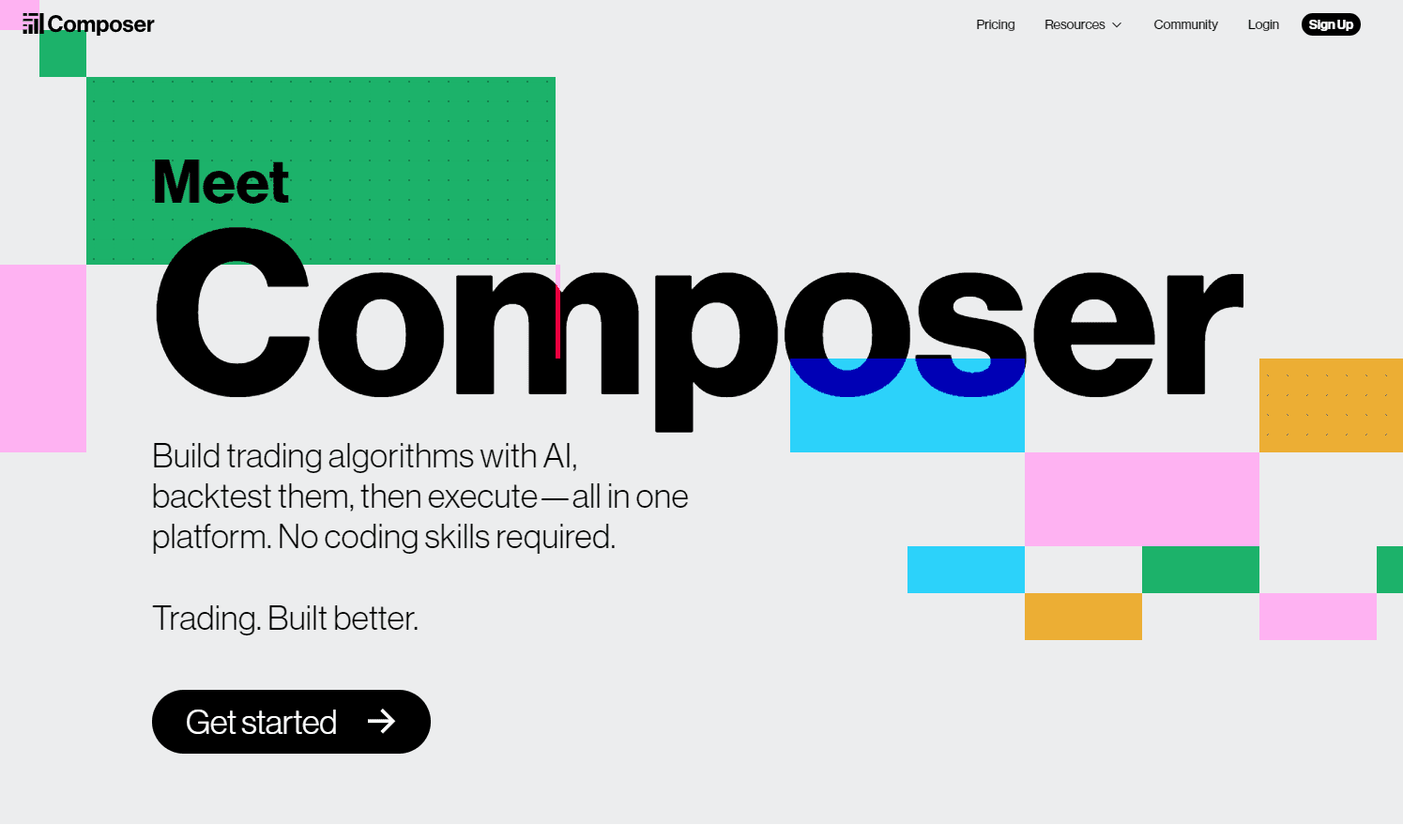
5. Composer — AI-Built Automated Portfolios
Composer is the platform for building, backtesting, and executing systematic trading strategies with AI assistance. Drag-and-drop strategy building, AI-assisted strategy generation, and broker-integrated execution (commission-free) for retail systematic traders. For traders who want to build and run systematic strategies without coding, Composer is the canonical pick.
Production credibility: raised $6M+ Series A; deployed across retail systematic traders; the broker-integrated execution removes a meaningful operational hurdle vs strategy-only platforms.
What it wins at: systematic strategy development without coding, the backtesting → paper-trading → live-execution workflow, and the use case where retail traders want to operate like systematic funds at micro-scale.
Where it falls down: for discretionary traders, the systematic framework is the wrong abstraction. Best for systematic strategy development specifically.
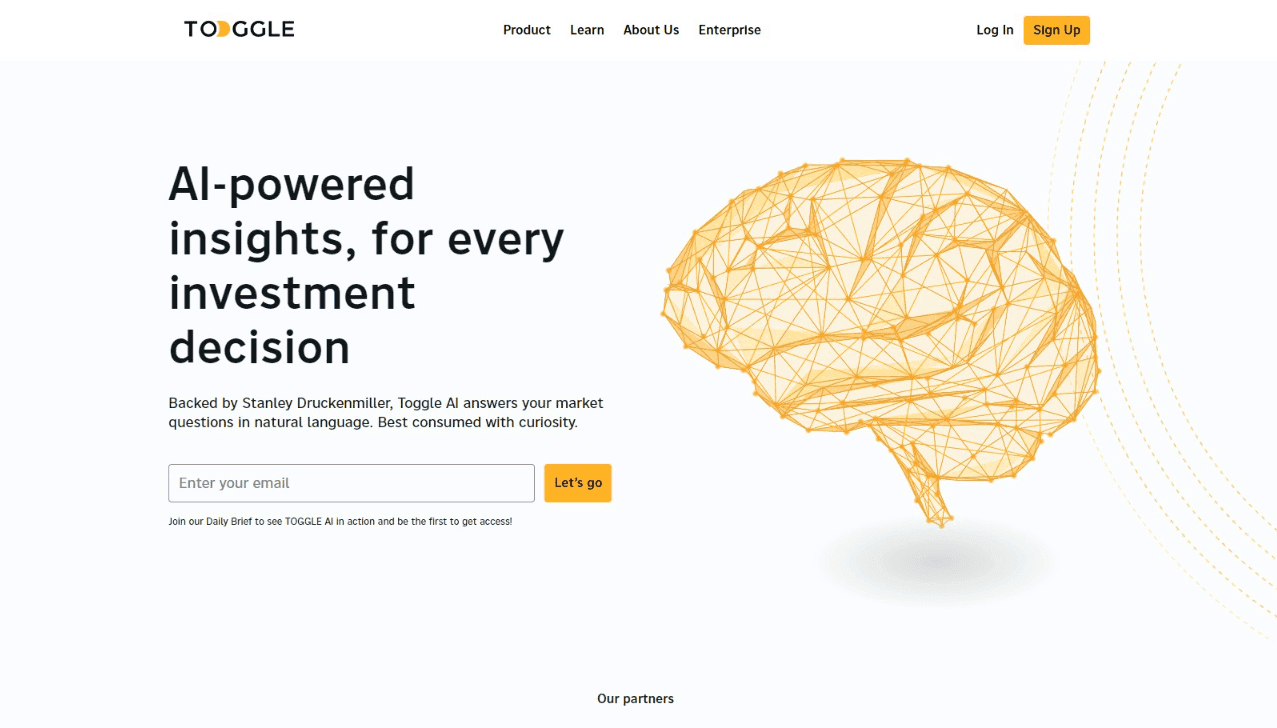
6. TOGGLE AI — Natural-Language Trading Insights
TOGGLE AI is the natural-language AI insights platform for traders — ask questions in English ("how does AAPL typically perform after earnings beats") and get data-driven answers from the AI's analysis of historical patterns. For non-technical traders who want AI insights without learning charting or backtesting tools, TOGGLE AI is the most accessible entry point.
Production credibility: raised $13M+ at a $50M+ valuation; backed by Bridgewater Associates' Ray Dalio personally; deployed across retail and prosumer traders; the natural-language-query interface is the differentiator vs traditional charting platforms.
What it wins at: non-technical traders who want AI insights, natural-language queries that traditional platforms can't answer, and the use case where understanding the question matters more than mastering the tool.
Where it falls down: for traders who already master charting and technical analysis, the natural-language wrapper adds little. Best for non-technical traders specifically.
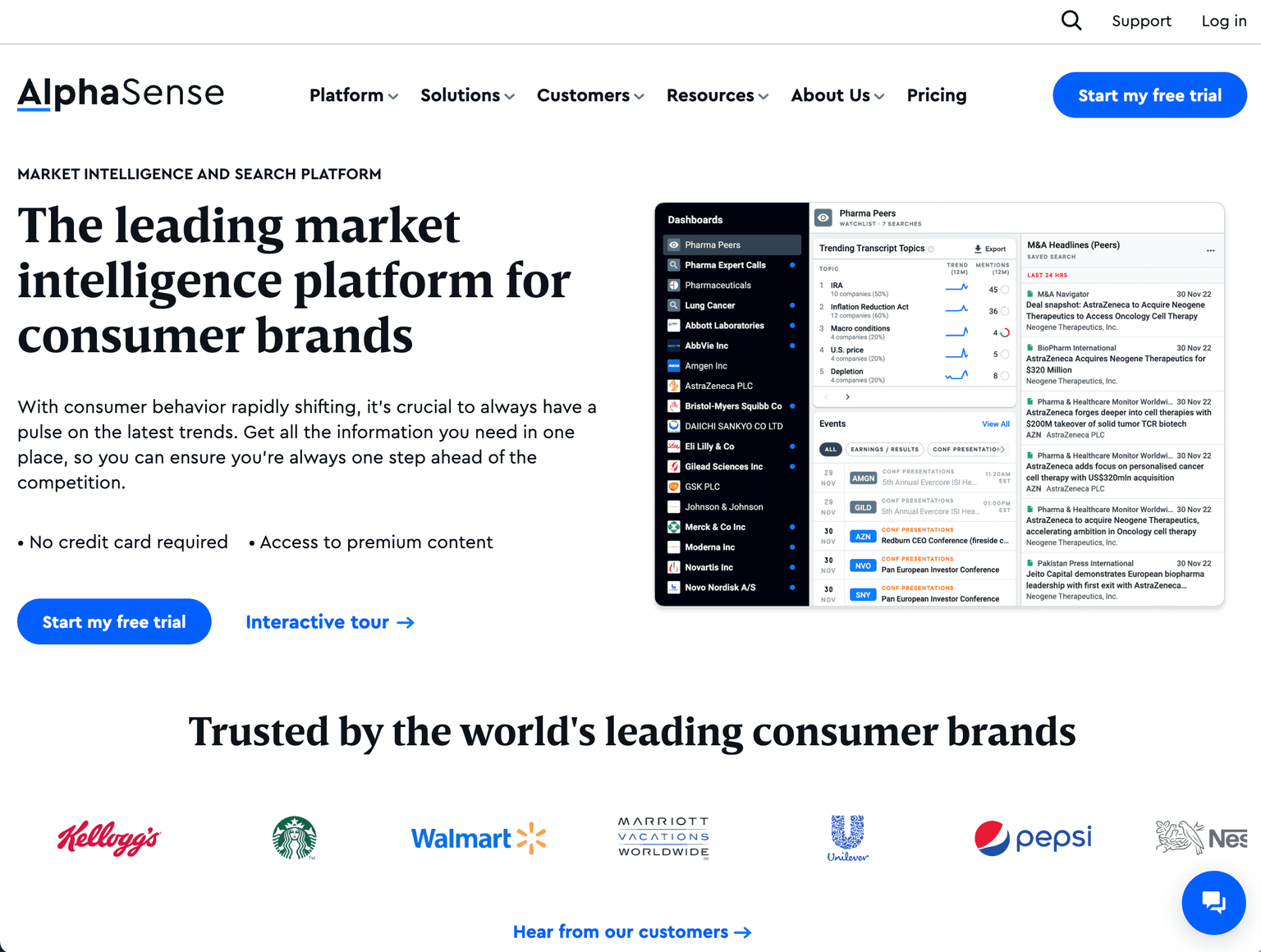
7. AlphaSense — AI Research Across News and Filings
AlphaSense is the market-intelligence layer for research-driven trading — AI search across news, SEC filings, earnings-call transcripts, and broker research, with sentiment and event detection over the lot. Where a screener tells you what moved, AlphaSense tells you what was said about it, and by whom.
Production credibility: used across institutional research desks, asset managers, and corporate strategy teams, with a licensed content corpus that includes broker research most retail tools cannot touch. The licensed sources are the moat, and the reason answers cite into something checkable.
What it wins at: event-driven and research-driven strategies, tracking sentiment and disclosure changes across a watchlist, and any workflow where the primary document matters more than the price chart.
Where it falls down: it is an institutional product with pricing to match, and it is not a real-time execution or alerting tool. For pure technical trading, the screeners above are the right abstraction.
A note on this slot: Uptrends.ai held this position until it shut down; it is now recorded in our AI graveyard.
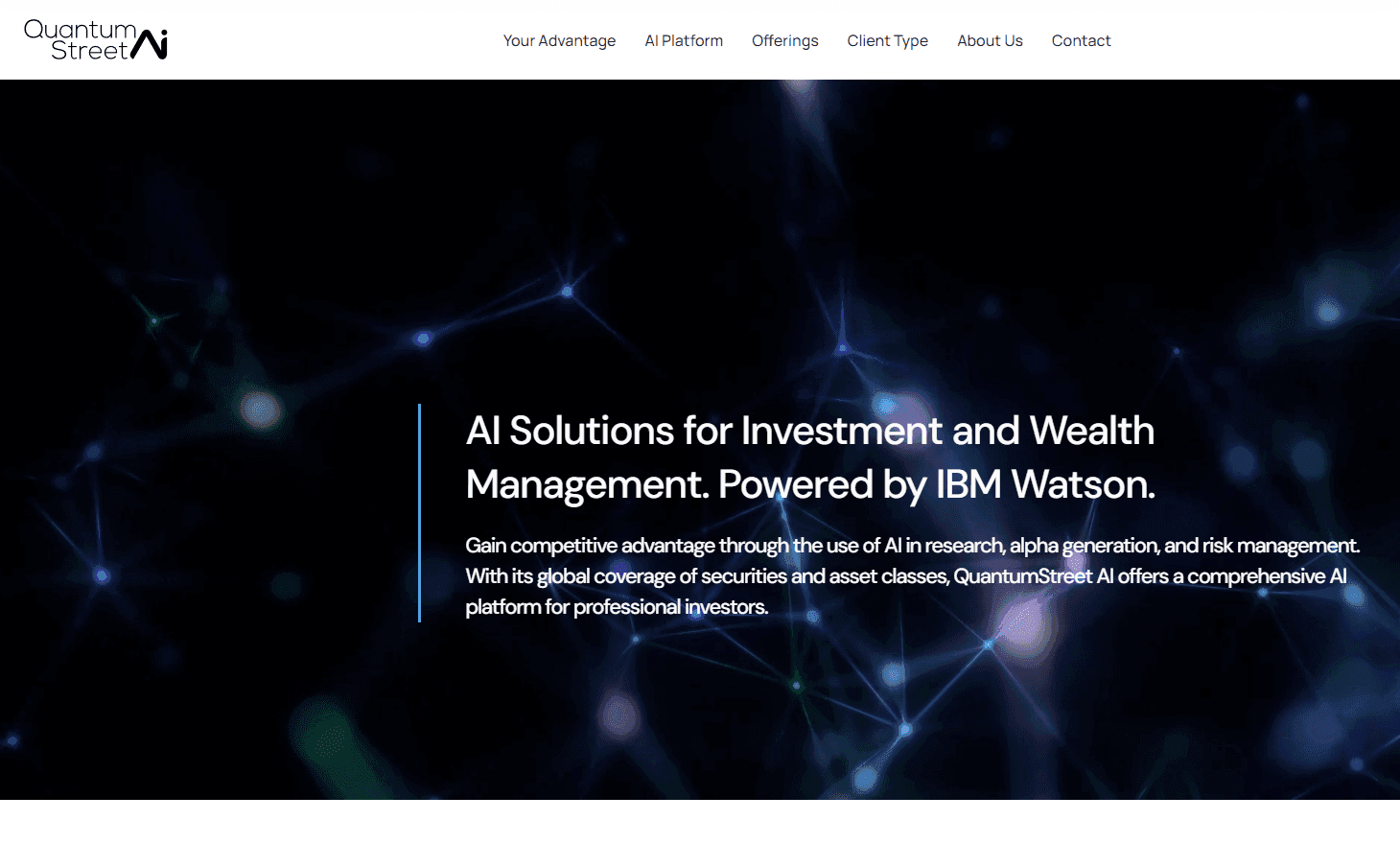
8. QuantumStreetAI — AI Investment Research
QuantumStreetAI is the AI-driven investment research platform combining fundamental analysis, alternative-data signals, and AI-generated investment theses. For traders combining fundamental research with quantitative signals, QuantumStreetAI is the research-platform tier of the AI trading category.
Production credibility: privately held; deployed across retail and prosumer investors; the fundamental-analysis-AI positioning is the differentiator vs charting-focused tools.
What it wins at: fundamental-analysis-driven trading, alternative-data-informed investment theses, and the use case where understanding why a stock should move matters more than chart patterns.
Where it falls down: for technical-analysis-driven trading or active intraday workflows, the fundamental-research focus is the wrong abstraction. Best for fundamental research and longer-horizon investing specifically.
How to Build the 2026 AI Trading Stack
Match tools to trading style:
- Active intraday trader: Trade Ideas + TrendSpider. Real-time alerts plus chart automation.
- Pattern-based swing trader: Tickeron + TrendSpider + LuxAlgo. Pattern recognition across multiple lenses.
- Systematic / quantitative trader: Composer + TOGGLE AI for hypothesis testing. Strategy building + natural-language analytics.
- TradingView-based trader: LuxAlgo + Trade Ideas (for alerts when TradingView's are insufficient).
- Fundamental-analysis investor: QuantumStreetAI + TOGGLE AI for ad-hoc questions.
- News/event-driven trader: AlphaSense + Trade Ideas. Research and disclosure search plus intraday alerts.
Important Disclosures (Read This)
- AI signals are not investment advice. All tools above provide general analytical capabilities, not personalized recommendations. Consult a licensed financial advisor for investment decisions.
- Past performance doesn't guarantee future results. Backtested or historical AI-strategy returns don't predict future returns; trading involves substantial risk of loss including total capital loss.
- AI trading carries unique risks. Models can fail unpredictably, especially during regime changes (market crashes, structural breaks, low-liquidity events). Don't size positions based on AI confidence alone.
- Verify regulatory status. Make sure any AI trading platform you use is operating clearly within trading-tools-not-investment-advice category. Avoid platforms that promise specific returns or operate as unregistered investment advisors.
- Trade only with capital you can afford to lose. Especially with leveraged products (options, futures, margin), AI signals can amplify losses as fast as gains.
Adjacent Reading
- Best AI Tools for Finance and Accounting (2026) — corporate finance AI (different from retail trading)
- Best AI Tools for Data Visualization & Analytics (2026) — broader analytics platforms
- Best LLMs (2026) — foundation models powering many AI trading platforms
- Best Vector Databases for AI (2026) — AI infrastructure adjacent
Frequently Asked Questions
Are AI trading tools actually profitable for retail traders? It varies. The tools above provide analytical capability that can improve decision quality; they don't guarantee profitability. Profitable use requires combining AI signals with disciplined risk management, position sizing, and the trader's own judgment about market context. Most retail traders lose money; AI tools change the analytical baseline but don't change the underlying skill requirement.
Will AI replace human traders? Professional algorithmic and quant trading is already heavily AI-driven; that side of the market is shaped by ML and AI more than by human discretion. Retail discretionary trading still benefits from human judgment around market context, news interpretation, and risk discipline that pure AI tools don't fully replicate.
Are AI trading platforms safe to connect to my brokerage? The major platforms (Trade Ideas, TrendSpider, Composer, Tickeron) integrate via official broker APIs (Interactive Brokers, TradeStation, Tradier, Alpaca). Always verify the OAuth scopes during connection — read-only access is safer than write/trade access; only grant trade-execution access if you're explicitly using the platform's automated execution features.
What's the typical pricing for a 2026 AI trading stack? Budget retail trader (LuxAlgo only): $20–70/month. Active retail trader (Trade Ideas + TrendSpider): $200–500/month. Prosumer trader (full stack): $500–1,500/month. Most platforms offer free trials or paper-trading tiers; never pay for an AI trading tool without testing it on simulated trades first.
How do I evaluate an AI trading platform's claims? Backtest the strategies on out-of-sample data (data the AI didn't train on); paper-trade for at least 30 days before deploying real capital; track win rate, average win/loss, and drawdown statistics independently of the vendor's published numbers. Vendor-published returns often use cherry-picked time windows; your own forward-tested returns are the only meaningful number.
Can AI trading tools predict market crashes or regime changes? No. AI models trained on historical data fail unpredictably during regime changes (March 2020, late 2022, episodic flash crashes). The pattern of "AI worked well right up until it didn't" is the defining failure mode of the category. Always have manual override capability and pre-defined drawdown limits when using AI signals.
Are these tools regulated by the SEC or FINRA? Most are explicitly trading tools and analytics platforms — not registered investment advisors. They don't provide personalized investment advice (which would require RIA registration). If a platform crosses into providing personalized recommendations, it should be registered; verify this before subscribing. The platforms above are clearly on the analytics side.
Final Thoughts
The AI trading category in 2026 is more capable and more saturated with marketing exaggeration than most software categories. The real tools (above) provide genuine analytical capability without overpromising. The marketing-heavy outliers (which we excluded) often promise specific returns or operate as unregistered investment advisors — categories that warrant caution and regulatory scrutiny.
For any retail trader evaluating AI tools in 2026, the highest-leverage move is: start with paper-trading and free trials, validate the AI signals on out-of-sample data over 30+ days, and only deploy real capital with disciplined risk management and pre-defined drawdown limits. AI is an analytical enhancement, not a substitute for discipline. The traders that compound returns over years use AI tools to inform decisions they would have otherwise had to make manually — they don't outsource the decisions themselves.
Categories these tools span
More collections you may also like


Sign up for our newsletter
Receive weekly updates so you can stay up-to-date with the world of AI
Sign up for our newsletter
Receive weekly updates so you can stay up-to-date with the world of AI
The AI tools directory for discovering, exploring, and comparing the most innovative AI tools in the industry