Spring Health
AI-powered precision mental healthcare for employers. $3B valuation. Routes employees to the right care (therapist, coach, medication) via ML matching.
Overview
Spring Health: AI Precision Mental Healthcare
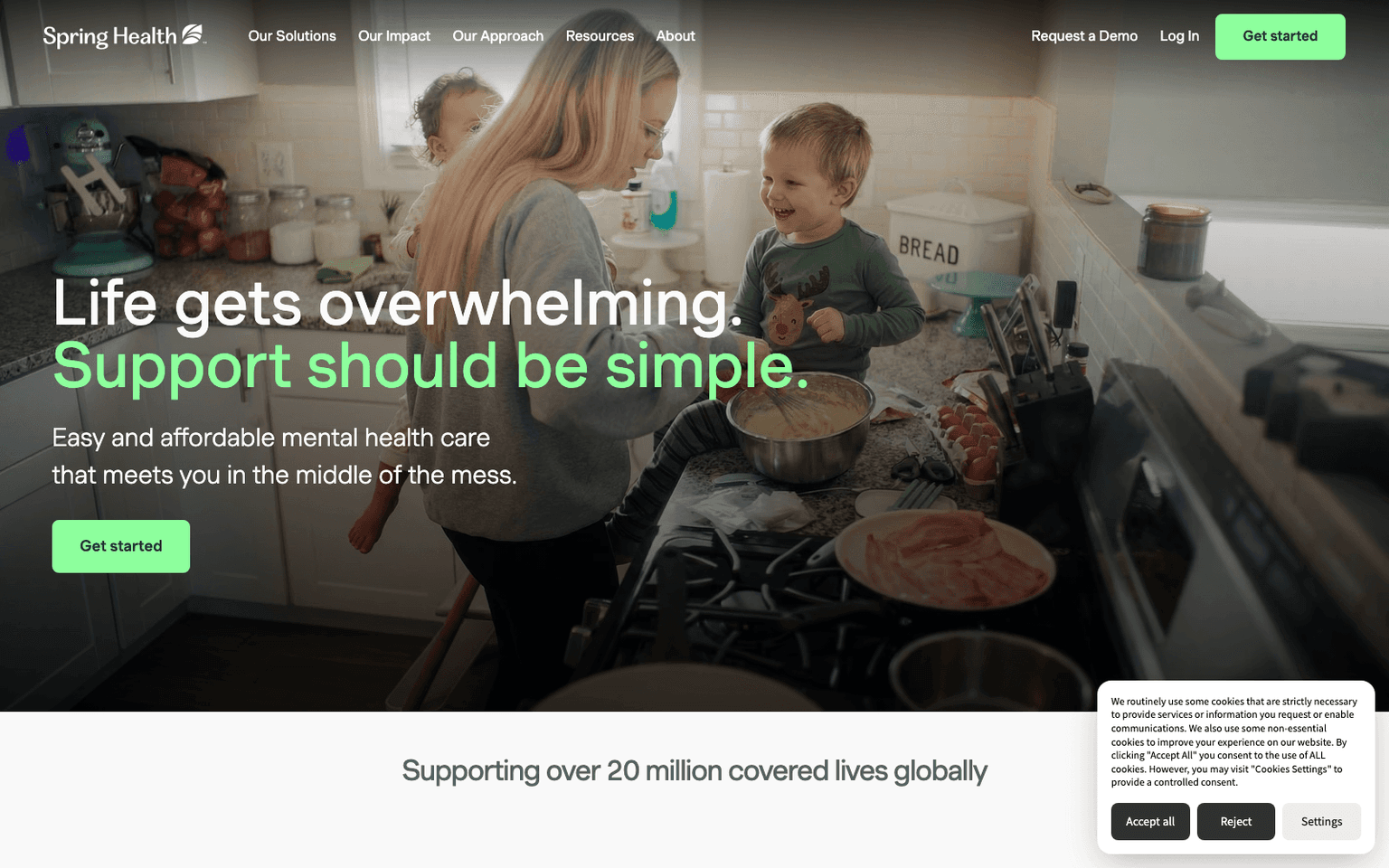
Spring Health is the AI-powered precision mental healthcare platform — using ML to route employees to the right type of care (therapist, coach, medication, digital tools) based on assessments and predicted treatment response. Sold primarily through employers as a benefits offering covering 10M+ lives.
Valued at $3B+ in late-stage rounds led by Kinnevik, Tiger Global, and others. The pitch: traditional EAPs have 5% utilization and poor outcomes; Spring Health drives 30%+ utilization with personalized care matching that improves outcomes measurably.
Key Features
- AI assessment + care matching (therapist/coach/med)
- Predicts treatment response per individual
- Employer benefits — covers 10M+ lives
- $3B+ valuation (Kinnevik, Tiger Global)
- 30%+ utilization vs 5% traditional EAP
Ideal Use Case
Mid-to-large enterprises (5,000+ employees) replacing or augmenting traditional EAP/mental health benefits with measurable, personalized care matching that drives higher utilization and better outcomes.
Why Use Spring Health
Headspace, Lyra, Modern Health are competitors. Spring Health's wedge: precision care matching via ML (not just access to a network) and rigorous outcomes measurement that demonstrates ROI to enterprise buyers.
FAQ
What does Spring Health do for employees? Spring Health uses AI to match employees with the right mental healthcare provider, whether that's a therapist, coach, or medication-based treatment. The platform intelligently routes people to the care that fits their specific needs, improving access to mental health support within employer benefits.
Who should consider using Spring Health? Spring Health is designed for employers looking to improve mental health outcomes and reduce costs across their workforce. It works best for organizations that want to move beyond one-size-fits-all mental health benefits and match employees to personalized care paths.
How is Spring Health priced? Spring Health operates on a paid model. Visit the Spring Health pricing page for current plans and to request a quote tailored to your organization's size and needs.
How does Spring Health compare to other mental health platforms? Spring Health differs from alternatives like Abridge, Flatiron Health, and Exscientia by focusing specifically on precision matching between employees and mental health providers rather than general health data management or drug discovery applications.
tl;dr
AI precision mental healthcare. ML routes employees to right care. $3B val, 10M+ lives covered.
Related
Looking for more options? Browse the Healthcare directory or read our best AI healthcare tools listicle. Spring Health has a Wikipedia entry and is tracked on Crunchbase.
Why Use Spring Health
Editorial Review
Our take on Spring Health.

ML-driven triage for mental health benefits that matches employees to care; solid if your org needs to scale therapy access efficiently.
What works
- ML matching reduces friction in therapy matching
- Trusted by orgs seeking EAP modernization
- Integrates with existing benefit infrastructure
What doesn't
- Routing layer, not care delivery—outcomes depend on downstream ops
- Success requires organizational adoption discipline and change management
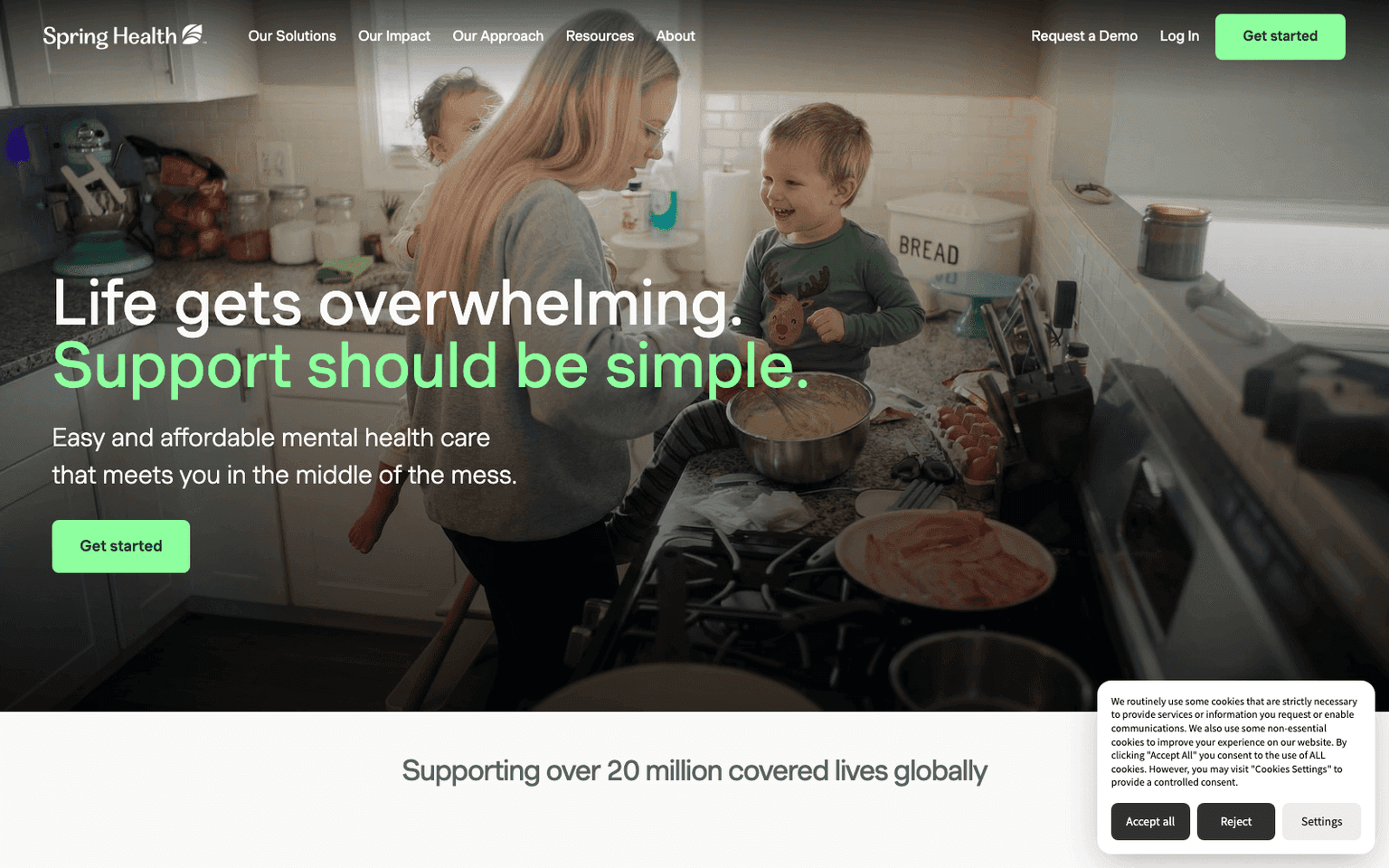
Spring Health sits in the employer benefits space, using machine learning to route employees toward the right mental health resource—therapist, coach, medication management—instead of letting them guess. The pitch is sensible: most EAP programs are a mess of underutilized services; matching people to what actually fits them should reduce waste and improve outcomes.
The catch is that this lives upstream of actual clinical care. It's a routing and matching layer, not a care provider itself. That's fine if your organization has the operational muscle to integrate it into your benefits stack and track whether people actually show up and improve. If you're hoping for a turnkey mental health solution, you're buying a coordinator, not a clinic.
Valuation and scale don't tell you much about product fit for your org. What matters: does your current EAP have measurable engagement gaps? Do you have HR ops who can champion adoption? Can you instrument outcomes or at least engagement metrics? If yes on those, worth a serious conversation with their sales team.
User Reviews
Similar Tools