
Flatiron Health
AI technology for cancer care and research.
Acquired Flatiron Health
Acquired · February 2018
Still operating. Roche announced a definitive agreement to acquire Flatiron Health on February 15, 2018 and closed the $1.9B deal on April 6, 2018. Flatiron runs as an independent affiliate of the Roche Group and has kept building: its oncology dataset now spans more than five million patient records and 1.5 billion datapoints, and it tripled its international network across the UK, Germany and Japan.
Acquired by Roche.
Is Flatiron Health shut down?
No — Flatiron Health is still operating. Its acquisition by Roche was announced on February 15, 2018, and the product continues to ship. We list it in the ToolDirectory.AI graveyard's acquired-but-operating section and watch for post-acquisition changes.



Overview
Advancing Cancer Care and Research with Flatiron Health's AI Technology
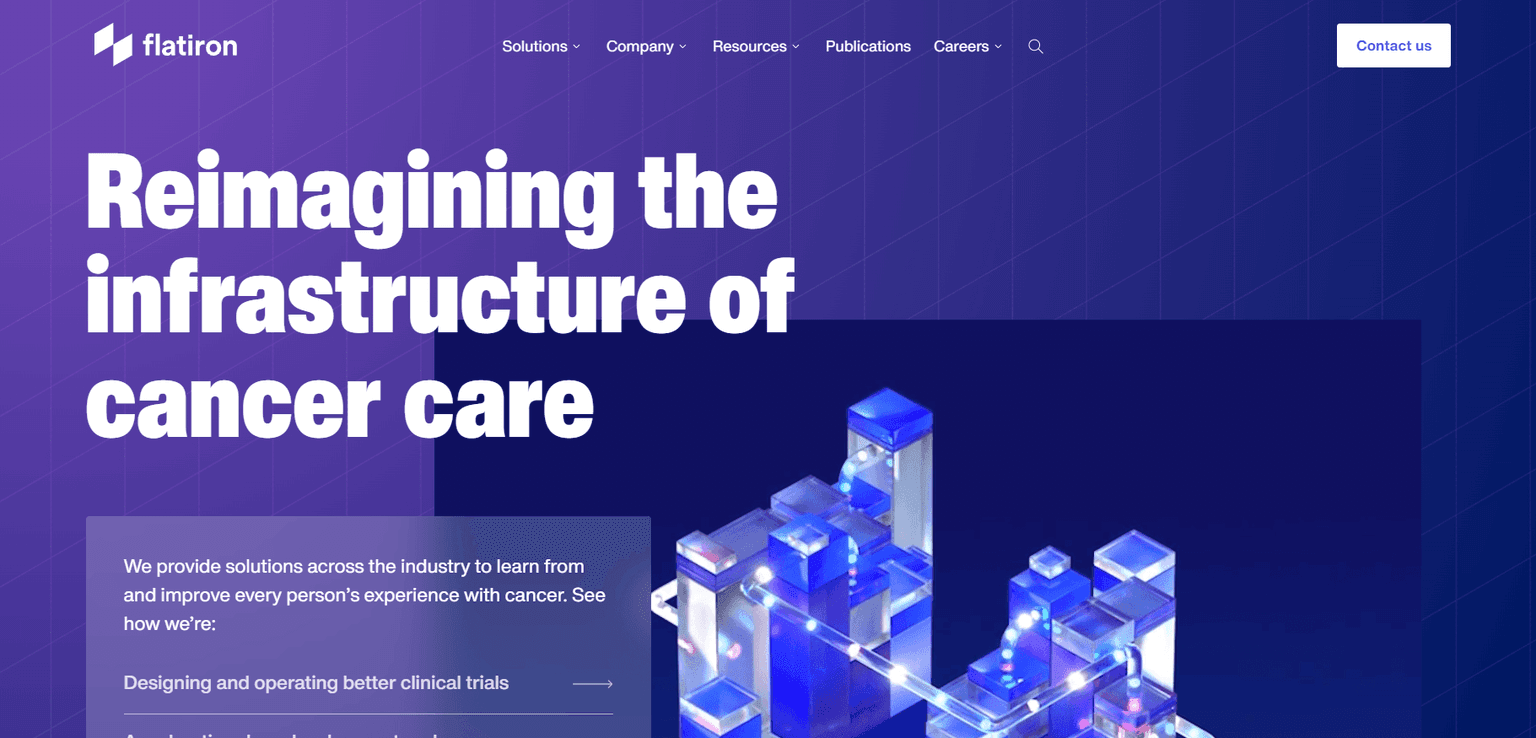
Flatiron Health is at the forefront of transforming cancer care and research infrastructure. Utilizing advanced AI technology, Flatiron Health provides solutions that enable clinicians, researchers, and regulators to learn faster and deliver smarter care for every cancer patient. Their commitment to leveraging technology and evidence aims to close the gap between care and research, ultimately transforming possibilities into tangible results in the fight against cancer.
Key Features:
- Real-World Evidence Generation: Partner with Flatiron's team for robust evidence and insights.
- Clinical Trial Optimization: Utilize EHR-to-EDC connectors for efficient trial data management.
- Precision Oncology Support: Customizable clinical decision support platform for personalized care.
- Diverse Clinical Research Solutions: Catering to academic medical centers, HEOR & RWE teams, and more.
- Regulatory Affairs Expertise: Leverage regulatory-grade real-world data for strategic planning.
Ideal Use Case
Flatiron Health is ideal for oncologists, clinical researchers, healthcare data analysts, and regulatory affairs professionals in the cancer care ecosystem seeking to enhance patient care and accelerate cancer research.
Why use Flatiron Health:
- Data-Driven Insights: Harnesses extensive real-world data for informed decision-making.
- Enhanced Patient Care: Provides evidence-based treatment options and clinical decision support.
- Streamlined Clinical Trials: Offers technology-driven solutions for efficient trial management.
- Comprehensive Oncology Solutions: Addresses diverse needs across the oncology ecosystem.
- Regulatory Compliance: Assists in meeting regulatory requirements with high-quality data.
FAQ
What does Flatiron Health do? Flatiron Health provides AI technology designed to support cancer care and research, helping healthcare organizations improve treatment outcomes and clinical insights.
Who should use Flatiron Health? Healthcare providers, cancer centers, and research institutions looking to leverage AI to enhance their oncology programs and clinical decision-making would benefit most from this platform.
What is the pricing model for Flatiron Health? Flatiron Health operates on a freemium model. Visit the Flatiron Health pricing page for current plans and to inquire about specific pricing for your organization.
How does Flatiron Health compare to similar tools? Flatiron Health competes in the healthcare AI space alongside alternatives like Abridge, Exscientia, and Innovaccer, each offering different approaches to clinical and research applications.
tl;dr:
Flatiron Health is revolutionizing the field of oncology with its AI-driven technology, bridging the gap between cancer care and research. By providing comprehensive solutions for real-world evidence generation, clinical trial optimization, and precision oncology, Flatiron Health is not just a tool but a partner in the global effort to combat cancer. It's an indispensable asset for anyone involved in cancer care and research, aiming to make a significant impact in the lives of patients.
Related
Looking for more options? Browse the Healthcare directory or read our best AI healthcare tools listicle. Flatiron Health is also tracked on Crunchbase.
Why Use Flatiron Health
Editorial Review
Our take on Flatiron Health.

Specialized oncology platform that turns cancer care data into actionable insights for clinics and researchers.
What works
- Roche-owned, with 5M+ patient records and 1.5B datapoints for oncology research
- Purpose-built for cancer care, not stretched across all healthcare
- Aggregates real-world treatment data for research patterns
What doesn't
- Highly specialized—only relevant if you work in cancer care
- Pricing and access require direct inquiry; no transparency upfront
Flatiron Health sits at the intersection of clinical care and research infrastructure—it's built specifically for cancer treatment, not general healthcare. The platform aggregates real-world data from electronic health records and treatment patterns, which means hospitals and research teams can surface trends that might otherwise stay buried in chart notes.
The freemium model means you can explore the basics without a conversation, though meaningful deployment will require talking to their team about your institution's specific needs. That's typical for healthcare infrastructure, where one size definitely doesn't fit all. The real value isn't in the software alone—it's in what you can learn from pooled, de-identified oncology data when you have the right tool to ask questions of it.
What matters here is context: if you're a cancer center or running oncology research, this is worth a serious look. If you're shopping for general healthcare AI, this is too specialized.