OpenVino
OpenVINO™ toolkit optimizes deep learning inference for computer vision, speech recognition, NLP, and more.
Overview
OpenVINO™ Toolkit: Streamlining Deep Learning Inference
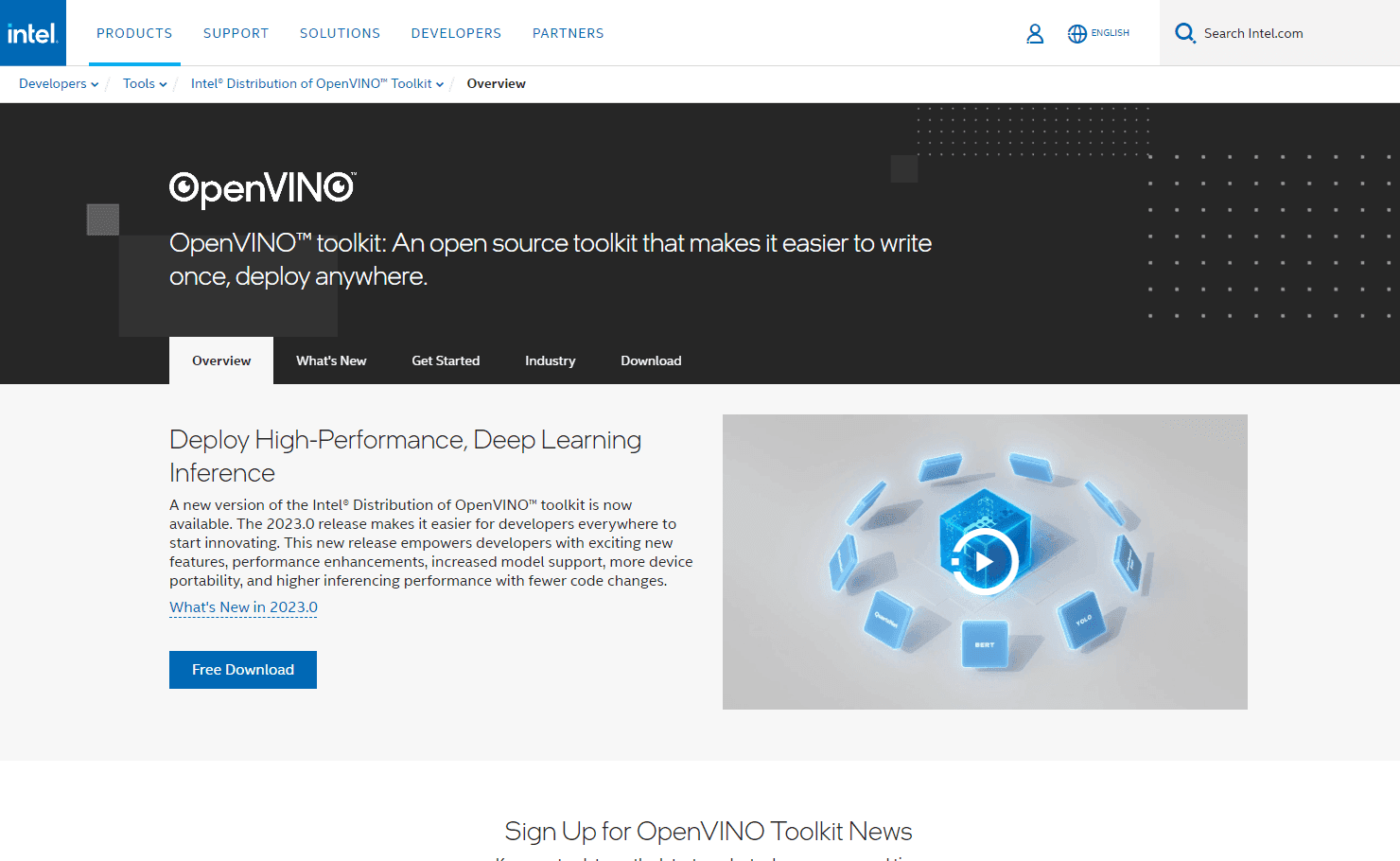
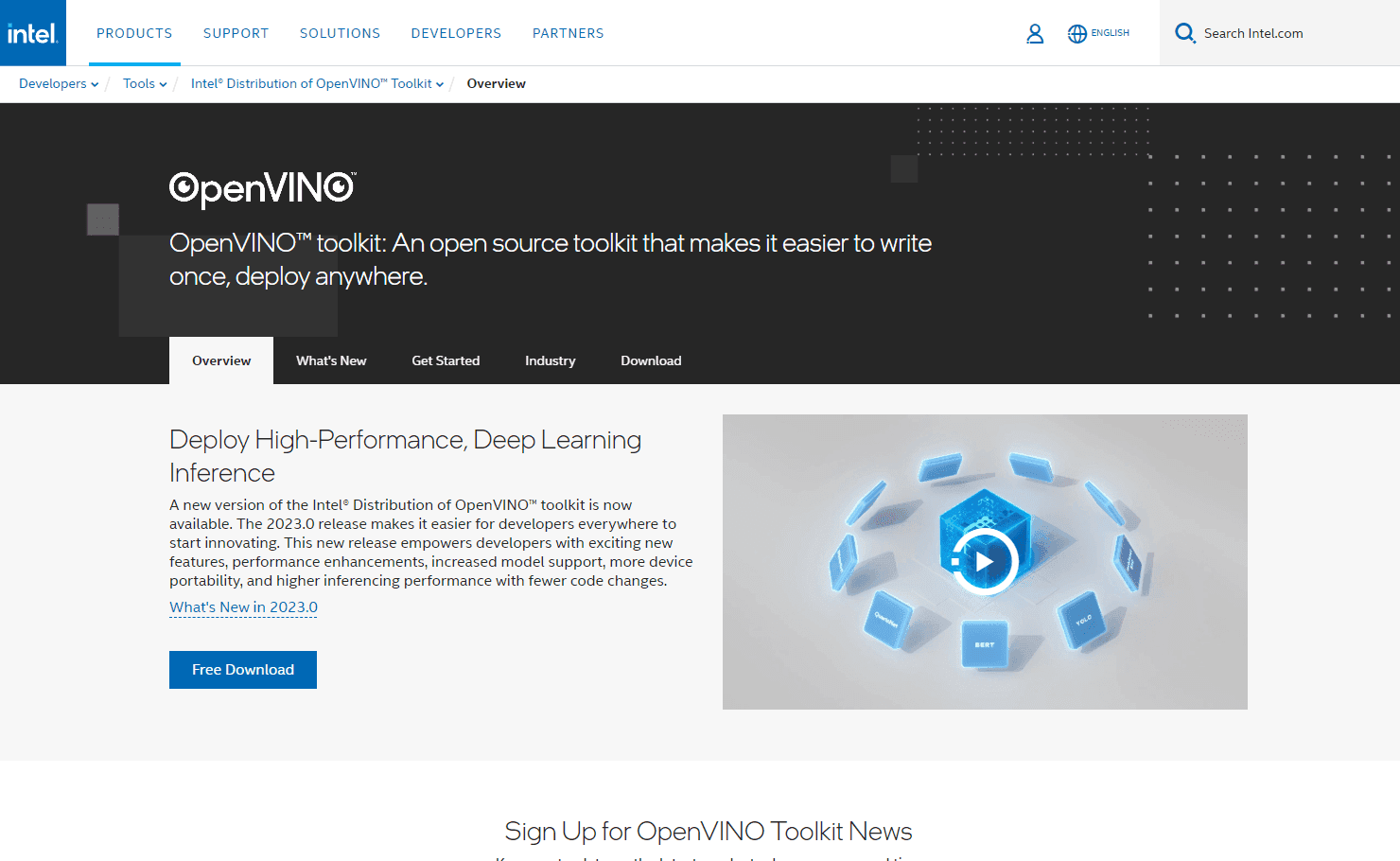
Intel® introduces the OpenVINO™ toolkit, an open-source toolkit designed to simplify the deployment process of deep learning models across a variety of Intel® hardware. The toolkit provides developers with the tools needed to convert and optimize models trained using popular frameworks such as TensorFlow*, PyTorch*, and Caffe*. It ensures seamless deployment across diverse Intel environments, whether on-premise, on-device, in the browser, or in the cloud. The 2023.0 release of the OpenVINO™ toolkit brings forth new features, performance enhancements, increased model support, and more, making AI innovation more accessible to developers.
Key Features:
- Convert and optimize models from popular training frameworks
- Deploy models across various Intel hardware and environments
- Enhanced model support and device portability
- High inferencing performance with minimal code changes
- Comprehensive resources for learning and implementation
Ideal Use Case:
Developers and AI enthusiasts aiming to optimize and deploy deep learning models efficiently across diverse Intel platforms.
Why use OpenVINO™ Toolkit:
- Simplified model conversion and optimization process
- Broad support for popular deep learning frameworks
- Seamless deployment on diverse Intel environments
- Continuous updates and enhancements for improved performance
FAQ
What does OpenVINO help developers do? OpenVINO is a toolkit that optimizes deep learning inference across computer vision, speech recognition, natural language processing, and other AI applications. It's designed to make AI models run faster and more efficiently on various hardware platforms.
Who should use OpenVINO? OpenVINO is built for developers working on deep learning projects who need to deploy and optimize inference workloads. It's particularly useful for teams building production AI applications that require better performance and resource efficiency.
What's the pricing structure for OpenVINO? OpenVINO uses a paid pricing model. Visit the OpenVINO pricing page for current plans and detailed cost information.
How does OpenVINO compare to other developer tools? Unlike GitHub Copilot, Cursor, and v0 which focus on code generation and AI-assisted development, OpenVINO specializes specifically in optimizing deep learning inference performance. It targets developers who need to accelerate and deploy trained models rather than generate code.
tl;dr:
The OpenVINO™ toolkit by Intel® offers a comprehensive solution for converting, optimizing, and deploying deep learning models across various Intel platforms, ensuring high performance and efficiency.
Related
Looking for more options? Browse the Developer Tools directory or read our best AI coding tools listicle. OpenVino is also tracked on Crunchbase.
Why Use OpenVino
Editorial Review
Our take on OpenVino.

OpenVINO optimizes deep learning inference across vision, speech, and NLP workloads, but targets a narrower use case than general coding tools.
What works
- Quantizes and compiles models for fast inference on CPU/GPU/edge
- Handles multiple frameworks and output formats
- Strong community rating and documented use cases
What doesn't
- Narrow use case—inference optimization only, no training or generation
- Category mismatch with listed alternatives limits discoverability
OpenVINO is an inference optimization toolkit designed to accelerate deep learning models across computer vision, speech recognition, and NLP tasks. It compiles and quantizes models to run efficiently on CPUs, GPUs, and specialized hardware—useful if you're shipping trained models to production rather than building them. The toolkit handles model conversion from popular frameworks and offers runtime optimizations that can meaningfully cut latency and memory footprint on edge or server deployments. That's its strength: it solves a real problem for teams who've already trained a model and need it to actually run fast in production.
The friction point is scope. OpenVINO isn't a code editor, copilot, or model trainer—it's a narrow, post-training optimization layer. You'd reach for OpenVINO only if you have trained models that need inference acceleration, not if you're looking for AI-assisted development. Deployment context matters enormously here: it's valuable on-device or in latency-critical inference servers, less so for prototyping or local development loops.
User Reviews
Similar Tools