OpenEvidence
AI-powered medical search and clinical decision support. $1B+ valuation. Used by 25%+ of US doctors. Forbes AI 50.
Overview
OpenEvidence: AI Medical Search for Clinicians
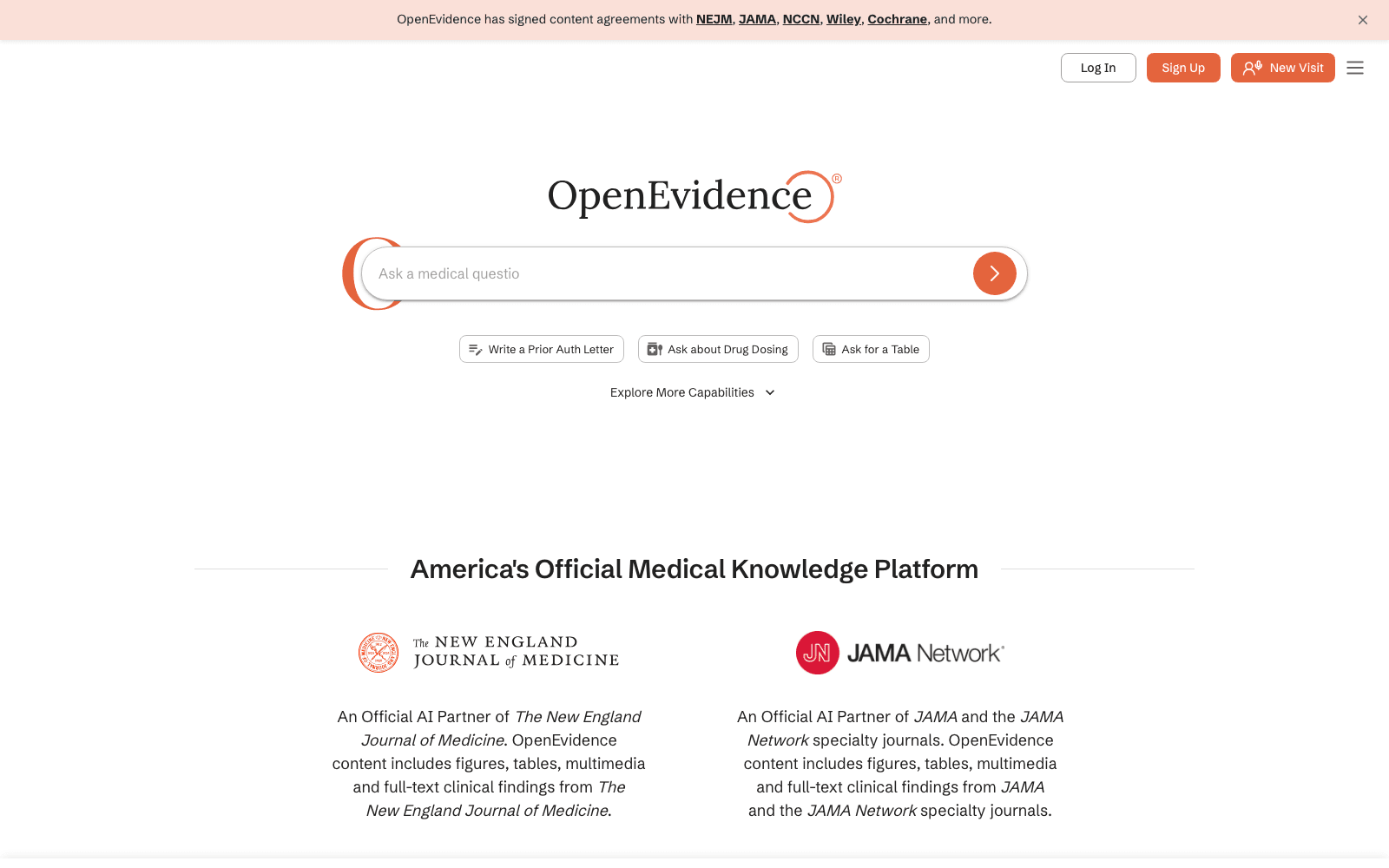
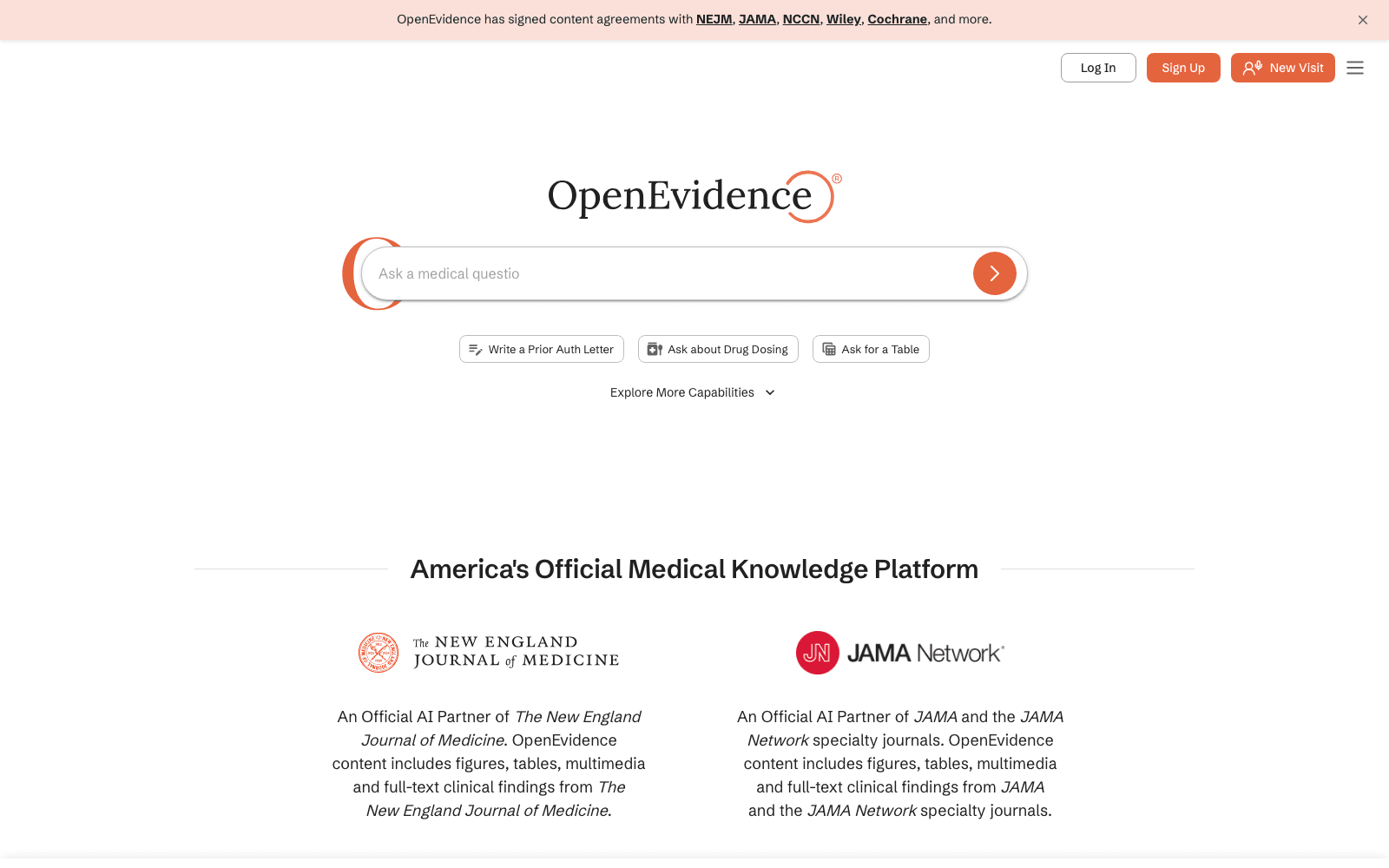
OpenEvidence is AI-powered medical search and clinical decision support. Doctors don't have time to read research; ChatGPT hallucinates clinical content. OpenEvidence fills the gap — real medical literature, real citations, no hallucinations. Free for physicians, monetized via pharma/device partnerships.
Key Features
- AI-powered medical search and clinical decision support
- $1B+ valuation; Forbes AI 50 list 2025
- Used by 25%+ of US physicians
- Indexes peer-reviewed medical literature with citation-backed answers
- Free for verified medical professionals
Ideal Use Case
Practicing physicians, medical residents, and healthcare professionals who need fast, citation-backed answers to clinical questions during patient care.
Why Use OpenEvidence
Doctors don't have time to read research; ChatGPT hallucinates clinical content. OpenEvidence fills the gap — real medical literature, real citations, no hallucinations. Free for physicians, monetized via pharma/device partnerships.
FAQ
What does OpenEvidence do? OpenEvidence is an AI-powered medical search and clinical decision support tool designed to help healthcare professionals find evidence-based information and make informed clinical decisions. It uses artificial intelligence to surface relevant medical research and clinical data quickly and accurately.
Who should use OpenEvidence? OpenEvidence is built for medical professionals, including doctors and clinicians who need rapid access to clinical evidence and decision support at the point of care. It's trusted by a significant portion of US healthcare providers seeking evidence-based guidance for patient care.
How much does OpenEvidence cost? OpenEvidence is completely free to use, making evidence-based clinical decision support accessible to healthcare professionals without any subscription or licensing fees.
How does OpenEvidence compare to similar tools? OpenEvidence competes in the clinical decision support space alongside alternatives like Abridge, Flatiron Health, and Exscientia, but distinguishes itself through its focus on AI-powered medical search combined with broad adoption among US physicians. Visit OpenEvidence to explore how it fits your clinical workflow compared to other available options.
tl;dr
AI medical search for doctors. $1B+. Used by 25%+ of US physicians. Free for clinicians.
Related
Looking for more options? Browse the Healthcare directory or read our best AI healthcare tools listicle. OpenEvidence has a Wikipedia entry and is tracked on Crunchbase.
Why Use OpenEvidence
Editorial Review
Our take on OpenEvidence.

Free AI search for medical evidence that's quietly embedded in a quarter of US doctor workflows.
What works
- Free access for a tool embedded in real clinical workflows
- High community rating from actual practicing users
- Narrows the gap between medical research and bedside decisions
What doesn't
- Business model sustainability unclear to end users
- Quiet adoption means less public feedback on newer features
OpenEvidence sits in an unusual position: it's genuinely useful enough that a significant portion of practicing physicians rely on it, yet it doesn't command the attention of flashier health AI tools. The core function is straightforward—AI-powered search across medical literature and clinical data to support decision-making at the point of care. For doctors, that means faster access to relevant evidence when you need it, rather than toggling between PubMed and other fragmented sources.
What makes it work is friction reduction. Medical evidence is scattered across journals, guidelines, and trials; OpenEvidence's job is to surface what matters for a specific question without forcing you through a traditional search interface.
The free model is the obvious draw, but also worth asking: how does that sustain? The company's well-funded status suggests they're confident in a long-term path, though that's not the same as having transparent plans for everyone using it today. For clinicians, the main risk is feature or availability shifts downstream.
User Reviews
Similar Tools