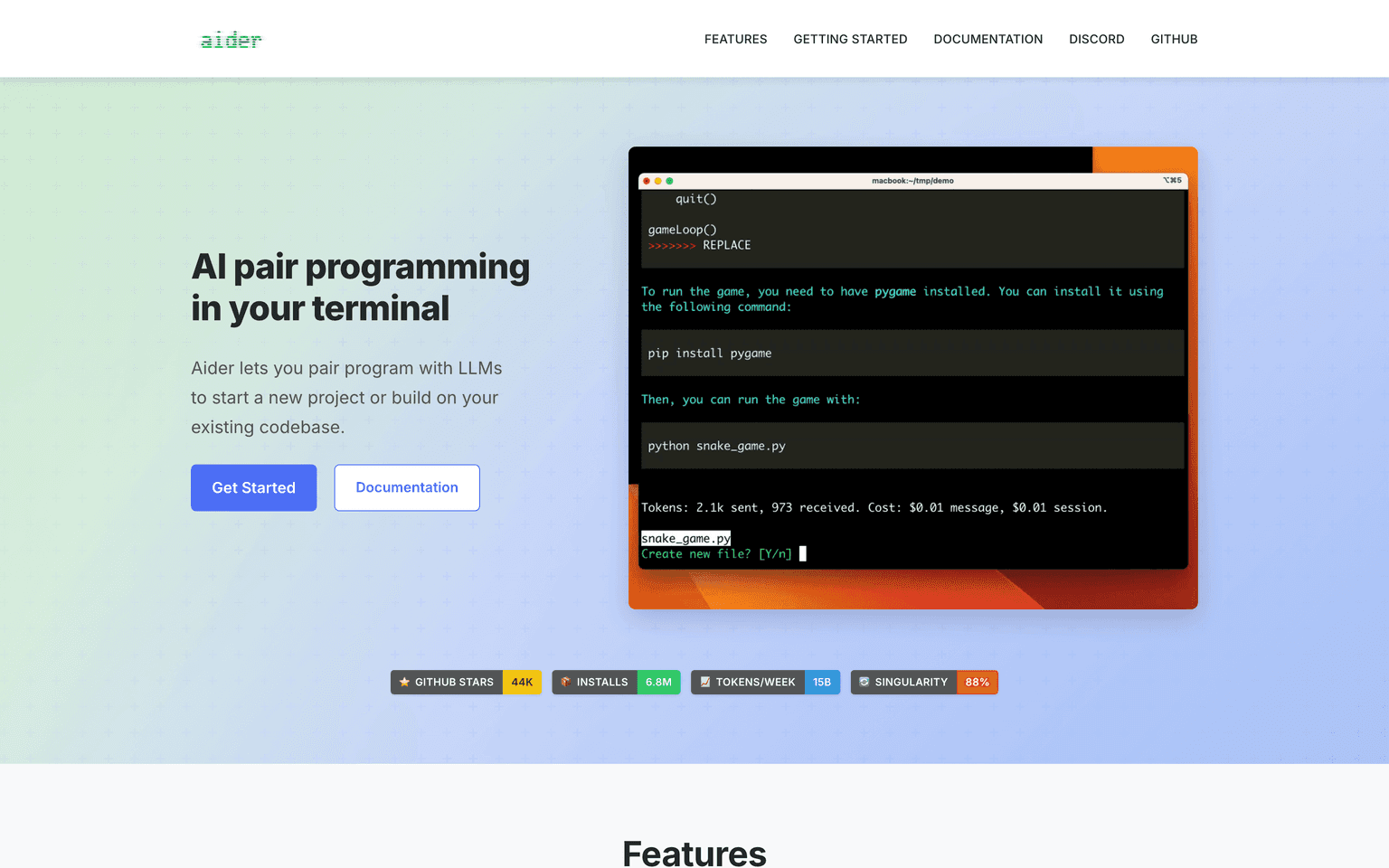
Muse Code
Muse Code is Meta's terminal coding agent, built on Muse Spark 1.2 with a 1M-token context and subagent orchestration for large repositories.
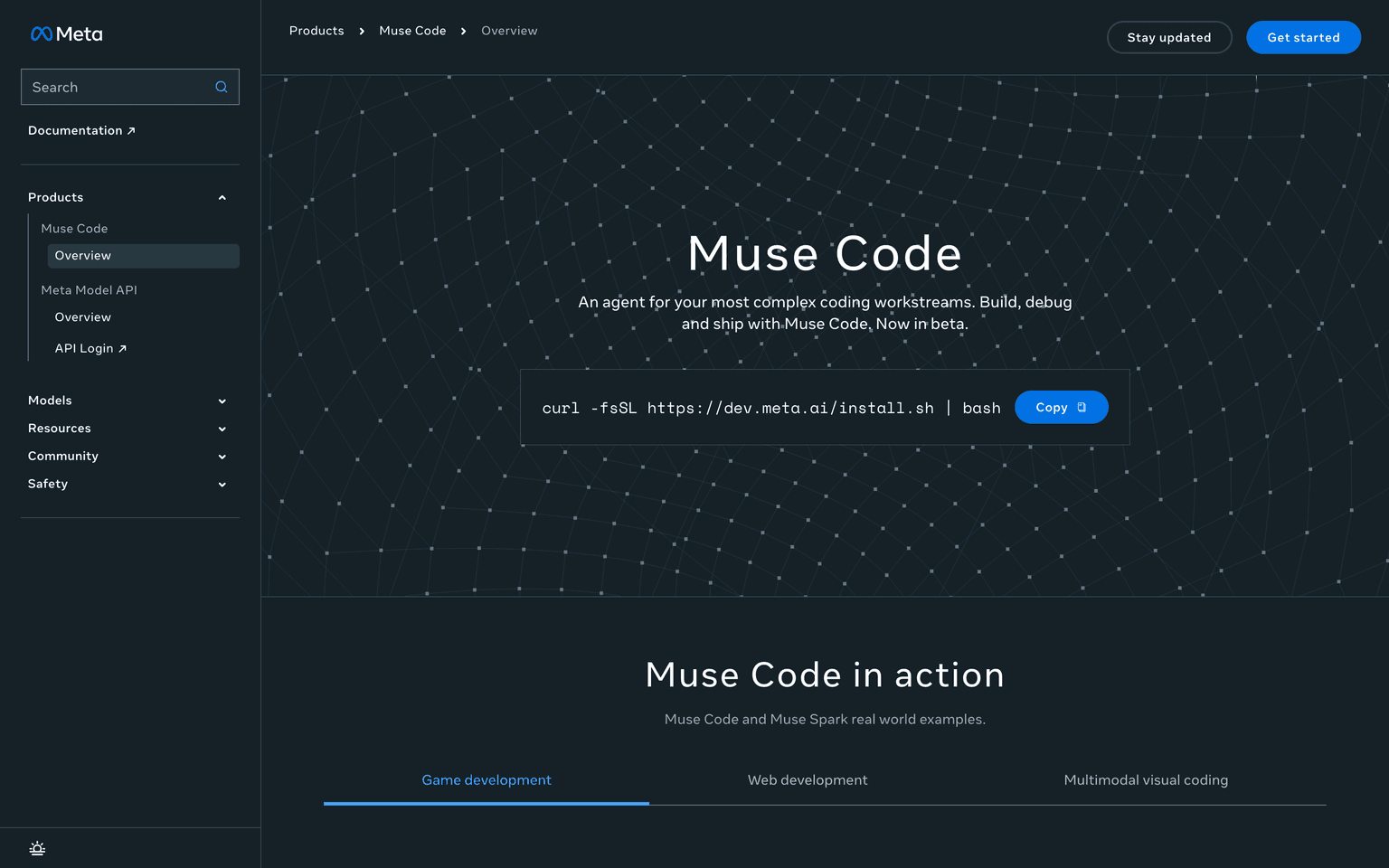
Overview
Muse Code
Muse Code is Meta's terminal-native coding agent, launched on 5 August 2026 and aimed squarely at large codebases. Muse Code runs on Meta's Muse Spark 1.2 model with a one-million-token context window, orchestrates subagents across a task, works in git worktrees, and keeps an event log so a crashed run can be recovered rather than restarted. Meta describes the target as complete software engineering tasks across large repositories: planning the change, writing the code, and validating the result. Installation is a single terminal command, and the beta covers macOS and Linux.
Production credibility: Meta launched Muse Code on 5 August 2026 and it remains in beta at the time of writing, limited to macOS and Linux. It runs on Muse Spark 1.2, Meta's coding model, and access and billing run through the same Meta developer portal that hosts the Muse Spark API. Meta publishes token pricing rather than seats: the standard tier is $1.25 per million input tokens and $4.25 per million output, with cached input at $0.15; a contributor tier is priced at $0.10 per million input and $0.20 per million output, with cached input at $0.002.
Key Features
- Terminal-native agent installed with a single command
- One-million-token context window for work spanning large repositories
- Subagent orchestration across the parts of a single task
- Git worktree support so parallel work does not collide
- Event-logged runs, allowing recovery after a crash rather than a restart
- Token-metered pricing with a cheaper contributor tier
Ideal Use Case
Engineers working in large monorepos where the relevant context does not fit in a normal window: cross-cutting refactors, migrations, and multi-file features. The event log and worktree handling make it a better fit for long-running tasks than for quick edits, and token pricing suits teams that would rather meter usage than buy seats.
How Muse Code differentiates
Claude Code and OpenAI Codex occupy the same terminal, so the differences are in the engineering around the model. Muse Code's pitch is scale and durability: a million-token window, subagents, worktrees, and a run log that survives a crash. It is also priced per token rather than per seat, with a contributor tier an order of magnitude cheaper than standard. The caveats are that it is beta, macOS and Linux only, and tied to Meta's own model rather than a choice of frontier models.
FAQ
Q: What is Muse Code? A: Muse Code is Meta's terminal coding agent, launched in August 2026. It plans, writes and validates changes across large repositories using Meta's Muse Spark 1.2 model with a one-million-token context window.
Q: How much does Muse Code cost? A: Meta prices it per token. The standard tier is $1.25 per million input tokens and $4.25 per million output, with cached input at $0.15. A contributor tier is $0.10 per million input and $0.20 per million output.
Q: Which platforms does Muse Code support? A: The beta runs on macOS and Linux. Installation is a single terminal command, with access and billing through the Meta developer portal.
Q: What model powers Muse Code? A: Muse Code runs on Muse Spark 1.2, Meta's coding model, which is also available directly through the Muse Spark API on the same developer portal.
Q: How is Muse Code different from Claude Code? A: Both are terminal agents. Muse Code emphasises large-repository work — a one-million-token context, subagent orchestration, git worktrees and crash-recoverable event logs — and bills per token rather than per seat.
tl;dr
Muse Code is Meta's terminal coding agent, launched 5 August 2026 on Muse Spark 1.2. It brings a one-million-token context, subagents, git worktrees and crash-recoverable runs to large codebases, priced per token from $1.25 per million input tokens.
Why Use Muse Code
User Reviews
Similar Tools