
Graphite
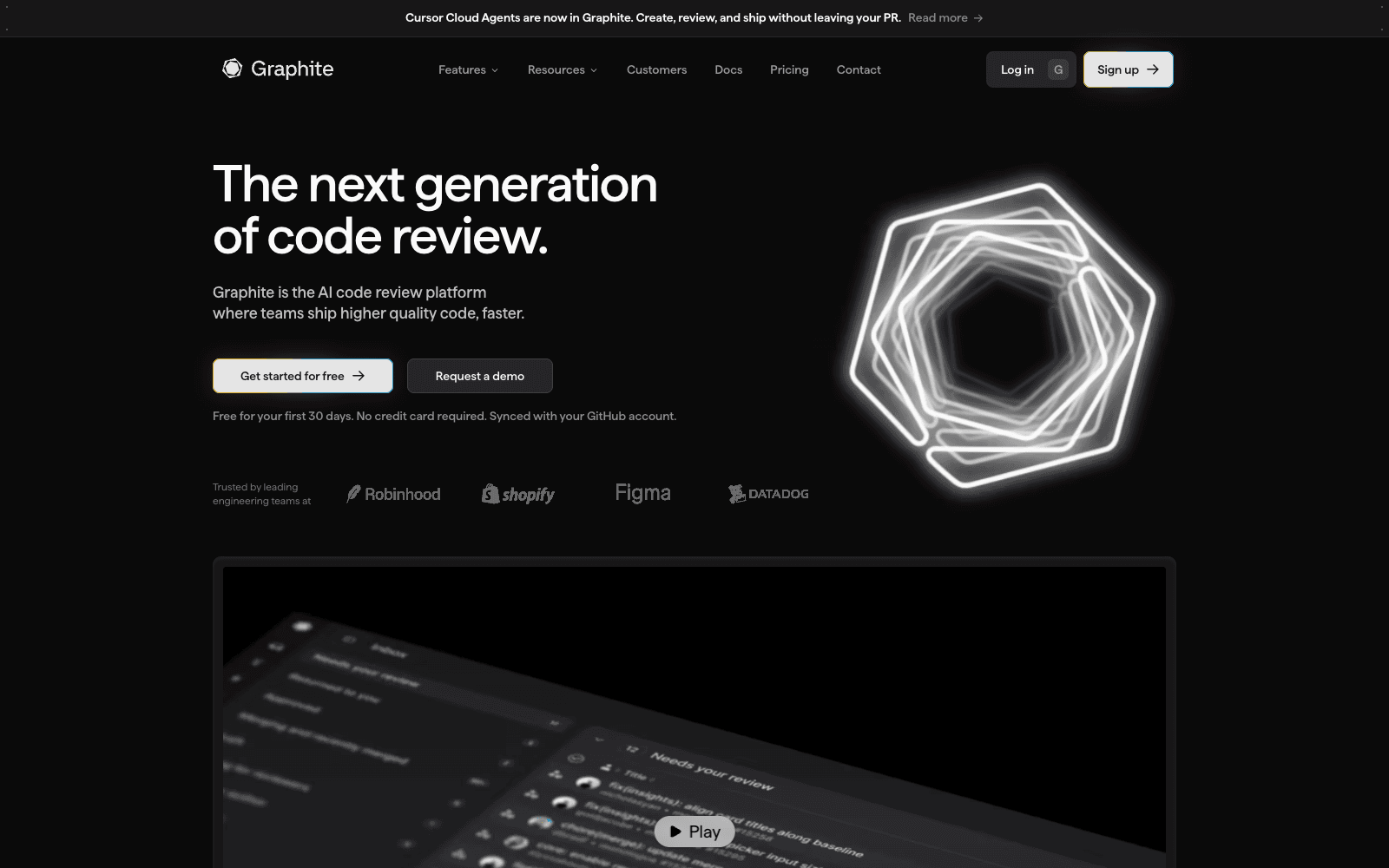
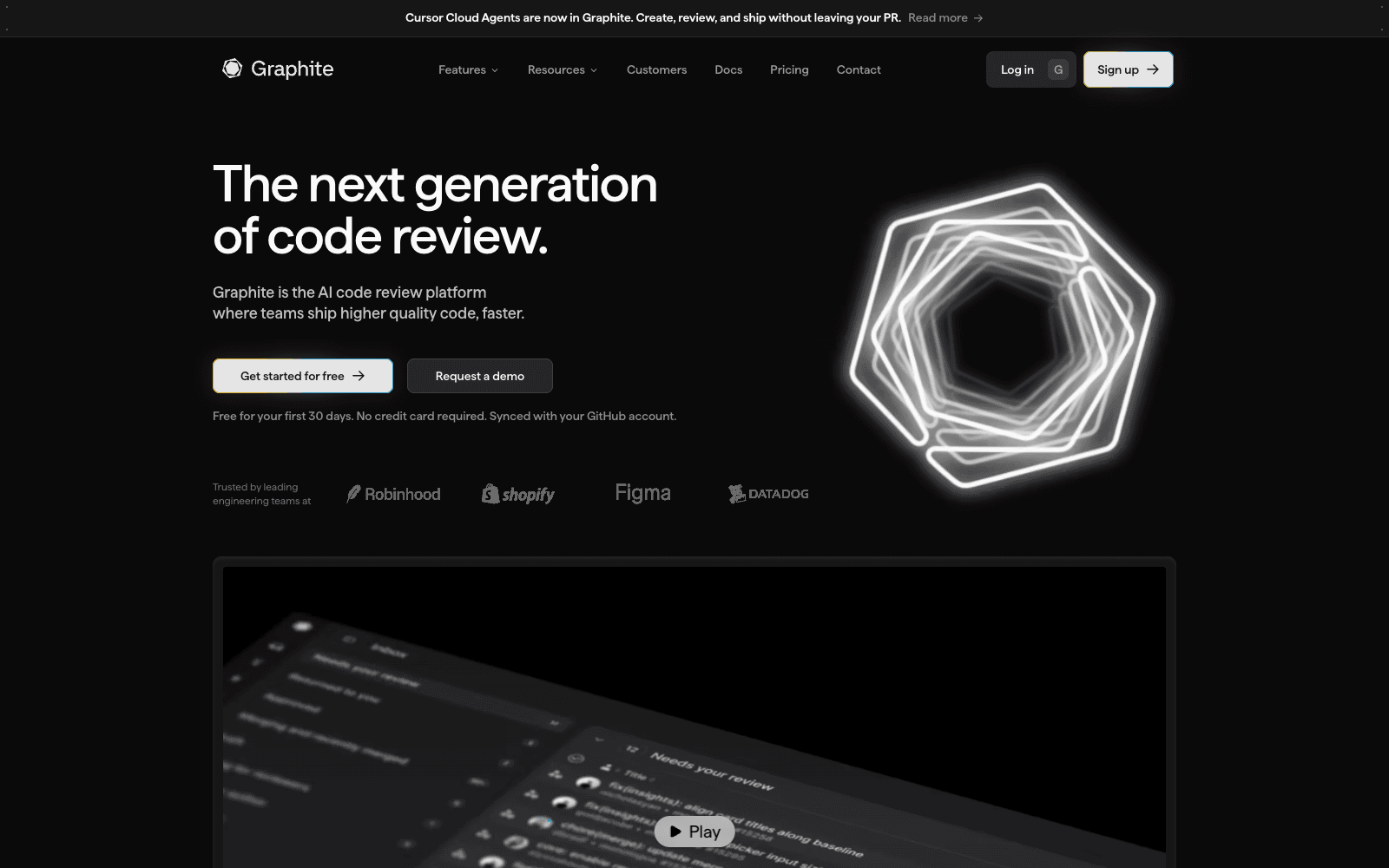
Graphite is the AI code review and stacking platform for high-velocity engineering teams. ~$80M raised; Sequoia + Anthropic-backed; powers Diamond AI revie
Acquired Graphite
Acquired · December 2025
Still operating. Anysphere, the maker of the Cursor AI code editor, announced it was acquiring Graphite, the AI code review and stacked pull request platform, on December 19, 2025. Terms were not disclosed beyond a mix of cash and equity. Graphite continues as its own product, now at graphite.com, and has added Cursor Cloud Agents.
Acquired by Cursor (Anysphere).
Last known pricing: Free 30-day trial; paid team plans; enterprise on request.
Is Graphite shut down?
No — Graphite is still operating. Its acquisition by Cursor (Anysphere) was announced on December 19, 2025, and the product continues to ship. We list it in the ToolDirectory.AI graveyard's acquired-but-operating section and watch for post-acquisition changes.
What to use instead
Featured

Replit
AI agent that turns ideas into deployable apps in minutes — no coding required.
Freemium
4.93
497

TRAE
ByteDance's AI IDE — agentic coding, autonomous SOLO mode, and multi-agent problem-solving.
Freemium
4.93
496

Browser Use
Most popular open-source framework for AI browser agents — 89% on WebVoyager benchmark, the OSS that backs many production browser-using AI products.
Freemium
4.93
470
Overview
Graphite: AI Code Review & Stacked PR Platform
Graphite is AI code review and stacked-PR workflow platform for high-velocity engineering teams. Code review is the single largest source of velocity loss in modern engineering — PRs sit waiting for human review, get rubber-stamped, or get blocked on style nits. Graphite's pitch is Diamond AI reviewer covering style and obvious correctness so humans focus on architecture, plus stacked PRs that let engineers ship the small reviewable chunks human reviewers actually want.
Acquisition note (December 2025): Cursor maker Anysphere announced on December 19, 2025 that it was acquiring code review startup Graphite for undisclosed cash and equity. Graphite keeps operating as a separate product, which has moved to graphite.com and now integrates Cursor Cloud Agents.
Key Features
- AI code review and stacked-PR workflow platform for high-velocity engineering teams
- Founded in 2020 by Tomas Reimers, Greg Foster, and Merrill Lutsky (ex-Airbnb engineers)
- Approximately $80M+ raised across rounds; Sequoia and Anthropic invested
- Diamond is Graphite's AI code reviewer — comments on PRs with the rigor of a senior engineer
- Stacked PRs let engineers ship in small reviewable chunks instead of one giant PR
- Integrates natively with GitHub; popular with engineering teams that ship many small PRs daily
- Used by Vercel, Snowflake, Shopify, Notion, Asana, and many other modern engineering orgs
Ideal Use Case
Mid-sized to large engineering organizations that ship many small PRs daily and need both faster, higher-quality code review and structured stacked-PR workflows — particularly companies practicing trunk-based development.
Why Use Graphite
Code review is the single largest source of velocity loss in modern engineering — PRs sit waiting for human review, get rubber-stamped, or get blocked on style nits. Graphite's pitch is Diamond AI reviewer covering style and obvious correctness so humans focus on architecture, plus stacked PRs that let engineers ship the small reviewable chunks human reviewers actually want.
FAQ
Who owns Graphite? Graphite is owned by Anysphere, the company behind Cursor, which announced the acquisition on December 19, 2025. Graphite still operates as its own code review product.
Q: Who founded Graphite? A: Tomas Reimers, Greg Foster, and Merrill Lutsky — all former Airbnb engineers — co-founded Graphite in 2020.
Q: How much has Graphite raised? A: Approximately $80M+ across rounds, with Sequoia Capital and Anthropic participating.
Q: What is Diamond? A: Diamond is Graphite's AI code reviewer — it comments on pull requests with the rigor of a senior engineer, catching bugs, style issues, and architectural concerns.
Q: Graphite vs CodeRabbit vs Greptile? A: All three are AI code review tools. Graphite's differentiation is the combination of Diamond AI reviewer plus stacked PR workflow — the two together change how engineering teams structure work, not just how they review it.
Q: Who uses Graphite? A: Vercel, Snowflake, Shopify, Notion, Asana, and many other modern engineering organizations practicing trunk-based development with high PR velocity.
tl;dr
Graphite is the AI code review and stacked-PR platform for high-velocity engineering teams. Sequoia + Anthropic-backed; ~$80M+ raised. Diamond AI reviewer plus stacked-PR workflow. Used by Vercel, Snowflake, Shopify, Notion, Asana.
Related
Looking for more options? Browse the Developer Tools directory or read our best AI coding tools listicle. Graphite is also tracked on Crunchbase.
Why Use Graphite
Editorial Review
Our take on Graphite.

Stacked pull requests plus an AI reviewer that comments on every PR pre-merge. The stacking workflow is the durable part — it changes how teams break up work, and the merge queue understands the stack rather than fighting it.
What works
- Stacked PRs remove review blocking on sequenced changes
- Merge queue is stack-aware and lands PRs in dependency order
- AI review and PR chat catch mechanical issues before merge
What doesn't
- Benefits depend on the team actually adopting stacking as a habit
- Paid tier pricing is not detailed publicly beyond the trial
Graphite started as a stacked-PR tool and that remains its centre of gravity. Stacking lets a developer break a large change into a sequence of small, individually reviewable PRs and keep moving instead of blocking on review of the first one. The CLI and VS Code extension manage the stack, and the merge queue is stack-aware, landing changes in the right order rather than serialising them badly.
The AI review layer sits on top. Every PR gets an automated review aimed at catching real bugs with suggested fixes before merge, and Graphite Chat puts an interactive reviewer on the PR page that can explain changes and work through CI failures.
The honest framing is that AI review is a useful second pass, not a replacement for a human one — its value is catching the mechanical class of mistake so reviewers spend attention on design. The bigger commitment is cultural: stacking asks your team to change how it decomposes work, and teams that adopt the tool without adopting the habit get much less from it. GitHub integration is deep, and the trial runs without a card.