Freed AI
AI medical scribe that transforms patient conversations into structured SOAP notes in seconds — used by clinicians across all specialties to cut documentation time in half.
Overview
Freed AI: AI Medical Scribe for Clinicians
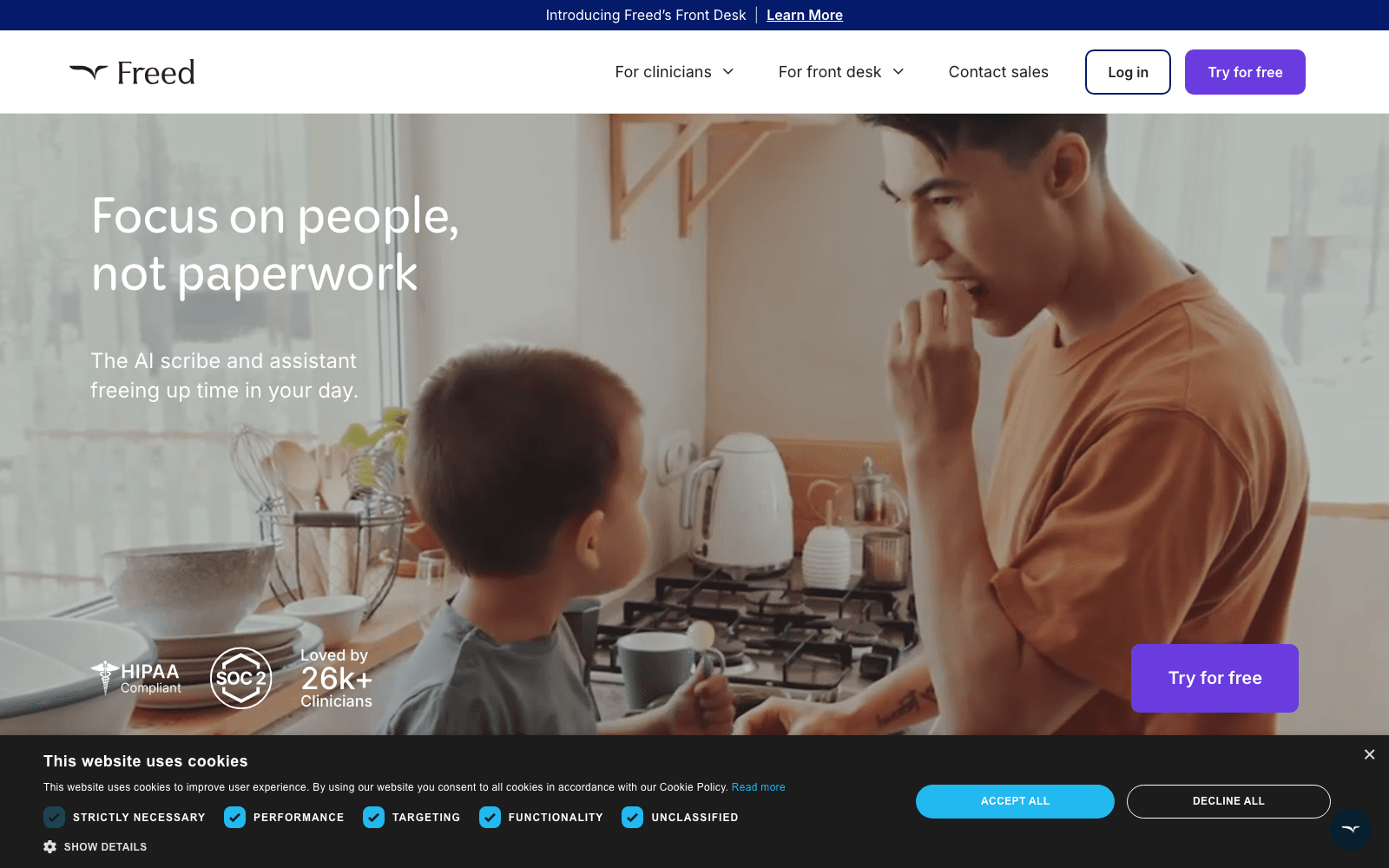
Freed is the medical scribe AI used by clinicians across all specialties to dramatically reduce documentation time. Recording a visit feels as natural as having a conversation; Freed works in the background to listen, transcribe, and produce a structured SOAP note ready for EHR import — all in seconds.
The platform consistently ranks at the top of clinician-recommendation lists for AI scribes, alongside Abridge and DAX Copilot, with particular strength in independent practice and small-to-mid clinic settings.
Key Features
- Structured SOAP notes generated from natural patient conversations
- Real-time transcription with clinical-context awareness
- Specialty-aware output formatting (primary care, psychiatry, dermatology, etc.)
- HIPAA-compliant infrastructure
- Native EHR exports and copy-paste workflows
Ideal Use Case
Independent practitioners, small clinics, and any clinician where the documentation burden is the primary source of burnout. Strong fit for primary care, behavioral health, and high-visit-volume specialties.
Why Use Freed AI
DAX Copilot is enterprise-deployed but expensive and Epic-centric. Freed targets the long tail of clinicians who don't have institutional Epic deployments — independent practitioners, urgent care, behavioral health — with a self-serve product that's fast to deploy and clinician-loved.
FAQ
What does Freed AI do? Freed AI is an AI medical scribe that listens to conversations between clinicians and patients, then automatically generates structured SOAP notes in seconds. It's designed to cut documentation time roughly in half for healthcare providers.
Who should use Freed AI? Freed AI works for clinicians across all medical specialties who spend significant time on patient documentation. Any healthcare provider looking to reduce their administrative burden and focus more time on patient care can benefit from this tool.
How much does Freed AI cost? Freed AI operates on a freemium model with both free and paid options available. Visit the Freed AI pricing page for current plans and to see which tier fits your needs.
How does Freed AI compare to similar tools? Freed AI competes with other medical documentation solutions like Abridge, Flatiron Health, and Exscientia. Each tool has different strengths, so it's worth comparing features and ease of integration with your existing workflow.
tl;dr
AI medical scribe for clinicians, especially independent and small-clinic settings. Fast SOAP notes, HIPAA-compliant, self-serve.
Related
Looking for more options? Browse the Healthcare directory or read our best AI healthcare tools listicle. Freed AI is also tracked on Crunchbase.
Why Use Freed AI
Editorial Review
Our take on Freed AI.

A focused medical scribe that handles the tedious part—turning patient talk into structured notes—without pretending to be a diagnostic tool.
What works
- Outputs in actual SOAP format clinicians use daily
- Freemium model lets you validate before commitment
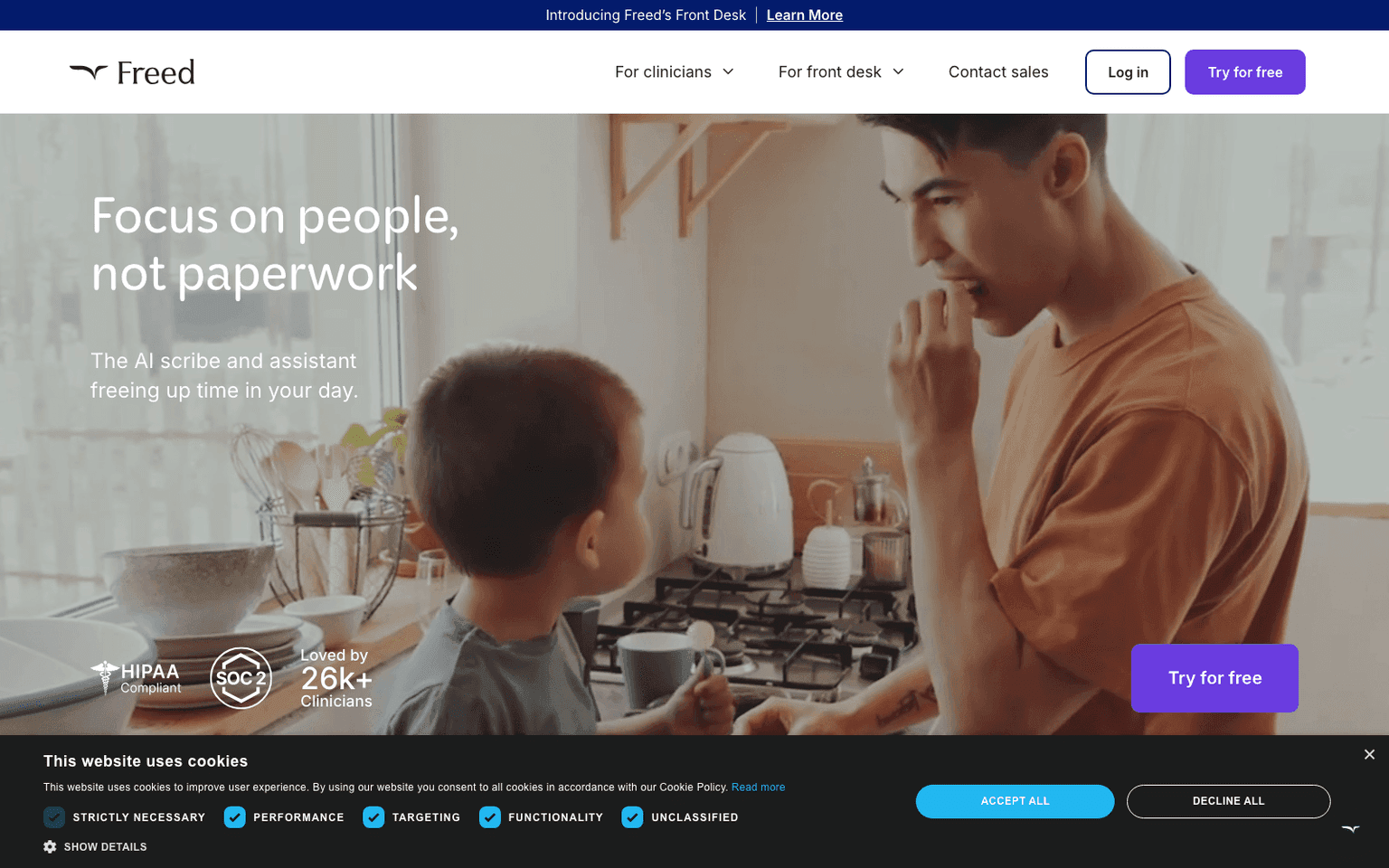
- 26,000+ clinicians across 1,000+ organisations, at roughly 3M patient visits a month
What doesn't
- Relies on AI judgment in legally sensitive documentation
- Solo tool—doesn't integrate the full documentation workflow
Freed AI sits in a useful middle ground: it listens to patient conversations and outputs SOAP notes (the standard format clinicians actually use) without requiring you to retrain your workflow. The claim of cutting documentation time in half is the kind of thing that matters in a field where charting can eat half your day. It's built specifically for healthcare, which means it's not a generic transcription tool trying to do medicine.
The freemium model lets you test the core function without commitment, which is smart for something this specialized.
The rough part: medical documentation is legally and clinically sensitive. You're trusting an AI to capture nuance in patient-clinician conversations and structure it correctly. The tool likely works well for straightforward visits; edge cases and complex patient presentations are where you'd want to spot-check the output. Also worth knowing it's not a full EHR replacement—it handles one piece of a much larger documentation puzzle.
User Reviews
Similar Tools