Core ML
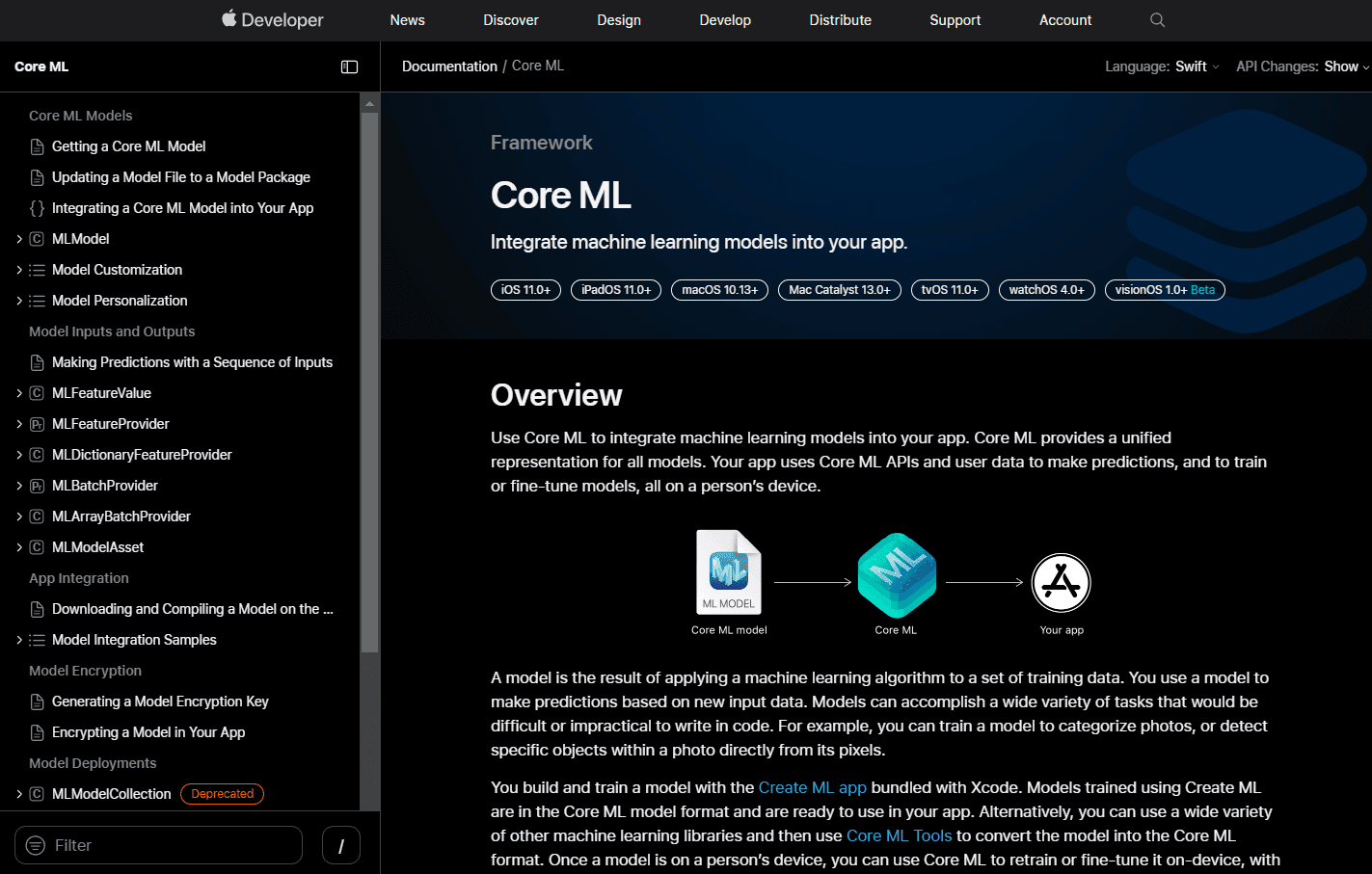
Apple's machine learning framework for integrating models into apps.
Overview
Core ML: Apple's Machine Learning Framework
Core ML is Apple's dedicated framework designed for integrating machine learning models into iOS, macOS, watchOS, and tvOS apps. It provides developers with the tools and resources to seamlessly incorporate machine learning capabilities into their applications, enhancing user experience and functionality. With Core ML, developers can leverage the power of machine learning without requiring extensive expertise in the domain.
Key Features:
- Platform Integration: Native support for iOS, macOS, watchOS, and tvOS applications.
- Optimized Performance: Designed to maximize efficiency and performance on Apple devices.
- Broad Model Support: Compatible with a wide range of machine learning models.
- Real-time Processing: Enables real-time machine learning computations, ideal for dynamic applications.
- Privacy and Security: On-device processing ensures user data privacy and security.
Ideal Use Case:
Core ML is ideal for developers building applications on Apple platforms that require machine learning capabilities. Whether it's for image recognition, natural language processing, or predictive analytics, Core ML provides the tools to integrate these features seamlessly.
Why use Core ML:
- Apple Ecosystem: Native integration with Apple's ecosystem ensures optimal performance and user experience.
- Ease of Use: Simplifies the process of integrating machine learning into apps.
- Highly Optimized: Designed to deliver fast, efficient machine learning computations on Apple hardware.
FAQ
What is Core ML and what can it do? Core ML is Apple's machine learning framework that lets developers integrate trained machine learning models directly into their apps. It enables on-device AI processing without requiring constant cloud connections.
Who should use Core ML? Core ML is designed for Apple developers who want to add machine learning capabilities to iOS, macOS, watchOS, and tvOS applications. It's ideal for teams building intelligent features that need to run efficiently on Apple devices.
How much does Core ML cost? Core ML is a free framework for developers. Visit the Core ML documentation and pricing page for details on any associated costs or enterprise options.
How does Core ML compare to other AI solutions? Core ML focuses on on-device machine learning for Apple platforms, whereas alternatives like Claude and Anthropic offer cloud-based AI services. Core ML is best for developers prioritizing privacy and performance within the Apple ecosystem.
tl;dr:
Core ML is Apple's framework for integrating machine learning models into apps, offering developers an easy and efficient way to enhance app functionality with ML capabilities.
Related
Looking for more options? Browse the AI/ML Models directory or read our best AI models listicle. Core ML is also tracked on Crunchbase.
Why Use Core ML
Editorial Review
Our take on Core ML.

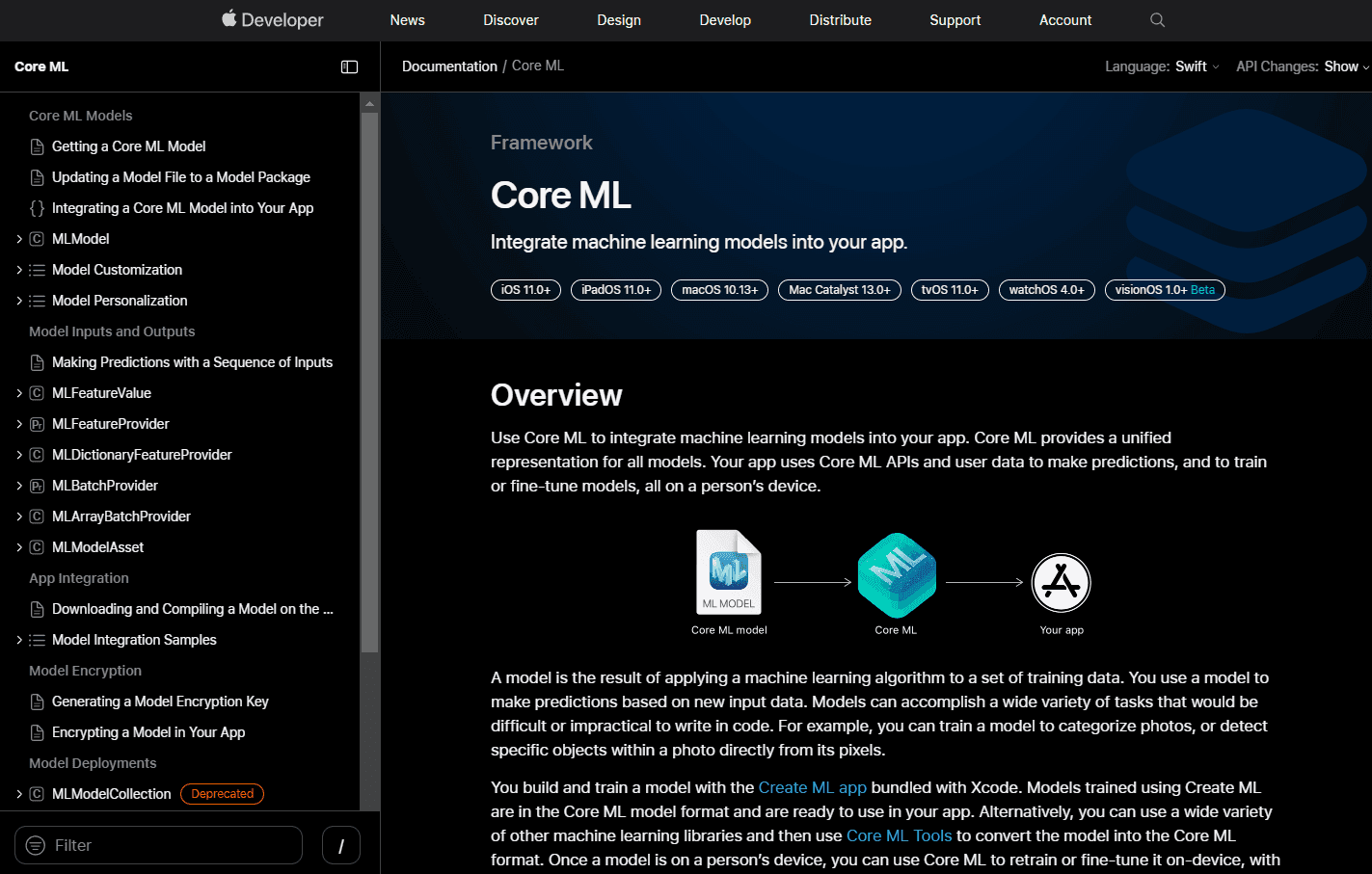
Core ML is Apple's on-device ML framework for shipping trained models into iOS, macOS, and other Apple platforms with minimal overhead.
What works
- On-device inference; no server dependency or network latency
- Native Xcode integration; straightforward Swift API
- Supports multiple model types without custom glue code
What doesn't
- Apple platforms only; no Android, web, or Linux support
- Limited to models Core ML can import; some formats need conversion
Core ML handles model conversion and inference on Apple silicon, letting you take TensorFlow, PyTorch, or other trained models and run them locally on iPhones, Macs, and iPads. The appeal is straightforward: inference happens on-device, so no server round-trip, lower latency, and user data stays off the wire. You export a model to Core ML format, wire it into Xcode, and call it from Swift or Objective-C. The framework supports vision, sound, text, and tabular tasks, and Apple's tooling (Create ML) can also train simple models end-to-end if you just want to prototype fast. Worth knowing: Core ML is Apple-only. If your app ships to Android or web, you'll need a parallel implementation or a different strategy. The learning curve is gentler than raw TensorFlow, but you're locked into Apple's workflow and hardware assumptions. For teams already deep in the Apple ecosystem and building consumer apps where latency or privacy matter, it's the natural choice. For cross-platform work or research, you're probably reaching for something else.
User Reviews
Similar Tools